Collar Guard…Not a Product, but a Safety Feature.

1-lajoie-collarBy David G. Firestone

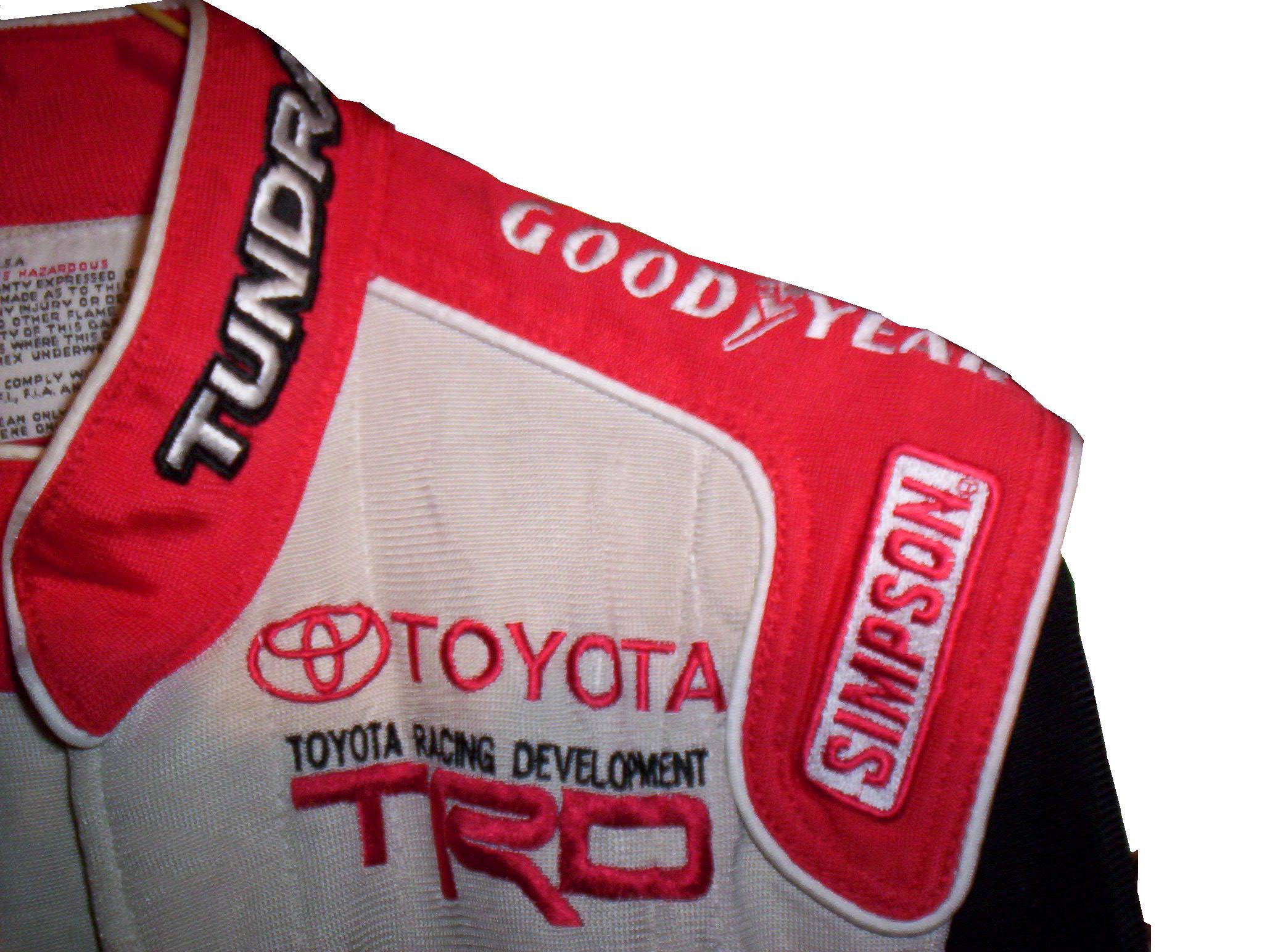
Like shoulder epaulets, the collar of a driver suit has made a transition. It has gone from safety accessory to fashion piece, but unlike the epaulet, it is not only ornamental. Because the collar is still a piece of safety equipment. It goes without saying that fire is an ever present danger in auto racing. The collar protects the neck from burns. This may seem minor, but many people who die from burns die from infection. When the skin is compromised, it can’t stop germs from getting inside the body, and as such makes infection a serious risk during burn injuries.

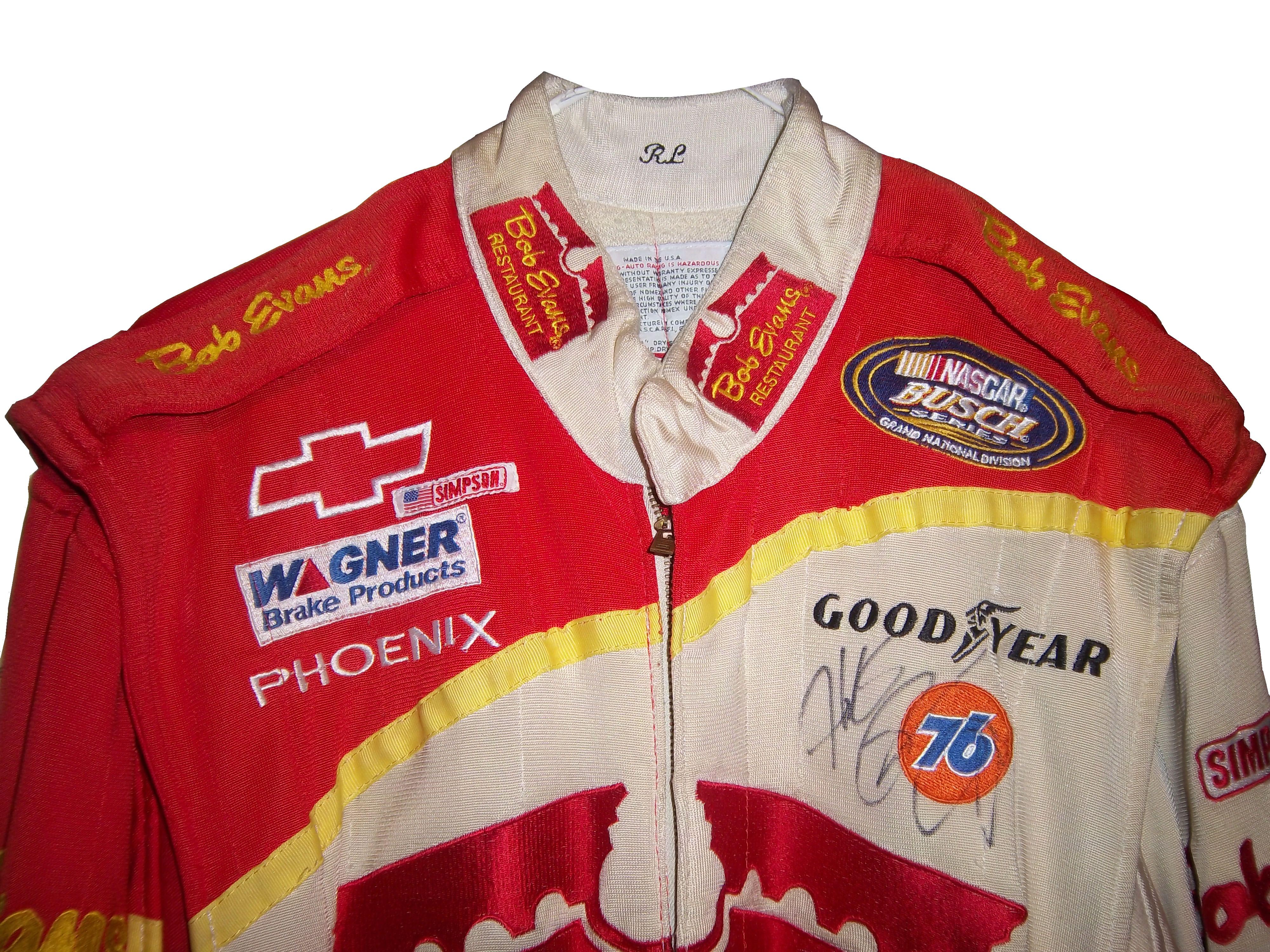
But the fashion aspect of collars is interesting as well. With the standard alignment of sponsors on the top of the suit, the Series logo, tire manufacturer logo, car manufacturer logo, and other sponsor logos are on the top, and the primary sponsor logos are present on the collar and epaulets. This Randy Lajoie example shows how the suit appears during an televised interview:1-lajoie-f

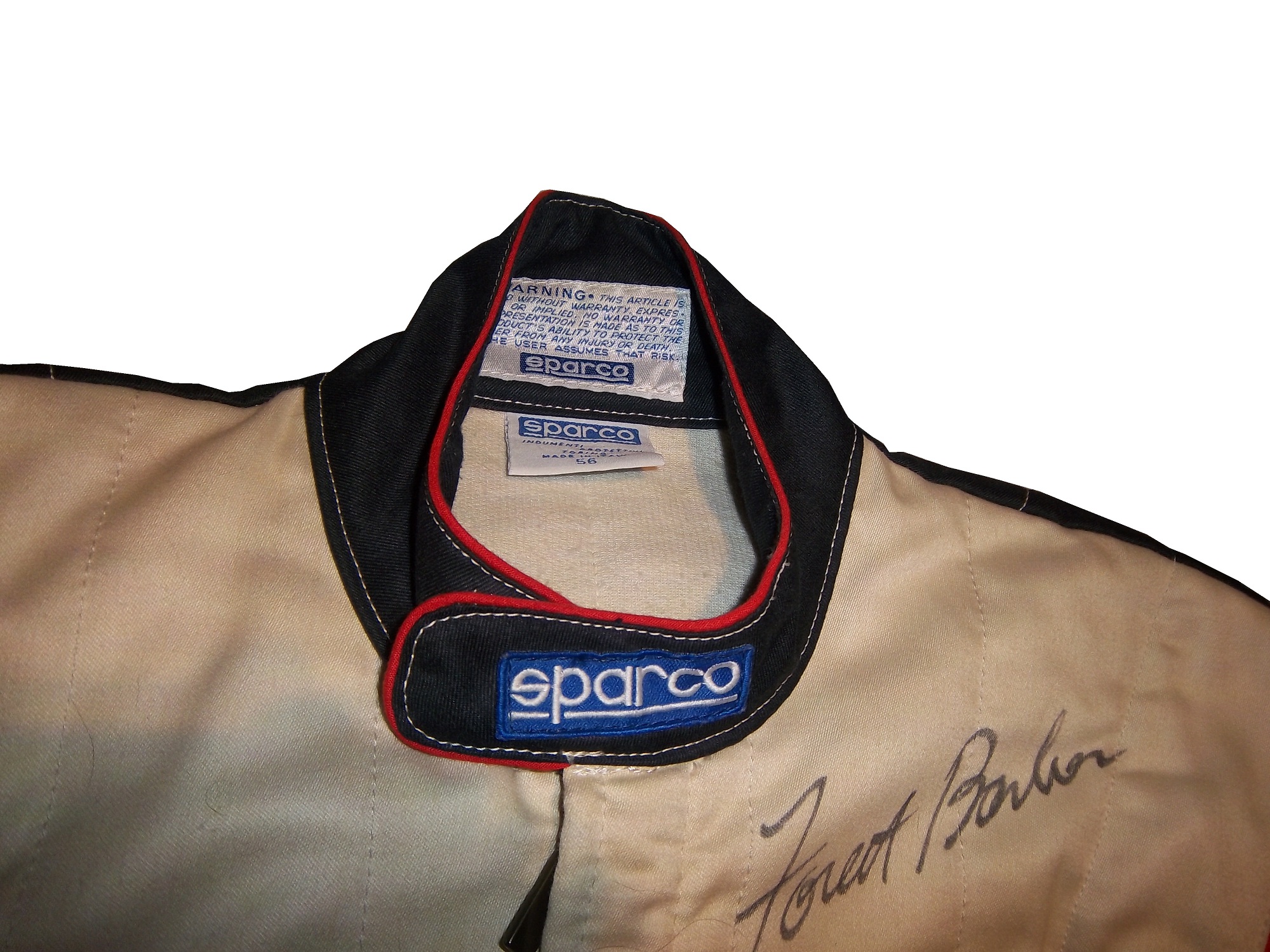
Note a couple of things: First, the fabric on the collar overlaps just a bit here, but when the driver wears it, it meets perfectly at the center of the neck. Second, it allows the driver to breathe easily. Comfort Vs. Safety is a constant debate. This is one kind of collar, the other kind of collar is what I call the Velcro collar, as shown in this Alex Barron suit from 1998:36-barron-collar

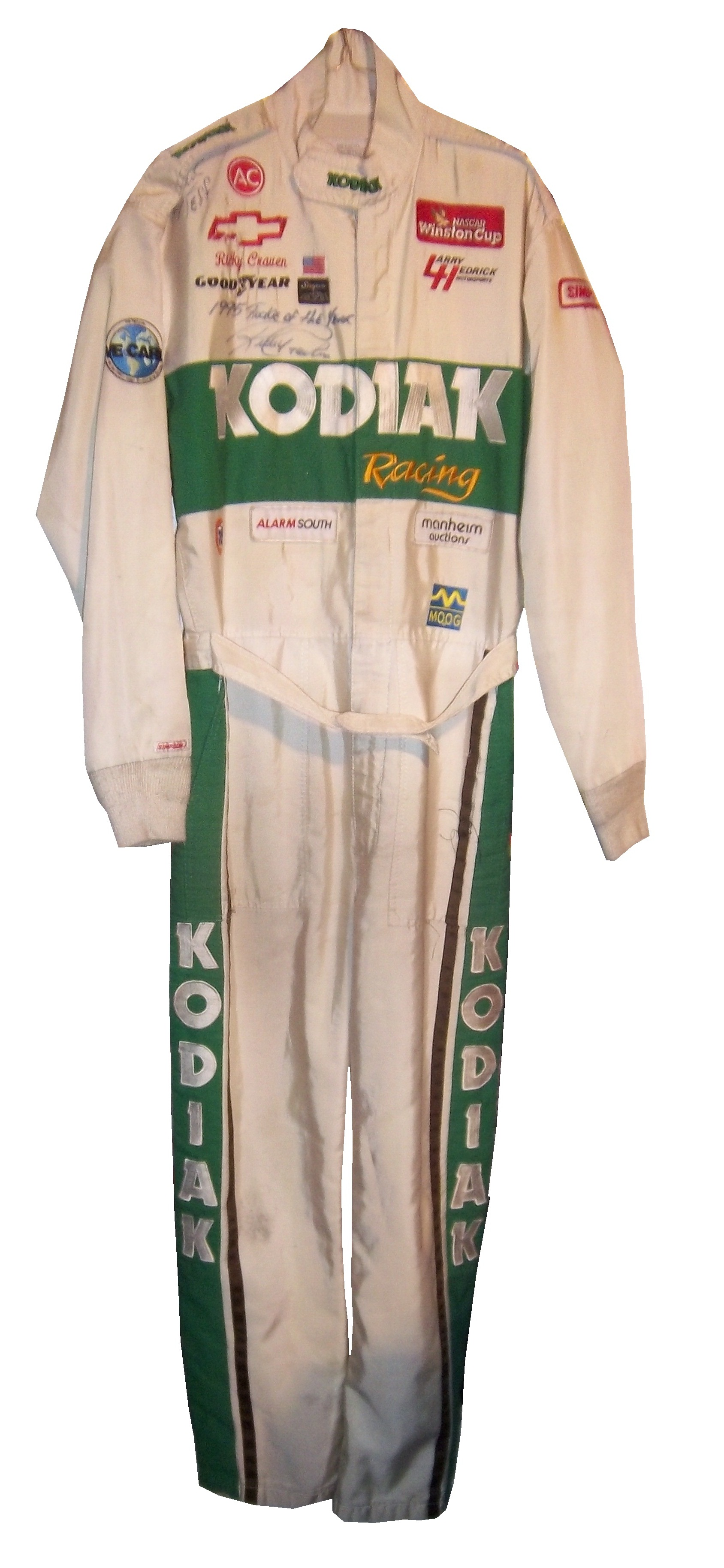
The Velcro collar is exactly what it sounds like, a collar with a strap which Velcros shut. This provides a little more protection in case of fire. It also has another use, as sponsor ads are popular to put on the front of the Velcro strap. This has been used quite often over the years…41-craven-collarbarber-collar

This is due to the fact that for quite some time the open face helmet was used, and the collar provided extra fire protection where the helmet failed. In this day in age, helmets come standard with Nomex socks on the bottom, so the collar, while still a key safety feature, is not as critical. But for sponsor logo placement, it really can’t be beat.

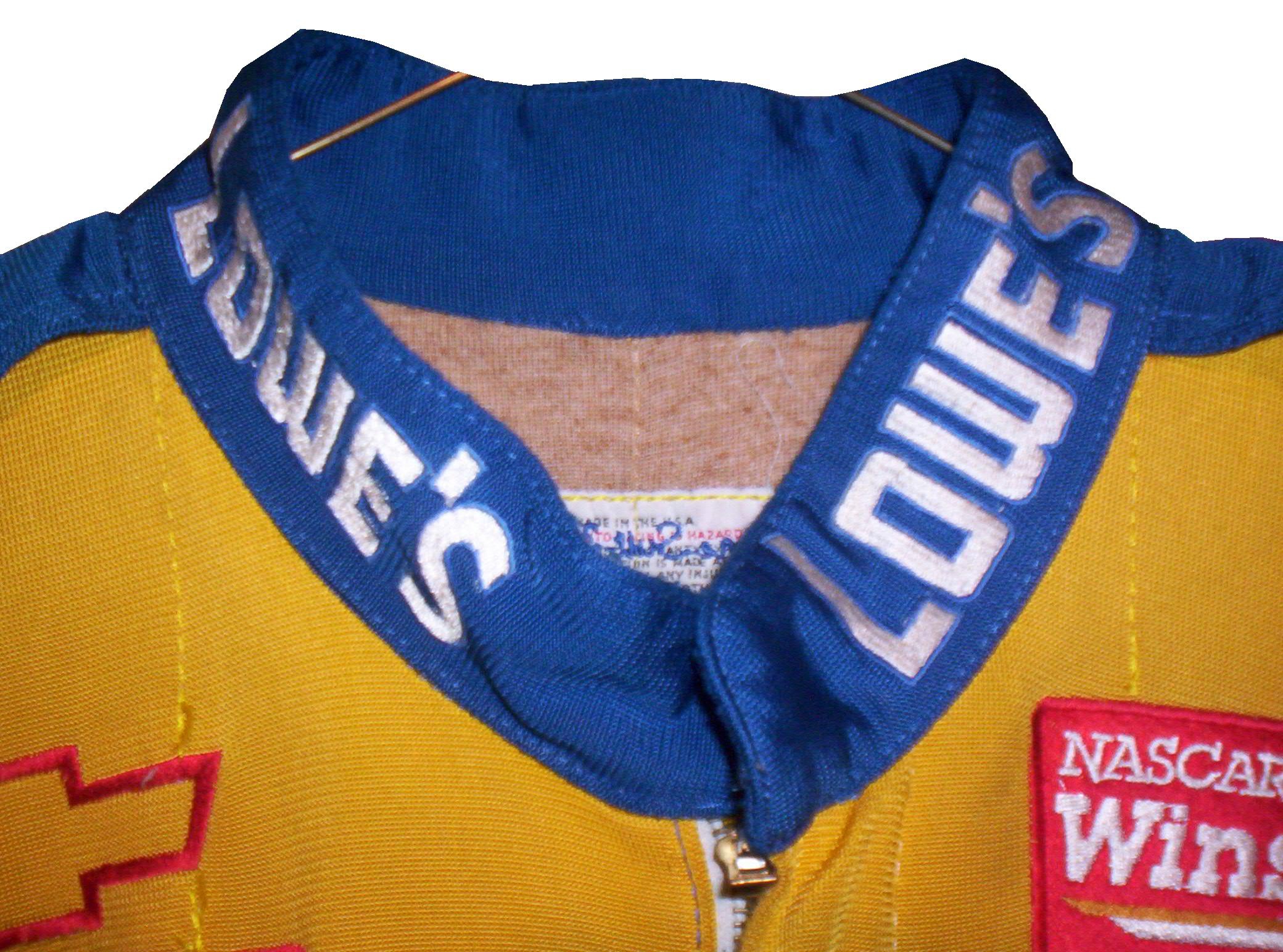
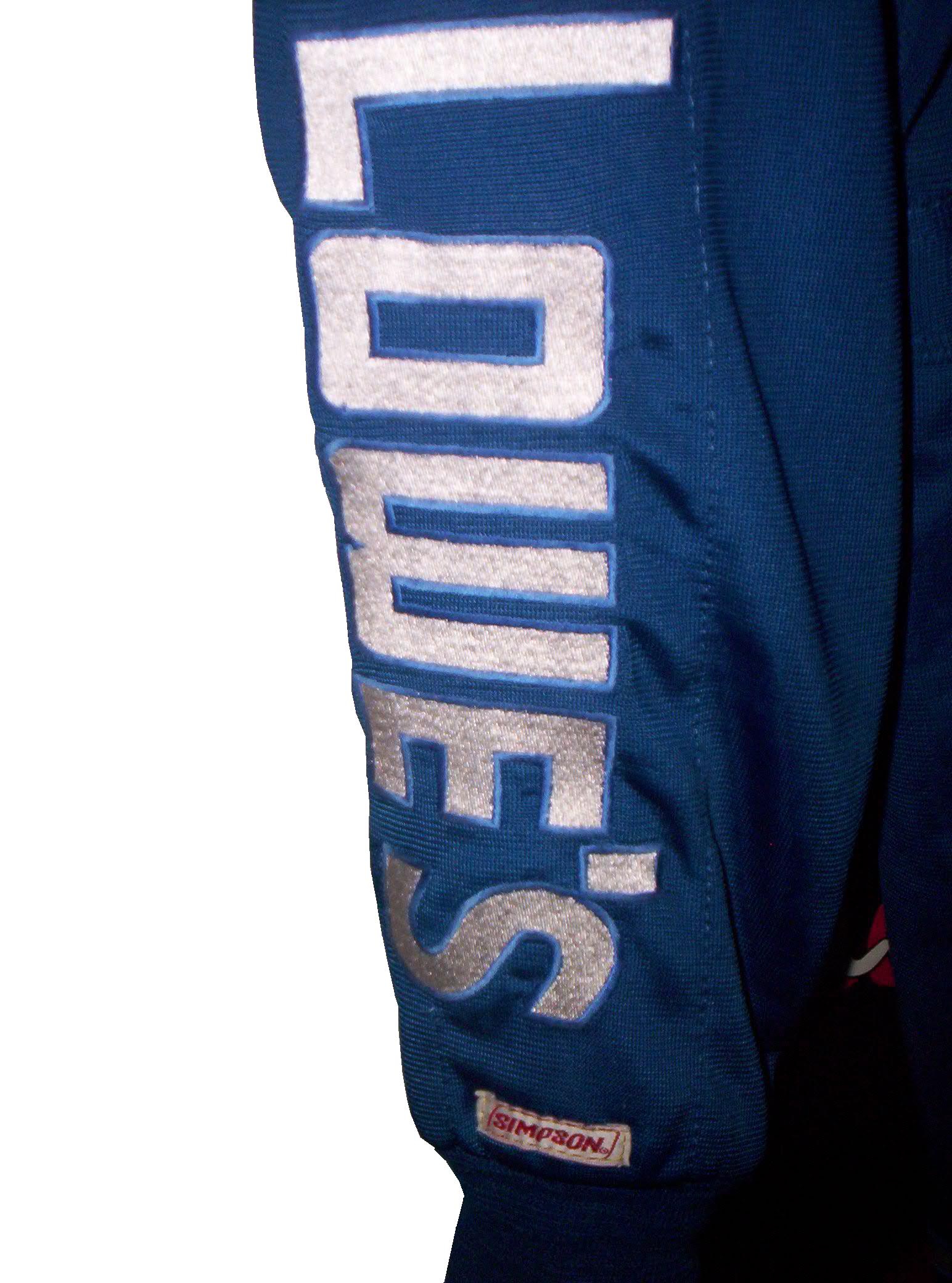
If the collar does not have a Velcro closure, then the primary sponsor logo is sewn into either side of the collar. Like the Lajoie example above, or this Mike Skinner example below, this can be used very effectively as a place for sponsor logos.31-skinner-collar

Like most other aspects of the driver suit, the choice of Velcro or not comes down to driver preference. Kyle Bush, as well as older brother Kurt favor the Velcro style, whereas Tony Stewart and Carl Edwards prefer the non-Velcro variety. Many pit crew shirts have a similar design to the driver design as well.

Editor’s note: For the next two weeks I will be on a very badly needed vacation. I will still have articles ready to go, but I won’t be commenting on up do date issues until I get back. I will still check in from time to time.

Moving on to paint schemes…

Denny Hamlin #11 FedEx Express 2005 Toyota Camry Done as a memorial to Jason Leffler, this is a replica of the scheme that Leffler ran in 2005 during FedEx’s first season as a full-time NASCAR sponsor. It is very faithfull to the original scheme. It also has a great design and color scheme, and earns an A

Greg Biffle #16 3M/Give Kids a Smile Ford Fusion The same bland paint scheme that I described as “There’s nothing really wrong here, but nothing really right here either.  The side design looks forced, the black roof is idiotic, the color scheme is good, but the number design looks too cliche.  It makes no sense, but 3M schemes never do.” It has a small Give Kids a Smile logo on the hood, that is all but invisible. I gave it a C and it will stay at a C.

David Stremme #30 Window Wax Toyota Camry Ugh! This is bad, I can live with the color scheme, but the design is bad. It gets a D

Austin Dillon #33 American Ethanol Chevy SS While I hate the shade of green used here, this scheme looks pretty decent. The designs around the front brake vent are unnessicary, but I still like them. If the green were a bit darker, I could give it a better grade than a C+.

AJ Allmendinger #47 Charter Toytoa Camry The hood design is interesting here. It is designed in the same light as television logos on driver suits. It is a unique idea that works and I hope will catch on. The color scheme is great, and I love the overall design. A

Brian Vickers #55 Aaron’s/Louisville Cardinals Toyota Camry The color scheme is good, but the Fruit Stripe Gum design seen on the Louisville Cardinals shorts is ugly. The whole Zubaz design scheme is horrible on sports uniforms, and even worse on this car. I have nothing against the Louisville Cardinals, but this is horrible. F

Dale Earnhardt Jr #88 National Guard Solider of Steel Chevy SS Solid simple scheme with good colors, but the Superman Logo on the hood is next to invisible.

2014 NASCAR Hall of Fame Nominees

I had an article ready on driver shoes and glove ready for this week, but NASCAR came out and announced this week that the 2014 NASCAR Hall of Fame would be electing new inductees on May 22. So what I’m going to do this week is discuss each inductee in some detail, and add the 5 who I should be inducted this year, and the 5 that I think will be inducted this year.

Red Byron-One of NASCAR’s 50 Greatest Drivers he is the first champion in what is now the Sprint Cup, Red Byron is considered one of the best drivers in the early years of NASCAR. After winning the inaugural NASCAR Modified championship, he took to the inaugural NASCAR Strictly Stock series. Although he only had 2 wins in the 8 races, he took the title.

Richard Childress-The top team in the 1980’s and 1990’s Childress has the distinction of being the first owner to win a race in all 3 of NASCAR’s top series, as well as being the first owner to win a championship in all 3 of NASCAR’s top series. In total, in the top 3 NASCAR series, he has 6 championships and 193 wins.

Jerry Cook-His work in the Wheelin Modified Series speaks for itself, 6 championships, 342 wins, and one of NASCAR’s 50 Greatest Drivers. He is also known for having a rivalry with Ritchie Evans, who was inducted into the NASCAR Hall of Fame a few years ago.

H. Clay Earles-The founder of Martinsville Speedway, Earles built Martinsville after witnessing the popularity of stock car racing at fairgrounds, feeling that a permanent track would be a profitable venture. Earles also began the tradition of awarding grandfather clocks to race winners, a practice that continues to this day.

Tim Flock-Two time Sprint Cup champion in 1952 and 1955, he hold the record for most poles in a season with 18, highest career winning percentage for a driver with 21%. He is one of NASCAR’s 50 Greatest Drivers.

Ray Fox-An engine builder who’s engines helped Junior Johnson win the 1960 Daytona 500, and the discovery that drafting at Daytona increases speed, Fox has 14 wins to his team as an owner, with 62 top 5’s 82 top 10’s, and 16 poles over 12 years.

Anne Bledsoe France-Helped build the sport with her husband Bill France Sr, and is the first woman up for induction.

Rick Hendrick-The top owner in NASCAR in the last 20 years, Hendrick has 262 wins in NASCAR’s top 3 Series, as well as 14 championships.

Jack Ingram-A 2-time Nationwide Series champion with 31 wins, Ingram also won the Late Model Sportsman Division in 1972, 1973, and 1974. He is one of NASCAR’s 50 Greatest Drivers.

Bobby Isaac– 1970 Sprint Cup champion who was well-known for racing the 1970 Dodge Daytona, Isaac has 37 wins, 170 top 10’s and 49 poles over 14 years. Isaac later took the Daytona to the Bonneville Salt Flats and set 28 speed records, many of which still stand. He is one of NASCAR’s 50 Greatest Drivers.

Dale Jarrett-Son of 2011 NASCAR Hall of Fame inductee Ned Jarrett, Dale is the 1999 Sprint Cup Champion who also won 3 Daytona 500s and two Brickyard 400’s. He is one of NASCAR’s 50 Greatest Drivers.

Fred Lorenzen-26 wins to his name, Lorenzen also had a winning streak from 1962 to 1967, won the 1965 Daytona 500, and pulled the Yellow Banana stunt in 1966. He is one of NASCAR’s 50 Greatest Drivers.

Raymond Parks-When Red Byron won the 1949 Sprint Cup championship, Parks was recognized as the owner of the team, the first team owner to win a Sprint Cup championship.

Benny Parsons-the 1973 Sprint Cup Champion and the 1975 Daytona 500 winner, Parsons also has 21 wins, 283 top 10’s, and 20 poles in his career. He retired from driving and became a respected television announcer. He is one of NASCAR’s 50 Greatest Drivers.

Maurice Petty-Chief engine builder for Petty Enterprises, and head mechanic for Richard Petty. For most of Richard’s 200 wins, Maurice was working on the cars.

Larry Phillips-Raced from 1961 to 2001, winning the NASCAR Weekly Series Championship in 1989, 1991, 1992, 1995, and 1996, seven NASCAR Weekly Regional championships, and 13 track championships.

Les Richter-An inductee into the Pro Football Hall of Fame, Richter was the vice-president of special operations for the International Speedway Corporation, chairman of the board for the International Race of Champions, Senior Vice President of NASCAR, and was working at Auto Club Speedway at the time of his death in 2010.

Glenn “Fireball” Roberts-Won the 1962 Daytona 500, in addition to 32 other races. His death in 1964 helped lead to safer driver uniforms with better fire protections. He is one of NASCAR’s 50 Greatest Drivers.

T. Wayne Robertson-Employee of RJR who helped promote the NASCAR Winston Cup Series by taking a show car to shopping malls, and other events, with a point standings leader-board.

Wendell Scott-The first African American to win a NASCAR Sprint Cup race, Scott is a true trailblazer, not just in racing, but in sports as well.

Ralph Seagraves-RJR executive who established the sponsorship of the Grand National series in NASCAR by Winston, forming the NASCAR Winston Cup Series in 1972, and would later go on to sponsor the NHRA as well.

Ollen Bruton Smith-Builder of Charlotte Motor Speedway, and founded Speedway Motorsports which helped oversee expansion in NASCAR, Smith was also a promoter who would put on a show for the fans before races.

Curtis Turner-Won 38 races in 4 years in the NASCAR Convertible Division, Turner would later win 17 races in the Sprint Cup Series. Turner holds the distinction of being the only Sprint Cup driver to win two flag-to-flag races back to back, leading a total of 400 laps in the two races in July of 1950. He is one of NASCAR’s 50 Greatest Drivers.

Joe Weatherly-Won two Sprint Cup Championships, two Modified Championships, with 25 wins, 153 top 10’s, and 18 poles. He is one of NASCAR’s 50 Greatest Drivers.

Rex White-1960 Sprint Cup Champion, with 28 wins, 163 top 10’s, and 36 poles. He is one of NASCAR’s 50 Greatest Drivers.

Those are the nominees for the 2014 Hall of Fame class. Picking who I think should be inducted for the 5 spots is difficult. But Wendell Scott is a given, as is Jack Ingram. I would also give a nod to Rick Hendrick and Richard Childress here. And for my final pick, I’m going with Burton Smith.

Who I think will get picked for the hall of fame is much simpler. Any driver who was named in the 50 Greatest Drivers is a safe pick. I would be shocked if Hendrick and Childress don’t get picked. So I think that Wendell Scott, Rick Hendrick, Richard Childress, Bobby Isaac, and Curtis Turner will get the pick.

Two new paint schemes this week

Austin Dillon #51 Realtree/Bruce Lowery Chevy SS That is not what a Realtree sponsored car should look like…This is! It looks too formal for hunting camo and I can’t give it a passing grade here, so it gets an F

Joe Nemechek #87 ATI Gun Stocks Toyota Camry Seriously? What is the stone design on the sides, roof and hood? Is ATI selling stone gun stocks? If the design was only on the door frame, I would be able to stand it, but is just looks bad. Again an F!
The Epaulet…What It Was, and What It Is

12-miller-rshoulder - CopyThe mighty epaulet, every racing fan has seen them, but few understand what they are for. They are now mostly for fashion and sponsor exposure, but epaulets have a more interesting history than one might think.12-miller-lshoulder

Back in the 1950′s and 60′s, racing suits were supposed to provide fire protection, but early versions of the suit were very unreliable. Many drivers perished in fires, and sometimes, drivers were trapped within the car, unable to escape the raging inferno within their car. The solution? The epaulet. Mounted on both shoulders, epaulets were reinforced strips of fabric specifically designed to help pull an injured or unconscious driver from a burning car. Epaulets quickly became an integral part of the driver suit.10-labonte-rshoulder

As racing technology became more advanced, the need for epaulets for safety began to decrease, but this was happening at a time when coverage was increasing and sponsorship was rising. It did not take that long for sponsors to realize that they could slap a logo on the epaulet and get the company name more visible on pictures and TV interviews. As such the epaulet made the successful transition from safety feature to fashion accessory.

10-labonte-lshoulder

As in-car cameras began to become commonplace across racing, epaulets evolved with them. I mentioned in a previous post that Christian Fittipaldi favored epaulet styles used in F1 and IndyCar. When Sparco first came to NASCAR in the early 2000′s, they brought their epaulet style with them, and it quickly became the standard for NASCAR epaulet style. Most driver suits worn in NASCAR today involve some variation of the Sparco epaulet. They have evolved very well over the years, and are a familiar part of the driver suit

Moving on to paint schemes…

First the NASCAR Camping Word Truck Series

Ty Dillon #3 Bass Pro Shops Chevy Silverado Bass Pro Shops has a great scheme this year, both in the Cup series, and this scheme is just good. Nothing wrong, everything right, Final grade: A+

Brendan Gaughn #62 South Point Hotel and Casino Chevy Silverardo This scheme is very simple, and looks really good. The color scheme is solid, and brings back memories of Rusty Wallace driving for Miller Genuine Draft. The lettering is easy to read, and stands out. Final Grade: A

Now on to the Sprint cup Series…

Trevor Bayne #21 Ford Motorcraft/Quick Lane Ford Fusion I think this is a prototype, but that said, this is still a classic scheme. It has a great color scheme, number design, and is just a solid scheme all around. Final Grade A+

Jeff Burton #31 Cheerios Chevy SS This scheme is rather under designed for my taste. The color scheme is decent, but the gray Cheerio design is hard to see, and looks more like soda carbonation rather than breakfast cereal. Final Grade C+   On a related note some more pics from the Caterpillar scheme have been released, and they are still using the same scheme from last year.  It is pretty good, so my final grade will not change.

Austin Dillon #33 Honey Honey Nut Cheerios Chevy SS Now this is just awful. The color scheme is bad, and the HONEY NUT CHEERIOS lettering is nearly invisible. The bright blue Kroger logo looks out of place, and the tailpipe decals with rookie stripe just takes more away from an already bad scheme. Final Grade F-

Television Logos

By David Firestone

I recently did a post focusing on Christian Fittipaldi, and the unusual way his suit displayed the so-called television logos.  But these logos have a unique history all their own.  One of the first examples on an in-car camera being used was the 1979 Daytona 500.  At that time driver suits mostly looked like this: That is Buddy Baker after winning the pole at Bristol that same year.  As can be clearly seen, no logos of any kind on the legs, or sleeves.  For much of the early and late 1980′s that was mostly the case.  Even though by 1989 there were opportunities to add logos in good places, in many instances this did not occur.  There are instances where there were logos on the legs and sleeves, and the position in many of them is consistent with today.

In the late 1990′s, TV logos were still, for the most part off the radar screen.  But around 1997, sponsors started taking the hint, and adding these logos.  Although it was not popular across the board,  it steadily gained momentum, and by 2004 these logos began to be the rule rather than the exception.    Granted in-car cameras were somewhat more nomadic then they are now, but even still it is kind of amazing that these logos took as long as they did to catch on.  Here is an example of a televison logo.  This logo comes from a Mike Skinner suit from 1997:31-skinner-rsleeve2 - Copy


This is how it appears when the driver’s arms are at their sides.  When the driver has his arms at the wheel, or crossed, the logo appears like this:31-skinner-rsleeve2

It seems so simple, and it is surprising that it took that long to figure this out.  In fact, in a number of instances, logos on sleeves looked like this, The Ted Musgrave suit from a previous post:15-musgrave-rsleeve1

While that looks good outside the car, inside the driver compartment, it looks like this to an in-car:15-musgrave-rsleeve1 - Copy

Not good for an in-car, the logo is next to impossible to read.  The legs have gotten the same treatment, in some cases the logo looks like this Ricky Craven model from 1996:41-craven - Copy

But to an in-car camera, the logos look like this:41-craven-legs - Copy

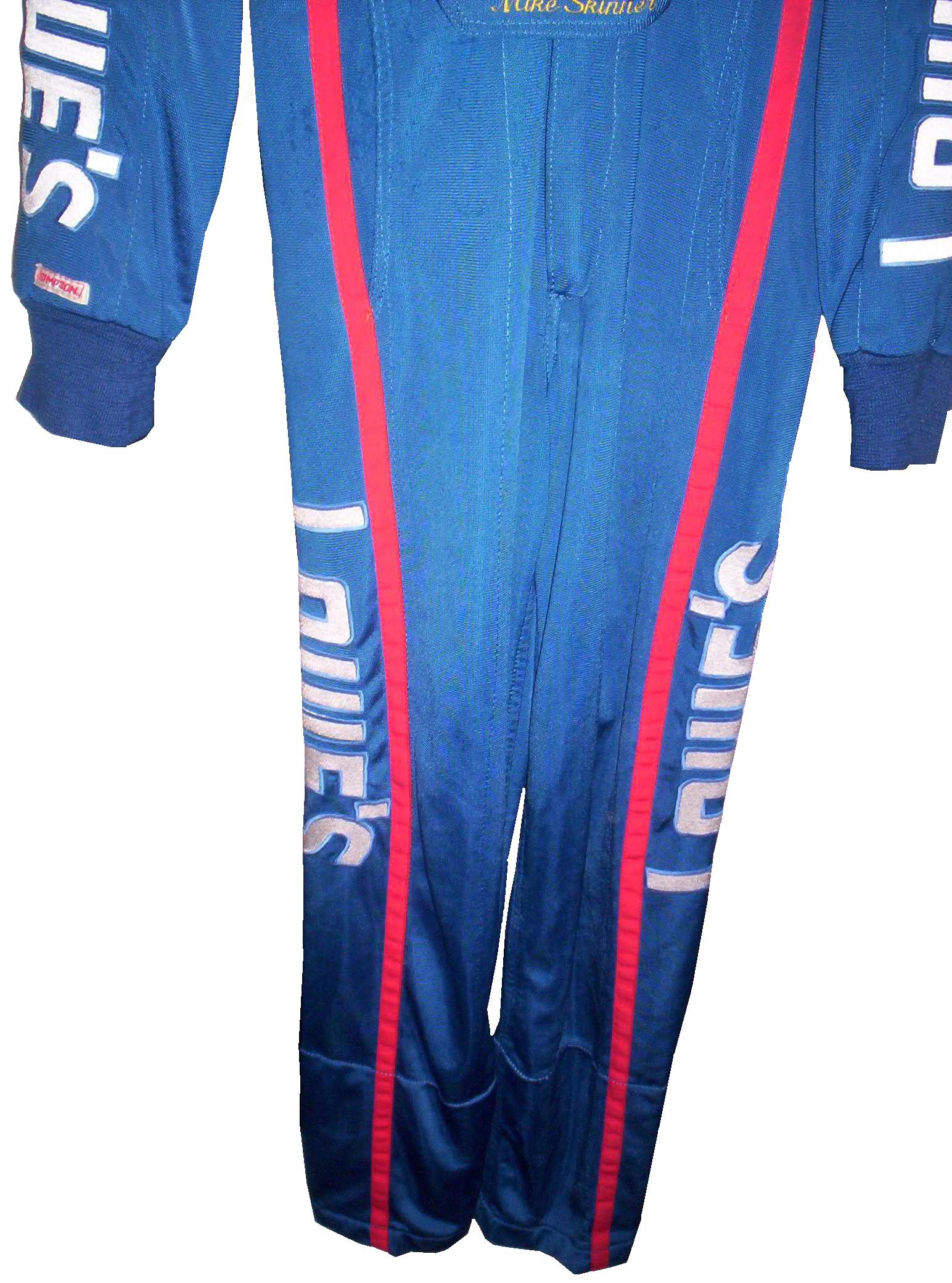
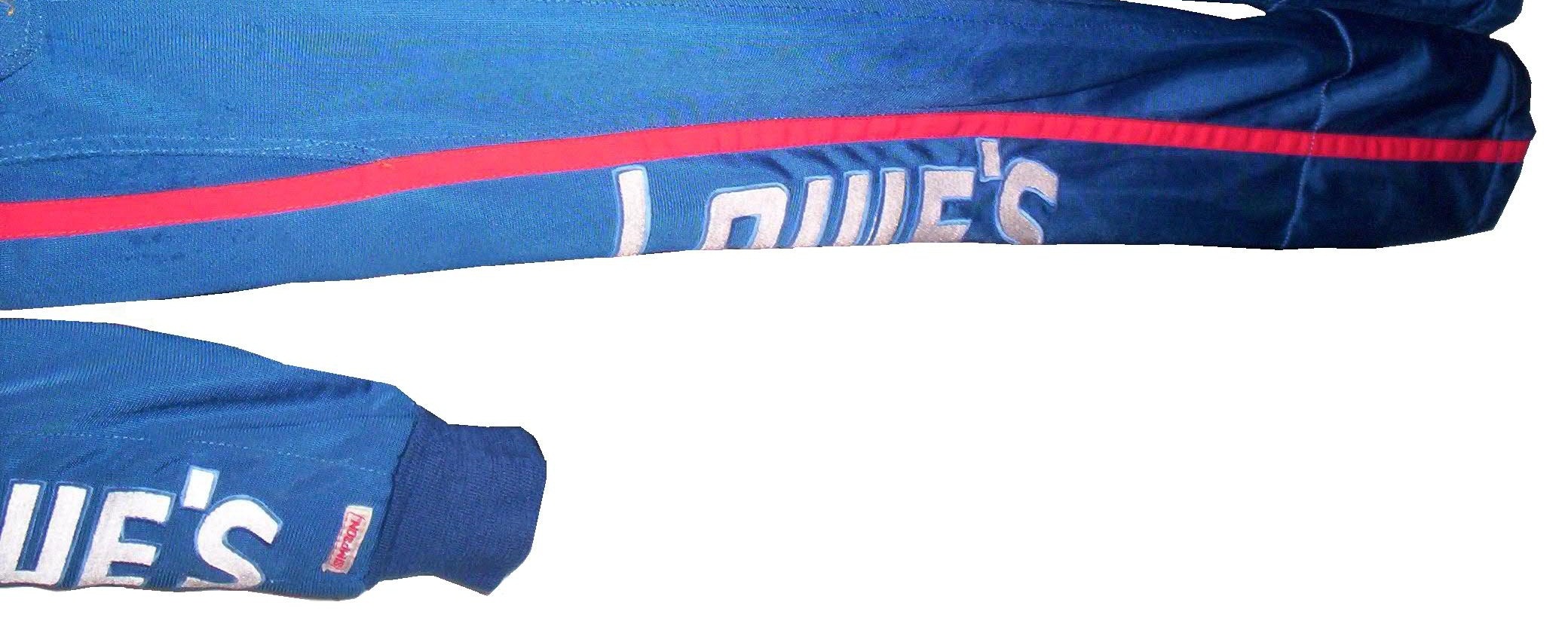
Again, the logo is impossible to read.  The proper alignment looks like this:31-skinner-legs

This is the proper alignment, when the driver is in the car, and the camera is to the side, the logo appears as such:31-skinner-legs - Copy

The whole point of sponsorship in racing is brand exposure, and these logos are a perfect example of this.  I still love the fact that even the drivers who almost never have an in-car camera have these logos.

Moving on to more 2013 paint schemes….

Ryan Newman #39 Wix Filters Chevy SS  “Black with lime green and silver shark fins is a really great design” said no one ever.  Final Grade: F

Moving on to the Nationwide Series…

Austin Dillon #3 Advocare Chevy Camaro  I’m not a fan of power blue in most cases, but here it just works.  The RCR 3 always looks good, the logos are good, and the whole car looks sold.  Final Grade: A

Regan Smith #5 Tax Slayer/Hellmans Chevy Camaro  Could someone please explain to me why Dale Jr. and Regan Smith are running identical paint schemes in the Nationwide Series this year?  The only differences between the two cars are the numbers and name rail.  The Hellmans scheme stays at a B-, but the Tax Slayer scheme looks better from the layout shown here, and it has earned the A rating.

Brad Keselowski #22 Discount Tires Ford Mustang This would be an A grade, if not for the Discount Tire logo…why does it look like it was designed by a 5 year old in art class?  The letters are so horribly aligned, it takes the scheme from classic to comical.  I’m shocked that it isn’t written in Comic Sans with the D backwards.  It is really sad, because it takes away from an otherwise great scheme, and takes the final grade from A to B-

Ty Dillon #33 Ritz/Wesco/Armour Chevy SS Three schemes to discuss.  The Wesco scheme is good but if the door numbers were a different color than the stripes, it would get a better grade than B-.  The Ritz scheme is completely solid, with great colors, great design, and great logos, and gets an A.  The Armour scheme is decent, but the numbers could use a more visible outline.  There is also a logo just behind the door number that is next to invisible.  Final Grade B+