Every Great Outfit Needs Gloves and Shoes to Match!

10-riggsshoes - CopyBy David G. Firestone

Since the fire risk in racing is as high as it is, it makes sense that driver uniform includes fire retardant shoes and gloves to go along with it. Although they are frequently overlooked by many fans, they are just as critical to driver safety and comfort as the suit and helmet. Gloves and shoes have, like the suit and helmet, become fashion forward in recent years.

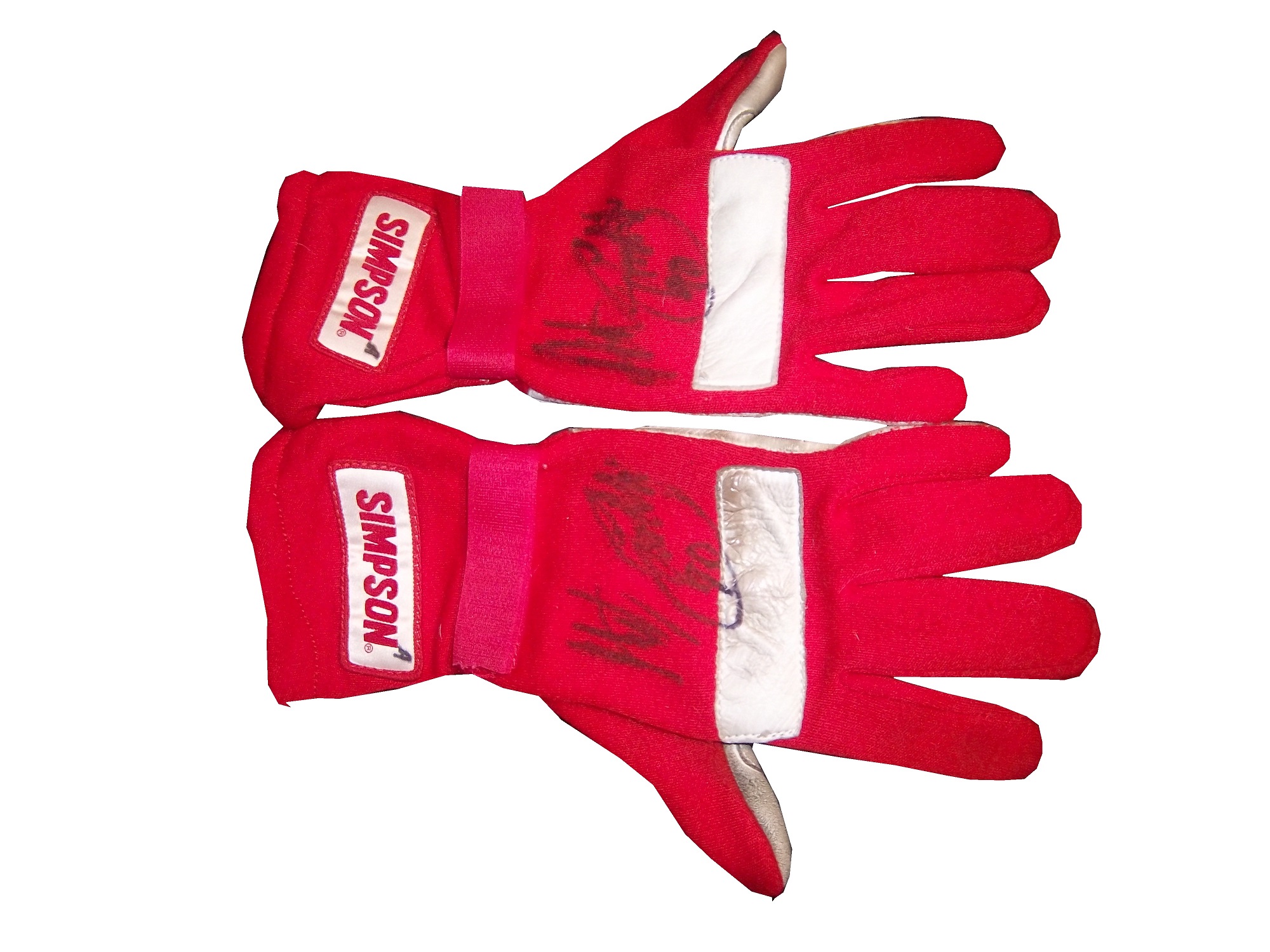
Let’s look at the gloves first. Gloves in racing are typically made of multiple layers of Nomex, and feature a textured layer on the palm, which is designed to help the driver grip the steering wheel. Gloves may be waterproofed for open cockpit racing, where rain and other inclement weather may not impede the race. The gloves give the same amount of protection that the suit does, roughly 30 seconds, and are certified by FIA and SFI. This example, worn by Hut Stricklin in 2000 shows the basics..90-stricklingloves


The textured palm…90-stricklingloves-rglovb 90-stricklingloves-gloveb


The thickness…90-stricklingloves-rsize 90-stricklingloves-lsize


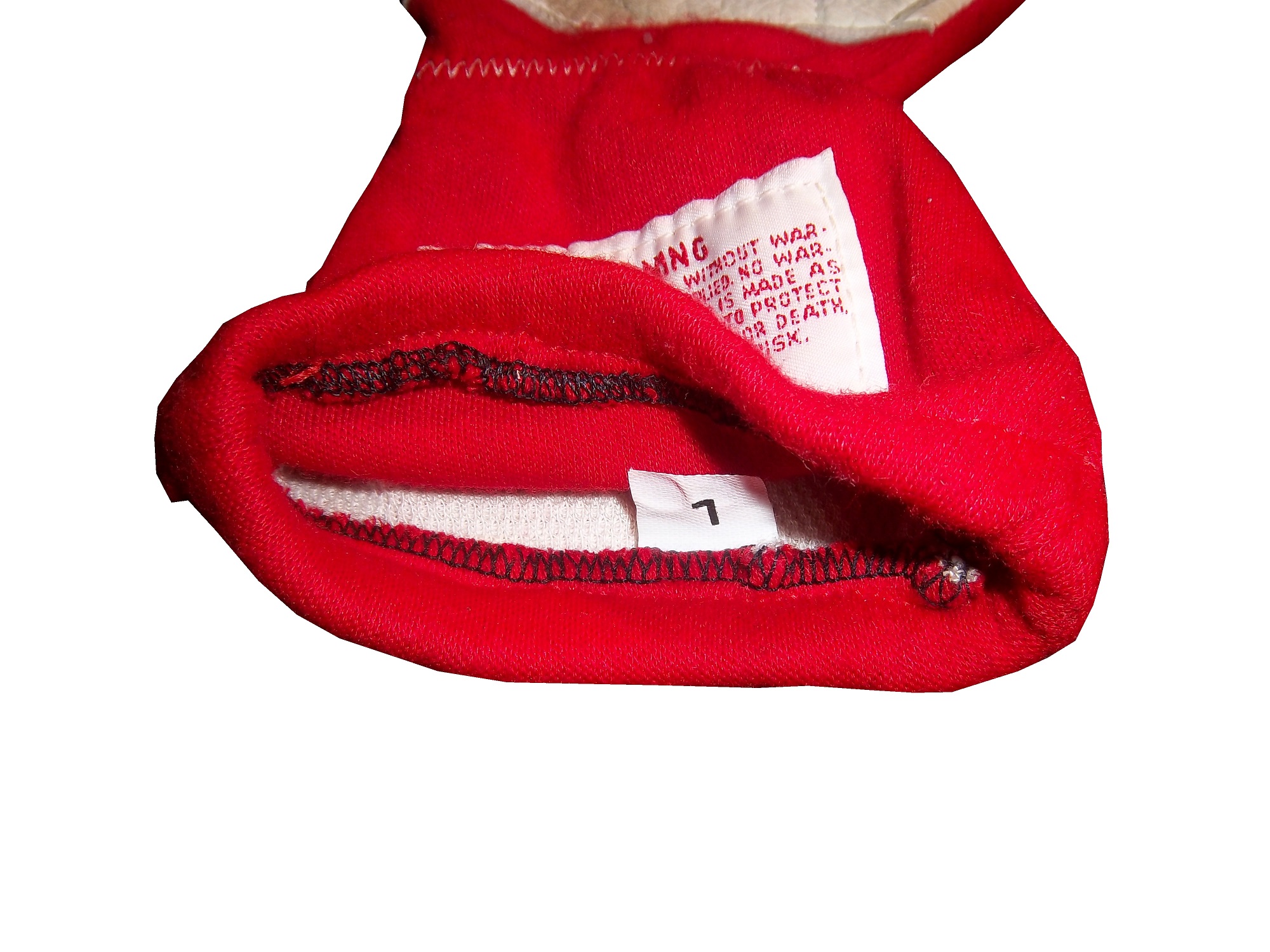
as well as the liability tag and the safety certification…90-stricklingloves-ltag 90-stricklingloves-rtag

As I mentioned above, gloves have evolved to be more visible on in-car cameras. These examples, worn by Dale Earnhardt Jr. and Jimmie Johnson show how these new customizations can take a simple safety equipment item, and add some visual appeal to it. A search on eBay reveals that these items do wind up for sale after they are used.

Next, let’s discuss the shoes.

Shoes are as important as gloves in terms of fire protection. Those 30 seconds of fire protection are critical for the driver to get out of a burning car. The basic design of the shoes are meant to help the driver, well, drive. Some drivers in years past have opted for nontraditional racing shoes, such as Dave Marcus who was well-known for wearing wingtips while racing.

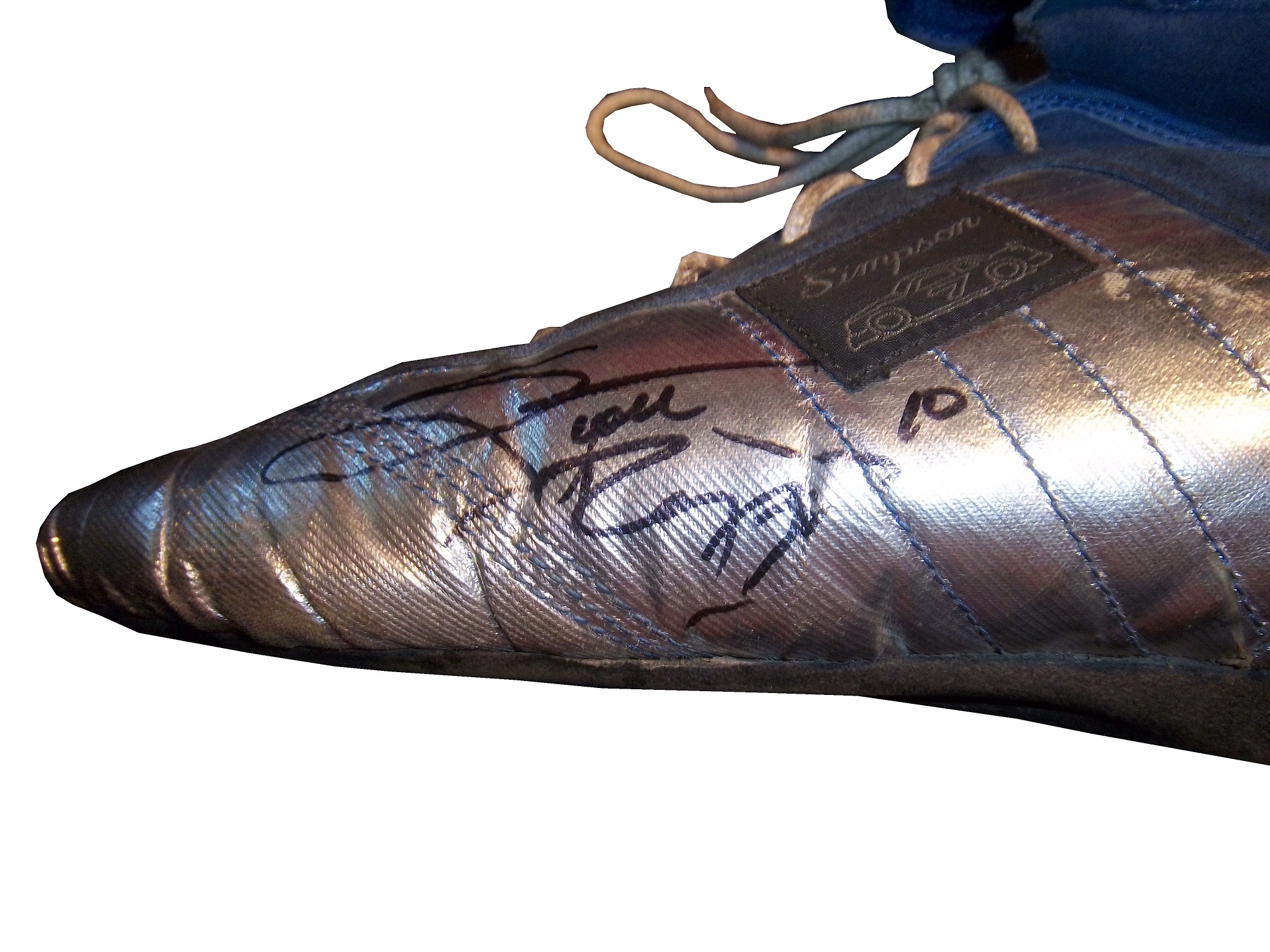
Typical racing shoes consist of a rubber, fire retardant sole, with triple-layer Nomex material covering the foot. The tongue, and shoe laces are fire retardant as well. Velcro straps are frequently employed to secure the shoe as extra protection. Let’s look at a race-worn pair, this pair worn by Scott Riggs in the early 2000’s.10-riggsshoes

These shoes show the sole design,10-riggsshoes-bottom

Main design, with the reflective layer adding some extra protection…10-riggsshoes-rshoe2 10-riggsshoes-rshoe1 10-riggsshoes-lshoe2 10-riggsshoes-lsig

and thickness…10-riggsshoes-ltop


While the design of the gloves are fashion forward, the shoes are more utilitarian than anything else. But they do wind up on eBay sometimes…

Jamie McMurray #1 Bell Helicopters Chevy SS Love the simplicity in the design and color scheme, as well as Bell’s great logo! It is simple, yet elegant, and earns an A grade

Kasey Kahne #5 Farmer’s Insurance 85th Anniversary Chevy SS It’s amazing how a color change can affect a scheme. I graded the standard scheme at a D+ earlier this year, and with the black red and tan color change it takes it from a D+ to an A-. Notice that there is no real difference between the two schemes except the colors and the new one is so much better!

Kevin Harvick #29 Bad Boy Buggies Chevy SS I like this scheme for the same reasons as the Jamie McMurray Bell scheme, and it gets the same A grade!

David Stremme #30 Window Wax Toyota Camry  The best way I can describe this scheme is that there is nothing good about it.  Anything they could have messed up with this scheme, they did.  It gets an F-

David Stremme #30 Lean 1 Toyota Camry See Above

Landon Cassill #33 Justin Workboots Chevy SS I like the design scheme except for the primary sponsor logo is a completly different color than the rest of the car.  The thing is that the two color schemes work very well by themselves, but the combo of the two just makes no sense.  It takes an A scheme and brings it down to a C…PICK A COLOR SCHEME!

Richard Lasater and His Helmet

By David G. Firestone

Spent the last week just being insanely busy, with Passover and the Chicago Sun Times Collectables Convention, but now back to work. I’ve discussed the safety aspects of race gear, but today, I’m going in a bit of a different direction. Even in today’s safety-conscious racing environment, injuries are always a possibility. Denny Hamlin suffered a fractured vertebrae, and Dale Earnhardt Jr. has suffered a concussion in the last few years. Wrecks can be hell on drivers, but what about the uniform protecting them? What would a helmet from a wreck like this look like?

Well the helmet looks like this:lasater-1 lasater-2 lasater-3 lasater-4 lasater-5 lasater-6 lasater-7

For a helmet that went through a scary-looking wreck, it is in good shape…and that is not by accident. It was worn by Richard Lasater throughout the 1993 season. At the 1993 Fram Filter 500K, Lasater was involved in that scary wreck, and wasn’t seriously hurt. As for overall damage, it is mainly scratches, scrapes and dings, no cracks or serious damage.

The helmet kept Lasater safe and suffered minor damage because that is what it was designed to do. After the race, he autographed the helmet and it wound up in my collection. This helmet shows better than any other helmet I have the reasons why proper equipment is needed in racing.

On to Paint Schemes…

Jamie McMurray #1 Bass Pro Shops Chevy SS White? Seriously? Did the designers not realize that the white looks awful? The black and orange color scheme works, but white? I don’t get this scheme at all, and it gets an F grade

Marcos Ambrose #9 MAC Tools Ford Fusion Good color choices here. The basic design is solid. I can do without the quarter panel design, but it is still a good scheme with a B grade-

Danica Patrick #10 Go Daddy St. Patrick’s Day Chevy SS I would like to thank the 1978 Cincinnati Reds for being one of the first teams to wear green on St. Patrick’s Day for encouraging this awful F grade scheme.-

Denny Hamlin #11 Fedex March of Dimes Toyota Camry There are two schemes that fans voted for. With Hamlin on the shelf for a while, Mark Martin and Brian Vickers will share the 11 ride. That said, scheme #1 I don’t hate, but it has something odd going on with the hood and nose design…I swear it looks like the two parts were designed by different people who never interacted with each other, and that earns it a C grade Scheme #2, the better of the two schemes, not only looks more like a FedEx scheme, it is simpler and much cleaner as well, and earns an A grade.

Tony Stewart #14 Rush Truck Centers Chevy SS Good color and design schemes here. A Grade

Kyle Bush #18 Snickers Bites Toyota Camry A paint scheme that has a great color scheme, and illustrates the theory that less is more. Nothing bad about this Scheme-A+

Jeff Gordon #24 Imron Elite Real Truck Paint Chevy SS Based off the classic Jeff Gordon Scheme, it looks really good, and it works as a paint scheme. Great color scheme used here…A+

Jeff Gordon Cromax Pro Chevy SS Another good DuPont inspired scheme with a great color scheme and great design-A+

Ken Schrader #32 Federated Auto Parts Ford Fusion Federated Auto Parts always has great looking cars, and they do not disappoint here. Great color scheme and great design earn a great grade of A+

Timmy Hill #32 U.S. Chrome Ford Fusion NASCAR rules prevent using chrome in most NASCAR paint scheme aspects, which is kind of disappointing since this scheme should have a bit of chrome in it. Even so, it is still a solid A scheme, with great colors and simple, yet elegant design

Josh Wise #35 MDS Ford Fusion The color scheme of the car, and the color scheme of the logos match! As a direct result, the car looks so much better! This scheme earns a B grade because the deisgn on the quarter panel needs some work.

Ryan Newman #39 HAAS Automation Chevy SS Great color scheme, good basic design, I love the diagonal hood logo, A+ Scheme

Brian Vickers #55 RK Motors Toyota Camry Basic design with an uninspired color scheme. The car is just blah. I can’t give this scheme anything except a C-

Brian Vickers #55 Jet Edge Toyota Camry A better color scheme takes the grade from C to B

Joe Nemecheck #87 Maddies Place Rocks Toyota Camry Simple design, decent color scheme, good hood logo, Final grade B

Dale Earnhardt Jr. #88 Amp Energy Chevy SS Orange? Amp’s main can color is green. It’s not a bad design, but using a color that isn’t really used on the packaging earns this scheme a C-

Some Thoughts on the Sprint Unlimited and An Introduction to Photo matching

Here are my thoughts on the Generation 6 car after the Sprint Unlimited

Here is a video showing the new cars in action…

Why did the roof logos come to NASCAR? I stated during Winter Testing that I thought that the logos would show up on roof cameras…but they can’t. The logos on the roof are all but invisible to the in-cars, and are next to impossible to see at speed on the regular cameras circling the track. The whole point of sponsorship is for the logos to be seen, but the roof logos defy that, so really, they are useless

Fox debuted several new cameras, including a revamped zipline camera called the CAMCAT that flies over the track, and a gyroscopic camera that stays level even when the car is on a banking. The new zip line camera is really good, and the gyroscopic camera gives the fan a really good idea of how banked the track really is.

The new cars in general look really good, and I was wrong about the names on the windshields. They do look good, and they are easy to see with the in-cars. I don’t approve of the manufacturer logos on windshield on either side of the name though. In addition to the larger roof flaps, the cowl flaps are visibly bigger, and have been moved to the hood.

The orange Home Depot back bumper on the Dollar General Toyota driven by Matt Kenseth looks really weird. As does the door design on the Target Chevy.

Man! Kevin Harvick’s car looks really good, as does Dale Jr’s! Martin Truex in the Napa Toyota is the most improved paint scheme of the whole field.

The cars seem to be sparking more than they did last year. They also look “cleaner” than they did last year. They have cleaner lines and cleaner windshields.

Speaking of windshields and windows the side windows need to be attached better. During the wreck, one car lost a side window, and Carl Edwards lost a side window in the final laps of the race. NASCAR needs to look into that.

The fan picks format worked really well, and I hope this shows up again during the All-Star Race

Now on to photo matching.

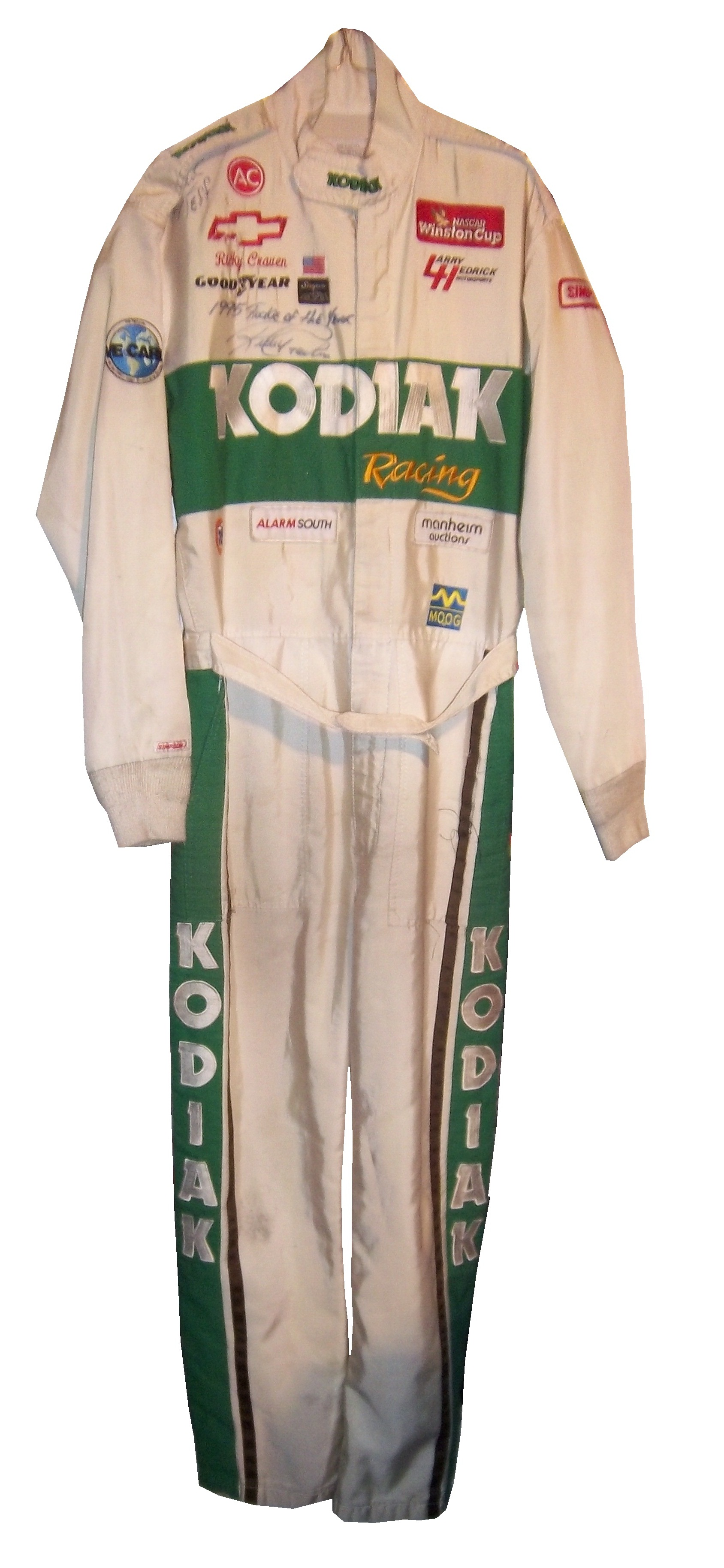
One of the best ways to authenticate a driver suit as having been worn by the driver is to find a photo of the driver wearing the suit. In many instances, this is not possible. In other instances the driver wears several different suits throughout the season, and finding the exact suit can be difficult. Let’s take a look at a Ricky Craven suit from 1996.41-craven

This suit was difficult to photo match but I thought I had in this photo from Fuller Motorsports and Collectibles.41-craven-4

Upon closer inspection, this suit in the photo and the suit in my collection are not the same.41-craven-1


The location of the yellow RACING embroidery is in a different location, the leg stripes in the photo are white whereas the suit I own has green leg stripes…but modifications are not uncommon, and the name and GOODYEAR logos are in different places as well.41-craven-3 41-craven-2
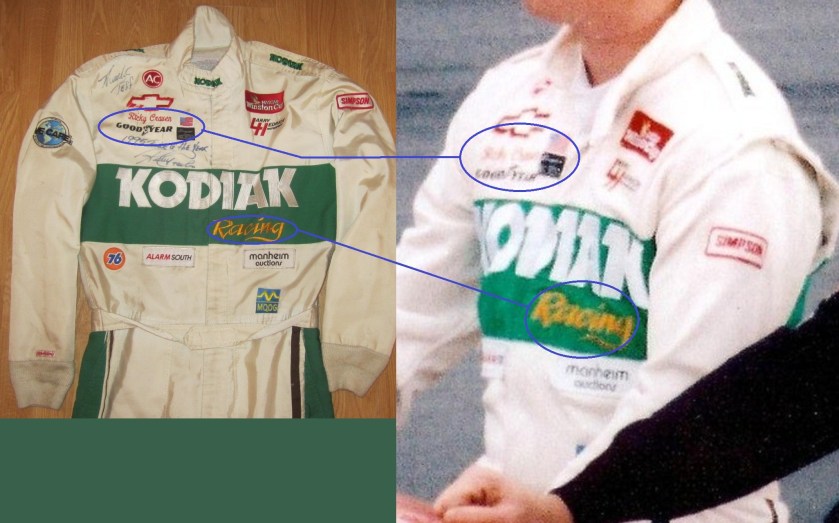
 

This card is from 1996, and shows Craven clearly wearing the suit in my collection.41-craven-5


The RACING, GOODYEAR, and name are all in the correct place. The only difference is that the ALARM SOUTH and MANHEIM AUCTIONS logos are not seen in the card, but on the suit they were clearly added later. They are patches on the suit whereas everything else is embroidered on the suit.41-craven-7 41-craven-6

Now on to paint schemes…a lot of ground to cover

We start with the Truck Series

Dusty Davis #1 Accell Chevy Silverado Good Color scheme, simple yet attracive design, final grade: A

Jeb Burton #4 Arrowhead Chevy Silverado Color scheme is great, but the door design is a little overdone. The Arrowhead sponsorship could be used better with an arrowhead design on the door. Still it is a decent design that earns a B-

Justin Lofton #6 MADVAPES Chevy Silverado The early 1990’s called, they want their design back. All joking aside, this is actually a good scheme. The color scheme is great, and the design, while loud, is attractive. Final Grade A

John Wes Townley #7 Zaxby’s Toyota Tundra There is nothing right with this design. Everything here is just awful, and earns the F grade it deserves.

Max Gresham #8 AMWINS Chevy Silverado The side stripes are good, the color scheme is good, and it gets an A grade

Ron Horniday #9 Smokey Mountain Herbal Snuff Chevy Silverado First off, I thought snuff was banned as a sponsor from NASCAR…oh well…anyway, the design is good, and the color scheme is good, thought the gold could be a little bolder. Final Grade A-

Jennifer Jo Cobb #10 Driven2Honor.org Chevy Silverado No redeeming factors at all…F-

Brad Keselowski #19 DrawTite/National Watermelon Association/Reese Racing Ford F-Series The Reese and DrawTite schemes are A grades, but the National Watermelon Association scheme gets an A+ for the graphics on the bed of the truck that make it look filled with watermelons..that is just awesome!

Ryan Blaney #29 Cooper Standard Ford F-Series Another great color and design scheme, and I love the yellow wheels…A+

James Buescher #31 Rheem Chevy Silverado The Same as Kevin Harvick, and it is a good scheme…A

Devin Jones #35 Veristor Chevy Silverado Good colors bad design…C

Ryan Sieg #39 Pull-A-Part Chevy Silverado Good color scheme, but mediocre side design…C-

Kyle Busch #51 Toyota Care Toyota Tundra. Normally I would give this a bad grade, but give the fact that it is Kyle’s truck, the design and color schemes just scream Kyle Busch, so it is rather appropriate. I also love the Days of Thunder numbers and ROWDY above the door…A-

Darrell Wallace Jr. #54 Toyota Care Toyota Tundra I’ll forgive this one as well…A-

Dakoda Armstrong #60 Winfield Chevy Silverado This I will not forgive for one simple reason…THE SPONSOR LETTING IS NEXT TO INVISIBLE ON THE WHITE BACKGROUND! The point of sponsorship is to make your logo and lettering as visible as possible! As such, this scheme gets an F

David Starr #81 BYF/Chasco Toyota Tundra Good color scheme and simple yet attractive design work well here. I like the Lone Star logo on David Starr’s truck as well…A+

Moving on to Nationwide Schemes

Brad Sweet #5/Dale Earnhardt Jr. #88 Great Clips Chevy Camaro This looks like a paint scheme that was thrown together at the last minute by an art student. The color scheme is odd, and the design is just weird. What does this has to do with a barber shop? Final Grade D+

Paul Menard #33 Menards Chevy Camaro Pretty much the same scheme as his Sprint Cup Scheme…Same grade too C-

Parker Kligerman #77 Toyota Toyota Camry You can never go wrong with a plain black car with white lettering…A+

Now on to the Sprint Cup

Jamie McMurray #1 Race With Insulin Chevy SS A good design based on Charlie Kimball’s IndyCar race car that has a simple yet good design, and a great color scheme. My only complaint here is that the stripe doesn’t go far enough back. Final Grade: B+

Kasey Kahne #5 Great Clips Chevy SS Huh? What does this design have to do with a barber shop? This design looks like the team didn’t have enough of one single color and went with a patchwork design to make it work…but it doesn’t work, and it gets a D+ grade

Dave Blaney #7 Sany Chevy SS Great color scheme ruined by bad door design and generic racing number design. The design is just disgusting to look at, and it gets a D- The paint scheme saved it.

Kyle Busch #18 Interstate All Battery Center Toyota Camry This is a design that has elemets from the Dale Jarret and Bobby Labonte eras. I love this design! Great color scheme, simple nostalgic design, and it gets an A!

Mike Bliss #19 G Oil Toyota Camry This is a very weird design…the weed design doesn’t do the car any favors, and the doors and quarter panels are worse. Green, black and white is usually a good scheme, but here is just falls flat. I love how the nose makes it look like the car has a piece of cilantro stuck in its teeth and that boost the grade to a C-

Trevor Bayne #21 Motorcraft Quick Lane Ford Fusion This is based on the 1963 Daytona 500 winning car Tiny Lund drove and it looks really good! I can’t give this scheme any lower than an A so I won’t.

Michael Waltrip #26 Sandy Hook Support Fund Toyota Camry Are you serious? I think it is really disgusting that a support fund for a school shooting is sponsoring a car for the Daytona 500! I don’t know who thought this was a good idea, but it is just awful. I’m so sickened by the sponsor, I will just give the scheme an F-

Terry Labonte #32 C&J Energy Services Ford Fusion Is Terry trying to pull a Grey Ghost? If it wasn’t for the yellow decals, I would be convinced that this photo is in black and white. If the flames were red, or yellow, or even blue I could give it a higher grade, but I can’t give this scheme anything but a D

David Ragan #34 Peanut Patch Ford Fusion Good Color scheme, good overall general design, good scheme, Final Grade: A

Regan Smith #51 Guy Roofing Chevy SS Decent color scheme, the number change is not good from last year, and the basic design is decent, so I give it a C

Brian Keselowski #52 Wreaths Across America Toyota Camry Not bad, not bad at all. Great color scheme and decent design. The hood design needs a little work, the left side looks odd with a white box, while the right side has no box at all, but that is a minor complaint for an A grade

Mark Martin Aarons Toyota Camry Great design, great colors and simple designs that look good, it gets an A

David Reutimann #83 Burger King/Dr. Pepper Toyota Camry. Great classic design with a great color scheme that gets an A+

Travis Kvapil #93 Burger King/ Dr. Pepper Toyota Camry See Above, A+

Aspects of the Current Helmet Design

By David Firestone

As I mentioned in the last post, the SFI/FIA Certifications on current helmets are located on the HANS anchors. I also discussed the advancements in helmets over the last 12 years in my post on the evolution of helmets. But what makes the current helmet design so effective? Let’s take a look at one.mcdonalds-1

This example is an Impact! Air Vapor helmet worn by either Regan Smith in 2005 or Jason Keller in 2006. It was used in the Nationwide Series for Team Rensi Motorsports, founded by former McDonald’s Executive Sam Rensi. It carried a McDonald’s sponsorship.mcdonalds-4

It was made by Impact! Race Products in Brownsburg, Indiana. Impact has a unique history. After Dale Earnhardt Sr.’s death in 2001, Bill Simpson, who had founded Simpson Race Products resigned after NASCAR had blamed Earnhardt’s death partially on a seat belt failure. He had a one year non-compete contract with Simpson, and after that expired, he went to found Impact. Because Bill Simpson was a race driver, he understood the needs of drivers, and both Simpson and Impact followed that philosophy. Let’s take a closer look at some of the features of this helmet.

This is an Air Vapor helmet, used by a number of drivers on the NASCAR circuit. It is made out of a carbon composite material, which is both lightweight and very durable. It has been custom painted with McDonald’s colors and some very cool “ghost skulls.” The helmet has a number of unique curves, and grooves designed to help air flow around the helmet and keep the visor fog-free.mcdonalds-6

The visor is much narrower than older Simpson models, and the gold tint is shading for the visor. The Impact strip across the top does not obstruct the driver’s vision at all, as it covers the area of the visor over the opaque section of the helmet.mcdonalds-10 mcdonalds-12 mcdonalds-8

The Microphone equipment is still present and in good condition. The microphone is one of the most critical safety features, as spotters are mandatory at every race, and they tell the driver everything going on around them. The driver can also tell the crew chief what, if anything, needs to be done to the car during pit stops. The telephone cord-style cable plugs into the seat, and the seat is connected to the electrical system in the car.

Finally, the ventilation intake is located on the top of the helmet. This is connected to a hose, which in turn is connected to a “hot box” mounted in a window behind the driver. The hot box has a gas scrubber on it, which cleans up the air, and cools it before blowing it on the driver. Considering that the driver compartment can reach temperatures of over 160 degrees Fahrenheit, this is a critical piece of equipment. Older models, like this Ted Musgrave model from 1996, have the intake located on the side. However, since the HANS device became mandatory, the intake has moved to the top to accommodate the device.musgrave4

mcdonalds-4

Now on to paint schemes…

Nationwide Series schemes first…

Ryan Reed #16 Drive to Stop Diabetes Ford Mustang Good color scheme, red white and black is always a good choice, but the design on the side is confusing to look at. If the design next to the front wheels is removed, I could give it a better grade, but with that design it gets a C.

Kyle Busch #54 Monster Energy Toyota Camry I like matte black, and simple designs in race cars, so this design is one of my favorites. I can’t give this scheme anything less than an A

Steven Wallace #66 Richard Tocado Ford Mustang Great scheme…only way this could be any better is if the lettering, numbers and stripes were in gold, like Rusty’s 1990’s MGD scheme…A grade.

Johanna Long #70 Foretravel Motor coaches Chevy Camaro A very solid scheme with a great color scheme, great design, and an A grade…very solid!

Now on to the Sprint Cup Schemes

Dave Blaney #7 Florida Lottery Chevy SS The color scheme is mediocre, with too many light colors and not enough dark. The lettering is just awful, and the car number looks like something that a small town driver would use, not a Sprint Cup driver would. I’ll be generous and give this scheme a D+

Ricky Stenhouse Jr. #17 NOS Energy/Valvoline NextGen Ford Fusion I love this scheme. Orange and blue is a great scheme to work with, there is not a lot of needless design on the sides, the lettering and numbers look good. So this scheme gets an A. Ricky’s Valvoline NextGen scheme is the same as the Nationwide Series car Trevor Bayne drives, and it gets the same A grade.

Kevin Harvick #29 Rheem Chevy SS Yet more proof that red white and black is a great color scheme. I’m not a fan of the curvy design on the nose that leads to the stripes, but as good as this scheme is, it is a flaw I will overlook. Though I’m not a fan of the ads on the roof, again I’ll overlook that. The black on white numbers are a unique twist, that gives the car a cleaner look. Final Grade: A

Terry Labonte #32 C&J Energy Sources Ford Fusion If there were no contingency decals present, I would think this is just a black and white picture. Silver is a great color for cars, and the black white and silver scheme works well in most applications, but this scheme just falls flat. Final Grade C-…just too meh to be good.

JJ Yeley #36 Accell Construction/Golden Corral/United Mining Equipment Chevy SS Three schemes here, first the Accell Construction scheme, which uses a great color scheme, but the side design is just brutal to look at. The Golden Corral scheme is great, with a great color and simple design schemes, and is amazing to look at. The United Mining Equipment scheme has a good color scheme. The stripes are bad, but I like the coal design on the doors and roof. Accell Construction gets an F, Golden Corral gets an A, and United Mining Equipment gets a B

David Ragan #38 Love’s Truck Stops Ford Fusion The only bad thing I can say about this scheme is I don’t like the back bumper design. Other than that, great color scheme and reasonably simple design. Final Grade: B+

Carl Edwards #99 Subway/Kelloggs Ford Fusion The green stripes look more like seaweed, and ruin what could have been a great scheme. The Kellogg’s/Cheez It’s scheme is way too cartoonish to be taken seriously, so both schemes get an F grade.

NASCAR Helmets Over The Years

By David G. Firestonemcconnell-5

The evolution of the racing helmet in NASCAR for the most part was slow, in the beginning. NASCAR was officially founded in 1947, two years after World War II ended. Many of the helmets worn during the 1940’s and 1950’s were little more than repainted army and air force helmets. These helmets were basic at best, and as protection for the dangers of racing, these helmets were inadequate at best. During the 1950’s, many drivers switched from military headgear to motorcycle helmets. In the 1960’s, motorcycle-style helmets became the norm.mcconnell-5

The above helmet was worn by Jim McConnell, who raced and promoted races in Maine, and went on to found Beech Ridge Motor Speedway in Scarborough, Maine. This is a racing helmet, but it looks more like Wyatt’s Captain America helmet from Easy Rider, in its basic design. It has an open face, no microphone equipment, and is rather thin. Although there would be advancements in helmet technology, the open-face design would remain popular until the 1980’s.Noffsinger-1

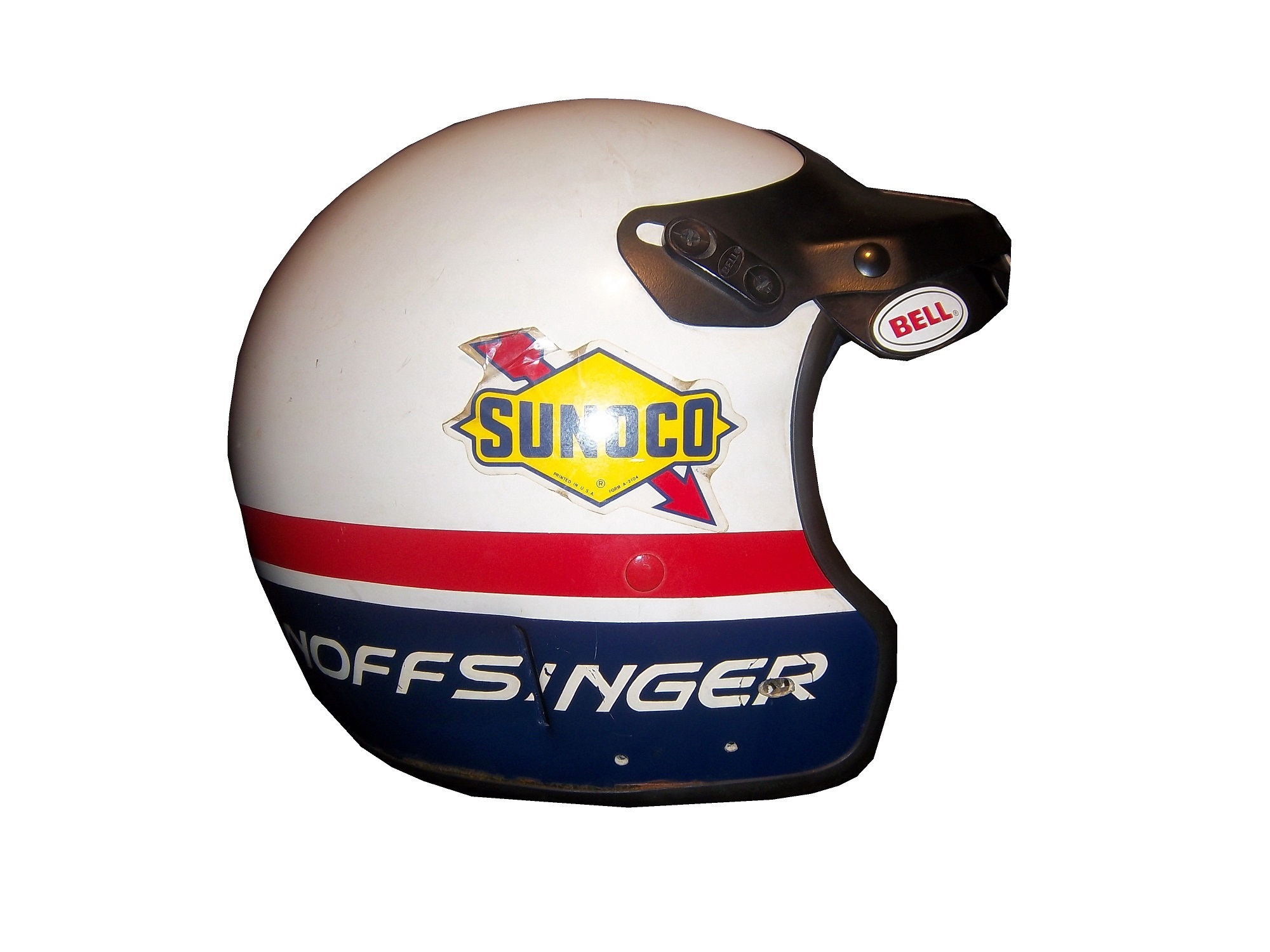
This helmet was worn by Brad Noffsinger in 1988, it is the same general design, though it is much thicker, has some advancements in visor technology, and had some microphone technology in it as well. Although these helmets have since been banned, they remained legal for as long as they did for one simple reason: Advanced visibility. NASCAR did not want to have a crash caused by decreased visibility due to a rule mandating full-face helmets.musgrave1

The Ted Musgrave helmet mentioned in a previous post is a perfect example. The bottom part covering the chin does to a certain extent reduce visibility for a driver. The logic makes sense, in that if there was a crash caused by reduced visibility, so for the 1990’s and 2000, the open-face was legal…then came the 2001 Daytona 500. That race saw the death of Dale Earnhardt Sr. from a Basilar skull fracture, which as tragic as it was, wasn’t the first death due to sub-par safety equipment. John Nemechek, Adam Petty, Kenny Irwin Jr., and Tony Roper had all been killed in similar accidents. Only after Earnhardt’s death, did the HANS device come to light, and eventually became mandatory in NASCAR, and eventually, across the board in racing. Now the helmets used in NASCAR look like this:mcdonalds-1This is a helmet worn between 2004 and 2005 by either Regan Smith or Jason Keller. As you can see, it has a number of advancements, including the visor, and air intakes, but the biggest advancement is these small bolts towards the back.mcdonalds-2 - Copy

These are where the HANS device connects to the helmet. The HANS device was mandated after the death of Dale Earnhardt Sr. to prevent Basilar skull fracture deaths. This device has worked very well. The HANS device works by attaching the device to the helmet, and then being secured by the shoulder straps, as seen below:

As advanced as this helmet is, there is always room for improvement. What new form will the racing helmet of tomorrow take? Only time will tell.

On to Paint Schemes, we have a lot of ground to cover today…

First in the Camping World Truck Series

Chris Cockrum #07 Accu-Tech/Homesmart Toyota Tundra Decent color scheme, good stripe pattern, logos are easy to see. Solid A grade.

Sean Coor #82 Warriors in the Workplace Ford F-Series Simple yet bold. Great use of matte black, great number design and color scheme. The logo is easy to see and stands out. No distracting stripes or patterns. Solid A grade.

Next up, the Nationwide Series

Sam Hornish Jr. #12 Wurth Tools Ford Mustang The doors look like they have race damage on them already, which is not a good sign. The color scheme is decent, but the Pennzoil stripes just kill it. The logos are easy to see, but the stripes are just awful. Final grade C+

Matt Kenseth #18 Reser’s Foods Toyota Camry. Numbers are great, color scheme is good, logos are easy to see, and the background design is visible, but not overpowering. The only thing keeping this scheme from a higher grade is the picture of the package on the side of the car. That drags the grade down to a B+ from an A

Now moving on to the Sprint Cup Series

Denny Hamlin #11 FedEx Toyota Camry There are a total of 4 variations of the FedEx scheme, Express, Freight, Ground and Office. Right off the bat, the front nose design and stripes are awful. The color schemes are great, as are the logos and numbers, but the stripes kill it. The best grade I can give is a C+ across the board.

Paul Menard #27 Menard’s Chevy SS Not the worst I have ever seen, but the yellow is way too bright, and the massive collection of sponsor stickers on the quarter panel is just ugly. Final Grade C-

The Epaulet…What It Was, and What It Is

12-miller-rshoulder - CopyThe mighty epaulet, every racing fan has seen them, but few understand what they are for. They are now mostly for fashion and sponsor exposure, but epaulets have a more interesting history than one might think.12-miller-lshoulder

Back in the 1950′s and 60′s, racing suits were supposed to provide fire protection, but early versions of the suit were very unreliable. Many drivers perished in fires, and sometimes, drivers were trapped within the car, unable to escape the raging inferno within their car. The solution? The epaulet. Mounted on both shoulders, epaulets were reinforced strips of fabric specifically designed to help pull an injured or unconscious driver from a burning car. Epaulets quickly became an integral part of the driver suit.10-labonte-rshoulder

As racing technology became more advanced, the need for epaulets for safety began to decrease, but this was happening at a time when coverage was increasing and sponsorship was rising. It did not take that long for sponsors to realize that they could slap a logo on the epaulet and get the company name more visible on pictures and TV interviews. As such the epaulet made the successful transition from safety feature to fashion accessory.

10-labonte-lshoulder

As in-car cameras began to become commonplace across racing, epaulets evolved with them. I mentioned in a previous post that Christian Fittipaldi favored epaulet styles used in F1 and IndyCar. When Sparco first came to NASCAR in the early 2000′s, they brought their epaulet style with them, and it quickly became the standard for NASCAR epaulet style. Most driver suits worn in NASCAR today involve some variation of the Sparco epaulet. They have evolved very well over the years, and are a familiar part of the driver suit

Moving on to paint schemes…

First the NASCAR Camping Word Truck Series

Ty Dillon #3 Bass Pro Shops Chevy Silverado Bass Pro Shops has a great scheme this year, both in the Cup series, and this scheme is just good. Nothing wrong, everything right, Final grade: A+

Brendan Gaughn #62 South Point Hotel and Casino Chevy Silverardo This scheme is very simple, and looks really good. The color scheme is solid, and brings back memories of Rusty Wallace driving for Miller Genuine Draft. The lettering is easy to read, and stands out. Final Grade: A

Now on to the Sprint cup Series…

Trevor Bayne #21 Ford Motorcraft/Quick Lane Ford Fusion I think this is a prototype, but that said, this is still a classic scheme. It has a great color scheme, number design, and is just a solid scheme all around. Final Grade A+

Jeff Burton #31 Cheerios Chevy SS This scheme is rather under designed for my taste. The color scheme is decent, but the gray Cheerio design is hard to see, and looks more like soda carbonation rather than breakfast cereal. Final Grade C+   On a related note some more pics from the Caterpillar scheme have been released, and they are still using the same scheme from last year.  It is pretty good, so my final grade will not change.

Austin Dillon #33 Honey Honey Nut Cheerios Chevy SS Now this is just awful. The color scheme is bad, and the HONEY NUT CHEERIOS lettering is nearly invisible. The bright blue Kroger logo looks out of place, and the tailpipe decals with rookie stripe just takes more away from an already bad scheme. Final Grade F-

Television Logos

By David Firestone

I recently did a post focusing on Christian Fittipaldi, and the unusual way his suit displayed the so-called television logos.  But these logos have a unique history all their own.  One of the first examples on an in-car camera being used was the 1979 Daytona 500.  At that time driver suits mostly looked like this: That is Buddy Baker after winning the pole at Bristol that same year.  As can be clearly seen, no logos of any kind on the legs, or sleeves.  For much of the early and late 1980′s that was mostly the case.  Even though by 1989 there were opportunities to add logos in good places, in many instances this did not occur.  There are instances where there were logos on the legs and sleeves, and the position in many of them is consistent with today.

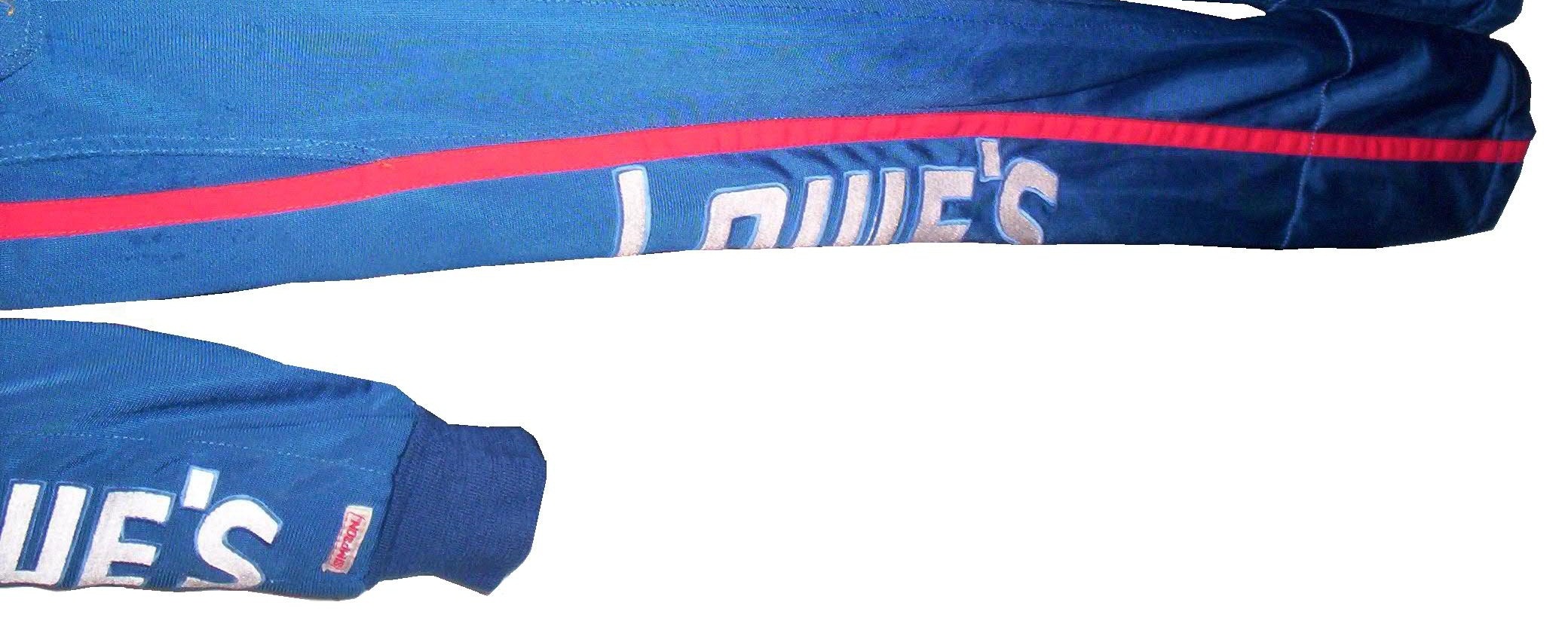
In the late 1990′s, TV logos were still, for the most part off the radar screen.  But around 1997, sponsors started taking the hint, and adding these logos.  Although it was not popular across the board,  it steadily gained momentum, and by 2004 these logos began to be the rule rather than the exception.    Granted in-car cameras were somewhat more nomadic then they are now, but even still it is kind of amazing that these logos took as long as they did to catch on.  Here is an example of a televison logo.  This logo comes from a Mike Skinner suit from 1997:31-skinner-rsleeve2 - Copy


This is how it appears when the driver’s arms are at their sides.  When the driver has his arms at the wheel, or crossed, the logo appears like this:31-skinner-rsleeve2

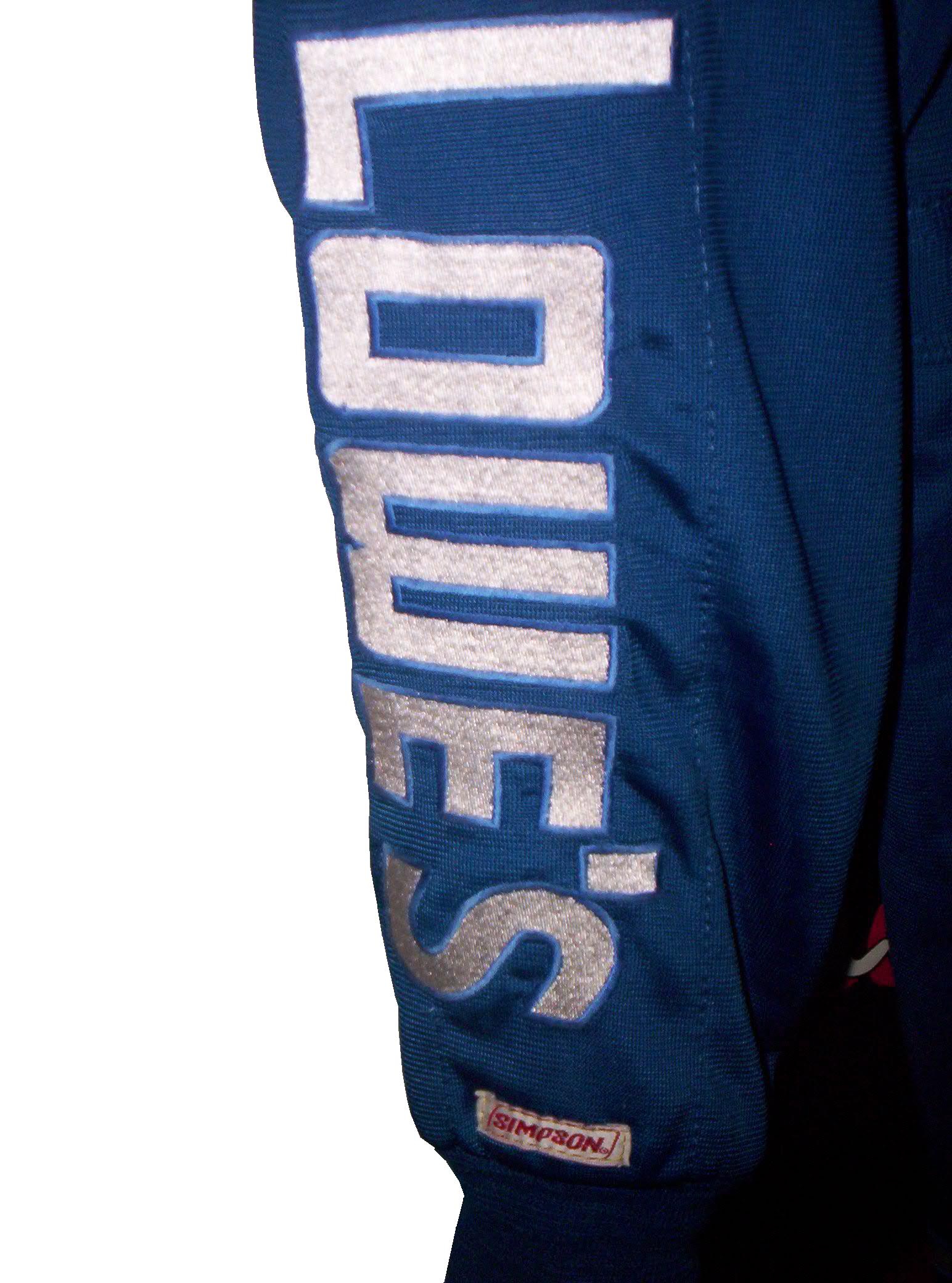
It seems so simple, and it is surprising that it took that long to figure this out.  In fact, in a number of instances, logos on sleeves looked like this, The Ted Musgrave suit from a previous post:15-musgrave-rsleeve1

While that looks good outside the car, inside the driver compartment, it looks like this to an in-car:15-musgrave-rsleeve1 - Copy

Not good for an in-car, the logo is next to impossible to read.  The legs have gotten the same treatment, in some cases the logo looks like this Ricky Craven model from 1996:41-craven - Copy

But to an in-car camera, the logos look like this:41-craven-legs - Copy

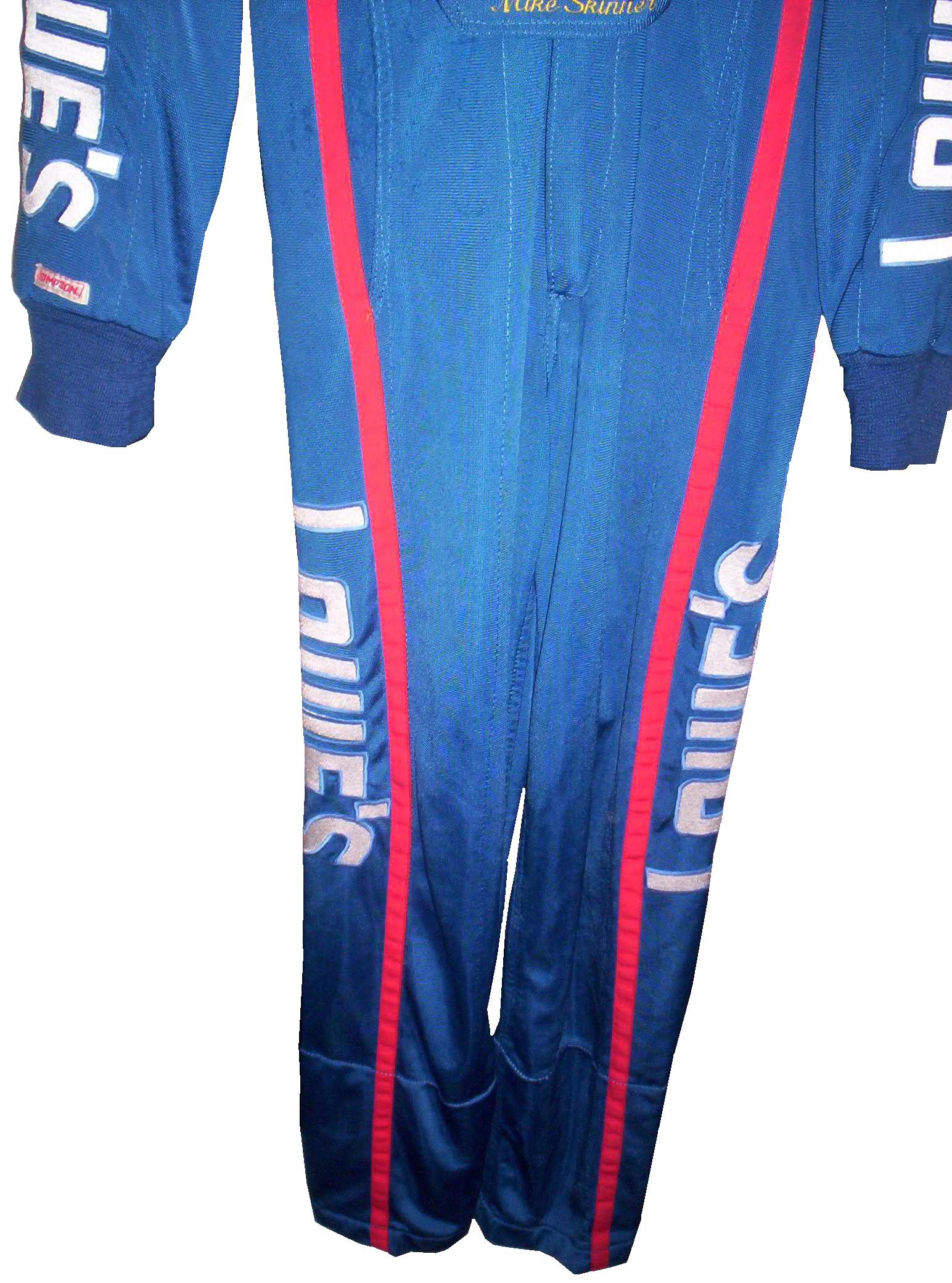
Again, the logo is impossible to read.  The proper alignment looks like this:31-skinner-legs

This is the proper alignment, when the driver is in the car, and the camera is to the side, the logo appears as such:31-skinner-legs - Copy

The whole point of sponsorship in racing is brand exposure, and these logos are a perfect example of this.  I still love the fact that even the drivers who almost never have an in-car camera have these logos.

Moving on to more 2013 paint schemes….

Ryan Newman #39 Wix Filters Chevy SS  “Black with lime green and silver shark fins is a really great design” said no one ever.  Final Grade: F

Moving on to the Nationwide Series…

Austin Dillon #3 Advocare Chevy Camaro  I’m not a fan of power blue in most cases, but here it just works.  The RCR 3 always looks good, the logos are good, and the whole car looks sold.  Final Grade: A

Regan Smith #5 Tax Slayer/Hellmans Chevy Camaro  Could someone please explain to me why Dale Jr. and Regan Smith are running identical paint schemes in the Nationwide Series this year?  The only differences between the two cars are the numbers and name rail.  The Hellmans scheme stays at a B-, but the Tax Slayer scheme looks better from the layout shown here, and it has earned the A rating.

Brad Keselowski #22 Discount Tires Ford Mustang This would be an A grade, if not for the Discount Tire logo…why does it look like it was designed by a 5 year old in art class?  The letters are so horribly aligned, it takes the scheme from classic to comical.  I’m shocked that it isn’t written in Comic Sans with the D backwards.  It is really sad, because it takes away from an otherwise great scheme, and takes the final grade from A to B-

Ty Dillon #33 Ritz/Wesco/Armour Chevy SS Three schemes to discuss.  The Wesco scheme is good but if the door numbers were a different color than the stripes, it would get a better grade than B-.  The Ritz scheme is completely solid, with great colors, great design, and great logos, and gets an A.  The Armour scheme is decent, but the numbers could use a more visible outline.  There is also a logo just behind the door number that is next to invisible.  Final Grade B+

New Paint Schemes and Some IndyCar News…

We start off today with a unique story from IndyCar.  Ryan Hunter-Reay won the Izod IndyCar Series Championship last season, and as such has the right to use the number 1 on his car.  He normally used 28 as his car number, because 28 million people worldwide are affected by cancer, and his mother passed away from cancer in 2009.  So he is using a number 1 with a rather unique twist.  Also mentioned that Marco Andretti will switch to number 25 from 26 next year.

Moving on to NASCAR paint schemes, let’s look at the Nationwide Series first.  Two Chevy schemes and one Ford scheme have been released so far

Sam Hornish-#12 Alliance Ford Mustang  Could someone explain to me why in the world it has door handle decals?  And why does it have a blue line on the door that looks like race damage?  I really want to defend this scheme, but no, just no.  Final Grade: C

Kevin Harvick-#33 Hunt Brothers Pizza Chevy Camaro    First off, the Camaro looks really good on its own, and this paint scheme works quite well.  The door-handle decal is visible, but not as bold as the Hornish car.  The green/white contrast works well, and the decal package on the front looks really good.  The stripes on the sides work very well, and are not as haphazard of some schemes I have seen for this season.  Final Grade: A

Dale Earnhardt Jr./Cole Whitt-#88 Tax Slayer Chevy Camaro  Decent color scheme at work here, but what is with the pink roll cage?  The red black and white scheme has a similar color in the front stripe at the nose.  It’s visually distracting, and pointless.  The powder blue/pink stripe takes away from a great scheme and takes the final grade from an A to a B-.  Get rid of the blue, and it would be an A

Now we look at the Sprint Cup Schemes

Kasey Kahne-#5 Time Warner Cable Chevy SS  Awful color scheme, check.  Door and panel design that is supposed to be edgy but is really a cliche, check.  The most unoriginal sponsor logo in NASCAR, check.  Ok, I think we’re all done here, Final Grade: D

Ryan Newman-#39 Quicken Loans Chevy SS  Want to have some fun, open the Kahne link, and this link in two different tabs, and switch back and forth to see how “original” this scheme is.   Clearly both were designed by the same person, they look almost identical, except the fronts are a little different, and the color scheme on the Newman car is much better.  Final Grade: C-

Jeff Gordon-#24 Drive to End Hunger Chevy SS Yuck! They took one of the best color schemes ever and ruined it!  But these shots do feature a new design that will be used in NASCAR in 2013, and that is a sponsor decal on the roof.  The close-up of the rear-end shows the decent taillight decals, and the unnecessary tailpipe decals, as well as the updated Chevy logo.  Final Grade: D-

Been a long day, will be back tomorrow.

When Using Yellow, Keep It Mellow

When Jimmie Johnson’s team unveiled the car that would race in the Shootout this year, I felt compelled to write a blog on the issue of yellow cars.  Yellow is the same as any other color, it can work very well when used properly.  The problem is that many teams won’t use it properly.  Some colors work well bold and bright, and some don’t.  So let me make the case both for and against yellow as the main paint scheme in racing…

The Case For Yellow…

Yellow in racing seems to work well if the shade used isn’t overly bright.  A perfect example is Ricky Stenhouse Jr.’s Schoolbus scheme from last year. Dr. Frank W. Cyr picked school bus yellow in 1939 for its visibility, and the fact that black lettering on the shade of yellow is very visible in semi-darkness.  It also works very well on race cars.  Another example of yellow being chosen for easy visibility is the Yellow Cab Company in Chicago when president John D. Hertz chose yellow for his taxi cabs, a fact that Aric Almirola demonstrated in 2012 at New Hampshire.

One example of a longtime shade of yellow is Penzoil.  They have used the same shade of yellow for decades, and no matter what, it always looks good.  As long as the shade of yellow is not overpowering it will look good…which brings me to…

The Argument Against Yellow.

Apparently highlighter yellow is the top shade for any team that uses yellow, and it always looks bad.  Unlike red or silver when it comes to yellow, the brighter it is, the worse it looks.  If you don’t believe me look at the following examples…do I have to say anything more? I think not.  I’m shocked that more teams are not figuring this out, but it seems that every year the shades of yellow get worse.

Neon yellow is a terrible color, and it is used way to liberally in racing in this day in age.

In related news two other paint schemes were released..

Kasey Kahne #5 Quaker State Chevy SS Meh…Not bad, the door looks like a Carolina Hurricanes logo, but other than that it’s a mediocre scheme with decent color.  Final Grade: C

Carl Edwards #99 Aflac Ford Fusion I didn’t think it was possible, but we actually have a color scheme worse than the Seattle SeahawksThat shade of green is even worse than some of the shades of yellow I mentioned!  If it was silver, or for that matter any other color it would work, but this scheme gets a bad grade for a bad color…Final Grade: F!

The Curious Case of The Bugle of Christian Fittipaldi

By David Firestone

Christian Fittipaldi is a Brazilian race driver who raced in F1, Champ Car and eventually NASCAR. Although he had two wins in Champ Car, his F1 and NASCAR careers were fruitless. His NASCAR career lasted from 2002-2003, and during that time he raced in a total of 16 races, with 2 DNQ’s. With the exception of the 2003 Daytona 500, all of his races were for Petty Enterprises, and he raced in all 3 of their teams at the time, cars #43, 44, and 45. His final two races were for car #44, which at the time was sponsored by Bugles.

44-fittipaldib

In 2011, I bought the Bugles driver suit Fittipaldi wore for those final two races. When I got the suit, I saw it had some…irregularities to it. The most prominent feature are the television logos on the sleeves.

44-Fittipaldi-llogo 44-Fittipaldi-rlogo

Notice anything odd? The TV logos on the sleeves are incorrectly positioned…for NASCAR. I found this to be a bit odd, as there seems to be no logical reason for the logos to be set the way that they are. These logos, introduced in the 1990′s as a way for the primary sponsor of the car to advertise to the in-car cameras, should be positioned so that the logo appears clearly. These logos are designed for a camera mounted in the area where the passenger seat would be, as seen at 0:48 in the video below:

The logos are upside down. I was trying to understand why this was done, and then I watched the Indianapolis 500, and watching the in-car views, and suddenly, it all made sense, as seem below:

It became clear rather quickly that the TV logos are correct for F1 and IndyCar in-car cameras, but not correct for NASCAR ones. It seems that this car was designed for an open-wheel car, but not a stock car. The evidence on the shoulders is further proof…

44-Fittipaldi-rshoulder 44-Fittipaldi-lshoulder

I’ve never seen any shoulder design like that of this suit before. The V pattern with the Goodyear logos on both sides. This is not unique to this suit, the shoulder designs of an earlier Christian Fittipaldi suit are the same as this one, though the logos are not visible on the back.

45-fittipaldi-rshoulder 45-fittipaldi-lshoulder

So we have two anomalies to this suit, but why did this happen? This suit was worn in 2003, and these logos were developed an implemented in the mid 1990′s. My theory to the answer can be found in two things, who wore the suit, and who made the suit. Fittipaldi was an open-wheel driver, and frequently wore suits made by an Italian company named Momo. Although Momo makes NASCAR equipment now, back in 2003, they were new to the NASCAR game, and as such were not as used to designing for NASCAR in-car cameras. As such, they designed the suit for an open-wheel car.

Granted Momo wasn’t as familiar with the design of stock cars, and their in car camera placement, but even so, wasn’t there somebody examining the suit? Wasn’t a team representative present at any point in the process? How does a mistake like that happen? The thing that really gets me is this…that was from the same season, and was made by the same company, but clearly the logos are correct in this shot…if they get it right once, why can’t they get it right again? How did that mistake happen? Well it did, and although there was no harm done, it does look pretty goofy…

Moving on to new paint schemes, let’s look at some…

First in the Nationwide Series

Regan Smith #5 Hellman’s Chevy Camaro The yellow is ok, a bit too bright for my taste, but I have seen much worse. The stripes look good, great colors and they are easy to figure out unlike some others. Final Grade: B+ Tone down the yellow a bit and it would be an ANow onto the Sprint Cup:
Matt Kenseth #20 Husky Toyota Camry Not much really to say, mediocre color scheme, no real design to comment on, the logos are plain Jane enough, it’s a bland scheme that earns a C grade. A mediocre grade for a mediocre scheme.

Aric Almirola #43 Smithfield Foods Ford Fusion Basically the scheme is unchanged from last year, and that is a good thing. I love this scheme, great color, great design, looks good, the logos are easy to see, and I give it an A. Extra credit was given for the use of Petty Blue.

Bobby Labonte #47 House Autry House Foods Toyota Camry The design is simple, but good. The color scheme need some work. The red used is too bright, as is the blue. The logo group on the quarter-panel is awful. The really odd thing is that this is the first scheme of Labonte’s that has been released, and it is the scheme slated for the All-Star Race. Why in the world would the All-Star Race scheme be released before any of the regular season races? I just don’t understand the logic here. But that being said, the final grade is a B-. If the color wasn’t so bright, I could grade it higher.