By David G. Firestone
Going off topic this week. If you were a kid during the Roman empire, and you were with a friend, and needed something to do, you could play “navia aut caput” or “ship or head.” How it works is that you take a coin, and one picks ship, the other picks head, and then you flip the coin in the air, and whichever side the coin lands on the person who picked that side wins. If you were playing it in England, you were playing “cross and pile.”
That simple game would grow into a bit of dispute resolution that is still used today. While it is used in politics, and business on occasion, coin tossing has become a major part of sports. It’s used in soccer to determine which goal the winning team attacks first. Cricket uses it to determine who bats first and who bowls first. Fencing uses a coin toss at the end of a tied match, where overtime has also ended. But the most well-known usage of a coin toss is in American Football, at the start of the game, to determine who gets the ball first.
Three minutes prior to the game, the team captains meet at midfield, the referee then instructs the visiting team captain to chose heads or tails, which are named for being sides opposite each other. He then flips the coin into the air, and the side that wins can chose to receive, or kick, and to defer their choice until the second half.
The 2004 season was one that Dolphins fans would like to forget. Not only did the Dolphins go 4-12, but they had to deal with Ricky Williams retiring from football. They also had to reschedule two games because of the threat of hurricanes. Their September 26th game was moved from 1 PM to 8:30 PM due to Hurricane Jeanne, and their opening day game was moved from September 12th to September 11th due to Hurricane Ivan. Their opening day game wasn’t great, they lost the game, and lost the coin toss, which was done with this Highland Mint coin. The Highland Mint was founded in the 1980’s, and focuses strictly on sports coins, and custom minting. They make the game coins for the NFL. Every game coin from regular games to the The Super Bowl is taken from the game and sold by the NFL to the private market, and this is one such example.
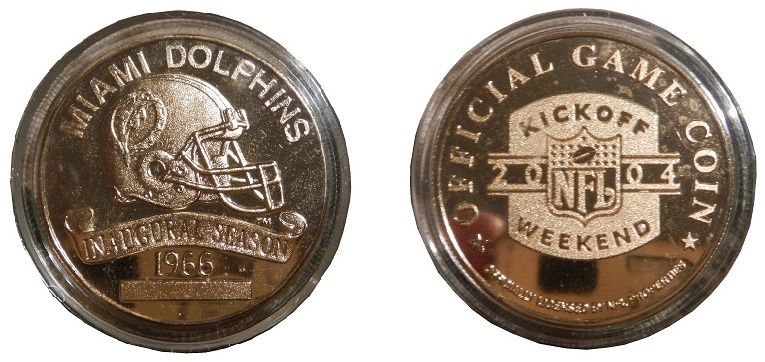
The coin is gold, and has on the head side, a Miami Dolphins helmet, and MIAMI DOLPHINS INAUGURAL SEASON 1966 stamped into the coin. There is also a box for the serial number to be etched, but since this wasn’t one of the limited edition coins that got sold on the collector market, it is blank. 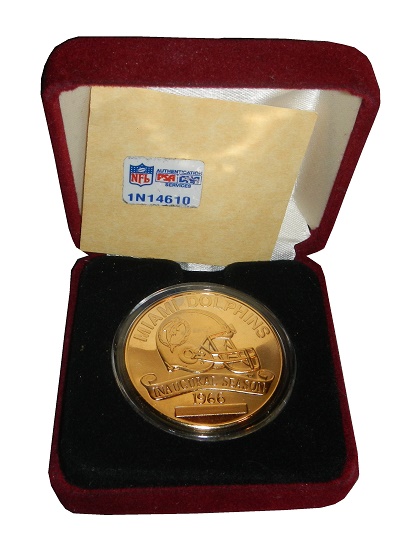

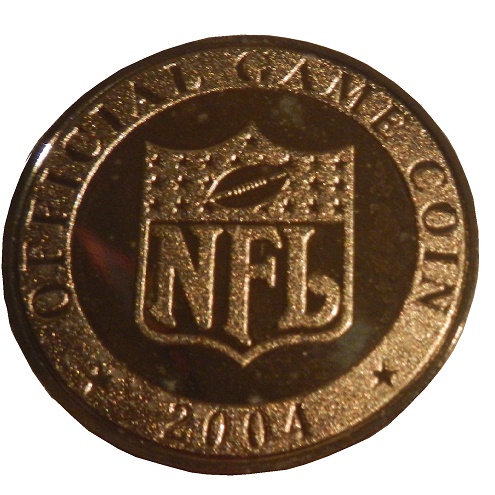
 The tails side of the coin has the NFL Kickoff Weekend 2004 logo, and OFFICIAL GAME COIN and OFFICIALLY LICENSED NFL PROPERTIES stamped into the coin.
 This is 1 of 2500 coins, and has the serial number 0001 stamped into the edge of the coin, near the bottom of the front.
 It has been placed in a plastic holder, and comes in a felt box. It has a tag that comes with the retail coins, but it has the PSA DNA sticker on it, as well as a PSA/DNA lot.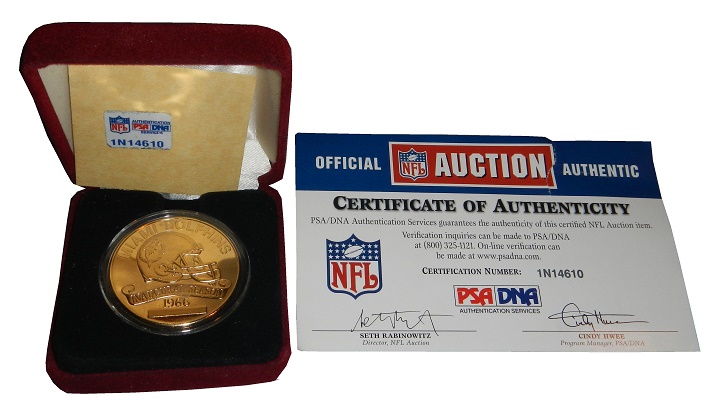

 2004 was not a great year for Chicago sports. The Blackhawks, Bulls, Cubs, Fire, and White Sox all missed the playoffs, while having mediocre to awful seasons. The Cubs and White Sox were dead by September, and while the Bulls and Blackhawks were getting started, it became clear rather quickly that they had nothing, and their seasons weren’t going to go anywhere. The Fire have always been the odd group out in Chicago sports. When they won the MLS Cup in October 1998, nobody in Chicago noticed or cared. But like the rest of the sports in Chicago, the season they had was not great in 2004.
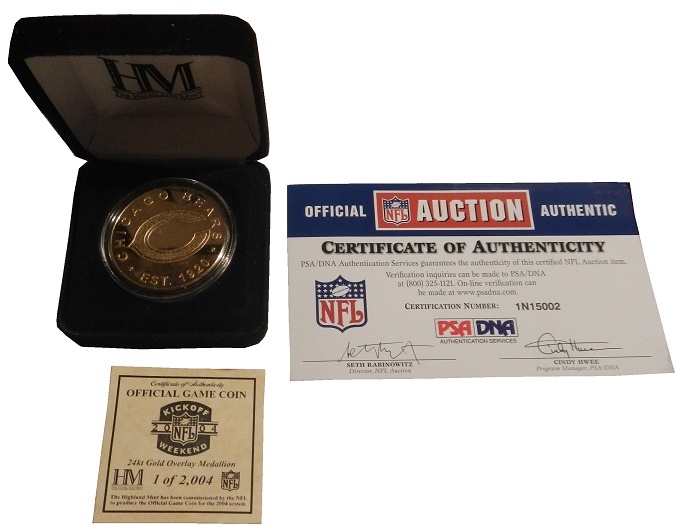
The bright spot was supposed to be football. The Bears had a decent roster, a new set of alternate uniforms, and a brand new coach in Lovie Smith. The NFC North wasn’t as strong as other conferences. So it is into this season the Bears started on September 12, 2004. The Bears began their season at home against the Lions. Before the game, they lost the coin toss, and went on to lose the game. The coin toss was conducted with this Chicago Bears coin. The HEADS side of the coin features a Chicago Bears “Wishbone C” logo, and CHICAGO BEARS EST 1920 stamped into it.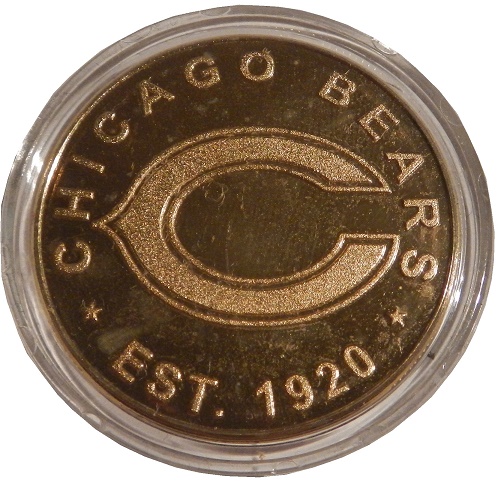


 The coin is stamped #531. There were a total of 5000 made, and while other examples of game-used toss coins are numbered 0001, this isn’t surprising as any one of the 5000 coins made could find their way onto the field.


 In 2011, One team that looked decent, but didn’t make the playoffs were the New York Jets. With an 8-8 record, they missed the playoffs for the first time since 2008. The two teams would meet at M&T Bank Stadium in Baltimore on October 2, 2011. This special coin was used for the coin toss, which New York won, and deferred. The Franklin Mint made coin doesn’t really show use, and is number 0001. It comes with PSA/DNA NFL Auction authentication.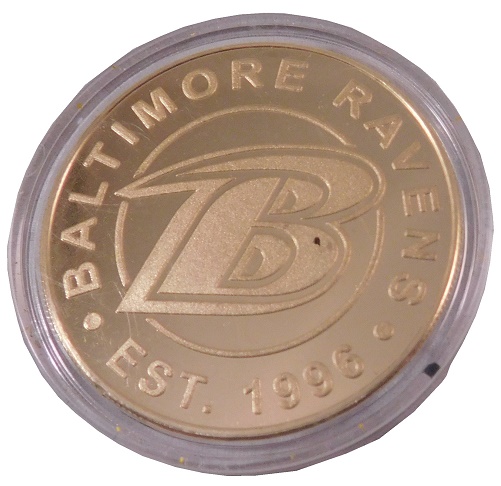




 I’m not the biggest fan of tennis. I don’t understand a lot of the rules, and I don’t understand the scoring system, even though I took a class on it in high school. That said, tennis has a huge fan base. Naturally, the tennis memorabilia market is ripe, but unlike most other sports, until recently, The ATP was slower to wake than most other leagues. Now that the ATP is embracing the memorabilia market, the match-used market has a lot to offer.
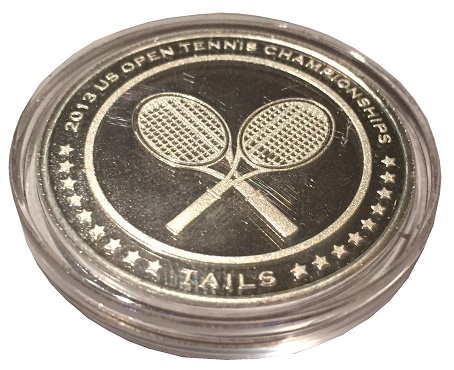
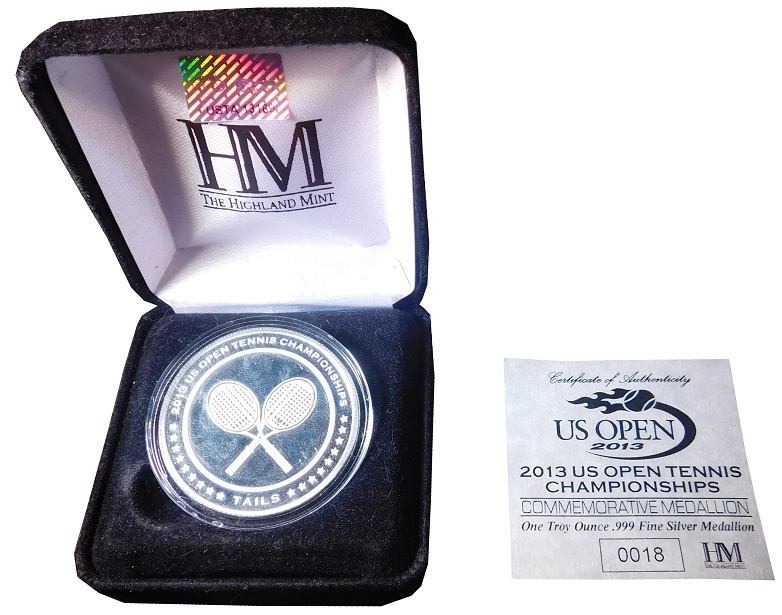
Like many other sports, tennis uses a coin toss to determine who serves and who receives. From at least 2008 to 2013, the US Open used Highland Mint made flip coins. Like other flip coins, these were custom designed for the occasion. I have a couple of match-used coins from the 2013 Tournament.
The Men’s Doubles saw Leander Paes and Radek Štěpánek defeat Alexander Peya and Bruno Soares in the Finals. On the way to the finals, Alexander Peya and Bruno Soares defeated Ivan Dodig and Marcelo Melo at Louis Armstrong Stadium 7–5, 6–4 on September 5, 2013. This coin was used for the coin toss. This Highland Mint made coin was authenticated by MeiGray, which the US Open used from 2012 to 2015 for their memorabilia. It comes with a full Letter of Authenticity, and MeiGray hologram, in a MeiGray folder.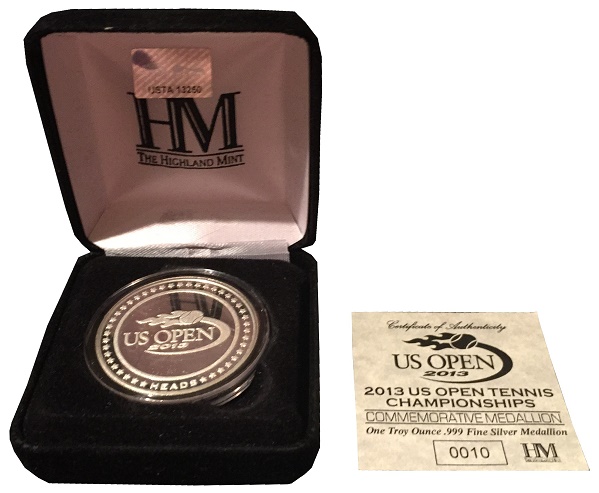




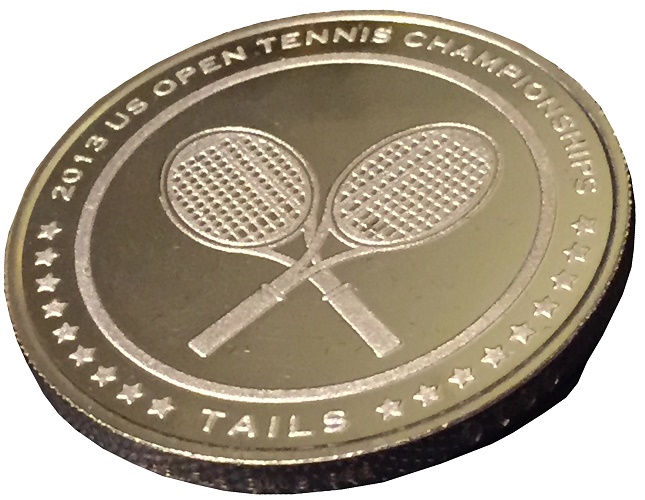
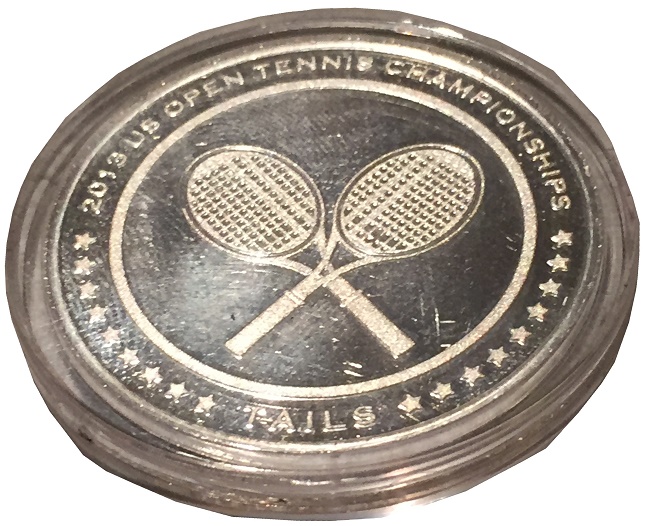

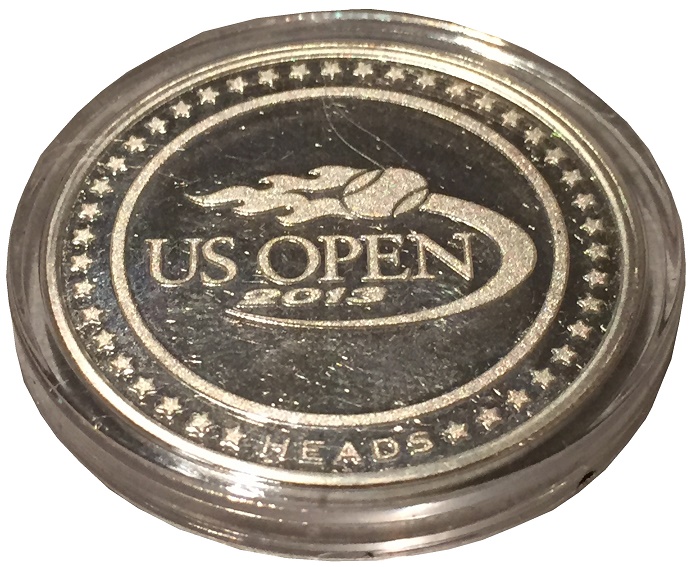


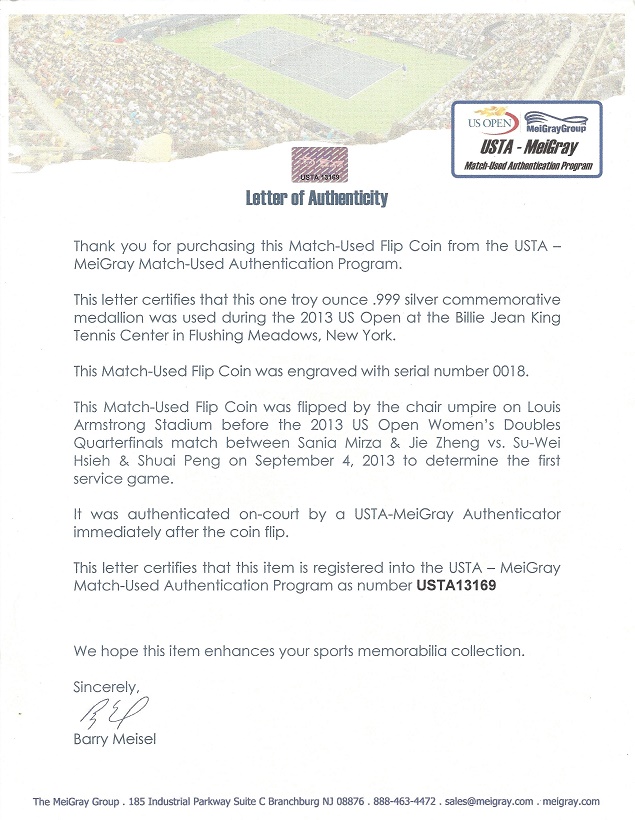
 The Women’s Doubles saw Andrea Hlaváčková and Lucie Hradecká defeat Ashleigh Barty and Casey Dellacqua on September 7 6–7(4–7), 6–1, 6–4 . To get there, Andrea Hlaváčková and Lucie Hradecká had to beat Sania Mirza and China Zheng Jie in the Women’s Doubles Semifinals on September 5 6–2, 6–2. The day before, Mirza and Zheng Jie defeated Hsieh Su-wei and China Peng Shuai 6–4, 7–6(7–5) in the Quarter Finals at Louis Armstrong Stadium. This Highland Mint Coin, #18 was used for the coin toss. This Highland Mint made coin was authenticated by MeiGray. It comes with a full Letter of Authenticity, and MeiGray hologram, in a MeiGray folder.





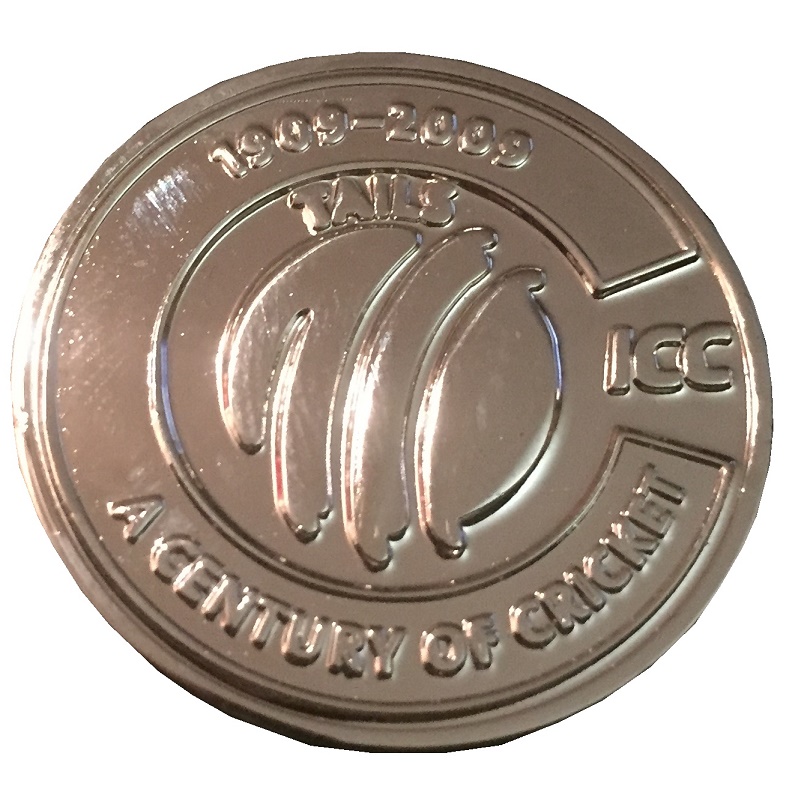
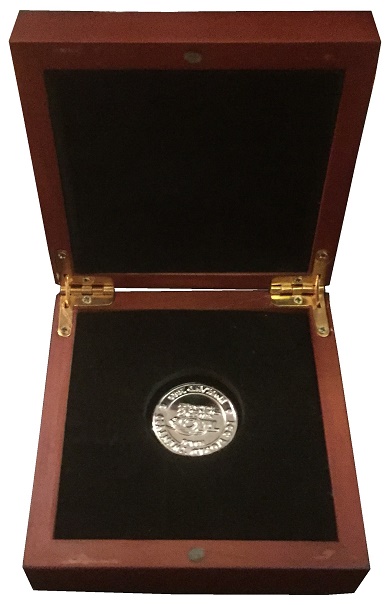
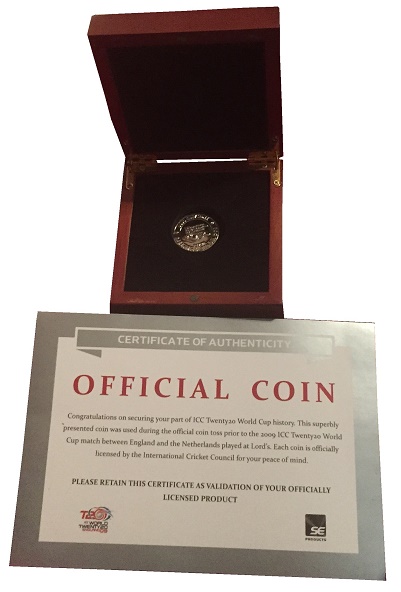
 Cricket also uses toss coins. One form of cricket is Twenty20 cricket, aka Twenty-20, and abbreviated to T20. In a Twenty20 game the two teams have a single innings each, which is restricted to a maximum of 20 overs. The England and Wales Cricket Board created Twenty20 in 2002, and it has grown in popularity, spawning its own World Cup, like the ones played in 2009. I have a couple of match-used coins from the 2009 Twenty20 World Cup, including this one, from the South Africa vs. Pakistan semi-final, where Pakistan won with 149/4 over South Africa’s 142/5. The coin, slightly larger than an American quarter, is in great condition. The specially made coin is not sold as a replica, and comes in a customized box, with an International Cricket Council logo. The box is about 4 inches square. The coin itself is slightly larger than an American quarter, though much smaller than an NFL toss coin. The heads and tails are marked. The heads side features a 2009 ICC Twenty20 logo, with England 2009. The tails section features an ICC logo, with a 100th anniversary commemoration.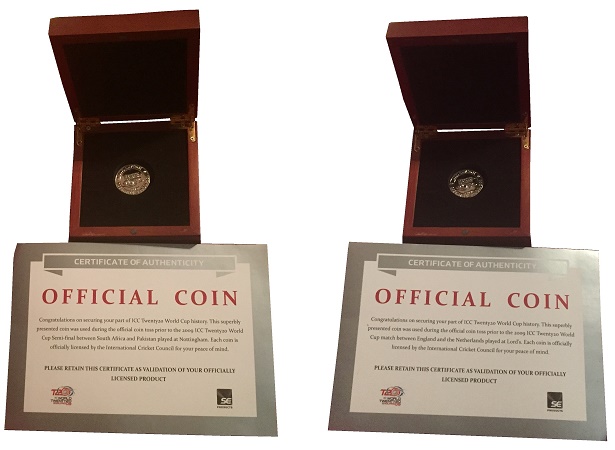


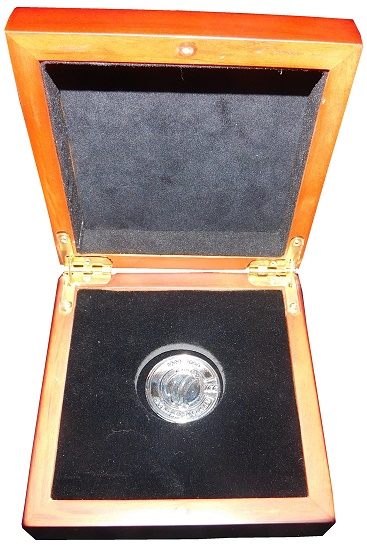


 I also have a second coin, from a Group B competition between England and the Netherlands. This was one of the early matches, where The Netherlands won 163/6 over England’s 162/5. The coin is identical, no serial numbers are on these coins, and the only difference is the COA.


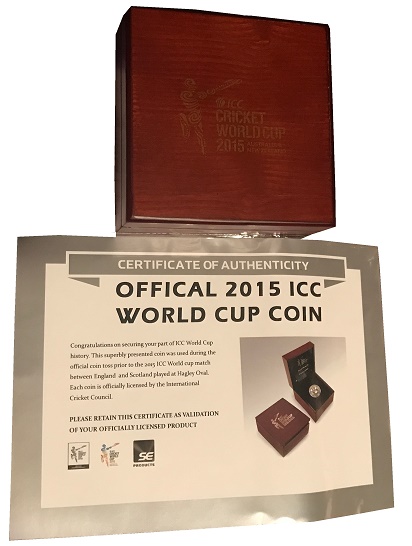
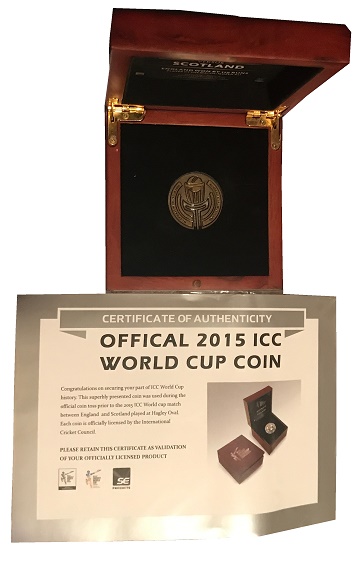
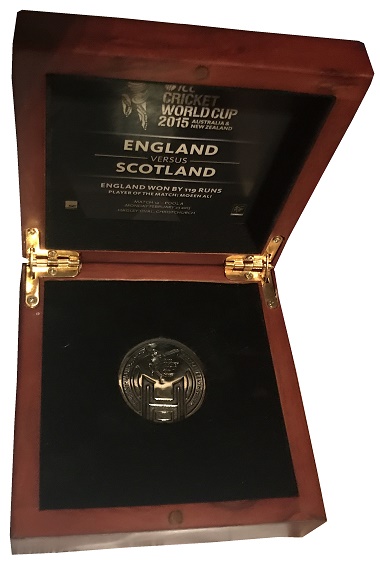
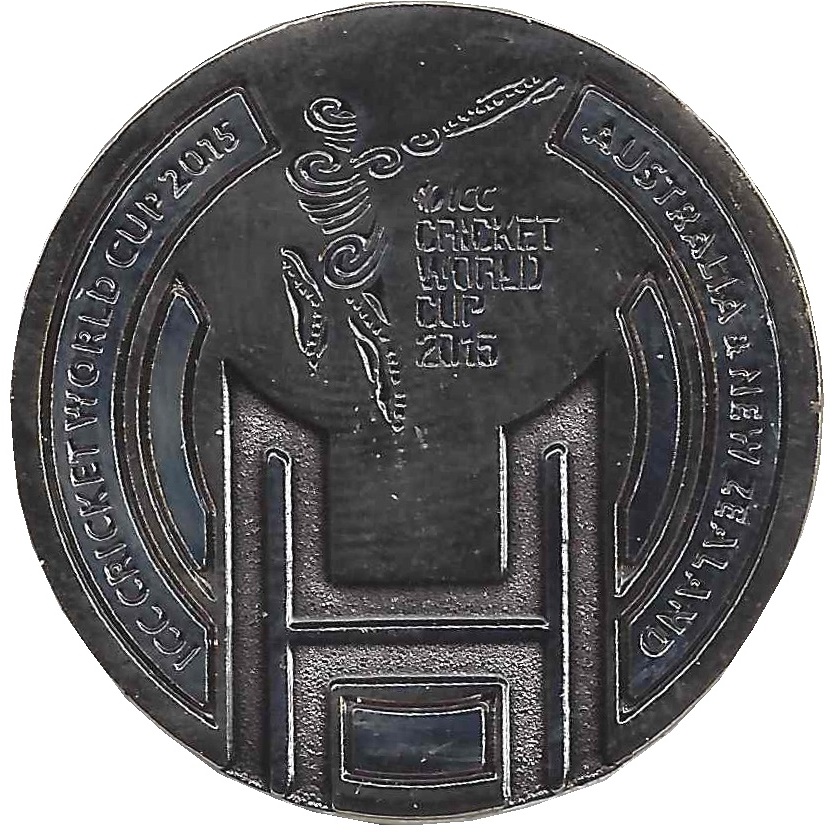
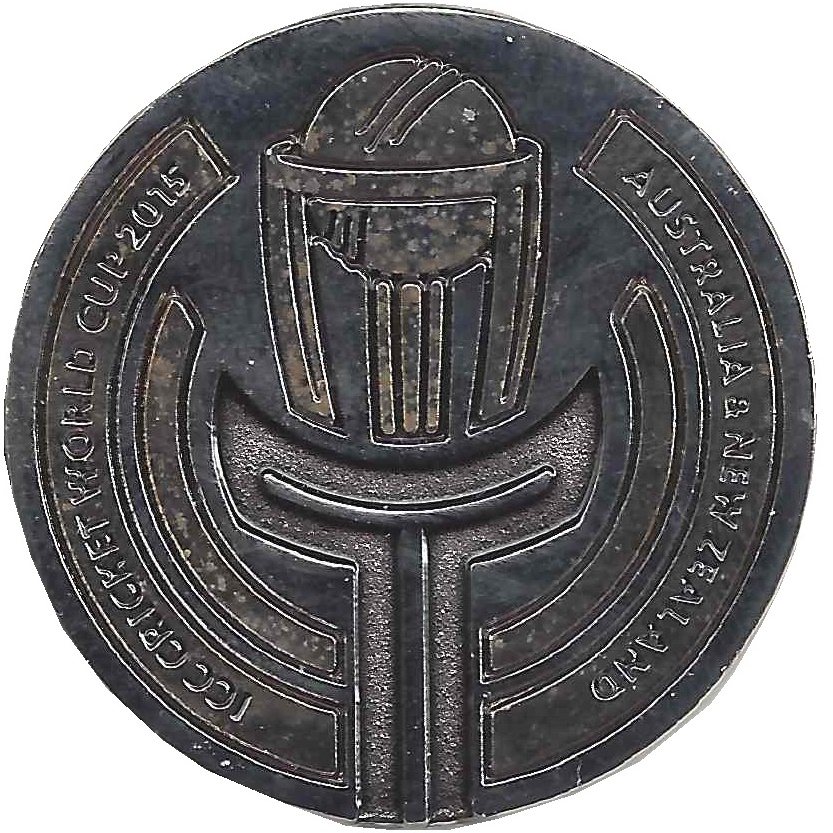
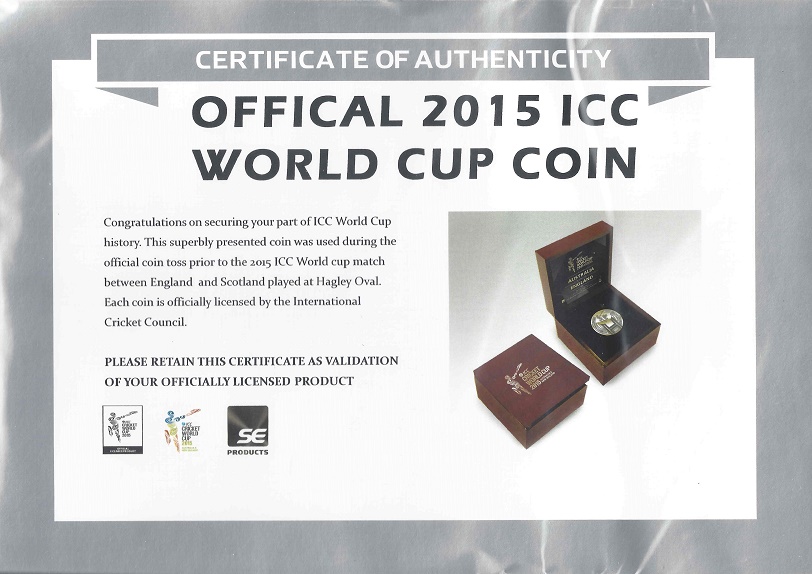
 Cricket also has a World Cup. The 2015 Cricket World Cup had a series of great matches. One such match was the game between England and Scotland that took place on February 23rd, at The Hagley Oval, Christchurch, New Zealand. England triumphed over Scotland, by a score of 303/8 (50 overs) to 184 (42.2 overs). This coin, slightly larger than the 20Twenty coin, but smaller than an NFL toss coin was produced. It includes a display box featuring details on the game, and a COA.

 Next week…the grades for the Throwback race!

 By David G. Firestone
 The right glove has SPARCO, RESCUE RANCH, PERFORMANCE PLUS MOTOR OIL, FORD, and FORD PERFORMANCE logos screen printed.
 The inside of the right glove features a very intricate pattern on the palm and fingers.


 The right wrist features a Sparco manufacture date of 2018. There is also an SFI rating tag inside the wrist, as well as a holographic FIA safety certification.

 The left glove is identical to the right glove in every way possible.
 The left glove has SPARCO, RESCUE RANCH, PERFORMANCE PLUS MOTOR OIL, FORD, and FORD PERFORMANCE logos printed.
 The inside of the left glove features a very intricate pattern on the palm and fingers.


 The left wrist features a Sparco manufacture date of 2018. There is also an SFI rating tag inside the wrist, as well as a holographic FIA safety certification.

 Next Week, I compare NASCAR and NHRA gloves.