Last Week, Chevy teams were ranked. This week, the Paint Scheme Ranking Executive Committee, made up of myself, and Alejandro my black cat have determined how Ford’s teams will be ranked. Alejandro was slightly more useful this week, keeping my leg warm while he slept. As with last week, teams that did not exist or did not run Fords last year will be marked with NR for Not Ranked.
1-Wood Brothers #21 Rank Last Year:1st of 17-The Wood Brothers always design great cars, and the Quick Lane scheme uses the blue very well. It all looks good!
2-Team Penske #2 Rank Last Year:6th of 17-The Wurth and Redd’s Apple Ale schemes are a bit over designed, but the white Miller Lite schemes, Alliance Truck Parts, and Detroit Genuine Parts schemes make up for it.
3-Roush Fenway Racing #6 Rank Last Year:NR-This would be ranked higher, as it has a somewhat vintage look, but the candy cane on the nose looks odd. It’s still a good scheme.
4-Richard Petty Motorsports #43 Rank Last Year:2nd of 17-The Ekcrich camouflage scheme doesn’t work, camouflage schemes rarely do. The Charter green is horrible, but the rest of the schemes look really good.
5-Levine Family Racing #95 Rank Last Year:16th of 17-The TWD schemes look medicore, but could be worse. The template Levine Family Racing switched too this year looks great and the cars look very good too.
6-Front Row Motorsports #34 Rank Last Year:11th of 17-The majority of the schemes look great, but the upside down lettering on the hood of the CSX scheme looks odd. The Wendell Scott scheme is amazing!
7-Humphery Racing #77 Rank Last Year:NR-Plinker Arms doesn’t look great but it could be worse. That applies to Essex Homes as well. The rest of the schemes look good.
8-Front Row Motorsports #35 Rank Last Year:10th of 17-The Hefty scheme is a little unorthodox, silver and orange isn’t a great combo, but the design looks good. MDS looks good.
9-Team Penske #12 Rank Last Year:3rd of 17-The SKF scheme works very well. The Penske Truck Rental scheme uses a horrible shade of orange, and just looks hideous.
10-Phil Parsons Racing #98 Rank Last Year: 15th of 17-While I like the Dogecoin,Trench Shoring,iRacing, black Curb Records, and unsponsored black schemes, anything else looks horrendous.
11-Front Row Motorsports #38 Rank Last Year:9th of 17-Most of the schemes are good, but the Love’s Truck Stops, and Love’s Truck Stops Camo schemes are horrific.
12-Roush Fenway Racing #17 Rank Last Year:5th of 17-Eco-Power has awful shades of green. Pit for a pair is awful even for a pink-washing scheme. Zest has a good color scheme, but awful design scheme,as does Fifth-Third Bank. Their all-star scheme was terrible. Ford Eco-Boost, NOS, and Nationwide work very well.
13-Richard Petty Motorsports #9 Rank Last Year:4th of 17-Can all be summed up with Great color schemes but mediocre design schemes. The camo scheme looks bad, but the upside is that the camo is subtle.
14-Team Penske #22 Rank Last Year:14th of 17-The Shell/Pennzoil scheme has a decent color scheme but a bad design scheme. Anything Pennzoil Platnum is awful, as is Auto Trader. The Auto Club scheme has a great color scheme but a bad design scheme.
15-Roush Fenway Racing #99 Rank Last Year:12th of 17-Fastenal looks good, but anything else looks terrible.
16-Go FAS Racing #32 Rank Last Year:8th of 17-The Terry Labonte throwback scheme was amazing, but most of their other schemes are over-designed messes.
For the end of the 2014 NASCAR Sprint Cup Season, the Paint Schemies have returned! The Schemies will reveal the best and worst paint schemes and driver suits of 2014. This was done using the Driver Suit Blog executive committee for paint scheme analysis and consists of me and me alone, and uses the following standards:
Color Scheme:How the colors look, and how they work with each other.
Overall Design:How good the design itself looks, is there too much, or not enough.
Primary Sponsor Logos: How the primary sponsor logos look on the car
Originality: How original is the scheme.
All of the above can work for or against a scheme, and all will be taken into consideration.
Let’s get the bad paint scheme awards out of the way.
First, the Paint Schemie Award for Worst Regular Season Single Paint Scheme .
The next Paint Schemie Award is for Exhibition Race Paint Schemes. This category is a little different, as the Schemies will go to the best and worst special scheme that was run in either the Sprint Unlimited, the Sprint Showdown or the Sprint All-Star Race.
The Paint Schemie Award for Worst Exhibition Race Paint Scheme Goes To:
That’s all for the best and worst, now I wanted to do something in the way of a top 10 list, but I wanted to do something differnet. I wanted to do the top to logos that have never been the primary sponsor of a Sprint Cup Car, so here they are:
Greg Biffle #16 Ortho Home Defense Ford Fusion-A totally new paint scheme for next year, and this is actually an A scheme! Color scheme is good, the minimalist design with the red and yellow stripe on the bottom looks good, and again, this is an A scheme.
I want to clarify something that I stated last week. My rule for pinkwashing is an automatic F. After a few people pointed out to me that almost everyone is wearing a pink ribbon, I’ve made the decision not to factor a pink ribbon into the grades. That said, pink lettering, numbers, or background will still earn an automatic F. Let’s get to the reviews.
Denny Hamlin #11 FedEx One Rate Toyota Camry Um…huh? Someone explain to me what black leather and zippers have to do with FedEx? It’s not a bad design, though I could have done without the green at the bottom, so I’ll give it an A-, but I don’t get why they used that design at all.
Kyle Busch #18 M&M’s Halloween Toyota Camry M&M’s always have great Halloween schemes, and this is no different. Orange and black are always a good scheme, and the design fits both M&M’s and Halloween very well. I’ll give it an A+
Terry Labonte #32 C&J Energy Services Ford Fusion Terry is making his 890th start at Talladega, and this scheme is in honor of that. This is now, officially, my all-time favorite throwback scheme. The driver side is designed to look like his Kellogg’s scheme when he won the 1996 Sprint Cup Championship, and the passenger side is designed to look like his 1984 Championship winning Piedmont Airlines scheme. I couldn’t say anything bad about this if my life depended on is, A+
Landon Cassill #40 Thunder Coal Chevy SS Between the paint scheme grades for last week, and the race at Charlotte, Cassill picked up Thunder Coal as a sponsor. The logo works well on a white background, and the car has a clean, smooth look that earns an A+
Michael Waltrip #66 My AFib Story Toyota Camry Ok, this one needs some explaining. Michael Waltrip suffers from Atrial fibrillation or AFib, an abnormal heart rhythm. He is working with The American Heart Association to inform people about AFib, and this scheme features pictures of those who have shared their stories about dealing with the disease, and I have to give this an A+ for that. It also doesn’t hurt that the color and design schemes are really good too!
Josh Wise #98 Provident Metals Ford Fusion A much more scaled down version of the paint scheme, which is much smoother and better looking. It has a great color scheme, so I’ll give it a B+.
When you say “driver suit” you think of names like Simpson, Sparco, Impact!, OMP, Stand 21, and Momo, you don’t automatically think of Oakley. Oakley started in 1975 as a sunglasses company by Jim Jannard in his garage in Foothill Ranch California. He got the name from Oakley, his English Setter. He went from working in his garage to one of the biggest sunglasses companies in the world. They design eyewear for athletes, the military, skiers, and, starting in the late 2000’s, motorsports apparel.
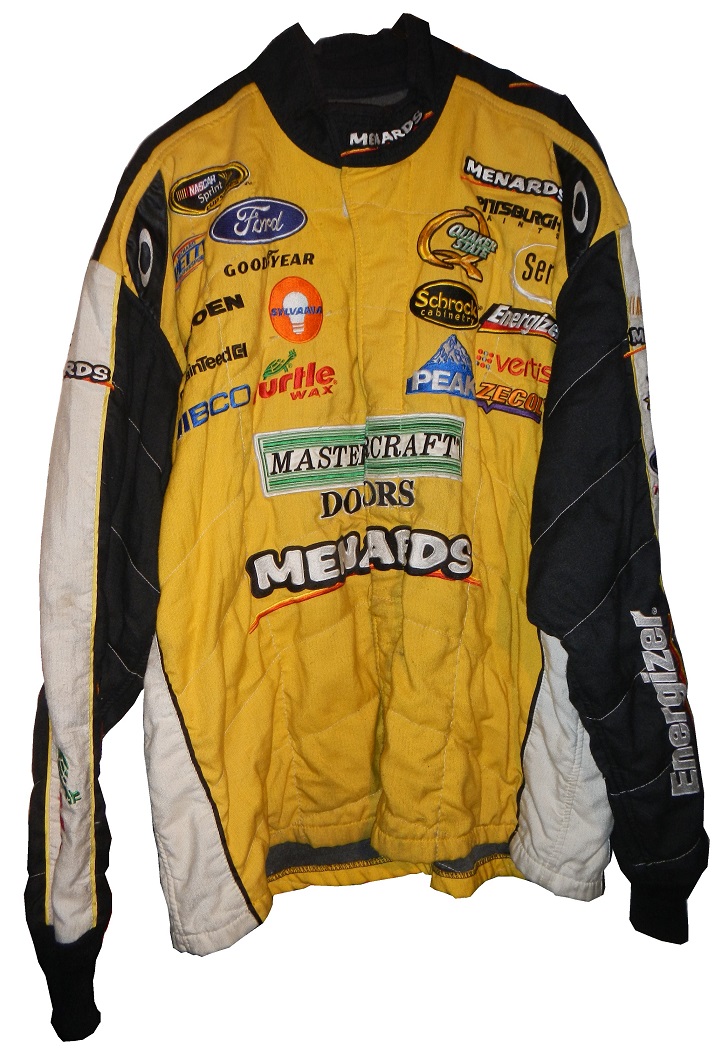
Oakley makes a number of racing items, the most prominent being driver suits. IndyCar drivers Justin Wilson, Ed Carpenter, Mike Conway, and Josef Newgarden all wear Oakley driver suits as do Alex Bowman, Ryan Truex, Martin Truex Jr., Clint Bowyer, Jeff Burton, Michael Waltrip, and Ricky Stenhouse Jr. in NASCAR and Tony Schumacher in the NHRA. While they make suits for the top drivers in the sport, for some reason they don’t seem to sell suits through their own site, you have to go to a third-party site to buy their racing suits…which to me seems odd, because no one else ever does that.This particular suit was worn by Jason Romesburg, who was the rear tire changer for Paul Menard in 2010. Menard had a decent season, with a top 5, and 6 top 10’s and 17 laps led. The suit shows heavy use, with the right cuff on the pant leg destroyed. In addition to the damage to the pant leg, what strikes me about this suit is that the material seems so light. While it is safety certified, it does not feel like a Nomex suit. It is very light for a suit of its size.
The suit is a two-piece and the jacket does not show as much wear as the pants, and I understand the reason. The logo about the Menard’s logo is for Mastercraft Doors. Paul Menard races with Menard’s on the quarter panel and a rotating set of sponsors on the hood. Mastercraft Doors was on the hood for 3 races in 2010, the Brickyard 400, the Carfax 400 at Michigan, and the Ford 400 at Homestead. While the jacket doesn’t show as much wear, it does show some staining on the sleeves. There are stains on the white area of the sleeves. Since Romesburg was a tire changer, this is to be expected.
The two piece suit is very popular with pit crews because it has the same fire protection as a one piece but with less restriction than a one piece. If you have ever worn a one-piece jumpsuit you know that it does restrict movement, as opposed to a jacket and pants of the exact same size. So when you are changing 4 tires in 14 seconds, you need every edge you get. What I don’t see on the jacket are arm gussets. These would be used to add movement without subtracting fire protection. I have two theories on this, either the suit fit well enough that they weren’t needed, or because the crews were switching jackets so often that expense or time dictated that arm gussets couldn’t be used.
One detail I love are the television logos on the sleeves. The dual logos on the sleeves look good and actually work well for both sponsors. The suit actually looks pretty good, but I do not like the quilt pattern on the legs, because it isn’t represented on the jacket, and it does look pretty odd in this respect. It does look like the two were designed and made by different people. I’m also amazed by how lackluster the warranty label is…That is the shortest warranty label I have ever seen on a modern suit. Let’s compare it to a Simpson tag…Wow that is a short warranty label, also, I don’t think a skull and crossbones don’t belong on this kind of suit, but it does say what it needs to say, just in a much shorter form than most driver suits.
In short, Oakley is making decent suits, and they are doing what they are designed to do, protect the driver from fire. I think Oakley suit could catch with minor league racers, provided they start marketing them better. The fact that they don’t sell them through their own website, and provide more info on the drivers who wear their suits make it hard to sell them to the general public. Puma, which has a lot of talent on its roster too, does not want to sell through its own website. Why they don’t is a mystery, as there is a lot of money in these suits, and people will pay for high quality suits made by a reputable company.
Before I get to the Paint Scheme Reviews, we have some breaking news on a story I had discussed in my Silly Season post a few weeks ago. I had mentioned at the time that Comcast was in negotiations with NASCAR to become the title sponsor of the Nationwide Series. Nationwide Insurance is leaving the series at the end of the season. Well it was announced on Wednesday that Comcast and NASCAR have come to a deal for a 10 year sponsorship of what will be called the Xfinity Series. It was not revealed how much the deal was worth, but we are talking hundreds of millions of dollars. I will be interested to see the series logo and what Xfinity does with the new deal. Now on to…
Jeff Gordon #24 Drive to End Hunger Chevy SS The front is a bit over designed, the ribbon on the side does work somewhat, and the orange, I’d never thought I would say this, is too dull. I’ll give it a C+
Joe Nemechek #66 Friedman Law Firm Toyota Camry Law firms can be good at what they do, and they are apparently great at designing race cars. Clean, simple, attractive with a good color scheme eans an A+
Clay Rogers #75 Beard Oil Chevy SS Beard Motorsports is making their debut with Clay Rogers at Richmond in the Beard Oil Chevy. Their first time car has a great design scheme and a great color scheme and earns an A+
Dale Earnhardt Jr. #88 Nationwide Chevy SS A great design with a great color scheme and a great simple design. My sticking point with this is that I do not like the silver numbers, the font design just doesn’t work. I’ll give it a B+
David Stremme #90Junie Donlavey Tribute Chevy SS Junie Donlavey passed away earlier this year, and Circle Sport Racing will run this design based on his 1972 Ford Gran Torino. It looks amazing, and I have to give it an A+
Josh Wise #98 Provident Metals Ford Fusion Looks good, good color scheme, decent design scheme. Too many stripes. I looked Provident Metals up and found that they are a precious metal dealer who make a currency called “Zombucks” which they jokingly market as “currency for the Apocalypse.” I’ll give it an A-
Home Beer Brewing Project Update…
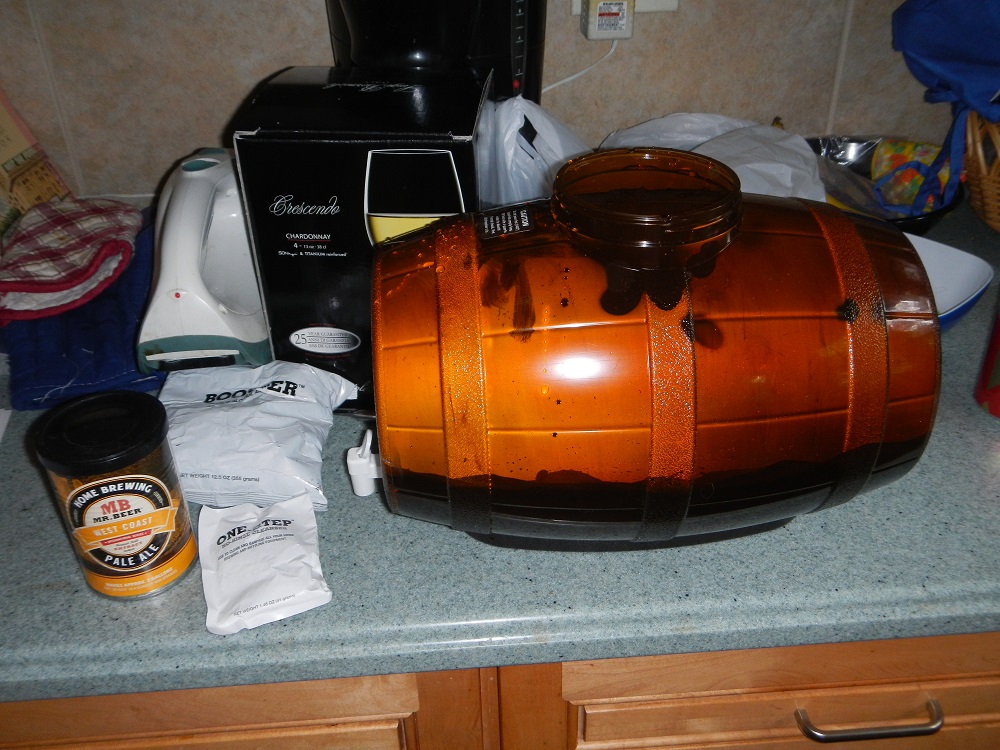
Two weeks ago, I started the work on brewing beer using the Mr. Beer Homebrewing Kit. It fermented for two weeks, and I bottled it this week. The recipe will make 2 gallons of beer, which fits into four 2-liter bottles. I added the sugar to the bottles…added some liquid to the bottom to get the mixture started…then I bottled the four 2-liter bottles…Now I have to wait two more weeks for the carbination to complete….then I have to chill for two days prior to enjoying…Ugh! Well, I’ll keep you posted, and I’ll have some jam while I wait…
It’s August, the summer is winding down, you are seeing back to school ads on TV, Halloween stuff is popping up in stores, and the Silly Season is officially underway. For me, this begins the most hectic part of the year for The Driver Suit Blog. Within the next few months, driver changes, sponsor changes and team changes will be announced. There is always a shakeup of some kind, and this year will be no different.
Carl Edwards, for example, will be leaving Roush Fenway Racing after the season. It was announced on Tuesday that Edwards would be moving to Joe Gibbs Racing and driving the #19 Toyota Camry. He has sponsors, one of which is Arris, which is a communications company for 17 races. The remaining 19 races he has a sponsor for the other races, but that hasn’t been addressed yet.
Where a driver is in the points helps with these kinds of decisions. As it stands right now, there are 1- drivers in the Chase because of a victory, and X driver who are in the Chase because of points. Will that change before Chicagoland? I have no reason to believe it won’t. I will be watching the Federated Auto Parts 400 this year, in light of what happened last year. I would have to believe that something like last year can happen. As of today, there are 12 drivers, AJ Allmendinger, Aric Almorla, Kurt Busch, Kyle Busch, Dale Earnhardt Jr., Carl Edwards, Jeff Gordon, Denny Hamlin, Kevin Harvick, Jimmy Johnson, Brad Keselowski, and Joey Logano have a spot in the Chase due to wins. That leaves 4 spots open, and with 3 races to go it is highly unlikely that there will be 3 new winners, so some drama can and will happen.
The part where it gets really bad is that from here to Daytona in February, there will be 2015 paint schemes released on a regular basis. The problem is that every 2015 scheme I grade will have to be taken with a grain of salt. For example,in mid-August last year, Brian Vickers was announced to drive the #55 Aaron’s Dream Machine. The announcement included photosof thecar. However, later on, a new design was released, and became the current standard. I didn’t complain too much because both designs are good. But this is a constant issue for me, do I grade them as-is, or do I back off and wait? This will get more and more frustrating between now and Homestead. An example of this is that Ricky Stenhouse Jr.and Greg Biffle just announced one of their new car designs for 2015. I will take it with a grain of salt, but I will grade it below as I normally would.
Something I also have to take into consideration is that something late in the season will cause a major change to the playing field. A perfect example is the unpleasantness last year at the Federated Auto Parts 400. After that scandal, Napa announced that it would be leaving Michael Waltrip Racing, and that left Martin Truex Jr. without a ride. He moved to Furniture Row Racing, and the full-time #56 became the part time #66.
One other major story I am following and I’m sure you are as well is who will sponsor the Nationwide Series next season? It was announced in 2013 that after 2014, Nationwide Insurance would be leaving as the series sponsor. Nothing definitive has been announced as of today, but I would have to believe there will be an announcement before the season ends. I’m curious just as the rest of us as to who that would be. Comcast is negotiatinng a deal for the series, and I would think a deal would be announced quite soon.
There will be driver changes, sponsor changes, team changes, and schedule changes. A rumor is going around that The Southern 500 will move back to Labor Day, Atlanta will follow the Daytona 500, and that the first Bristol race is moving from early March to mid-April. Again, when the schedule is announced we will know for sure. There are little changes every year, and after a while these little changes add up to big changes.
One other bit of news I need to address is that on Monday, a number of teams stayed at Michigan to test some 2015 rule changes. All totaled, 6 different car configurations were tested for a total of 160 laps. Again, equipment changes are a common event between seasons and this is nothing new. Information will be taken, adjustments will be made, and there will be more testing during the off season. Once that happens, the rules package will be created and distributed to the teams for the upcoming season.
Now before I get into paint schemes, I’d like to discuss something that has been happening in F1 for a while and I think needs to be stopped. Between the Hungarian Grand Prix on July 27, and the Belgian Grand Prix on August 29, F1 is on it’s “summer break.” This is due to the high travel restrictions and the limit on active crew members an F1 team can have. Teams don’t show up to the track on the Friday before the race, they show up on the Monday before the race. While I am not unsympathetic to the demands on crew members, I am a racing fan. F1 is one of the most watched sports in the world, with telecasts that can get as many as 54 million viewers worldwide. Fans love the sport, and the summer break is a headache. So here is my solution. First, we double the number of active personnel that the team can have, so fresh guys that can be rotated. Second, we extend the season by 4 weeks, so that there can be time for drivers and crew to relax between events.
Now we have a lot of ground to cover when it comes to…
Greg Biffle #16 Roush Perfomance Ford Fusion Red and black is a great color combination, and I like the dot fade effect. This is the best Biffle scheme all year and it earns an A
Greg Biffle #16 Hire our Heroes Ford Fusion Another prime example of why came and race cars don’t mix. This is just an awful mess. The American flag motif just looks horrible with the camo, but I think it might look good by itself. I’ll give it a D
Aric Almirola #43 Eckrich Ford Fusion Ok, I thought we had this said, but I’ll say it again…CAMO DOES NOT WORK ON RACE CARS! It takes an A scheme down to a C-
Jimmie Johnson #48 Lowes Chevy SS Reportedly, Jimmie was unhappy with the color scheme change from blue to white and asked Lowes to swtich back to blue after a series of sub-par finishes. Lowes agreed, and the car is another classic Jimmie Johnson A+ scheme!
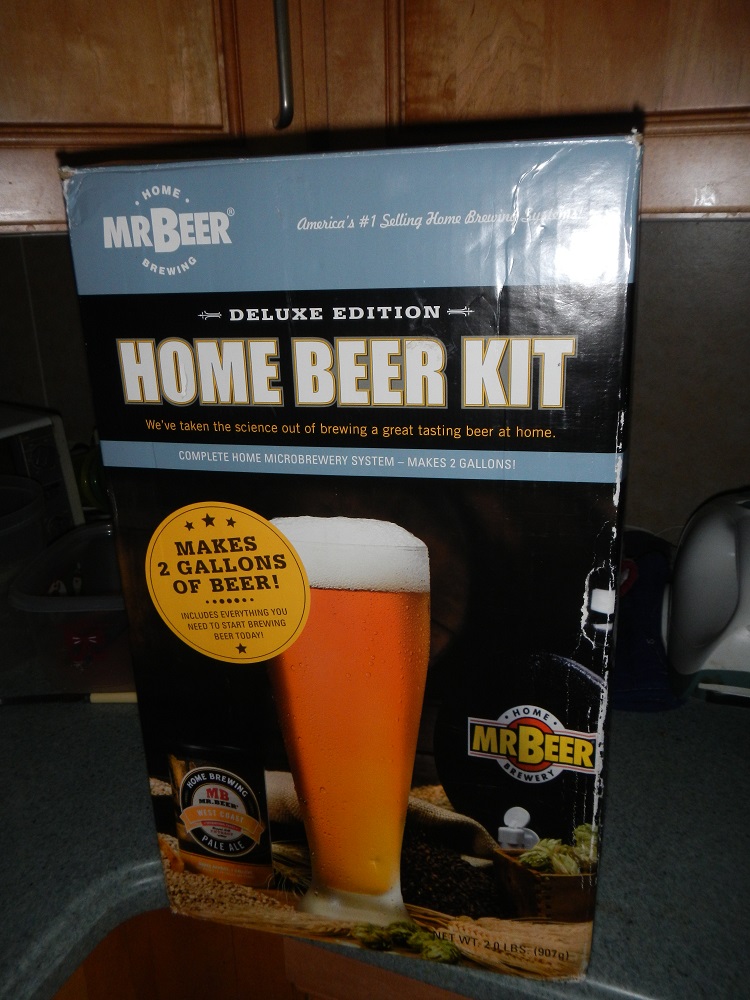
Carl Edwards #99 Ford Eco-Boost Ford Fusion The word of the day is overdesigned. Good color scheme, but overdesgined and a C- gradeBefore I go I wanted to tell you about a project. I recently bought a Mr. Beer home brewing kit. It is a kit for beginers like me who have no experience brewing beer. It is a realativly simple process. The kit comes with a 2 gallon fermenter, some booster sugar, brewer’s yeast, a pale ale hopped malt extract, and some no rinse cleanser. You need a non wooden spoon, a glass bowl a can opener and a measuring cup. You use the no rinse cleanser to sanitize everything you use to make the beer, then you place the hopped malt extract and booster containers in hot water while you boil 4 cups of water.While the water is boiling, you fill the fermenter with 4 quarts of cold water. Once the water is boiled, you add the hopped malt extract, and booster sugar, and mix well. Then you pour the mix into the fermenter, add more water, and then add the yeast. Now comes the hard part, we have to wait two weeks for it to ferment. I’ll keep you posted.
The 2014 Sprint All Star race is behind us, and as usual, there were a myriad of different paint schemes. Some were good, others not so much, but I have to say there were a lot of great schemes in this year’s race. Let’s start with the Sprint Showdown. Unlike in previous years, The Showdown took place on Friday, and the All-Star Race was on Saturday. The Showdown was a great event, which saw Clint Bowyer winning, AJ Allmendinger finishing second, and in the upset of the year, Josh Wise winning the Sprint Fan vote, and advancing to the All Star Race. Let’s get to the grades:
#10 Cole Whitt #26 Speed Stick Gear Toyota Camry This is one of the few schemes that has both a classic and modern look at the same time, and paired with a great color scheme, it earns an A
#13 Austin Dillon #3 Dow Chevy SS While I like the color scheme and number and logo designs, the white stripe up the side kills the look. It takes an A scheme to a B+ scheme.
#14 Kyle Larson #42 Target Chevy SS The scheme looks decent, I like the red on the back, though I do not like the Target logos at the bottom. That takes a scheme that was an A grade to a B-
#16 Michael Annett #7 Pilot/Flying J Chevy SS Good color scheme, but the awful template is back for Tommy Baldwin. It is really sad, because this could be a great scheme, but the template takes it from an A to a C-
#19 JJ Yeley #44 Phoenix Warehouse Chevy SS My first thought when I saw this scheme was it looked like the color scheme from the 1994-1995 NBA All-Star Game jerseys which is a decent color scheme. But to say the car is overdesigned is an understatement. This scheme is awful. Not even a great color scheme can help this car pass. F
Now we move on to the All-Star Race, which saw Jamie McMurray pull an upset and take the win, thus guaranteeing him entry into the event for the next 10 years. Overall there were a lot of great schemes, though I wish more teams would run special schemes.
#5 David Ragan #34 Taco Bell Ford Fusion Overall design and color schemes are good, and the only complaint is that the Taco Bell logo should be in color as opposed to black and white. A+
#11 Jeff Gordon #24 Drive to End Hunger Chevy SS Great overall design, great color scheme, though the D on the hood reversed to miror the curves of the hood looks odd. Still it’s a good scheme and Ill give it an A
#12 Dale Earnhardt Jr. #88 National Guard Chevy SS The new metallic numbers work, and the overall design is decent, since it incorporates the design used on the numbers. I’ll give it an B+
#13 Denny Hamlin #11 FedEx Express Toyota Camry The front nose design and stripes are awful. The color schemes are great, as are the logos and numbers, but the stripes kill it. The best grade I can give is a C+
#15 Kasey Kahne #5 Time Warner Cable Chevy SS It is a good color scheme, but the design on the side needs a little tweaking. Get rid of the needless zig-zag pattern and it works a whole lot better. It is still a decent scheme, so I will give it a C
#17 Matt Kenseth #20 Home Depot/Huskey Toyota Camry I would give this scheme an A grade, but the yellow back bumper ruins it. The clash between the two just works awkward, and it takes an A scheme down to a C
#19 Ryan Newman #31 Cat/Quicken Loans Chevy SS What in the blue hell is going on here? I’ve liked Ryan’s schemes this year but this is an F scheme, even though I like the color scheme.
#22 Greg Biffle#16 3M Ford Fusion-The sides and roof have gotten worse from last year. I have to give it an F in that respect.
Also, check this video out concerning how different pit stops in open wheel racing were between 1950 and today:
The video shows how far we have come in pit stops, but we also have come a long way in driver uniforms.
By David G. Firestone
50 years ago this week, events over the course of 6 days in May of 1964 changed the culture, cars, and uniforms of auto racing forever. Three deaths in two races over those six days demonstrated that current safety methods were ineffective at best, and 3 talented drivers lost their lives. The 1964 World 600 and the 1964 Indianapolis 500 helped introduce reenforced fuel tanks and Nomex driver suits, among other things. 50 years later, those events are still being felt
The World 600 began in the early afternoon on May 24, 1964. For the first six laps, it was business as usual, but on lap 7, on the backstretch, Junior Johnson and Ned Jarrett wrecked, and Glenn “Fireball” Roberts swerved to avoid them, and wrecked. He was trapped in the car by the pedals, and his car caught fire. Ned Jarrett ran and pulled Roberts from the car, and paramedics took him to the hospital. 39 days after the wreck, while still in the hospital from his injuries, he died from pneumonia.
NASCAR had rules concerning “fire retardant” uniforms but these were inadequate at best. These uniforms were cotton coveralls traditionally used by workmen that had been dipped in a number of fire retardant materials including Borax. These were not only ineffective, but were extremely uncomfortable to wear. They were known for inflaming the skin, and aggravating asthma. Fireball was not wearing these coveralls during that race, because he had a doctor’s note stating he should not wear them. There is some debate over what the doctor’s note was for, either for asthma or skin hives. It llustrates why these uniforms were not popular, they were so uncomfortable to wear that drivers did not want to wear them.
6 days later, on May 30, the 48th Indianapolis 500 was held. Dave MacDonald started 14th, and Eddie Sachs started 17th when the green flag dropped. MacDonald was racing a car built by racing innovator Mickey Thompson, which by all accounts was badly built and difficult to drive. The first lap led into the second, which saw Dave MacDonald lose control of his car and smash into the inside wall. The fuel tank instantly ignited and the car went across the track, and collected a number of other cars, including Eddie Sachs car, which also exploded on impact. Sachs was killed by the impact, but MacDonald was seriously burned, and his lungs were scorched, the lung damage proved to be fatal.
Inspired by these events, the Nomex firesuit was introduced in 1967 as a replacement for the cotton coveralls dipped in chemicals. It was a lot more comfortable and safer than chemical-dipped cotton, so drivers were more willing to wear them. Like most new safety equipment in sports, it took a while to catch on. Nomex was created in 1967, for NASA. Its main use at the time was for the Apollo Command Module parachutes. NASA needed a material that could stand up to the heat of reentering the earth’s atmosphere, and still remain fully functional.
Bill Simpson is credited with introducing Nomex to driver suits. The story goes that Simpson started making Nomex suits after learning about the material from astronaut Pete Conrad while Simpson was working as a consultant for NASA. One of the pivital moments in the history of the suit was when Simpson had heard that a competitor had been badmouthing his products, and so, in something he said later was “the dumbest thing I have ever done,” challenged the competitor to a “burn off.” Simpson put on his suit and lit himself on fire. He later recreated this for a Mazda commercial.
Why did it take so long to make critical changes to driver uniforms? The events that took place in 1964 were tragic, and it clearly illustrated why the old system didn’t work. The only change made immediately after the events was the rule that fire retardant suits were now mandatory, regardless of how it made the driver feel. In today’s sports safety culture, there would be focus groups, meetings within the sanctioning body, and changes within a few months after the event. But by 1964 standards, just rigidly enforcing the rule was the best course of action. Remember that in 1964 race car drivers were seen as somewhat expendable. Driver deaths in racing were stunningly common back then. As such, while there was a need for improvement, it was not a priority for sanctioning bodies. The sad fact is that back then, driver deaths were part of the allure of racing. People would go to these events and hope to see a fatal crash, as crass as that sounds. As for the suits themselves, the only other options besides chemical dipped cotton was aluminized cotton or aluminized kevlar, which was not more comfortable, as it was like wearing aluminum foil.
So what did these pre-Nomex driver suits look like? They looked like this. This is a driver suit made by Hinchman in Indianapolis. It is basically a polyester suit that is customizedto thedriver’spreference. It is not all that different than a jumpsuit that one would wear to work. It is a very flimsy material, has no cuffson the arms or legs, and, most amazingly, the tag states that the suit is “Untreated, will burn, must be dipped.” This suit was worn circa 1972, which is indicated by the “Archie Bunker for President” patch sewn into the chest. Like any new safety technology in sports, it takes time for it to become the standard, and for Nomex, this is no exception.
This race, along with the 1955 24 Hours of Le Mans and the 2001 Daytona 500 have their legacies written in death, but unlike other similar events, the lessons they had to teach were learned, and the racing world as a whole is better for them. The deaths in these events were not in vain, and others are alive because of them. 50 years later, those 6 days in May 1964 are still having an impact on racing.
While the bulk of The Driver Suit Blog is devoted to NASCAR, which, admittedly is my favorite form of auto racing, I do follow other forms of racing, and collect items from many different forms of racing. I am a fan of NHRA drag racing, and I attend races when I can. I have a decent collection of NHRA memorabilia, so this week, I’m gonna show some love for drag racing.
First, let’s get some factual history out of the way. Founded in 1951 by Wally Parks, the National Hot Rod Association or NHRA was created to act as a governing body for the sport of drag racing. Parks had previously founded Motor Trend and Hot Rod magazines, and was a racing enthusiast . The NHRA has 80,000 members, 95% of which are non-professional drivers. While there are hundreds of drag racing classes, The three most popular and well-known are top fuel, funny cars and pro stocks.
Top fuel dragsters are 25 feet long, have the engine mounted behind the driver to provide weight to the rear tires, which are 36 inches high by 17 inches wide. They run on a 90/10 fuel mix, 90% nitromethane and 10% methanol.Funny cars are designed with a frame, engine, suspension and cockpit with a fiberglass body that raises up to allow access to the car. The name “funny car” came to be because the early models in the 1960’s had the rear wheel base moved forward, and huge rear tires. They didn’t look “stock” so they were called “funny.”Pro stocks are an interesting design. Whereas top fuel and funny cars use nitro burning supercharged V8’s, by rule, pro stocks can’t use superchargers, turbochargers, or nitrous oxide. They also run on 118 octane racing fuel. Little consideration is given aerodynamically, and the cars can be hard to handle.
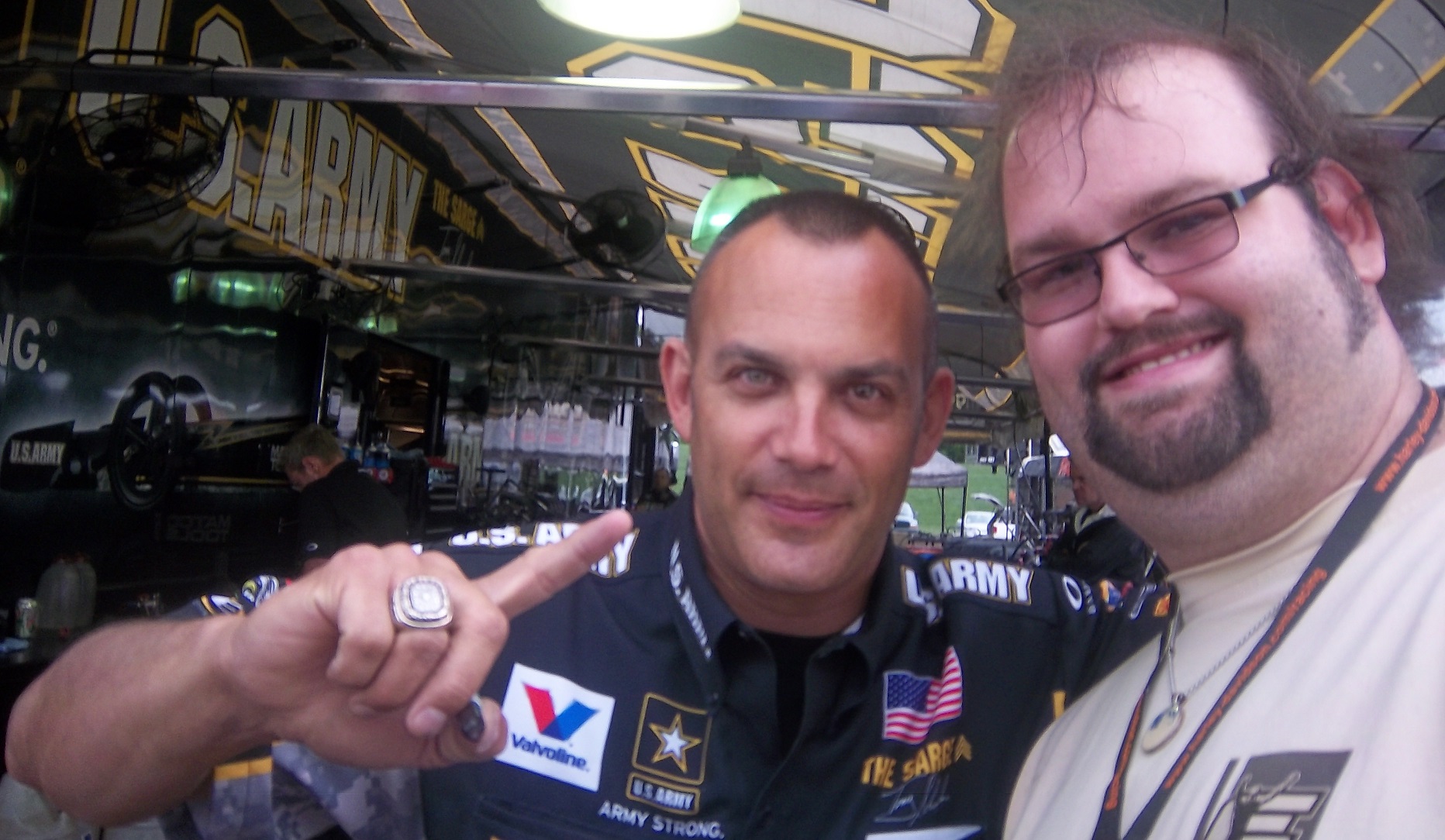
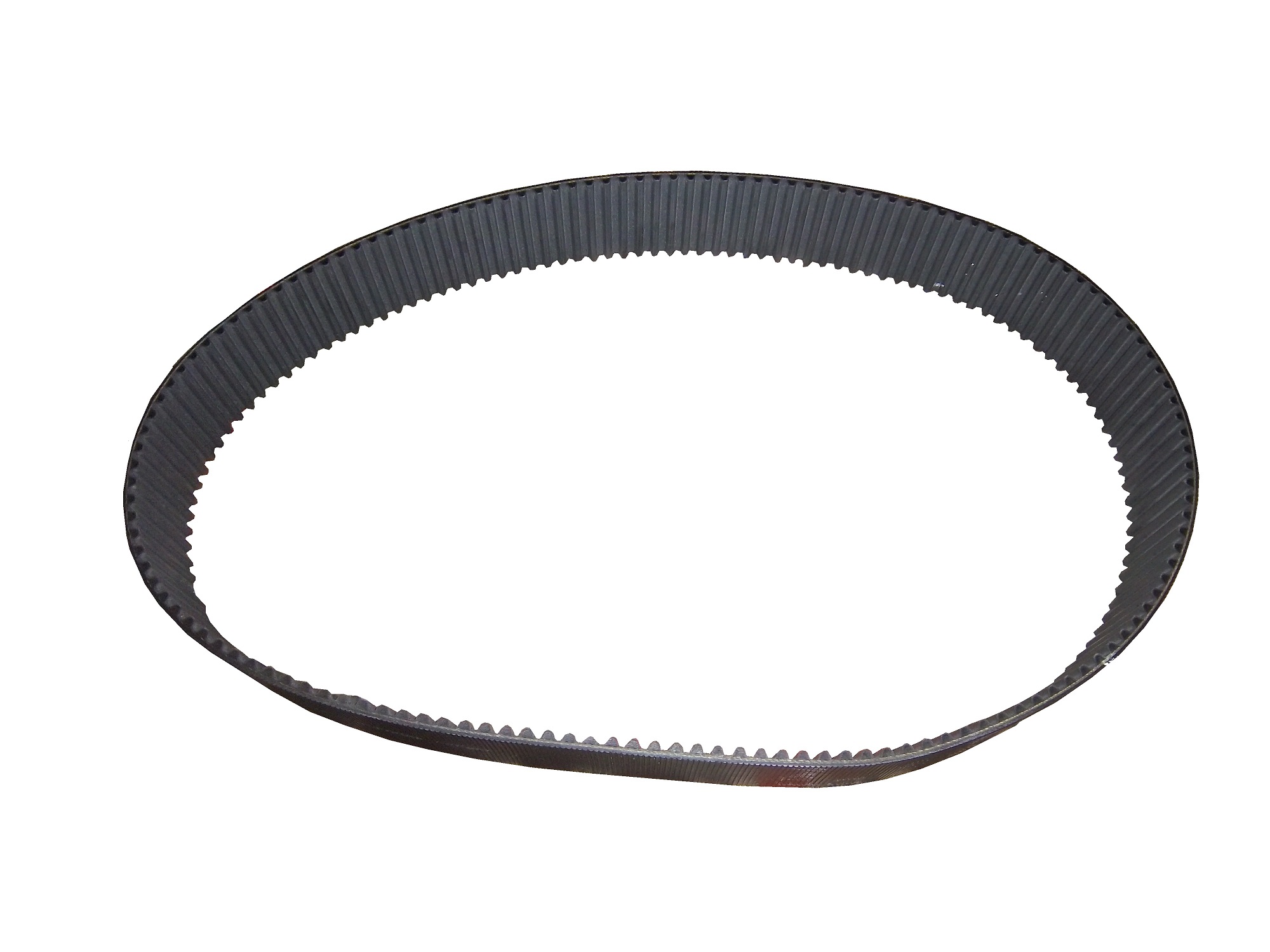
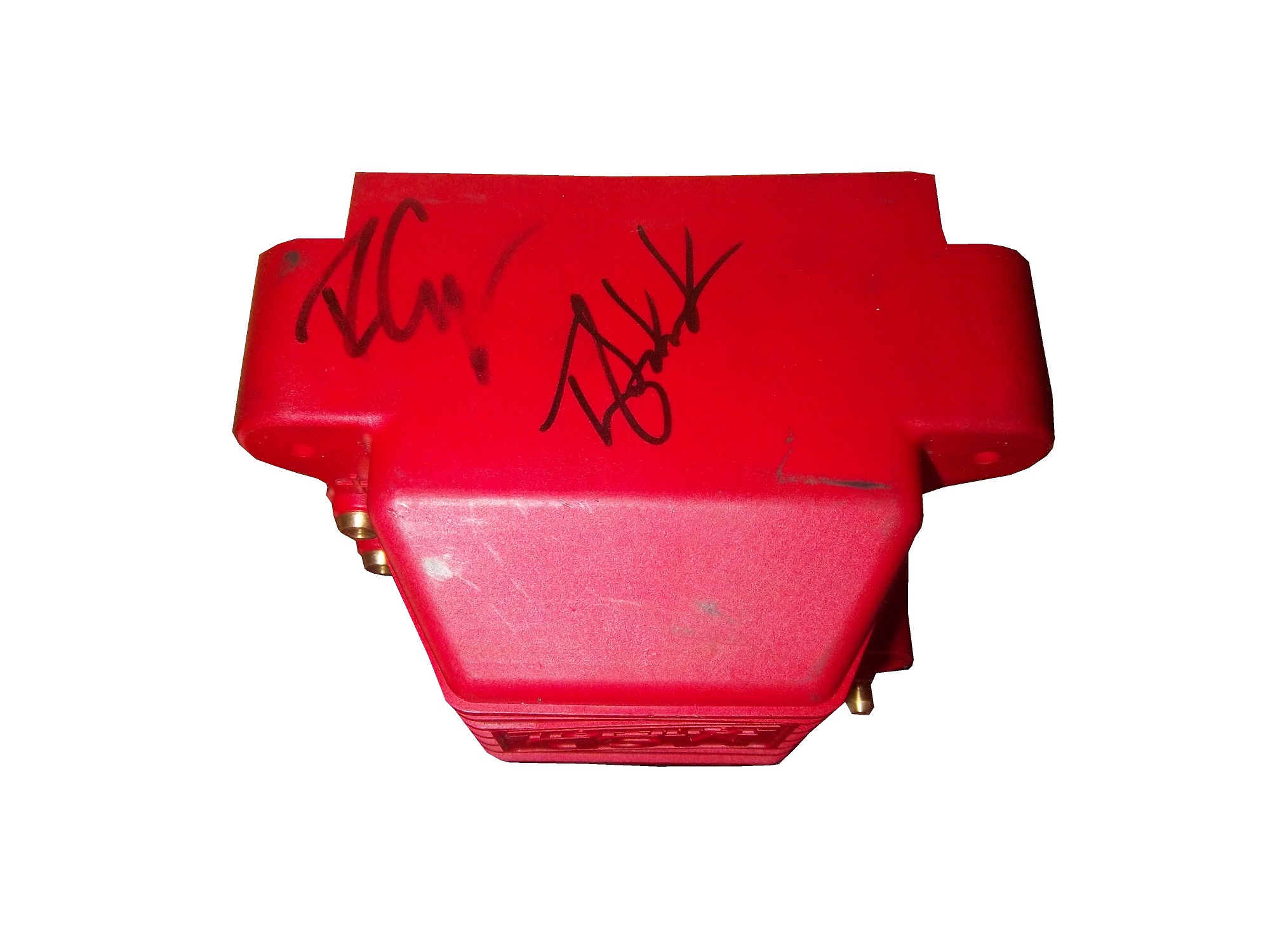
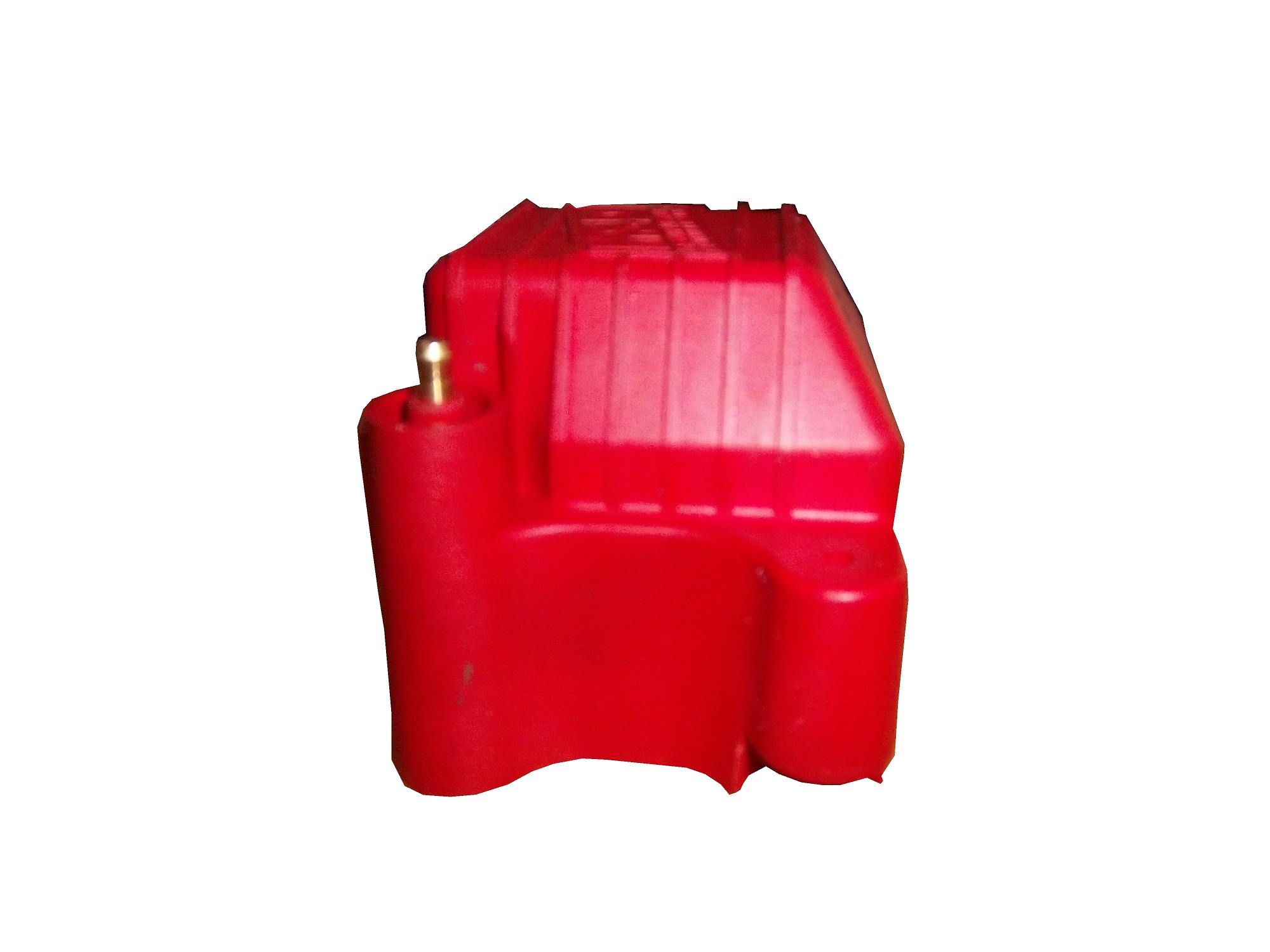
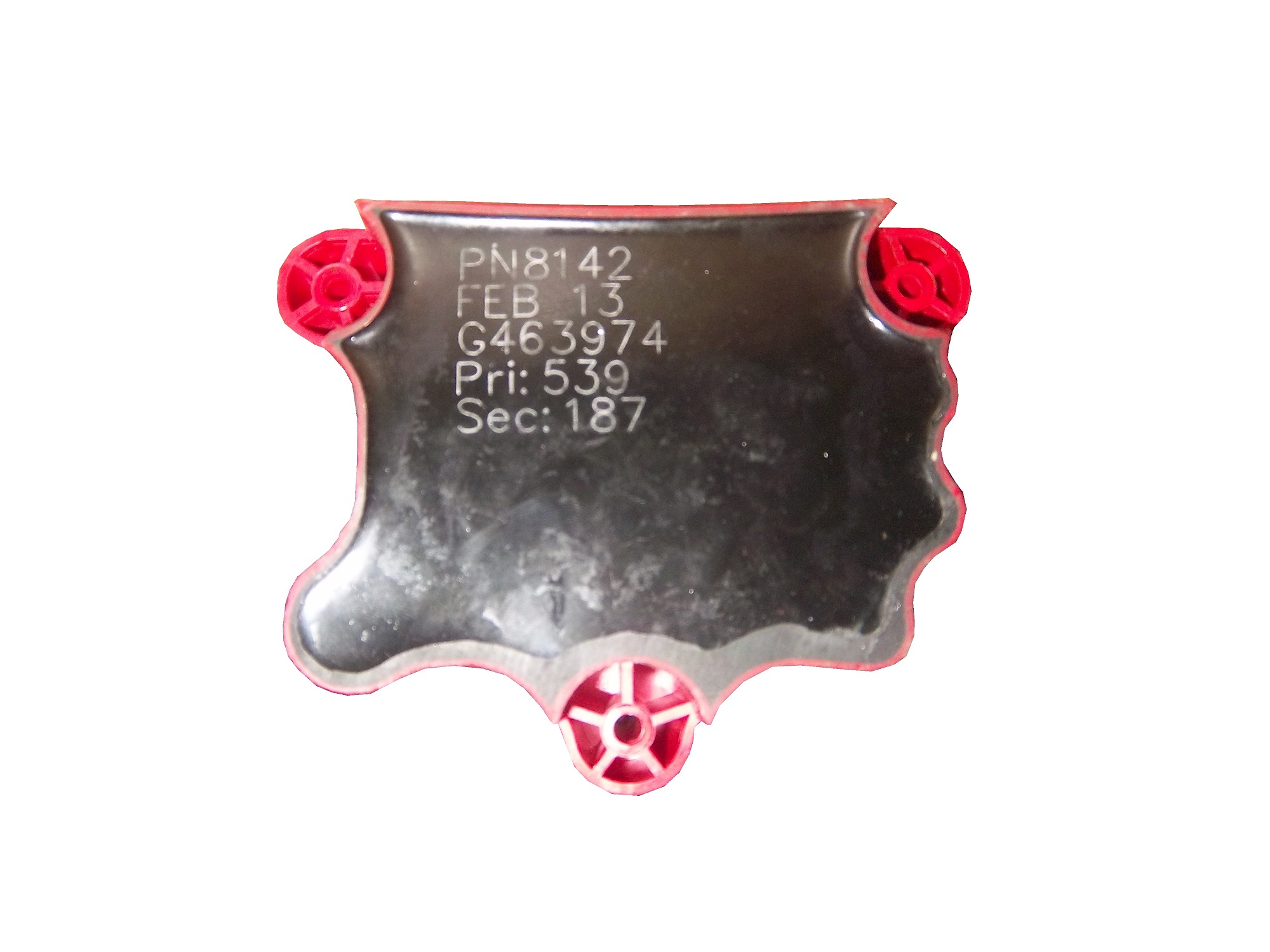
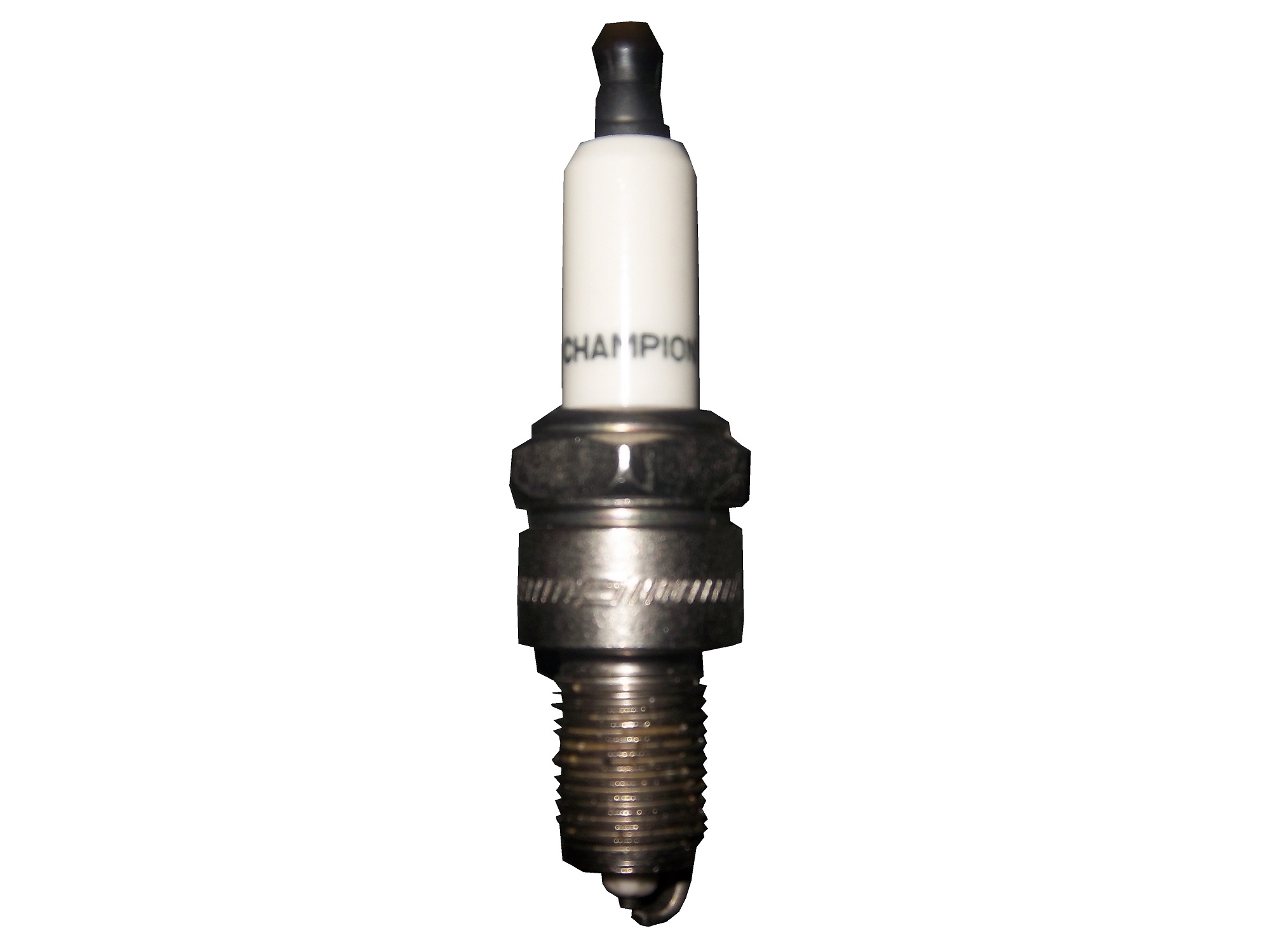
In regards to race-used equipment, I have this timing belt from Bob Tasca’s Motorcraft Funny car, this one used in his first qualifying session at the Ford Thunder Valley Nationals in Bristol Tennessee. This run he had a 4.15 second, 306 MPH run. This thing is HUGE, measuring over 64 inches in circumference and 3 inches across.As well as an ignition coil and a spark plug from Morgan Lucas Racing. Ignition coils are used to turn on cars in general, but this MSD 8142 is designed to fire up these 8000 horsepower engines, which need a lot of electricity to start and operate. I was fortunate enough to have Tony Schumacher and Ron Capps autograph it in person.
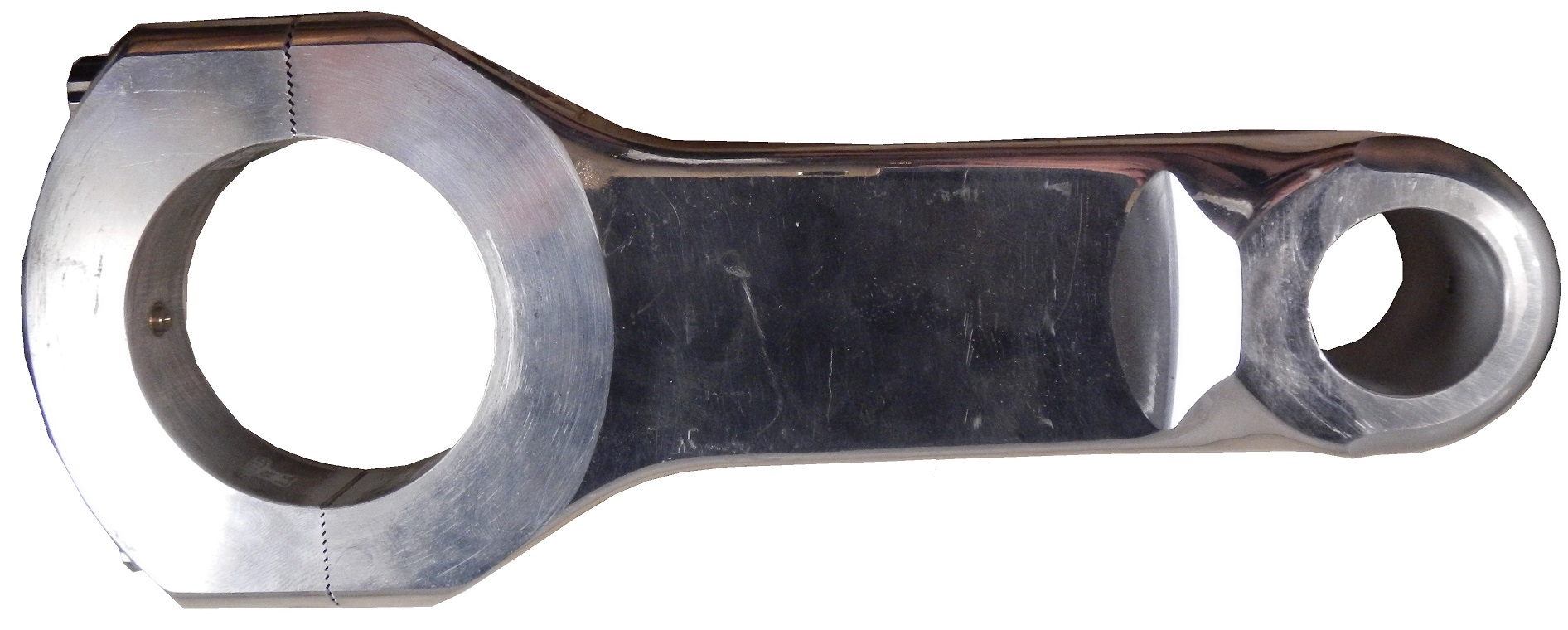
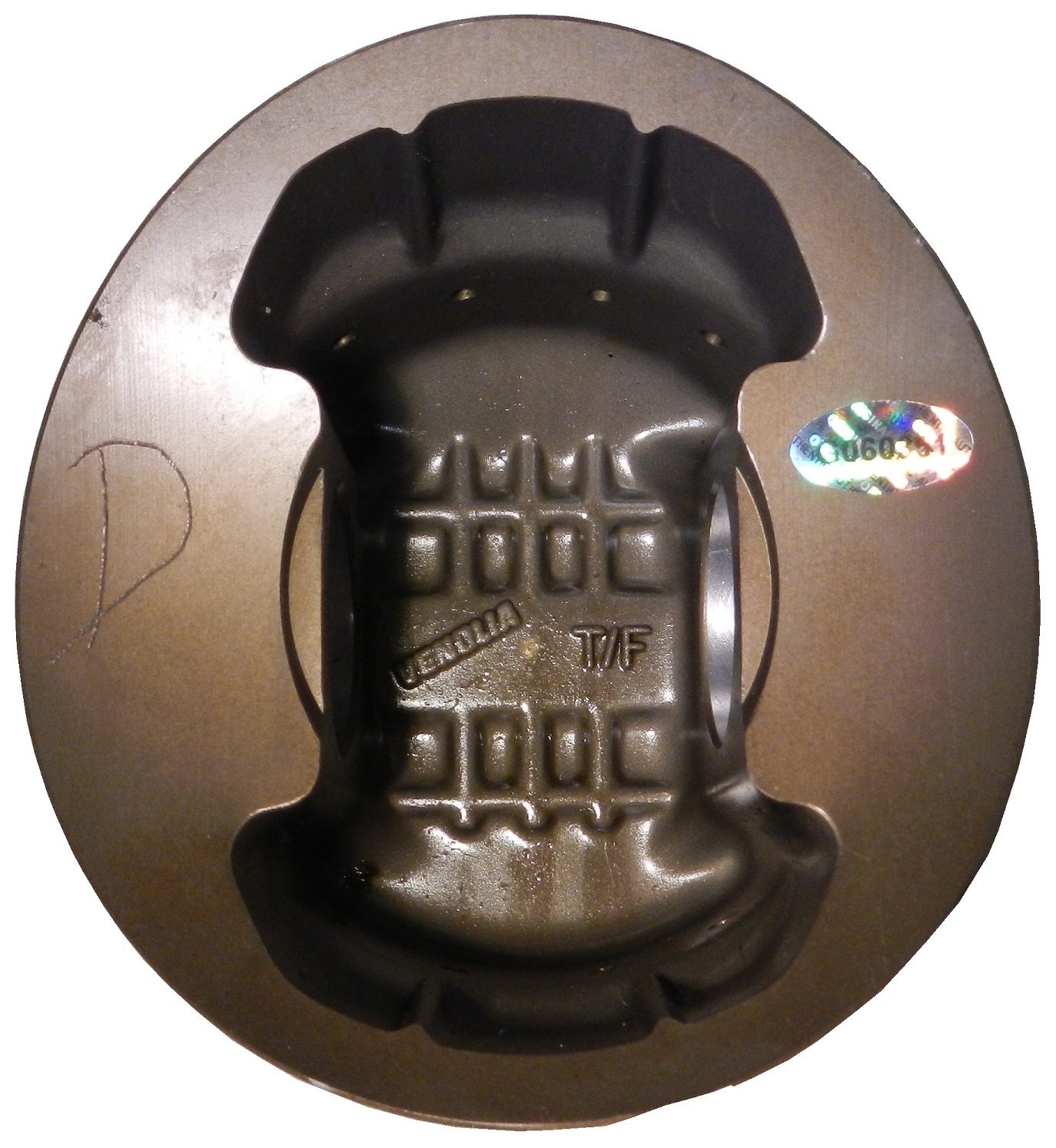
One thing I wanted was a race-used piston. I recently got one, but it is in two different pieces. The piston rod itself was used and autographed by top fuel driver Bob Vandergriff, and the piston head was used and autographed by Brandon Bernstein, son of drag racing legend Kenny Bernstein. The piston head is 3 inches in diameter, and the piston rod is almost a foot long!
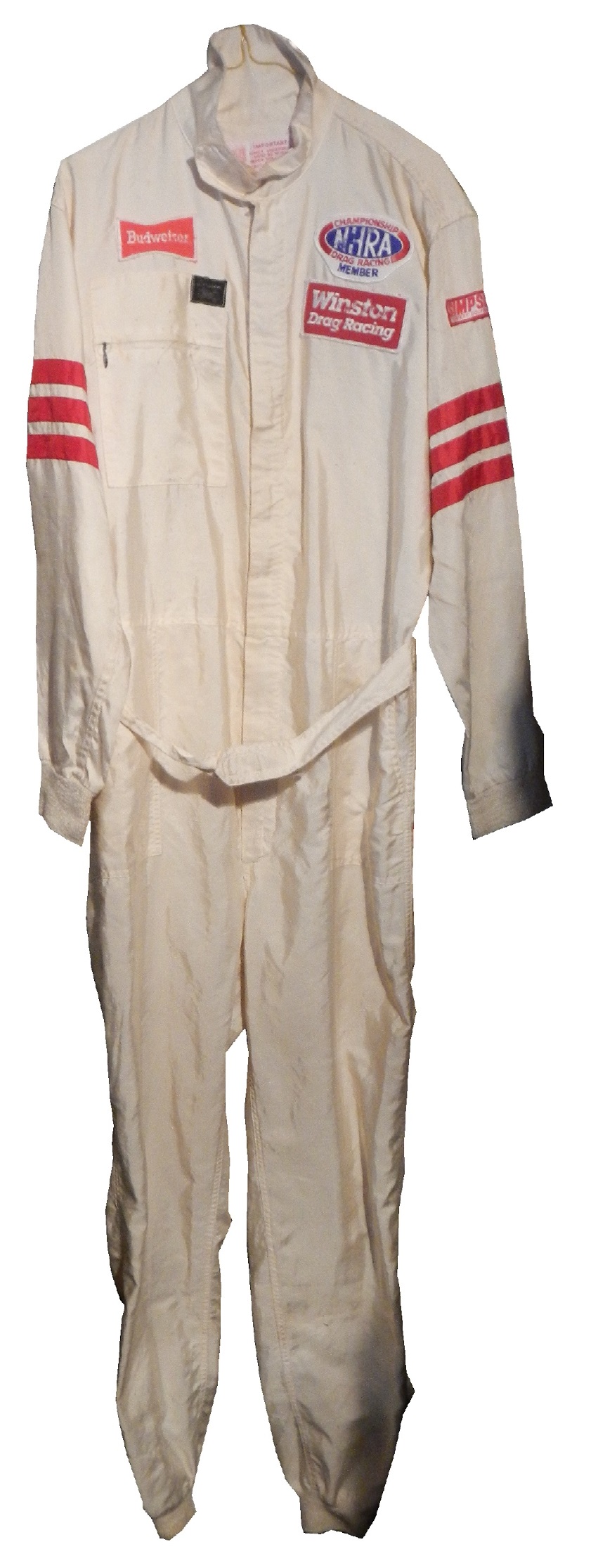
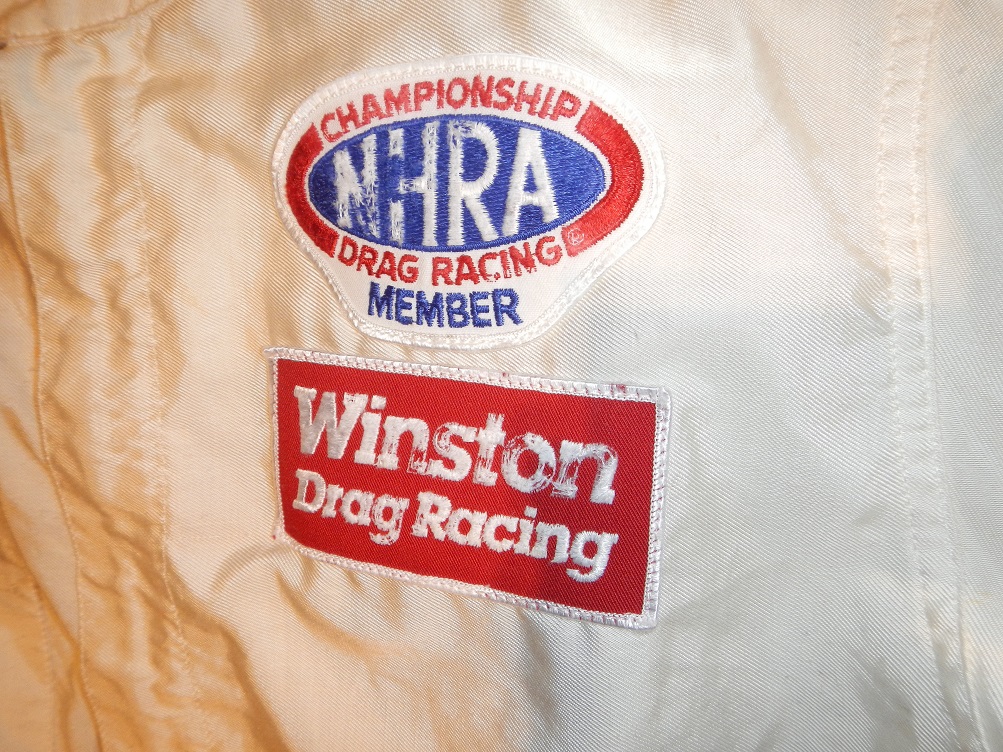
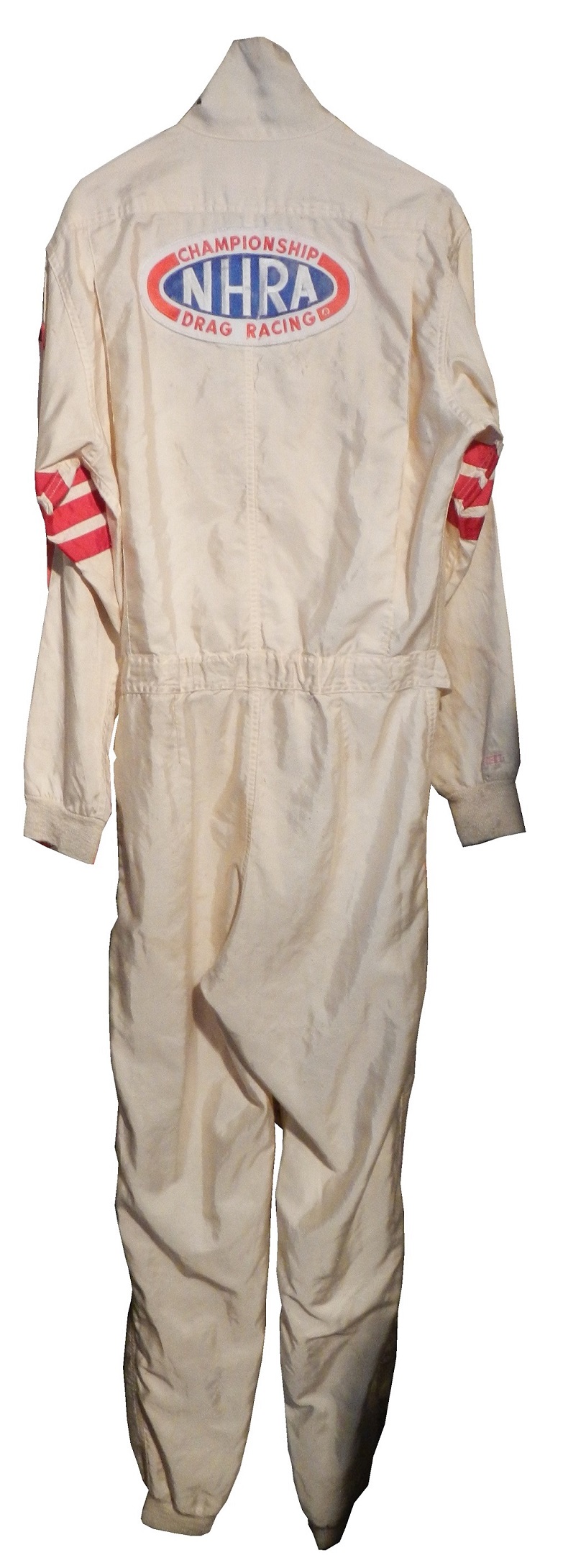
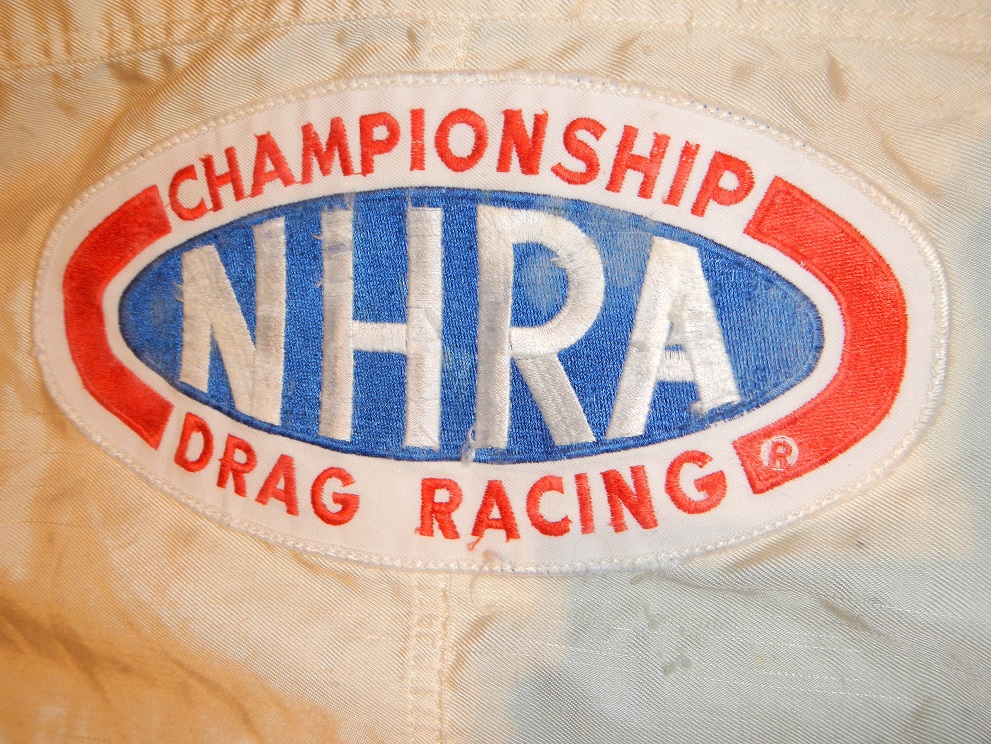
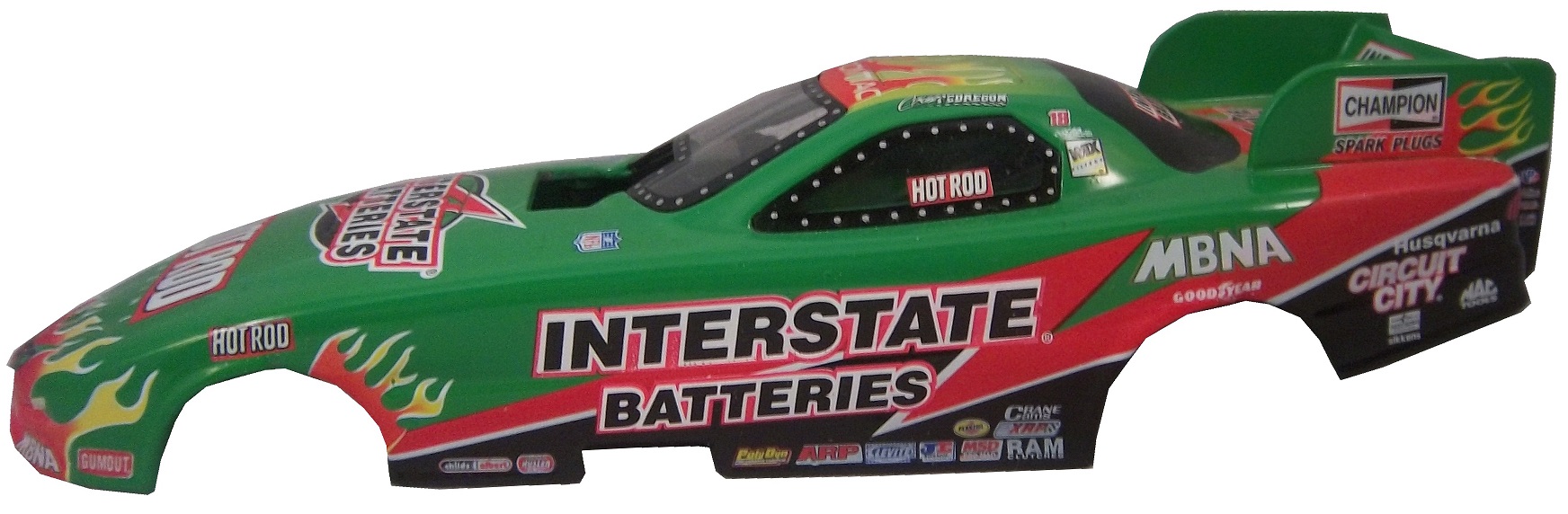
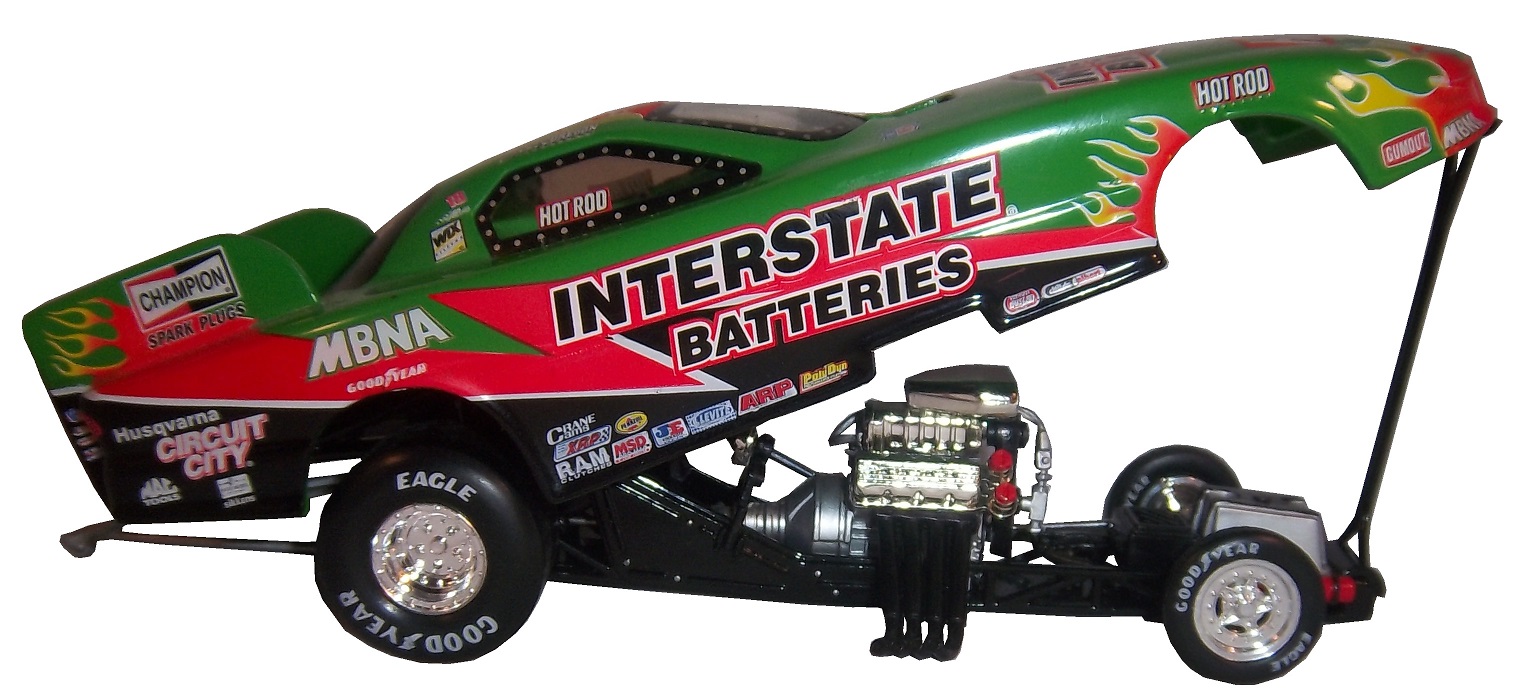
One of the more oddball items I have is this 1987 Budweiser/NHRA driver suit. Here is what I can say definitively about this suit: It was made in 1987, shows a lot of use, is not safety certified, and shows the Simpson open-wheel tag. Other than that, I don’t know much about this suit and I’m still working on it.Now we move on to die-casts. In my die cast article, I mentioned that I have a 1:32 Cruz Pedregon 1998 die cast from his days with Joe Gibbs Racing.
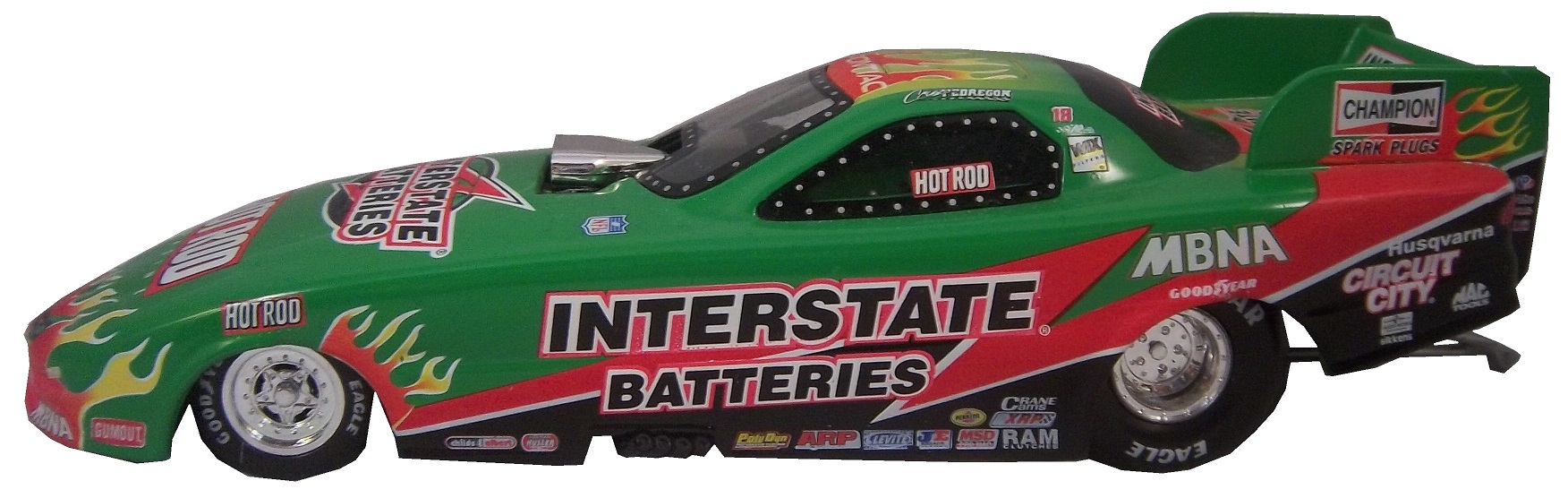
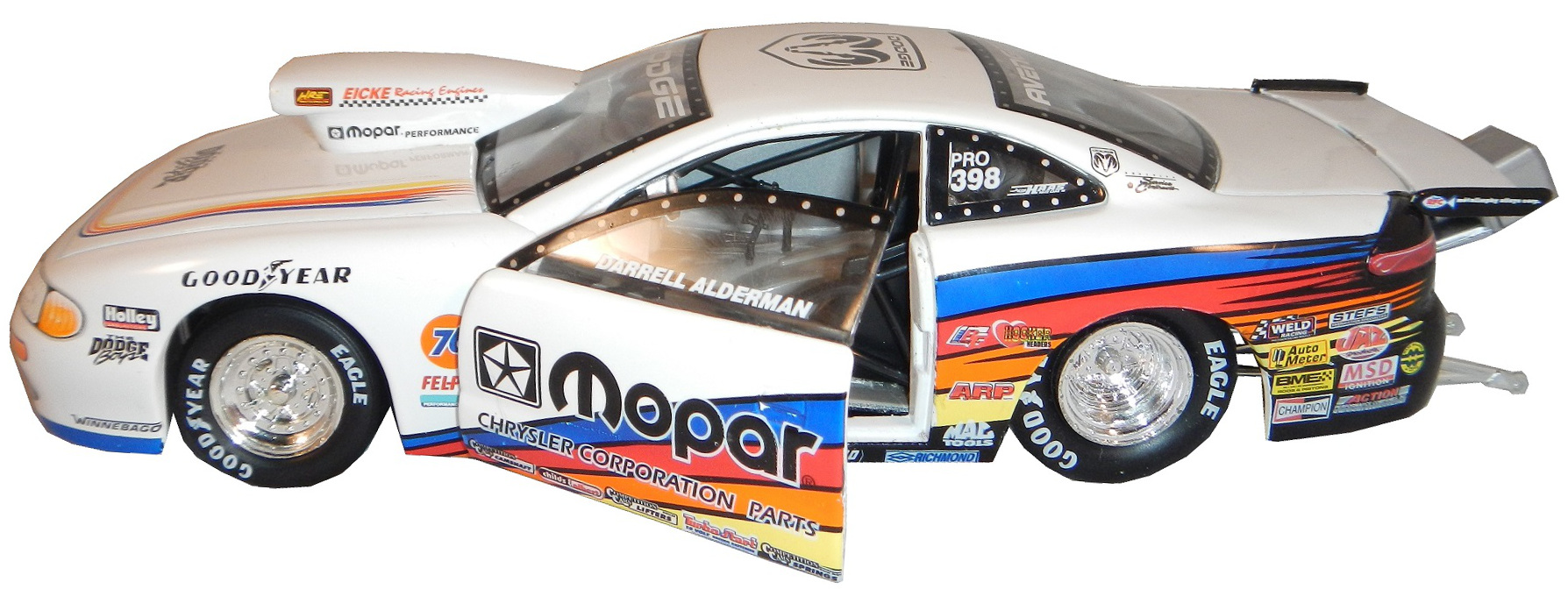
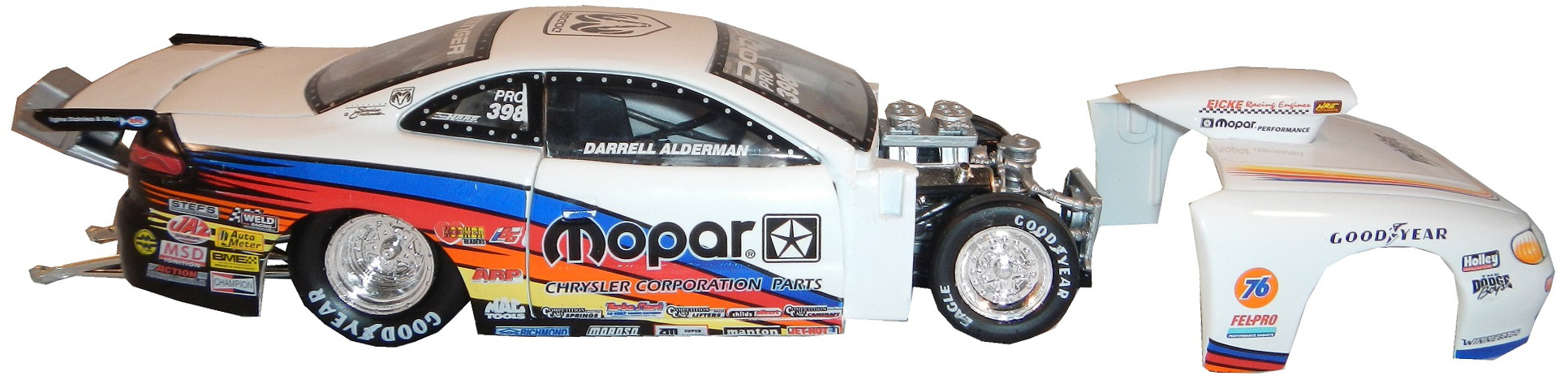
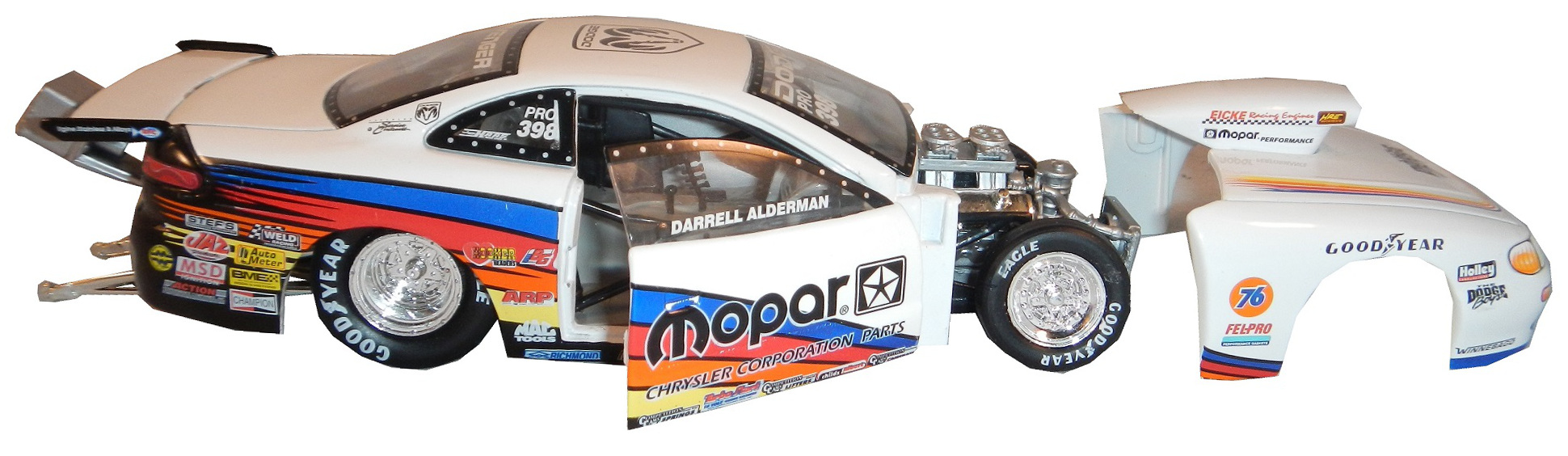
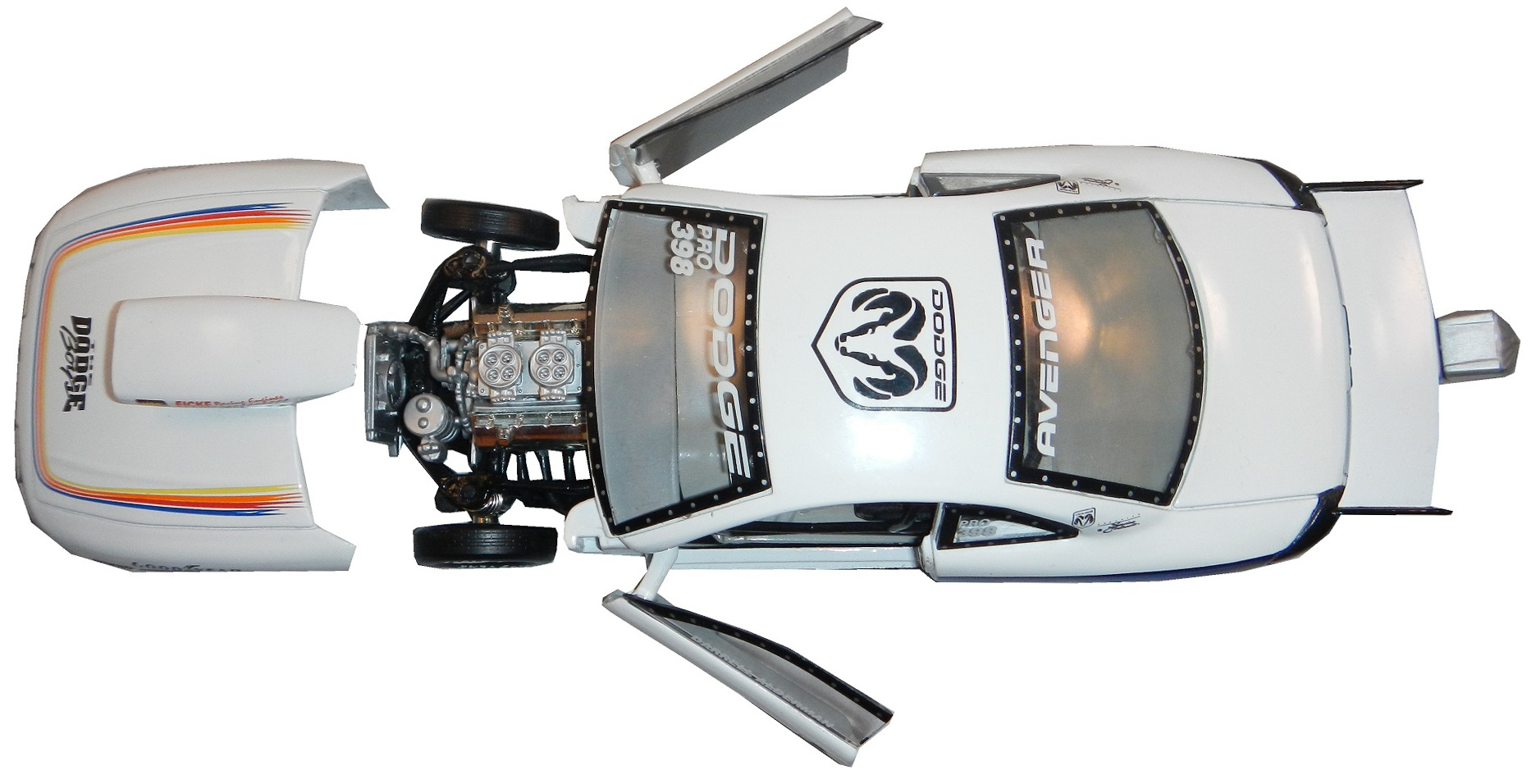
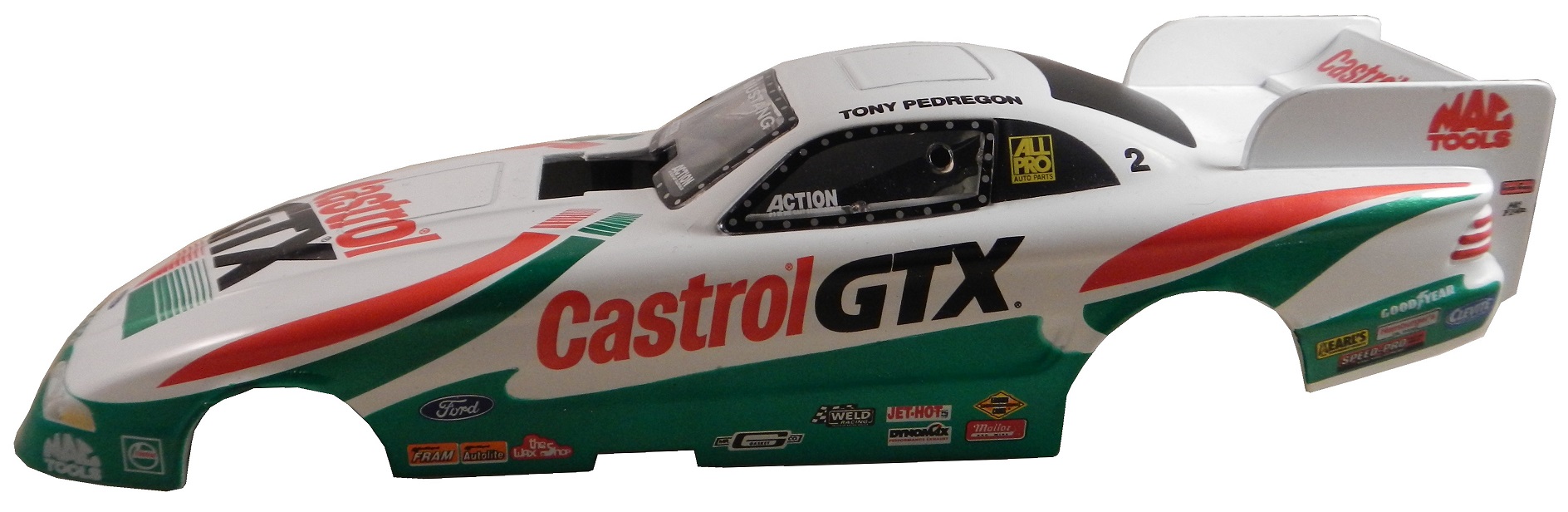
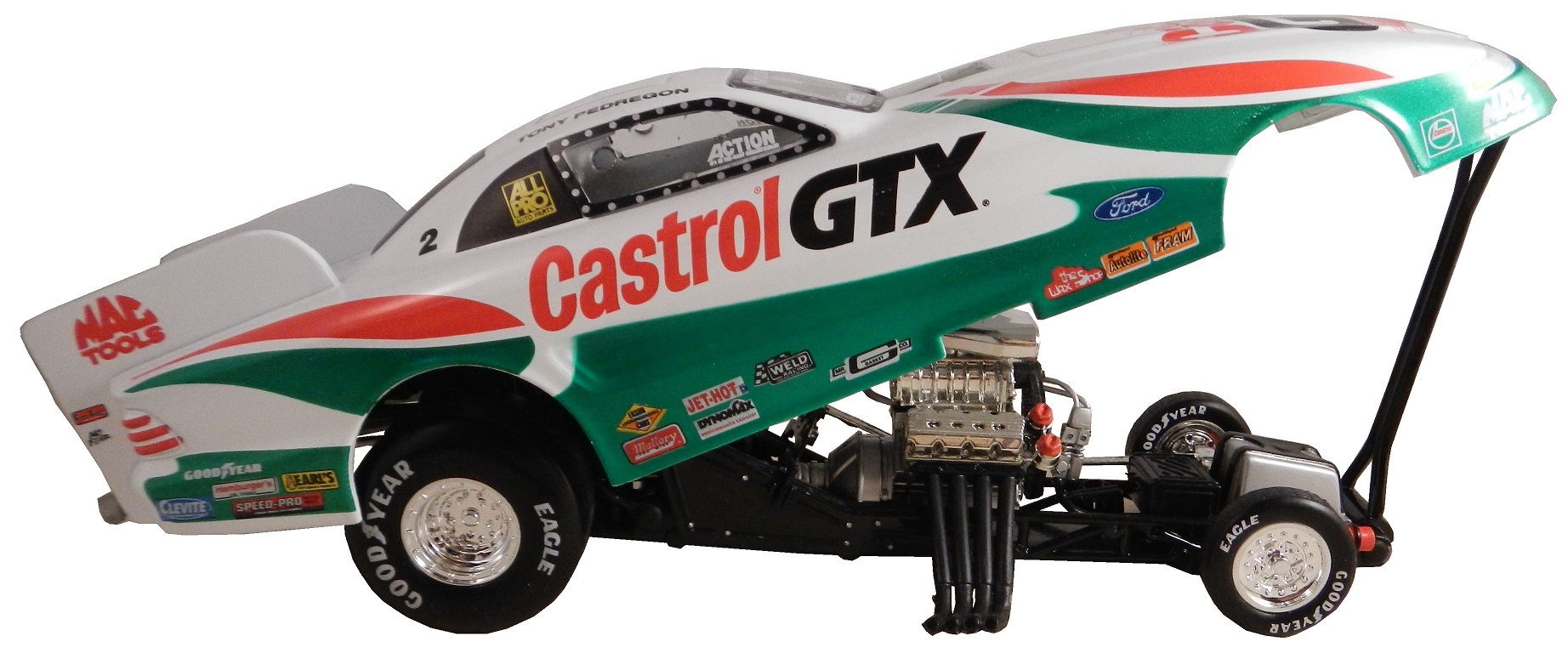
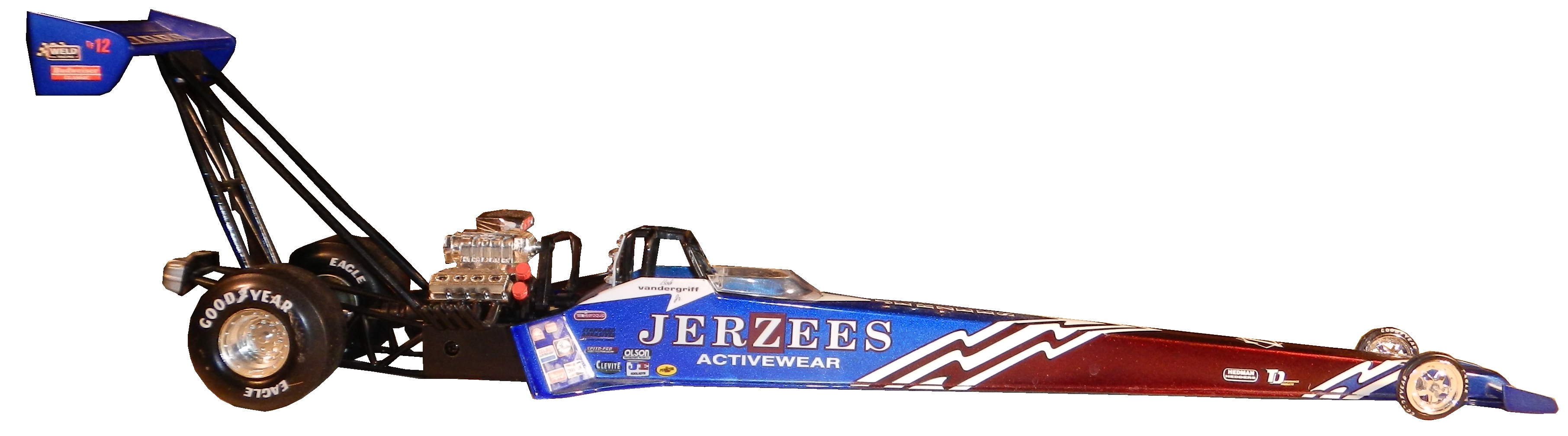
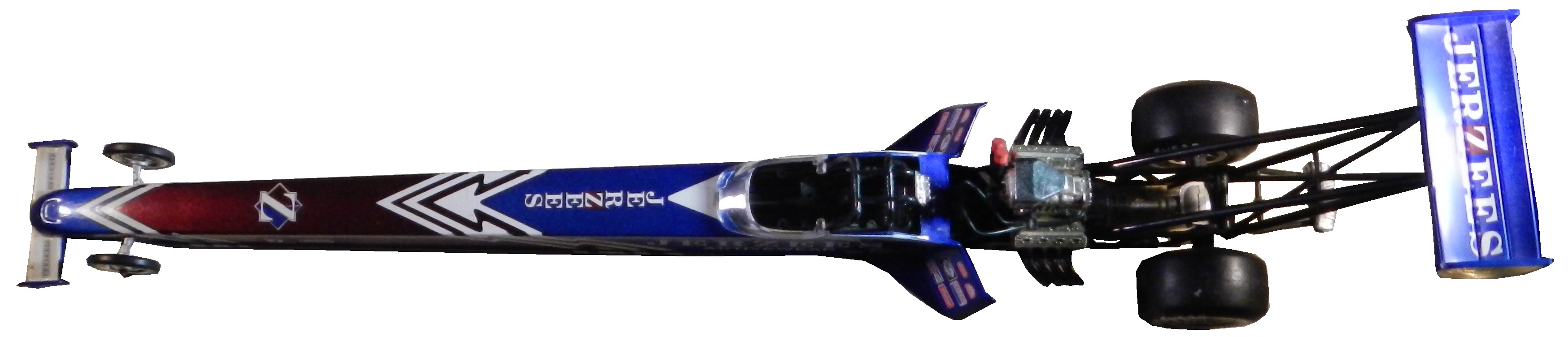
During my recent vacation, I found myself at a baseball card store. I bought a bunch of NASCAR die casts, as well as a Darrell Alderman 1:24 pro stock from 1997, where the doors open, and the hood comes off.Also from 1997, this Tony Pedregon 1:24 funny car die cast, with a body that is removableMy personal favorite die cast is this Bob Vandergriff 1:24 top fuel die cast.
Danica Patrick # 10 GoDaddy Chevy SS I didn’t think this was possible, but they took one of the ugliest schemes in racing and found a way to make it worse…the hood speaks for itself, and it says “I’m getting an F-!”
Greg Biffle 3M Window Film Ford Fusion What in the blue Hell is going on here? This is the worst Greg Biffle scheme I have seen this year and considering how bad his schemes have been that is saying a lot. F-
Travis Kvapil #32 Keen Parts Ford Fusion Awful color scheme, and the goofy pyscadelic side design just looks awful. I’m also laughing at corvetteparts.net painted on the side of a FORD! F-
Kurt Busch #41 Haas Made in America Chevy SS When it comes to patriotic schemes, it is hit or miss, and this is a hit. The stars and stripes look good, and the overall design is solid enough to earn an A.
Before I go I need to cover an update to a story I discussed last week. I had discussed Swan Racing going under due to lack of sponsorship. I did not get a chance to discuss that Swan Racing has gone under, but the two cars, #26 and #30 have found new homes. BK Racing is now the new home for the #26, and XXXtreme Motorsports is home for the #30, though it will change to #44, and keep the current owner points. It is always sad when a team has to close, but at least the equipment did not go to waste. Sadly, Parker Kligerman is now out of a ride for the foreseeable future.
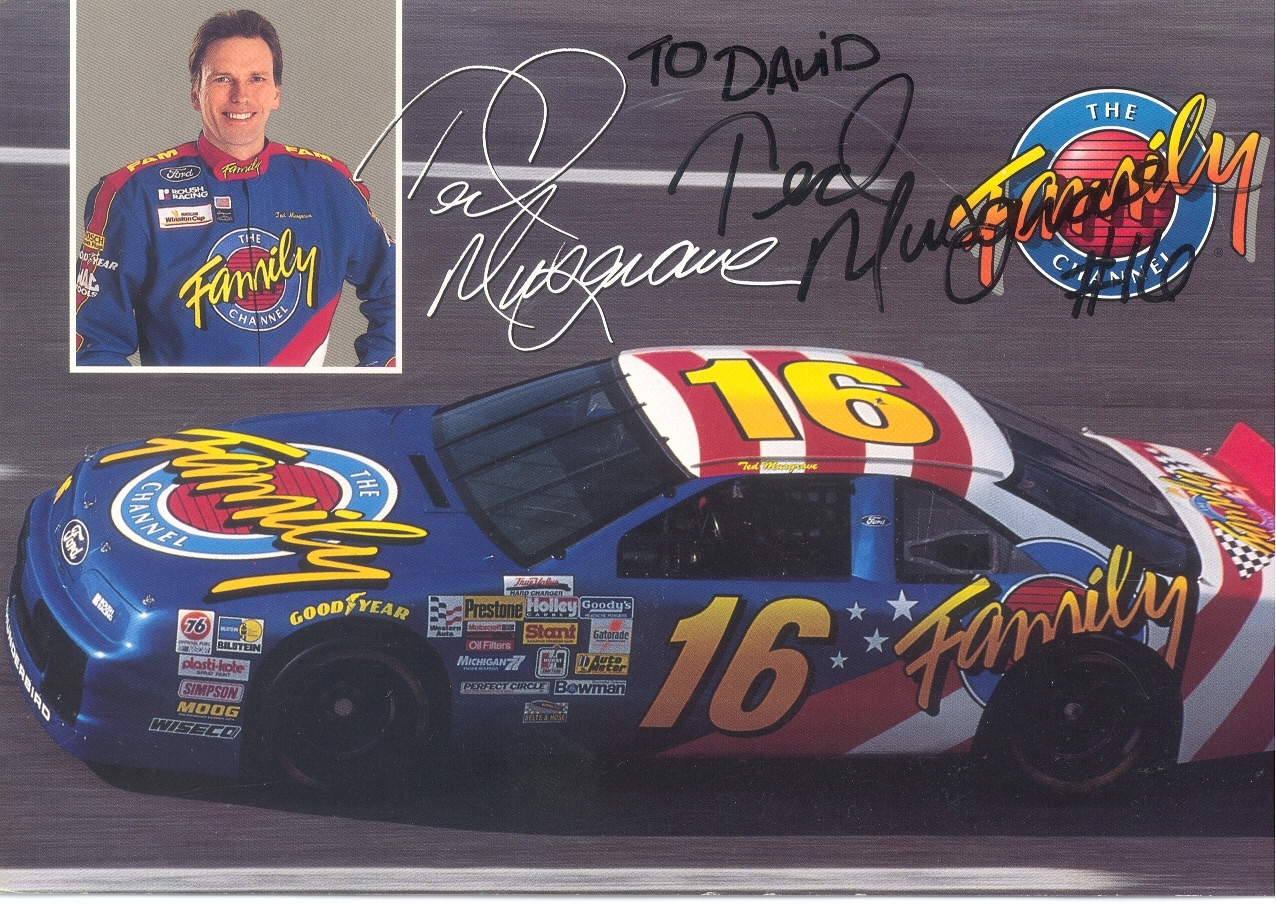
Last week, I discussed my favorite driver to collect, and this week I will examine his most well-known sponsor. From 1994-1997 Musgrave was sponsored by the Family Channel. The distinctive patriotic red white and blue design with that Family Channel logo was eye catching. The Family Channel logo was classic 1990’s design. It was also an idea whose time had come, and is still a great idea.
It was founded by Pat Robertson in 1977 as the CBN Satellite Service, which focused on Christian Broadcast Network programing. By 1981, it had re-branded as the CBN Cable Network, which began to focus more on family-friendly programing. It was a channel where families could watch together without needless violence, and gratuitous sex, something that should be redone today. The major moment was in 1990 when the channel became too profitable for the non-profit Christian Broadcast Network, and was transferred to International Family Entertainment, Inc. The CBN Cable Network became The Family Channel, and began to air recent dramas and sitcoms, as well as cartoons. In 1994, to gain visibility, The Family Channel joined forces with Roush Racing to create the #16 Family Channel Ford Thunderbird. This partnership lasted for 3 years, and Ted raced in 124 races, with 15 top 5’s and 36 top 10’s.
During the 1997 season, The Family Channel was purchased by Fox Kids Worldwide Inc. which was a joint venture between News Corporation, and Saban which re-branded the channel as Fox Family channel. This was out of necessity, as the average age of the viewer under the Family Channel banner was much older, and Fox Family set about trying to win back the younger viewers. The channel was used for everything from movies to cartoons, to Fox programing to Major League baseball. It became clear when the channel went from 10th in ratings to 17th in Nielsen ratings, that something was not working. Many outside observers felt that the push for younger viewers alienated the previous viewers.
In July 2001, almost 4 years to the date, the channel was sold to ABC and re-branded it ABC Family, which still operates to this day. It has come up with a format that amalgamates the two different styles of network. Though it hasn’t regained its previous glory, it has created a network that is family-friendly and appeals to families, not just young kids.
The #16 race team it spawned has had just as interesting a history. Roush had started in NASCAR in 1988, with Mark Martin as a driver and Stroh’s Light as the sponsor. They had a lot of success as a combo, and a second team was created in 1992. Wally Dallenbach Jr. started driving the Keystone Beer sponsored #16 Ford Thunderbird in 1992. Changes came in 1994, When Ted Musgrave was taken on as a sponsor. Ted was kept on until midway through the 1998 season, when he was let go from the team, and replaced with Kevin Lepage.
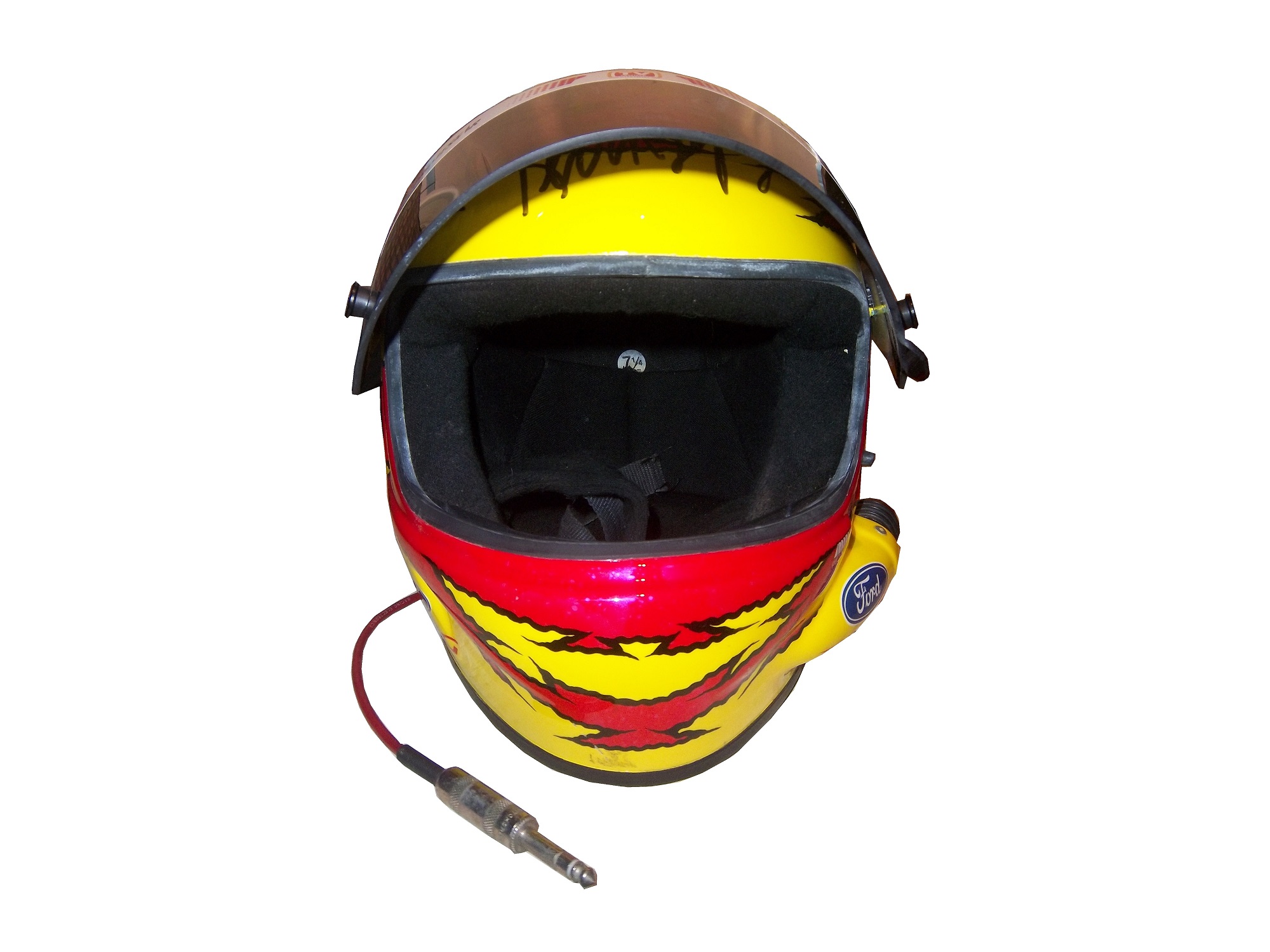
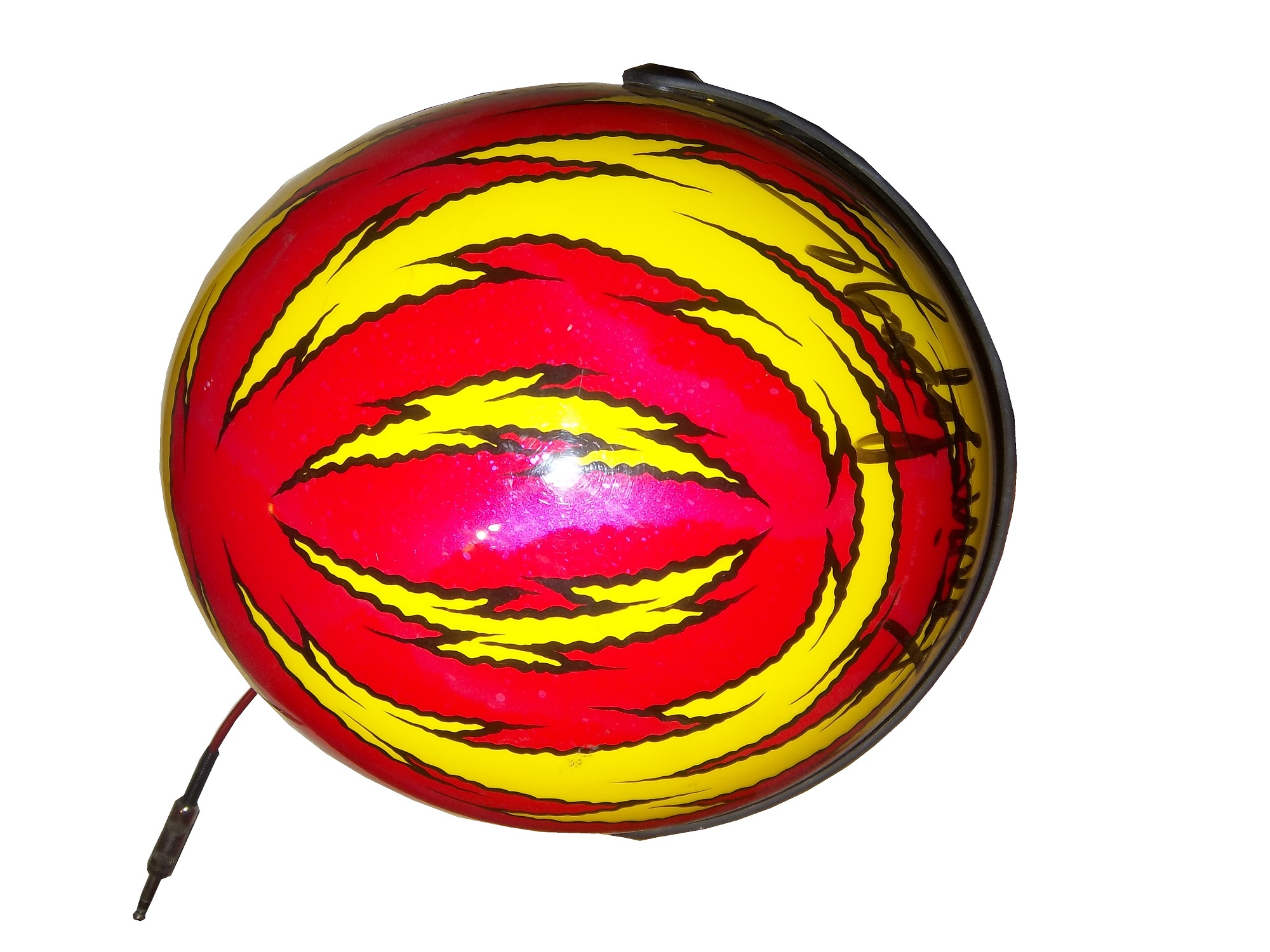
In 1999, TV Guide became one of the primary sponsors, and Lepage had a decent start to the season. As 1999 went on, Primestar left, TV Guide stayed and Lepage slipped in the points standings. I own a Kevin Lepage race-worn and signed helmet from 1999. It has the distinctive red and yellow scheme that TV Guide was known for. In 2000, Family Click took over as a sponsor, but Lepage slightly improved finishing 26th . At the end of the season, Family Click left the team, Lepage was released, and the #16 team disappeared for the entire 2001 season.
In 2002, the #16 Roush Racing Ford came back to NASCAR with Greg Biffle. They ran a limited schedule with 7 races started of the 10 races Biffle attempted to qualify for. In 2003, Biffle raced in the #16 Ford full-time, winning the Winston Cup Rookie of the Year award. Biffle continues to race in the #16 Ford full time and has had a lot of success, having won 19 races between 2003 and 2013. This team has a very bright future ahead of it.
Now on to…
PAINT SCHEME REVIEWS
Greg Biffle #16 Megulars Ford Fusion Best scheme Greg Biffle has run all year…and since that this is a C+ scheme, that is really sad. The color scheme is good, but the car design is awful.
David Stremme #33 Mace Chevy SS Great design, great color scheme, and I think that this is the first self-defense spray I have seen sponsor a car, so A+




































 The Driver Suit Blog
