By David G Firestone
STAR COM RACING #00
Jeffery Earnhardt #00 VRX Racing Simulators Chevy Camaro-New sponsor for 2018, white with silver and blue cutting edge designs. C
CHIP GANASSI RACING #1
Jamie McMurray #1 GearWrench Chevy Camaro–New scheme for 2018, black with green stripes and roof. A
Jamie McMurray #1 Cessna Chevy Camaro–New scheme for 2018, black with blue waves on sides. A
Jamie McMurray #1 DC Solar Chevy Camaro-New sponsor for 2018, dark blue and white with diagonal stripes. B-
Jamie McMurray #1 McDonald’s/Cessna Chevy Camaro–New scheme for 2018, red and black replaces blue. A
Jamie McMurray #1 McDonald’s Chevy Camaro–New scheme for 2018, red with yellow and black stripe, and yellow design on rear quarter panel bottom. A-
Jamie McMurray #1 Cessna/DC Solar Chevy Camaro-New scheme for 2018, same as McDonald’s, but with black, white, and gray. A
TEAM PENSKE #2
Brad Keselowski #2 Wurth Ford Fusion–New scheme for 2018, white and red Penske template. A
Brad Keselowski #2 Discount Tire Ford Fusion-New sponsor for 2018, white with black outline. A
Brad Keselowski #2 Miller Lite Ford Fusion–No change. A
Brad Keselowski #2 Alliance Truck Parts Ford Fusion–No Change. A
Brad Keselowski #2 Auto Trader Ford Fusion–No Change. D-
Brad Keselowski #2 Discount Tire Bruce Halle Ford Fusion-New scheme for 2018, same as discount tire but with Bruce Halle tribute on hood. A
RICHARD CHILDRESS RACING #3
Austin Dillon#3 Dow Chevy Camaro–New scheme for 2018, black fade to red to black across whole car. A
Austin Dillon #3 AAA Chevy Camaro–New scheme for 2018, all red, with white stripe pattern on sides. A
Austin Dillon #3 American Ethanol Chevy Camaro–New scheme for 2018, green front, black rear, white and black waves on sides. C-
Austin Dillon #3 Dow Silastic Silicone Elastomers Chevy Camaro-New sponsor for 2018, white with liquid motif on front, and yellow field motif on rear. A
STEWART-HAAS RACING #4
Kevin Harvick #4 Busch Ford Fusion–No change. A
Kevin Harvick #4 Mobil 1 Ford Fusion–No change. A
Kevin Harvick #4 Jimmy Johns Ford Fusion–New scheme for 2018, black and white reversed. A
ROUSH-FENWAY RACING #6
Trevor Bayne #6 Advocare Ford Fusion–New scheme for 2018, black with grey, silver and blue stripes. A
Trevor Bayne #6 Performance Plus Motor Oil Ford Fusion–No change. B-
Trevor Bayne #6 Advocare 25th Anniversary Ford Fusion-New scheme for 2018, same as regular, but with 25th Anniversary logo on hood. A
Trevor Bayne #6 Ford EcoBoost Ford Fusion–New scheme for 2018, black replaces red, more toned down, with white rear. B+
PREMIUM MOTORSPORTS #7
Danica Patrick #7 GoDaddy/Warriors By Danica Chevy SS-New sponsor for 2018, green with white stripes and black rear. A-
HENDRICK MOTORSPORTS #9
Chase Elliott #9 NAPA Chevy Camaro–New scheme for 2017, blue with white designs on sides. B+
Chase Elliott #9 Hooters Chevy Camaro–New scheme for 2018, orange back and white front, with Y design across sides. B-
Chase Elliott #9 Sun Energy Chevy Camaro–No change. F
Chase Elliott #9 Kelly Blue Book Chevy Camaro–New scheme for 2018, blue with white diagonal side and cutting edge design. C
Chase Elliott #9 Mountain Dew Chevy SS–New scheme for 2018, green with small black stripes on bottom. A
STEWART-HAAS RACING #10
Darrell Wallace Jr. #10 Smithfield Foods Ford Fusion–New sponsor for 2018, black and white with slash patterns on sides. A
JOE GIBBS RACING #11
Denny Hamlin #11 FedEx Express Toyota Camry–No change. B-
Denny Hamlin #11 FedEx Freight Toyota Camry–No change. B-
Denny Hamlin #11 FedEx Ground Toyota Camry–No change. B-
Denny Hamlin #11 FedEx Office Toyota Camry–No change. B-
TEAM PENSKE #12
Ryan Blaney #12 Duracel/Menard’s Ford Fusion–New scheme for 2017, yellow with narrow stripes. A
Ryan Blaney #12 Dex Imaging Ford Fusion-New scheme for 2018, Penske template, white front, red rear. A
Ryan Blaney #12 PPG Ford Fusion-New sponsor for 2018, blue front, white rear, horizontal paint drip motif across car. A
Ryan Blaney #12 Peak/Menard’s Ford Fusion–New scheme for 2018, new Menard’s template with Peak on hood. A
Ryan Blaney #12 Menard’s/Pennzoil Ford Fusion-New sponsor for 2018, yellow with silver and white wave design on sides. B-
GERMAIN RACING #13
Ty Dillon #13 Twisted Tea Chevy Camaro–No change. A
Ty Dillon #13 Geico Chevy Camaro–New scheme for 2018, similar scheme to 2017, but some cutting edge designs replace stripe on sides. C
Ty Dillon #13 Geico Millitary Chevy Camaro–New scheme for 2018, similar scheme t0 2017, but with some changes to the front. F
STEWART-HAAS RACING #14
Clint Bowyer #14 Rush’s Truck Stops Ford Fusion–New scheme for 2018, yellow front, red stripe, black rear. A
Clint Bowyer #14 Haas CNC Ford Fusion–No change. A
Clint Bowyer #14 Mobil 1 Ford Fusion–New scheme for 2018, silver replaces green. A
Clint Boyer #14 CSU One Cure Ford Fusion–New scheme for 2018, side stripes are cleaner. A
PREMIUM MOTORSPORTS #15
Ross Chastain #15 Low T Center Chevy Camaro–No change. F
ROUSH-FENWAY RACING #17
Ricky Stenhouse Jr. #17 Fastenal Ford Fusion–New scheme for 2018, blue with white and black diagonal stripes across sides. A
Ricky Stenhouse Jr. #17 Fifth-Third Bank Ford Fusion–No change. B-
Ricky Stenhouse Jr. #17 Ford Ford Fusion–New scheme for 2018, black front, with red and black stripes across sides. F
JOE GIBBS RACING #18
Kyle Busch #18 M&M’s Toyota Camry–No change. A
Kyle Busch #18 Snickers Almond Toyota Camry-New sponsor for 2018, red, white and blue with large stripes on sides. F
Kyle Busch #18 M&M’s Caramel Toyota Camry–No change. A
JOE GIBBS RACING #19
Daniel Suarez #19 Stanley Toyota Camry–New scheme for 2017, yellow with a series of gray and black cutting edge designs on sides. D-
Daniel Suarez #19 Arris Toyota Camry–New scheme for 2018, orange replaces silver on quarter panel. A
Daniel Suarez #19 Peak Toyota Camry–No change. A
Daniel Suarez #19 Arris Ruckus Toyota Camry-New sponsor for 2018, solid orange with white and black numbers and letters. A
Daniel Suarez #19 Coca Cola Toyota Camry–New sponsor for 2018, red with white Coca Cola stripe across sides. A
JOE GIBBS RACING #20
Erik Jones #20 DeWalt Toyota Camry–No change. A
Erik Jones #20 Reser’s Fine Foods Toyota Camry-New sponsor for 2018, black with red bottom. A
Erik Jones #20 Circle K Toyota Camry–New scheme for 2018, slightly different design, with shorter stripes, and logo adjustments. A
Erik Jones #20 SportClips Toyota Camry–New sponsor for 2018, same as 2017 #11. C-
WOOD BROTHER RACING #21
Paul Menard #21 Motorcraft Ford Fusion–No change. A
Paul Menard #21 Menard’s Ford Fusion-New sponsor for 2018, same as #12. A
Paul Menard #21 OmniCraft Auto Parts Ford Fusion–No change. A
TEAM PENSKE #22
Joey Logano #22 AAA Ford Fusion–No change. D
Joey Logano #22 Auto Trader Ford Fusion–No Change. D-
Joey Logano #22 Pennzoil Ford Fusion–No change. A
Joey Logano #22 Shell/Pennzoil Ford Fusion–No change. D
Joey Logano #22 Pennzoil Ford Fusion–No change. A
BK RACING #23
Gray Gaulding #23 EarthWater Toyota Camry–New scheme for 2018, white replaces black, complex gray, orange, and blue designs on sides. F
Gray Gaulding #23 Toyota Camry-New scheme for 2018, white with red and black numbers. A
Gray Gaulding #23 Toyota Camry-New scheme for 2018, black sides, white hood and roof. A
HENDRICK MOTORSPORTS #24
William Byron #24 Axalta Chevy Camaro–New scheme for 2017, blue with flame motif across whole car. A
William Byron #24 Liberty University Chevy Camaro-New sponsor for 2017, blue with red flames on front. A
RICHARD CHILDRESS RACING #31
Ryan Newman #31 Granger Chevy Camaro–No change. A
Ryan Newman #31 Caterpillar Chevy Camaro–No change. B-
Ryan Newman #31 Liberty National Chevy Camaro-New sponsor for 2018, green front, rear and roof, blue sides. F
Ryan Newman #31 Bass Pro Shops/Cabela’s Chevy Camaro-New sponsor for 2018, red top, yellow stripes, black bottom. C-
GO FAS RACING #32
Matt DiBenedetto #32 Keen Parts/Corvette Parts Ford Fusion–New scheme for 2017, red, with slight wave formation across sides. A
Matt DiBenedetto #32 The Hurricane Heist Ford Fusion-New sponsor for 2018, dark blue thunderstorm motif. A
Matt DiBenedetto #32 Can Am/Wholey Ford Fusion–New scheme for 2018, slight design change, with Wholey logo on quarter panel. F
FRONT ROW MOTORSPORTS #34
Michael McDowell #34 Love’s Truck Stops/Speedco Ford Fusion–No change. A
Michael McDowell #34 K-Love Ford Fusion–No change. A
Landon Cassill #34 Love’s Truck Stops Ford Fusion–No change. A
JTG DAUGHERTY RACING #37
Chris Buescher #37 Kleenex Chevy Camaro–New scheme for 2018, blue with silver and white cutting edge designs. C
Chris Buescher #37 Louisiana Hot Sauce Chevy Camaro-New sponsor for 2018, black with red and yellow fire design on sides. A
Chris Buescher #37 Natural Light Chevy Camaro–New scheme for 2018, red cutting edge designs have been added. B-
FRONT ROW MOTORSPORTS #38
David Ragan #38 Shriner’s Children’s Hospital Ford Fusion–New scheme for 2018, blue with black and white stripe, and red bottom. A
David Ragan #38 FR8 Auctions Ford Fusion–No change. F
STEWART-HAAS RACING #41
Kurt Busch #41 State Water Heaters Ford Fusion-No change. B+
Kurt Busch #41 Monster Ford Fusion–No Change. A
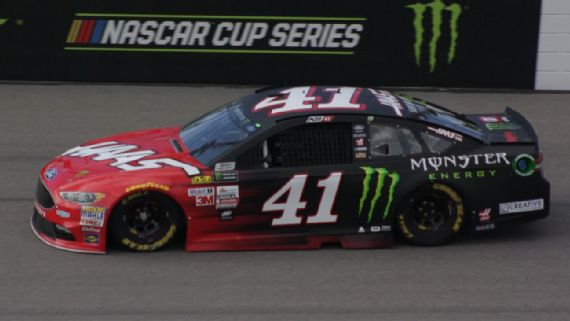
Kurt Busch #41 Haas/Monster Ford Fusion–No Change. A
Kurt Busch #41 Haas Automation Ford Fusion-New sponsor for 2018, red fade to black. A
CHIP GANASSI RACING #42
Kyle Larson #42 Credit One Chevy Camaro–New scheme for 2018, blue with white and lighter blue stripes. A
Kyle Larson #42 DC Solar Chevy Camaro-New sponsor for 2018, same design as #1, but with colors reversed. B-
Kyle Larson #42 DC Solar Chevy Camaro-New scheme for 2018, blue and white with sunburst motif on sides. D-
RICHARD PETTY MOTORSPORTS #43
Darrell Wallace Jr. #43 Click N Close Chevy Camaro-New sponsor for 2017, dark blue with Click N Close. A
Darrell Wallace Jr. #43 Air Force Chevy Camaro–New scheme for 2018, same as 2017, but with black stripe across bottom. A
Darrell Wallace Jr. #43 STP Chevy Camaro–New scheme for 2018, red sides, blue hood and roof, with some silver designs on borders. A-
Darrell Wallace Jr. #43 NASCAR Racing Experience Ford Fusion-New sponsor for 2018, blue sides, white hood and roof. A
Darrell Wallace Jr. #43 Cosmopolitan of Las Vegas Chevy Camaro-New sponsor for 2018, white front, blue rear. A
JTG DAUGHERTY RACING #47
AJ Allmendinger #47 Kroger Chevy Camaro–New scheme for 2018, white with blue and red stripes on sides. B-
HENDRICK MOTORSPORTS #48
Jimmie Johnson #48 Lowe’s Pro Services Chevy Camaro–New scheme for 2018, black with gray outlines. A
RICK WARE RACING #51
Justin Marks #51 Keens Buildings Chevy Camaro-New sponsor for 2018, black with orange, gray, and white designs on sides. D+
Justin Marks #51 Harry’s Razors Chevy Camaro-New sponsor for 2018, blue, orange, and white sunbeam design. C+
Cole Custer #51 Haas CNC Ford Fusion-New sponsor for 2018, same as #14, but white replaces black. A
Harrison Rhodes #51 Davis Roofing Chevy Camaro-New sponsor for 2018, white with red and black vertical stripes. A
PREMIUM MOTORSPORTS #55
Joey Gase #55 Nevada Donor Network Chevy Camaro-New sponsor for 2018, black with orange and blue designs on sides. A-
BEARD MOTORSPORTS #62
Brendan Gaughan #62 Beard Oil/South Point Chevy Camaro-New sponsor for 2018, white front, yellow curve, black rear. A
MBM MOTORSPORTS #66
Mark Thompson #66 Phoenix Air Ford Fusion–No change. A
TRI STAR MOTORSPORTS #72
Corey LaJoie #72 Schluter Systems Chevy Camaro–New scheme for 2018, black replaces all white designs. C-
Mark Smith #72 Chevy Camaro-New scheme for 2018, black with red and white stripe across bottom. A
FURNITURE ROW RACING #78
Martin Truex Jr. #78 Bass Pro Shops/5-Hour Energy Toyota Camry–New scheme for 2018 black with orange designs on sides. C-
Martin Truex Jr. #78 5-Hour Energy/Bass Pro Shops Toyota Camry–New scheme for 2018 black with red designs on sides. C-
Martin Truex Jr. #78 Auto Owner’s Insurance Toyota Camry–No change. A
HENDRICK MOTORSPORTS #88
Alex Bowman #88 Nationwide Chevy Camaro–New scheme for 2017, blue with white designs on sides. B+
Alex Bowman #88 Axalta Chevy Camaro–New scheme for 2018, black with blue,red,white,and yellow cutting edge designs across sides. F
Alex Bowman #88 Llumar Window Film Chevy Camaro-New sponsor for 2018, white with red and green designs on sides. B+
RICKY BENTON RACING #92
David Gilliland #92 Carquest/Black’s Tire Ford Fusion-New sponsor for 2018, white with black and blue wave on sides, black roof. C-
LEAVINE FAMILY RACING #95
Kasey Kahne #95 Procore Chevy Camaro–New scheme for 2018, black, white, and orange with cutting edge designs across whole car. F
Kasey Kahne #95 Procore Chevy Camaro-New scheme for 2018, same as earlier scheme, white and black reversed. F
Kasey Kahne #95 Procore/Habitat for Humanity Chevy Camaro-New sponsor for 2018, same as Procore, but with Habitat for Humanity on sides and hood. F
Kasey Kahne #95 WRL Contractors Chevy Camaro–New scheme for 2018, blue is the primary color, with lighter blue patches on sides. B+
GAUNT BROS RACING #96
 The Driver Suit Blog