Wheel Reviews-9 Days in Summer

By David G. Firestone

9 Days in Summer is a documentary produced by Ford showing the development of the Cosworth DFV and Lotus 49. These two cars would only go on to race in 9 of the 11 races in 1967. Although it is produced by Ford, and isn’t as neutral as documentaries should be, this one is really interesting when compared to the way things are done now in auto racing.

The film shows designer Keith Duckworth silently working on his board, mixed with video of racing cars, and stylized guages. Then the film shows a 1966 meeting of four people, Duckworth, Fred Hayes, Colin Chapman and Harley Copp in Ford’s Design and Engineering Center in Essex, discussing the development of a new race car. After this discussion has proceeded for a while, the film jumps to the 1967 Belgian Grand Prix, where both of Ford’s new cars drivern by Graham Hill and Jim Clark, retire. This provides some of the most unintentionally hilarious scenes I have ever seen, because the film will show footage of racing mixed with random shots of farm animals. The editing is a little schizophrenic.

The scene then sifts back to the DEC, and Ford building the first series of engines. The various issues including size and weight are discussed, and the engines are machined using a series of automated machines, which were revolutionary in 1967 are obsolete in 2017.

The movie cuts to the LeMans Forumla One circuit. The track is described as “a Mickey Mouse track.” Both cars suffer engine problems, and fail to finish. After the race, Ford goes back to the shop, and tries to figure out what the problem is. The size of the engine, a 3L 90 degree V8 is designed to work with the chassis. It’s a new experiment, designing the engine and car specifically for each other. In fact, the engine makes up part of the chassis.

The British Grand Prix at Silverstone is the next event, Ford brings both their cars to the event with a lot of confidence. The power of the car is clear, but the reliability is dubious. Despite this, Graham Hill does an interview where he praises the new car design. Afterwards, other aspects of the car design are worked on by the team.

A new engine design is delivered to Lotus, and the engineers proceed to mount the engine to the rest of the chassis. After this is done, Graham Hill wrecks at practice for The Grand Prix of Germany at the Nürburgring. The jumps cause a series of suspension problems, and both Lotus cars retire. Hill spins at the begining of the race, and is at the back of the pack. I also love the total lack of safety gear at the track, no walls, no fences, and sharp cliff drop-offs.

Next is shown footage of Lotus testing the new car setup. This time at Snetterton. Graham Hill is testing, and says that, among other things, “It’s got some poke, not a bad old tool.” This part shows some obviously staged shots of the testing, and the short montage and then cuts to the rainy Canadian Grand Prix. There are a number of double-exposed shots of the cars racing in the rain, and the cars seem like they have got the problems fixed. Rain derails Clark’s race, plauging the electrical system. Hill keeps going, but rain causes him to finish fourth.

Graham Hill is shown relaxing with his family before the Italian Grand Prix at Monza. This bit of fun and merrient seems sad when looking back. Damon Hill, who would go on to have his own racing career is featured in this scene. The two drivers featured, Graham Hill and Jack Clark wouldn’t be around for much longer. Jack Clark would die in 1968 in a plane crash, and Graham Hill would die in 1974 in a racing accident. Once the relaxing is done, the work begins anew at Monza.

At Monza, Clark shows some speed initially, and jumps to the front. Graham Hill looked decent, but yet another engine failure plagues him. Clark blows a tire, makes a lap back, and loses the race in a photo finish. The camera shows the closeness of the finish. It’s a badly-needed boost for the new engine design.

The next scene is Jim Clark examined a rainy and empty Watkins Glen. He kicks a rock, and walks into a car. Suddenly it’s race day. Clark and Hill start at the front, and have a great start to the race. This time however is different, as Clark and Hill finish first and second respectivly.

The final race in the Formula One season is Mexico, which had Clark and Hill battle each other for the lead. It’s obvious that, like the Lotus testing, some shots were clearly staged. Hill breaks a universal joint, and his race and season are over. Jim Clark goes on to win his second race of the season. The film ends with a model of the car on a desk, with some trophies in the background.

Again, it’s more of a promotional film than a documentary, but it did something that wouldn’t be done today, take a viewer into the whole design process of an engine and chassis design. The secrecy that Formula One, and other racing teams is such that often, teams don’t want cameras around their engines. This film takes the veiwer into the engine design process, to a degree that’s uneard of.

The editing is pointless artsy sometimes. Also, the farm animals, the double-exposure, and the obviously staged shots take away from the whole feel of the documentary. Still, it’s worth a watch, if you are a racing fan, but there are a lot of better documentaries out there.

NASCAR Book Club-NASCAR: A Complete History

1By David G. Firestone

Many NASCAR fans are NASCAR historians, as am I. I love learning about the history of auto racing, and the history of automobiles. I also love being able to access information about the history of NASCAR. For those who love NASCAR, one of the best books is NASCAR The Complete History. I have the 2013 edition, which covers up to the end of the 2013 season.1The book is a heavy-duty leather covered book with a stock car depiction on it. Inside, each season is given a few pages, in which the story of the season, photos and statistics are present. There is a bit of generalization involved with the seasons review, but it’s forgivable because a lot of details about the season, the drivers, and the racing that is really good. It’s a long read, but a good read.2 3 4 7 8 9 As a reference material, it’s great because it contains a lot of things that can’t really be found in other books, especially about the early seasons of NASCAR, and some of the early drivers. It’s easy to lose track of time while reading this book, there are so many good stories, and good information. As a book, its a great read that could be read over the course of a weekend. The writing is great, and interestingly, there are times where you take an interest where it wouldn’t seem that interesting.

Each year, a new edition is published, in order to add the previous season’s information into the book. I find that the new editions aren’t as interesting, because much of the new information is stuff we’ve just seen, and I like the older, more obscure things the books discusses.

My final assessment is that this book is a must-have for NASCAR fans and I would go so far as to say that it should be in the possession of all racing fans. It’s a great reference, and a great read.

Wheel Reviews-Senna

By David G. Firestone

January is Wheel Reviews Month. This month, I will feature four Wheel Reviews, two movie and two book reviews. I’ve got an obscure movie next week, and a couple of interesting books prepared for the weeks after that. This week, I’m going to focus on one of, if not the, best racing documentaries ever produced.

One of the most important laps in Formula One history was the seventh lap of the 1994 San Marino Grand Prix. That was the lap where Ayrton Senna lost control of his car on the Tamburello corner at Autodromo Enzo e Dino Ferrari, located in Imola, Italy, and died as a result of his injuries. That accident was the genesis of the refocusing on safety that saw Formula One go without a fatality for 20 years, which is unheard of in the history of auto racing.

The dark clouds that were over that race were clear to everyone. Rubens Barrichello was seriously injured during a crash. During Saturday qualifying, Roland Ratzenberger was killed in a wreck. There was talk among the drivers and track staff about the issues, and if drivers would back out of the race. Senna and Dr. Sid Watkins allegedly discussed Senna backing out of the race and going fishing. Senna did appear to be visibly shaken and his mental state before the race clearly wasn’t where it needed to be. Senna decided against going fishing, and during lap seven, his life came to an end.

One of the best documentaries about Formula One, and for that matter auto racing, Senna was released in 2010. Produced by Tim Bevan, Eric Fellner, and James Gay-Rees, and directed by Asif Kapadia, Senna revolves around Ayrton Senna’s Formula One career. It touches on his time with Toleman in 1984, and Lotus from 1985 to 1987. Where it really starts to get in depth is when it discusses his signing with McLaren in 1988.

Senna won five races prior to 1988, but when he joined McLaren, he became a top-shelf driver. The film discusses in detail his personal life, and his relationships with his family off track, and his rivalries with Alain Prost, and Jean-Marie Balestre, among others. The rivalry between Prost and Senna is the main conflict. You get a sense that the two didn’t like each other on a personal level, but they had a deep respect for each others driving skills.

You also see that Senna had a deep respect for Brazil, even though politically the country was in a bad place at the time. The country rallied around him because he gave the country something to root for in a dark time. Senna was a devout Catholic, and his faith plays in to who he was as a driver and a person. The conflict between his on-track and off-track lives makes the ending even harder.

One of the things that I like is that the documentary doesn’t have a single narrator, but that Senna speaks via archival footage, and what interviews were done aren’t shown, but heard audibly. It’s hard to watch the ending, seeing the wreck that took the life of a great driver. The personal life/professional life conflict is also a great part of the film.

I would make a few changes to the film. I would like to see more on his racing upbringing. The first 4 years of his career are covered, but I’d like to see more focus on 1984-1987. More importantly, nothing is discussed concerning how he went from Karting to Formula One. I’d like to see Ayrton Senna before he was a legend in the industry. I also would love to see more background on the political issues that Brazil was facing. It’s covered somewhat, but I would love to see the documentary get more into the issues, and how they affected him, both personal and professional.

All in all, Senna has a few minor issues, but it’s still in my mind the best racing documentary ever made. If you haven’t seen it yet, go out and rent a copy.

Next week, an obscure Formula One documentary.

Paint Scheme Leaderboard-The Grand Finale

By David G. Firestone

Alejandro and I have finished averaging out all the grades of all 45 teams that ran in The NASCAR Sprint Cup Series. Alejandro was there for moral support, as he slept on my lap the whole time. Without further ado, here is the list:

1-#98 Premium Motorsports Chevy/Toyota-Position Last Year-10th of 49-The #98 of Premium Motorsports has- done the impossible…They’ve had a perfect season! Not one of their paint scheme grades was below an A! The have dethroned The Wood Brothers for the top spot, in both their manufacturer, and across the board. A

2-#35 Front Row Motorsports Ford-Rank Last Year:2nd of 49-The #35 had a great showing, with two very solid A schemes, and…well…nothing else. Two perfect A schemes means an A for the year.

3-#55 Premium Motorsports Chevy/Toyota-Position Last Year-17th of 49-Becker Auto Trailers was the only paint scheme that kept the #55 out of the top spot. The #55 had a very solid year, and with the exception of the B+ Becker Auto Trailers scheme, and when your worst scheme is a B+, that’s worth an A

4-#21 Wood Brothers Racing Ford-Rank Last Year:4th of 49-A throwback for a basic scheme, two other schemes based on this design is a great way to have a high A average. The Virginia Tech scheme was a B+, just barely keeping them out of the top spot. A

5-#47 JTG Daugherty Racing Chevy-Position Last Year-5th of 49-A few sub par grades kept JTG Daugherty from the top spot, namely Unwharrie Bank, Bush’s Baked Beans, and Pink-washing. Still, They had a very sold year, and they have earned an A for the season.
6-#20 Joe Gibbs Racing Toyota-Position Last Year-9th of 49-Four solid A schemes, Dollar General, DeWalt, DeWalt USA, Tide, and Dollar General Silver Numbers, that’s what Matt Kenseth had this season. Sadly, Flexvolt derailed the A train, taking the A down to an A-.

7-#30 TMG Chevy-Position Last Year-NA-TMG had a very solid and impressive year…until the D- level Feed The Children scheme debuted. It derailed a sold A year, and took the whole set from an A to an A-.

8-#41 Stewart Haas Racing Chevy-Position Last Year-49th of 49-Kurt Busch had a very solid year, and while the Slate and Hass VF1 schemes weren’t great, they were still B+ level. All in all, Kurt earns an A- this season.

9-#2 Team Penske Ford-Rank Last Year:11th of 49-Brad Keselowski had a great season, with all of his sponsors having great showings…except Auto Trader and the patriotic Miller Lite scheme. It averages out to an A-

10-#46 HScott Motorsports Chevy-Position Last Year-23rd of 49-Northland Oil, and St Jude’s were two B+ grades, that took an otherwise solid A season down to an A-.

11-#44 Richard Petty Motorsports Ford-Rank Last Year:40th of 49-Thanks to Shore Lodge, and The Red Cross, this is another scheme that could have taken the top spot, but is relegated to an A- for the season. All of Alberston’s schemes were A schemes. The Twisted Tea schemes were good too, though I stand by the F given to the modern scheme run during the Throwback race at Darlington.

12-#14 Stewart Haas Racing Chevy-Position Last Year-42nd of 49-Tony Stewart’s final season saw a series of very solid A schemes, and several mediocre schemes. Bass Pro Shops, Ducks Unlimited, and TaxAct didn’t do him any favors. Still his average ends up being an A-.

13-#15 HScott Motorsports Chevy-Position Last Year-NA-While Visine needed a few tweaks, and AccuDoc needed a lot of work, Clint had a great season. Solid A- season for sure.

14-#38 Front Row Motorsports Ford-Rank Last Year:14th of 49-If not for Snapchat/Rock the Vote, and Florida Lottery, this set would have taken the top spot. With the two blemishes, the #38 earns an A- for the season.

15-#4 Stewart Haas Racing Chevy-Position Last Year-7th of 49-The one real black mark on Kevin Harvick’s season was the Bloomin Monday paint scheme. Outback needed a little work, the hunting camouflage scheme needed a decent amount of work. It was a season that could have been much better without those schemes. B+

16-#16 Roush Fenway Racing Ford-Rank Last Year:32nd 49 of 49-Greg Biffle had a lot of great schemes this year, and he has a decent grade. The one scheme that hurt Biffle was the pink washing scheme. It helped take Greg down to a B+ for the season.

17-#88 Hendrick Motorsports Chevy-Position Last Year-41stof 49-Nationwide’s and Axalta’s schemes were great, but Mountain Dew is where the schemes began to go off the rails. Many of them were great, but Dewcision was a disaster, the camouflage scheme was horrid. The worst of them all was the green, yellow, and white “Patriotic” scheme, that couldn’t have been less patriotic if their lives depended on it. Most of their schemes were A’s, but the two F’s and a C brought the total down to a B+.

18-#18 Joe Gibbs Racing Toyota-Position Last Year-35th of 49-The Interstate Batteries scheme still sucks, but the Throwback did make up for it. The Skittles/Marvel scheme needed work, and the Halloween and Snickers Crispier schemes could have been better. It averages out to a B+.

19-#5 Hendrick Motorsports Chevy-Position Last Year-37th of 49-Kasey had a pretty decent year this year. His average scheme grade is higher, B over a C+. Also, his schemes were notably better than last year, so he really earned the B.

20-#34 Front Row Motorsports Ford-Rank Last Year:16th of 49-Chris Buescher had a slew of great schemes. Love’s Truck Stops, and CSX had great showings, but the Support the Troops and Hire our Veterans were F schemes, and took him from the top spot down to a B.

21-#31 Richard Childress Racing Chevy-Position Last Year-27th of 49-Ryan Newman’s schemes were all over the map, some were great, some were awful. Wix was a disaster, Florida Lottery was bad, Kalahari Resorts was worse. Still, there were a decent amount of A’s to make up for it, bringing their total up to a B.

22-#19 Joe Gibbs Racing Toyota-Position Last Year-22nd of 49-If not for Comcast Busniess, Carl Edwards would be higher ranked. All of the schemes except for Comcast were solid. The average of the grades is a B.

23-#17 Roush Fenway Racing Ford-Rank Last Year:33rd of 49-Sunny D was a downgrade, which sucks, because while Eco-Boost needed some work, all of Ricky Stenhouse Jr.’s schemes were A schemes. He finished the season with a solid B

24-#42 Chip Ganassi Racing Chevy-Position Last Year-25th of 49-Clorox and Huggies dragged a solid A season down to a B. The Target fade scheme was good, though some variations needed work. The Coca Cola scheme needed work, but it wasn’t awful. It’s still a solid B scheme.

25-#10 Stewart Haas Racing Chevy-Position Last Year-46th of 49-Replacing GoDaddy with Nature’s Bakery was a good move, and Mobil 1 worked too. Sadly, the Patriotic scheme, April O’Neil, and Aspen Dental killed off what would have been a Solid A season. It’s still a B for the year though.

26-#59 Circle Sport – Leavine Family Racing Chevy-Position Last Year-NA-This is a case of two mediocre schemes that average out to a B. Nothing great, and nothing awful.

27-#3 Richard Childress Racing Chevy-Position Last Year-31st of 49-There are a lot of schemes on this list that needed improvement. There were a number of good schemes, and a number of awful schemes. Credit to Bass Pro Shops, in that their scheme didn’t look that bad here. The AAA scheme needs to go. B-

28-#11 Joe Gibbs Racing Toyota-Position Last Year-8th of 49-The four primary FedEx schemes were great, sad that three of them have gotten the axe. The SportClips scheme still looks awful, and the FedEx Cares scheme was awful. Also, great call in letting Denny design a D- scheme. All grades taken into account, Denny averages a B-.

29-#95 Circle Sport – Leavine Family Racing Chevy-Position Last Year-15th of 49-If not for Donatello, ON Semiconductor, and Advil, the #95 would rank much higher ere. There were a lot of A’s and B’s handed out over the course of the season. Still, with some of the designs, it ended as a B- season.

30-#6 Roush Fenway Racing Ford-Rank Last Year:34th of 49-The basic Advocare scheme was good, and the Mark Martin throwback was great, but from the Patriotic scheme on, the schemes went downhill. The fan mosaic, Advocare Spark, and SEAL Legacy schemes were all in the B range, and averaging them out, the schemes grade ends up as a B-.

31-#7 Tommy Baldwin Racing Chevy-Position Last Year-43rd of 49-Nikko had a lot of bad schemes this season. Citizen Soldier wasn’t that good either. Add in not one, but two pink-washing schemes, and Tommy Baldwin Racing couldn’t earn anything better than a C+. What kept them above water, in terms of grades, was the many good non-Nikko and throwback schemes.

32-#32 Go Fas Racing Team Ford-Rank Last Year:39th of 49-Of the 25 pages of schemes that make up the Paint Scheme Tracker, Go FAS Racing takes up an entire page. The schemes are all over the place, from solid A schemes, to horrid F schemes. The schemes average out to a C+.

33-#99 Roush Fenway Racing Ford-Rank Last Year:NA-Since the team only ran one race, I’ll just quote my piece during the paint scheme grades…The color scheme is good, but the design is a bit too much. It’s not bad, just over done. I’ll give it a C+.

34-#23 BK Racing Toyota-Position Last Year-30th of 49-If the car had a beverage sponsor, it almost always got a higher grade. The Life With Cancer scheme got a decent grade, but Leonardo, Brandeis Machinery, Sweet Frog, and Bubba Burger were all disasters, and the final grade has been dragged down to a C+.

35-#24 Hendrick Motorsports Chevy-Position Last Year-6th of 49-Sun Energy was the worst scheme of the bunch, coupled with Dewcision Baja Blast,and two bad patriotic schemes leads to a final grade of C+.

36-#27 Richard Childress Racing Chevy-Position Last Year-26th of 49-With two temperamental templates used this season, it’s no surprise that Paul Menard was all over the spectrum this season, in terms of grades. His schemes could be great, or they could be awful. Averaging all the grades out, he winds up with a C+.

37-#48 Hendrick Motorsports Chevy-Position Last Year-38th of 49-It’s not a good sign when all three primary schemes earn a C-, and most of the special schemes earn much higher grades. The Jimmie Johnson Foundation scheme is a disaster though, and the final grade is a C+.

38-#78 Furniture Row Racing Toyota-Position Last Year-Position Last Year-1st of 49-As much as I like their stores, I’m beginning to hate Bass Pro Shops because of their car designs. Furniture Row had a great scheme this year, as did Auto Owner’s Insurance. The throwback scheme needed work, and Tanger Outlets looked bad. Everything Bass Pro Shops did with the #77 was bad. The grades average out to a C+.

39-#43 Richard Petty Motorsports Ford-Rank Last Year:20th of 49-Once upon a time, the #43 had a lot of great schemes, and almost never looked bad. Then Fresh From Florida and the Waffle House came on board, and the schemes went from a solid A for the season to a C+.

40-#83 BK Racing Toyota-Position Last Year-29th of 49-Another team that takes up one whole page of the 25 page Paint Scheme Tracker, BK Racing was all over the place. Grades were either high, or low, not many in between. In averaging them out, BK Racing earns a C+ for the season.

41-#1 Chip Ganassi Racing Chevy-Position Last Year-36th of 49-The season started out solid…then Credit One came on board. Bass Pro Shops didn’t help, and did I mention that I HATE THE MAC TONIGHT SCHEME? In the end, the best they could muster is a C.

42-#13 Germain Racing Chevy-Position Last Year-48th of 49-A great primary scheme, and a great throwback scheme were neutralized by two bad military schemes. Two A’s and two F’s averages out to a C.

43-#40 Hillman Racing Chevy-Position Last Year-24th of 49-Their Daytona 500 scheme was a D-, then, the team went belly up.

44-#93 BK Racing Toyota-Position Last Year-NA-A couple of B’s could not help the #93 from being at the bottom of the barrel, with a D+ for the season.

45-#22 Team Penske Ford-Rank Last Year:45th of 49-Penske used the same template that earned them the bottom rank in Ford last year, and the results speak for themselves. The only good schemes were the ones that threw the template away, and did their own thing, namely the Throwback, and Pennzoil. The schemes grades average out to a D+, though they should be lower.

Ladies and Gentlemen…The 2016 Paint Schemies!

By David G. Firestone

For the end of the 2016 NASCAR Sprint Cup Season, the Paint Schemies have returned! The Schemies will reveal the best,and worst paint schemes of 2016. I’ve eliminated the exhibition and improved categories for 2016, with exhibition replaced by throwback paint scheme. This was done using the Driver Suit Blog executive committee for paint scheme analysis and consists of me and Driver Suit Blog assistant, my cat Alejandro, and uses the following standards:

Color Scheme:How the colors look, and how they work with each other.

Overall Design:How good the design itself looks, is there too much, or not enough.

Primary Sponsor Logos: How the primary sponsor logos look on the car

Originality: How original is the scheme.

All of the above can work for or against a scheme, and all will be taken into consideration.

Let’s get the bad paint scheme awards out of the way.

First, the Paint Schemie Award for Worst Regular Season Single Paint Scheme .

The nominees are:

Danica Patrick #10 Aspen Dental Chevy SS

Joey Logano #22 Shell/Pennzoil Mosiac Ford Fusion

David Ragan #23 Sweet Frog Toyota Camry

Ryan Newman #31 Wix Filters Chevy SS

Jeffery Earnhardt #32 Can-Am/Kappa Ford Fusion

Matt DiBenedetto #83 Mass Markets Toyota Camry

The Award for Worst Regular Season Single Paint Scheme goes to:

Joey Logano #22 Shell/Pennzoil Mosiac Ford Fusion

The next award is for Worst Paint Scheme Set, meaning the team that is running consistently bad schemes all year. The nominees are:

#5 Hendrick Motorsports

#22 Team Penske

#32 Go Fas Racing Team

#48 Hendrick Motorsports

#78 Furniture Row Racing

#83 BK Racing

The The winner of the Award For Worst Scheme Set of 2016 goes to…

#22 Team Penske

The next Paint Schemie Award is for Throwback Paint Schemes. This category is a little different, as the Schemies will go to the best and worst throwback. For 2016, the nominees for Worst Throwback Paint Schemeof 2016 goes to…

Jamie McMurray #1 McDonald’s Mac Tonight Throwback Chevy SS

Now after talking about the bad, we discuss the good. Here are the winners in the best category…

First, the Paint Schemie Award for Best Regular Season Single Paint Scheme.

Brad Keselowski #2 Miller Lite Ford Fusion

Austin Dillon #3 Cheerios Chevy SS

Kevin Harvick #4 Busch Chevy SS

Denny Hamlin #11 FedEx Express Toyota Camry

Carl Edwards #19 Stanley Toyota Camry

Ryan Blaney #21 Motorcraft Ford Fusion

Kurt Busch #41 Monster Energy Chevy SS

Brian Scott #44 Jewel-Osco/Ritz/Triscut Ford Fusion

Marin Truex Jr. #78 Furniture Row Toyota Camry

The winner of the Schemie for Best Regular Season Single Paint Scheme of 2016 goes to…

Ryan Blaney #21 Motorcraft Ford Fusion

The next category is best throwback, and it should come as no surprise that the competition was strong this year.

Kevin Harvick #4 Busch Throwback Chevy SS

Trevor Bayne #6 Advocare Mark Martin Throwback Ford Fusion

Clint Bowyer #15 Five Hour Energy Benny Parsons Throwback Chevy SS

Ricky Stenhouse Jr. #17 Fastenal Throwback Ford Fusion

Kyle Busch #18 Interstate Batteries Dale Jarrett Throwback Toyota Camry

Carl Edwards #19 Arris Tony Stewart Throwback Toyota Camry

Matt Kenseth #20 Tide Pods Toyota Camry

Ryan Blaney #21 Motorcraft Throwback Ford Fusion

Jeffery Earnhardt #32 Keen Parts Dale Earnhardt Throwback Ford Fusion

Jimmie Johnson #48 Lowes Earnhardt Throwback Chevy SS

The winner of the Schemie for Best Throwback Scheme of 2016 goes to…

Trevor Bayne #6 Advocare Mark Martin Throwback Ford Fusion

The final award of 2016 is the Paint Schemie for Best Paint Scheme Set of 2016. The nominees are:

#20 Joe Gibbs Racing Toyota

#21 Wood Brothers Racing Ford

#30 TMG Chevy

#35 Front Row Motorsports Ford

#38 Front Row Motorsports Ford

#41 Stewart Haas Racing Chevy

#47 JTG Daugherty Racing Chevy

#55 Premium Motorsports Chevy/Toyota

#98 Premium Motorsports Chevy/Toyota

The winner of the Schemie for Best Paint Scheme Set of 2016 goes to…

#98 Premium Motorsports

That’s it for the Schemies, next week, the Paint Scheme Leaderboard begins with Chevy!

Formula One Month Ends With A Bang!

schumacherpant-1By David G. Firestone

On this, the last Friday Feature of Formula One Month, I’ve saved the best for last. I really do mean the best here. With 91 wins, 155 podiums, 1,566 career points, 68 pole positions, and 29 total Formula One records including wins, podiums, championships, and pole positions, Michael Schumacher is one of, if not the greatest drivers in the history of Formula One. His 91 career wins is 40 wins total over the next driver, Alain Prost, who has 51 wins. From 1991 to 2006, Schumacher raced for Jordan, and Bentiton, winning two championships for Bentition, before moving to Ferrari in 1996. After being disqualified from the World Championship for is actions at the European Grand Prix, Schumacher returned to a 2nd place finish in 1998, then down to a 5th place finish in 1999.

Then in 2000, while still with Ferrari, he began his 5 Championship run from 2000 to 2004. After two more successful years, Schumacher retired in 2006. From 2007 to 2009, Schumacher held a number of position in Ferrari, including team adviser, and road car driver. When Mercedes restarted their Formula One team, they gave Schumacher a chance to drive, next to Nico Rosberg. Schumacher took it, and for three seasons, he raced again in Formula One. This didn’t go so well, with Schumacher not winning, and only scoring one podium. After the 2012 season, Schumacher retired for a second time, this time for good.

Schumacher was known for wearing Sparco suits while with Bentition, and OMP suits with Ferrari. When he returned from retirement, he wore Alpinestars with Mercedes in 2010, and 2011. In what was his final season before his second and final retirement, he wore Puma suits for 2012. This pair of pants, worn under the driver suit, is attributed to Schumacher.The lightweight Nomex Puma pants are in good condition, and show some light wear.schumacherpant-1The waist shows some light wear, and has a Puma wash tag with M.S. written in Sharpie. This appears to be the same writing as the Valtteri Bottas undergarments.schumacherpant-2 schumacherpant-3The cuffs are hemmed, but the hem is very hard to see.schumacherpant-4 schumacherpant-5The back of the pants don’t show any wear to speak of.schumacherpant-6On the center, just below the hem on the back of the pants is the Puma FIA 8856-2000 Compliance tag.schumacherpant-7I’d like to believe that Schumacher could have had one more run in Formula One in him, but tragedy struck. On December 29, 2013, Schumacher and his son Mick were skiing off-piste on the Combe de Saulire below the Dent de Burgin above Méribel in the French Alps, when he fell, and hit his head on a rock. Despite wearing a ski helmet, Schumacher suffered serious brain injuries, leaving him unable to walk, and having serious memory problems, and unable to speak. He may never walk again, and certainly will never race again. It’s a tragic and sad end to a racing legend’s career, and maybe his life.

Although his life has more or less been ruined through his skiing accident, his life will forever be known for Formula One, and his legacy as one of the greatest of all time has been cemented. I can only wish him and his family the best in his recovery.

With Formula One Month now complete, I’m going to shift focus to one of my December traditions…The Paint Schemies! That takes place next week!

Williams Grand Prix Engineering Undergarments Part 2

77-bottasBy David G. Firestone

Formula One Month continues this week with a familiar theme. Last week I discussed a Kazuki Nakajima race-worn undershirt from his time with Williams Grand Prix Engineering. This week, I’m going to keep the Williams undergarment theme going with a look at one of their current drivers.

Born in Nastola, Finland in 1989, Valtteri Bottas finished 8th in the 2005 Karting World Cup. By the end of 2008, he had won the 2008 Formula Renault Eurocup and the 2008 Formula Renault Northern European Cup, the first driver to do that since Filipe Albuquerque in 2006. In 2009, he advanced to Formula 3, where he won the Championship despite not winning a race. That same year, he won the 2009 Masters of Formula 3. In 2010, he became a test driver for Williams, and raced in the GP3 series, claiming the 2011 Championship.

In 2013, his big break came when he got the call to race for recently re-branded Williams-Martini Racing. He was teamed with Pastor Maldonado for that season. He had some success, including stating third in the Canadian Grand Prix, finishing 8th in the United States Grand Prix, and finishing 4th in the Championship.

2014 saw Williams-Martini Racing release Maldonado and replace him with Felipe Massa. Bottas and Williams had a great season, with Bottas scoring 6 podiums, Massa scoring 3, and the two sharing the Etihad Airways Abu Dhabi Grand Prix podium behind race winner and Champion Lewis Hamilton.

2015 saw a setback for Bottas, after suffering a soft tissue damage to his lower back, and was not medically cleared to race at the season-opening Australian Grand Prix. This would be a bad omen for the season, as Bottas was only able to score two podiums, one at the Canadian Grand Prix, the other at the Mexican Grand Prix. Although he finished 5th in the points standings, it was clear he wasn’t as strong as he previously was in 2014.

Going back to 2014, Bottas’ best season in Formula One. That season, drivers were allowed to pick their car numbers. The number they chose would be the one they raced with for their careers. Bottas chose 77 because the 7’s look like T’s, and he could use “Bo77as” That was also the first season Martini joined Williams, and changed the car and uniforms to have a more traditional look. During that season, Bottas wore this set of Puma long-johns and balaclava.77-bottas 77-bottas-balaclava-1The long-johns show some light use.77-bottasThe collar is a Velcro-closure with a pre-2015 Experian logo screen-printed on the front. The opening extends down the front, and ends just above the last logo on the right side. 77-bottas-collarThe right chest features Mercedes-Benz, RANDSTAD, BP PETROBAS, and BANCO DE BRAZIL logos heat pressed into the lightweight Nomex material.77-bottas-rchestThe left chest features a MARTINI logo pressed into the Nomex.77-bottas-lchestThere are no logos on the torso, nor is there a belt.77-bottas-flogo 77-bottas-beltNear where the belt would be is a Puma wash tag/warranty label with V.B. written on it in Sharpie.77-bottas-tag2The legs have standard cuffs, and have no adornment at all.77-bottas-legsBeing a set of long-johns, there are no epaulets or adornments of any kinds on the shoulders.

77-bottas-rshoulder 77-bottas-lshoulderThe right sleeve has EXPERIAN, WIHURI, and ORIS SWISS WATCHES logos pressed into the upper arm. There are no television logos on the ends of the sleeves. 77-bottas-rsleeve1 77-bottas-rsleeve2The left sleeve features GENWORTH, KEMPPI, PIRELLI, and THOMSON REUTERS logos pressed into the upper sleeve. No television logs are present at the end of the sleeve.77-bottas-lsleeve1 77-bottas-lsleeve2The back of the long-johns show some very light use.77-bottasbThe back of the neck features a Puma FIA tag, and WILLIAMS MARTINI RACING logos. The back torso features RANDSTAD and Puma logos. 77-bottas-neck 77-bottas-blogoAround the same time Bottas wore the long-johns, he also wore this balaclava. It shows decent use. BOTTAS is sewn into the material on the left side.77-bottas-balaclava-1 77-bottas-balaclava-2The front of the balaclava features a Puma logo below the nose-hole, and heaving stain around where the nose and mouth area.77-bottas-balaclava-4 77-bottas-balaclava-5 77-bottas-balaclava-3The right side shows some use, and has a small opening in the side.77-bottas-balaclava-6 77-bottas-balaclava-7The back of the balaclava has some light staining, a Puma wash tag, and a Puma FIA safety tag sewn into it.77-bottas-balaclava-8 77-bottas-balaclava-9Valtteri Bottas is poised for great things in Formula One. He has the talent, he has the drive, and he has had a lot of success in racing. Next week, I’m going to discuss a pair of pants worn by the most successful driver in the history of Formula One.

Williams Grand Prix Engineering Undergarments Part 1

nakajimashirtBy David G. Firestone

Formula One Month continues, and now we are in my area of expertise. We’re going to talk about uniforms. I talked a few weeks ago about how teams are beginning to add logos to their undershirts in American auto racing. Formula One has take this to a whole new level. For this and next week, we are going to get into this.

Williams F1 has an interesting history. Although the current version was founded in 1977, Frank Williams started his first team in 1969. That team, Frank Williams Racing Cars, never achieved any real success in Formula One. Even after bringing in Walter Wolfe as an owner in 1976, the team wasn’t doing well at all, and Williams left in 1977. The old team became Walter Wolfe Racing, and lasted until the 1970 season. In 1977, Williams founded Williams Grand Prix Engineering, and the team eventually took off. Williams Grand Prix Engineering currently has 7 Formula One Drivers Championships, 9 Manufacturers Championships, and 114 race wins. They have had some great drivers, like Alain Prost, Nigel Mansell, Ayrton Senna, and KeKe Rosberg. Other drivers they have had haven’t done well, like Kazuki Nakajima.

Born in Okazaki, Aichi, Japan, Kazuki Nakajima, son of Satoru Nakajima, raced through the ranks of Japanese karting, won the Suzuka Formula ICA karting champion in 1999, and was picked up by Toyota as a developmental driver. He won Formula Toyota in 2003, advanced to Japanese Formula Three in 2004, and had a decent amount of success. After moving to the Formula Three Euroseries in 2006, he raced alongside Sebastian Vettel, and finished seventh in the points. Nakajima also raced in GP2 and the Japanese GT300 series during this time.

In 2007, Nakajima was signed as a test driver for Williams F1. He was one of two test drivers, along with Narain Karthikeyan. They were the test drivers, and Nico Rosberg and Alexander Wurz were the race drivers. Wurz retired from F1 just before the 2007 Chinese Grand Prix, the final race of the season, and Nakajima took over the Williams seat. In 2008, Nakajima raced the full season with Williams, and their sponsors, with All Saints clothing on as a new sponsor. Nakajima failed to score a single point in any capacity. In 2009, Nakajima raced a second season for Williams F1, and after a second season with no points scored, he left Williams. He was scheduled to race for Stefan GP, but due to a ruling by Formula One, Stefan GP wasn’t allowed to race for the 2010 season. Nakajima left Formula one.

2008 in Formula One will forever be known for “Crashgate.” Crashgate, also known as the “Singapore Sling” was when Nelson Piquet Jr. intentionally spun and crashed on lap 14 of the 2008 Singapore Grand Prix to give teammate Fernando Alonso an advantage. This advantage worked well because Alonso started 15th and won the race. While ignored at the time, it would later emerge that Renault F1 had ordered Piquet to crash. The investigation destroyed Renault as an F1 team, with Alonso winning the following Japanese Grand Prix, which is their last win in F1 as a team. Two engineers who were involved, Flavio Briatore and Pat Symonds, were banned for life from Formula One, though this was later reduced on appeal. In the end, Lewis Hamilton of McLaren would win his first Championship.

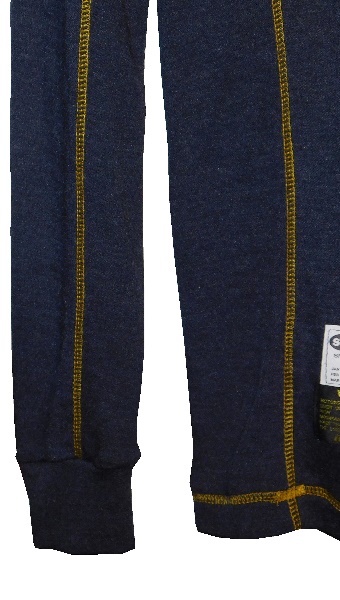
As I said above, Formula One is really focused on logo placement on uniforms. Drivers are given special undershirts that mirror the logo placements on driver suits. This is done so that the driver can wear the suit pulled up to the waist, for comfort, without taking sponsor exposure away. This example is a Kazuki Nakajima undershirt from 2008.nakajimashirtThe shirt shows light use, not uncommon, as Nomex undershirts are often rotated by the driver. The Nomex here is a much lighter and thinner version than NASCAR or the NHRA uses.

The front collar features a Phillips Shavers logo heat pressed into the fabric. There is no cowl tag. There is a Sparco FIA compliance tag sewn into the area just below the neck.nakajimashirt-collarThe right chest features an AT&T logo heat-pressed into the Nomex material.nakajimashirt-rchestThe left chest features an RBS logo and a Bridgestone logo.nakajimashirt-lchestThe front torso has an All-Saints logo present.nakajimashirtf-flogoThe left side has a Sparco inventory tag, which also has wash instructions. The tag is sewn in a vertical style, as opposed to a jock-tag style attachment.nakajimashirt-tagThe shoulders have Sparco logos in epaulet position, but have no epaulets or other adornment.nakajimashirt-rshoulder nakajimashirt-lshoulderThe right sleeve features THOMSON REUTERS, OTIS WATCHES, and BR PETROBAS logos heat pressed on the upper arm, and RBS logos present on the end of the sleeve in television position.nakajimashirt-rsleeve1 nakajimashirt-rsleeve2The left sleeve features ALLIANZ and LENOVO logos on the upper sleeve, and RBS logos in television position.nakajimashirt-lsleeve1 nakajimashirt-lsleeve2The back of the shirt doesn’t show any wear to speak of.nakajimashirtbThe back of the neck has no adornment present.nakajimashirt-neckThe back of the shirt has two logos. A WILLIAMS AT&T logo on top, and a PHILLIPS SHAVERS logos underneath.nakajimashirt-blogoGoing back to the Guy Smith article, I just don’t get why in the world NASCAR isn’t doing this more. Sponsors would love them, fans would love them, driver would love them, it works out well for everyone. Granted, there are some teams that are doing this, but why all the top teams aren’t is mind boggling. I’d also like to point out that this would help the NASCAR memorabilia market. American racing fans would love to own one of these custon shirts, yet for some strange reason, they never seem to happen. Do you honestly think that fans wouldn’t want to own a race-worn undershirt from their favorite driver? Fans will buy anything, and I mean ANYTHING with their favorite driver’s name and/or number on it. These would sell very well. I’m totally lost why this isn’t a fixture in NASCAR.

Next week, we will stay with Williams F1, but in a more recent example, from one of their current drivers.

Formula One Month Starts With Odds and Ends

mariussadisplay-7By David G. Firestone

This week, I finally get to start Formula One Month. Formula One is the biggest auto racing sanctioning body in the world. Nobody can deny that. Races can see over 300,000 spectators at the track, and 58 million viewers on television. Teams cover over 50,000 miles in travel distance and many engineers work on the car while never leaving their race shop. The cars are more sophisticated than any other racing vehicle in the world. Formula One has proven to be the great auto racing group in the world.

The merchandise table is a key to their success. While the pricing of items is a little suspect, fans will wear their affiliations on their shirts. But as I discussed a few weeks ago, the race-used memorabilia market in F1 is significantly different than in NASCAR and the NHRA. NASCAR is very big in body pieces or “sheet metal.” The NHRA is very big in engine parts. While F1 has some of these available, they are much more pricey than their NASCAR and NHRA counter-parts. Formula One isn’t run by dumb people, they do realize that there is a demand for these items.

These items come to sale sometimes. One such way these items come to market is when a team changes names or goes belly up. While many items can be salvaged, some items can’t be, and are sold to collectors. One such example is this this Virgin Racing interview backdrop from 2011.mariussadisplay-1The backstory on this is that Virgin Racing was founded as Manor Racing, and carried a Virgin sponsorship in 2010. In 2011, Marussia Motors, a Russian sports car company bought a stake in the team, and the team was re-branded as Marussia Virgin Racing. With the new team came the inclusion of the Marussia logo into the team. Their run as a team was unimpressive one, with neither driver scoring points. The team became Marussia F1 from 2012 to 2014, when the team shut down due to financial issues. In 2015, the team was re-branded to “Manor Marussia F1 Team.” After 2015, Marussia ceased to exist, and ceased their F1 team, and the team was re-branded to Manor Racing.

This interview backdrop is a portable one, specifically made for team members or special guests to stand in front of while giving an interview. It’s almost 4 feet wide, and well over 6 feet tall. It consists of a cloth container with the backdrop inside. It’s in great condition.mariussadisplay-2 mariussadisplay-3 mariussadisplay-4 mariussadisplay-6 mariussadisplay-5It’s almost 4 feet wide, and well over 6 feet tall. It consists of a cloth container with the backdrop inside. The backdrop has a balance leg, and the cloth part rolls up. A collapsible pole holds it up. I’ve given a demonstration of the effect they are going for…mariussadisplay-7Now while F1 is not as readily selling body pieces, they do sell them. Teams will change their designs due to rule changes, and they will sell the old body pieces. What I’ve noticed is that a lot of teams will encase the pieces in Lucite or something similar. I think that this might have to do with secrecy. The teams want to make money, but they don’t want to give their hands away on what they make their cars out of. I also like the idea of a body panel in Lucite. It looks good, and makes a good fit for an office.

This Red Bull piece is one such example. redbull-1The piece is just under 2.5 inches long, and is encased in a piece of Lucite which is 3.5 inches by 3 inches by 1 inch. It’s blue, with red and white logos, and the three championships etched into the glass. The top has Infiniti Red Bull Racing etched into it. This would place it between 2013 and 2015. It comes with a small COA and a small blue pouch. Other than that, there is no information about when it was used, or who by.redbull-2 redbull-3 redbull-4 redbull-5 redbull-6 redbull-7 redbull-8I get that the limited number of engines used by an F1 team, and the restrictions on how many parts can be used limit what could be sold, but there is a genuine market for these parts. I’m also wondering why F1 doesn’t market race-used tires. That would be a gold mine for F1, Perelli, and the teams, and collectors will love them. I also get that because the body on an F1 car doesn’t get changed as often as NASCAR, the market for body pieces is limited. I just wish prices were lower because I would buy more items.

While body pieces and parts are in limited supply, uniforms and uniform items are in decent supply, and are decently priced. I’m going to get more into uniform design in the coming weeks. Next week, I’m examining an undershirt.

Guy Smith-Bland Name, Great Driver!

smithundershirtBy David G. Firestone

Endurance car racing has had many forms in the US. One of the most noted sanctioning bodies was the American LeMans Series. Founded in 1999 by Don Panoz, owner of Road Atlanta and the brains behind the Petit Le Mans, the American LeMans Series or ALMS was one of the major sports car racing series, in addition to the Grand-Am Road Racing. From 1999 to 2013, American LeMans raced LeMans Prototypes and Grand Touring classes in a number of rovals, and road courses. In 2014, American LeMans and Grand Am merged to create the WeatherTech SportsCar Championship, which is run by IMSA.

As I mentioned last week, sports car racing doesn’t have the visibility of NASCAR or F1, but they do have a large and dedicated fanbase. Also, while NASCAR tends to have American based drivers, sports car racing attracts drivers from all over the world. One such driver is British driver Guy Smith. While he has a boring name, he has had a great career, winning the 24 Hours of LeMans in 2003 for Team Bentley in the Bentley Speed 8 LeMans Prototype. Prior to racing in sports cars, he raced in the Indy Lights series, then he raced in Champ Car. While racing sports cars, he would alternate between ALMS and Grand Am.

In 2005, Smith signed with Dyson Racing. Together, Smith and Dyson would go on to have a successful partnership for many years. The partnership has 6 wins, 42 podiums, and the 2011 championship. In 2011, the team won a single race, The 2011 Northeast Grand Prix at Lime Rock Park in Lakeville, CT, but with 7 podiums in 9 races, they solidly won the championship. During that season, Smith wore this undershirt.smithundershirtThe shirt shows light use, with some very light stains. Guy has signed the front of the shirt and added “Lime Rock 2011”smithundershirtThe thick front collar has a Stand 21 tag sewn into it. The tag has the FIA Certification as well as the Stand 21 logo.smithundershirt-collarThe front has DUNLOP, BP BIOFUELS, THETFORD, MAZDA, DYSON RACING, and CASTROL logos heat-pressed into the white material. Guy has signed the area under the Castrol logo, and added “Lime Rock 2011.”smithundershirt-flogo smithundershirt-sigThe bottom-left side of the shirt features a Stand 21 tag, and sewn into the inside is a wash tag that indicates that the shirt is “50% Aramid 50% Viscose.”smithundershirt-tag1 smithundershirt-tag2The shoulders and sleeves are in a black cloth, as opposed to the white front and back. They have no logos or patterns adornment.smithundershirt-rshoulder smithundershirt-rsleeve-1 smithundershirt-rsleeve2 smithundershirt-lshoulder smithundershirt-lsleeve1 smithundershirt-lsleeve2The back of the shirt is plain white.smithundershirtb smithundershirt-neck smithundershirt-blogoI’m noting something that I noticed. The shirt is 50% Aramid and 50% Viscose. What I find odd is that a racing undershirt would be certified when it is made of material that isn’t known for its fire retardant properties. I had never heard of Viscose prior to this, and from what I’ve been able to find, it’s more of a material used for a t-shirt or shorts, than for a racing shirt. Also, unlike the items I will examine in the coming weeks, this shirt is decently thick, and quite hefty.

It’s also worth noting that the reason there are sponsor logos on the shirt is so the driver doesn’t have to wear his firesuit up while on camera and the sponsors can still get exposure. I will discuss stuff of similar design in the coming weeks. What I’ve noticed is that while it’s practical, it is only being used in NASCAR by Jamie McMurray,

Embed from Getty Images

and Kyle Larson of Ganassi Racing.

Embed from Getty Images

I’m really wondering why this isn’t the standard in NASCAR like it is in Formula 1. It makes logical sense from a comfort perspective, and a sponsor exposure perspective. Every suit is designed with maximum sponsor exposure in mind. I can’t understand why an undershirt wouldn’t receive the same treatment.

Next Week, Formula 1 Month starts!