Item Spotlight-Alex Barron 1998 Champ Car Driver Suit

By David G. Firestone
While I typically watched NASCAR growing up, I did also watch IndyCar. That was before “the split” which diluted the value the sport so much that to this day it is still suffering, 6 years after the unification of Champ Car and the Indy Racing League. I got tired of politics and wanted to watch racing, I didn’t care who was sanctioning it. I still watch IndyCar racing and I collect race-used stuff.

I mentioned this a few months ago, when I discussed video matching. My first open wheel driver suit is this Alex Barron suit from 1998.36-barron

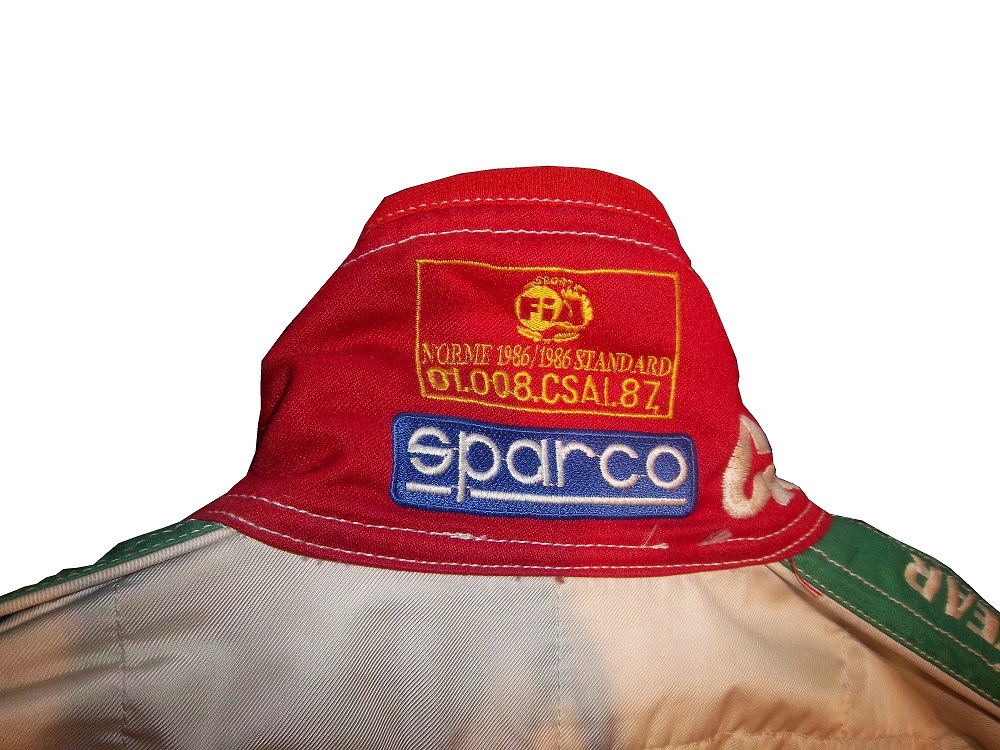
Not only is this my first open wheel suit, it was also my first suit that featured an FIA safety certification on the back of the neck. Having dealt in NASCAR suits, I didn’t know what to make of it, and through some research, I eventually learned what it was and what it meant.36-barron-neck 36-barron-fia2The chest features a FedEx Championship Series patch, probably my favorite sanctioning body patch ever,
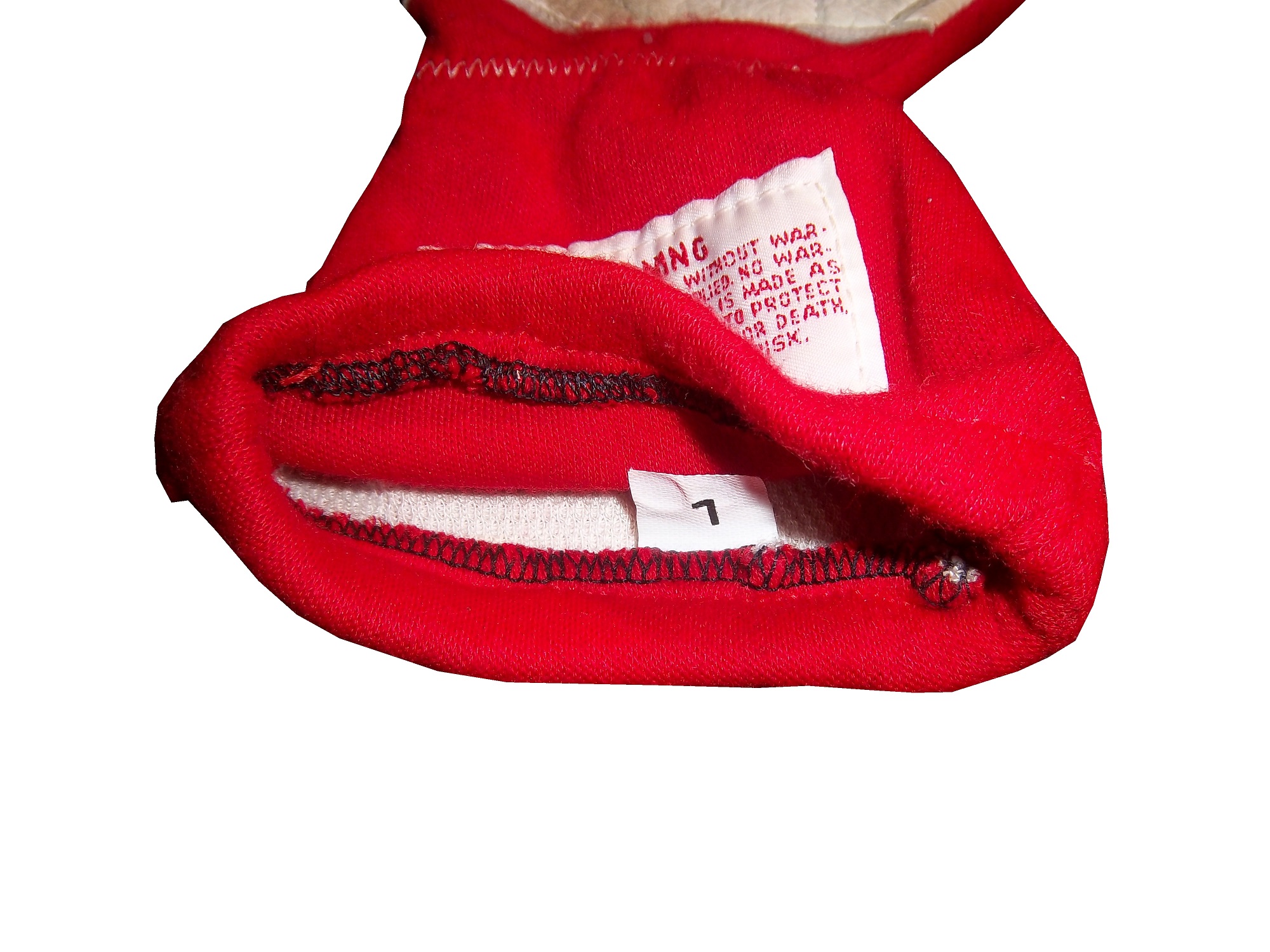
and logos for Toyota and Denso.36-barron-lchest 36-barron-rchest 36-barron-flogoThis being my first Sparco driver suit, The cowl tags, and location of the warranty tags were out of place, as compared to a NASCAR driver suit.36-barron-tag 36-barron-tag2One thing I do find interesting is that there are no television logos on the sleeves and legs, but as the video at the end shows, that was not uncommon, but more on that later.36-barron-rsleeve2 36-barron--lsleeve2 36-barron-legs
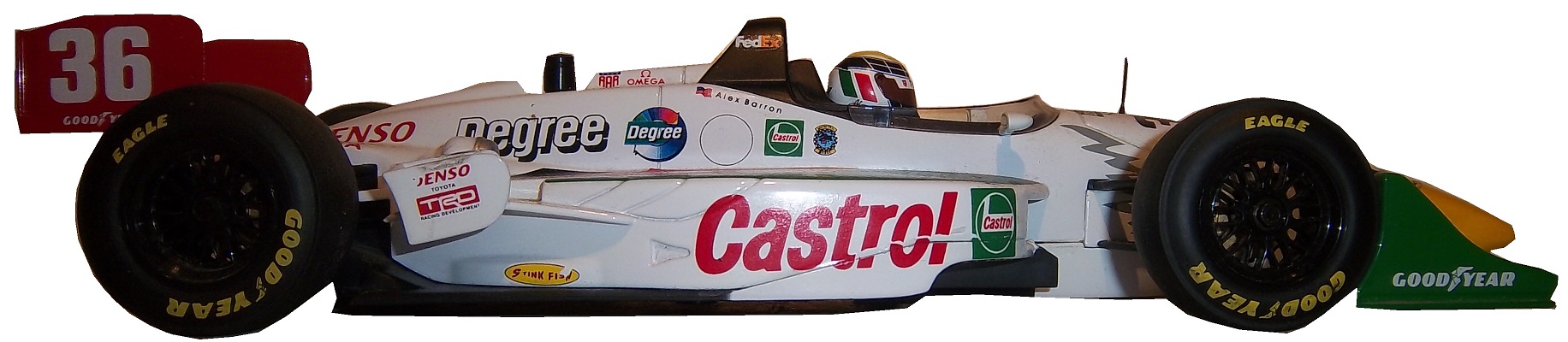
The collar has an unusual design. Most collar designs feature either logos on the side, or logos across the front, or sometimes both. This one is unique in that it features a DEGREE logo on the front, as well as a CASTROL logo on the right side, but nothing on the left side…I’ve never seen that before or since, and I can’t understand the need for that particular design…it just looks odd.36-barron-collarAlex’s name is embroidered into the belt, and something I love about open wheel suits is that because it is an international sport, much more so than NASCAR, the driver usually has their home country flag embroidered next to their name on their suit, as this suit shows.36-barron-beltI also have a 1/18 die cast of Barron’s very sharp looking car from 1998. It is the only die cast I have that has a driver in it. I love the fact that he is wearing a very accurate version of his driver suit.36i-barron-2 36i-barron-3 36i-barron-1Now as I mentioned, this was the suit Barron wore during his most infamous moment, his crash at Road America, where he wound up on top of Bryan Herta. Someone recently uploaded the whole race to YouTube, and when watching it, notice that nobody has logos for the in-car camera. I find that rather interesting, since it would be very easy to place logos on the sleeves, and it was commonplace in other forms of racing. But it is an interesting race.
Now we have another piece of news to discuss.  In the realm of NCAA sports, the two major factions in uniforms are Nike and Under Armour.  Nike has a deal with Denny Hamlin for driver suits, and I was wondering when Under Armour would jump on the band wagon, and this week, we got our answer.  Under Armour, who has signed deals with Michael Waltrip Racing and Henrdick Motorsports to outfit teams with apparel.  This deal does not include the drivers themselves but the car numbers are fair play.  I find it a bit unusual that the deal provides apparel for all members of the team, pit crew members, front office personel, and everyone EXCEPT the faces of the franchises.  Now that might change in the near future, but for now that is how the deal works.  You can read more about the deal here.

Now we move to…

PAINT SCHEME REVIEWS!

Jamie McMurray #1 Bell Helicopters Chevy SS Great look, great color scheme, A+

Austin Dillon #3 Dow Powerhouse Solar Chevy SS The side is somewhat over designed, but I like the product placement on the roof. The color scheme is great so I will give it a B

Denny Hamlin #11 FedEx Office March Of Dimes Toyota Camry Decent color scheme, but the side is a bit overdesigned, and has a messy look to it. C+

Clint Bowyer #15 Willy’s Duck Diner/Buck Commander Toyota Camry Too much camo. Camo doesn’t work they way designers want it to on a car and I give it a D

Greg Biffle #16 Give Kids A Smile Ford Fusion Man! Greg Biffle really wants the Paint Schemie Awards for Most Degraded Paint Schemes, and Worst Paint Scheme Set with another F scheme. Horrible design, and an ugly paint scheme.

Greg Biffle #16 3M Areospace Ford Fusion Take the worst aspects of Greg Biffle 2014 schemes, and add a liberal amount of camo, and you have an F scheme

Ricky Stenhouse Jr. #17 Ford EcoBoot Ford Fusion I like the color scheme, I like the overall scheme, and my only complaint is that the orange numbers on the roof should be on the door.  Still it is an A scheme

Cole Whitt #26 Swan Energy Toyota Camry Simple design and a great color scheme earns an A+

Cole Whitt #26 Swan Energy Toyota Camry Simple design and a great color scheme earns an A+

Paul Menard #27 Menards/Duracel Chevy SS This is the best Menard scheme I have seen! Duracel works very well on the hood, and I give it an A

Parker Kligerman #30 Swan Energy Toyota Camry Just when I thought Swan had learned the error of their ways, and were improving their paint schemes, along comes this one. Now we are back to square one, and this scheme earns a D+

Parker Kligerman #30 SMS Audio Toyota Camry Well things for Swan are looking up, this is a pretty cool design. It works very well, and has a great color scheme. A+

Ryan Newman #31 Quicken Loans Billion Dollar Bracket Challenge Chevy SS I understand what they tried to do, but the scheme as a whole is just bland, boring, and C+.

Travis Kvapil #32 Keen Parts Ford Fusion  Decent design, good color scheme, but the logo on the hood is very difficult to see.  That is a major issue.  When a sponsor pays for a car, the hood design should be easy to see, but this isn’t easy, and I give it a C-

Aric Almirola #43 Ekrich Ford Fusion The red on the roof is pointless, and it takes away from a great scheme. If the roof were Petty Blue, and the red was just a stripe on the bottom, I would give this scheme an A+ but with the red roof, it goes down to a B-

Michael McDowell #95 Triangle Office Equipment Levine Family Racing keeps up the fight with Swan Racing to win the Most Improved Paint Schemie Award with another beautiful A+ scheme!

49 Years Later…Those 6 Days in May Are Still Being Felt.

By David G. Firestone

When Glenn “Fireball” Roberts was elected to the NASCAR Hall-Of-Fame on May 22, I felt the need to do this article. Fireball’s racing career was a Hall of Fame worthy, no one can argue that, but it was the wreck that led to his death that has had the most lasting effect. His election to the Hall-Of-Fame came 2 days shy of the 49th anniversary of the 1964 World 600. During that race, he was involved in a wreck on the 7th lap, and suffered an 80% body burn. While fire protection was mandatory in NASCAR, and many other racing groups, the way this was accomplished was by taking a pair of cotton coveralls, and dipping them into chemicals, which made them fireproof, but were uncomfortable to wear. Roberts was asthmatic, and the chemicals were aggravating his asthma. So he had a doctor’s note stating as such, and was not wearing any fire protection for that tragic event.

6 days later, on May 30, the 48th Indianapolis 500 was held. On lap 2, Dave MacDonald spun and crashed, which ignited a huge fire, due to the car being badly designed, poorly built, and having a large amount of fuel on board. Eddie Sachs was involved, and was killed due to blunt force trauma. Bobby Unser was burned, as was Robbie Dunman. Dave MacDonald had his lungs scorched by the flames, and was very badly burned, and passed away later in the day.

These two tragic events would, in the long run, have a very bright silver lining. Shortly after these took place, the safety culture of racing improved with the introduction of Nomex. Nomex offered better comfort and fire protection. There were Nomex suits being used in racing, though at that time they were experimental. After those 6 days in May of 1964, Nomex became, and still is the standard for racing suits. SFI was founded thereafter in order to make sure that the suits are up to par, and are safe. The proof that these suits are safe is the fact that other than the addition of extra layers and some cosmetic design changes, the suits remain largely the same.

Interestingly, the driver suit changes were not the only safety changes made after that incident. The cars themselves got a makeover. USAC, in charge of the Indy 500 at the time, mandated that the Indy cars had a new fuel cell design added to them. This fuel cel, which was used in military helicopters at the time, was designed to help prevent a huge explosion in a wreck. In addition, the standard fuel in Indy car was changed to methanol, instead of gasoline. On the NASCAR side, changes were slower to come, but they did come, and now races are much safer.

The major lesson here is that safety is evolutionary and that these accidents, as tragic as they are, all have lessons to be learned. With the 6 days in ’64, it was that fire protection needs to be a forefront of racing safety. With the 1955 24 Hours of Le Mans disaster, which saw one driver and 83 spectators killed, and another 120 injured the lesson was that spectator safety should be a very serious consideration in track design. With Ayrton Senna’s and Roland Ratzenberger’s deaths in the 1994 San Marino Grand Prix, the lesson was that car design needs to be more safety focused than what it was. With Dale Earnhardt’s death in the 2001 Daytona 500, The lesson is that sanctioning bodies in racing should be proactive with safety instead of reactive. These lessons have all been learned, and driver safety has been improved, but as has been said many times after these incidents, you can never take the risk of death out of racing.

Every Great Outfit Needs Gloves and Shoes to Match!

10-riggsshoes - CopyBy David G. Firestone

Since the fire risk in racing is as high as it is, it makes sense that driver uniform includes fire retardant shoes and gloves to go along with it. Although they are frequently overlooked by many fans, they are just as critical to driver safety and comfort as the suit and helmet. Gloves and shoes have, like the suit and helmet, become fashion forward in recent years.

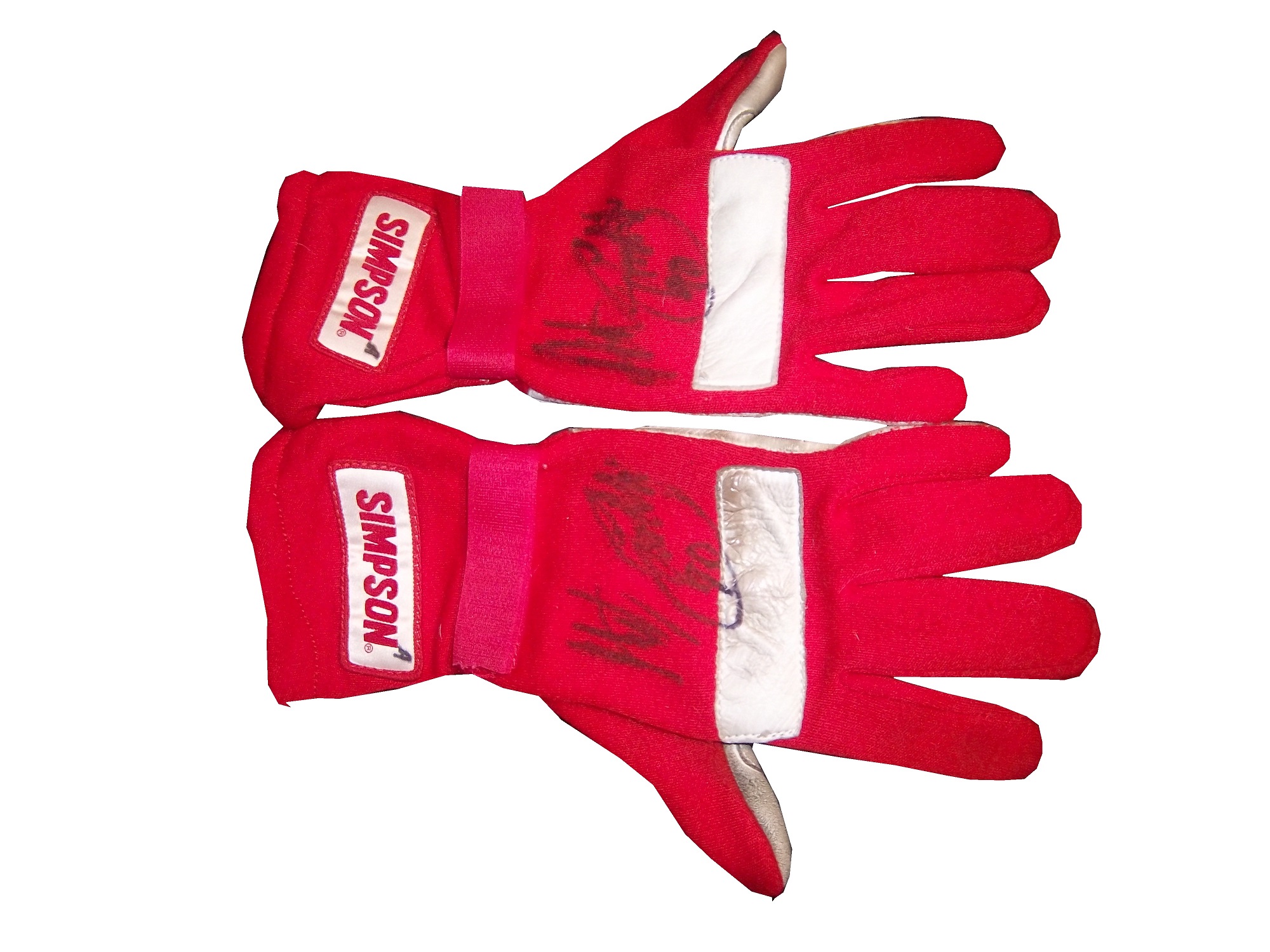
Let’s look at the gloves first. Gloves in racing are typically made of multiple layers of Nomex, and feature a textured layer on the palm, which is designed to help the driver grip the steering wheel. Gloves may be waterproofed for open cockpit racing, where rain and other inclement weather may not impede the race. The gloves give the same amount of protection that the suit does, roughly 30 seconds, and are certified by FIA and SFI. This example, worn by Hut Stricklin in 2000 shows the basics..90-stricklingloves


The textured palm…90-stricklingloves-rglovb 90-stricklingloves-gloveb


The thickness…90-stricklingloves-rsize 90-stricklingloves-lsize


as well as the liability tag and the safety certification…90-stricklingloves-ltag 90-stricklingloves-rtag

As I mentioned above, gloves have evolved to be more visible on in-car cameras. These examples, worn by Dale Earnhardt Jr. and Jimmie Johnson show how these new customizations can take a simple safety equipment item, and add some visual appeal to it. A search on eBay reveals that these items do wind up for sale after they are used.

Next, let’s discuss the shoes.

Shoes are as important as gloves in terms of fire protection. Those 30 seconds of fire protection are critical for the driver to get out of a burning car. The basic design of the shoes are meant to help the driver, well, drive. Some drivers in years past have opted for nontraditional racing shoes, such as Dave Marcus who was well-known for wearing wingtips while racing.

Typical racing shoes consist of a rubber, fire retardant sole, with triple-layer Nomex material covering the foot. The tongue, and shoe laces are fire retardant as well. Velcro straps are frequently employed to secure the shoe as extra protection. Let’s look at a race-worn pair, this pair worn by Scott Riggs in the early 2000’s.10-riggsshoes

These shoes show the sole design,10-riggsshoes-bottom

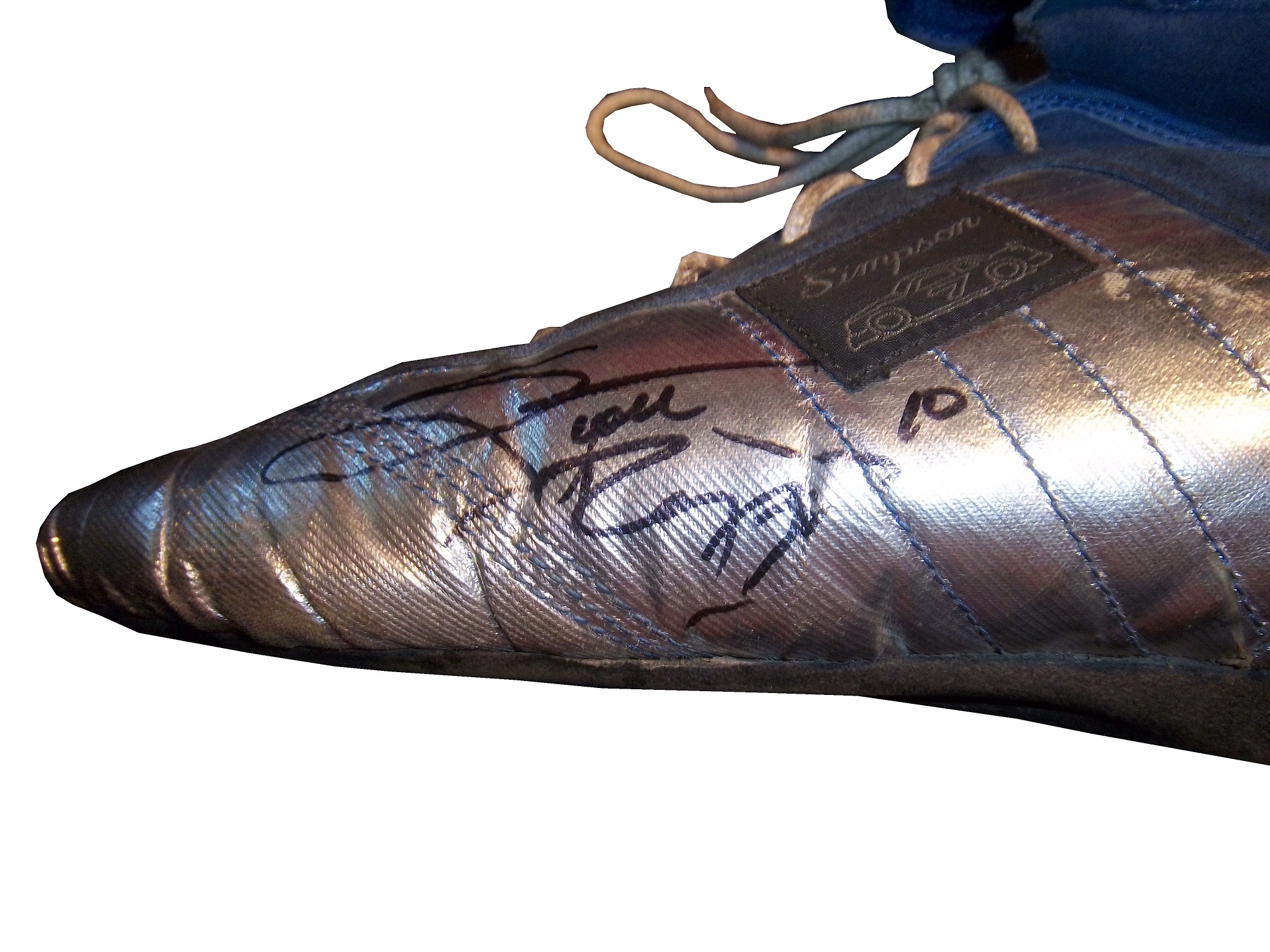
Main design, with the reflective layer adding some extra protection…10-riggsshoes-rshoe2 10-riggsshoes-rshoe1 10-riggsshoes-lshoe2 10-riggsshoes-lsig

and thickness…10-riggsshoes-ltop


While the design of the gloves are fashion forward, the shoes are more utilitarian than anything else. But they do wind up on eBay sometimes…

Jamie McMurray #1 Bell Helicopters Chevy SS Love the simplicity in the design and color scheme, as well as Bell’s great logo! It is simple, yet elegant, and earns an A grade

Kasey Kahne #5 Farmer’s Insurance 85th Anniversary Chevy SS It’s amazing how a color change can affect a scheme. I graded the standard scheme at a D+ earlier this year, and with the black red and tan color change it takes it from a D+ to an A-. Notice that there is no real difference between the two schemes except the colors and the new one is so much better!

Kevin Harvick #29 Bad Boy Buggies Chevy SS I like this scheme for the same reasons as the Jamie McMurray Bell scheme, and it gets the same A grade!

David Stremme #30 Window Wax Toyota Camry  The best way I can describe this scheme is that there is nothing good about it.  Anything they could have messed up with this scheme, they did.  It gets an F-

David Stremme #30 Lean 1 Toyota Camry See Above

Landon Cassill #33 Justin Workboots Chevy SS I like the design scheme except for the primary sponsor logo is a completly different color than the rest of the car.  The thing is that the two color schemes work very well by themselves, but the combo of the two just makes no sense.  It takes an A scheme and brings it down to a C…PICK A COLOR SCHEME!

New Paint Schemes and Some IndyCar News…

We start off today with a unique story from IndyCar.  Ryan Hunter-Reay won the Izod IndyCar Series Championship last season, and as such has the right to use the number 1 on his car.  He normally used 28 as his car number, because 28 million people worldwide are affected by cancer, and his mother passed away from cancer in 2009.  So he is using a number 1 with a rather unique twist.  Also mentioned that Marco Andretti will switch to number 25 from 26 next year.

Moving on to NASCAR paint schemes, let’s look at the Nationwide Series first.  Two Chevy schemes and one Ford scheme have been released so far

Sam Hornish-#12 Alliance Ford Mustang  Could someone explain to me why in the world it has door handle decals?  And why does it have a blue line on the door that looks like race damage?  I really want to defend this scheme, but no, just no.  Final Grade: C

Kevin Harvick-#33 Hunt Brothers Pizza Chevy Camaro    First off, the Camaro looks really good on its own, and this paint scheme works quite well.  The door-handle decal is visible, but not as bold as the Hornish car.  The green/white contrast works well, and the decal package on the front looks really good.  The stripes on the sides work very well, and are not as haphazard of some schemes I have seen for this season.  Final Grade: A

Dale Earnhardt Jr./Cole Whitt-#88 Tax Slayer Chevy Camaro  Decent color scheme at work here, but what is with the pink roll cage?  The red black and white scheme has a similar color in the front stripe at the nose.  It’s visually distracting, and pointless.  The powder blue/pink stripe takes away from a great scheme and takes the final grade from an A to a B-.  Get rid of the blue, and it would be an A

Now we look at the Sprint Cup Schemes

Kasey Kahne-#5 Time Warner Cable Chevy SS  Awful color scheme, check.  Door and panel design that is supposed to be edgy but is really a cliche, check.  The most unoriginal sponsor logo in NASCAR, check.  Ok, I think we’re all done here, Final Grade: D

Ryan Newman-#39 Quicken Loans Chevy SS  Want to have some fun, open the Kahne link, and this link in two different tabs, and switch back and forth to see how “original” this scheme is.   Clearly both were designed by the same person, they look almost identical, except the fronts are a little different, and the color scheme on the Newman car is much better.  Final Grade: C-

Jeff Gordon-#24 Drive to End Hunger Chevy SS Yuck! They took one of the best color schemes ever and ruined it!  But these shots do feature a new design that will be used in NASCAR in 2013, and that is a sponsor decal on the roof.  The close-up of the rear-end shows the decent taillight decals, and the unnecessary tailpipe decals, as well as the updated Chevy logo.  Final Grade: D-

Been a long day, will be back tomorrow.

The Curious Case of The Bugle of Christian Fittipaldi

By David Firestone

Christian Fittipaldi is a Brazilian race driver who raced in F1, Champ Car and eventually NASCAR. Although he had two wins in Champ Car, his F1 and NASCAR careers were fruitless. His NASCAR career lasted from 2002-2003, and during that time he raced in a total of 16 races, with 2 DNQ’s. With the exception of the 2003 Daytona 500, all of his races were for Petty Enterprises, and he raced in all 3 of their teams at the time, cars #43, 44, and 45. His final two races were for car #44, which at the time was sponsored by Bugles.

44-fittipaldib

In 2011, I bought the Bugles driver suit Fittipaldi wore for those final two races. When I got the suit, I saw it had some…irregularities to it. The most prominent feature are the television logos on the sleeves.

44-Fittipaldi-llogo 44-Fittipaldi-rlogo

Notice anything odd? The TV logos on the sleeves are incorrectly positioned…for NASCAR. I found this to be a bit odd, as there seems to be no logical reason for the logos to be set the way that they are. These logos, introduced in the 1990′s as a way for the primary sponsor of the car to advertise to the in-car cameras, should be positioned so that the logo appears clearly. These logos are designed for a camera mounted in the area where the passenger seat would be, as seen at 0:48 in the video below:

The logos are upside down. I was trying to understand why this was done, and then I watched the Indianapolis 500, and watching the in-car views, and suddenly, it all made sense, as seem below:

It became clear rather quickly that the TV logos are correct for F1 and IndyCar in-car cameras, but not correct for NASCAR ones. It seems that this car was designed for an open-wheel car, but not a stock car. The evidence on the shoulders is further proof…

44-Fittipaldi-rshoulder 44-Fittipaldi-lshoulder

I’ve never seen any shoulder design like that of this suit before. The V pattern with the Goodyear logos on both sides. This is not unique to this suit, the shoulder designs of an earlier Christian Fittipaldi suit are the same as this one, though the logos are not visible on the back.

45-fittipaldi-rshoulder 45-fittipaldi-lshoulder

So we have two anomalies to this suit, but why did this happen? This suit was worn in 2003, and these logos were developed an implemented in the mid 1990′s. My theory to the answer can be found in two things, who wore the suit, and who made the suit. Fittipaldi was an open-wheel driver, and frequently wore suits made by an Italian company named Momo. Although Momo makes NASCAR equipment now, back in 2003, they were new to the NASCAR game, and as such were not as used to designing for NASCAR in-car cameras. As such, they designed the suit for an open-wheel car.

Granted Momo wasn’t as familiar with the design of stock cars, and their in car camera placement, but even so, wasn’t there somebody examining the suit? Wasn’t a team representative present at any point in the process? How does a mistake like that happen? The thing that really gets me is this…that was from the same season, and was made by the same company, but clearly the logos are correct in this shot…if they get it right once, why can’t they get it right again? How did that mistake happen? Well it did, and although there was no harm done, it does look pretty goofy…

Moving on to new paint schemes, let’s look at some…

First in the Nationwide Series

Regan Smith #5 Hellman’s Chevy Camaro The yellow is ok, a bit too bright for my taste, but I have seen much worse. The stripes look good, great colors and they are easy to figure out unlike some others. Final Grade: B+ Tone down the yellow a bit and it would be an ANow onto the Sprint Cup:

Matt Kenseth #20 Husky Toyota Camry Not much really to say, mediocre color scheme, no real design to comment on, the logos are plain Jane enough, it’s a bland scheme that earns a C grade. A mediocre grade for a mediocre scheme.

Aric Almirola #43 Smithfield Foods Ford Fusion Basically the scheme is unchanged from last year, and that is a good thing. I love this scheme, great color, great design, looks good, the logos are easy to see, and I give it an A. Extra credit was given for the use of Petty Blue.

Bobby Labonte #47 House Autry House Foods Toyota Camry The design is simple, but good. The color scheme need some work. The red used is too bright, as is the blue. The logo group on the quarter-panel is awful. The really odd thing is that this is the first scheme of Labonte’s that has been released, and it is the scheme slated for the All-Star Race. Why in the world would the All-Star Race scheme be released before any of the regular season races? I just don’t understand the logic here. But that being said, the final grade is a B-. If the color wasn’t so bright, I could grade it higher.