The 2017 Paint Schemie Awards Are Here!

By David G. Firestone

With the month of November, and the 2017 racing season behind us, I’m happy to present the 4th Annual Driver Suit Blog Paint Schemie Awards! Regular readers know about this, but I’ll discuss this again. Every year, I pick the best and worst paint schemes and award them the Paint Schemie. This was done using the Driver Suit Blog executive committee for paint scheme analysis and consists of me and Driver Suit Blog assistant, my cat Alejandro, and uses the following standards:

Color Scheme:How the colors look, and how they work with each other.

Overall Design:How good the design itself looks, is there too much, or not enough.

Primary Sponsor Logos: How the primary sponsor logos look on the car

Originality: How original is the scheme.

All of the above can work for or against a scheme, and all will be taken into consideration.

Let’s get the bad paint scheme awards out of the way.First, the Paint Schemie Award for Worst Regular Season Single Paint Scheme .

The nominees are:

Ty Dillon13 Geico Military Chevy SS

Ricky Stenhouse Jr. #17 Sunny D Ford Fusion

Kyle Busch #18 Interstate Batteries Toyota Camry

Matt Kenseth #20 Tide Pods Toyota Camry

Chase Elliott #24 Sun Energy Chevy SS

Matt DiBenedetto #32 Can Am/Kappa Ford Fusion

The 2017 Paint Schemie Award for Worst Regular Season Single Paint Scheme goes to:

Chase Elliott #24 Sun Energy Chevy SS

The next award is for Worst Paint Scheme Set, meaning the team that is running consistently bad schemes all year. The nominees are:

Starcom Racing #00 Chevy SS

Stewart-Haas Racing #10 Ford Fusion

Go Fas Racing #32 Ford Fusion

Hendrick Motorsports #48 Chevy SS

Furniture Row Racing #77 Toyota Camry

BK Racing #83 Toyota Camry

The The winner of the Award For Worst Scheme Set of 2017 goes to…

Hendrick Motorsports #48 Chevy SS

The next Paint Schemie Award is for Exhibition or Throwback Paint Schemes. This category is a little different, as the Schemies will go to the best and worst throwback. For this category, all exhibition race and throwback paint schemes qualify automatically.

The 2017 Paint Schemie Award for Worst Exhibition or Throwback Paint Schemes goes to…

Gray Gaulding #23 Bubba Burger Toyota Camry

Now after talking about the bad, we discuss the good. Here are the winners in the best category…First, the Paint Schemie Award for Best Regular Season Single Paint Scheme.

The nominees for the 2017 Paint Schemie Award for for Best Regular Season Single Paint Scheme are:

Jamie McMurray #1 McDonald’s Chevy SS

Brad Keselowski #2 Miller Lite Ford Fusion

Kyle Busch #18 M&M’s Toyota Camry

Matt Kenseth #20 PEAK Antifreeze Toyota Camry

Ryan Blaney #21 Motorcraft Ford Fusion

Chase Elliott #24 NAPA Auto Parts Chevy SS

The 2017 Paint Schemie Award for for Best Regular Season Single Paint Scheme goes to…

Ryan Blaney #21 Motorcraft Ford Fusion

The next category is Paint Schemie Award is for Best Exhibition or Throwback Paint Schemes, and it should come as no surprise that the competition was strong this year.

The 2017 Paint Schemie Award for Best Throwback Scheme of 2017 goes to…

Austin Dillon #3 American Ethanol Throwback Chevy SS

The final award of 2017 is the Paint Schemie for Best Paint Scheme Set of 2017. The nominees are:

Hendrick Motorsports #5 Chevy SS

Joe Gibbs Racing #18 Toyota Camry

Wood Brothers Racing #21 Ford Fusion

Stewart-Haas Racing #41

Premium Motorsports #55 Toyota Camry/Chevy SS

Beard Racing #75 Chevy SS

The 2017 Paint Schemie Award for for Best Paint Scheme Set goes to…

Beard Racing #75 Chevy SS

That’s it for the Schemies, next week, the Paint Scheme Leaderboard begins with Chevy!

Ray Lipper and Center Line Wheels Part 2

By David G. Firestone

Our last Friday Feature for Minor League Month is a continuation of what I started last week. Last week, I examined a driver suit worn by Center Line Wheels founder Ray Lipper. While the suit was an interesting find, it was only part of a larger uniform set. This week, I will examine the rest of the contents of the uniform set. This has to be the most comprehensive uniform set I have ever seen.

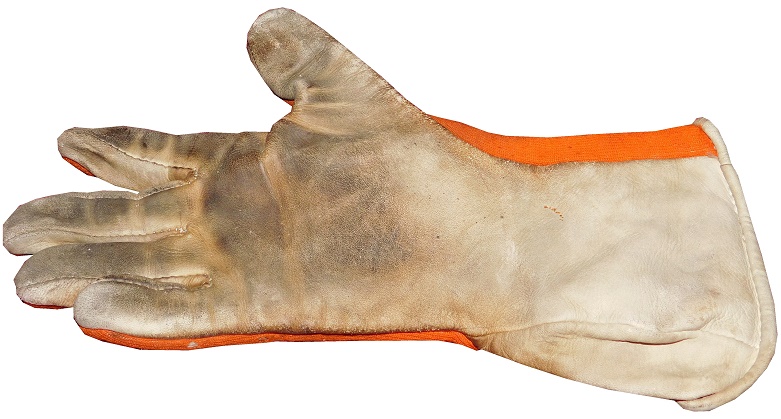
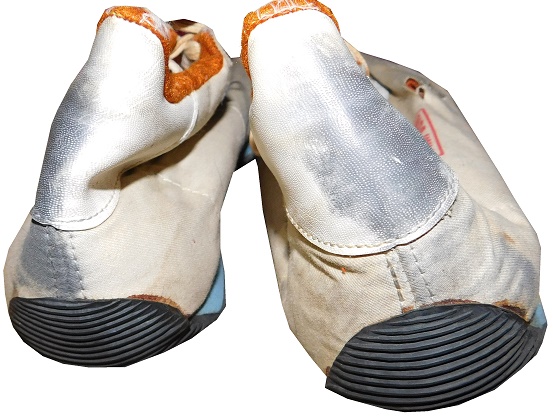
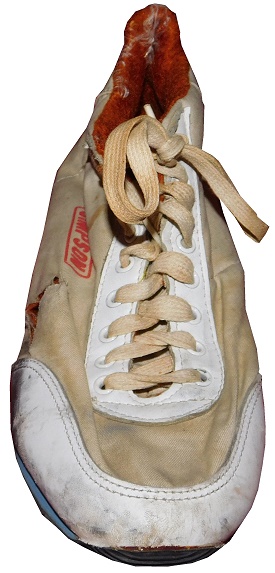
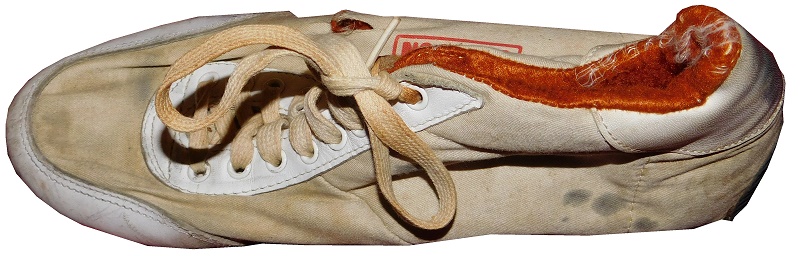
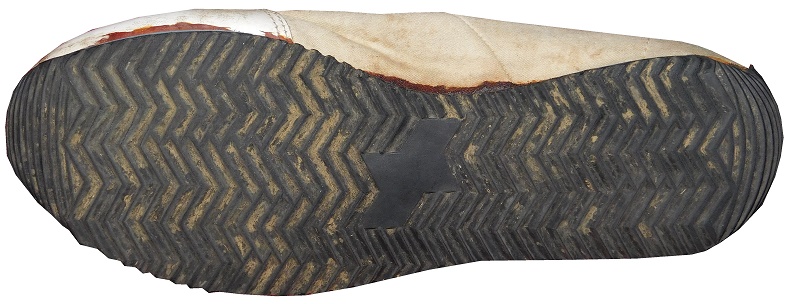
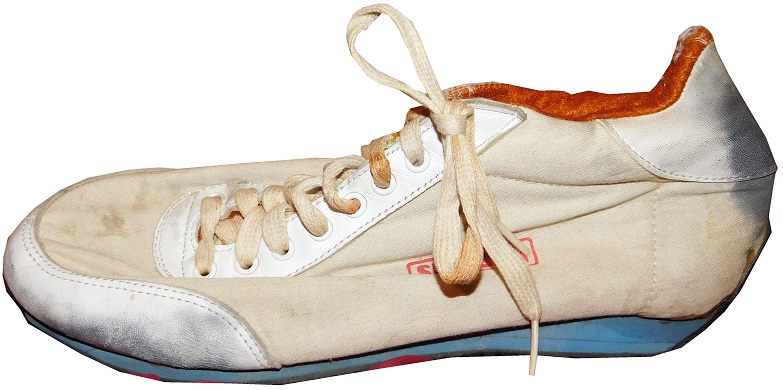
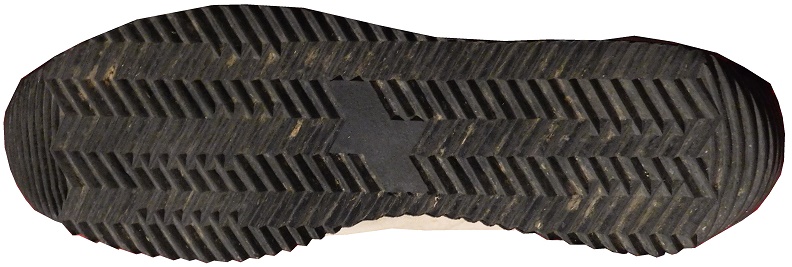
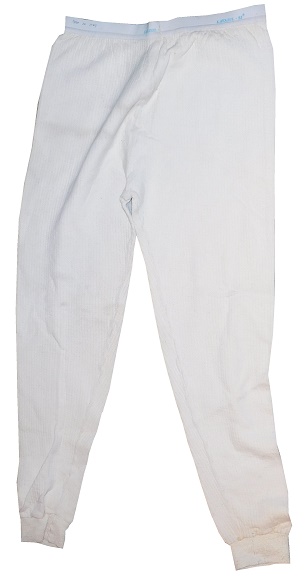
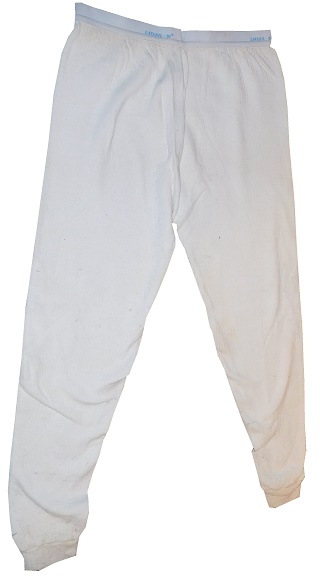
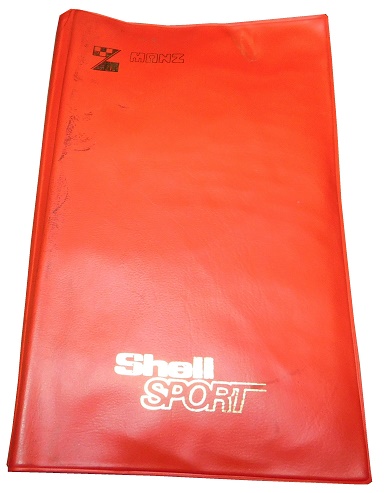
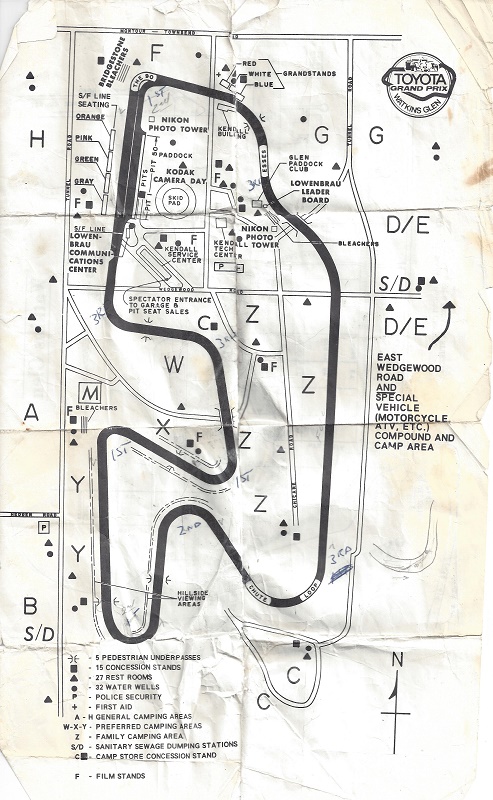
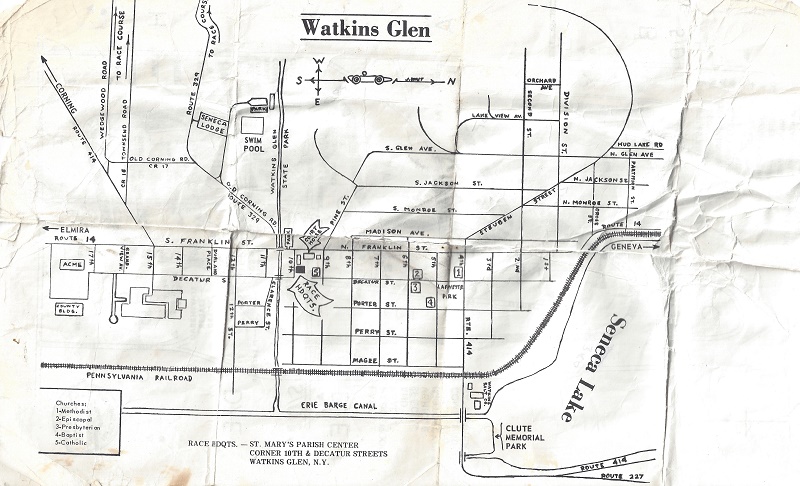
There is a black restraint harness included, which shows some light wear. There is also a set of orange Simpson gloves, both of which show heavy wear on the palms. Ray also wore these white Simpson racing shows, both of which show heavy wear. The right show has a tear in it, and the left shoe has some damage. The soles have dirt caked in them. This white balaclava was also worn, though there is no indication of who made it. This Linea Sport Nomex undershirt, which is thick and shows a lot of use is included in the lot. I’ve been trying to find out information about Linea Sport, but I’ve had no luck. This Italian-made pair of long-johns shows decent wear, as per the shirt, but are not as heavy as the shirt. This is a pair of black Nomex socks. They have no manufacturer indicated, and one is deformed from them being in a ball for some time. Moving on from the uniform elements, the lot also comes with a number of miscellaneous items.Race cars tend to be very loud, so Ray wore this par of earplugs, complete with original box. Cadillac Shoe Products has no affiliation with the Cadillac automobile company. This pair of black Cadillac shoe laces came with the set. This set of (presumably) car keys was used by Lipper at some point.A small, orange Snell Sport Vynl folder is included, and the contents of which are very interesting. This is a paper race result from the 1980 SCCA Formula Super Vee USA Robert Bosch/Valvoline Championship. One of the Gold Cup race took place at Watkins Glen on July 5, 1980. Lipper finished 16th, driving a Super Vee. He won $250 for his efforts.In preparation for a race at what is now Sonoma Raceway, Lipper hand drew this map of the track, and added notes as to what he should do in the car while driving in that area.This is a map of Watkins Glen, both the track, and the way to the track. It shows a lot of wear. In addition to racing in the United States, Lipper also raced in New Zealand. This is Lipper’s Motorsports Association of New Zealand(MANZ) license. The Manawatu Car Club is New Zealand’s oldest car club. Lipper was a part of it in 1982, and this is his member ticket. While Center Line Wheels may not be an independent company anymore, their lineage lives on. Ray Lipper has retired, both from Center Line and Racing. He’s been inducted into the SEMA Hall of Fame, and is another example of what makes racing great. He’s a businessman who races to help promote his company.

It’s that time of year again…next week…THE PAINT SCHEMIES!

Ray Lipper and Center Line Wheels Part 1

By David G. Firestone

Minor League Month continues, and this week is the first of two articles about a business man who raced to help promote his business.

In April of 2017, Center Line Wheels ceased production after 47 years. In August of 2017, the company was acquired by Corona, California based wheel manufacturer Design Infini. During those 47 years, Center Line had been a well-known aftermarket wheel rim company, which made high performance rims. Since Center Line had been a performance wheel company, it makes sense that they had been involved in motorsports, including supplying wheels to racing teams, as well as sponsoring teams.

Center Line was founded as the Center Line Tool Corporation in 1970 by Ray Lipper. Lipper saw the need for a good performance rim, and soon the company started focusing only on wheels. Lipper was also an avid racer, and raced in SCCA, and CART. His time in CART was not successful, with a DNS at the Phoenix race, and was one of 47 drivers not to qualify for the 1982 Indianapolis 500. He was elected to the SEMA Hall of Fame in 2002. During his racing career, he wore this racing uniform.

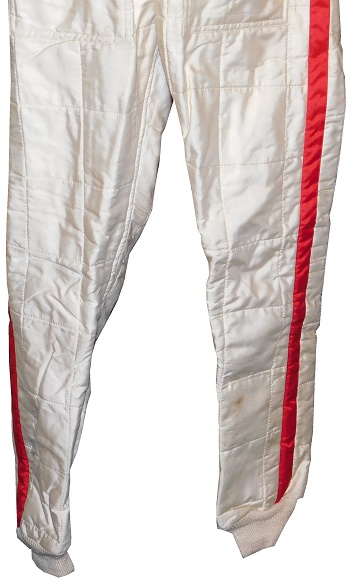
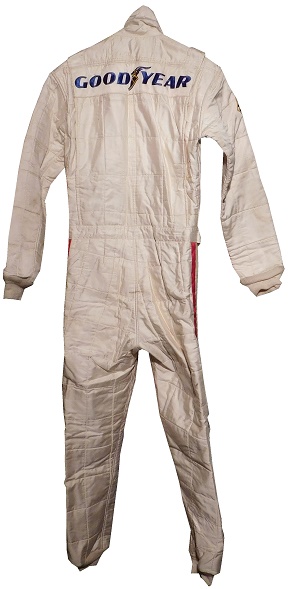
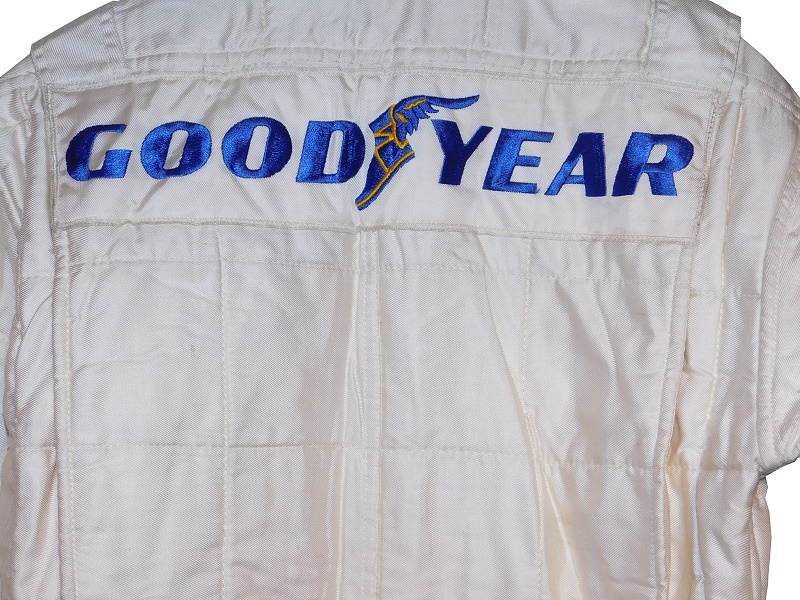
The uniform set, which is one of the most comprehensive I have ever seen, includes a suit, gloves, shoes, an undershirt, long johns, a harness, and some other miscellaneous stuff. We’ll look at the other stuff next week, this week, we will focus on the white Simpson driver suit, which shows some light use, and is very thick, and heavy duty.The collar has a Velcro-closure, with no adornment.The cowl tag is an older Simpson warranty label, used into the late 1980’s.While there is no large sponsor patch on the torso, there are a number of smaller patches on the chest and torso. On the right side, there is an older VALVOLINE logo, RAY LIPPER embroidered in a patch, a SIMPSON patch next to the name, and a WATKINS GLEN US GRAND PRIX patch below that.The left side of the front has CART,CENTER LINE RACING WHEELS,SCCA,ROAD AMERICA CAN AM 1981 CHICAGO REGION SCCA,and VW MOTORSPORT patches sewn into it.The suit features an unadorned white belt.The legs have a red stripe running up the white material, and have standard cuffs.The shoulders have red stripes that extend down to the cuff of the sleeves, and white straps that would be used to pull the driver out of the car in case of a fire. The right sleeve has a UNITED STATES AUTO CLUB patch, and has the red stripe extending to the cuff. The left sleeve features a SIMPSON RACE PRODUCTS patch, as well as a PPG INDUSTRIES patch.The back of the suit doesn’t show any wear to speak of.The back of the neck is unadorned.The upper back of the suit has a large GOODYEAR patch sewn into it.Ray Lipper is an automotive engineer who has raced all over the world. He was just as focused on racing as he was on making quality wheels. Next week, I will examine the rest of the uniform set.

“Mighty” Mike Niemann Loves His Sharpies!

By David G. Firestone

Minor League November rolls on, and for this week’s edition, we are heading to the Bay Area, specifically to the San Francisco Region of the SCCA, for a suit that has an interesting wearer.

California has a rich racing history. The NHRA was founded there, and many racers come from the west coast. There are many oval and road courses dotting the course. One such course is Laguna Seca. Built in 1957, after Ernie McAfee was killed at the dangerous Pebble Beach Road Races, Laguna Seca has hosted USRRC, Can-Am, Trans-Am, Formula 5000, IMSA GT, CART, American Le Mans Series, Grand American, Monterey Historic Automobile Races, Speed World Challenge, AMA (American Motorcyclist Association), WSBK Superbike World Championship and MotoGP motorcycle races.

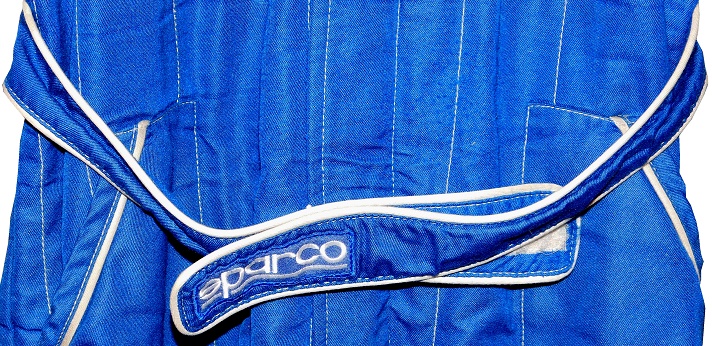
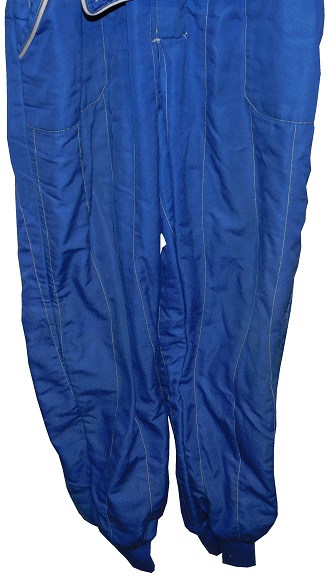
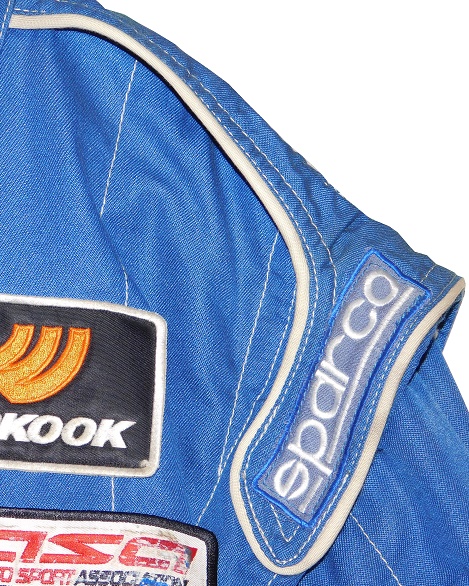
The SCCA races in the San Francisco Region, which often races at Laguna Seca. The drivers are guys who put a lot of effort into their cars. One such driver is “Mighty” Mike Niemann of Team Miataka Racing , who is well-known for his 1992 Mazda Miata, which he “painted” with $100 in Sharpies. He has raced in a number of SCCA events, all while wearing this driver suit.This Sparco suit shows decent use, with wear on the cuffs, and some wear on the front.The collar has a Velcro closure, and has a SPARCO logo on the front.The right chest features SUNOCO, TEAM MIATAKA RACING, and SCCA patches, as well as MICHAEL NEIMANN embroidered into it.The left chest features HANKOOK TIRES,NATIONAL AUTOSPORT ASSOCIATION,MAZDA, and LAGUNA SECA patches sewn into it.The front torso is unadorned, and shows some slight use.Inside the front zipper is the tagging, including the care tags, and the warranty label. The suit has a belt, which is blue, with white outlines, and has a SPARCO logo embroidered into it.The legs are unadorned, and have standard cuffs.The shoulders have epaulets, which have Sparco logos on the lower half, but are otherwise unadorned. The right sleeve has a MAZDA RACEWAY LAGUNA SECA patch on the upper half, and are otherwise unadorned. The left sleeve features the SFI 3-2A/5 certification, and is otherwise unadorned. The back of the suit has an FIA Standard 3856-2000 RS.006.01 certification on the back of the suit. Other than that, the back is unadorned. Mike Niemann painting his car with Sharpies is proof that guys who race in their spare time are just as devoted as the guys who race professionally. It took Niemann 22 days to paint his car using his Sharpies. He still races these days, and I hope he races for many years to come.

Next week is the first of a two-part series for a driver who is also a racing businessman.

Minor League Month Starts With a Pair of Justin South Gloves

By David G. Firestone

Last year, I did Formula One Month through November. I was thinking about how I wanted to do November in 2017, and I decided that November should be Minor League Month. Basically, for the next four Friday Features, I am going to focus on the little guys, who race at the local racetrack, or race in regional series. For our first installment, we are going to examine a pair of gloves worn by short track driver Justin South.

Growing up in Gardendale, Alabama, Justin South has raced all over the Southern United States. He has raced as high as ARCA, but has mostly raced on short tracks around the Southeast.

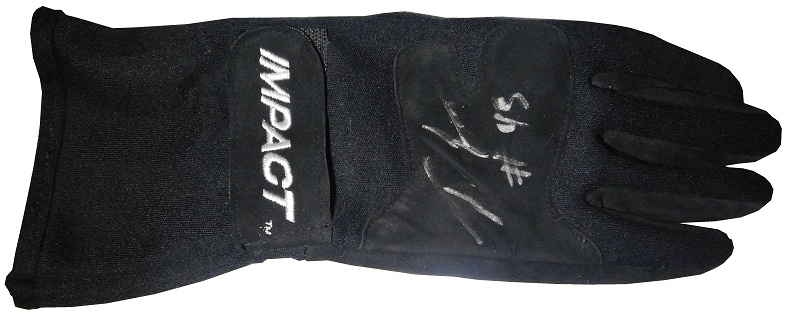
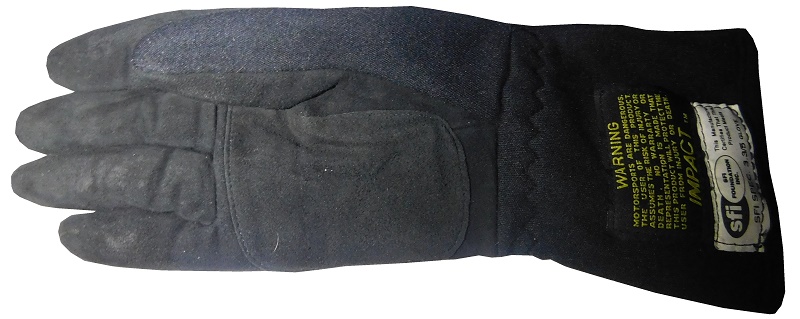
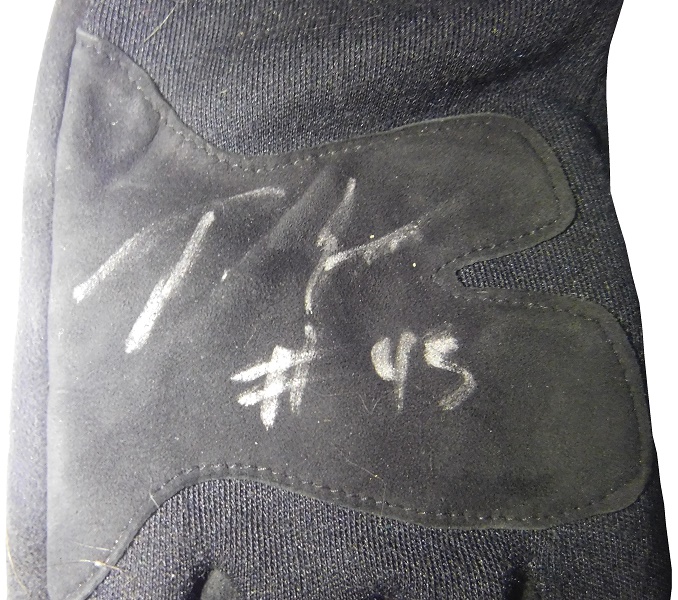
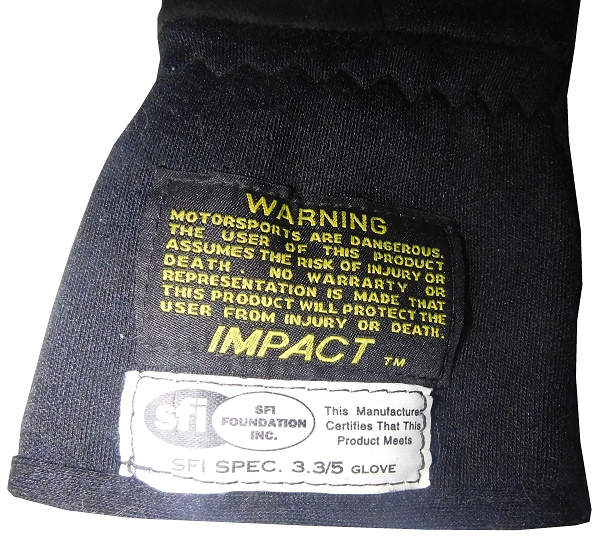
Justin South races everything from Super Late Models to Pro Late Models, and has raced on everything from dirt to asphalt. Like many small-time drivers, he has to buy his own equipment, and he is left with extras, such as these two right Impact! racing gloves, one of which he has autographed.Both gloves are in decent condition, and show some wear on the palms. Justin has autographed one of the gloves.Both of the palms of the gloves show light use.The first glove shows light wear on the palms, and Justin has autographed the glove with the number 45. This would indicate that the glove was not signed during his time in ARCA, as he never raced a car with that number in ARCA, and more than likely came from his regional racing. They also have Impact! and SFI tags. The second of the two gloves is identical, including wear patterns to the first glove, except that this glove has not been autographed. Justin South is the kind of racer that is seen thousands of times over in the towns and hamlets of the United States. He is the every day man, who races in his spare time, hoping to achieve a dream. He has raced in ARCA, and he would love to race in ARCA again, and I’m willing to bet that if he got the chance to race in NASCAR, he would grab it. There are thousands of Justin Souths in the United States and all over the world. They race for their dreams, and they hope to grab the elusive brass ring of racing professionally.

Next week, I will examine a Laguna Seca suit.

Draft Day Afternoon

By David G. Firestone

[Editor’s Note: This was supposed to run last week, but was delayed due to the interviews with Alexis DeJoria and Del Worsham.]

Going off-topic this week. Later today, The NHL Draft took place at The United Center in Chicago. I didn’t attend the event like I did the NFL Draft, but I am a hockey fan. Living in Chicago, I’ve gone to Blackhawk games, and I’ve followed other teams. When I was in college, the Blackhawks had a deal where you could get a ticket for $8. That was also during a time when the Blackhawks were a disaster, and nobody really cared about them.

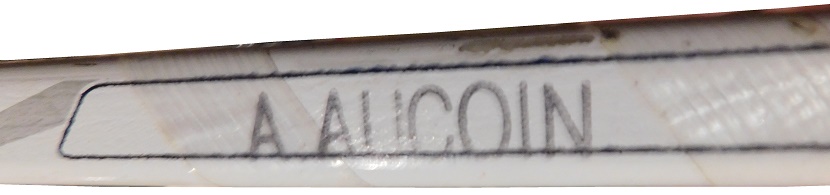
I’ve also collected some hockey memorabilia. Joining the Blackhawks in 2005, Adrian Aucoin quickly rose up and became the Blackhawks captain. In two seasons, he scored 4 goals, and had 17 assists. During his time with the Blackhawks, he used this stick.

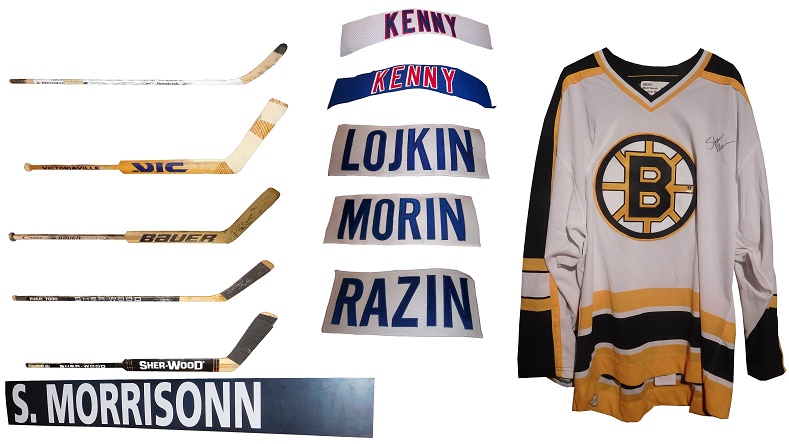
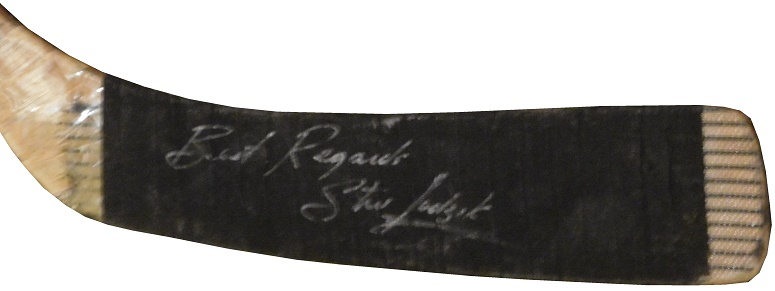
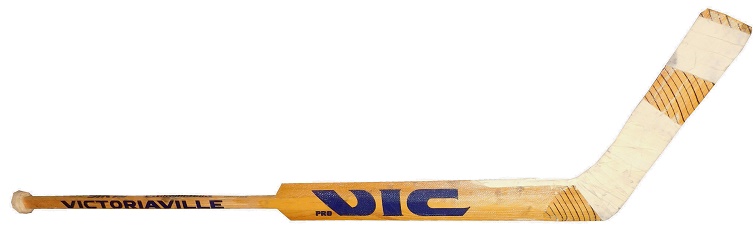
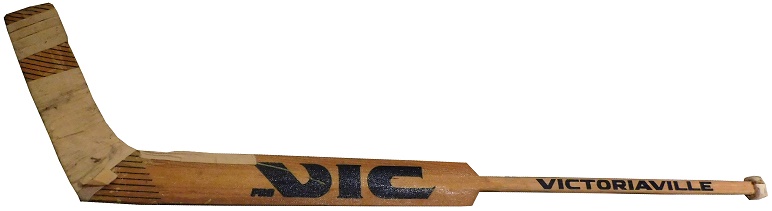
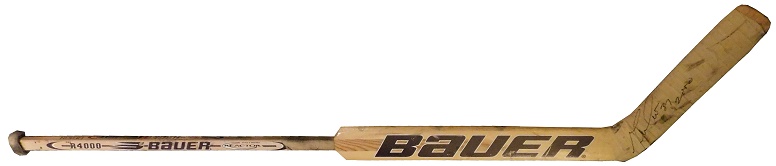
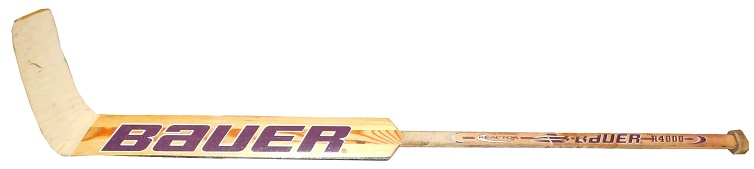
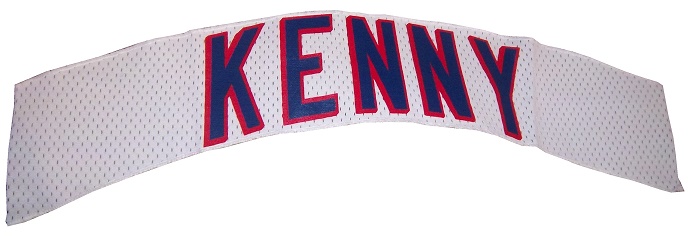
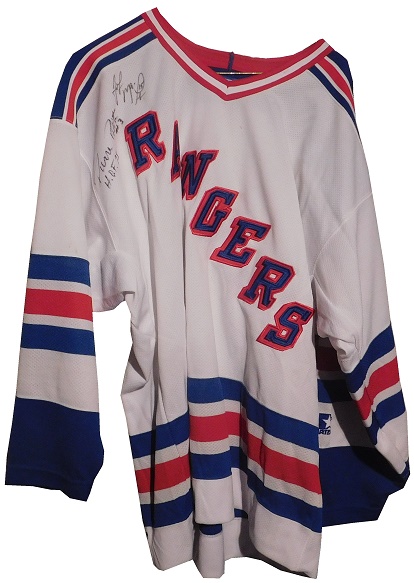
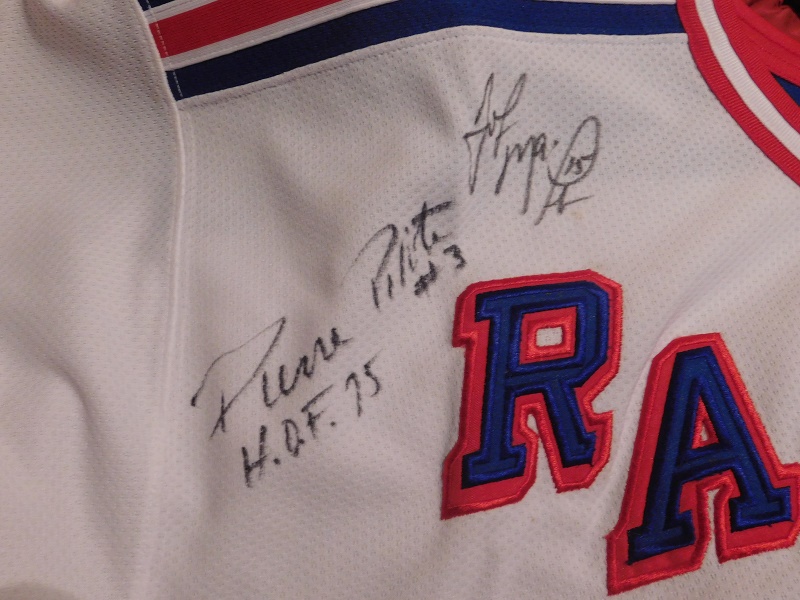
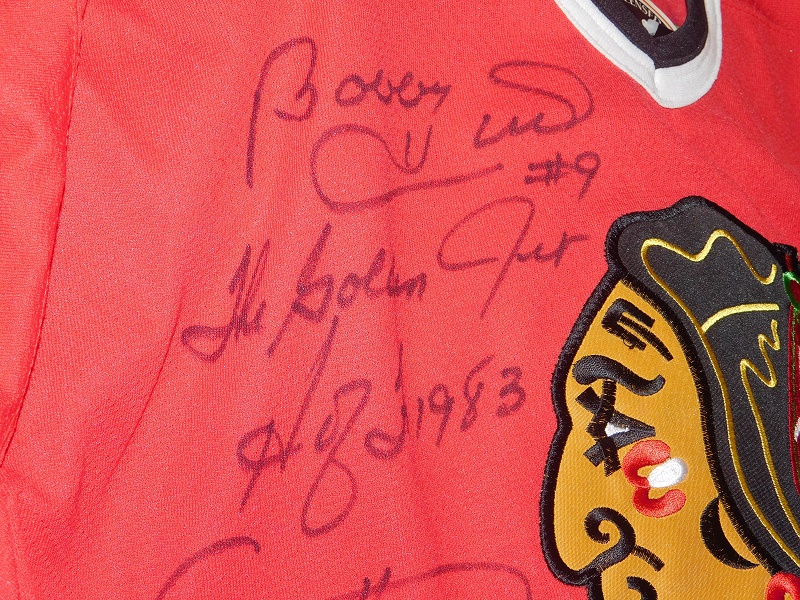
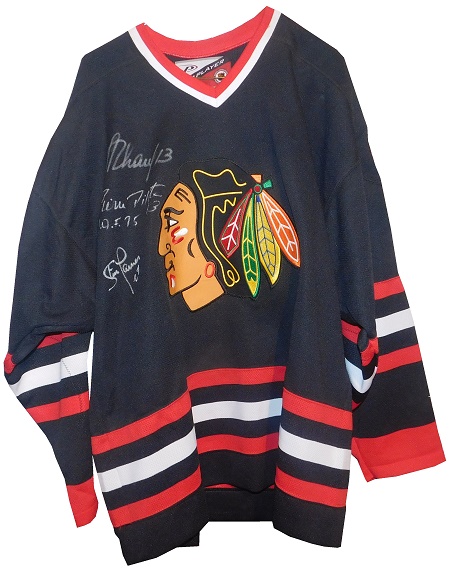
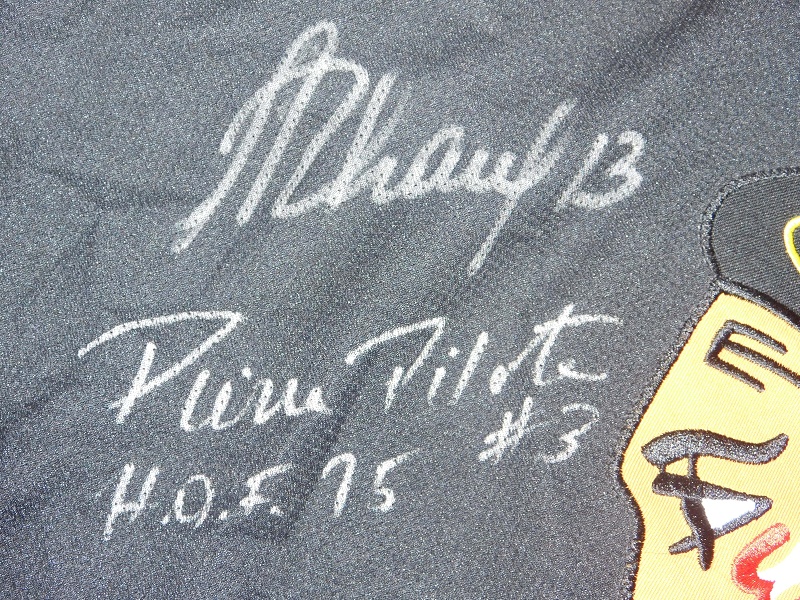
This Reebok 3K stick shows great use, has custom taping, and is autographed, and personalized to me. Playing with the Blackhawks from 1981 to 1989, Steve Ludzik was a mainstay on the roster. During his career, he also played for the Buffalo Sabres. At some point in his career, he used this Sher-Wood stick, which he autographed on the blade. Goalie Alain Chevrier had a lengthy career, playing for the Devils, Blackhawks, Penguins, and Red Wings. He had a decent career, nothing really memorable. During his time with the Blackhawks, he used the VIC stick. It shows a lot of use. Guy Hebert played in the NHL from 1991 to 2001. He played 491 games, wining 191, and losing 222. During his playing career, he used this Bauer stick, which he autographed on the blade, and it shows nice use. While Warren Skorodenski 35 game, 12 win and 11 loss record isn’t exactly memorable, he is known for having the highest save percentage in 1986-1987 while with the Chicago Blackhawks with a .903. During his time with the Blackhawks, he used this Sher-Wood stick, which shows nice use. Rob Kenny was a minor league hockey player in the late 1980’s and 1990’s. Though he never made the team, he did go to the New York Rangers training camp, and during that camp, he used these nameplates, which were removed from the jersey. The Fredericton Canadiens were an AHL team that played in Fredericton, New Brunswick from 1990 to 1999. Three of their players were Alexei Lojkin, Nathan Morin, and Gennady Razin. They played at various times, and their nameplates on their home whites were removed. The don’t show any real use. Shaone Morrisonn had a decent career in the NHL, playing for the Boston Bruins, Washington Capitals, and Buffalo Sabres. He was drafted in the 2001 NHL Draft in the first round, 19th overall. This is the actual draft board from the 2001 Draft, and the first Boston Bruins jersey he signed after being drafted. I also have a New York Rangers jersey signed by John MacLean and Pierre Pilote. I used to wear this Jocelyn Thibault jersey to games, and I eventually got it autographed and personalized by Thibault!I also have two Blackhawk jerseys, one signed by Bobby Hull, Pierre Pilote, and Steve Larmer. The other one is autographed by Alex Zhamnov, Pierre Pilote, and Steve Larmer. I also have autographed pucks, and flats as well. The NHL Draft doesn’t have the reputation that the NFL or NBA drafts have, but for seven rounds in two days, the hockey world will be focused on the United Center, wondering who will join what team. As with all drafts, time will determine if it will be a great draft, or an awful one. We will have to wait and see.

Next week, I’m going to start Minor League Month with a pair of gloves.

Speed Sport Suits…Legit or Counterfeit?

By David G. Firestone

Race car drivers will be the first to admit that the SFI rating is the most important part of a driver suit. The appearance and fit are nice, but how the suit protects from fire is crucial. That SFI patch can mean the difference between life and death.

SFI was founded in 1978, and originally called the SEMA Foundation Incorporated. SEMA stands for Specialty Equipment Market Association, and is composed of over 6,000 companies that promote after market automotive products. Since then, SFI and SEMA have parted ways, and SFI operates as an independent group devoted entirely to regulate racing safety equipment.

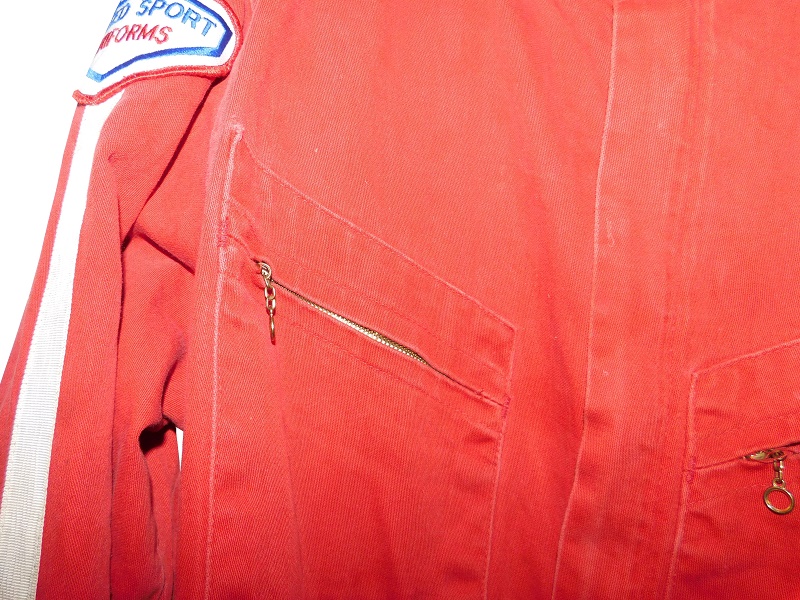
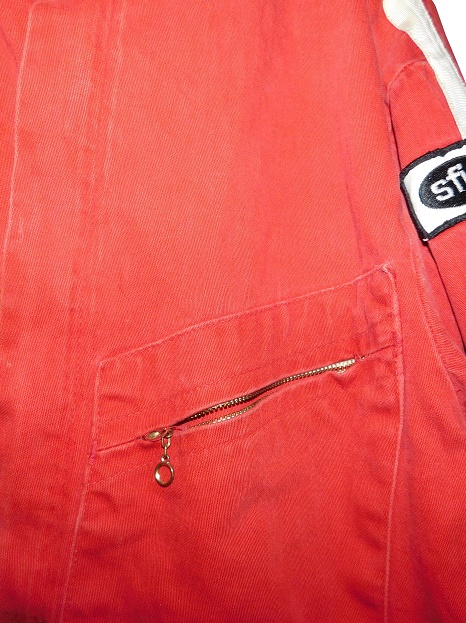
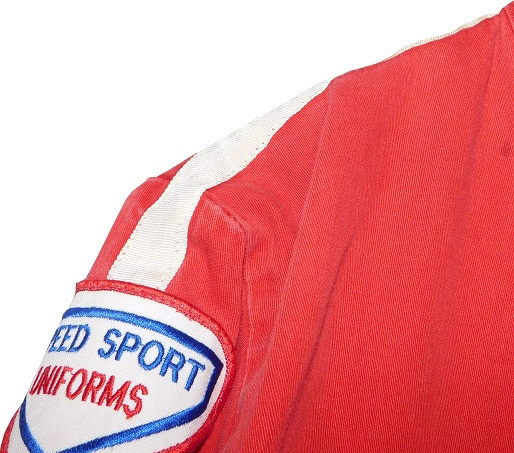
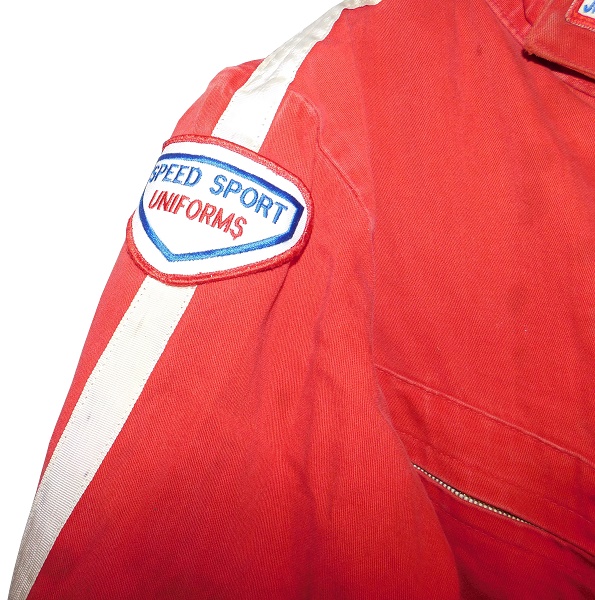
In the modern racing safety culture, the requirement that a suit conform to SFI standards is paramount, but not all companies are following the rules. Since 2013, the SFI has caught counterfeit racing equipment at least 5 times. Let’s also remember the Impact/SFI conflict from 2010. Each time they catch a company making fake SFI rated equipment, they publicly name the company, and the products. Examples can include newer models, and older ones, such as this Speed Sport suit which appears to date back to the 1980’s.Speed Sport was a racing suit manufacturer in the 1980’s. There is very little about them available on the company, and they didn’t last long. Every example of a Speed Sport suit appears to be of dubious quality, being made of a non-Nomex material that is labeled Nomex. This is a perfect exampe of why counterfeit racing suits need to be identified and called out.

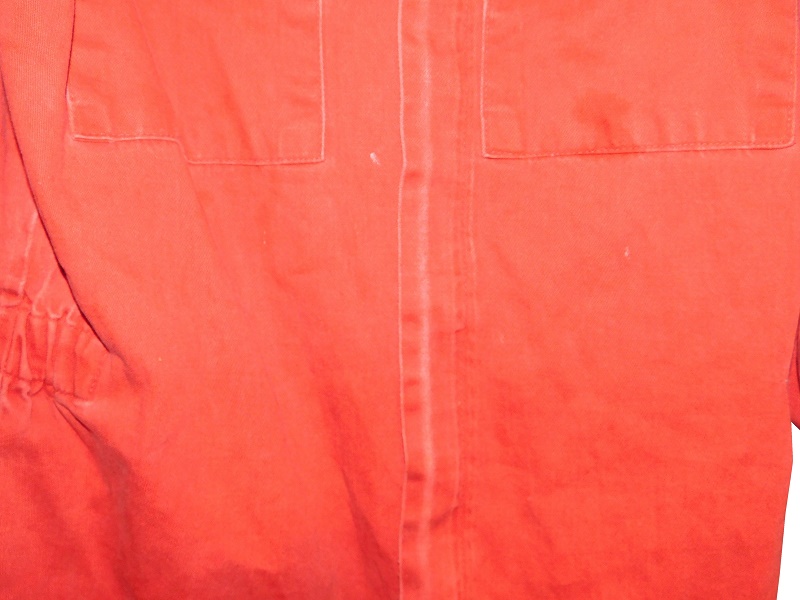
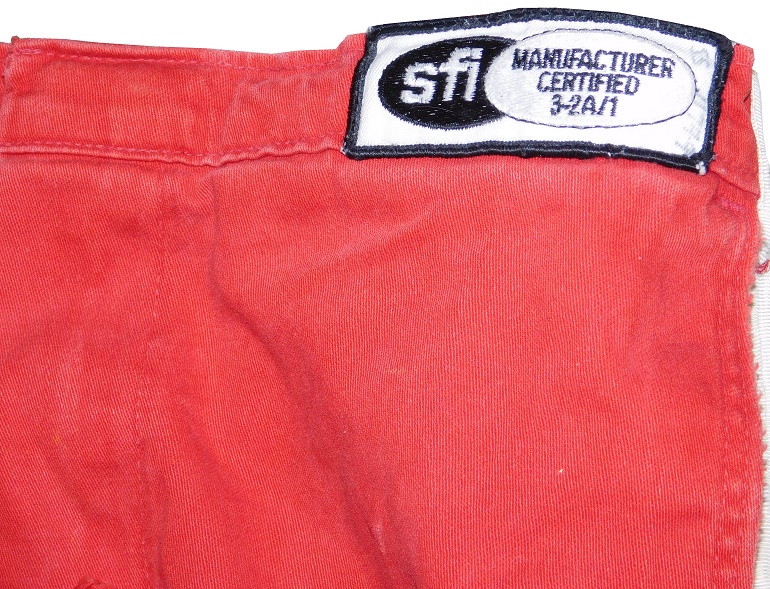
This single-layer two-piece suit is clearly NOT made of Nomex, and shows decent wear. There are a number of pieces of evidence to support this theory.The collar has a Velcro closure with a SPEED SPORT patch on the strap.A second clue that this isn’t real Nomex, aside from the fact that it doesn’t look or feel like Nomex, is the fact that the wash instructions state “Wash in warm water, tumble dry, do not bleach.” Every other Nomex driver suit I have come across states that the suit needs to be dry cleaned.The chests and torso are unadorned, and show some discoloration. The shoulders have a white stripe that extends down the whole sleeve. The right sleeve features a SPEED SPORT UNIFORMS patch, and the white stripe extends to the end of the sleeve. The left sleeve has a suspect SFI Certification patch, which indicates that the suit has a 1 rating. A 1 rating would provide the most minimal of protection. Normally, a 1 rated suit would provide 3 seconds of fire protection, but since this suit clearly isn’t made of Nomex, I doubt it would provide that much protection. The back of the jacket shows some stains and discoloration. The pants show a decent amount of wear with tears and stains. The pants are made of the same materials as the jacket, and have the same stripes.The inside of the pants shows the same wash tag that the jacket shows. The front zipper has been torn and has clearly been repaired.The cuffs show some discoloration. The back of the pants show the same discoloration as the front.The back of the pants have the same suspect SFI rating patch as the jacket.The sad fact is that there are companies that have no concern for the safety of their customers, and have no reservations slapping a fake SFI rating on a suit or uniform item, and selling them to customers. SFI is fighting a never ending war to keep their customers safe. Customers should do their research on if a company is working with SFI, the list can be found here. No driver or crew members should get hurt because of counterfeit racing gear.

Next week, I will post something I tried to post before the NHL Draft.

Comparing and Contrasting NHRA Championship Interview Caps

By David G. Firestone

Over the past few months, I’ve done a number of articles on NHRA Championship winner hats. When the NHRA was sponsored by Winston in the Winston Drag Racing Series. In 2001, Winston left the sport, and Coca Cola took over, creating the Powerade Drag Racing Series, which lasted until 2008. In 2009, Full Throttle Energy Drink took over the series sponsorship, creating the Full Throttle Drag Racing Series, which lasted until the end of the 2012 season. In 2013, Mello Yello took over, creating the NHRA Mello Yello Drag Racing Series we know today.

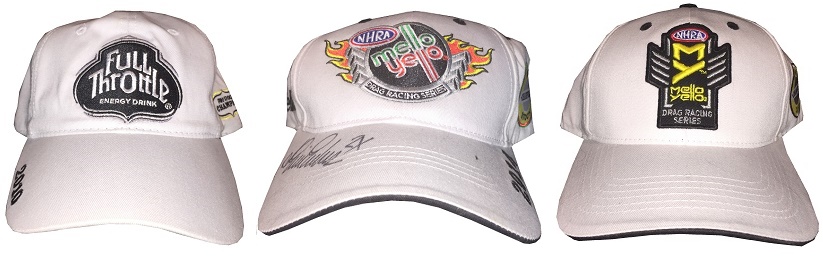
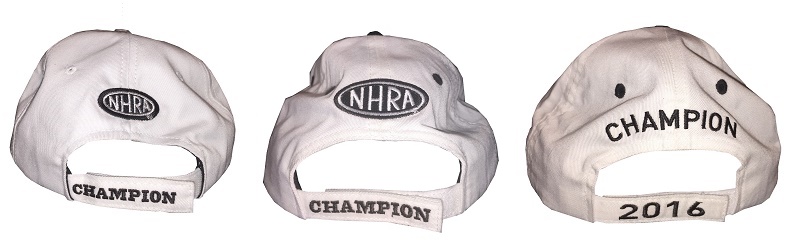
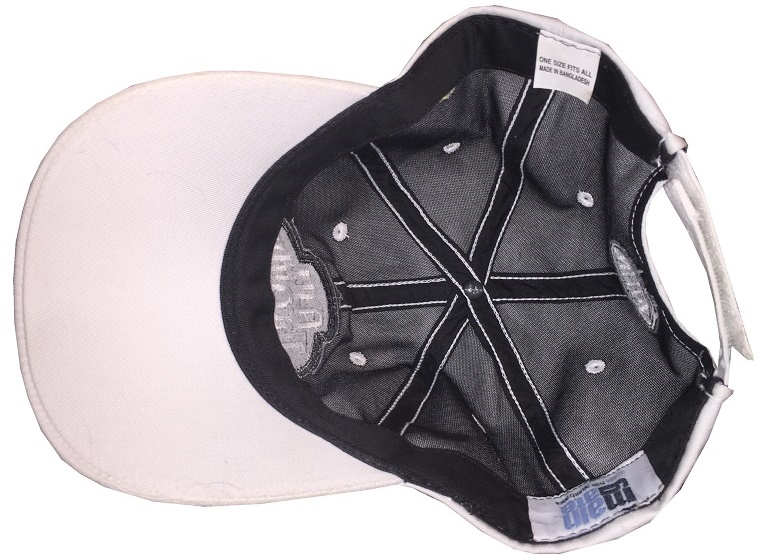
The three championship caps show how differently Full Throttle, the old Mello Yello, and the new Mello Yello promote their companies. Taking a look at the front of the caps, in 2010, Full Throttle simply had a Full Throttle Energy Drink logo. In 2014, the old Mello Yello had a vintage-inspired logo, with a motorsports motif added. In 2016, the new Mello Yello has a bolder, modern logo that is vaguely motorsports themed.The left sides are telling too. Full Throttle went for a minimalist design, with a PRO STOCK CHAMPIONSHIP embroidery with a Full Throttle theme. The Mello Yello caps both utilize a circle design, with PRO STOCK CHAMPION embroidered into it, though the gray was changed for the new Mello Yello as well as a new font was used.The back of the 2010 Full Throttle cap has an NHRA logo, which was needed since the front only has a Full Throttle logo. The word CHAMPION is embroidered on the Velcro closure. This design is mimicked on the 2014 Mello Yello cap, albeit with a larger NHRA logo and slightly larger lettering on the Velcro closure. In 2016, the caps got an update, with CHAMPION above the closure and 2016 on the closure.The right side of the caps aren’t utilized as well as the rest, with only one, the 2014 cap having GO ON YELLO! embroidered into it. While the 2010 cap has 2010 on the brim, and the 2016 cap has nothing.While there isn’t the room for design as the rest of the cap, the top does show some design differences. The eyelets are white on the 2010 cap, as is the squatchee. In 2014, those had changed to black, giving the cap a bit more of an interesting design. This change continued into 2016.The inside of the caps have Main Gate tags. Main Gate is an Indianapolis-based apparel company, which has deals with the NHRA and all their teams. They also have a number of deals with other companies, some sports, some not. In 2010,the inside was black, and the tag is on the right side. In 2014, the inside of the cap is white, the tag is on the left side, and GO ON YELLO! is printed on the brim. In 2016, the brim font changes, but the rest of the inside of the cap remains the same.It’s amazing to me that Full Throttle, who sponsored the biggest drag racing series in the world, took such a minimalist approach to sponsoring the series, but Mello Yello has thrown everything into making the sport work, and bringing in fans. Between the new approach, and a good television deal with FOX, the Mello Yello approach is working out well, and I hope it continues to work well.

Next Week, I will examine a possibly fraudulent SFI-rated suit.

The Reigning King Of Funny Car Has A Hat To Match

By David G. Firestone

Every sport has that one driver who is a true great, but never could win a championship. Baseball has Ted Williams. Football has Dan Marino. Basketball has Charles Barkley. Hockey has Joe Thorton. NASCAR has Mark Martin. IndyCar has Hélio Castroneves. Formula 1 has Stirling Moss. Up until the end of the 2016 racing season, Ron Capps could be considered this for the NHRA. After 10 years of racing in Funny Car, and so many close calls, Capps finally scaled the mountain, and won the 2016 NHRA Mello Yello Drag Racing Series Championship.

Ron Capps broke into the Mello Yello Drag Racing Series as a Top Fuel driver for Roger Primm. He would win his first race in Seattle that season. In 1996, he was signed by Don Prudhomme, and ran six races, though he did not qualify for two of them. In 1997, he switched to Funny Car, and raced for Don Prudhomme until 2005, when he signed with Don Schumacher Racing. In 2008, he signed a sponsorship deal with NAPA Auto Parts. In 2016, he finally climbed the mountain and won a Funny Car Championship.

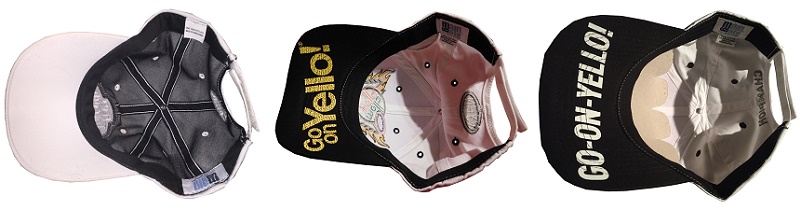
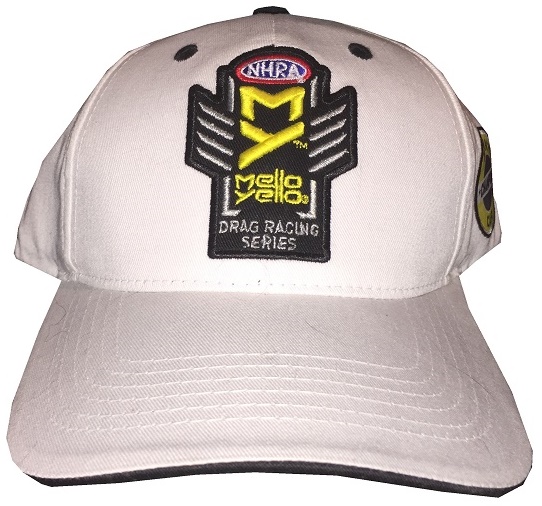
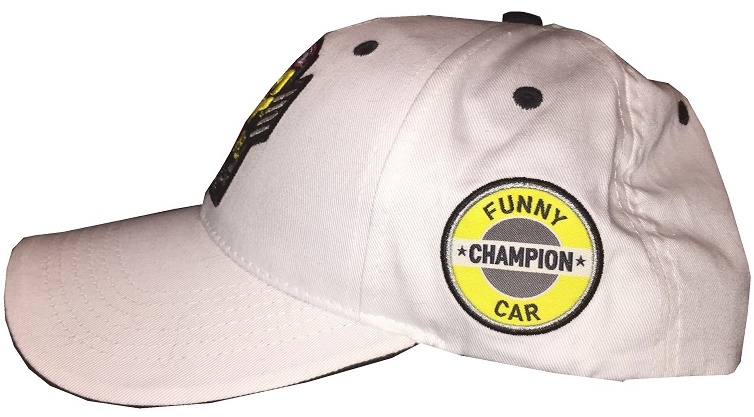
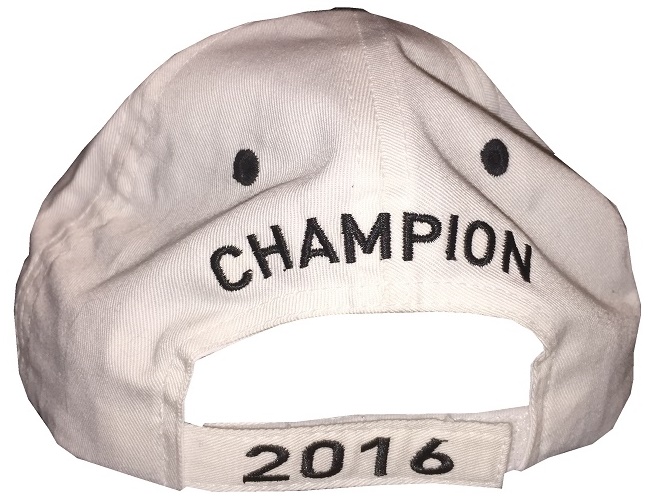
2016 was not an easy season, he had a lot of competition from the John Force Racing teams, as well as other Don Schumacher Racing cars. But he had 5 wins, Winternationals, Epping, Englishtown, Norwalk, and Seattle, 5 runner up finishes, and four number one qualifiers. He also passed Cruz Pedregon for 2nd on the Funny Car all-time win list with 49. Though he didn’t win the NHRA Finals, he did win the championship at the final race in Ponoma. One of his crew members was given this white championship hat.The cap is in great condition, showing no signs of wear. The front has the newest NHRA Mello Yello Drag Racing Series logo, introduced earlier in the year.The left side features a FUNNY CAR CHAMPION patch, which is the same basic design, with different font, and the gray in the center of the circle is darker.The rear has CHAMPION embroidered over the closure, and 2016 embroidered on the Velcro closure.The right side is completely plain.The top of the cap features six black eyelets, and a black squatchee.The inside of the cap has a Main Gate tag, the cardboard is still present, and the words GO-ON-YELLO! printed on the black material of the under brim.There doesn’t seem to be any reason why NHRA championship hats are white, and my best guess is that it was because John Force likes to wear white hats, but that is just speculation on my part. I have noticed that there is somewhat of an evolution of NHRA championship hats. I will discuss this in depth more next week.

One Of The Kings Of Pro Stock

By David G. Firestone

Minnesota might not seem like it, but they have a decent drag racing pedigree. They have Brainerd International Raceway, and the legendary Brainerd Zoo. Minnesota is also the home to a number of Pro Stock drivers, including Warren Johnson, Kurt Johnson, Jason Line, and Greg Anderson. Between them, they have won a combined total of 273 national events, and 13 Pro Stock Championships.

Greg Anderson’s road to NHRA stardom had some help from a legend. Anderson got his start tuning Warren Johnson’s Pro Stock car for many years, and winning three championships in 1992, 1993, and 1995. The 1995 championship was marred in controversy, with the feud between Warren Johnson and Wayne County Dodge driver Scott Geoffrion taking center stage. This was referred to as a war, and this led to an infamous incident at Houston where the two had a burndown, and a war of words. Later that season, the Wayne County Dodge team shop was broken into, and the engines of the cars were vandalized. Wayne County Dodge was also alleged to have illegally used Nitrous, and the team shut down soon after.

In 1998, Greg Anderson started racing in Pro Stock. He took to the class well, winning 86 races, and four championships. He won 12 races in a single season in 2003. In 2004, he set the record for most #1 Qualifiers in a season with 16. His career almost ended in 2014, after heart surgery. He rebounded, and had a solid showing in 2015, finishing second in the championship standings, as well as finishing second in 2016.

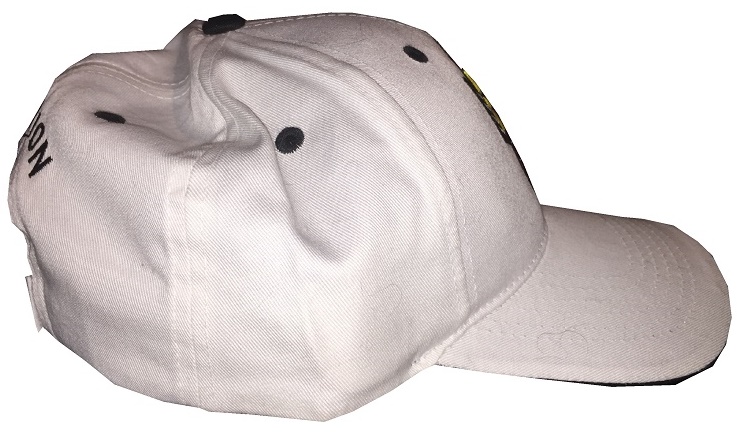
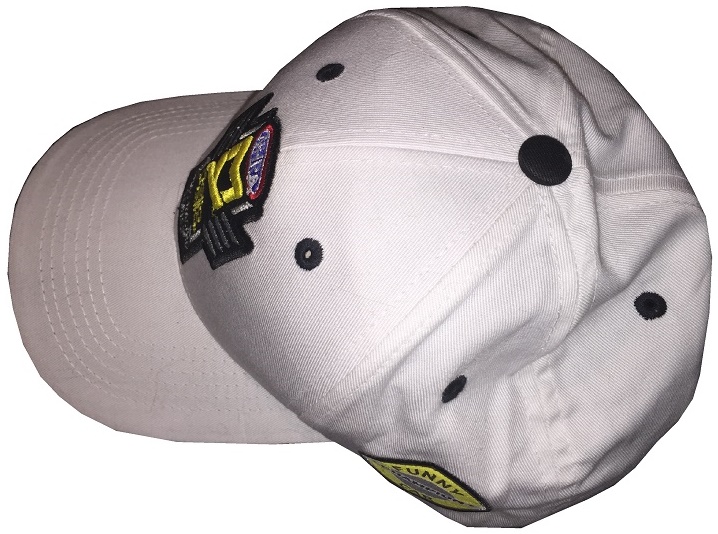
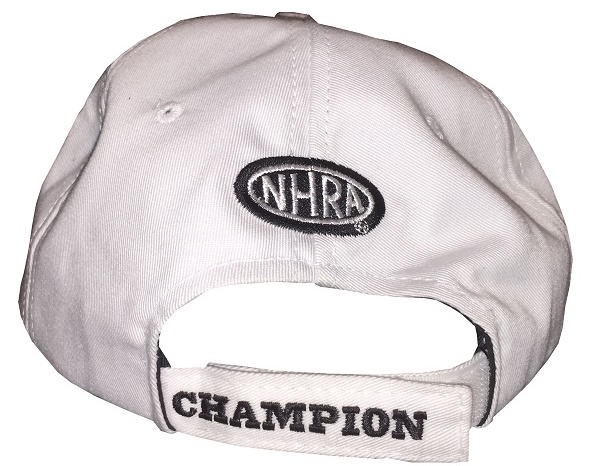
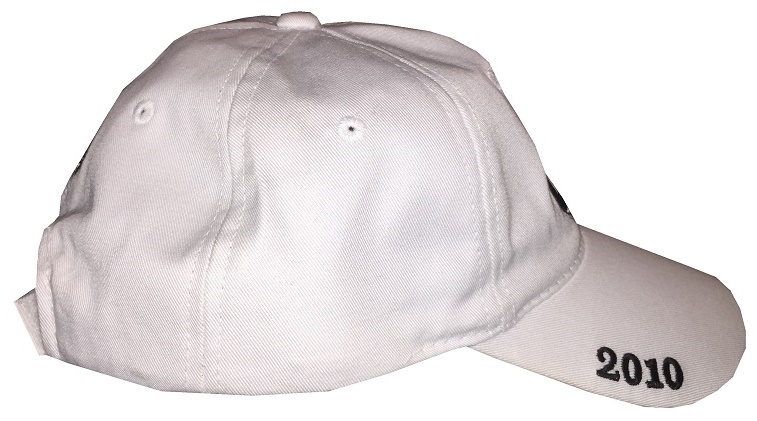
In 2010, he won 5 events, Norwalk, Seattle, Charlotte, Dallas and Las Vegas, and wound up winning the NHRA Full Throttle Drag Racing Series Pro Stock Championship. One of his crew members was issued this white hat in celebration.The cap is in great condition. It has a Full Throttle Energy Drink logo, as opposed to an NHRA Full Throttle Drag Racing Series logo.The left side features PRO STOCK CHAMPION embroidered into the side with black and yellow accents.The back of the cap has an NHRA logo and CHAMPION embroidered into the Velcro closure strap.The right side has 2010 embroidered into the bill.The top is pristine, and the cap has a white squatchee.The inside of the cap is black, has some light stains, and a Main Gate tag.Greg Anderson’s 2017 season is going well too. He has had solid showings at every event he has raced at, and has two wins, and has a good spot in the point standings. He will be a threat for the championship this year. He is 11 wins away from being the all-time win leader in Pro Stock.

Next week, I will discuss a Ron Capps championship hat.