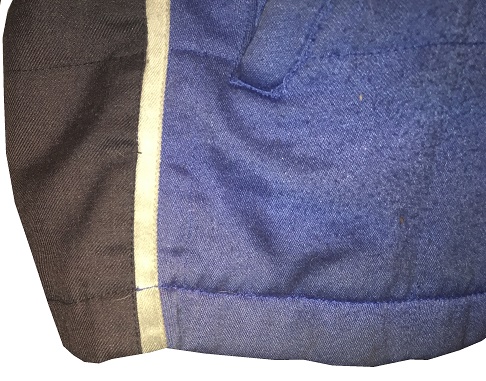
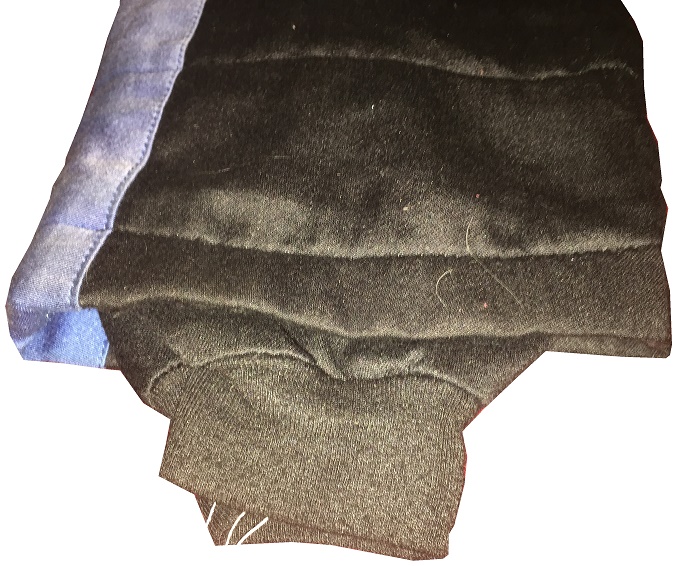
Hailing from St. Louis, Robby McGehee raced in IndyCar from 1999 to 2004. He raced for a number of teams, including Team Cheever, and Panther Racing. He raced in 38 races, including 5 Indianapolis 500’s. He scored a podium at Texas with a second place finish at the 2000 Casino Magic Texas 500.
His best finish in the Indianapolis 500 was a 5th place finish in the 1999 event. He started 27th and worked his way up to 5th in his first Indy Racing League start. One of his pit crew members wore this uncertified, single-layer suit. The suit was worn for 7 of the 10 1999 races, and may have been recycled in 2000. It shows light wear.The Velcro collar is unadorned.The standard Simpson warranty label is in the cowl. There is a small flag tag with the XL size indication. There is a tag pinned to the warranty label that reads “38847.”The right chest features an INDY RACING LEAGUE logo, and a SIMPSON logo present.The left chest features a PPG logo and an OLDSMOBILE logo embroidered.The front torso features a large ENERGIZER ADVANCED FORMULA logo embroidered.There is a black belt underneath the red and yellow stripe below the front logo. The belt is unadorned.The legs have standard cuffs, and are unadorned.The shoulders feature red epaulets with FIRESTONE logos embroidered.The right sleeve features an Energizer Bunny logos embroidered, with nothing in television position. The left sleeve features an Energizer Bunny logo and a SIMPSON embroidered, with nothing in television position.The back of the suit doesn’t show any wear.The back of the neck is unadorned.The back torso features an ENERGIZER ADVANCED FORMULA logo embroidered.With that, I present another edition of…
Tailgating time!
Sometimes you go to an event and you bring an entree. Sometimes you bring a side dish. This is for when you bring a
Cherry Pie Supreme
8 Servings
Ingredients:
9 inch unbaked pie shell
1 1 pound 5 ounce can of cherry pie filling.
4 3 ounce packages of soft cream cheese
1/2 cup sugar
2 eggs
1/2 teaspoon vanilla extract
1 cup dairy sour cream
Instructions:
1-Preheat oven to 425 degrees.
2 Prepare pie shell by spreading half of cherry pie filling in bottom, and set rest aside.
3-Bake shell 15 minutes or just until crust is golden. Remove from oven.
4-In small bowl, beat together cheese, sugar, eggs, and vanilla until smooth, and pour over hot cherry pie filling.
5-Bake 25 minutes, filling will be slightly soft in center.
6-To serve, spoon sour cherry around edge of pie.
7-Fill center with remaining cherry pie filling.
Next week, another pit crew suit from a little team that could.
James Finch started his career in construction, eventually founding Phoenix Construction in 1983, which specializes in Airport construction. In 1989, he founded Phoenix Racing, which fielded cars in The Cup Series, the Xfinity Series, and the Truck Series. They won a single race in the Cup Series, The 2009 Aaron’s 499 with Brad Keselowski, and 13 races in the Xfinity Series.
The team lasted from 1989 to 2013, during which time, Phoenix Racing raced a total of 795 races, 251 in the Cup Series, 543 races in the Xfinity Series, and one in the Truck Series. Phoenix Racing also raced 64 races in ARCA, and amazingly has 10 wins. In 2013, faced with rising costs, Finch decided that he would sell his race team. The team was bought by Harry Scott Jr., who renamed the team HScott Motorsports.
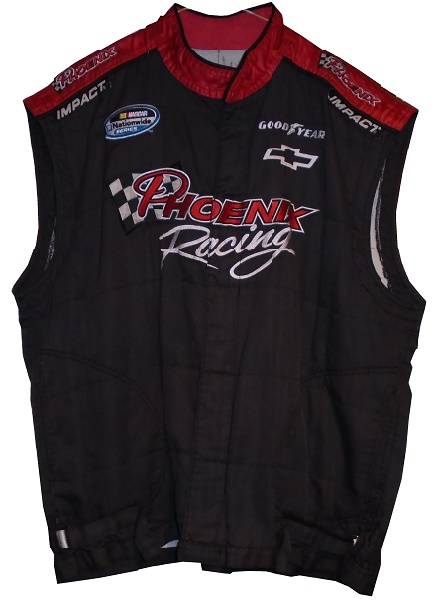
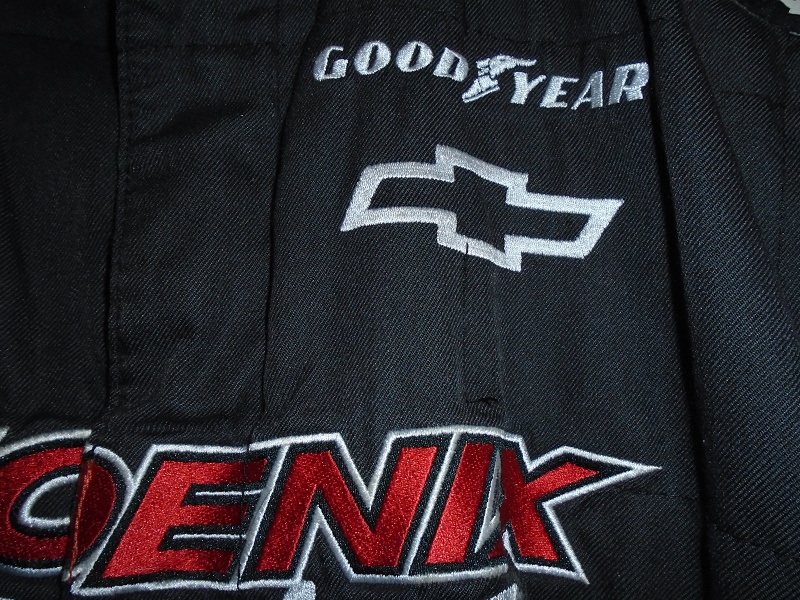
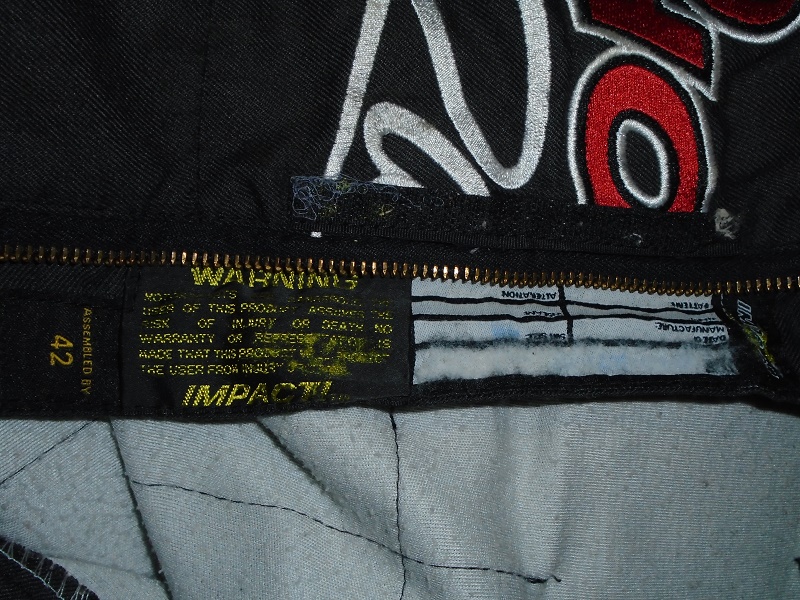
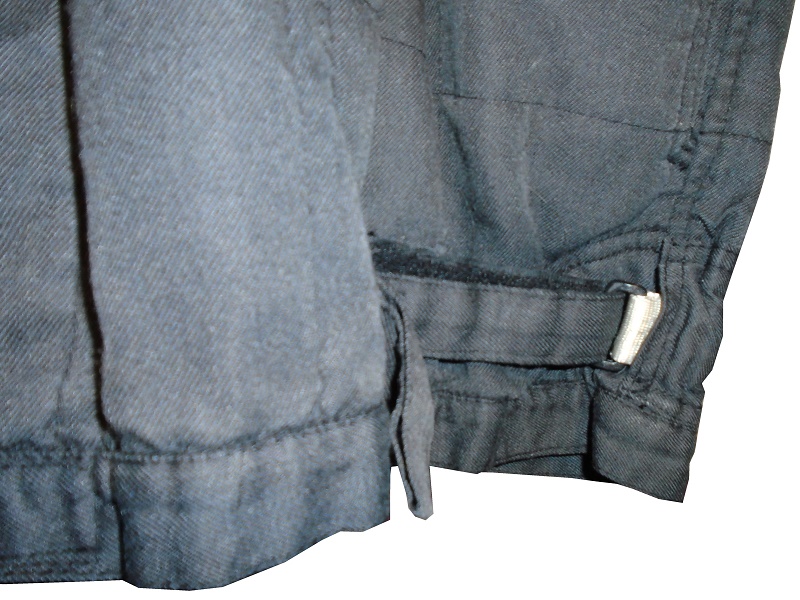
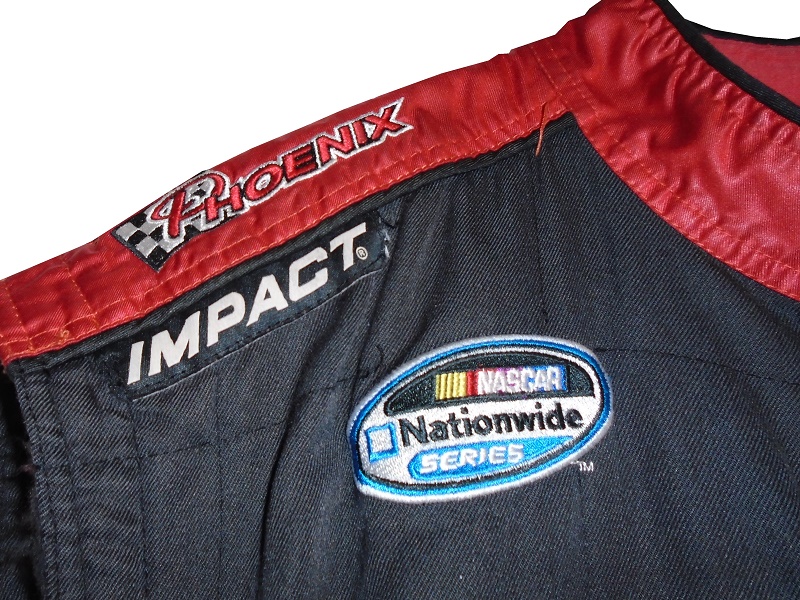
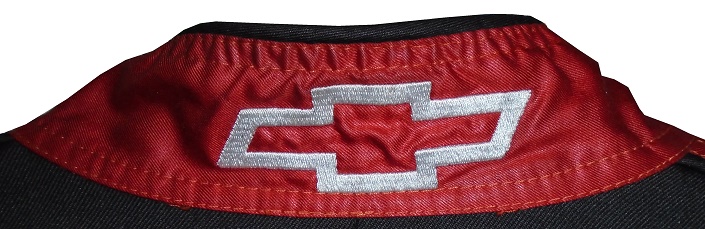
In 2011, Phoenix Racing raced in a total of 4 races, with two different drivers. Landon Cassill Started 2nd, and finished 3rd in the 2011 DRIVE4COPD 300, and Jamie McMurray raced 3 races, but failed to score a top 10. During that season, one of their crew member in the Nationwide Series wore this black Phoenix Racing vest. The vest shows light use, not surprising for a vest that was only used for 4 races at most.The vest has a standard red collar, which is unadorned.The cowl doesn’t have a tag, but does have the word MILEY written in Sharpie.The right chest features a NASCAR NATIONWIDE SERIES logo embroidered.The left chest features a GOODYEAR logo and a Chevy bow tie logo embroidered.The front torso has a large PHOENIX RACING logo embroidered.Inside the zipper is the Impact warranty label, and identification tag, which is unadorned, but shows wear from Velcro.The hems have comfort straps at the bottom, under the arm holes.The shoulder epaulets have PHOENIX logos embroidered into the red material, and IMPACT tags underneath, and the vest has standard arm holes.The back of the vest doesn’t show much wear.The back of the neck features a Chevy bow tie logo embroidered.The back torso features a PHOENIX RACING logo embroidered.Next week, an IndyCar pit crew suit.
Matt Kenseth #6 NESN Ford Fusion-It’s an ugly, over designed mess, but in a different way than last year. Give credit to NESN, they have horrible cars, but they are creatively horrible. F
Kyle Busch #18 Skittles Throwback Toyota Camry-The best Skittles NASCAR scheme EVER gets a second chance at Darlington. Ernie Irvan’s Skittles scheme was leaps and bounds above the rest of the Skittles schemes. I’m glad to see this scheme get a second chance. A
Paul Menard #21 Menard’s/Libman Ford Fusion-Is there any sponsor that the new Menard’s template can’t give an amazing look? I don’t think so! This is another great look for the Menard’s template. A
William Byron #24 Axalta/Imron Chevy Camaro-One shade of gray would have been enough, but let’s add more. Also, let’s add a hideous shade of yellow that completely clashes with the rest of the scheme, and a bad design, and you have a ready-made F scheme.
David Ragan #38 A&W Ford Fusion-Good look, Front Row template works very well with this color scheme, and the car looks great. A
Kyle Larson #42 Credit Chevy Camaro-The geometric designs are not a good look, and there are too many shades of blue. It’s not terrible, but not great, so all things considered, I give it a C-.
Jeffery Earnhardt #96 Nine Line Apparel Chevy Camaro-The black American flag motif doesn’t work, and the stripe on the side doesn’t work. It’s a mess on the sides, but the hood and roof designs work well. So, I’m going to give this scheme a C-.
I don’t know where my fixation on lottery memorabilia came from I don’t know why I find this stuff interesting. I guess it had to do with the way I grew up. Up until my grandfather came to live with us at age 10, we only had free television. In the Chicago suburbs, that meant we had WBBM Channel 2, WMAQ Channel 5, WLS Channel 7, WGN Channel 9, WTTW Channel 11, and WFLD Fox 32. There were others, if you were lucky with your rabbit ears, but those were the ones we got. As such, we would watch the news on WGN, which was what my family liked.
A part of those newscasts were the Lottery drawings, which fascinated me, but I can never remember our family playing the lottery. Again, it goes back to what I said during my first Lottery column, when I said that “Human beings all have hope, but human beings need something to hope for, and something to inspire hope. For many, religion is that outlet. For others, it is their sports teams. For many, the hope that they could win millions in the lottery is that beacon of hope.”
The history of the lottery in the United States dates back to the 1600’s, while Europe was colonizing North America. Many colonies saw gambling as harmless fun, but as English investors waned to profit from the New World, this changed quickly. As time went on, each of the 13 original colonies had a lottery system in place to help fund the colonies. It became a civic duty to play the lottery. Recessions, scandals, and corruption had almost eliminated the lottery in the United States by 1868.
In 1934, Puerto Rico, then a US colony, started a legal lottery. It would take 30 years, but in 1964, New Hampshire started a lottery. Since then, 44 of 50 states, as well as Puerto Rico, Washington DC, and the US Virgin Islands have lotteries. Alabama, Mississippi, and Utah don’t have lotteries due to religious objections. Nevada has the gambling industry, and they don’t want competition, and Alaska and Hawaii, not being mainland states, aren’t worried about losing tickets out of state.
The lottery takes several forms. Scratch off tickets, first introduced in the 1970’s, are a very popular method of playing the lottery. There are many different kinds of games, with different rules. Pick 3, pick 4, main drawing, and Powerball have their origin in “numbers games.” Numbers games were popular in poorer areas of the country, especially urban areas. The game works by drawing balls that had numbers to pick the winner. A similar game was popular in South Florida and Cuba called “Bolita” or “little ball” was where betters would bet on which number would be pulled out of a bag containing 100 numbered balls.
All the pre 1934 lotteries had one major drawback that kept them from being as accepted as it is today. They were easily rigged, and people lost money on the racketeering that took place around them. Today, the equipment, the drawing, the tickets, and every other aspect is heavily supervised and regulated so that this kind of cheating is not possible. The level of security for a drawing is high, due to the amount of money involved.
One thing that I learned about lottery security is that most of the people directly involved don’t know what equipment is going to be used. 90 minutes before the drawing, the equipment is determined, tested, the host rehearsed, and by the time that is all done, the broadcast is almost ready to start. Though security is high, and equipment is tested, there is always the case that something can go wrong. Do a quick search for “lottery blooper” on YouTube, and you get several examples, including this one:
Security is also high because the amount of money can entice people to cheat, even those inside the system. The chance for cheating can’t be avoided either, as the Pennsylvania Lottery discovered on April 24, 1980, when the winning number for the Daily Number was 666, which tipped off the lottery officials that something was off. It turned out that Nick Perry, the announcer for the lottery drawing, and a group of people replaced the standard lottery balls with latex paint. Of the 10 lottery balls, 8 were replaced with these new balls, so there would reduce the number of possible combinations to eight: 444, 446, 464, 466, 644, 646, 664, and 666. The 666 combination seemed odd, so an investigation was conducted, the guilty parties were caught, and to this day, the number 666 in the Pennsylvania Lottery is referred to as a “Nick Perry.”
To say that Florida has a major connection to NASCAR is a masterpiece of understatement. NASCAR itself was founded at The Streamline Hotel in Daytona Beach, and the Cup Series’ second race was held at The Daytona Beach and Road Course. NASCAR’s most important race, the Daytona 500, takes place every February.
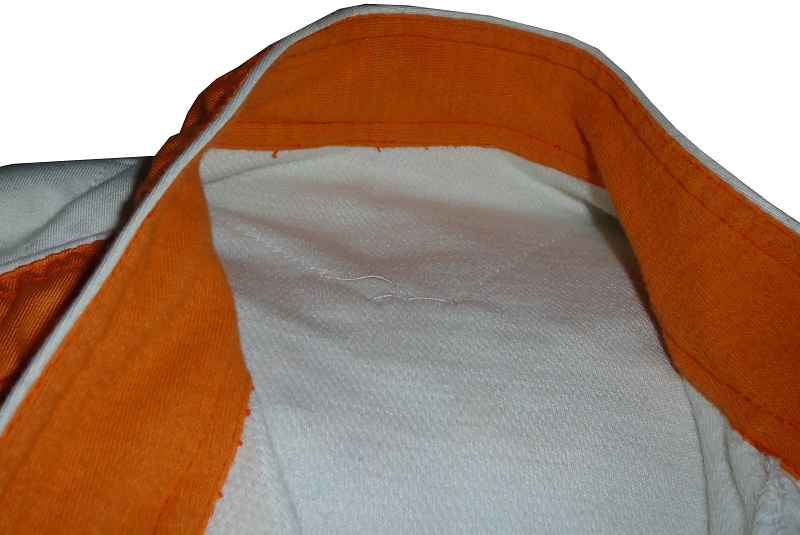
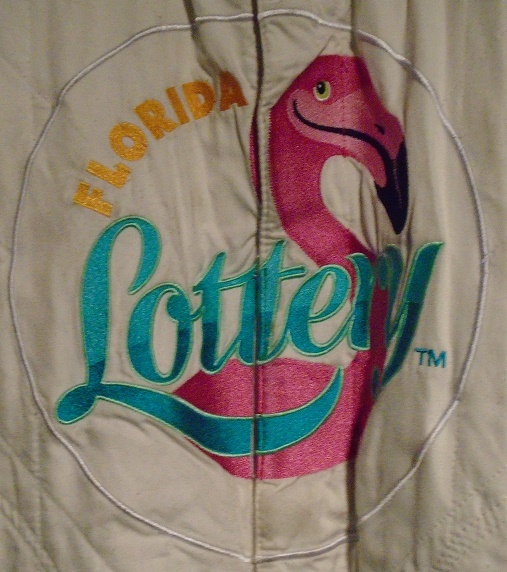
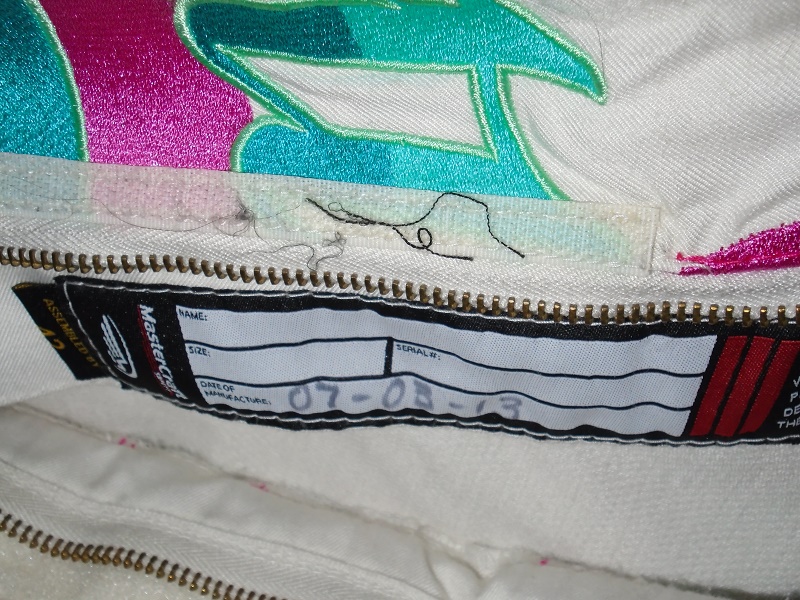
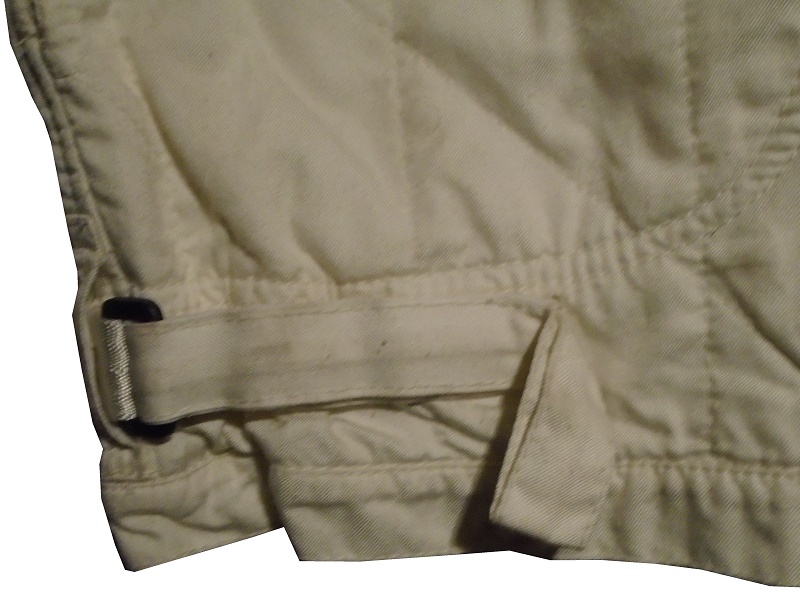
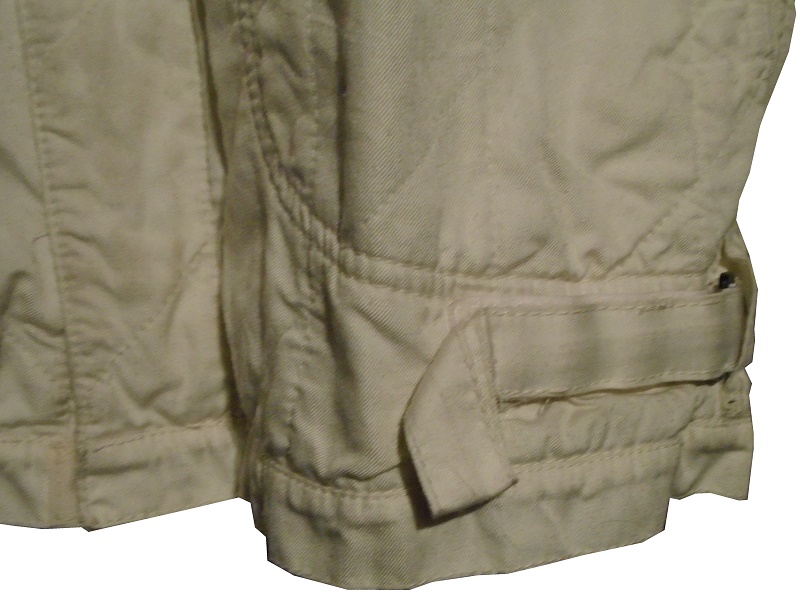
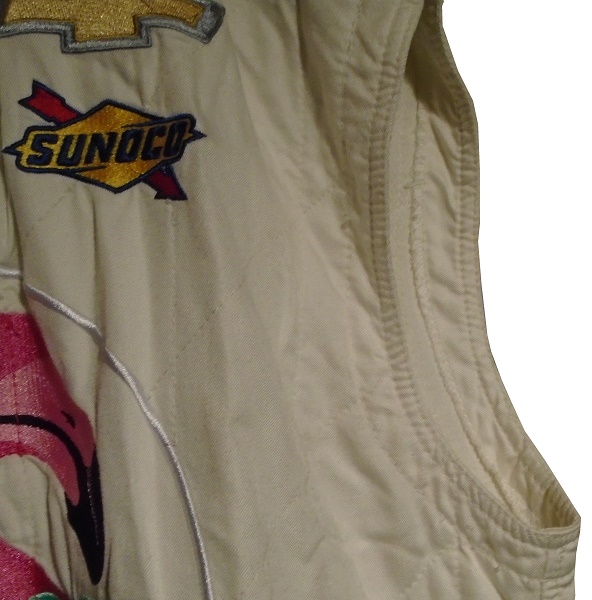
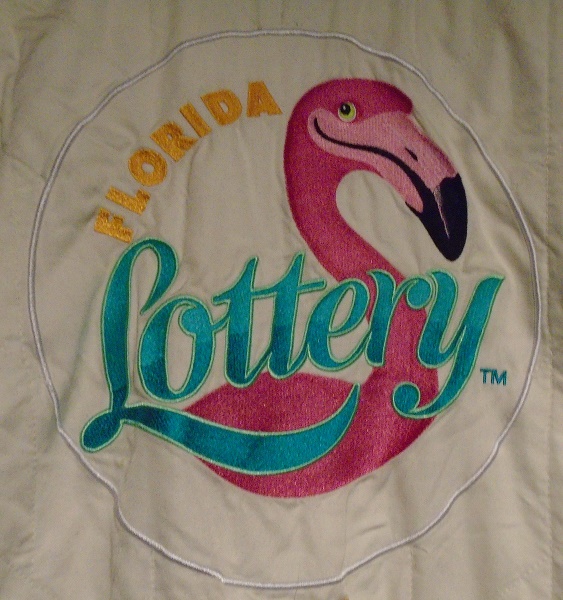
The Florida Lottery was started on January 12, 1988 by order of a constitutional amendment approved by Florida voters by a 2-to-1 margin in the general election of November 4, 1986. It was meant to generate income for schools. As the popularity of the lottery increased, the Florida Lottery began sponsoring southern-based races for individual race teams, including James Buescher in The Xfinity Series in July, 2013. One of the crew members wore this Impact vest. The vest shows light use.The orange collar is a standard collar, and is unadorned.There is no tag present in the cowl.The right chest features a NASCAR NATIONWIDE SERIES logo, and a GOODYEAR logo embroidered into it.The left chest features a Chevy bow tie logo, and a SUNOCO logo embroidered.The front torso features a FLORIDA LOTTERY logo embroidered into the white material.Inside the front zipper is the Impact warranty label and identification tag, which has 7-3-2013 written in Sharpie on the tag.The hems have Velcro comfort straps on the sides, under the arm holes.The orange shoulder epaulets are unadorned, and the vest has standard arm holes.The back of the vest doesn’t have much wear to speak of.The back of the neck has an Impact Racing logo.The back torso features a FLORIDA LOTTERY logo, with JUST IMAGINE underneath.Next Week the last vest project…for a while.
I think I speak for students everywhere when I say that I hated doing the “How I spent my vacation” paper for class at the beginning of the school year. I should not have to disclose how I spent my off-duty time to a teacher. I get that they do this because they want to figure out our writing skills, but that doesn’t mean I enjoy writing them. Oh, and by the way, many students lie on these papers. Sorry old teachers of mine, I lied about my vacation on your paper.
In this situation, I am doing this willingly, and I can relax. Relaxing is also what I did during my vacation. I really didn’t do as much this year, but I was able to work on a lot of side projects. I do soda, beer, and fast food reviews on my YouTube channel, and I shot quite a few of them. Most of them will air according to schedules. I did do a few which I can post…so I will.
My friend Josh came over from California, and with Van, we tried the North Shore Cider Company, which was really good…though the video turned out awful.
My buddies and I spent a lot of time hanging out and catching up. We ate a lot of great food, drank some great beer, and had some good times. I really was sad to see it end. I can only hope that next year will be just as fun.
[Editor’s note: I am on vacation until the end of July, normal operations will resume then.]
By David G. Firestone
Harry Scott Jr. purchased the Phoenix Racing Sprint Cup Series in late 2013. He renamed the team HScott Motorsports. HScott Motorsports raced from 2013 to 2016, with Justin Allgaier, Kyle Larson, Michael McDowell, Ryan Truex, Bobby Labonte, Michael Annett, and Clint Bowyer as drivers. The team didn’t have that much success on track.
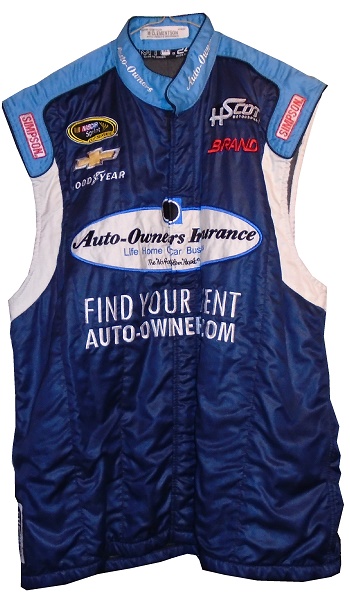
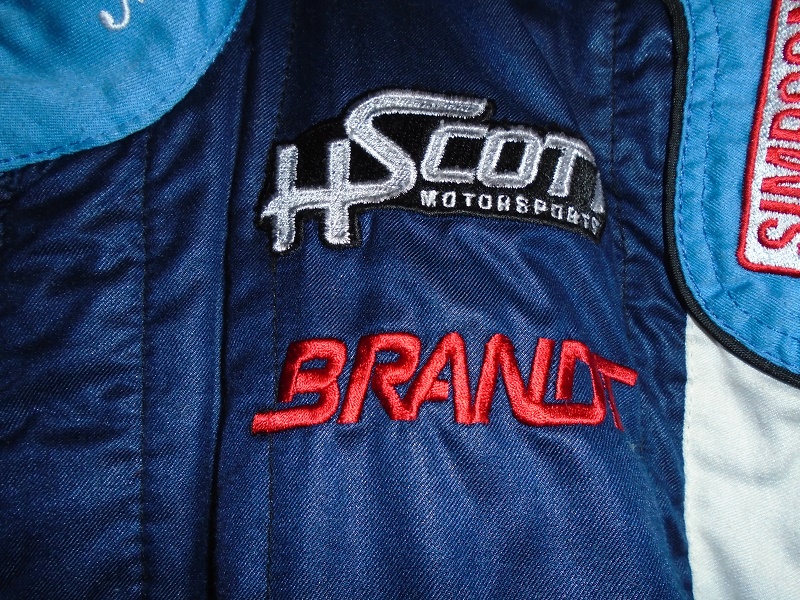
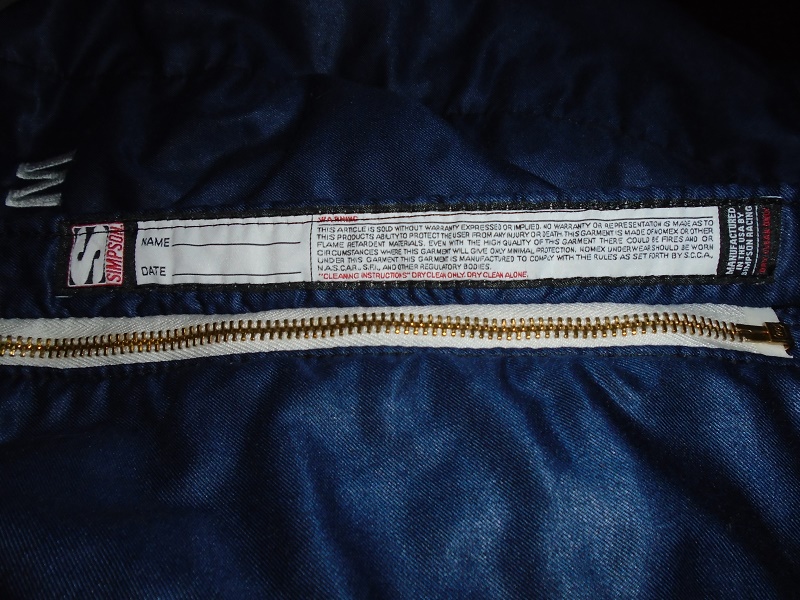
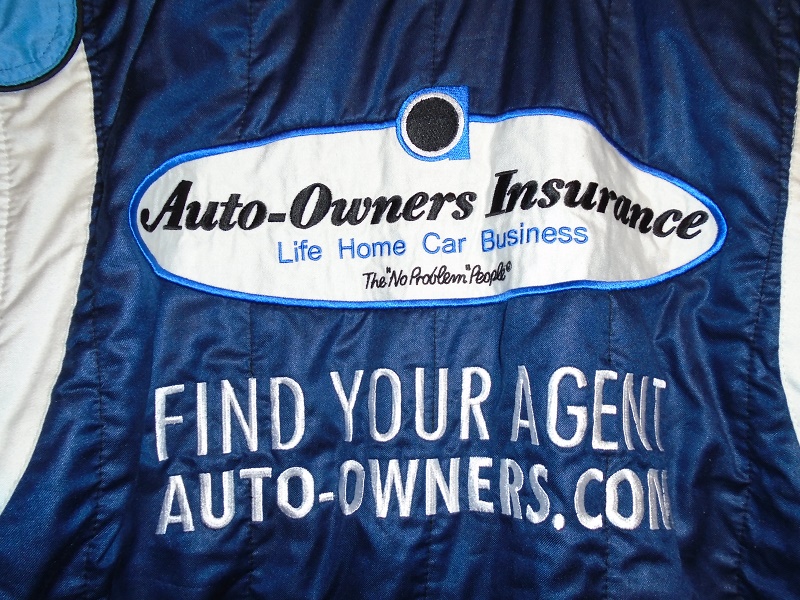
Founded in 1916 by Vern V. Moulton, Auto-Owners Insurance offers auto, home, business and life insurance through independent agents. It was founded in Mount Pleasant, Michigan, moved to Lansing in 1917, and finally to Delta Township, Michigan in 1976. They have been a sponsor of auto racing, including Justin Allgaier’s time at HScott from 2014-2015, though they didn’t have much success. During that time, a crew member wore this vest. The vest shows light use.The blue collars have black borders, with AUTO-OWNERS INSURACE embroidered in white.The cowl has a SIMPSON MTO 24 tag and an XL tag present. There is also a tag indicating the wearer of this vest is Mike Clemenston, who is listed as the truck driver, and who could have also been an alternate crew member.The right chest features a NASCAR SPRINT CUP SERIES logo, a CHEVY bow tie and a GOODYEAR logo embroidered.The left chest features a HSCOTT MOTORSPORTS logo and a BRANDT logo embroidered into it.The front torso features AUTO-OWNERS INSURANCE FIND YOUR AGENT AUTO-OWNERS.COM embroidered into it.Under the zipper is the SIMPSON warranty tag and identification label.The hems don’t have comfort straps, but the right side does have the SFI rating.The shoulder epaulets don’t have adornment on the top, but have SIMPSON logos on the sides. There are standard arm holes present.The back of the vest doesn’t show any real wear.The back of the neck has 51 embroidered into it.The back of the vest has AUTO-OWNERS INSURANCE FIND YOUR AGENT AUTO-OWNERS.COM embroidered.HScott Motorsports was a little team with big dreams. They did have some success in the form of top 10’s, but aside from that, they never won a race, even though they had some great drivers racing for them. It’s always sad when a little team closes up shop, but in life, that happens.
Next week, all good things must come to an end, including my vacation, which I will discuss next week.
[Editor’s note: I am on vacation until the end of July, normal operations will resume then.]
By David G. Firestone
Harry Scott Jr. purchased the Phoenix Racing Sprint Cup Series in late 2013. He renamed the team HScott Motorsports. HScott Motorsports raced from 2013 to 2016, with Justin Allgaier, Kyle Larson, Michael McDowell, Ryan Truex, Bobby Labonte, Michael Annett, and Clint Bowyer as drivers. The team didn’t have that much success on track.
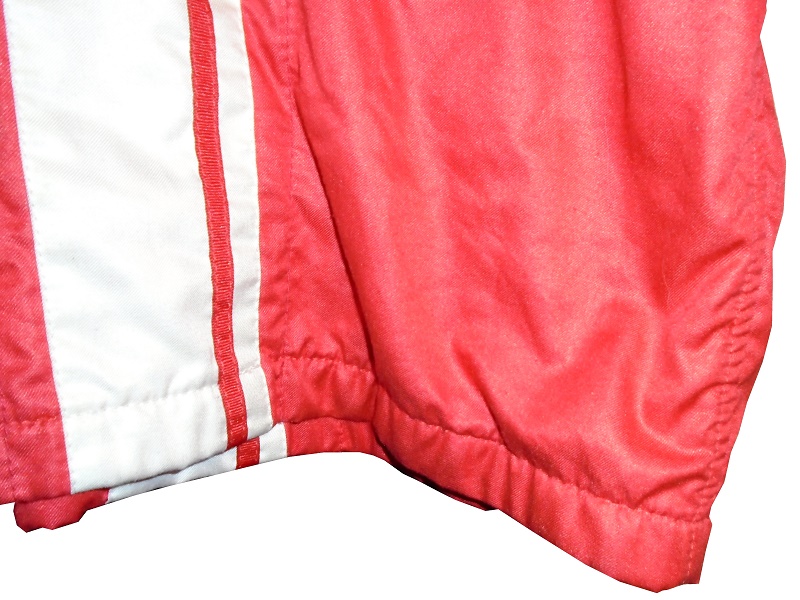
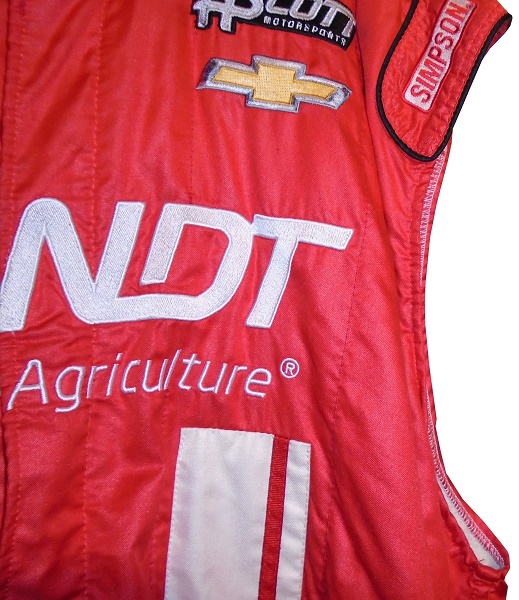
When the team was purchased, Scott ran Finch’s #51 and kept a few of the sponsors, including Springfield Illinois based Brandt Agriculture. In 2014 and 2015, Justin Allgaier raced the Brandt sponsored #51 Chevy SS. The team had a few top 10’s that year. During that time, one pit crew member wore this vest. The vest shows light use.The red collar is unadorned.The cowl has a SIMPSON MTO 24 tag and an XXXL tag present.The right chest features a NASCAR SPRINT CUP SERIES and a GOODYEAR logo embroidered.The left chest features a HSCOTT MOTORSPORTS logo and a Chevy bow tie logo embroidered into it.The front torso features a BRANDT PROFESSIONAL AGRICULTURE logo embroidered, and a classic racing stripe.Inside the front zipper is the Simpson warranty label.The hems don’t have comfort straps, but the right side does have the SFI rating.The shoulder epaulets don’t have adornment on the top, but have SIMPSON logos on the sides. There are standard arm holes present.The back of the vest doesn’t show any real wear.The back of the neck has 51 embroidered into it.The back of the suit has BRANDT.CA, a BRANDT PROFESSIONAL AGRICULTURE logo embroidered into it.HScott Motorsports was a team that liked the three-piece pit crew uniforms, another one of which we will examine next week.
[Editor’s note: I am on vacation until the end of July, normal operations will resume then.]
By David G. Firestone
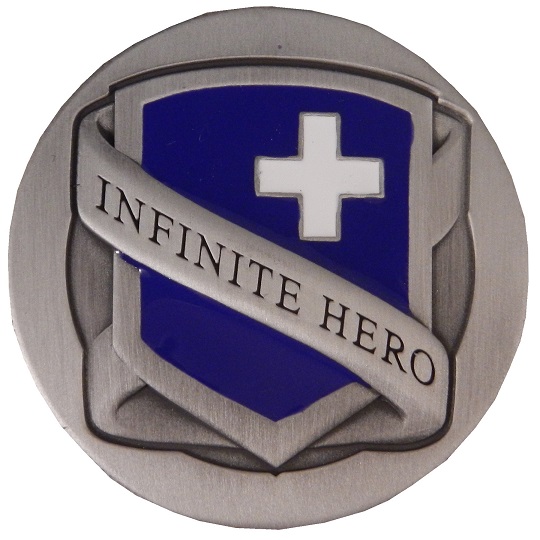
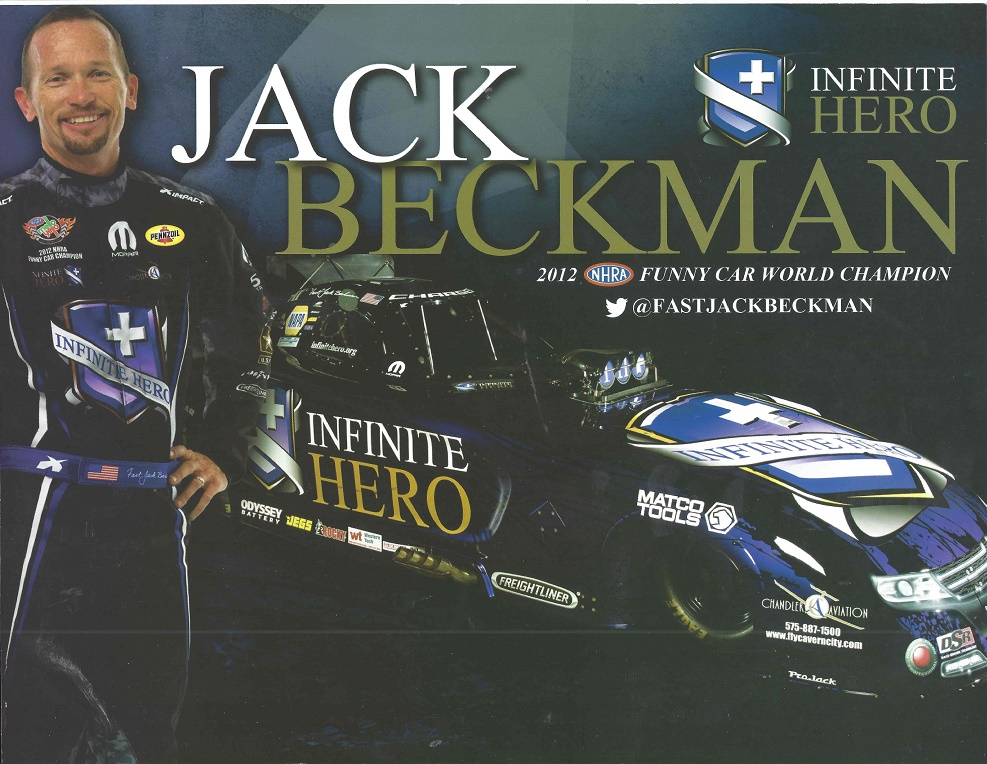
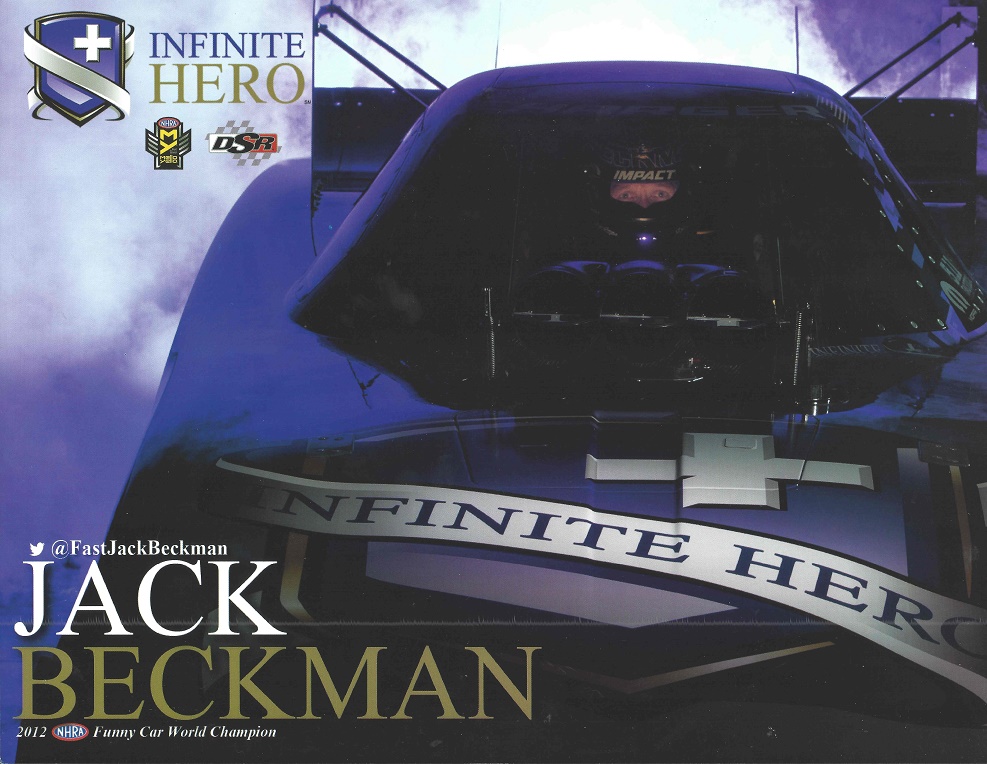
I’ve discussed Jack Beckman on The Driver Suit Blog many times. He is a great driver, he connects with the fans, and he was kind enough to grant me an interview last year. I’ve been into the Infinite Hero Challenge Coin program since the beginning, and love collecting them. Well, I’m back with another profile of the coins for 2018.
Launched in 2011, The Infinite Hero Foundation “…is to combat the most difficult front line issues – mental and physical – facing returning military heroes and their families.” Military personnel returning from overseas deployment face long term employment, mental and physical problems that the majority of Americans don’t understand. They work with other non-profit veterans groups and give out grants to help service men and women cope with these long term problems.
In April 2014, they started appearing on the side of Jack Beckman’s funny car. The late Terry Chandler, who also sponsors Tommy Johnson Jr.’s Make a Wish Foundation Funny Car, is the financial backer of the car. She pays for Infinite Hero to race on the sides of the car. This also began the NHRA coin program. When Jack Beckman gets into his funny car to race, he carries Infinite Hero Challenge Coins in the pocket of his driver suit. Once the race is over, he will autograph them and sell them at the track and on eBay. They cost $100 with all proceeds going to the Infinite Hero Foundation.
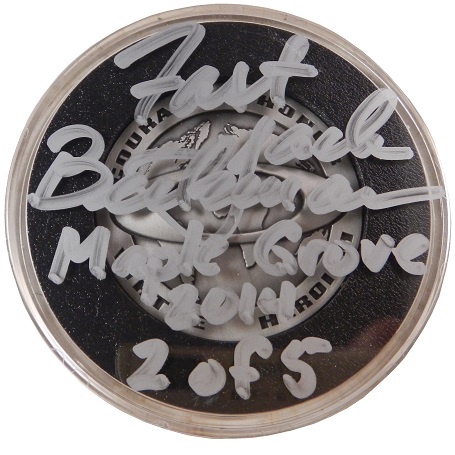
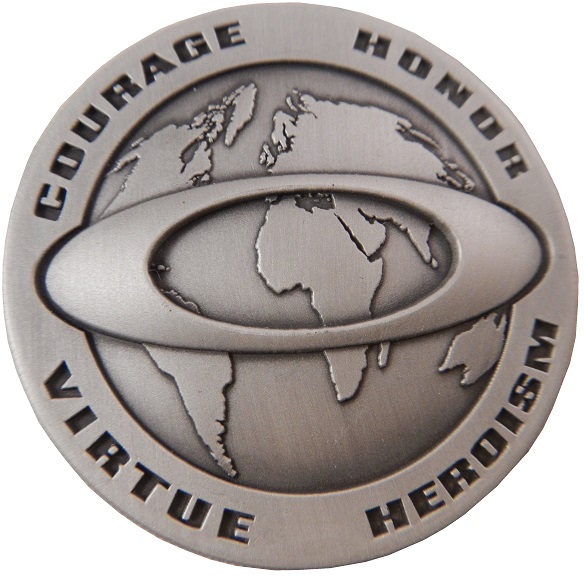
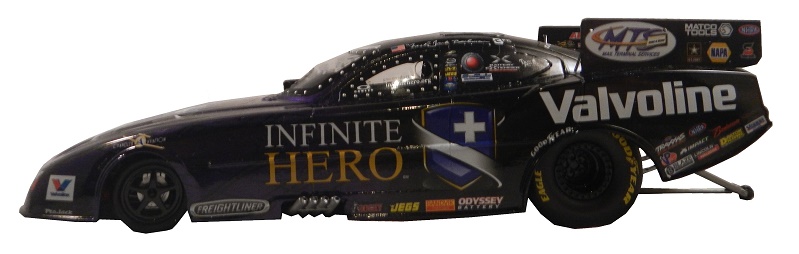
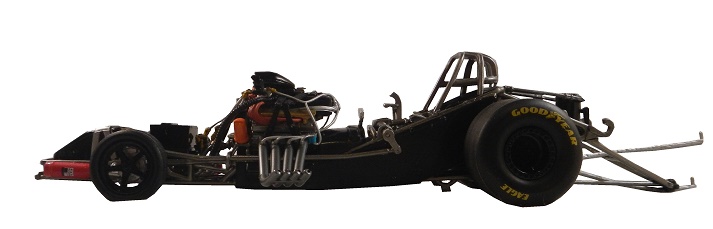
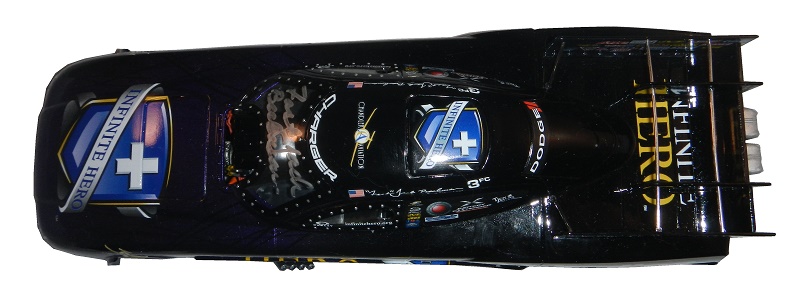
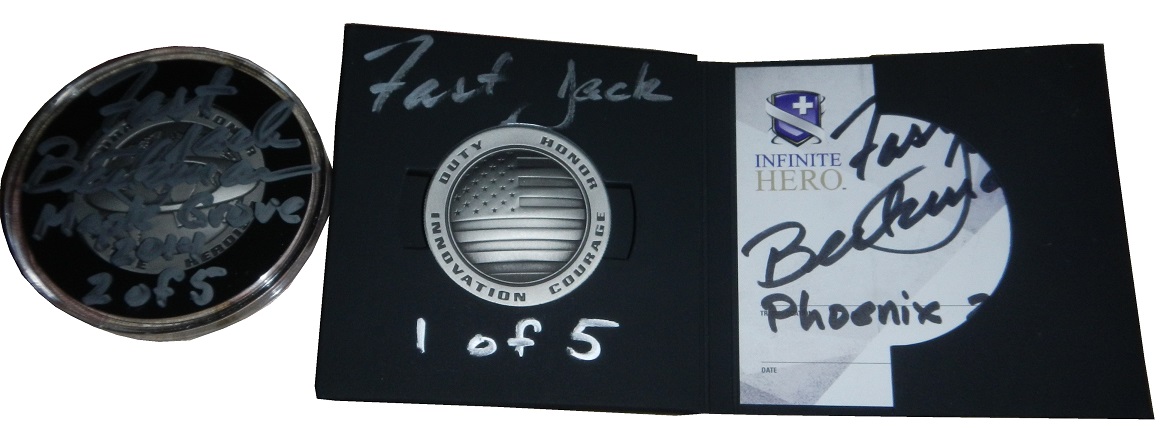
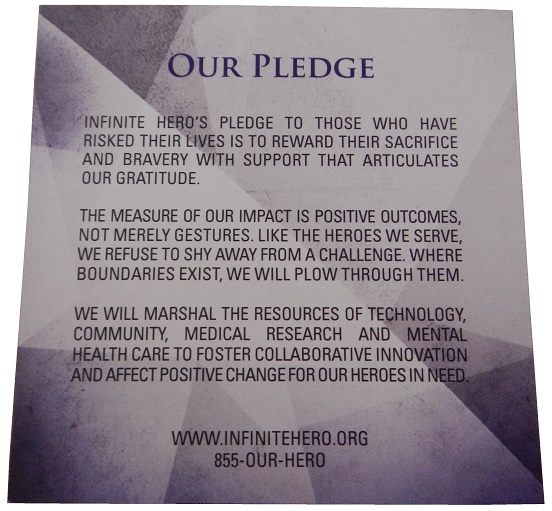
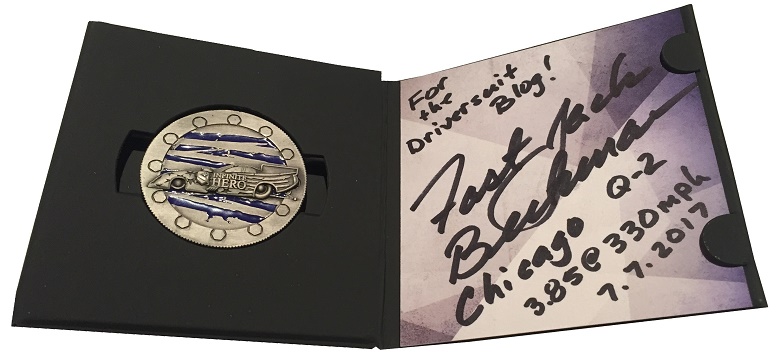
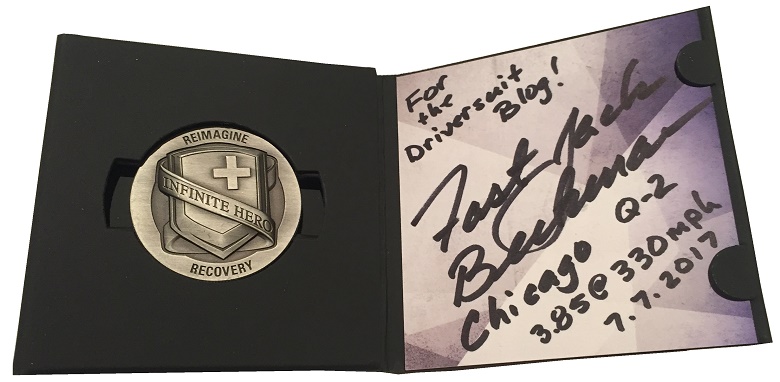
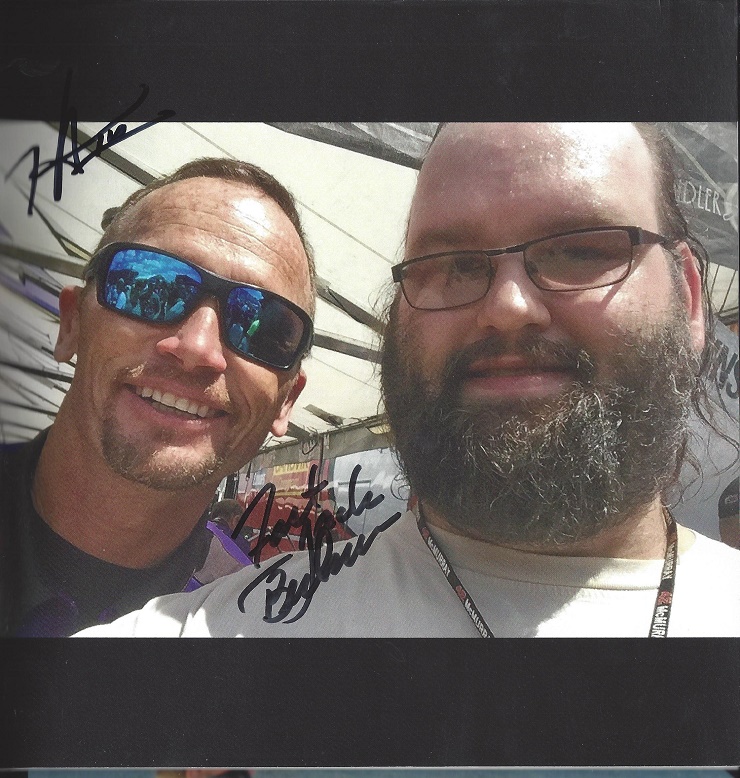
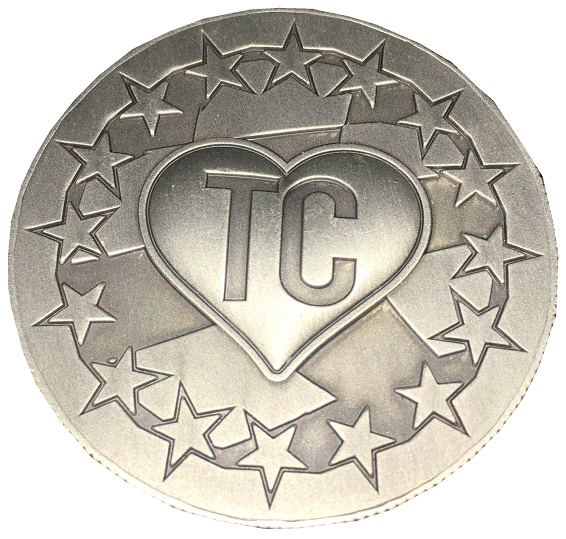
The 2014 design is quite thick, and has a ridged edge. One side featured “Courage, Honor, Virtue, Heroism,” around a globe design with an Oakley logo. Oakley is a partner with the Infinite Hero Foundation. The other side features an Infinite Hero Foundation logo with purple enamel. The coin was placed in a round, flat plastic container, with black foam braces. The coin lacks the blue enamel that the coin that comes with the glasses coin, and future coins, and has a very plain look. I do like the plain look. Jack used was identical to the one sold in stores. Jack autographed the plastic case.In 2014, this 1/24 scale die cast was produced. It is a full replica of Beckman’s funny car. Valvoline was a primary sponsor, and this was the only season Infinite Hero and Valvoline were together on the car. It’s also the only time that Infinite Hero Challenge appeared on the older Dodge funny car body. In 2015, the current body was introduced, and Pennzoil replaced Valvoline. Jack has autographed the windshield.A redesigned coin of the same size was introduced for 2015. The Oakley logos are gone. One side features a design similar to the globe design, but the globe design has been replaced with an American Flag design. “Courage, Honor, Virtue, Heroism” has been replaced with “Duty, Honor, Innovation, Courage.” The new emblem on the reverse side has one of the across bands removed. The new packaging is an upgrade, with the circular plastic cylinder replaced with an attractive box. It comes with a card that Jack Beckman autographed, and on the reverse it has the Infinite Hero Foundation Pledge. The first one is from The CARQUEST Auto Parts NHRA Nationals at Phoenix on February 22, 2015, where Jack was eliminated in the first round.The second one is from the Summit Racing Equipment NHRA Nationals in Norwalk, Ohio, where Beckman won the event, beating Courtney Force in the final round. Also in 2015, these hero cards were produced. Hero cards are given away at racing events and driver appearances. They have Jack’s picture, and information about the driver, team, and the Infinite Hero Challenge.For 2016, the coins got a major makeover. The Infinite Hero logo is now bigger. The words “Reimagine” and “Recovery” are stamped near the logo, and on the opposite side, a picture of Jack’s funny car replaces the flag motif. It should also be noted that the coin is slightly smaller, because it isn’t as tight in the coin case as the previous version. The Infinite Hero Pledge accompanies the coin. Also changed from 2016, Jack doesn’t sign the box and the pledge, he just signs the pledge.The 2017 Infinite Hero coin is slightly larger than the 2016 coin, and fits snugly in the box. The pledge piece remains unchanged. The coin itself has a plain pewter Infinite Hero Challenge logo on one side, and a blue enameled claw stripe design with a hex nut design on the border.Hero cards are given away at racing events and driver appearances. They have Jack’s picture, and information about the driver, team, and the Infinite Hero Challenge. For 2016-2017, a new card design was introduced. It has updated information, as well as the updated paint scheme introduced at the beginning of the season.Recently, I took a number of selfies with race car drivers, and made them into a book, and got them signed. This is me with Jack Beckman. Hector Arana signed the upper-left corner.This year’s design is done in memory of the late Terry Chandler, who passed away from cancer prior to the 2017 event. The front has a heart design with Chandler’s initials. The back of the coin has the Infinite Hero logo, with blue enamel. Jack also autographed a copy of the Infinite Hero pledge.For 2018, a new Hero card design was released.Jack Beckman is a great driver, who races for a great sponsor, and supports a great cause. He has been really amazing not just to me, not just to to The Driver Suit Blog, but to the NHRA and their fan base. I’m glad he’s going to be racing for The Infinite Hero Challenge until 2020. As long as he is selling them, I will continue buying the Infinite Hero Challenge Coins, and promoting them on The Driver Suit Blog. I can’t wait to see next year’s coin design.
[Editor’s note: I am on vacation until the end of July, normal operations will resume then.]
By David G. Firestone
Until being taken over by NASCAR, ARCA was an alternate group to NASCAR, with their own rules, teams, drivers, and fan bases. Many drivers used ARCA to get to NASCAR, and if their NASCAR careers didn’t work, they had the option to return to ARCA.
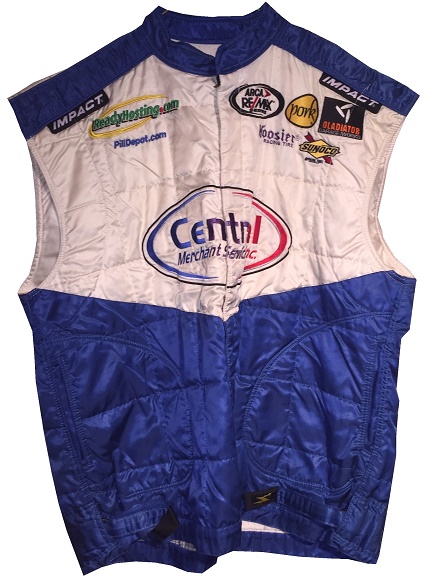
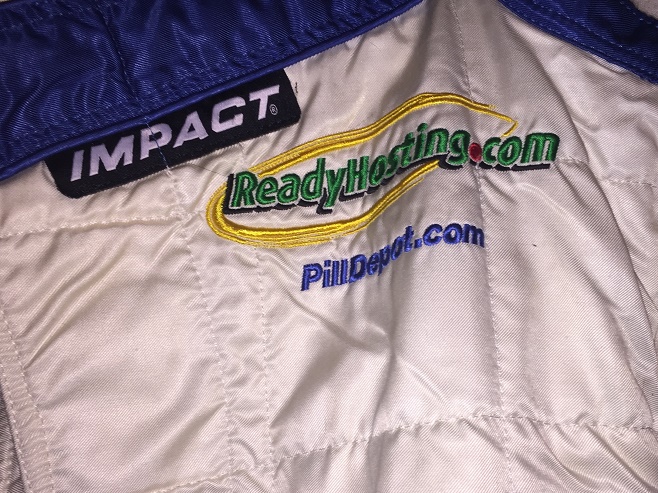
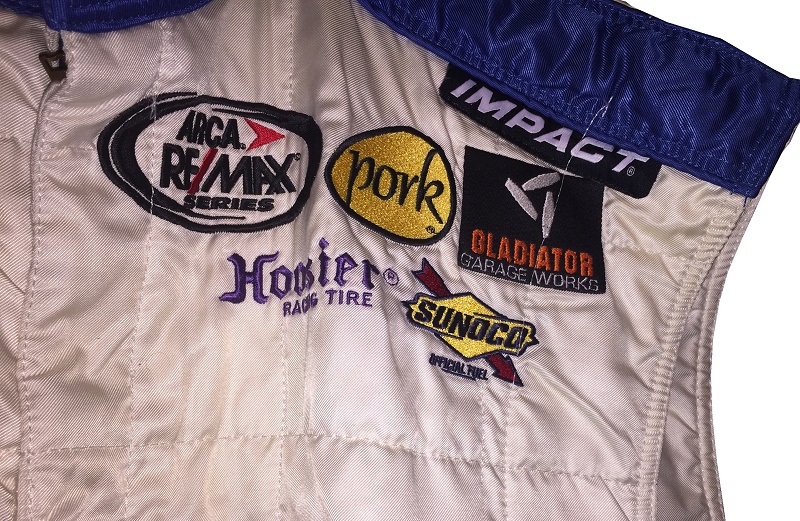
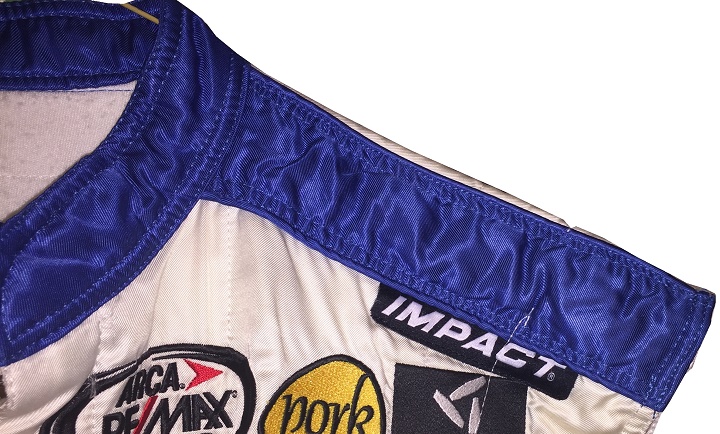
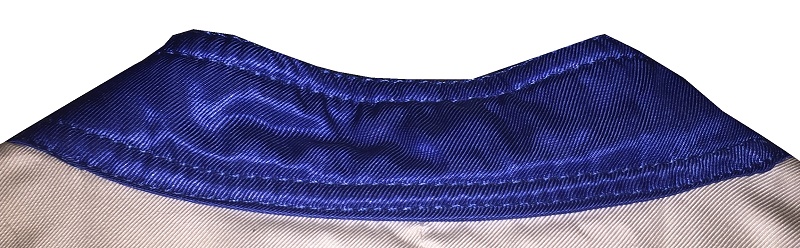
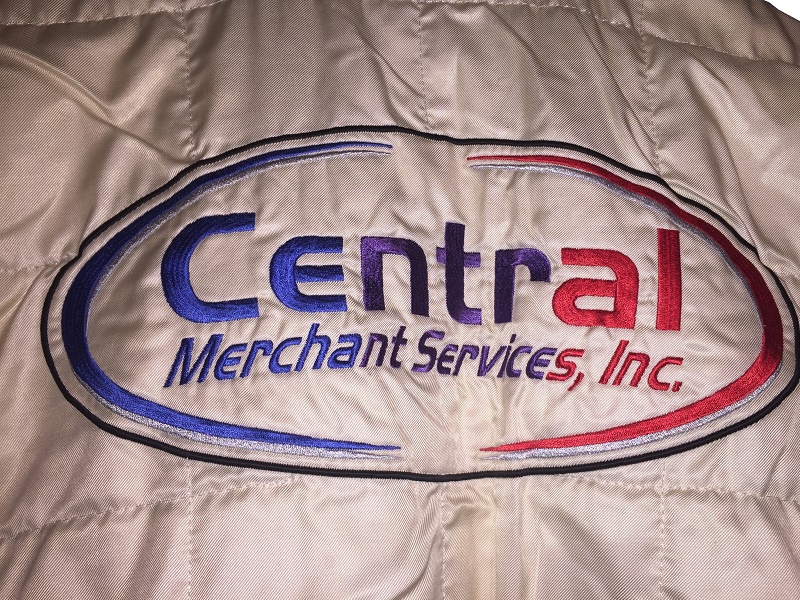
Central Merchant Services, Inc sponsored a few teams in ARCA from 2006 to 2009 for S&H Motorsports and Venturini Racing among others. They had some success on track. During that time, one of the pit crews wore this Impact vest. The vest shows very light use.The blue collar is unadorned.The right chest features READYHOSTING.COM, and PILLDEPOT.COM embroidered into it.The left chest features ARCA RE/MAX SERIES, PORK, GLADIATOR GARAGE WORKS, HOOSIER RACE TIRE, and SUNOCO logos embroidered into it.The front torso features a blue CENTRAL MERCHANT SERVICES logo embroidered in the white material. There is blue material below that.Inside the front zipper is the Impact warranty label.The corners have Velcro comfort straps attached.The blue shoulder epaulets are unadorned.The vest has standard arm holes present.The back of the vest doesn’t show that much use.The blue collar is unadorned in the back.The back torso features a blue CENTRAL MERCHANT SERVICES logo embroidered in the white material.It’s sad that ARCA, once an independent stock car racing series with its own identity is going to become just another NASCAR developmental series. Guys like Billy Venturini need ARCA to help their careers, and help keep their identity. I hope the ARCA guys are able to find their places after this is all said and done.
In NASCAR, there are usually two kinds of teams: big and small. The big teams include Stewart-Haas Racing, Hendrick Motorsports, Team Penske, Chip Ganassi Racing, Joe Gibbs Racing, and Furniture Row Racing. Big teams are multi-car teams that are championship caliber, and have little if any trouble with sponsorship issues. Small teams are teams like Tommy Baldwin, Germain Racing, Premium Motorsports, BK Racing, The Wood Brothers, Go FAS Racing, Circle Sport/TMG, Rick Ware Racing, and Leavine Family Racing. These teams, while they may have more than one team, are often underfunded, have mediocre drivers and on track results.
Interestingly, there is a third group, which could really either be considered big or small, depending how one looks at them. These teams include Richard Childress Racing, JTG Daugherty, Richard Petty Motorsports, Roush-Fenway Racing, and Front Row Motorsports. These are all teams that while they have multiple teams and decent sponsorship, they aren’t championship caliber, even though they do often make the playoffs and win races. The have a decent driver or two, and have decent fan bases. One of the most well-known and least appreciated of these teams is Front Row Motorsports.
Founded by Bob Jenkins and Jimmy Means in 2005 as a single-car team, the original team merged will Mach 1, and began a two-car operation. Eventually, the team shad as many as three teams, with two full time. Since team owner Bob Jenkins owns over 150 franchises from Yum! Brands, including Taco Bell and Long John Silver’s, as well as Morristown Driver’s Services or MDS, those sponsors frequently appear on the sides of his cars. While the team hasn’t shown much strength on many tracks, they show strength on superspeedways.
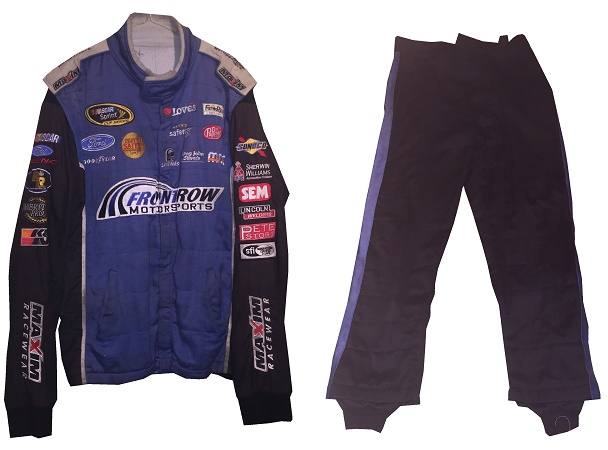
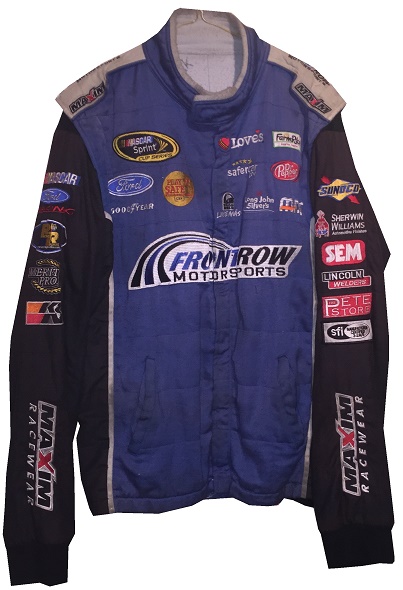
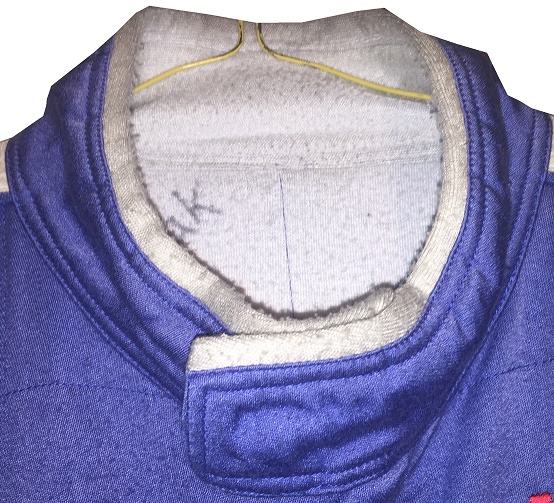
Founded some time in the early 2010’s, Maxim Racewear was a small-time operation that provided crew uniforms to lower-end teams, and eventually was found by some teams in the upper echelons of NASCAR, including Front Row Motorsports. The company went out of business around 2015, so information on them is difficult to get. One team they made pit crew uniforms for is Front Row Motorsports, as evidenced by this 2013-2014 example. This mismatched suit shows decent use, with scuff marks and stains.The blue collar has silver accents, and is unadorned.The name NOVAK is written in Sharpie in the cowl.The right chest has NASCAR SPRINT CUP SERIES,FORD,CSX PLAY IT SAFE, and GOODYEAR logos embroidered into it.The left chest features LOVE’S TRUCK STOPS, FARM RICH, SAFECAR.GOV, DR PEPPER, TACO BELL, LONG JOHN SILVERS, and MDS logos embroidered.The front torso features a FRONT ROW MOTORSPORTS logo embroidered into it.Inside the front zipper of the jacket features a Maxim Racewear warranty label.The sides of the jacket have Velcro comfort straps on the back.The shoulder epaulets have FRONT ROW MOTORSPORTS embroidered logos, as well as MAXIM RACEWEAR logos present.The right sleeve has NASCAR, FORD RACING, RACING RADIOS,MERIT PRO, and K&N logos on the upper sleeve, and a MAXIM RACEWEAR logo in television position on the end of the sleeve.The left sleeve features SUNOCO, SHERWIN WILLIAMS, SEM, LINCOLN WELDERS, THE PETE STORE, and the SFI certification on the upper sleeve, and a MAXIM RACEWEAR logo in television position at the end of the sleeve.The back of the jacket shows some wear with a few scuff marks and stains.The back of the neck is unadorned.The back torso has @FRONTROWNASCAR, I BREAK FOR TRAINS, and a FRONT ROW MOTORSPORTS logo embroidered into it.The pants show decent use, with the tag destroyed, and some scuff marks.In the inside of the pants is written 38 SPARE and some Asian lettering.There is a tag in the waist of the pants, but the pants have been washed some many times, the tag has been destroyed.The black pants have a blue stripe up the sides, and has boot cuffs, though the cuffs do show some wear. The back of the pants show some light wear.Front Row Motorsports is a little team that can, and they have a number of wins in the Cup Series. They have had a lot of talented drivers, and I hope they have a lot of success in the future.

 By David G. Firestone
 The standard Simpson warranty label is in the cowl. There is a small flag tag with the XL size indication. There is a tag pinned to the warranty label that reads “38847.”
 The right chest features an INDY RACING LEAGUE logo, and a SIMPSON logo present.
 The left chest features a PPG logo and an OLDSMOBILE logo embroidered.
 The front torso features a large ENERGIZER ADVANCED FORMULA logo embroidered.
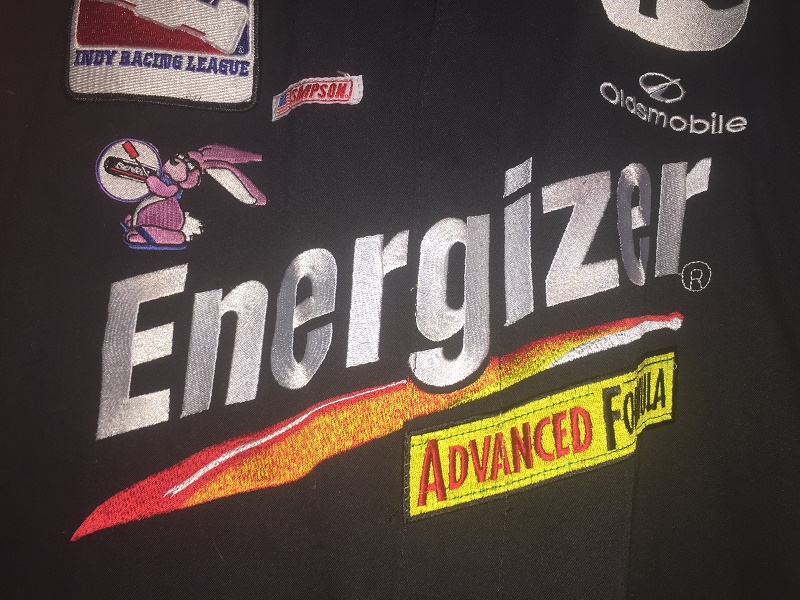 There is a black belt underneath the red and yellow stripe below the front logo. The belt is unadorned.
 The legs have standard cuffs, and are unadorned.
 The shoulders feature red epaulets with FIRESTONE logos embroidered.
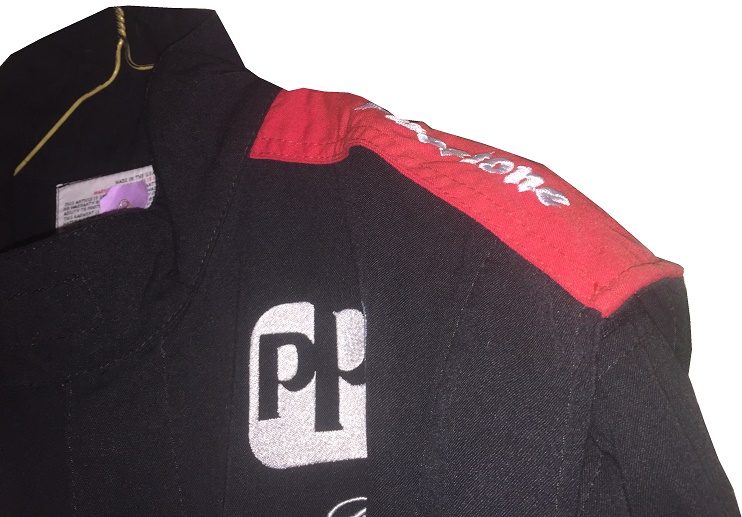 The right sleeve features an Energizer Bunny logos embroidered, with nothing in television position.
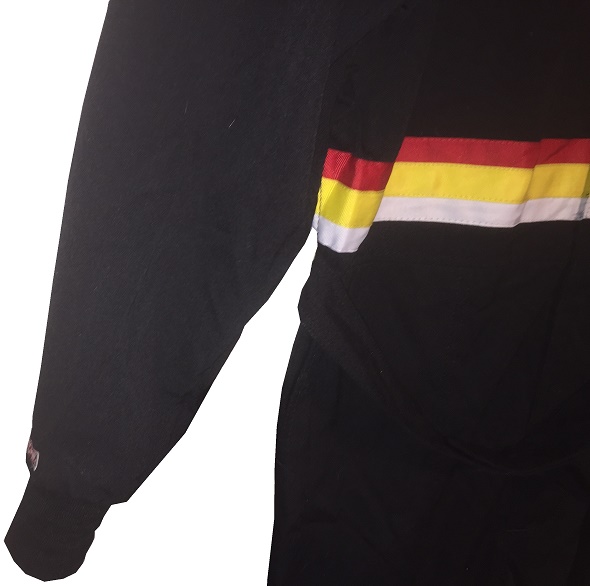 The left sleeve features an Energizer Bunny logo and a SIMPSON embroidered, with nothing in television position.
 The back of the suit doesn’t show any wear.
 The back of the neck is unadorned.
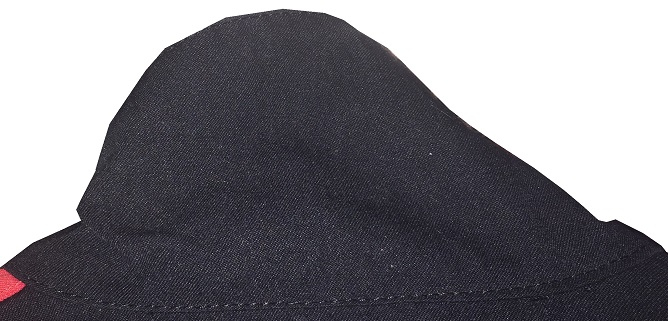 The back torso features an ENERGIZER ADVANCED FORMULA logo embroidered.
 With that, I present another edition of…