How I Spent My 2019 Summer Vacation

By David G. Firestone

Well, my 2019 summer vacation is officially over. I had a lot of fun over summer break. I didn’t really do much. I did watch a lot of racing, as usual. I worked on a series of projects, and I went to a wedding.

Watching racing is always fun! I enjoy taking my weekends and just lying on my couch, and watching NASCAR, NHRA, IndyCar, F1, IMSA, Formula E, or whatever else is going on. Many times while I’m watching, I do some website work, but just not having to do that is so much better.

The racing this summer was great. Though I do have a couple bones to pick. I’ll start with the NHRA. Stop trying to reinvent the wheel with your telecasts! I want to watch Top Fuel, Funny Car, Pro Stock, and Pro Stock Motorcycle. I don’t want to watch the nitro categories in one live telecast, and the rest tape delayed until later in the evening. Also, could you bring Pro Stock back for the entire season? The fans want it.

Now on to IndyCar. At the the time of this writing, the Mid-Ohio television ratings have not been released. But if there is an improvement, you can bet that IndyCar will brag about them on their website. I get that you want your ratings up. I get that you are happy when the ratings go up. But bragging about your ratings makes you look desperate. First off, compared to other forms of racing, your television ratings are still bad. Second, these “improvements” in these ratings aren’t as great. If ratings are up across the board, stating that your ratings are improving isn’t that much as you think it is.

OK, with all that said, I did go to a wedding this year. My friend Van got married to his sweetheart, and our group of friends got together to attend his wedding.

My only complaint was that this wedding took place in the midst of the July heatwave, so we all had to wear suits in 98 degree weather. The humidity didn’t help at all. Still, we had a great time. Matt, Josh and I also hung out, and spent a long time playing cards. It was great seeing the guys again.

I also spend time making review videos. I made several sampling videos, including cider,

a series of beer,

and Turkish delight.

In the end, all good things come to an end, including my vacation, so starting now, things will be back to normal.

Next week, I revisit the concept of “Phantom Sponsorships.”

Warranty Labels…Unseen by Many

90-stricklin-tagBy David G. Firestone

Editor’s note, I will be away on vacation until August. Here is a Friday Feature to tide you over.

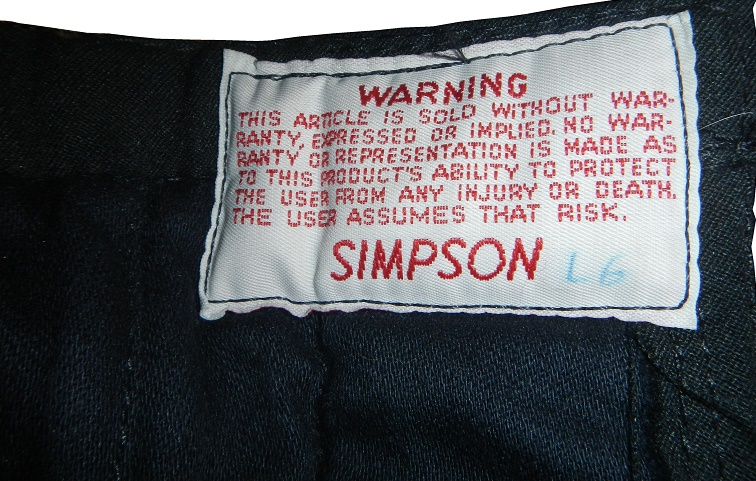
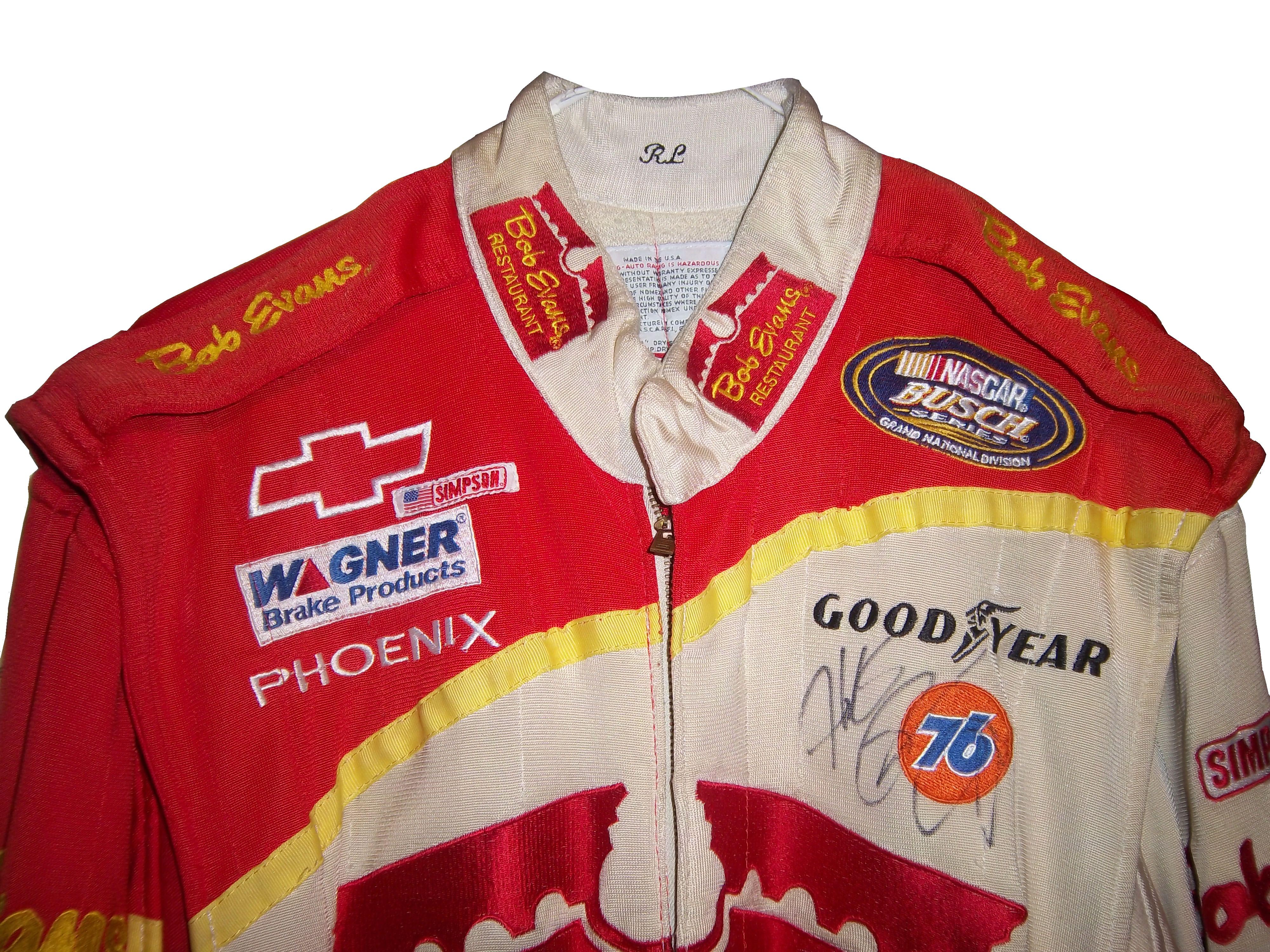
This week, we take a look at a suit feature that is unseen by most race fans. Every suit has one, the so called “Liability Tag. ”-Every piece of racing equipment has some form of “liability tag” which basically states that anything that happens to the wearer of the item is the wearer’s fault and not the company’s fault. The Simpson tag, which has remained virtually unchanged since the 1980’s reads as follows:

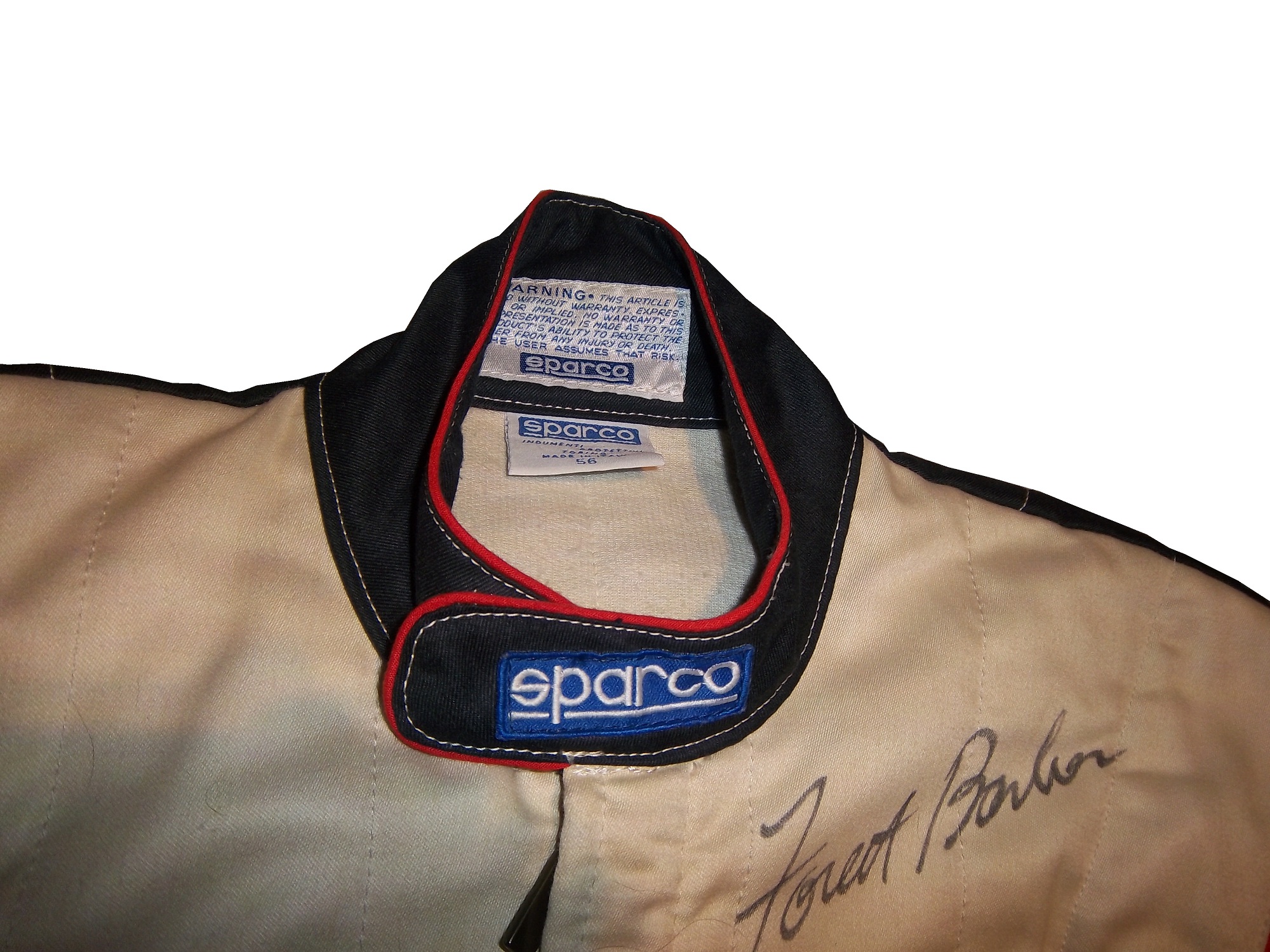
“Warning-Auto Racing is Hazardous-this Article is sold without warranty expressed or implied. No warranty or representation is made as to this product’s ability to protect the user from any injury or death. This garment is made of Nomex and other flame retardant materials. Even with the high quality of this garment there could be fires or circumstances where this garment will give only minimal protection. Nomex underwear should be worn under this garment. This garment is manufactured to comply with the rules as set forth by S.C.C.A., N.A.S.C.A.R. , S.F.I., F.I.A., and other regulatory bodies.”Cleaning Instructions” Dry clean only. Dry clean alone. Specify using perchloroethylene only.”36-barron-tag2Sparco’s tags are located behind the zipper andhave two different statements. Older suits have this tag:

“Although this product is manufactured from special materials that satisfy certain safety standards and may carry the approval of various authorities for its use in specific circumstances the manufacturer or supplier can not be held liable for its protective qualities under all activities, circumstances, and conditions.”barber-tag1Newer Sparco tags have this warning in both English and Italian:

“It is important to carefully read the user’s handbook concerning the care of the garment. This suit will offer protection from fire and the transmission of heat for a limited time, but it does not offer total protection against any kind of hear or fire. The fabric used to make this suit is subject to aging. It is recommended that the suit is inspected frequently for any signs of wear or damage that may result in a loss of protection to the wearer. If the suit has been worn extensively and shows signs of war or damage it is recommended to wear another suit. Sparco is not responsible for any damages the suit incurs from improper use of the suit bu the user, or any third party. Through improper care of the suit, misuse of the suit, or discoloration of the suit from perspiration, or any use of the product after the expiration date, as described in the instruction manual. Do not leave this garment under sunlight, or any artificial light. This suit is not intended for use in go-karts.”12-stremme-tagImpact! Suits use this simple warning:

“Motorsports are dangerous. the user of this product assumes the risk of injury or death. No warranty or representation is made that this product will protect the user from injury or death”

This is by no means unique.  Almost all sports equipment to a certain extent has this type of warning.  This example is from an XFL helmet. outlaws-helmet9 outlaws-helmet10 outlaws-helmet7


Nomex-The Core Of Driver Suits

By David G. Firestone

Editor’s note, I will be away on vacation until August. Here is a Friday Feature to tide you over.

I must have said the word Nomex a thousand times on this blog, but what exactly is Nomex? In short, it is a flame-resistant meta-aramid cloth material. It is an aramid material, which is the same thing as Kevlar, but it is not as strong as a bulletproof vest, but it has great thermal, as well as chemical resistance, which makes it great for racing firesuits.The development of the Nomex firesuit has been a long road. This road has seen its share of driver deaths and injuries. Before the Coca Cola 600, I discussed the deaths of Fireball Roberts, Eddie Sachs, and Dave McDonald in fire-related crashes over the course of 6 days in 1964. What took place from there would cross the paths of racing and a young drag racer.

Bill Simpson was born in Hermosa Beach, California in 1940. He took up drag racing at a young age, and at age 18, broke both arms in a drag racing crash. As he recuperated, he thought of safety in racing for the first time. He developed the idea of an X shaped parachute, and using materials from his uncle’s army surplus shop, developed a functional drag racing parachute. Don Garlits noticed the new parachutes, and took an interest, which helped the Simpson Drag Chute company to form. As time went on, he started making other racing equipment, which caught the attention of drivers, and, oddly enough, NASA. During a project, he met Pete Conrad, who introduced the now 27 year old Simpson to Nomex in 1967.

Nomex was created in 1967, for NASA. Far from the uses it has today, its main use at the time was for the Apollo Command Module parachutes. NASA needed a material that could stand up to the heat of reentering the earth’s atmosphere, and still remain fully functional. Simpson saw what the material could do, and decided it would work well to make driver suits, and other uniform items. Contrary to what most people think, Nomex is not fire PROOF, rather it is fire RETARDENT. It does burn, but burns at a much slower rate, and that protects the driver in the event of a fire. Bill Simpson decided to show how much better this material was by having a “burn off.” He put on one of his Simpson racing suits, doused himself in gasoline, and lit himself on fire. Though he was fully engulfed in flames, he was not hurt. Though he admits that is was a bad idea, it sold drivers on Nomex. Even today, 46 years later, Nomex is still the go-to material for driver suits.

Nomex is used for many other things. Nomex sheet is used in power cords for insulation. Fire-fighters use Nomex for protection in saving lives. Fighter pilots wear Nomex suits in case of cockpit fires. Nomex was developed for NASA and NASA still uses a lot of Nomex. It is used in what NASA refers to as the “Thermal Micrometeoroid Garment of the Extravehicular Mobility Unit”, or in regular English, the “outer layer of a spacesuit.” The spacesuits that space shuttle astronauts wore on liftoff and touchdown were primarily made of Nomex. Almost every project that NASA has done in the last 40 years involves Nomex in one form or another, so it is a very versatile material.
Interestingly, as safety concerns increased, and safety equipment changes for the better, you begin to see that Nomex is beginning to have competition in the driver suit market in terms of fire protection. While I’m typically a traditionalist when it comes to sports uniforms, for driver suits that is a great thing. Developing a new material that serves the same purpose as Nomex, but can do it better and longer is a great thing. Eventually, Nomex will go the way of typewriters, film cameras, the printing press, and the floppy disk as an invention that is obsolete but changed the world. Friday Feature to tide you over.


Another Look at Driver Suit Blog Favorite TJ Zizzo

By David G. Firestone

TJ Zizzo is the driver, he’s based in Lincolnshire Illinois, I’m based in Evanston, I’ve purchased a number of items from him.

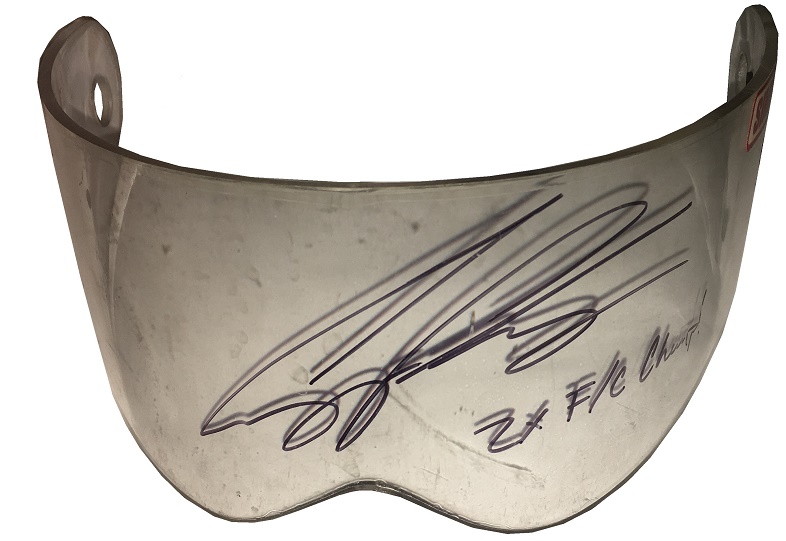
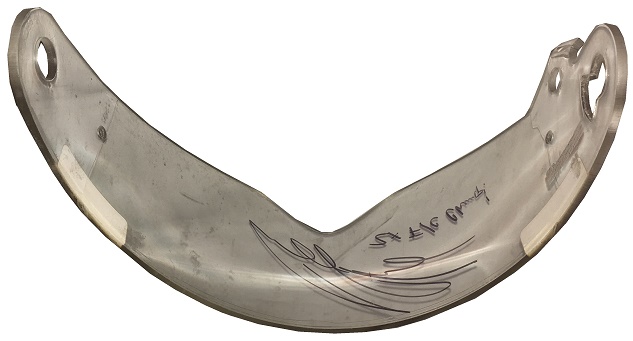
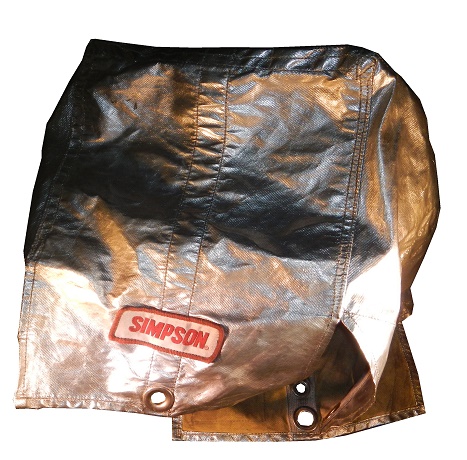
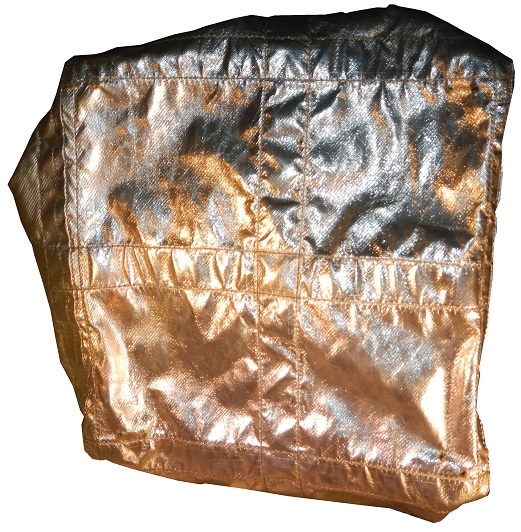
One of the things that I got was a visor. When I purchased it back in 2014, I’d been wanting to get an NHRA visor from some time, and I got one that had the modification I’ve been seeing. The visor shows some light use. I asked TJ why he had this modification, and he said that he wants to focus on the task at hand. He said that drag racing drivers can notice things, birds, scoreboards, women in the crowd, etc in the car in the moments leading up to the race, and this modification helps the driver by giving him tunnel vision. Tunnel vision is seen by the majority of people as a bad thing, but in something like drag racing, where intense focus for a brief period of time is a mandate, tunnel vision is a good thing. Top fuel dragsters have 10,000 horsepower and can go from 0 to 325 mph in less than 3 seconds. When you are behind the wheel of a car with that much power, you need to focus on the race as much as possible. TJ wears this style of visor because, the less he can see out of the helmet, the more he can focus on the race. TJ even said that this visor is much less covered than his current version, which looks something like this…In 2014, at the U.S. Nationals, TJ suffered a major engine explosion. He still has the blower drive seen flying in the video. I was amazed how heavy it was. He has one shelf in his new shop that has the pieces of the engine, and the damage suffered, from a fan’s stand point. The manifold that blew was made of solid magnesium and was heavy duty. The crankshaft in question was not only broken, but was slightly bent near the break. I wound up getting one of the rear tires from that race. Rear tires from top fuel dragsters are 3 feet tall by 17 inches wide. I’m planning on getting a glass to and making a coffee table at some point. The level of wear on the tires is amazing, with large patches of damage from the explosion. TJ also signed it and personalized it to me! I also got a front tire, which is 22 inches tall, by 3 inches wide. I’m not sure when it was raced, but it does show wear and it has ZIZZO written on the tread. To give an idea the size difference between the two, here are the two of them together in my office…One of my big gets was a TJ Zizzo Peak parachute. Zizzo ran two of these chutes on the back of his dragster from 2010 to 2013., and this example is 12 feet by 12 feet. It shows a decent amount of wear, with stains and holes. There is a hole in the center that allows the chute to be deployed, and there is an inventory tag placed here as well. On the cables connecting the chute to the car, there is some extra protection. This is necessary because on top fuel dragsters, the engine is very close to the parachute attachment, and in the event of a fire, the chute will still be able to function. TJ’s example shows some wear on the silver layer. One thing that a lot of non drag racing fans don’t realize is that many drivers pack their own chutes. Race car drivers are control freaks, and so this makes sense. The logic a few drivers use is that if I mess it up, I don’t have anyone to blame for it except myself.
The pilot chute is attached here as well. Pilot chutes are universally used to deploy parachutes. When the cords are pulled, and the chute is released, the pilot chute deploys, which catches air and pulls the primary chute behind it. The chutes are strapped to a bar at the back of the car, the straps pre-covered in Nomex to prevent fire damage, then packed into a bag, before the race. I’ve discussed the importance of spark plugs, and their prevalence in the auto racing memorabilia market before, so I won’t go into that again. I will show one of TJ Zizzo’s race-used spark plugs, which he managed to autograph. Given the size of the plug, that isn’t easy to sign.Ok, so I need to explain what is going to happen in July. As usual, I’m going on vacation for the month of July. I’m going to do things differently this year. I’m going to cut my Friday Features from four to two. The Tracker and the Grades will be updated in August. Monday Videos and Throwback Thursday will be unaffected.

Some Manor Mariussa Stuff This Week

By David G. Firestone

Virgin Racing was founded as Manor Racing, and carried a Virgin sponsorship in 2010. In 2011, Marussia Motors, a Russian sports car company bought a stake in the team, and the team was re-branded as Marussia Virgin Racing. With the new team came the inclusion of the Marussia logo into the team. Their run as a team was unimpressive one, with neither driver scoring points.

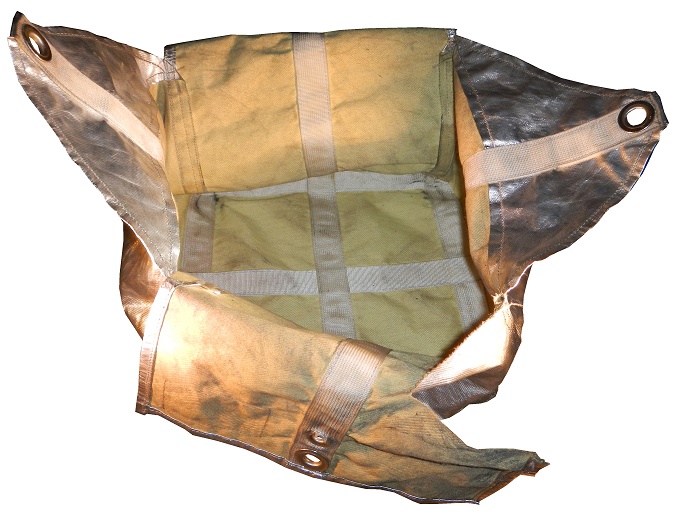
The team became Marussia F1 from 2012 to 2014, when the team shut down due to financial issues. In 2015, the team was re-branded to “Manor Marussia F1 Team.” After 2015, Marussia ceased to exist, and ceased their F1 team, and the team was re-branded to Manor Racing. It lasted until 2016, when Haas F1 took their spot. The team’s asserts were auctioned off, including this Sparco size 9.5 left driver boot. The boot shows decent use, with a large stain on the toe. Pictures from 2015 show Alexander Rossi wearing an identical pair of shoes to these. On the outside of the tongue, there is the FIA certification.The inside of the tongue features a care tag, but no size tag.This circa 2011 interview backdrop is a portable one, specifically made for team members or special guests to stand in front of while giving an interview. It’s almost 4 feet wide, and well over 6 feet tall. It consists of a cloth container with the backdrop inside. It’s in great condition. It’s almost 4 feet wide, and well over 6 feet tall. It consists of a cloth container with the backdrop inside. The backdrop has a balance leg, and the cloth part rolls up. A collapsible pole holds it up.

Next week, we revisit a Driver Suit Blog favorite.

Let’s Look At Undershirts Part 2-Michael Waltrip

By David G. Firestone

While he is a Triple Threat in NASCAR, with 16 wins across all three of NASCAR’s top series, Michael Waltrip tends to be remembered for all the wrong reasons. He won the 2001 Daytona 500, which is known as “Black Sunday” due to the death of Dale Earnhardt. He is remembered for his wreck at the 1990 Budweiser 250. He is also remembered for his team’s shenanigans during the 2013 Federated Auto Parts 400. Kind of an odd set of things to be remembered for a driver who won two Daytona 500s.

From 2001 to 2005, Michael Waltrip raced for Dale Earnhardt Inc. as a full time driver. During that time, he won all four of his Cup series races, three at Daytona, including the 2001 and 2003 Daytona 500, and the 2002 Pepsi 400, and the 2003 EA Sports 500 at Talladega. He also scored a combined 20 top 5’s, and 40 top 10’s. During his tenure with DEI, he wore this Sparco undershirt. The shirt shows a little bit of use, and has been signed by Waltrip on the back.The neck has a SPARCO patch embroidered. WALTRIP is written in Sharpie beneath this, and the FIA certification is below that.The front of the shirt shows a few very light stains.The hems are standard hems. The shoulders don’t show any wear. The sleeves show some light stains. The back of the shirt has some light stains.The back of the neck is unadorned. The Sparco warranty label is below the neck with “15” written in Sharpie. Aside from some very light, and impossible to photograph stains, Waltrip has signed the back torso. There is a picture of him autographing the back.

I tried my best to get pics of the stains, but none of them came out. They are subtle, and you need to look carefully to see them. This is a problem with cream-colored Nomex.

Next week, is a Formula 1 race-used shoe.

Vintage Item Spotlight-1980’s Unocal 76 Salesman Sample

unocal-76-2By David G. Firestone

Something that I find interesting are what are known as “salesman samples.” Salesman Samples are items that are used by representatives of companies to show buyers a sample of what it is they are buying. These can be anything from championship rings, swatch catalogs, or in this case, a case of lubricant samples from Unocal 76 from the 1980’s.

This interested me from the moment I laid eyes on it. The salesman would bring this case to a buyer, usually a mechanic, or factory that would use these industrial lubricants. The salesman would discuss the various characteristics of the lubricants for the buyer to help them make the right choice. Industrial lubricants are not equal and a lubricant that would work in a printing press might not be suitable in other applications.

This case is in great condition, and the 18 containers of samples it contains are still in good condition, though some of the lubricants have solidified over time.unocal-76-1 unocal-76-2 unocal-76-3 unocal-76-4 unocal-76-5 unocal-76-6 unocal-76-7 unocal-76-8 unocal-76-9 unocal-76-10 unocal-76-11 unocal-76-12 unocal-76-13 unocal-76-14 unocal-76-15 unocal-76-16 unocal-76-17 unocal-76-18 unocal-76-19 unocal-76-20

Let’s Look At Undershirts Part 1-Maurício Gugelmin

By David G. Firestone

Racing is an inherently dangerous sport.  It’s one of, if not the only sport where it is possible to be crushed and burned at the exact same time.  Fire is an ever present danger, and drivers wear fire retardent clothing to help keep them safe.  Other accesories are worn, including undershirts, which we will examine today.

Hailing from Joinville, Brazil, Maurício Gugelmin moved to The United Kingdom, and moved his way in to Formula 1 by 1988, where ha lased until 1992. In 1993, he raced in CART/Champ Car until 2001. He won a race, the 1997 Molson Indy Vancouver driving the Hollywood Cigarettes Mercedes. He has since moved back to Brazil, to work at the family business.

While Maurício Gugelmin wore various different suits over the years, many pictures of him feature Sparco suits. Since many drivers are loyal to suit companies, it would come as little surprise that he wore other accessories made by Sparco. This undated, customized Sparco shirt is one such example. The shirt does show some light use, though it is difficult to photograph cream-colored in Nomex.The front of the collar has a SPARCO logo embroidered.Inside the collar is a size tag that indicates that the size is Medium, as well as the Sparco warranty label.The front torso featues M. GUGELMIN embroidered, and the FIA safety certification. The torso is otherwise unadorned.The shoulders are unadorned. The long sleeve have no adornment. The back of the shirt is unadorned, and shows some light stains.The back of the neck and torso are unadorned. With that out of the way, let’s do some…

TAILGATING TIME

I’m a fan of chicken, but it can be a little bland and boring sometimes. There are some different recipes, including Chicken Kiev, so lets make that!

Chicken Kiev

8 Servings

Ingredients

4 whole boneless skinless chicken breasts

salt and pepper

1/2 tablespoon chopped chives or 1/2 teaspoon leaf tarragon

1 tablespoon minced parsley

1 stick cold butter

1/4 cup butter

1 egg, slightly beaten

1/2 cup dry bread crumbs or corn-flake crumbs

Instructions:

1-Place one breast at a time boned side up between pieces of plastic wrap

2-Using the flat side of a meat mallet or a rolling pin, flatten each until 1/8 inch thick.

3-Peel off wrap

4-Sprinkle breasts with salt and pepper

5-Divide chives and parsley among chicken breasts.

6-Cut butter in quarters lengthwise, and then in half crosswise to make 8 sticks/

7-Place a stick of butter on each chicken breast.

8-Rolling up chicken with butter inside, tucking in ends and sealing well.

9-Roll breasts in flower, dip in egg, and coat with crumbs.

10-Cover loosely, and refrigerate until ready to cook.

11-Heat 1 1/2 to 2 inches in oil in fry pan to 340 degrees.

12-Place chicken in oil and cook 10 minutes, or until golden brown

13-Serve with rice or noodles.

That is a tasty dish that would work at a party.

Next week, something special.

Balaclavas…A Unifying Aspect of Racing Uniforms Part 1

By David G. Firestone

Just a brief one this week, I’ve got some other things that need my attention at the moment.

Hailing from Noville, Switzerland, Mathéo Tuscher won Formula Pilota China in its first year in 2011, at the age of 14. He raced in Formula Two, GP3, the FIA World Endurance Championship, and LeMans.

2012 marked the 4th season of Formula 2. During that season, Mathéo Tuscher raced the full season for MotorSport Vision. He won two races, the first Circuit Paul Ricard, and the second Autodromo Nazionale Monza. He also scored four poles, the first Silverstone, the second Prtimao, the first Paul Ricard, and the first Monza. He also earned 9 podeiums, and finished second in the championship. This Alpinestars Balaclava was worn for at least one of the two races at Brands Hatch in West Kingsdown, Kent, England. This worn balaclava shows a large amount of staining, and has been signed on the right side.Mathéo Tuscher signed the left side, and added #12, his car number for 2012.The front of the balaclava has holes for eyes and to help the driver breathe, the FIA safety-certification, and BRANDS HATCH written in Sharpie. The right side is unadorned, as compared to the other three sides. There is some light staining, which is hard to photograph.The back of the balaclava features some light stains, and the Alpinestars warranty label, as well as a flag tag. Next week, we transfer from a Formula Two winner to a CART winner.

Every Great Uniform Needs Gloves and Shoes To Match Revisited Part 2

By David G. Firestone

Every so often, I like to revisit articles I did previously, and fix mistakes I made. For the next couple of weeks, I’m going to to revisit an article I did called “Every Great Uniform Needs Gloves and Shoes To Match.” This concerned a pair of Hut Stricklin gloves and Scott Riggs shoes. This was my first foray in to racing gloves and shoes. I made a lot of mistakes, so I’ll fix them. This week, the Scott Riggs shoes.

Shoes are as important as gloves in terms of fire protection. Those 10 seconds of fire protection are critical for the driver to get out of a burning car. The basic design of the shoes are meant to help the driver, well, drive. Some drivers in years past have opted for nontraditional racing shoes, such as Dave Marcus who was well-known for wearing wingtips while racing.

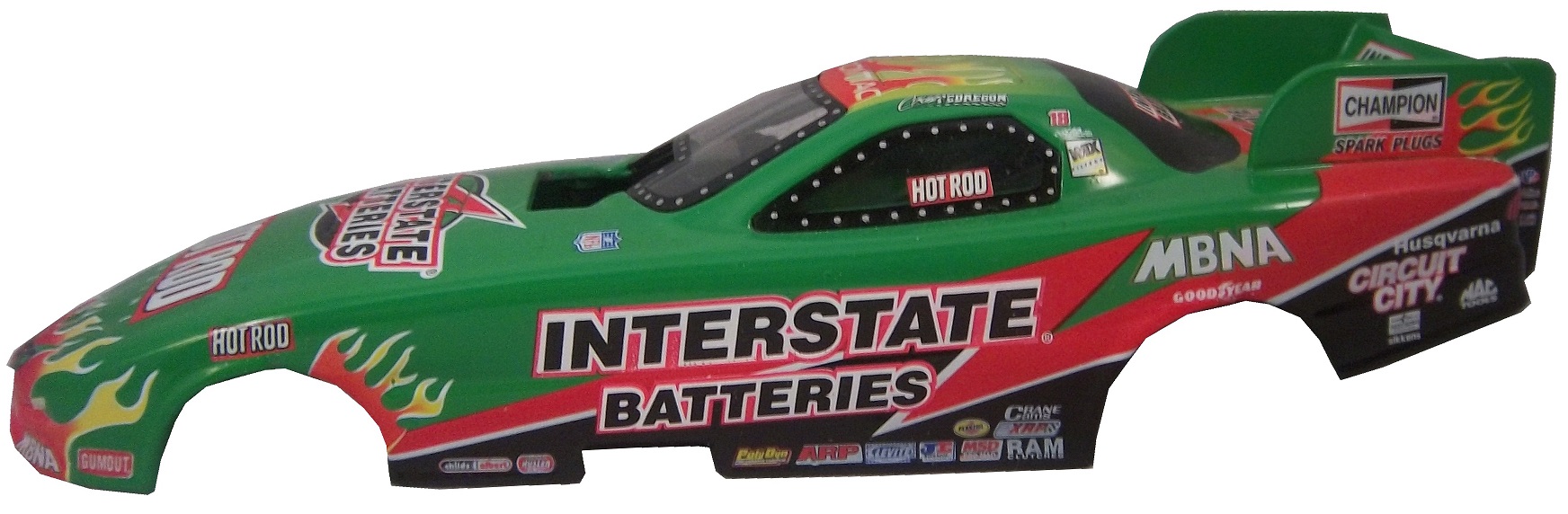
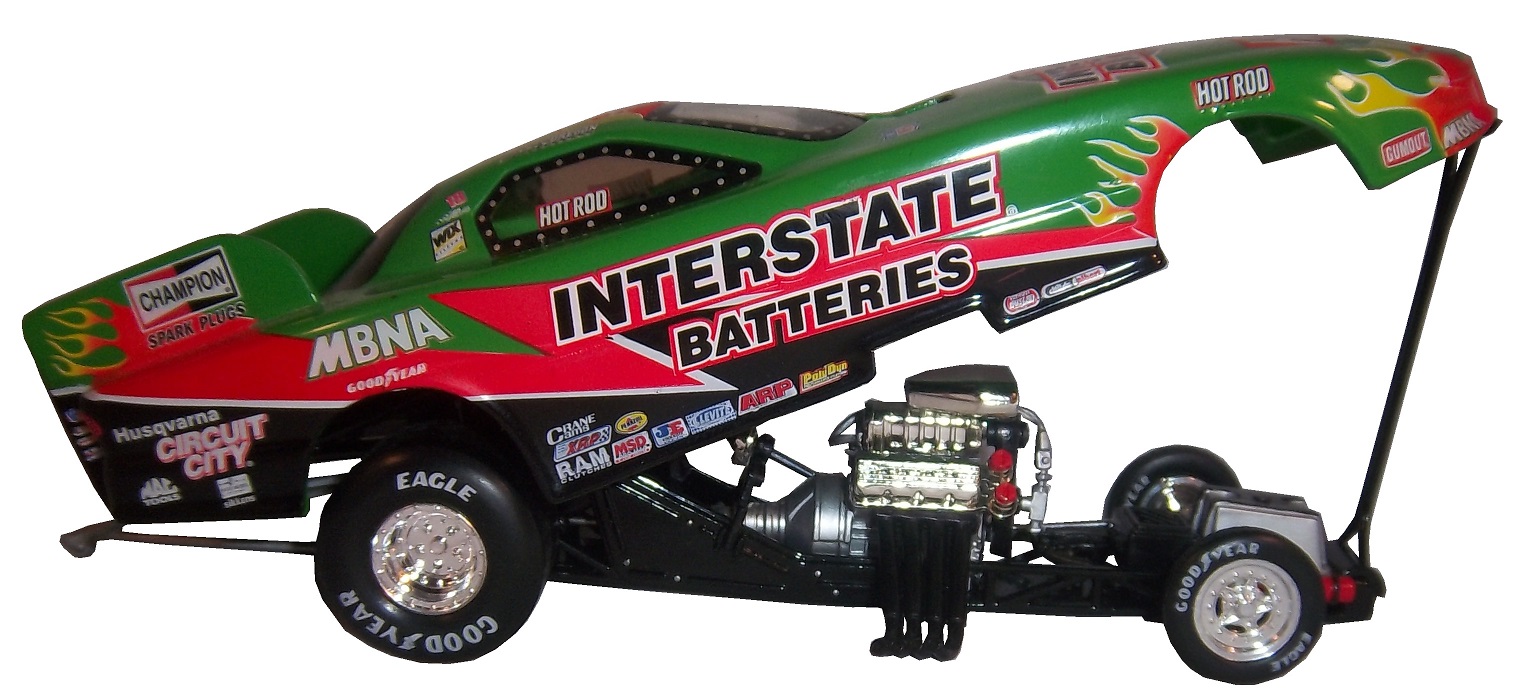
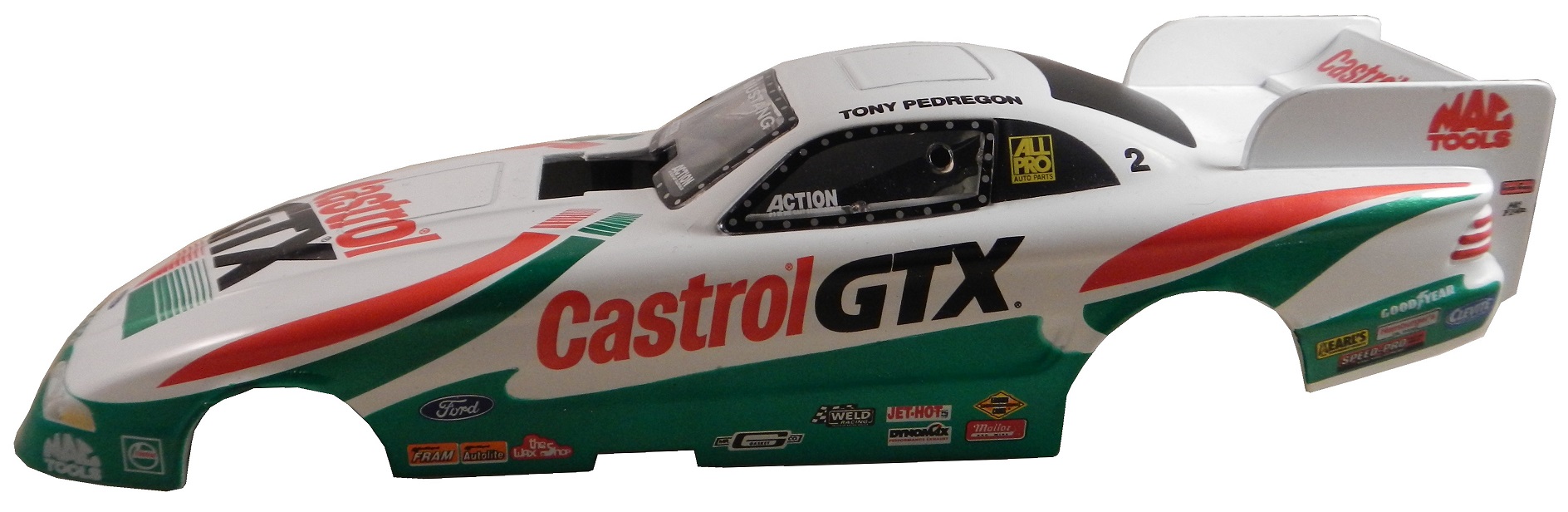
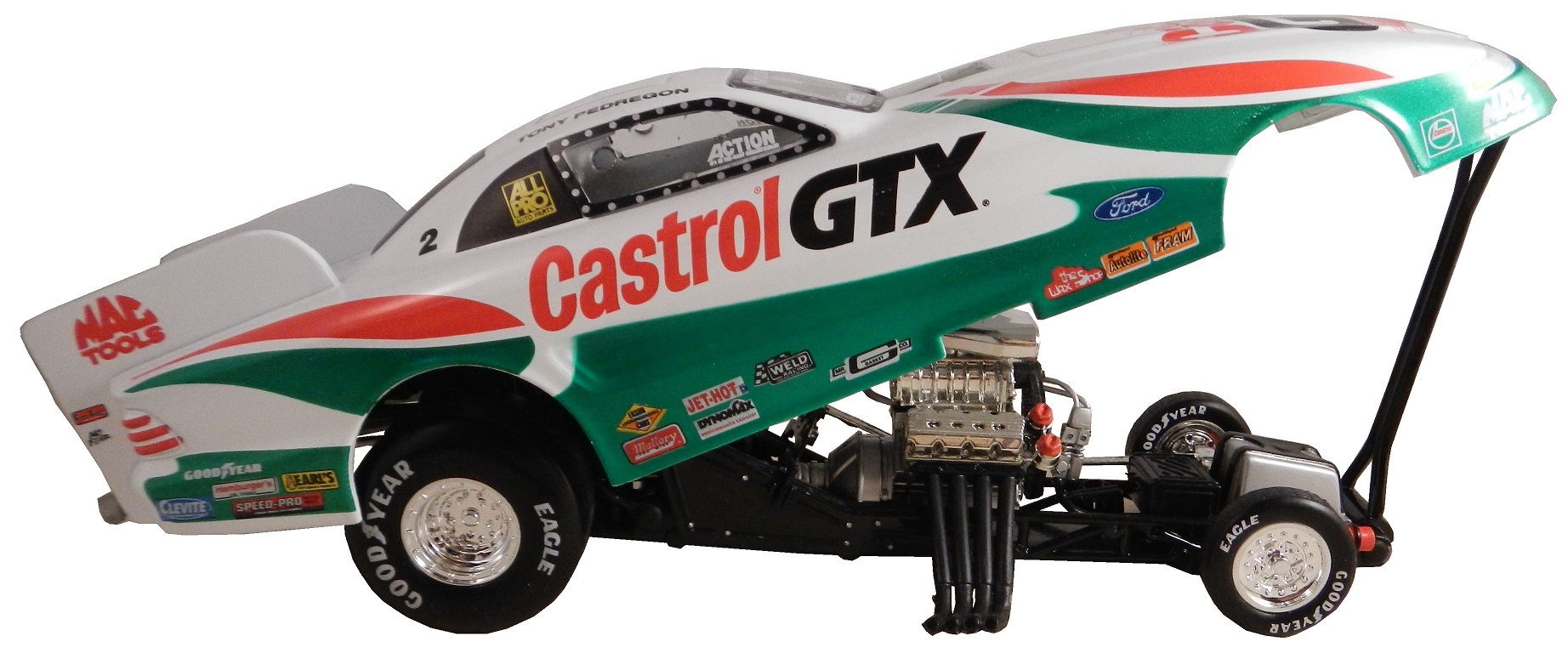
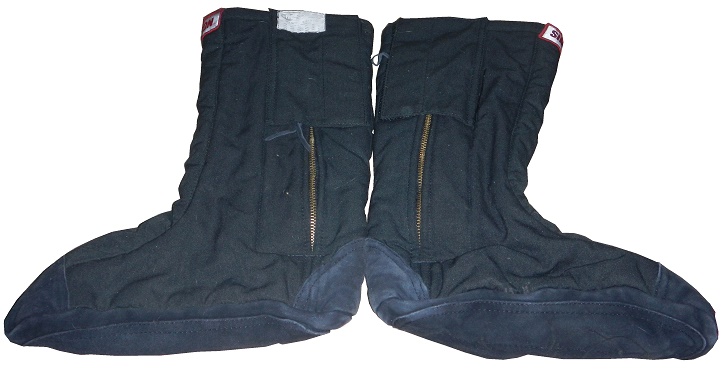
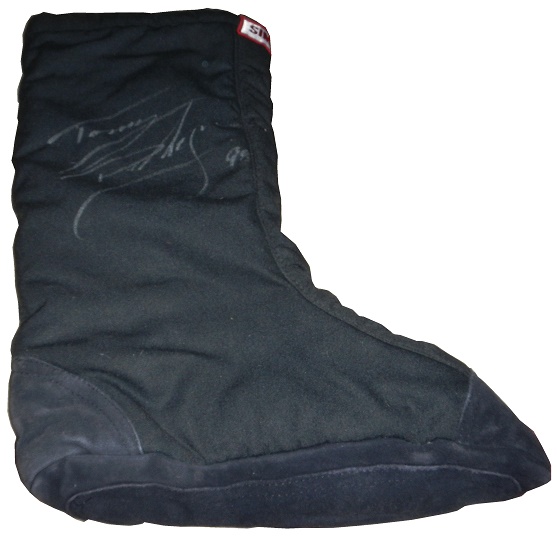
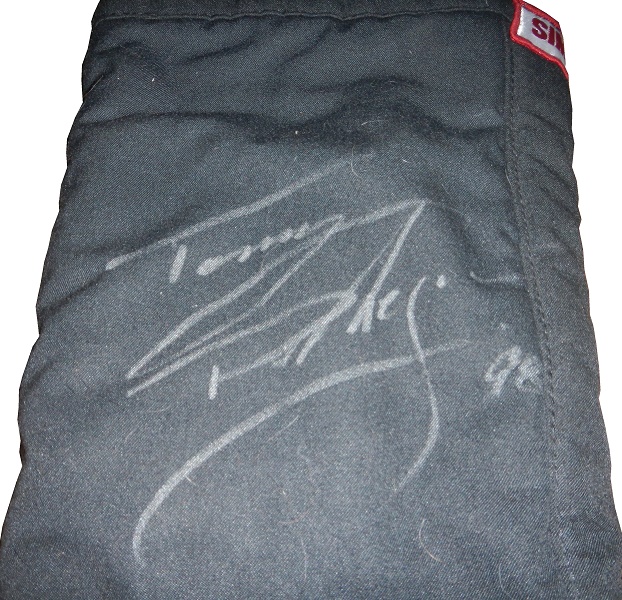
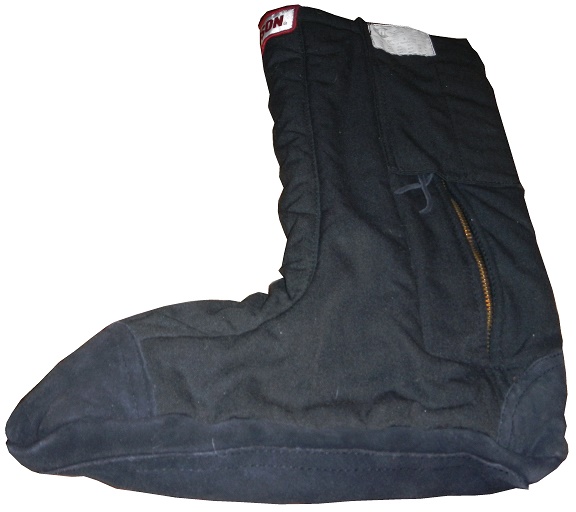
Shoes vary from racing category to racing category. Different racing categories need different shoes. For example, a pair of shoes worn in NASCAR differs from a pair worn in a Top Fuel Dragster. There are also other variations, such as the NHRA Funny Car over boots. This example is from Tony Pedregon. Scott Riggs raced in the top three NASCAR series from 1999 until 2014. He had a decent amount of success, with 4 wins in the Xfinity Series, Nashville and Fontana in 2002, and Gateway and Nashville in 2003. In the Truck Series, he has 5 wins, Martinsville, Dover, Kentucky, Nashville, and Cicero in 2001, along with a 5th place finish in 2001. He had 4 top 5’s and 16 top 10’s in the Cup Series.

From 2004 to 2007, Riggs had a little success in the Cup Series. Riggs scored four top 5’s, 5th in Dover in 2004, 4th at the 2005 Daytona 400, 2nd at the second Michigan race in 2005, and 4th at the second Bristol race of 2006. During that time, he also had 15 top 10’s at that time. During that time, he wore these blue and SFI 3.3/5 racing shoes. The shoes show a decent amount of use, and are autographed. The soles of the shoes show heavy wear, and material loss.

The right shoe features staining, scuff marks, and has been signed by Riggs on the silver. The left shoe features staining, scuff marks, and has been signed by Riggs on the silver. Next week, a racing balaclava.