Let’s Look At Undershirts Part 2-Michael Waltrip

By David G. Firestone

While he is a Triple Threat in NASCAR, with 16 wins across all three of NASCAR’s top series, Michael Waltrip tends to be remembered for all the wrong reasons. He won the 2001 Daytona 500, which is known as “Black Sunday” due to the death of Dale Earnhardt. He is remembered for his wreck at the 1990 Budweiser 250. He is also remembered for his team’s shenanigans during the 2013 Federated Auto Parts 400. Kind of an odd set of things to be remembered for a driver who won two Daytona 500s.

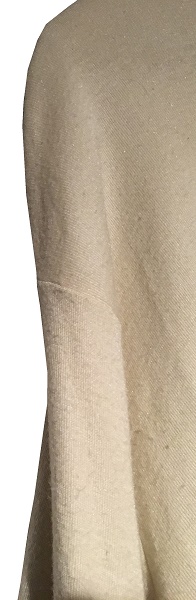
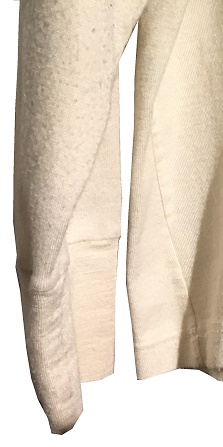
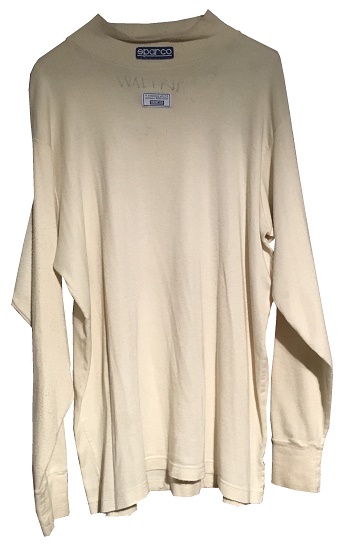
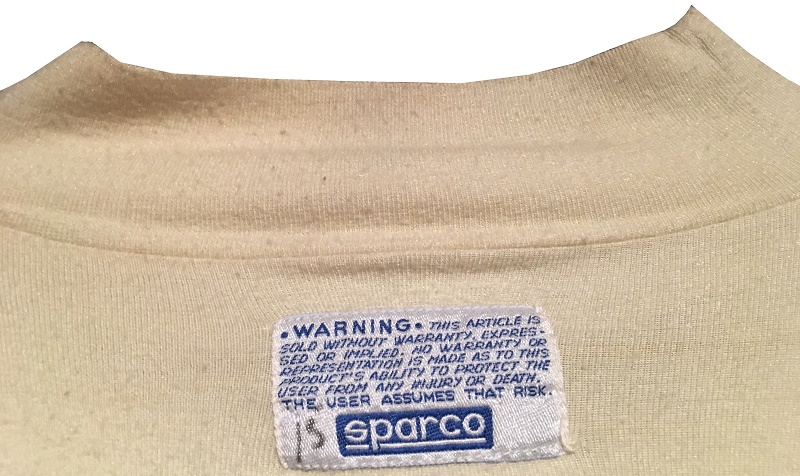
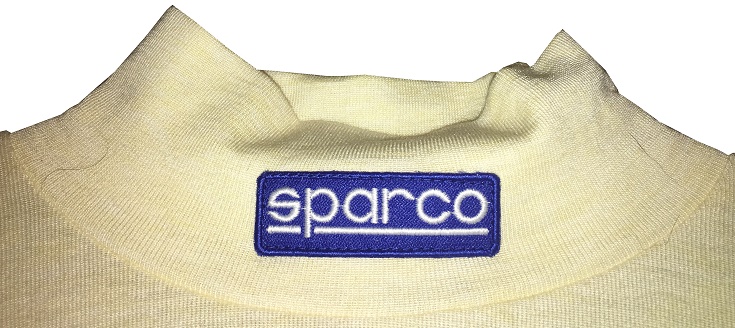
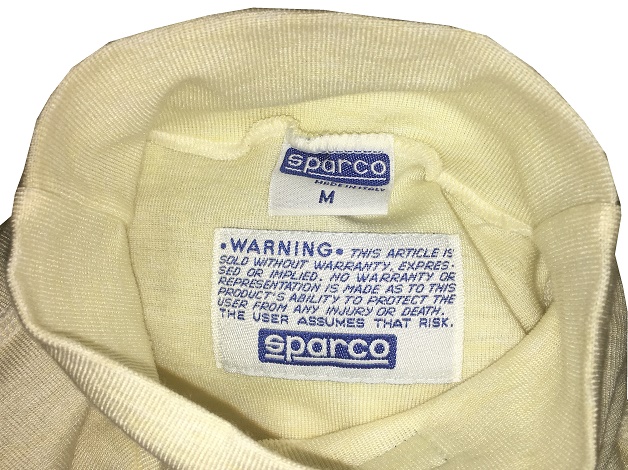
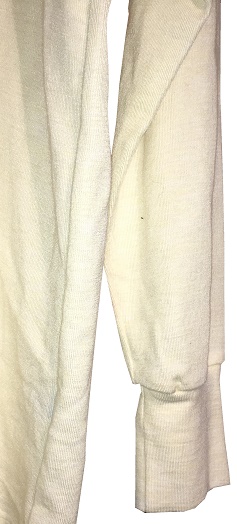
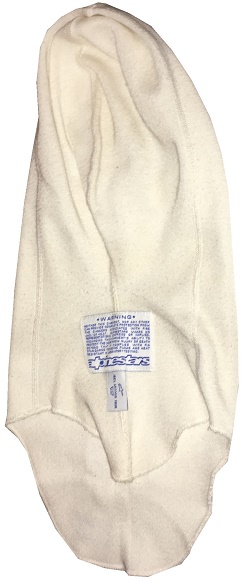
From 2001 to 2005, Michael Waltrip raced for Dale Earnhardt Inc. as a full time driver. During that time, he won all four of his Cup series races, three at Daytona, including the 2001 and 2003 Daytona 500, and the 2002 Pepsi 400, and the 2003 EA Sports 500 at Talladega. He also scored a combined 20 top 5’s, and 40 top 10’s. During his tenure with DEI, he wore this Sparco undershirt. The shirt shows a little bit of use, and has been signed by Waltrip on the back.The neck has a SPARCO patch embroidered. WALTRIP is written in Sharpie beneath this, and the FIA certification is below that.The front of the shirt shows a few very light stains.The hems are standard hems. The shoulders don’t show any wear. The sleeves show some light stains. The back of the shirt has some light stains.The back of the neck is unadorned. The Sparco warranty label is below the neck with “15” written in Sharpie. Aside from some very light, and impossible to photograph stains, Waltrip has signed the back torso. There is a picture of him autographing the back.

I tried my best to get pics of the stains, but none of them came out. They are subtle, and you need to look carefully to see them. This is a problem with cream-colored Nomex.

Next week, is a Formula 1 race-used shoe.

Vintage Item Spotlight-1980’s Unocal 76 Salesman Sample

unocal-76-2By David G. Firestone

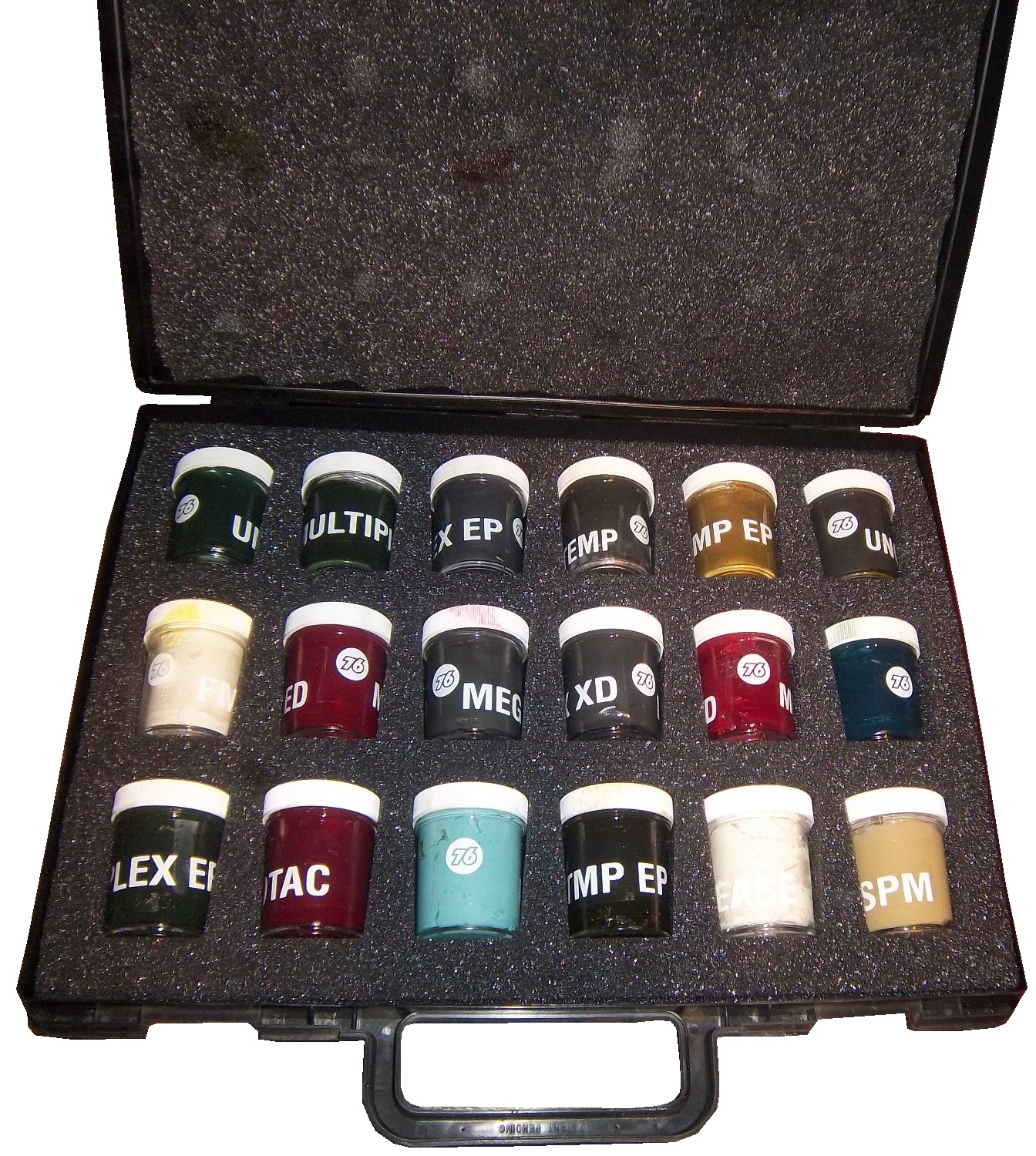
Something that I find interesting are what are known as “salesman samples.” Salesman Samples are items that are used by representatives of companies to show buyers a sample of what it is they are buying. These can be anything from championship rings, swatch catalogs, or in this case, a case of lubricant samples from Unocal 76 from the 1980’s.

This interested me from the moment I laid eyes on it. The salesman would bring this case to a buyer, usually a mechanic, or factory that would use these industrial lubricants. The salesman would discuss the various characteristics of the lubricants for the buyer to help them make the right choice. Industrial lubricants are not equal and a lubricant that would work in a printing press might not be suitable in other applications.

This case is in great condition, and the 18 containers of samples it contains are still in good condition, though some of the lubricants have solidified over time.unocal-76-1 unocal-76-2 unocal-76-3 unocal-76-4 unocal-76-5 unocal-76-6 unocal-76-7 unocal-76-8 unocal-76-9 unocal-76-10 unocal-76-11 unocal-76-12 unocal-76-13 unocal-76-14 unocal-76-15 unocal-76-16 unocal-76-17 unocal-76-18 unocal-76-19 unocal-76-20

Let’s Look At Undershirts Part 1-Maurício Gugelmin

By David G. Firestone

Racing is an inherently dangerous sport.  It’s one of, if not the only sport where it is possible to be crushed and burned at the exact same time.  Fire is an ever present danger, and drivers wear fire retardent clothing to help keep them safe.  Other accesories are worn, including undershirts, which we will examine today.

Hailing from Joinville, Brazil, Maurício Gugelmin moved to The United Kingdom, and moved his way in to Formula 1 by 1988, where ha lased until 1992. In 1993, he raced in CART/Champ Car until 2001. He won a race, the 1997 Molson Indy Vancouver driving the Hollywood Cigarettes Mercedes. He has since moved back to Brazil, to work at the family business.

While Maurício Gugelmin wore various different suits over the years, many pictures of him feature Sparco suits. Since many drivers are loyal to suit companies, it would come as little surprise that he wore other accessories made by Sparco. This undated, customized Sparco shirt is one such example. The shirt does show some light use, though it is difficult to photograph cream-colored in Nomex.The front of the collar has a SPARCO logo embroidered.Inside the collar is a size tag that indicates that the size is Medium, as well as the Sparco warranty label.The front torso featues M. GUGELMIN embroidered, and the FIA safety certification. The torso is otherwise unadorned.The shoulders are unadorned. The long sleeve have no adornment. The back of the shirt is unadorned, and shows some light stains.The back of the neck and torso are unadorned. With that out of the way, let’s do some…

TAILGATING TIME

I’m a fan of chicken, but it can be a little bland and boring sometimes. There are some different recipes, including Chicken Kiev, so lets make that!

Chicken Kiev

8 Servings

Ingredients

4 whole boneless skinless chicken breasts

salt and pepper

1/2 tablespoon chopped chives or 1/2 teaspoon leaf tarragon

1 tablespoon minced parsley

1 stick cold butter

1/4 cup butter

1 egg, slightly beaten

1/2 cup dry bread crumbs or corn-flake crumbs

Instructions:

1-Place one breast at a time boned side up between pieces of plastic wrap

2-Using the flat side of a meat mallet or a rolling pin, flatten each until 1/8 inch thick.

3-Peel off wrap

4-Sprinkle breasts with salt and pepper

5-Divide chives and parsley among chicken breasts.

6-Cut butter in quarters lengthwise, and then in half crosswise to make 8 sticks/

7-Place a stick of butter on each chicken breast.

8-Rolling up chicken with butter inside, tucking in ends and sealing well.

9-Roll breasts in flower, dip in egg, and coat with crumbs.

10-Cover loosely, and refrigerate until ready to cook.

11-Heat 1 1/2 to 2 inches in oil in fry pan to 340 degrees.

12-Place chicken in oil and cook 10 minutes, or until golden brown

13-Serve with rice or noodles.

That is a tasty dish that would work at a party.

Next week, something special.

Balaclavas…A Unifying Aspect of Racing Uniforms Part 1

By David G. Firestone

Just a brief one this week, I’ve got some other things that need my attention at the moment.

Hailing from Noville, Switzerland, Mathéo Tuscher won Formula Pilota China in its first year in 2011, at the age of 14. He raced in Formula Two, GP3, the FIA World Endurance Championship, and LeMans.

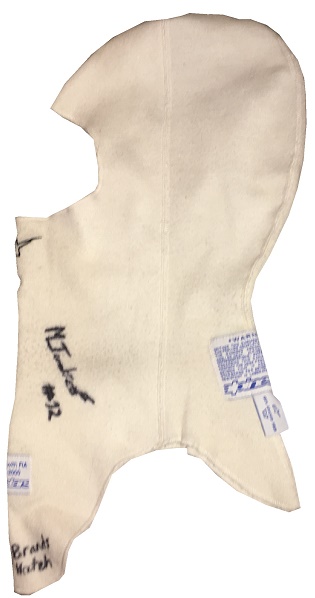
2012 marked the 4th season of Formula 2. During that season, Mathéo Tuscher raced the full season for MotorSport Vision. He won two races, the first Circuit Paul Ricard, and the second Autodromo Nazionale Monza. He also scored four poles, the first Silverstone, the second Prtimao, the first Paul Ricard, and the first Monza. He also earned 9 podeiums, and finished second in the championship. This Alpinestars Balaclava was worn for at least one of the two races at Brands Hatch in West Kingsdown, Kent, England. This worn balaclava shows a large amount of staining, and has been signed on the right side.Mathéo Tuscher signed the left side, and added #12, his car number for 2012.The front of the balaclava has holes for eyes and to help the driver breathe, the FIA safety-certification, and BRANDS HATCH written in Sharpie. The right side is unadorned, as compared to the other three sides. There is some light staining, which is hard to photograph.The back of the balaclava features some light stains, and the Alpinestars warranty label, as well as a flag tag. Next week, we transfer from a Formula Two winner to a CART winner.

Every Great Uniform Needs Gloves and Shoes To Match Revisited Part 2

By David G. Firestone

Every so often, I like to revisit articles I did previously, and fix mistakes I made. For the next couple of weeks, I’m going to to revisit an article I did called “Every Great Uniform Needs Gloves and Shoes To Match.” This concerned a pair of Hut Stricklin gloves and Scott Riggs shoes. This was my first foray in to racing gloves and shoes. I made a lot of mistakes, so I’ll fix them. This week, the Scott Riggs shoes.

Shoes are as important as gloves in terms of fire protection. Those 10 seconds of fire protection are critical for the driver to get out of a burning car. The basic design of the shoes are meant to help the driver, well, drive. Some drivers in years past have opted for nontraditional racing shoes, such as Dave Marcus who was well-known for wearing wingtips while racing.

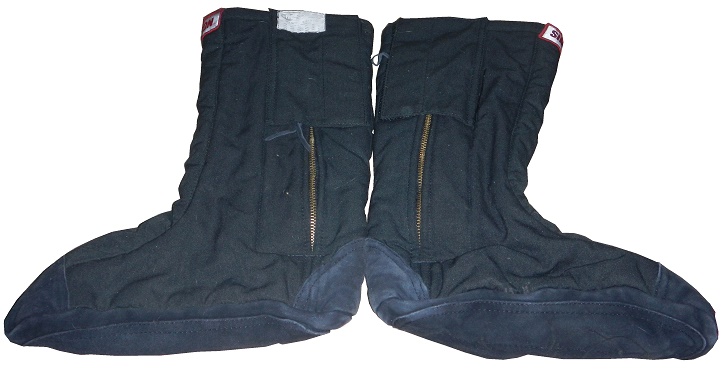
Shoes vary from racing category to racing category. Different racing categories need different shoes. For example, a pair of shoes worn in NASCAR differs from a pair worn in a Top Fuel Dragster. There are also other variations, such as the NHRA Funny Car over boots. This example is from Tony Pedregon. Scott Riggs raced in the top three NASCAR series from 1999 until 2014. He had a decent amount of success, with 4 wins in the Xfinity Series, Nashville and Fontana in 2002, and Gateway and Nashville in 2003. In the Truck Series, he has 5 wins, Martinsville, Dover, Kentucky, Nashville, and Cicero in 2001, along with a 5th place finish in 2001. He had 4 top 5’s and 16 top 10’s in the Cup Series.

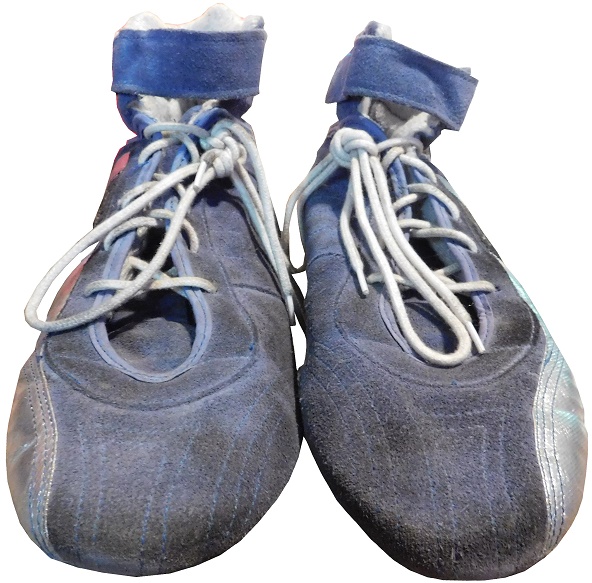
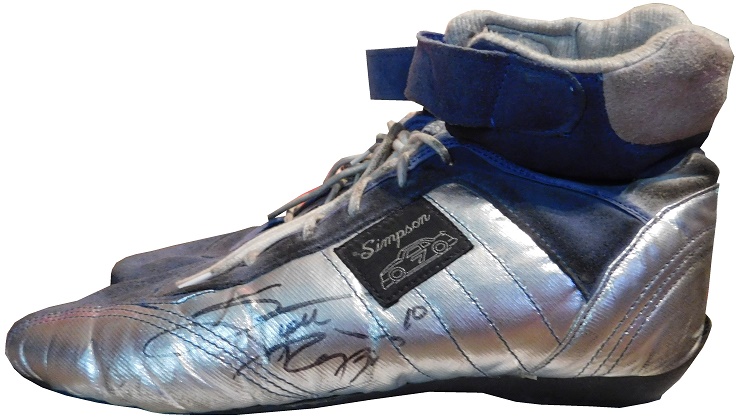
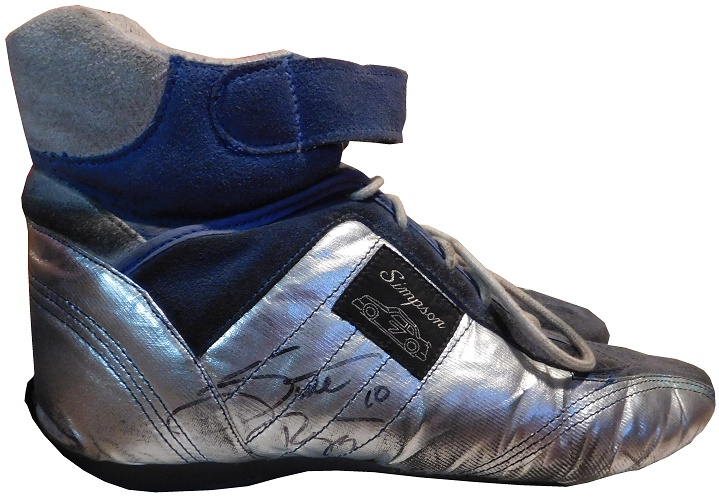
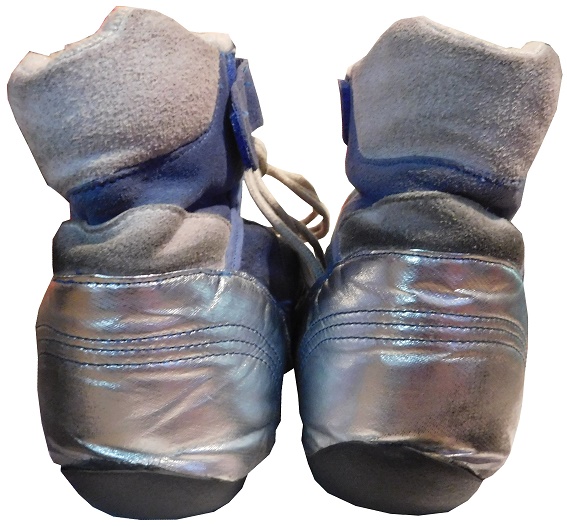
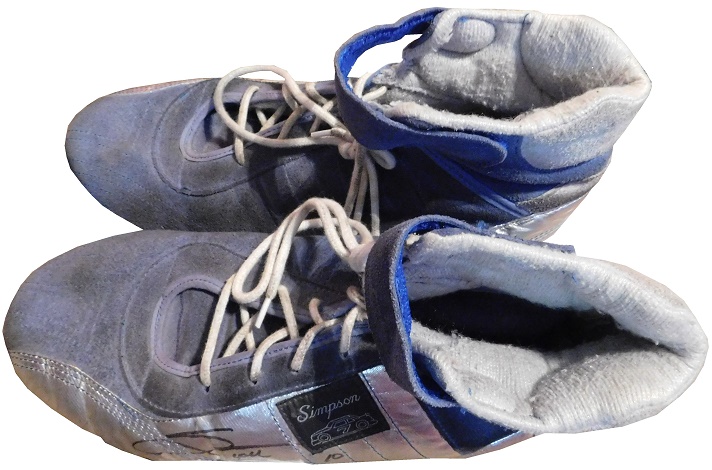
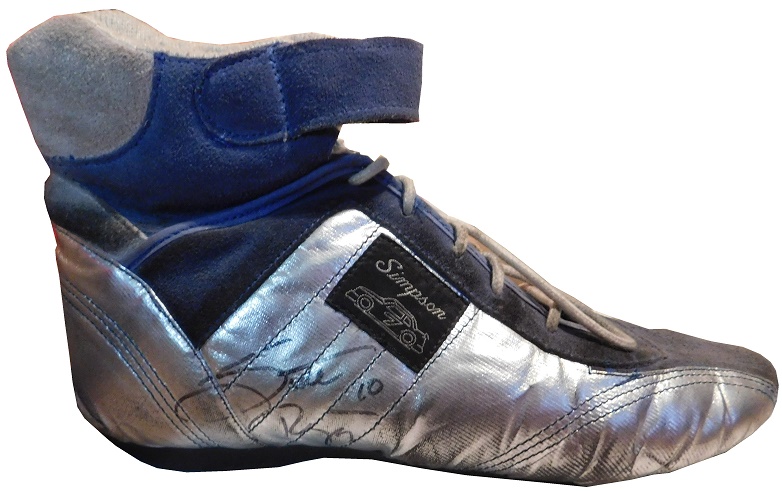
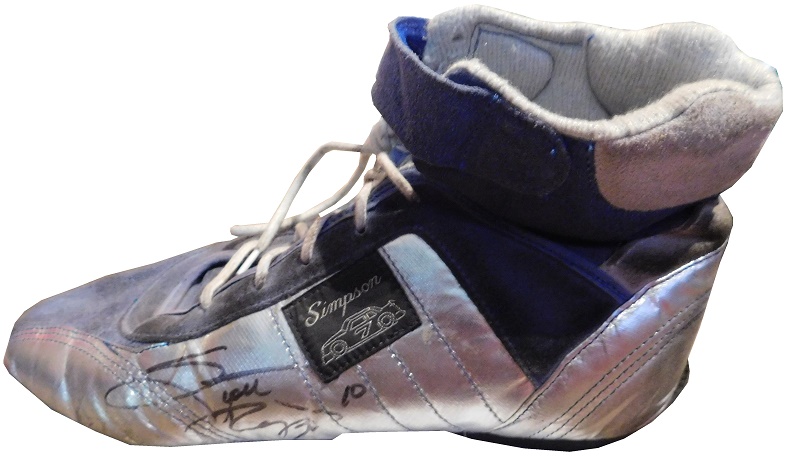
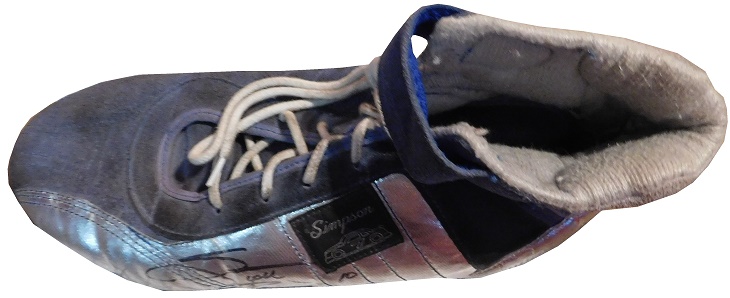
From 2004 to 2007, Riggs had a little success in the Cup Series. Riggs scored four top 5’s, 5th in Dover in 2004, 4th at the 2005 Daytona 400, 2nd at the second Michigan race in 2005, and 4th at the second Bristol race of 2006. During that time, he also had 15 top 10’s at that time. During that time, he wore these blue and SFI 3.3/5 racing shoes. The shoes show a decent amount of use, and are autographed. The soles of the shoes show heavy wear, and material loss.

The right shoe features staining, scuff marks, and has been signed by Riggs on the silver. The left shoe features staining, scuff marks, and has been signed by Riggs on the silver. Next week, a racing balaclava.

Every Great Uniform Needs Gloves and Shoes To Match Revisited Part 1

By David G. Firestone

Every so often, I like to revisit articles I did previously, and fix mistakes I made. For the next couple of weeks, I’m going to to revisit an article I did called “Every Great Uniform Needs Gloves and Shoes To Match.” This concerned a pair of Hut Stricklin gloves and Scott Riggs shoes. This was my first foray in to racing gloves and shoes. I made a lot of mistakes, so I’ll fix them. First, the Hut Stricklin gloves.

Since the fire risk in racing is as high as it is, it makes sense that driver uniform includes fire retardant shoes and gloves to go along with it. Although they are frequently overlooked by many fans, they are just as critical to driver safety and comfort as the suit and helmet. Gloves and shoes have, like the suit and helmet, become fashion forward in recent years.

Gloves in racing are typically made of multiple layers of Nomex, and feature a textured layer on the palm, which is designed to help the driver grip the steering wheel. Gloves may be waterproofed for open cockpit racing, where rain and other inclement weather may not impede the race. The gloves give the same amount of protection that the suit does, and are certified by FIA and SFI, depending on where they are being used.

Hailing from Calera, Alabama, Hut Stricklin became the final member of the famed Alabama Gang when he married Donnie Allison’s daughter Pam. In his racing career, he won the 1987 NASCAR Dash Championship, and in his Cup and Xfinity Series career, while never winning a race, he had a total of 11 top 5’s and 37 top 10’s.

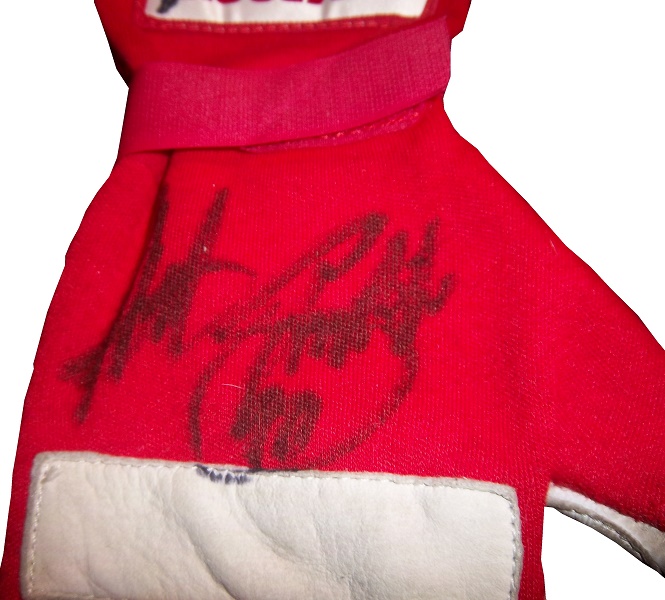
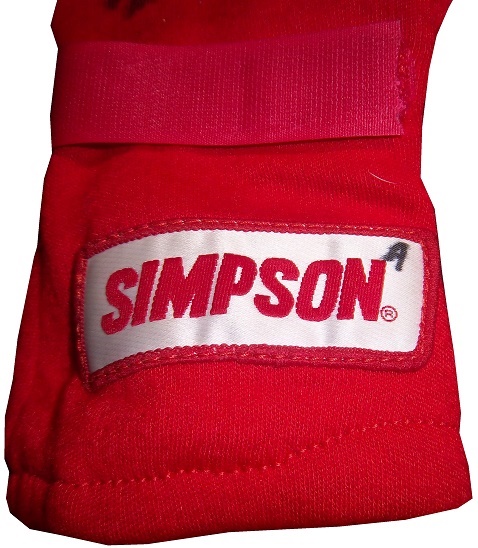
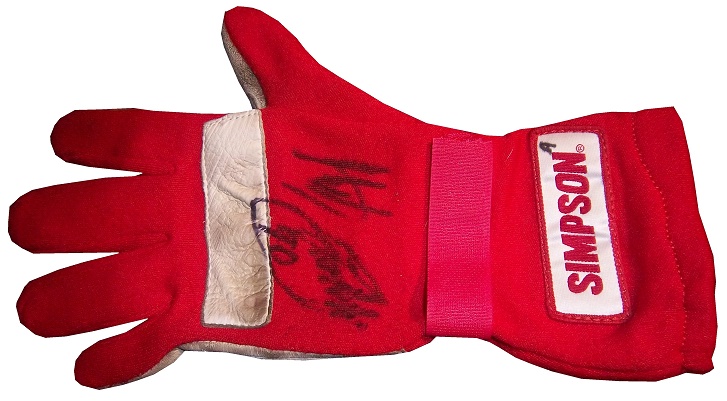
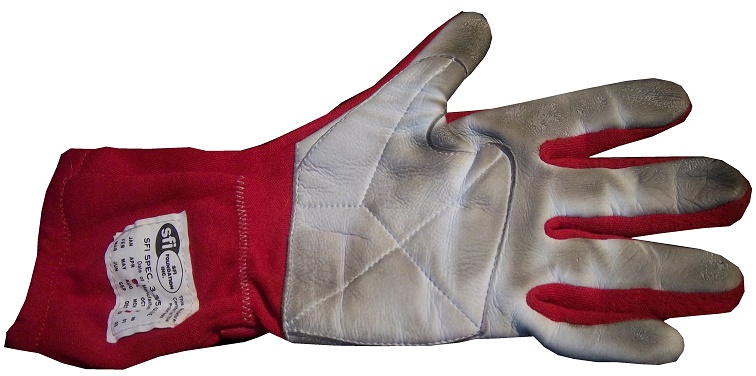
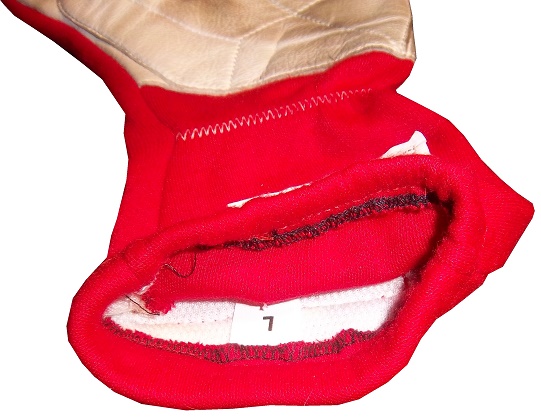
From 2000 to 2001, Stricklin raced for Junie Donlavey. In 2000, he raced 7 races with differing sponsors. In 2001, he raced 23 races with Hills Brothers as a sponsor. He scored a top 10, at Michigan at 2001. This pair of Simpson SFI 3.3/5 red gloves were worn by Hut Stricklin sometime after between 2000 and 2001. He has autographed both of them, and they show great use. The outer part of right glove features some wear on the white stripe, Stricklin’s autograph near the stripe, and a SIMPSON logo with an A written in Sharpie. The inner part of the right glove features heavy staining on the palms, a Simpson warranty label, and a size L tag inside the wrist. The outer part of left glove features some wear on the white stripe, Stricklin’s autograph near the stripe, and a SIMPSON logo. The inner part of the left glove features heavy staining on the palms, a SFI 3.3/5 certification label, and a size L tag inside the wrist. As I mentioned above, gloves have evolved to be more visible on in-car cameras. These examples, worn by Dale Earnhardt Jr. and Jimmie Johnson show how these new customization can take a simple safety equipment item, and add some visual appeal to it.

Next week, a pair of Scott Riggs shoes revisited.

A Great Series Needs a Great Logo!-2019 Edition

By David G. Firestone

NASCAR has a lengthy history in the United States. Founded in 1948, 71 years ago, NASCAR has taken stock car racing to new heights. Once a regional promotion, NASCAR is now an international powerhouse. NASCAR and their various series have logo histories that are interesting.

Let’s start with NASCAR itself.

1948-1968The first NASCAR logo features a track-inspired oval design, with checkered flags, and two streamlined cars heading toward each other. NASCAR INTERNATIONAL is printed in black on the greenish-yellow oval.

1968-1978A newer version of the logo is introduced. The oval is gone, the colors have changed from black and greenish-yellow to blue and white. The checkered flags have a much more pronounced, and a line motif is added to the back ground. NASCAR is on top of the cars, INTERNATIONAL is underneath them.
1978-2017A brand new logo is introduced in 1978. A rectangle with NASCAR in white lettering, with various different colors in the negative space replaces the old school NASCAR International logo. A series of colored vertical bricks are on the left side of the logo.

2018-???A much more toned down version of the previous logo, with different font is introduced during 2017, with much fanfare.

The Monster Energy NASCAR Cup Series has a unique tradition that stretches back to the 1970’s, the Series Logo. Series Logos are now commonplace in most forms of racing The evolution of the NASCAR Sprint Cup Series logo over the years in interesting.

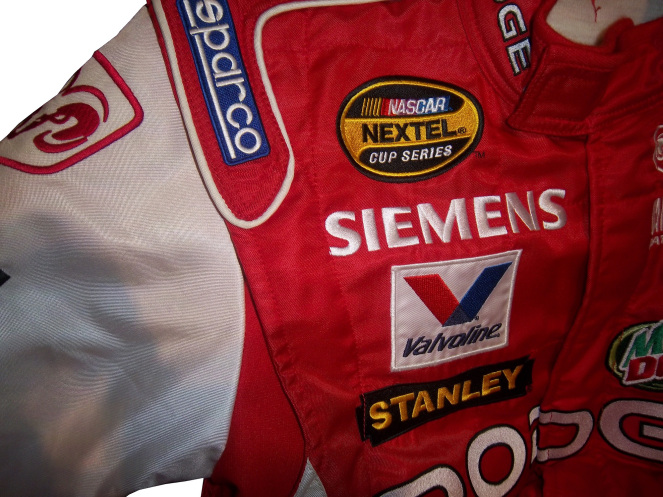
1972-1981This logo is designed in classic 1970’s design, and can be seen on driver suits, as this Dale Earnhardt Sr. example from 1980 clearly shows.

1982-1988The “1 Car” logo was a major redesign, and features a logo, with NASCAR GRAND NATIONAL SERIES embroidered, and a 1980’s car. Very visible on driver suits from the era.

1989-1992A simple Winston logo, which, while underwhelming is very visible on this Bobby Hillin Jr. Suit, and this photo of Dale Earnhardt Sr. from 1992…and look who is next to him!

1993-1996Again an underwhelming yet attractive series logo. The interesting thing about logos from 1993-2001 is that there are two designs, red with white lettering that displayed better on light driver suits, and white with red lettering that displayed better on dark colored driver suits. Though the rule was rather ambiguous for a while.

1997-1999This design went through some changes when Winston changed the design of their packaging. Starting in 1998, Winston went from a rounder typeface to a narrower and straighter typeface, as a young Tony Stewart is modeling.

1998:Every team and driver ran the NASCAR 50th Anniversary logo on their cars and driver suits. Not bad at all.

2000-2001A square design with an oval logo was used from 2000-2001, with the color-flipping returning. At this point, the discussion of who would replace Winston started, as due to legislation, cigarettes would not be allowed to sponsor auto racing within the next few years.

2002-2003The transitional oval logo. The Busch Grand National series had adopted an oval logo in 1995, and since the series would change sponsorships in 2004, this new logo would be the bridge between the old and the new.

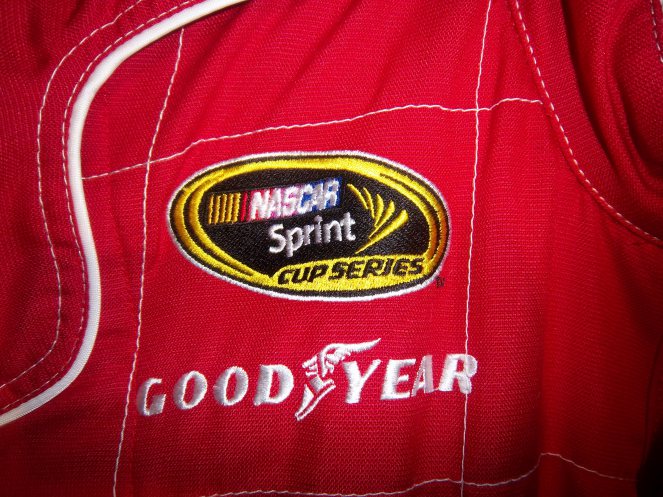
2004-2007New sponsor, new colors, new shape. Nextell Communications took over in 2004 and it became the Nextell Cup Series. This logo would remain constant until Sprint and Nextell merged, which led to:

2008-2016:Same color scheme, same shape, same basic design.

The logo has become a marketing point for NASCAR teams and NASCAR itself. Die casts, driver uniform coats, t-shirts, pit crew shirts, and many other items carry these logos.

2017-2019Monster Energy takes over the series sponsorship from Sprint, initially for only one season, though two seasons were eventually announced. The new Monster Energy NASCAR Cup Series has a logo based on the new Xfinity Series. It’s a black rectangle, with the current Monster Energy NASCAR Cup Series.

Now on to the NASCAR Xfinity Series

1982-1994 These two logos were used for the Busch Grand National series. The plain Busch logo worked better and was used more often than the Busch Beer Series logo.

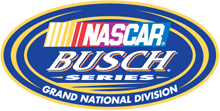
1995-2004An oval logo with the sponsor name, and GRAND NATIONAL SERIES added below. It was very marketable and worked quite well as a logo.

2004-2007Grand National Series has been removed, and some minor redesigns to BUSCH and the NASCAR logo as well. 2006 featured the 25th Anniversary logo.

2007-2014

2015-2017Xfinity takes over the series sponsorship, and release an off-center oval logo, black outline with cutting edge designs on the black outline. The center is white, and features a NASCAR Xfinity Series text.
2018-PresentWith the new NASCAR logo came a new Xfinity Series logo, this one a black square with red designs and a NASCAR Xfinity Series logo replaces the oval.

Last but certainly not least the NASCAR Gander Outdoors Truck Series.

1995For the first season, the Truck Series was referred to as the “Super Truck Series by Craftsman.” It featured a decidedly early 1990’s logo. It lasted for only one season.

1996-2002The Craftsman Truck Series is a better name and the logo, while still bearing a 1990’s style design, is more refined and professional.

2003-2008The entire logo is inside the oval, some minor color and typeface changes are present as well. 2005 featured the 10th Anniversary logo. 2009-2018 The same off-center oval design as the Nationwide Series and Sprint Cup logos, with a sponsor redesign for Camping World, who took over for Craftsman after 2009.

2019-???Gander Mountain takes over from Camping World. They are both owned by the same company. This results in a new logo, this one with a black rectangle, outlined in blue, with a blue rectangle with white lettering.
Next week, we revisit a pair of racing gloves.

Partnerships In Racing Can Get Confusing Sometimes

By David G. Firestone
Like many businesses, race teams often form partnerships to enhance business, or to stay afloat. Technical partnerships are one example, but there are other instances of struggling race teams teaming up to field race cars.

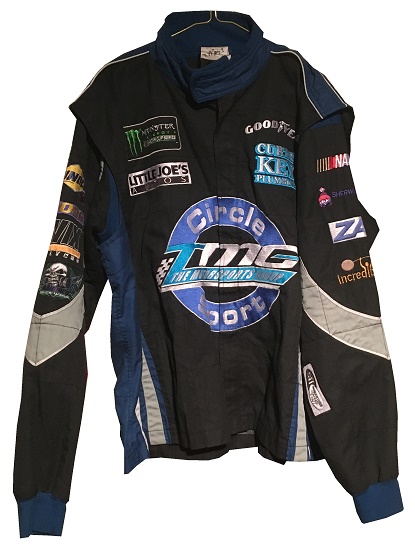
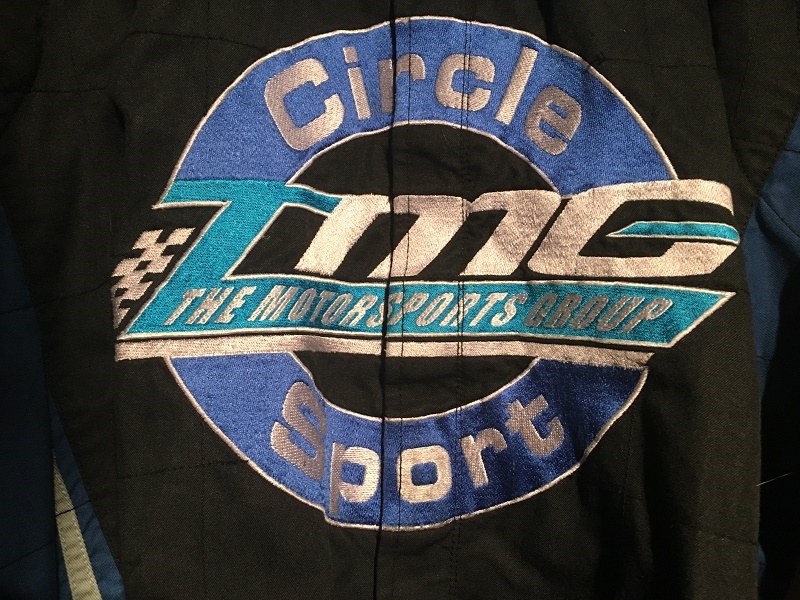
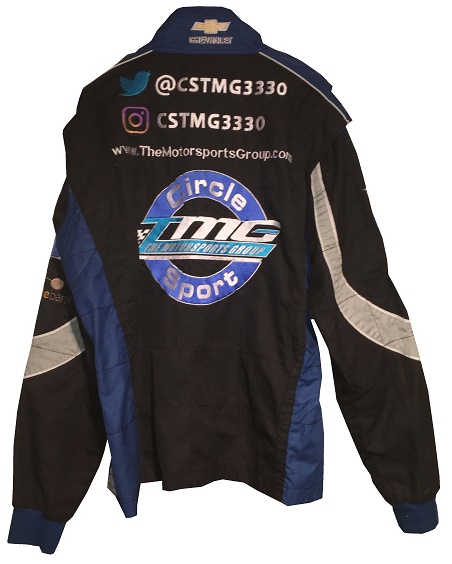
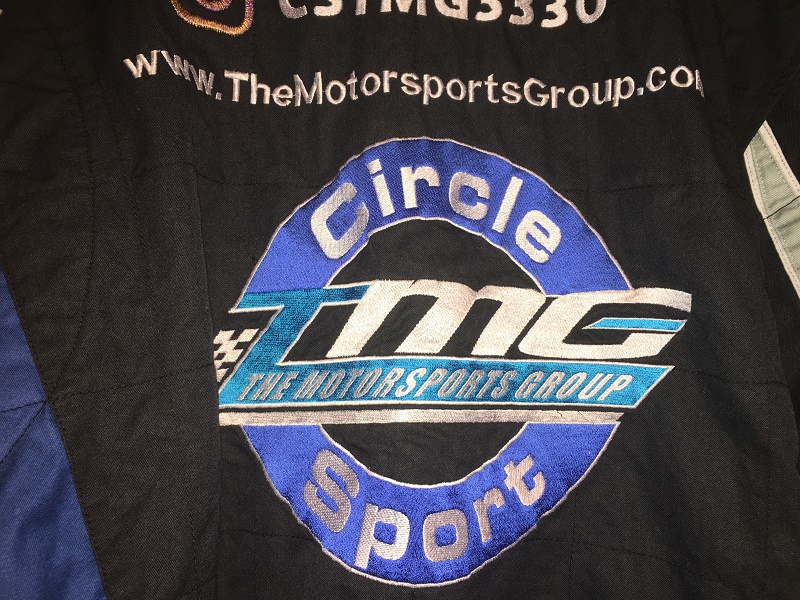
One such example of multiple teams fielding cars is the TMG/Circle Sport/RCR deal in 2017. Circle Sport merged with The Motorsports Group to field #33 for a limited schedule in 2017. RCR was also running the #33 for a limited schedule in 2017, so a deal was in place for all involved. Speaking as a race fan, I can tell you that this whole deal was needlessly confusing. Why not get a different car number than 33, so RCR could do what they want, and Circle Sport/TMG could do what they want.

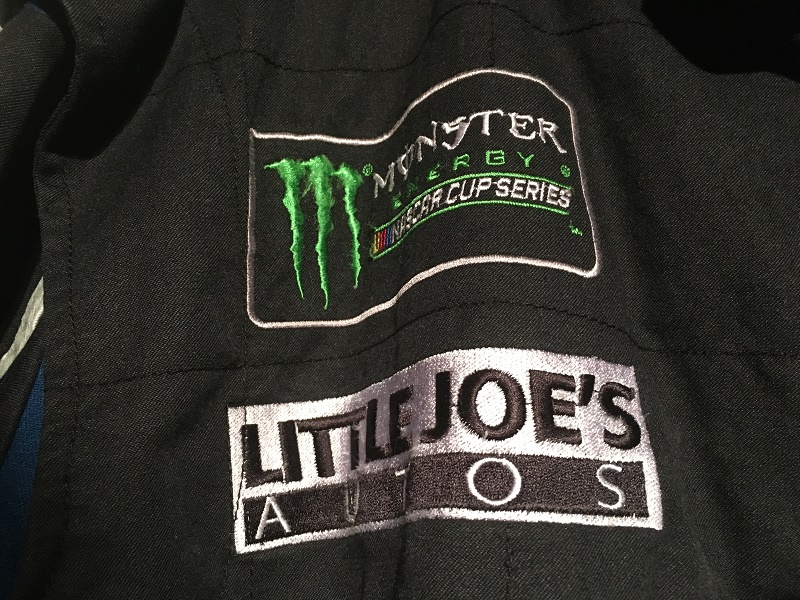
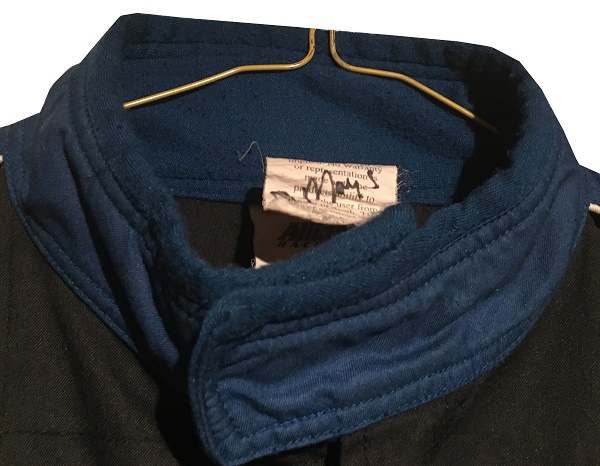
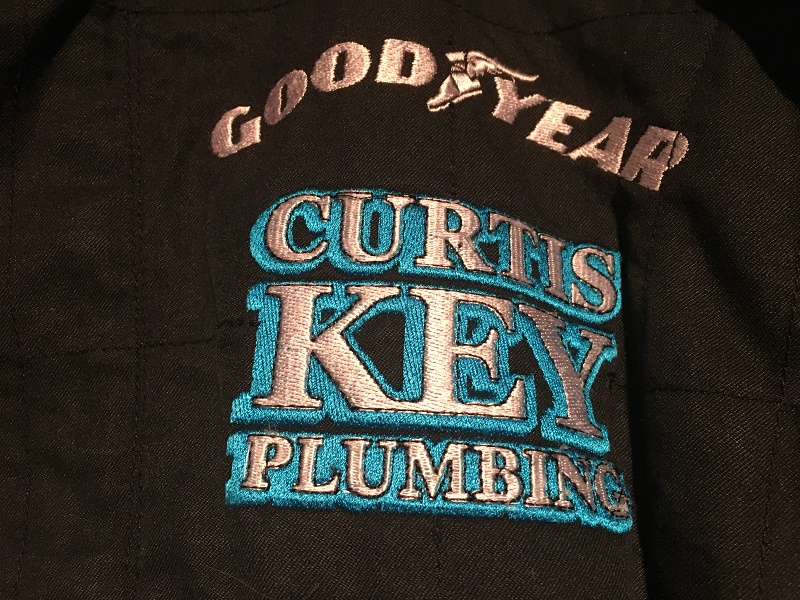
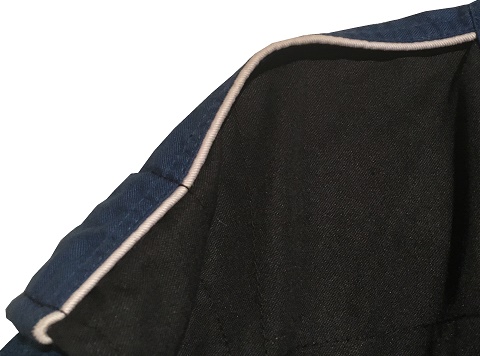
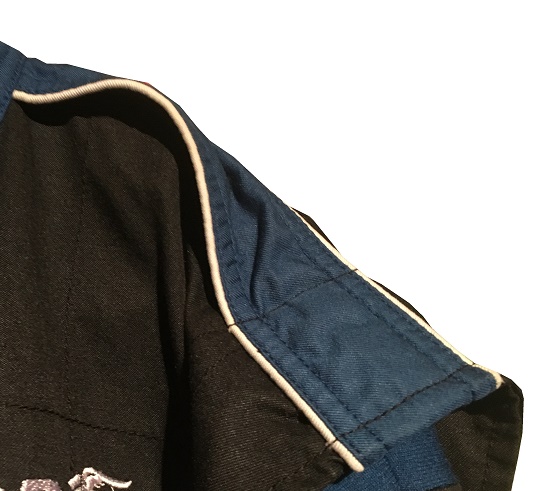
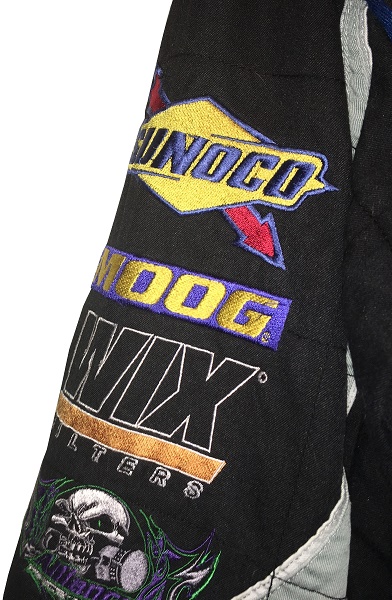
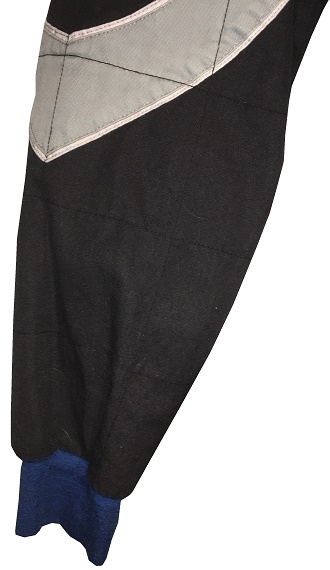
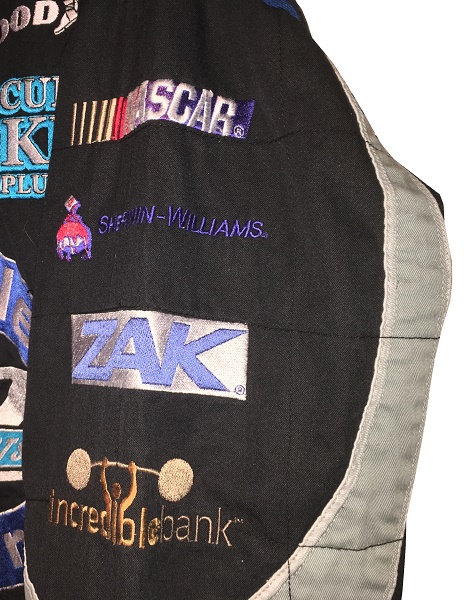
This pit crew jacket, made by Alliance, and rated SFI-1, was worn by a crew member named J Mays was worn during 2017. Alliance has been around for a few years. They are apparently based in McDonough, Georgia, though their own website states that they are based in Riverton, Illinois. This single-layer jacket shows light use.The blue collar has a Velcro closure, and has no adornment whatsoever.There is a care tag, and a warranty label in the cowl, with J MAYS written in Sharpie on it.The right chest features a MONSTER ENERGY NASCAR CUP SERIES logo and a LITTLE JOE’S AUTO logos embroidered.The left chest features a GOODYEAR and CURTIS KEY PLUMBING logos embroidered.There is a hybrid CIRCLE SPORT/TMG THE MOTORSPORTS GROUP logo on the front torso.Unlike some other pit crew jackets, this particular example does not have any comfort straps. There are blue and white stripe designs at the hems. The shoulders are blue, with white outlines, and are unadorned. The right sleeve features SUNOCO, MOOG, WIX FILTERS, and ALLIANCE RACE WEAR logos on the upper sleeve, and nothing in television position. The left sleeve features NASCAR, SHERWIN-WILLIAMS, ZAK, and INCREDIBLE BANK logos on the upper sleeve, and nothing in television position. The back of the suit shows some light wear.The back of the neck features a CHEVROLET logo, and the Twitter and Facebook handles for Circle/Sport and The Motorsports Group, @CSTMG3330 and CSTMG3330.The back torso features the same CIRCLE SPORT/TMG THE MOTORSPORTS GROUP logo as the front torso.Next week, a look at the history of the logos of the three NASCAR national series logos.

G-Force…Not A Scientific Law, But A Firesuit Manufacturer.

By David G. Firestone

G-Force Racing is a company that makes auto racing safety products. They have been around some years now. While they do show up in the big leagues every so often, they are dwarfed by the major racing safety companies. One example of them showing up in the big leagues is an example from FAS Lane Racing.

Go FAS Racing began life as one of Jack Roush’s Cup teams. In 2010, Roush sold Bill Jenkins the equipment, and Latitude 43 Motorsports was born. After the 2010 season, Jenkins decided to sell the team to crew chief Frank Stoddard, who founded FAS Lane Racing in 2011. In 2014, the team merged with Go Green Racing to form Go FAS Racing, which operates to this day.

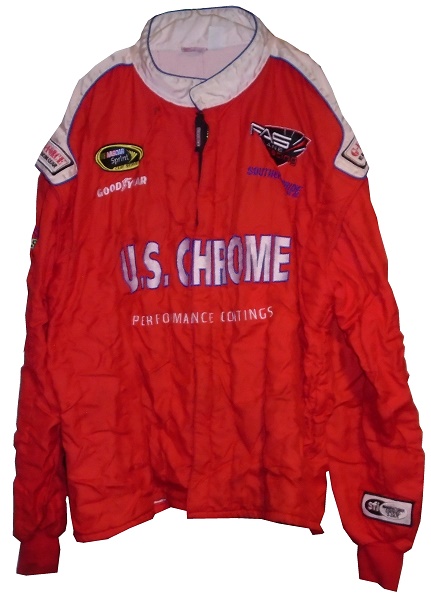
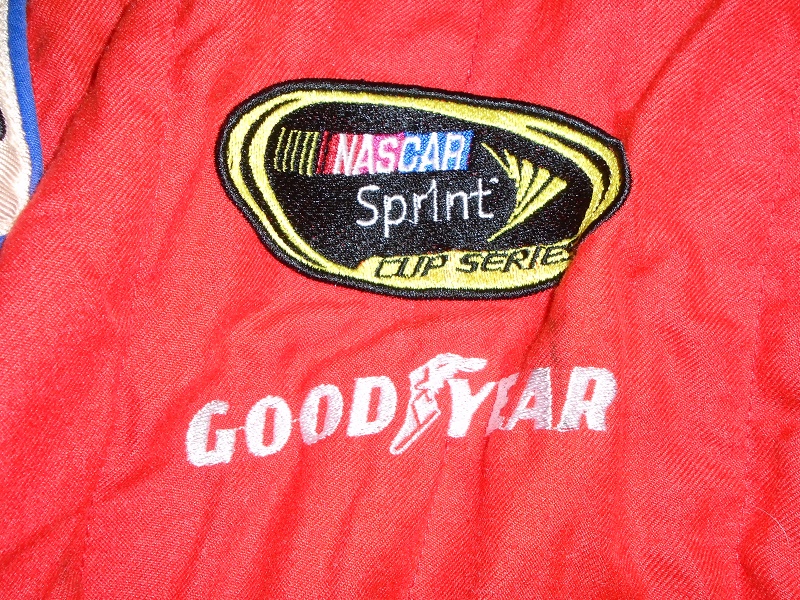
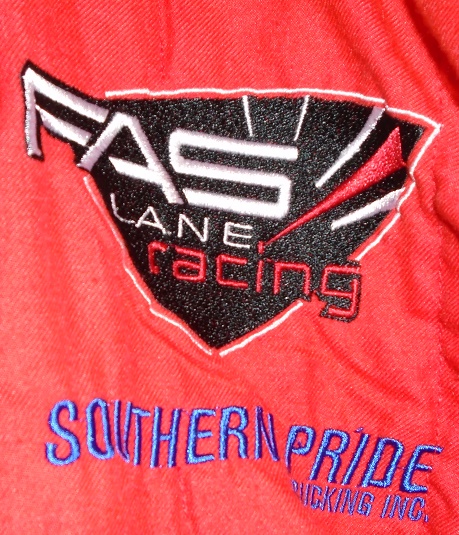
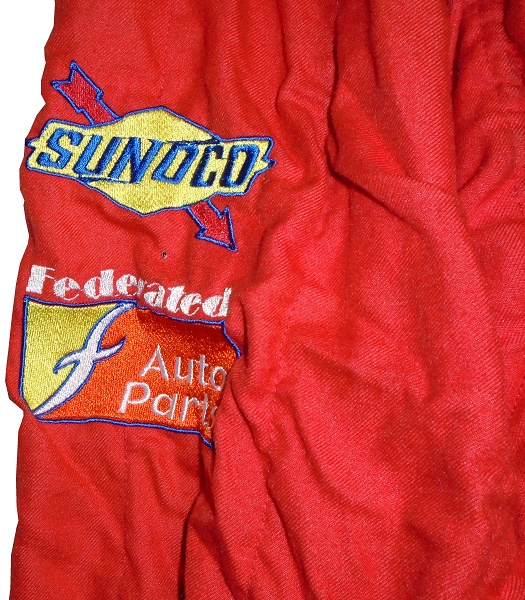
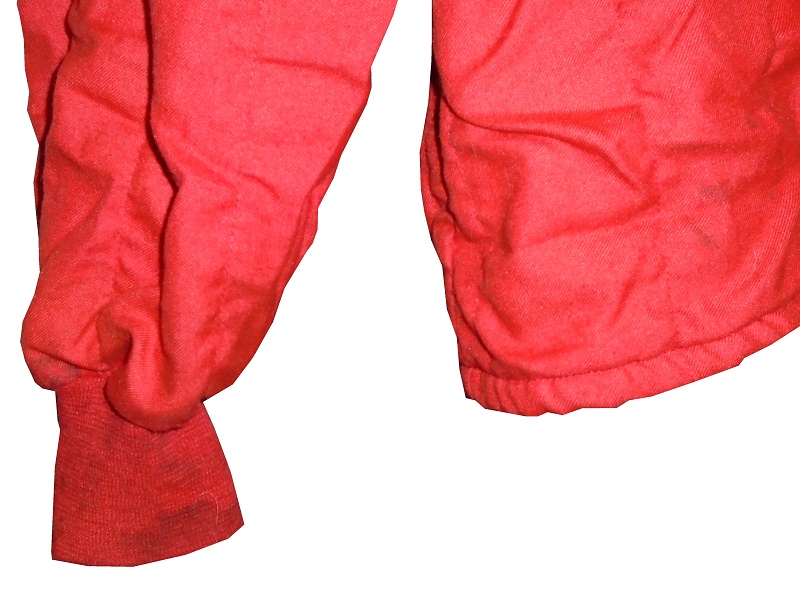
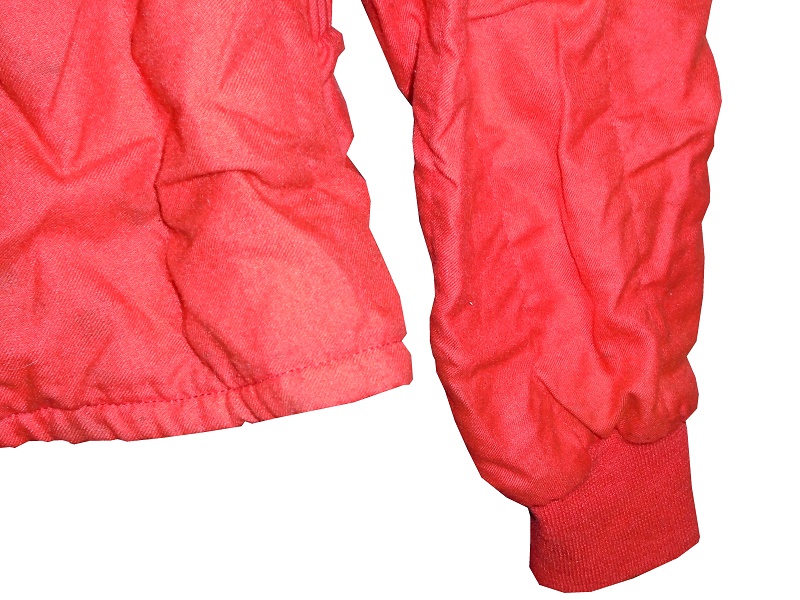
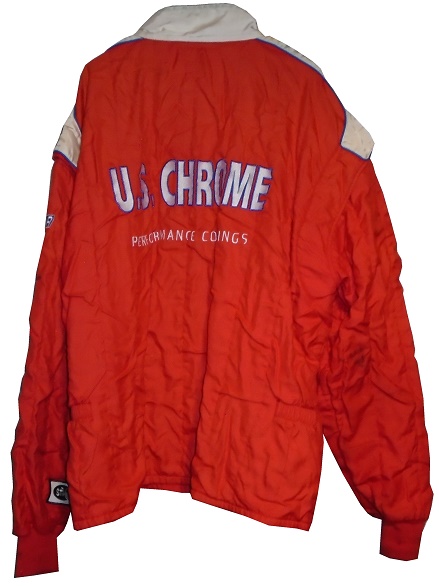
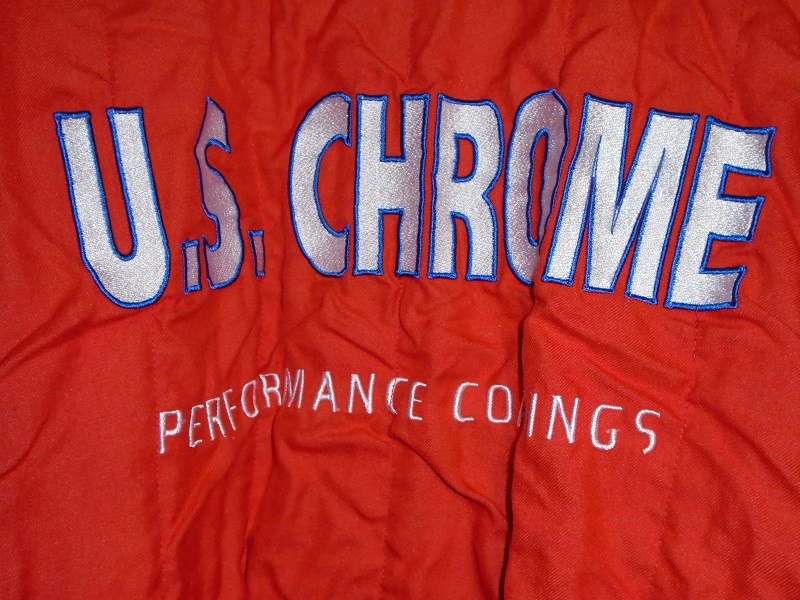
One of FAS Lane Racing’s sponsors during their first seasons was US Chrome. US Chrome sponsored Mike Bliss, Terry Labonte, and Ken Schrader in 2011. US Chrome also sponsored T.J. Bell, Mike Bliss, Ken Schrader, ans Timmy Hill in 2012. During those seasons, a crew member wore this double layer G-Force pit crew jacket. The jacket shows a decent amount of use, with scuffs and stains.The collar is of the standard variety.The cowl has a warranty label, and has care instructions. The name ABNER is embroidered into the collar. The right chest has a NASCAR Sprint Cup Series logo, and a GOODYEAR logo embroidered into it.The left chest features a FAS LANE RACING logo, and a SOUTHERN PRIDE logo embroidered.The front torso features a U.S. CHROME PERFORMANCE COATINGS logo embroidered in white and blue on the red material.The shoulders feature epaulets in white outlined in blue. A G-FORCE PRO SERIES RACING GEAR patch is present year the arm gusset. The right sleeve features a SUNOCO logo and a FEDERATED AUTO PARTS logo embroidered on the top of the sleeve, but nothing in television position. The left sleeve features a C&J ENERGY SERVICES logo and a NASCAR logo embroidered on the top of the sleeve, but nothing in television position. The back of the suit shows some light wear.The back of the neck is unadorned.The back torso features a U.S. CHROME PERFORMANCE COATINGS logo embroidered in white and blue on the red material.Next week, another pit crew jacket.

Another Look At Podium Caps Part 2

By David G. Firestone

Hailing from Arras, France, Frédéric Makowiecki has been a staple on the endurance racing circuit since 2010. He has numerous wins in endurance racing, including winning the 2013 FIA World Endurance Championship. He has raced in a number of racing series, including the Blancpain GT Series Endurance Cup, the Weathertech SportsCar Championship the GT1 World Championship, Super GT, and the 24 Hours of Le Mans.

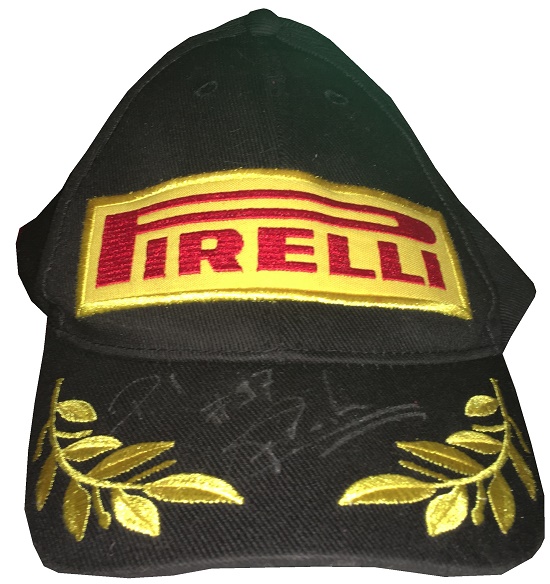
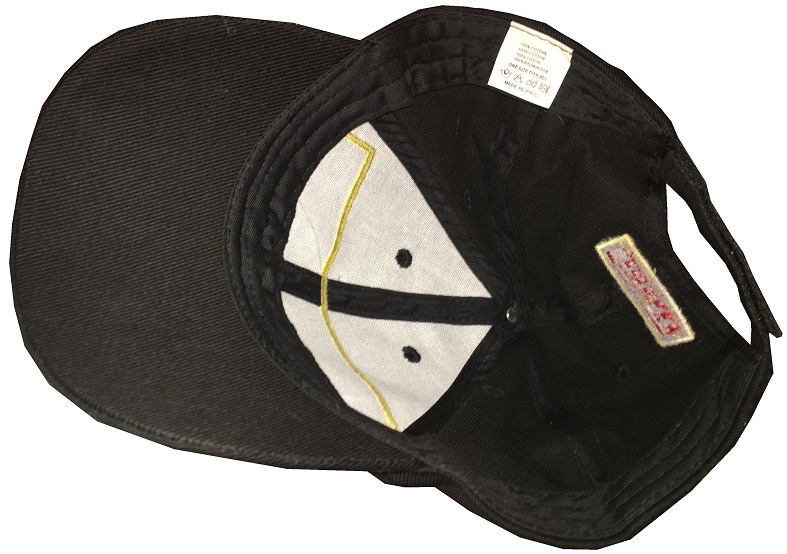
The 2013 Blancpain Endurance Series featured 5 races. The first three, Monza, Silverstone, and Le Castellet had a duration of three hours. The fourth race, the 2013 24 Hours of Spa, was a 24 hour long race, and the final race, held at the Nürburgring had a distance of 1000 km (621.371 miles). At the Silverstone event, Makowiecki, along with Stefan Mücke, and Darren Turner won the event, driving the Aston Martin V12 Vantage GT3 of Aston Martin Racing 86 laps for a distance of 314 miles. On the podium, Makowiecki wore this cap, which he later signed.  The cap shows light use, having only been worn once. There is a large PIRELLI logo embroidered on the front. Makowiecki has signed the brim in silver Sharpie.The left side features a plant design on the brim, and I have no idea what the name for that is. Otherwise, the left side is unadorned.The back of the cap features a smaller PIRELLI logo embroidered above the Velcro closure.Like the left side, the right side features a leaf design on the brim, and is otherwise unadorned.The top of the cap features a black squatchee.The inside of the cap features a care tag, and there isn’t any wear to speak of.Next week, a pit crew jacket.