The Face-Shield Project Part 1-NASCAR Face Shields

By David G. Firestone

While helmets have been around since the beginning of auto racing, full face helmets are a relatively new phenomena, having only come around since the late 1960’s. With the advent of full-face helmets came the visor. Visors or face-shields, are clear pieces of plexiglass that cover the open area of the helmet. In addition to keeping wind and rain out of a driver’s eyes in open cockpits, they also shield the driver’s face from fire, and can be tinted for racing in sunlight. Each form of auto racing has their own quirks when it comes to face-shields. Face-shields are designed to snap closed, and they all feature holes for the connection to the helmet, holes to keep the visor closed, and handles to help open the visor. This week we will look at NASCAR face shields.

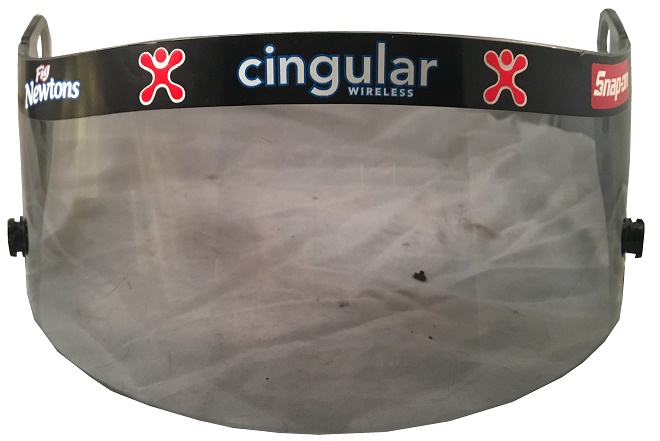
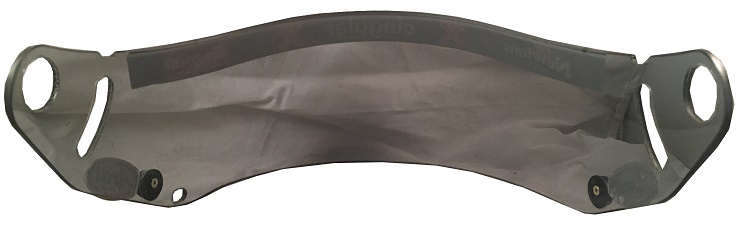
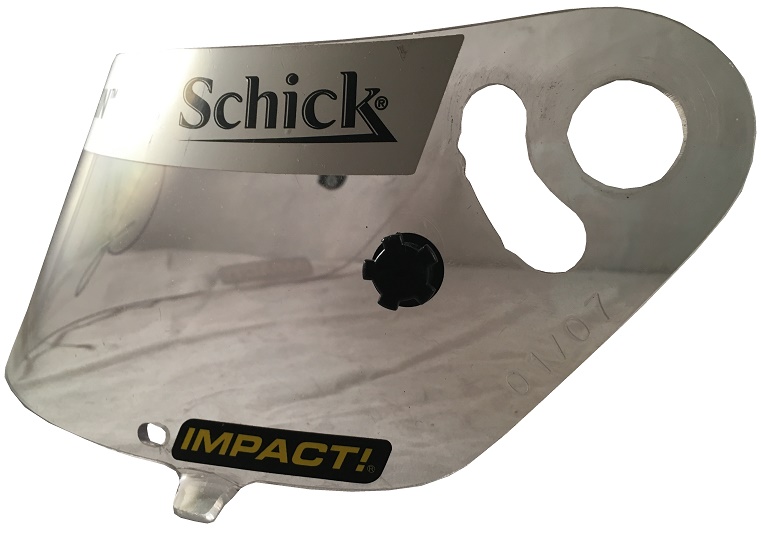
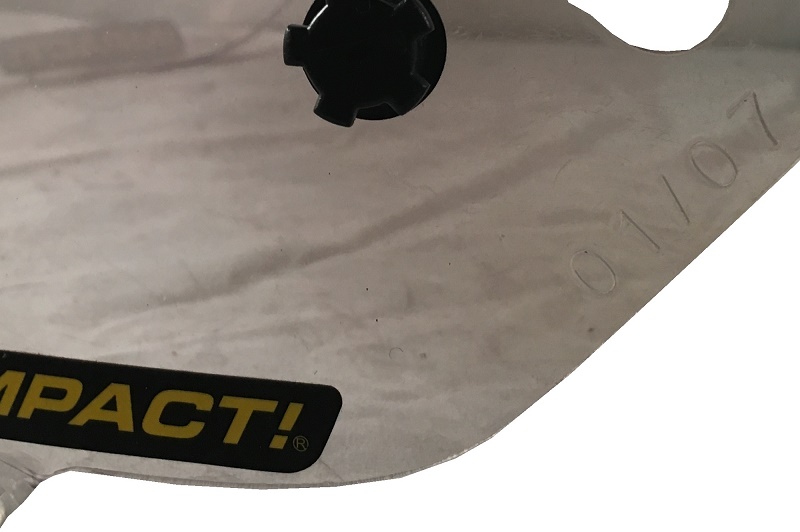
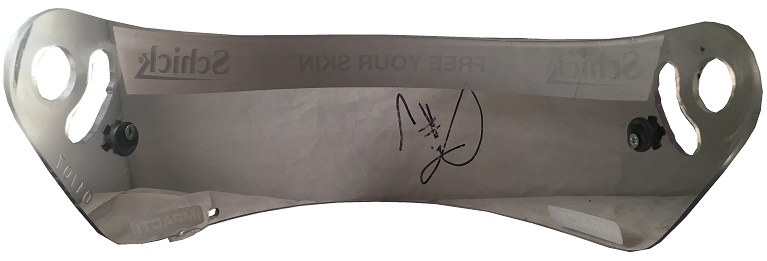
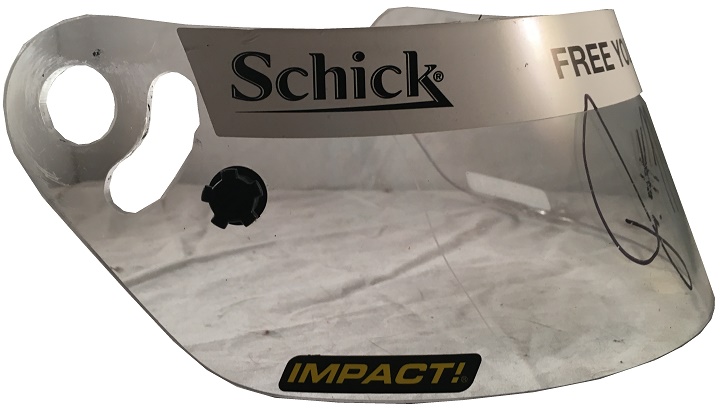
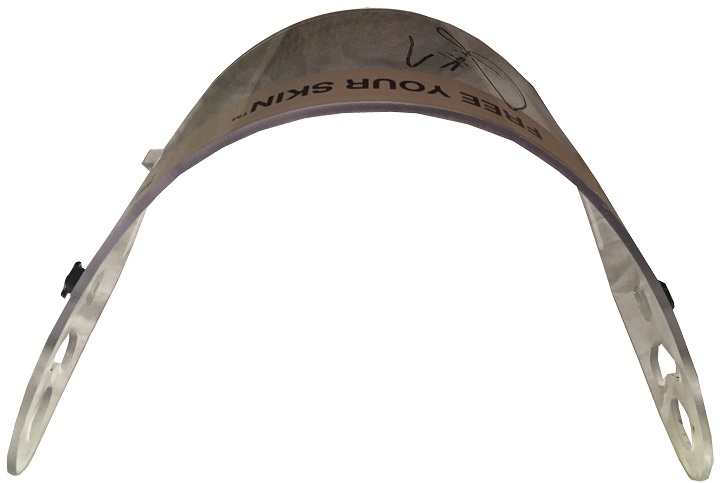
NASCAR face-shields are made for cars with enclosed cockpits. They typically come in clear, or have some kind of tint. For day to night races, the face-shield can have a tinted tear-off that can be removed when it gets dark. Sponsors will also place their logos on the shield on the area that is over the edge of the helmet, as evidenced by this Jeff Burton tinted Arai visor from his RCR days. The face-shield is in decent condition. This clear Impact face-shield is from JR Fitzpatrick, during his NASCAR days. It is in decent condition, has a manufacture date of 01/2007, and has been signed by Fitzpatrick. Next week, the face-shield discussion continues with NHRA face shields.

How I Spent My 2020 Vacation

By David G. Firestone

Just a brief post this week, and a day late. Well, another summer vacation come and gone again. This year was much different, as most of the things I wanted to do were canceled due to COVID-19. Since there was racing, I did get to enjoy it. I also put a lot of work into YouTube videos. I did two box breaks, I can’t count how many sampling videos, and even produced my new mini series. Those will come out in due time.

When it comes to The Driver Suit Blog itself, I have had to make a series of hard decisions. I’ve tried to reverse course, but I now have to accept that The Driver Suit Blog can’t continue in its current form after 2020. I simply do not have the time and resources to keep going. I will still work on The Driver Suit Blog, though I will do a lot more revisited articles, and cut back on Friday Features. This was a heavy blow, as I really love The Driver Suit Blog, but in the end, I have to make the right decision.

Next Week, The Face-Shield Project begins.

What Does A Playbook Have Inside?

By David G. Firestone

Editor’s Note: I am on Vacation until August, so I have prepared some Friday Features in advance.

Regular readers will know that I am an NFL fan. I collect NFL stuff in addition to NASCAR stuff. I have several toss coins, an endzone pylon, and some turf. I’ve had jerseys and helmets over the years as well. I recently found something that I just had to purchase.

The world of football was a much different place in 1964. There were two leagues, the NFL and the AFL. The first Super Bowl between the two wouldn’t take place until 1967. In 1964, the AFL consisted of a total of 8 teams in two divisions. The Eastern Division was made up of The Boston Patriots, The Buffalo Bills, The Houston Oilers, and The New York Jets. The Western Division had The Denver Broncos, The Kansas City Chiefs, The Oakland Raiders, and the San Diego Chargers. The 1964 AFL Championship took place at the War Memorial Stadium in Buffalo, New York. The game saw the Buffalo Bills beat the San Diego Chargers 20-7.

The 1964 Oakland Raiders were not a great team. They went 5-7-2 over 14 games. They had a couple of all-stars but really didn’t do much. These are a set of pages from the playbook of former wide receiver Bill Miller. They are in good condition, and don’t show any wear.

Next week, how I spend my summer vacation.

To Boot or Not to Boot…That is the Question-Revisited

By David G. Firestone

Editor’s Note: I am on Vacation until August, so I have prepared some Friday Features in advance.

I love exploring and discussing the lesser-known aspects of driver suits, and one thing that most fans don’t get to see are the cuffs are the end of the legs. In NASCAR, that is because there is a design feature in suits called the “boot cut.” As seen above, the boot cut features a cuff within a cuff. In NASCAR this is not just for aesthetic reasons. NASCAR, and other stock car classes feature the engine in front of the driver. In the very likely event of an engine catching fire the cuff helps keep the driver’s legs protected.

The other style of cuff is just called “cuff.” I’m going to call it a standard It is a predominant feature seen in many suits, including F1 and IndyCar suits. Since the engine and fuel tanks are located behind the driver, and because of the restricted space within the driver compartment, the cuff style is a popular choice. On occasion, cuff cuts can be seen on NASCAR suits as well. Early NASCAR suit feature cuff cuts, but in the 1980’s, the boot cut became the preferred choice. In the NHRA you see it a lot in the upper echelons, Top Fuel, Funny Car, and Pro Stock. I also see it in the semi-pro ranks. For drivers in other classes, as in different sanctioning bodies, it is left up to the driver. Some drivers prefer the standard cuff, some prefer the boot cuff.

Next week, something really cool…

Wire Copy…A Former Mainstay of American Media

By David G. Firestone

Editor’s Note: I am on Vacation until August, so I have prepared some Friday Features in advance.

The nature of racing media has changed. Traditional media is still present, but there are so many new ways of delivering the news, that it seems that changes happen almost every race. One thing that isn’t as previalnt anymore is wire copy. Wire copy is news sent via wire to news rooms. The news room will then take the wire copy, and edit it for broadcast. The old AP wire system would send news on everything from politics to sports. With newer technology comes better ways to transmit news.

The 1988 12 Hours of Sebring was rather uneventful. Klaus Ludwig and Hans-Joachim Stuck won the race driving over 1,300 miles in a Porsche 962 for Bayside Disposal Racing. There were some other events, both at the track, and in the news, with the murder of Mickey Thompson and his wife orchestrated by business partner Michael Frank Goodwin. These are some wire notes from throughout the weekend. They are incomplete, and show heavy wear. Next week, I revisit a classic article.

Exploring Chicago-History Through Food

By David G. Firestone

Editor’s Note: I am on Vacation until August, so I have prepared some Friday Features in advance.

Chicagoans are passionate about their city, their sports, and their food. Whether you are enjoying a Cubs game with an Old Style and a Maxwell Street Polish, or a White Sox game with a large slice of Pizzeria Uno, with some Goose Island, food is an integral part of the Chicago experience.

Now a true Chicago-style hot dog has a water simmered or steamed Vienna Beef hot dog on a S. Rosen’s Mary Ann bun. The high-gluten bun is meant to stand up not just to the toppings, but also to the steaming or simmering of the dog. Topping the dog you have yellow mustard; chopped white onions; bright green sweet pickle relish; a dill pickle spear; tomato slices or wedges; pickled sport peppers; and a dash of celery salt…a real drag it through the garden experience. A true Chicago-style hot dog is made with a Vienna Beef hot dog, and the Vienna Beef Cafe and factory store, which was located at 2501 North Damen Avenue in Lincoln Park was really the mecca for Chicago-style dogs. This was the factory store for Vienna Beef, and nowhere in Chicago were you ever be able to get a fresher hot dog. The next stop is Uno Chicago Grill. Located in the River North Neighborhood at 29 East Ohio street, this mecca for Chicago-Style Pizza fans is the originator of Chicago-Style Pizza. This location is the place where it was born. Founded in 1943 by Texas football star turned business man Ike Sewell, the restaurant has been synonymous with Chicago since the beginning.

Chicago-Style Pizza is just as synonymous with Chicago, if not more. Like Chicago-Style hot dogs, Italian beef, and Maxwell Street Polish sausage, it is treasured by Chicagoans and although sold in many other cities, it is perfect when enjoyed in the Chicago area.  The most traditional way to order a pizza is the “Numero Uno” which features fresh Italian Sausage, pepperoni, mushrooms, green peppers and onions. The crust is much thicker than most pizzas, and is baked somewhat before the toppings are added. When the toppings are put on, cheese goes on the bottom, the toppings are added second, and then the sauce is added on top of the toppings. Stuffed pizza is a variation where after the toppings, a layer of dough is added on top before the sauce. Now for another Chicago favorite, The Maxwell Street Polish Sausage. Chicago has one of the biggest Polish communities in North America, and this classic staple comes from Chicago’s Polish Heritage. The Mecca for this particular Chicago favorite is located near the Dan Ryan Expressway.

Jim’s Original, which was opened in 1943, is considered by many to be the originator of the Maxwell Street Polish Sausage. Macedonian immigrant Jimmy Stefanovic create the meal at the Maxwell Street Market. The original location was torn down in 2005, and Jim’s Original moved to Union Street. Another popular item is a bone-in pork chop sandwich, which was also popular at the old Maxwell Street Market. The traditional way to cook a Maxwell Street Polish Sausage is to flat-grill a 1/3 piece of Polish sausage, typically made by Vienna Beef or Bobak. To assemble the sandwich, bright yellow salad mustard is coated on the inside of a hot dog bun, then the Polish sausage is placed inside. On top of this, grilled onions are added. The sandwich is rolled in paper with some hot sport peppers, and placed in a paper bag with fried. This is traditionally enjoyed with a Wildwood Grape soda.Located next door to Jim’s Original is The Express Grill. The other restaurant claiming to be the originator of the Maxwell Street Polish Sausage is The Express Grill, which was founded by Tomislav Lazerevski, a relative of Jimmy Stefanovic in the 1950’s, and was located right next door to Jim’s Original. When the Maxwell Street Market was torn down in 2005, The Express Grill moved right next door to Jim’s Original, as it was in the Maxwell Street Market. Both of these outdoor sausage stands have no seating area, just a metal stand to rest your food on while you are eating, while the unmistakable scent of Polish sausage and grilling onions fill the air. Both locations are mirror images of each other, and have identical menus, products and prices. The taste is one of a kind, and when you eat there, you are eating a piece of Chicago history.

Last, but certainly not least is an Italian Beef sandwich. While there are a number of differing stories concerning the origins of Italian Beef, there are two commonly accepted stores. The first is that many Italians who worked in the stock yards of Chicago created the recipe to make inexpensive tougher cuts of beef that they brought home from work much more palatable. Another commonly accepted theory is that the method was created for weddings to make a roast last for all attendees to enjoy. Regardless of how it came to be, the best place is Al’s Italian Beef.

Italian beef is made of seasoned roast beef, sliced very thin, and simmered and served au jus and a combination of garlic, oregano, and a series of mix of ingredients. After preparation, the beef is placed on an Italian-style roll. The bread is often dipped into the au jus the meat is cooked in. Italian beef sandwiches are typically topped off with Chicago-style giardiniera or sauteed, green Italian sweet peppers. Giardiniera is an Italian or Italian-American relish made from pickled vegetables in vinegar or oil. There are two types of giardiniera , hot and sweet. Many places that sell Italian Beef make their own giardiniera. Some places serve “gravy bread” which is simply a piece of Italian bread dipped in the au jus, which Chicagoas refer to as “gravy.”

Opened in 1938, Al’s #1 Italian Beef was opened by Al Ferrei, his sister Francis, and her husband Chris Pacelli Sr. They side with the wedding story for the origin of Italian Beef. When they realized that people really liked their beef, they started selling to local business and hospitals. Eventually, they opened a location on Taylor Street, since the demand for their food was high. As you stand in the original Al’s, again, the sights and scents give you the felling that you are going to taste Chicago history. To enjoy an Italian Beef sandwich, Al’s recommends that you use the Italian Stance” in which your feet are 2 ½ feet from the counter, your elbows are on the table, and your mouth is wide open. They claim it is to prevent damage to your shoes. Here is what it looks like.For all of Chicago’s problems, I still call it home!

Next week, some notes from the 1988 12 Hours of Sebring

The Vest Project Part 23-The Rise Of Atreus!

By David G. Firestone

Rusty Wallace is a household name when it comes to NASCAR. With 55 wins and the 1989 Winston Cup Series Championship. Wallace is a well known and respected driver, who also had thrown his hat into team ownership. He owned a team in 1985, but closed it by 1992. He reopened it in 2004, raced in the Xfinity Series until 2013.

Rusty comes from a racing family. His brother Kenny and son Steven have both had racing careers. Kenny has nine wins in the Xfinity Series in 26 years. Steven had some wins in ARCA, but nothing of note in Xfinity. In 2008, while racing for Rusty Wallace Racing, he was sponsored by Atreus Homes & Communities for 14 races. During those races, he scored two top 5’s and three top 10’s. One member of his pit crew wore this Impact vest. The vest has some stains, but is in good condition.The collar doesn’t have a Velcro closure, and has ATREUS HOMES & COMMUNITIES logos embroidered. There is no tag in the cowl.The right chest features NASCAR NATIONWIDE SERIES, CHEVY, and GOODYEAR logos embroidered.The left chest features ATREUS HOMES & COMMUNITIES, JIMMY JOHN’S and JOINAPS.COM logos embroidered.The front torso has a large red ATREUS HOMES & COMMUNITIES logo embroidered.Inside the zipper is the Impact warranty label, with the name LOMBARDI written in Sharpie.The hems have comfort straps at the bottom, under the arm holes. The shoulders have epaulets with ATREUS HOMES & COMMUNITIES logo embroidered. There are holes for the sleeves. The back of the vest has some light stains.The back of the neck has a small Rusty Wallace Racing logo embroidered.The back torso features WWW.RUSTYWALLACE.COM and ATREUS HOMES & COMMUNITIES logos embroidered.So that’s all for this week, I’m going to take my annual July vacation. I will still post stuff, just not as often, and I’ll see you in August!
Back To Racing School

By David G. Firestone

Some race car drivers are born, other as made. Racing school is a place for driver to hone their skills. John “Skip” Barber III is a former F1 and SCCA driver. While we won 3 SCCA National Championships in a row, his F1 and IndyCar careers were not stellar. After his racing career ended, he taught four students to race in 1975. 45 years later, Skip Barber Racing Schools owns 130 cars and operates at over 30 tracks over North America. They are one of the best-known racing schools of all time.

Fire is an ever present threat in auto racing, including auto racing school. Skip Barber issued suits to their students. These were lightweight, and were inexpensive. This 1980’s-1990’s Pyrotect suit is one example. The suit does show decent use, not surprising for a lightweight suit.The collar has a Velcro closure, and a PYROTECT logo is sewn on the closure. There is nothing inside the cowl. The right chest features a BOSCH SPARK PLUG patch sewn into the tan material, and a SKIP BARBER RACING SCHOOL patch sewn into the white stripe.The left chest features a T/A RADIALS BF GOODRICH sewn into the upper tan area, a PYROTECT logo sewn on the black stripe, a BMW patch and a KONI patch sewn into the white stripe, and an EASTERN logo sewn into the lower tan area of the torso.The warranty label and the wash instructions are located inside the front of the suit.The belt on the suit is unadorned on the outside, but there are a couple of red patches sewn inside the belt, indicating this suit is number 48. The tan legs have standard cuffs, and a red stripe.The shoulders have straps to help pull the driver out of the car in case of a crash. The right sleeve has PYROTECT and PBI patches sewn into the white stripe. The end of the sleeve is unadorned. The left sleeve has PYROTECT and PBI patches sewn into the white stripe. The end of the sleeve is unadorned. The back of the suit shows some wear in the form of stains and scuffs.The back of the neck is unadorned.The back torso features a large SKIP BARBER RACING SCHOOL patch sewn into the upper part, and a BF GOODRICH T/A RADIALS patch on the lower part of the torso.Next week, The Vest Project continues!

The Most American of Head Coverings

By David G. Firestone

Going a bit off topic, and on topic at the same time. I don’t think there is any other head covering that is as ubiquitous as the baseball cap. Every major sport markets caps to some extent, some using them on the sidelines or even in play. Baseball caps are a popular item for fans, and collectors alike. Even in auto racing, caps are ever present. Drivers wear them for interviews, and in victory lane. But instead of a racing cap, today, I’m going to discuss a game-worn baseball cap I picked up in St. Louis.

Hailing from Winter Park, Florida, Derek Lilliquist was selected sixth in the 1987 Major League Baseball draft. After some time in the minors, he was called up by the Atlanta Braves in 1989. He was traded to the Padres in 1990, where he lasted until 1991. In 1992, the Indians claimed him off waivers, and as a relief pitcher, he put up career best numbers. He lasted with the Indians until 1994, when he signed with Boston, and he never reclaimed his previous glory. He last played for the Reds in 1996.

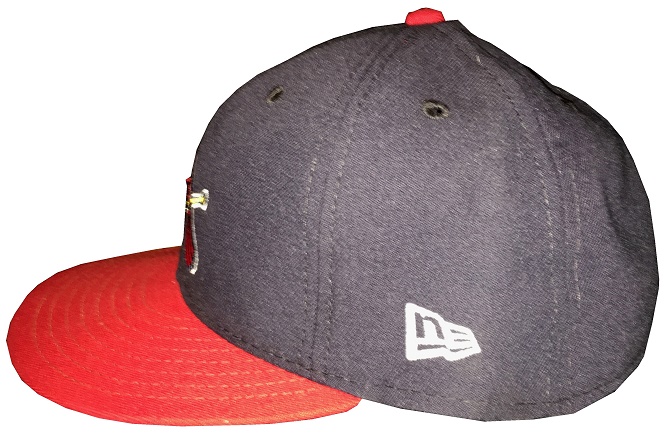
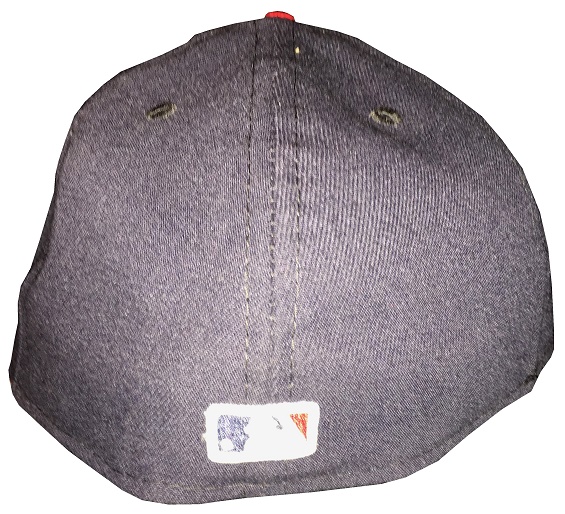
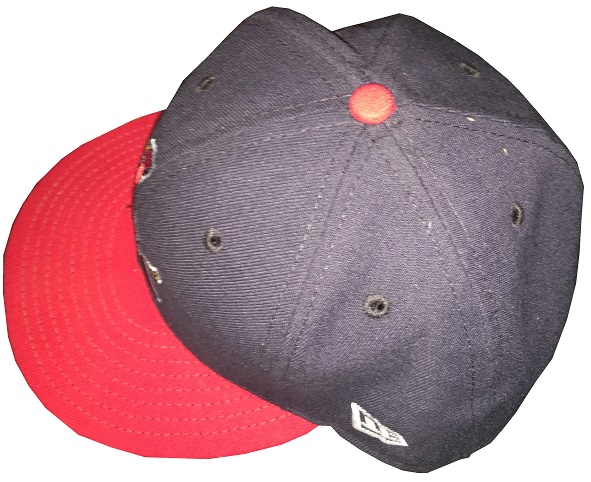
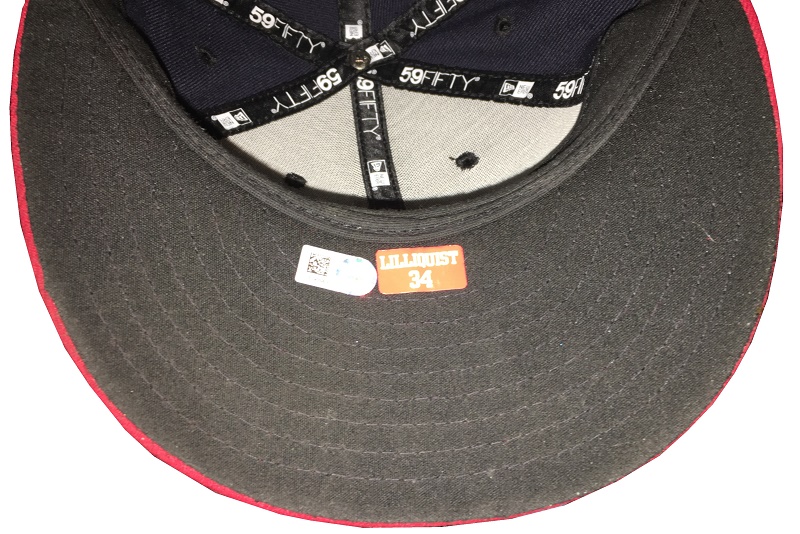
In 2002, he became a pitching coach for the Johnson City Cardinals, and by 2011, he was the pitching coach for the St. Louis Cardinals, a position he held until 2017, when he signed with the Nationals, where he was fired at the end of the 2019 season. During his final year with the Cardinals in 2017, he wore this Sunday Alternative hat. This size 7 3/8 MLB authenticated New Era hat shows light use. According to the MLB, this was worn on on April 2 and July 9, 2017.The left side features a NEW ERA flag logo embroidered into the blue material.The back of this fitted cap features a Cardinals team colored MLB logos embroidered.The right side is unadorned.The top of the cap features a red squatchee.The inside of the cap features light stains.The underside of the bill features a sticker reading LILLIQUIST #34 to the right of the MLB Authentication.That was a short one this week, so lets do some…

TAILGATING TIME!

Mustard Seasoned Pork Roast

6 Servings

Ingredients:

2 1/2 pounds boneless pork loin

Pepper

2 small finely chopped onions

3 sprigs of finely chopped parsley

3 tablespoons mustard (dry mustard mixed with water)

1/2 teaspoon basil

1/2 teaspoon sage

1/2 teaspoon marjora,

1 tablespoon vegetable oil

Instructions:

1-Slice pork loin in half lengthwise.

2-In a bowl, mix together the pepper, oinions, parsley, mustard and spices.

3-Spread mixture inside cut surfaces of the meat, and close meat by tying with sting.

4-Rub outside with vegetable oil.

5-Place in preheated 325 degree oven, and cook for about 2 hours.

Next week, we go to school…racing school!

The Pedregon Family One Of Drag Racing’s Greatest Families

By David G. Firestone

Before we dive into this weeks Friday Feature, I want to discuss why I reposted an old article last week. As happens sometimes, I had to deal with a couple of minor things last week, and I didn’t have enough time to get to the Friday Feature. I hate doing things this way, but real life gets in the way. Now on to the Pedregon Brothers!

When “Flaming” Frank Pedregon passed away in 1981, he had no idea his sons would become some of the most respected drivers in Funny Car. Fast forward to 2019, and one son Tony has 43 event wins, fourth on the all time win list, and two championships, and the other Cruz has 33, and two championships, including the only Funny Car championship not won by John Force in the 1990’s. The Pedregons have gone down as one the greatest families in the history of drag racing.

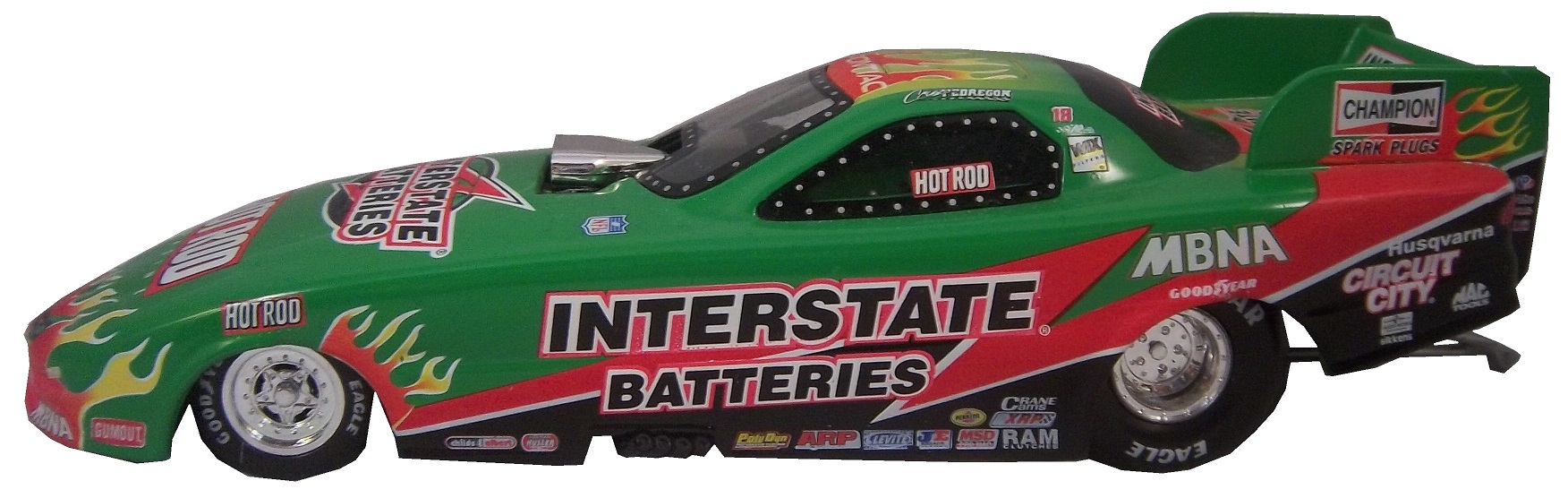
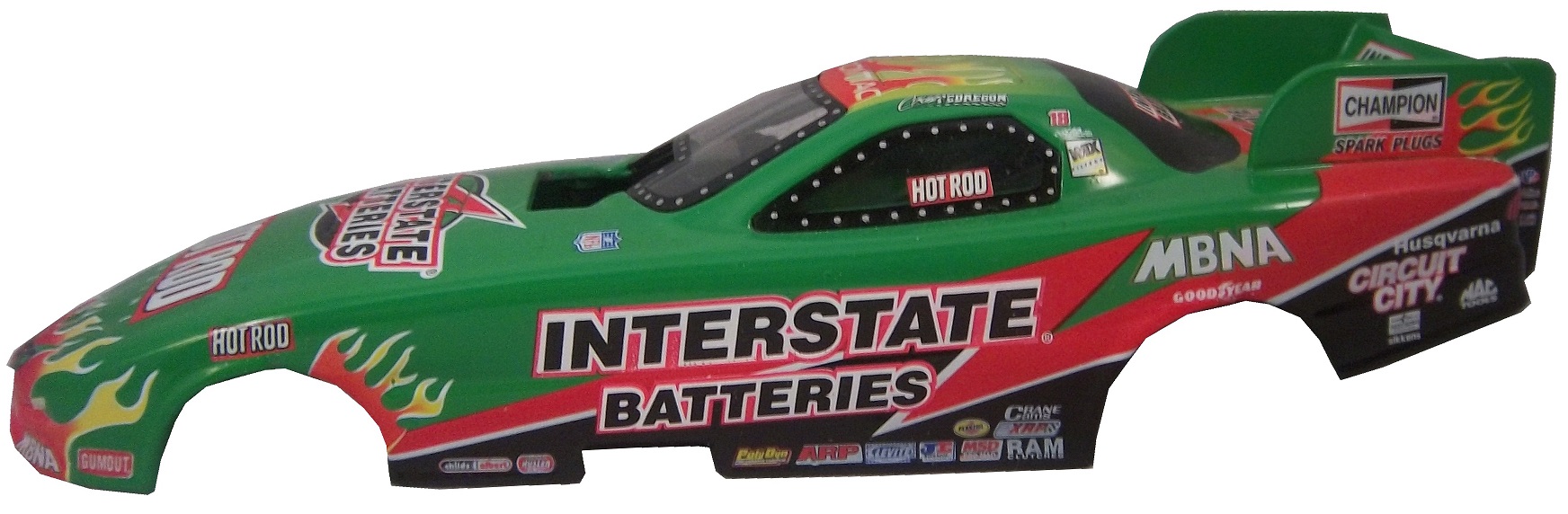
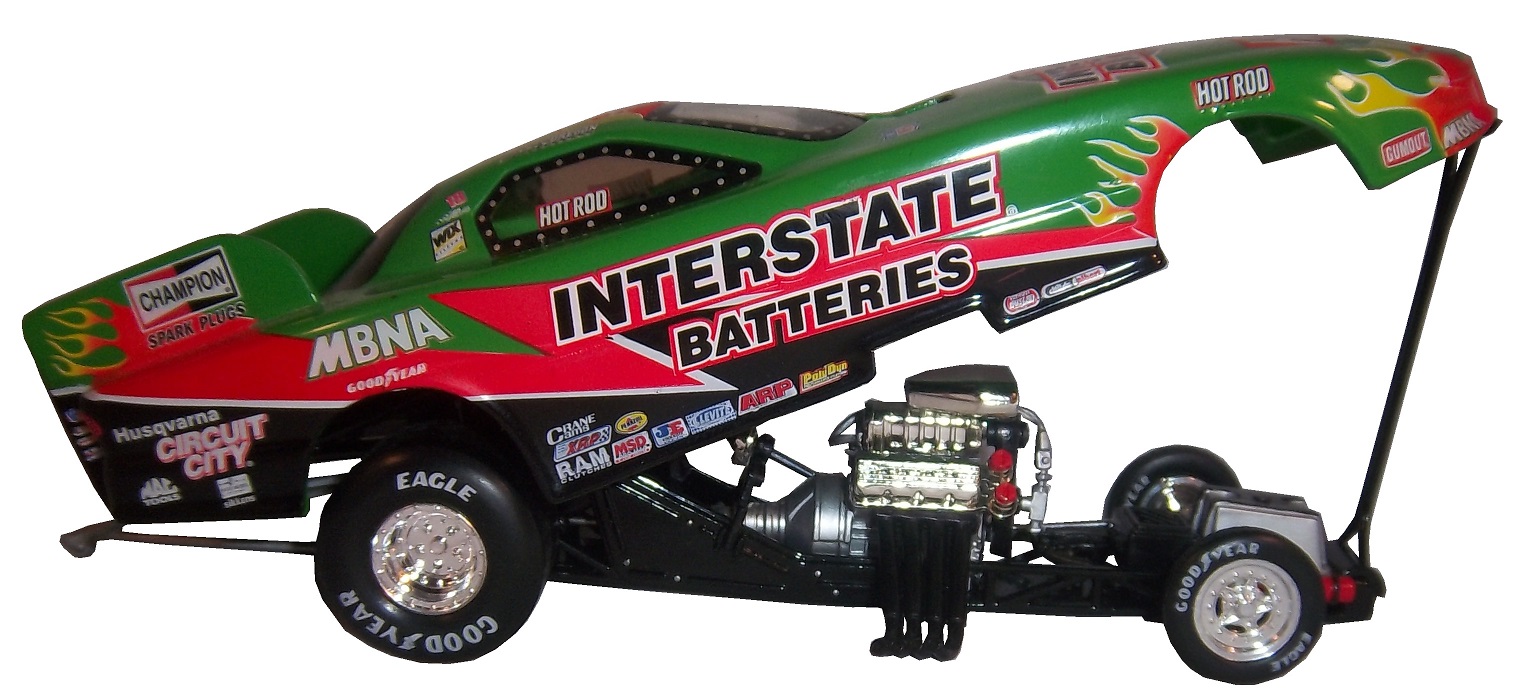
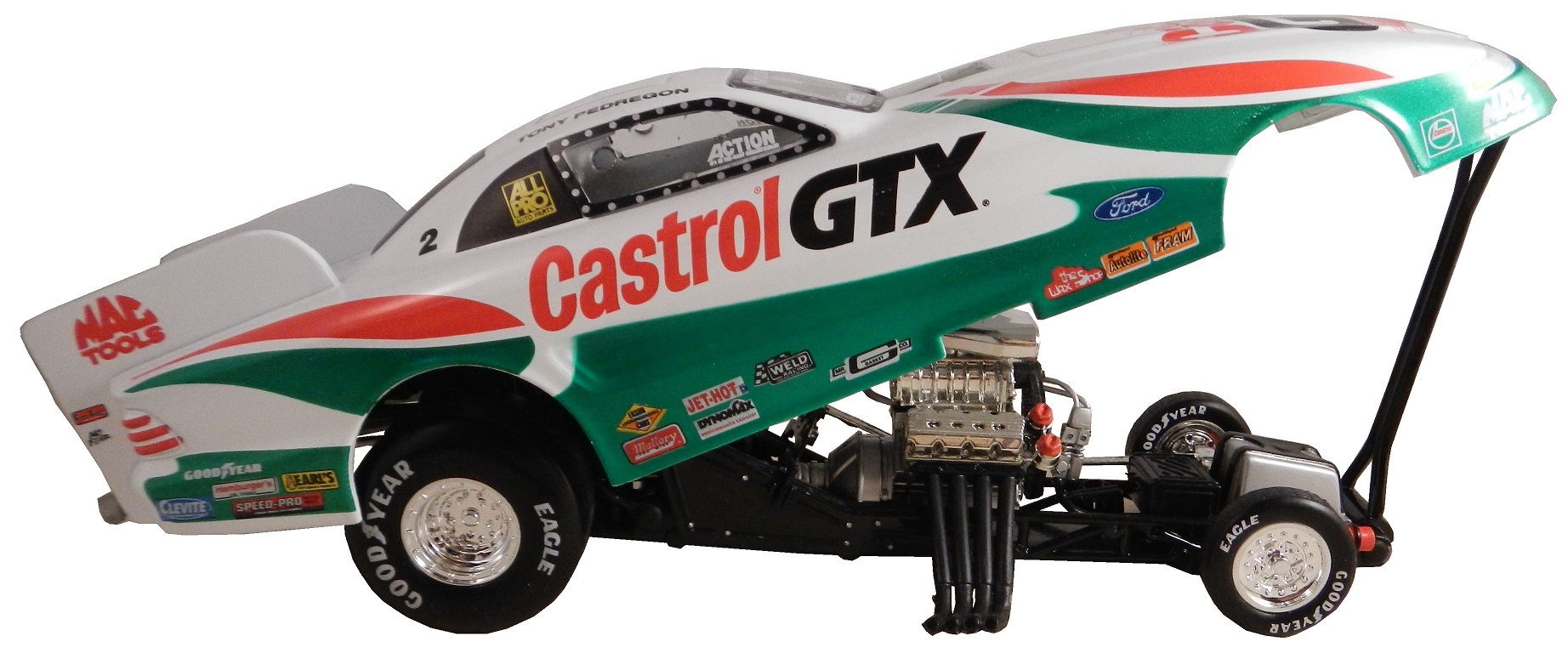
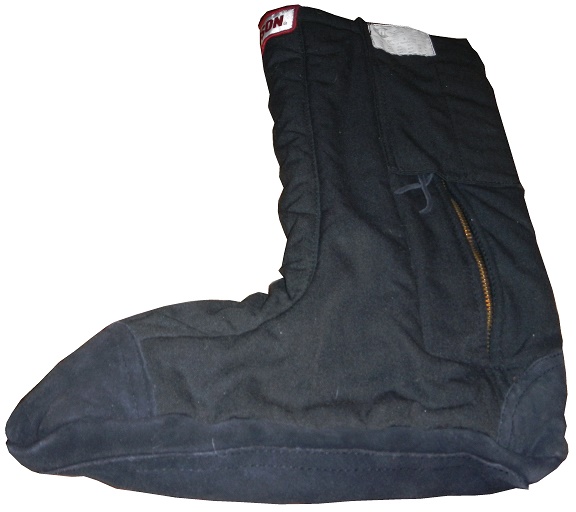
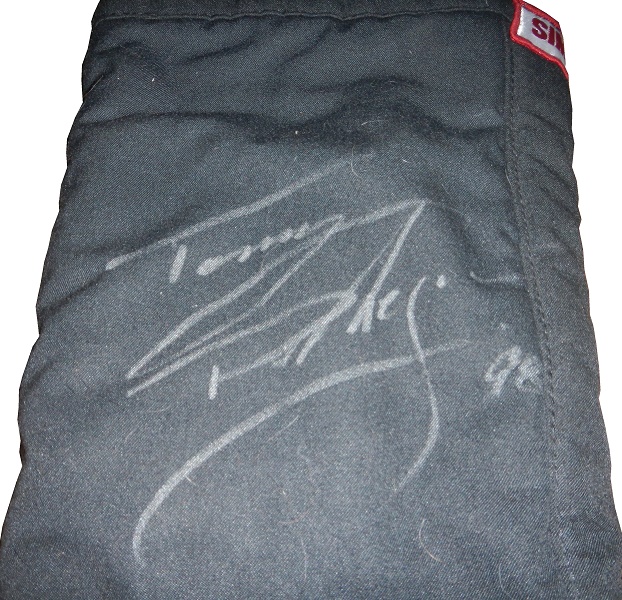
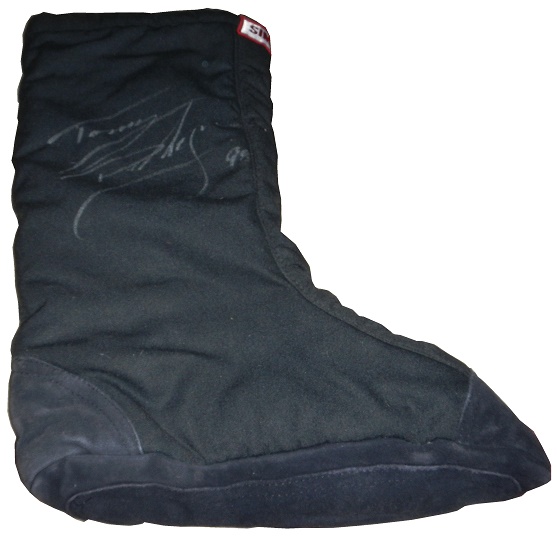
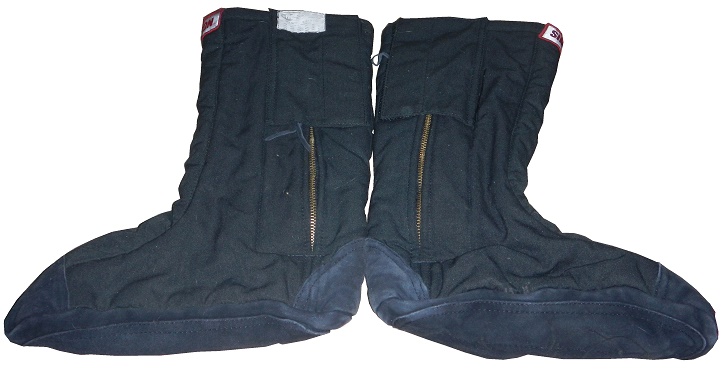
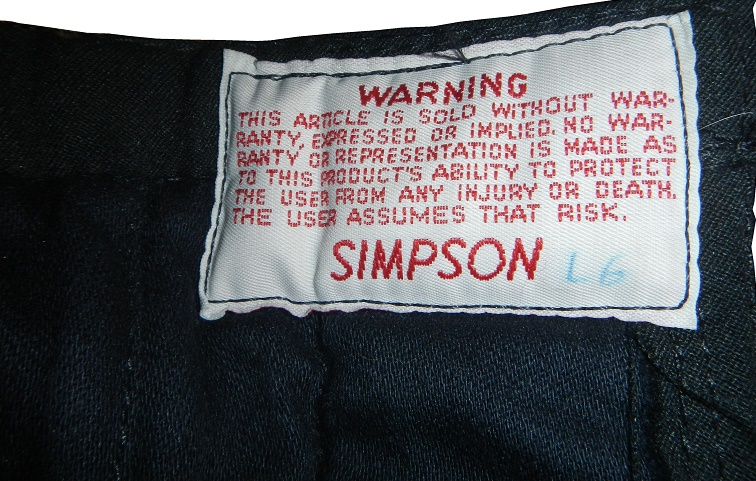
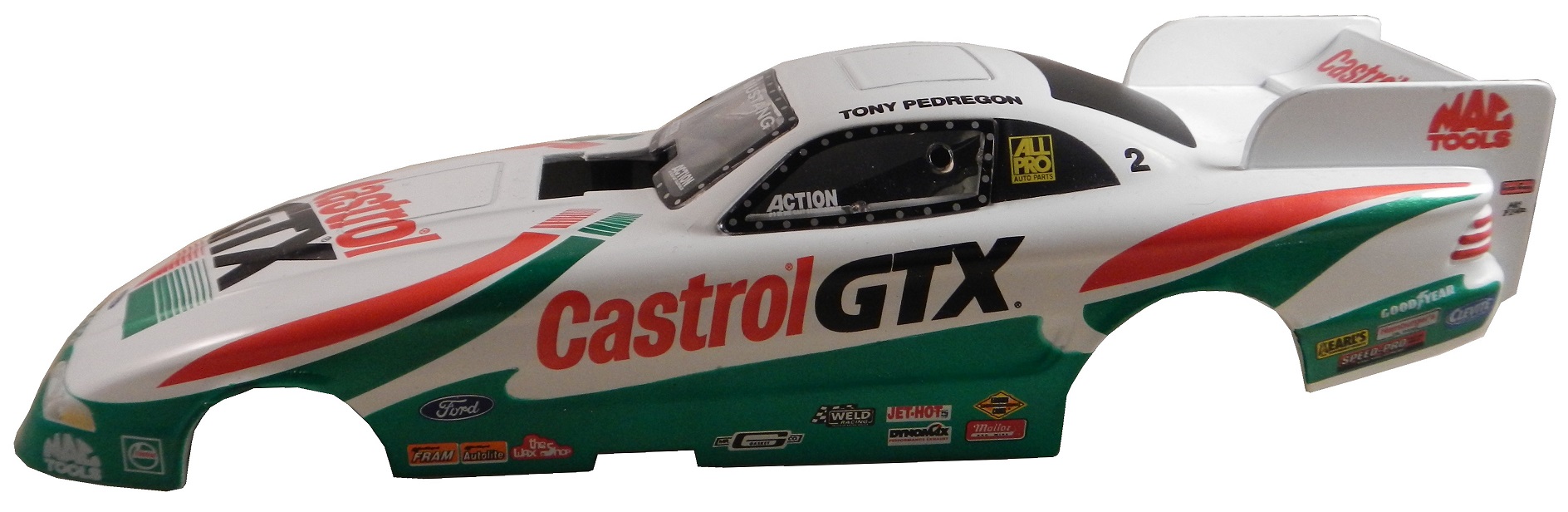
The first brother to have real success in Funny Car was Cruz. He started racing in 1987 in a top alcohol dragster, moved to top alcohol funny car, then to top fuel in 1991, and in 1992 won the Funny Car championship. The biggest rivalry in drag racing in the 1990’s was John Force vs. Cruz Pedregon. Both were driving Pontiac Firebirds for a while, with Cruz driving this Interstate Batteries/Hot Rod car, represented by this 1/32 die-cast. John Force was not going to be denied, and decided to get in Cruz’s head by hiring Tony as a driver. By 1993, both Pedregon brothers were racing in full time funny cars Tony and John did not have the best of relationships. Both John and Tony were racing the same design car, but Tony would have to, on occasion, throw a race for John. This is a 1:24 scale mock-up of his Castol funny car from his days with John Force. In 1998, Tony won 2 events, one at Texas, the other at Denver. During that season, he wore these Simpson Holeshot drag boots.These boots are unlike most racing shoes because they are designed to cover both the shoe, and the end of the leg of the driver suit. Why would funny car drivers wear such boots? Well, to answer that, let’s look at the design of the inside of a funny car. The driver sits almost on top of the rear axle, with the 10,000 horsepower engine, and nitromethane fuel tank directly in front. Should there be an engine explosion, which isn’t uncommon, the fire would blow back into the driver. There are firewalls in place, but those can’t always be counted on to protect the driver from the full effects of fire in the time it takes to get a funny car stops. That’s where these boots come in. They will give that little extra bit of help to the driver in exiting the car.  They are rated 15, not bad for 1998 standards, but would have a 20 rating in 2019. Both boots have been signed by Pedregon and he added the inscription “’98.”  In 2002, the Pedregon brothers formed Cruz Pedregon Racing, Inc., and both have had driver duties. This visor was used by one of the brothers, and autographed by both. It’s designed for a Simpson Bandit-style helmet. The Pedregon brothers didn’t use “The Clydesdale Effect” with this visor. I asked Cruz if he uses The Clydesdale Effect, and this was his response:

“I did, but honestly, to me, if your susceptible to that, you probably have something else going on. Part of your God given ability to focus, to me should be, even if something is in your vision, your focus should be the thing you are focused on, not things on the outside. I did try that at one time, and all it did was verify that I’m really screwed up.”

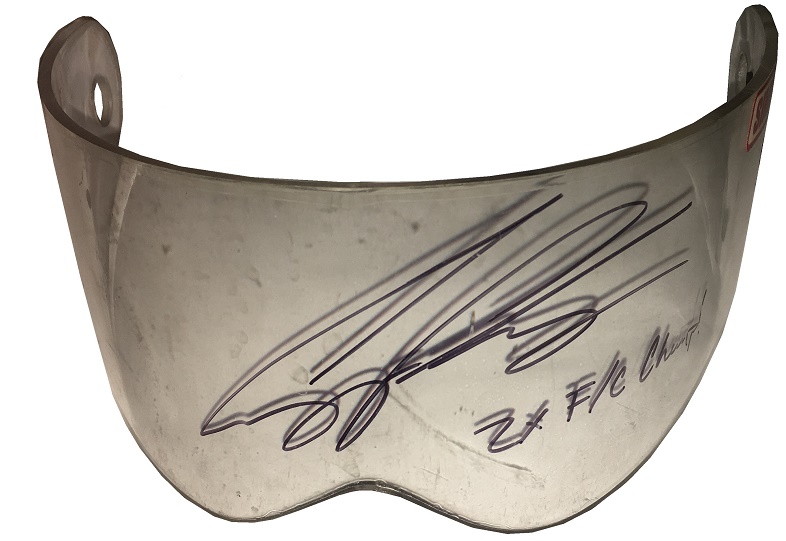
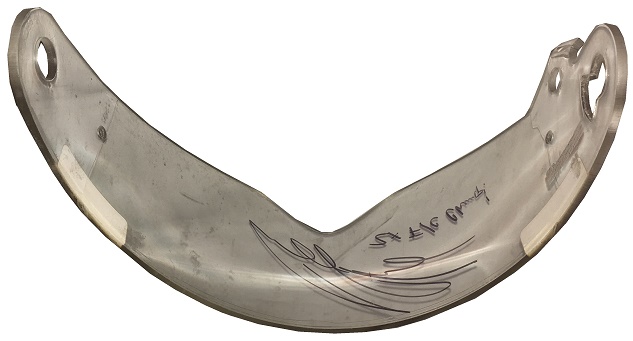
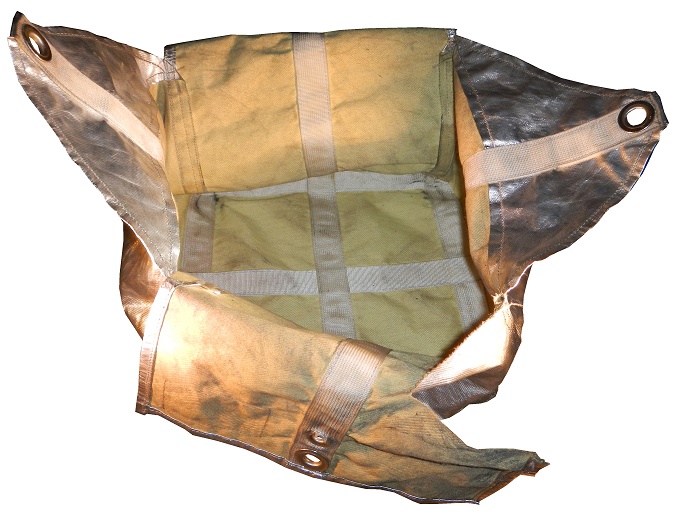
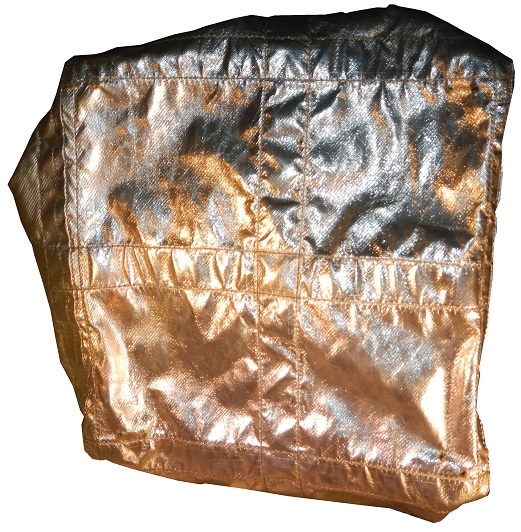
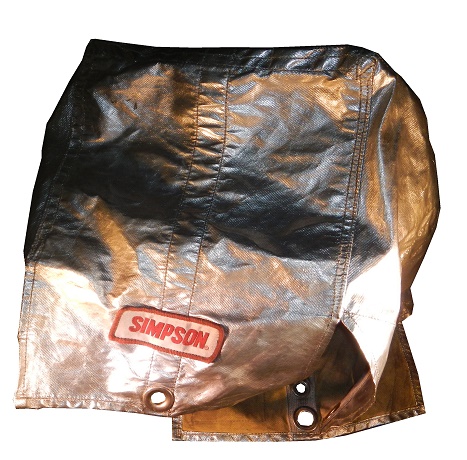
I also came across this Cruz Pedregon race-used visor. It’s a Simpson visor, which shows a number of scratches, and scuff marks, and Cruz has autographed the visor with the inscription “2X FC CHAMP!.” The last item is a parachute bag used by Frank Pedregon Jr. It’s designed to hold the parachute on the back of the car, and was from the car when Frank hit Scotty Canon. Next week, I’m gonna go off topic.