The Vest Project Part 24-Brendan Gaughan and South Point

By David G. Firestone

The son of second generation casino owner Michael Gaughan, Brendan Gaughan decided that he wanted to be a race car driver. He has raced in all three of NASCAR’s top series. While he hasn’t scored a win in the Cup Series, he has two wins in the Xfinity Series in 2014, and a total of six wins in the Truck Series, two in 2002, and four in 2003.

Starting in 2009, Brendan Gaughan was almost exclusively sponsored by South Point Hotel and Casino in Las Vegas. South Point is, not shockingly, owned by Brendan’s father Michael. During 2009, Gaughn ran a full schedule in the Xfinity Series for Rusty Wallace. During that time, he scored three top fives, and a total of 8 top 10’s. During the 2009 season, one of Gaughan’s crew members wore this Impact vest. The vest doesn’t show a lot of use.The collar is a standard collar with SOUTH POINT embroidered in red and black on the white material. There is a tag pinned into the cowl, but no other tags are present. There is also the initials KA written in Sharpie by the right edge of the collar. The right chest features NASCAR NATIONWIDE SERIES, CHEVY, and GOODYEAR logos embroidered in white, as opposed to their traditional colors. 2009 was the last year Rusty Wallace Racing raced Chevy before switching to Toyota.The left chest features 5-HOUR ENERGY and US FIDELIS logos embroidered in white.The front torso features a SOUTH POINT CASINO logo embroidered.The standard Impact warranty label and name label are sewn inside the front zipper. The name ADDAMS is written in Sharpie on the name label.The sides of the vest have adjustable straps present. The shoulders have yellow epaulets with SOUTH POINT logo embroidered, and there are holes for the sleeves. The rear of the vest doesn’t show much wear.The back of the neck has a black Oakley logo embroidered into the yellow material. http://www.rustywallace.com is embroidered below that in white.The back torso features a SOUTH POINT CASINO logo embroidered.Next week, we shift focus to Aston Martin.

The Gloves Make The Driver-NASCAR Vs. NHRA

By David G. Firestone

I’ve been wanting to do this for a while, but I wanted to get a more modern pair of NASCAR race-worn gloves. With the Ryan Newman gloves I discussed last week, that opportunity presented itself. I delayed both of these articles after the Daytona 500.

Racing is one of, if not the most dangerous sport in the world. No other sport can see an athlete crushed to death and burned to death at the same time. The dangers of the sport are ever present. However, some types of auto racing require heavier protection than others.

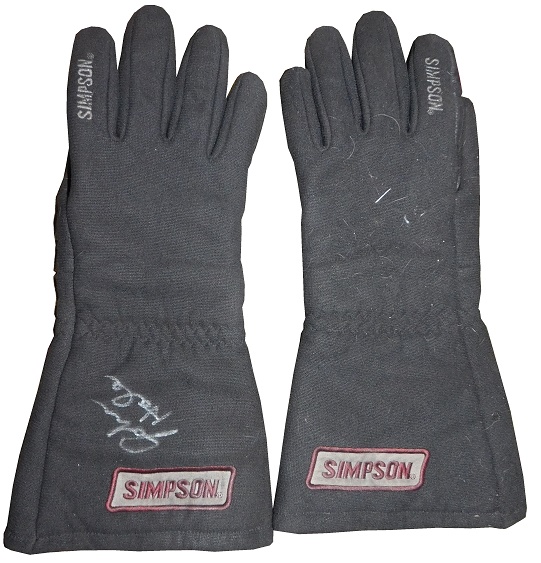
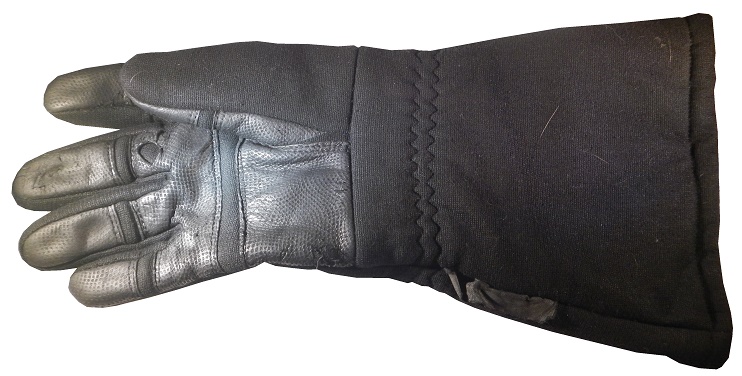
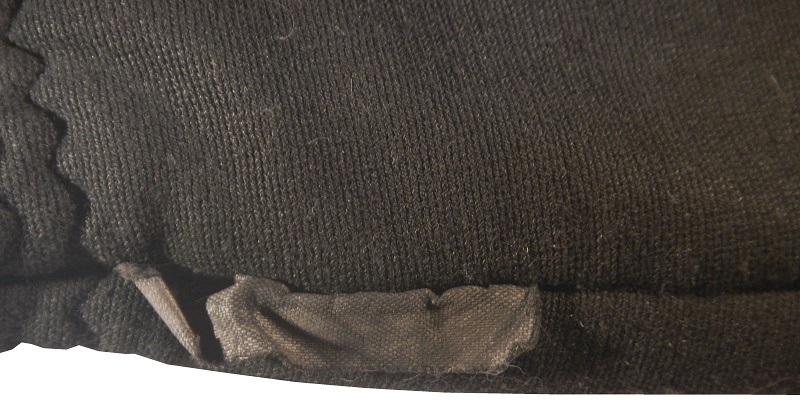
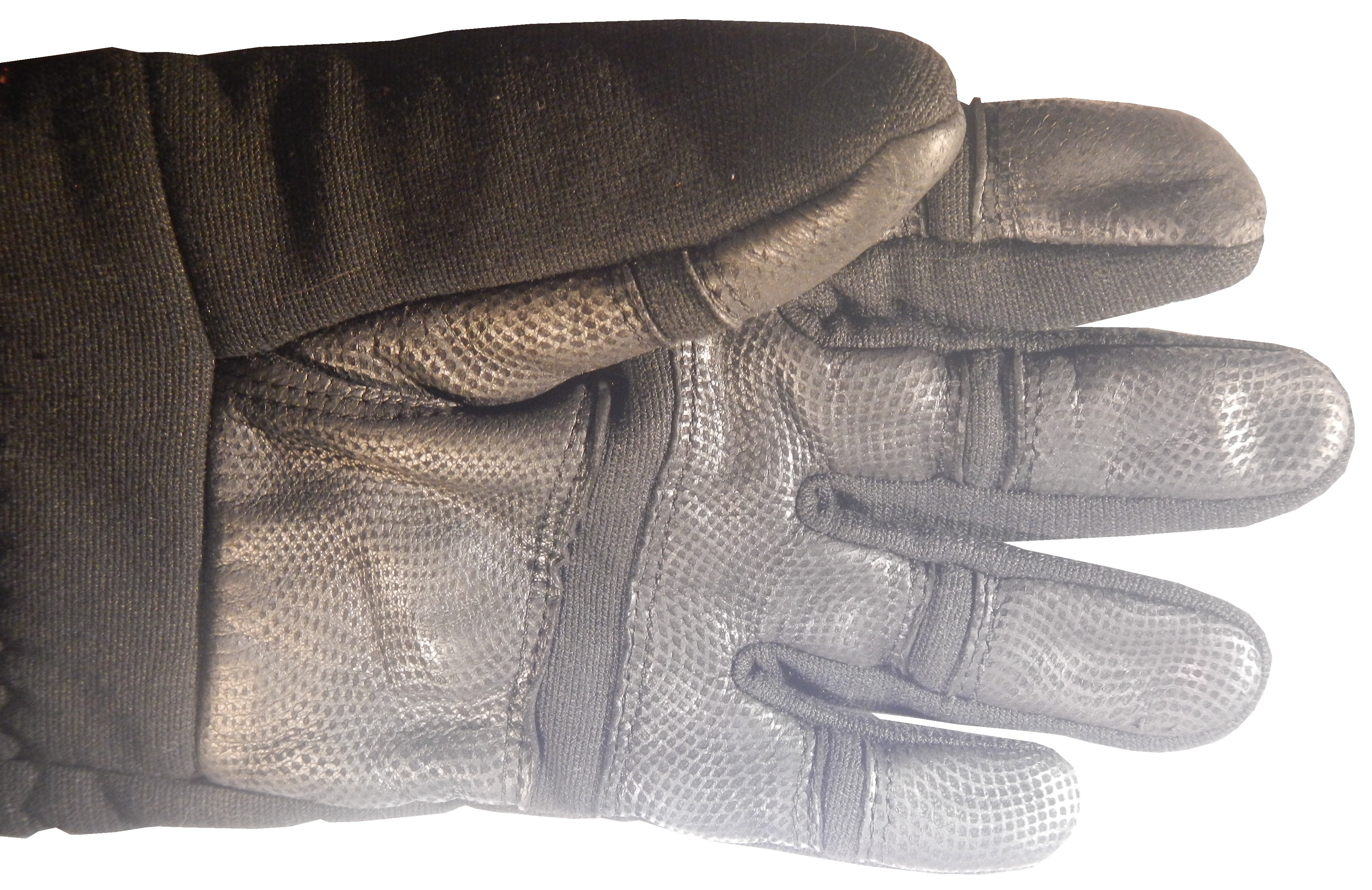
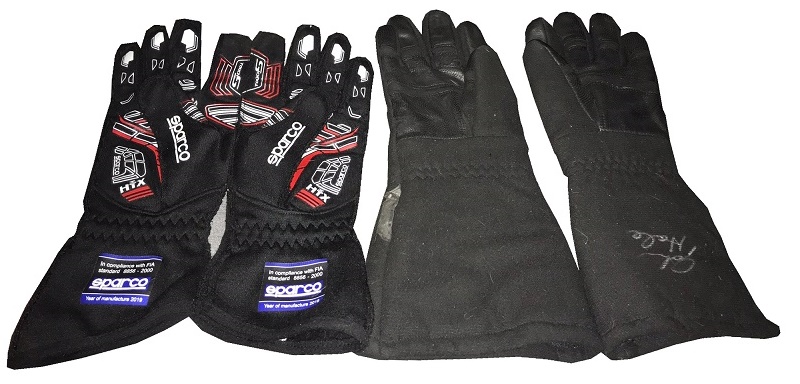
NASCAR and many other classes of auto racing only require an SFI 3.3-5 rating, which protects the wearer from second degree burn for 10 seconds. This is usually enough time for a driver to exit the vehicle, or rescue teams to get to the wrecked car. However the nitro categories of drag racing, top fuel dragster and top fuel funny car, as well as top alcohol dragster and top alcohol funny car require the highest safety rating SFI has, a 20, which protects the wearer from second degree burns for up to 45 seconds.  Let’s look at the differences between the two.For the NASCAR side, we will look at these circa 2019 Ryan Newman race-worn gloves. They are a 5 rated pair of gloves, and are very decorated, with numerous designs and logos, since in-car cameras frequently captures images of them. The material the have is very thin. On the NHRA side, we have a pair of John Hale top fuel funny car gloves from his time with Jim Dunn Racing. These have a 20 rating, have no adornment whatsoever, and are very thick. They are designed for a secondary pair of gloves underneath. When a fuel car explodes or crashes into the wall, it might take a bit of time for the car to stop, or rescue teams to get to the car. As such, the gloves have to protect for as long as possible. When compared between the two, the results are night and day. The NHRA gloves look like super armor compared to the NASCAR gloves. The NASCAR gloves look like cheap dollar store gloves compared to the NHRA gloves. It’s amazing how different the safety ratings make the gloves look and feel. The NASCAR gloves feel like the gloves one wears in winter, whereas the NHRA gloves look like the gloves that are used by cooks to pull chicken baskets out of a deep fryer. Next week, The Vest Project continues.

The Gloves Of The Rocket Man

By David G. Firestone

The old saying goes that sometimes the best planning is no replacement for dumb luck. Dumb luck can strike anyone. On January 2, I turned 38. I had spent the previous evening enjoying myself, because I had to go back to work on the 3rd, so I wouldn’t be able to drink. Like most people, I check my phone when I wake up. When I checked Twitter, I noticed I had six notifications. This was odd, as I hadn’t tweeted at all for the last few days. When I went to the notifications, I saw this tweet:

I had completely forgotten I had entered that to begin with, and well, it was one hell of a birthday surprise. I sent them my info, and a few days later, the gloves arrived. Today, we will look at them.

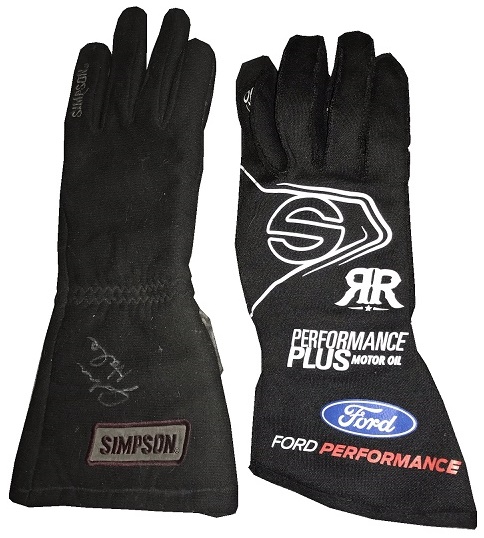
Nicknamed The Rocket Man, Ryan Newman has done a lot in his NASCAR career. He won the 50thDaytona 500 in 2008, the 2013 Brickyard 400,, and the 2002 Winston. He has 18 wins in the Cup Series, 7 wins in the Xfinity Series, and 1 win in the Truck Series. He is more recently known for suffering injuries during the last lap of the 2020 Daytona 500. That’s why I didn’t do these gloves sooner. Though it isn’t clear where these Sparco gloves were worn, it’s clear they were worn, as they show wear. The right glove has SPARCO, RESCUE RANCH, PERFORMANCE PLUS MOTOR OIL, FORD, and FORD PERFORMANCE logos screen printed. The inside of the right glove features a very intricate pattern on the palm and fingers. The right wrist features a Sparco manufacture date of 2018. There is also an SFI rating tag inside the wrist, as well as a holographic FIA safety certification. The left glove is identical to the right glove in every way possible. The left glove has SPARCO, RESCUE RANCH, PERFORMANCE PLUS MOTOR OIL, FORD, and FORD PERFORMANCE logos printed.The inside of the left glove features a very intricate pattern on the palm and fingers. The left wrist features a Sparco manufacture date of 2018. There is also an SFI rating tag inside the wrist, as well as a holographic FIA safety certification. Next Week, I compare NASCAR and NHRA gloves.

Beckman Returns Again For 2020

By David G. Firestone

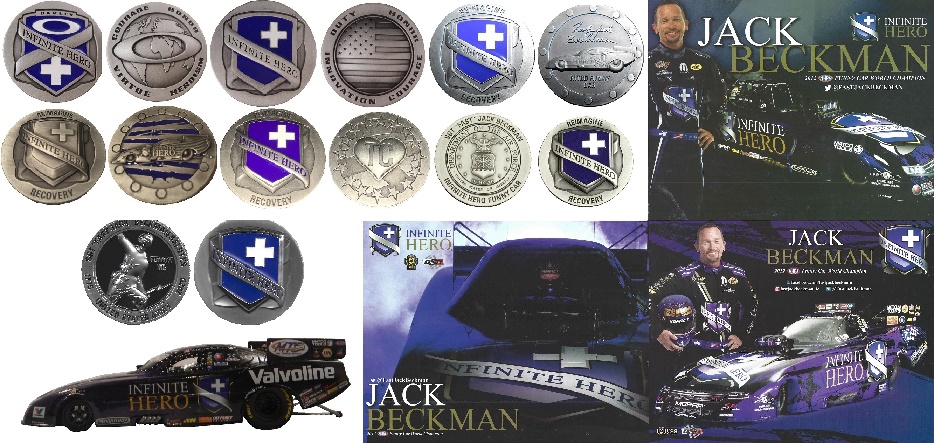
I’ve discussed Jack Beckman on The Driver Suit Blog many times. He is a great driver, he connects with the fans, and he was kind enough to grant me an interview last year. I’ve been into the Infinite Hero Challenge Coin program since the beginning, and love collecting them. Well, I’m back with another profile of the coins.
Launched in 2011, The Infinite Hero Foundation “…is to combat the most difficult front line issues – mental and physical – facing returning military heroes and their families.” Military personnel returning from overseas deployment face long term employment, mental and physical problems that the majority of Americans don’t understand. They work with other non-profit veterans groups and give out grants to help service men and women cope with these long term problems.
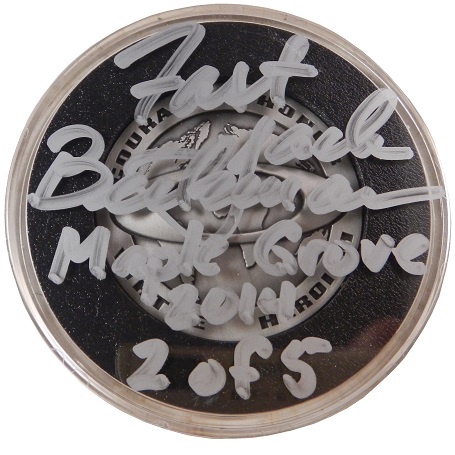
In April 2014, they started appearing on the side of Jack Beckman’s funny car. The late Terry Chandler, who also sponsors Tommy Johnson Jr.’s Make a Wish Foundation Funny Car, is the financial backer of the car. She pays for Infinite Hero to race on the sides of the car. This also began the NHRA coin program. When Jack Beckman gets into his funny car to race, he carries Infinite Hero Challenge Coins in the pocket of his driver suit. Once the race is over, he will autograph them and sell them at the track and on eBay. They cost $100 with all proceeds going to the Infinite Hero Foundation.

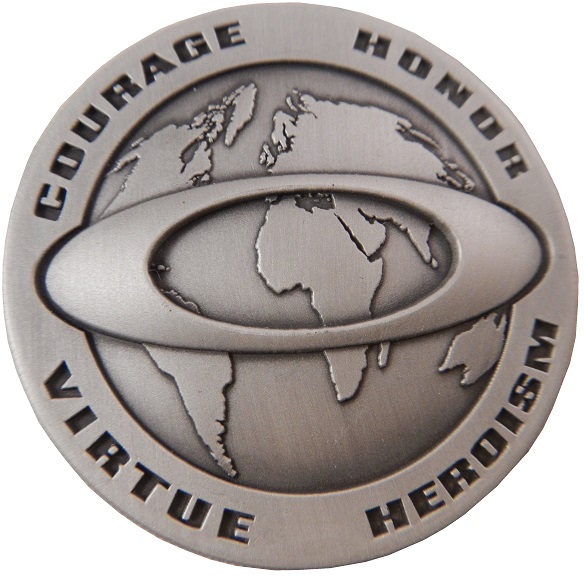
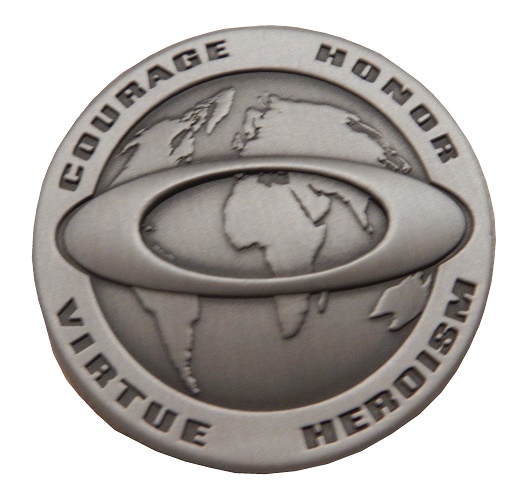
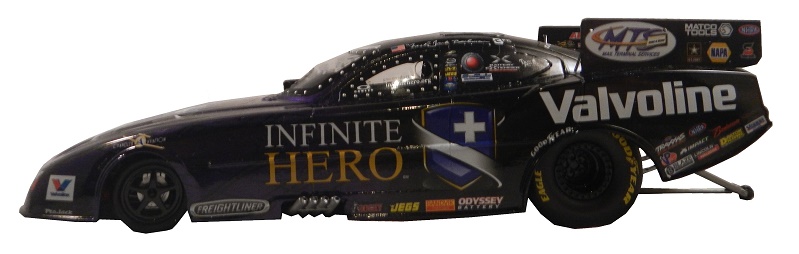
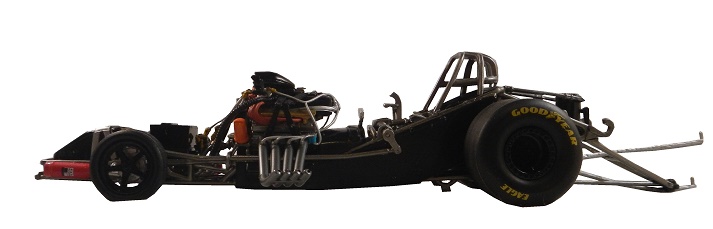
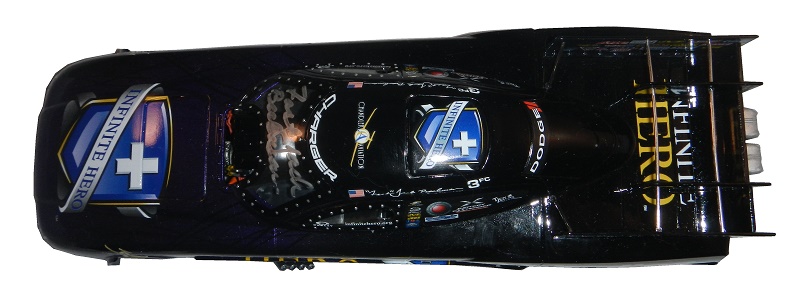
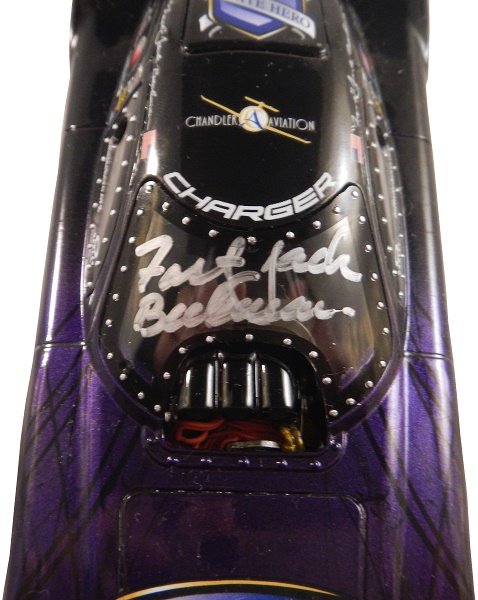
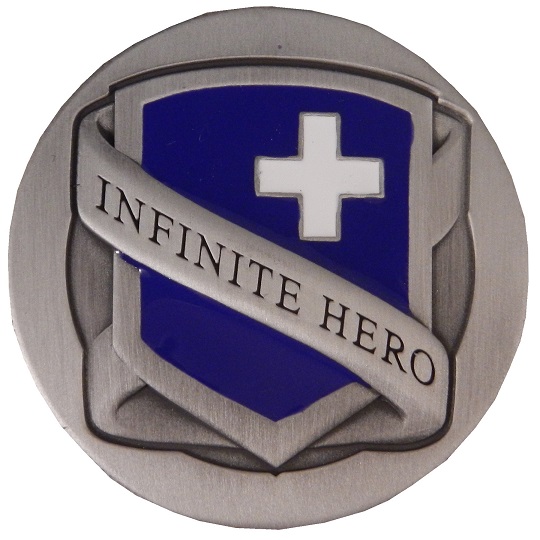
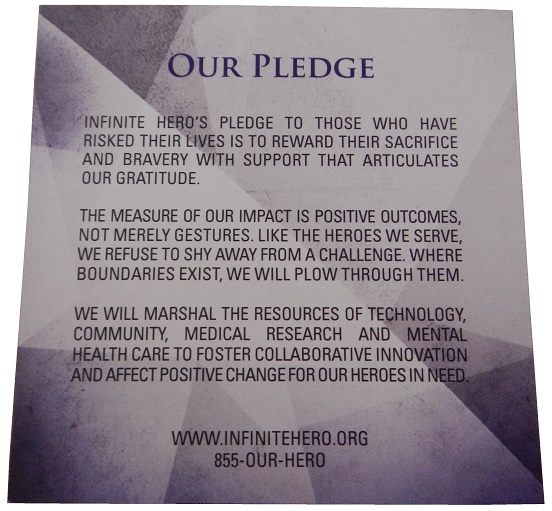
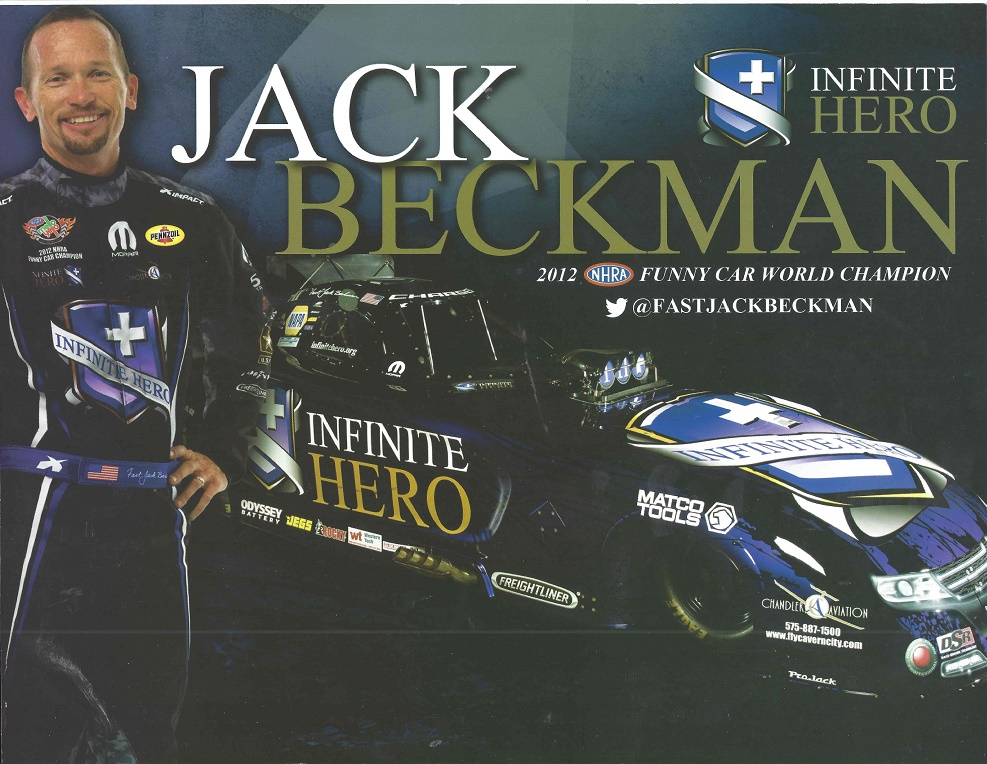
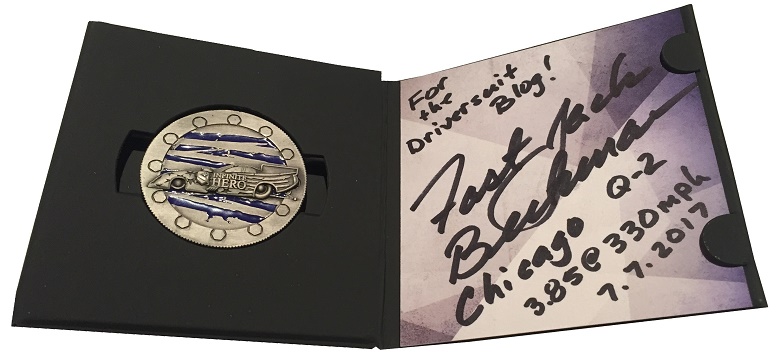
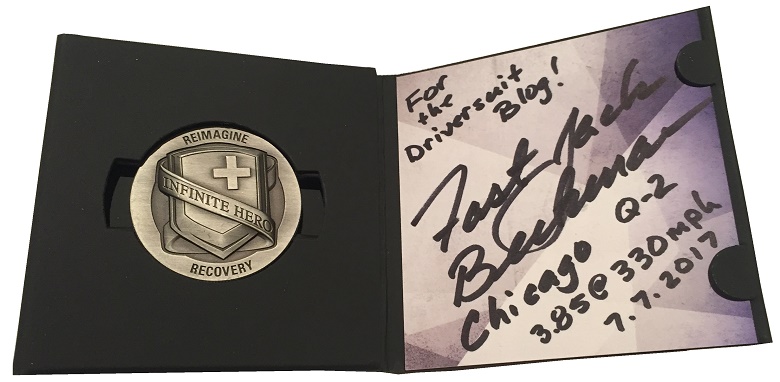
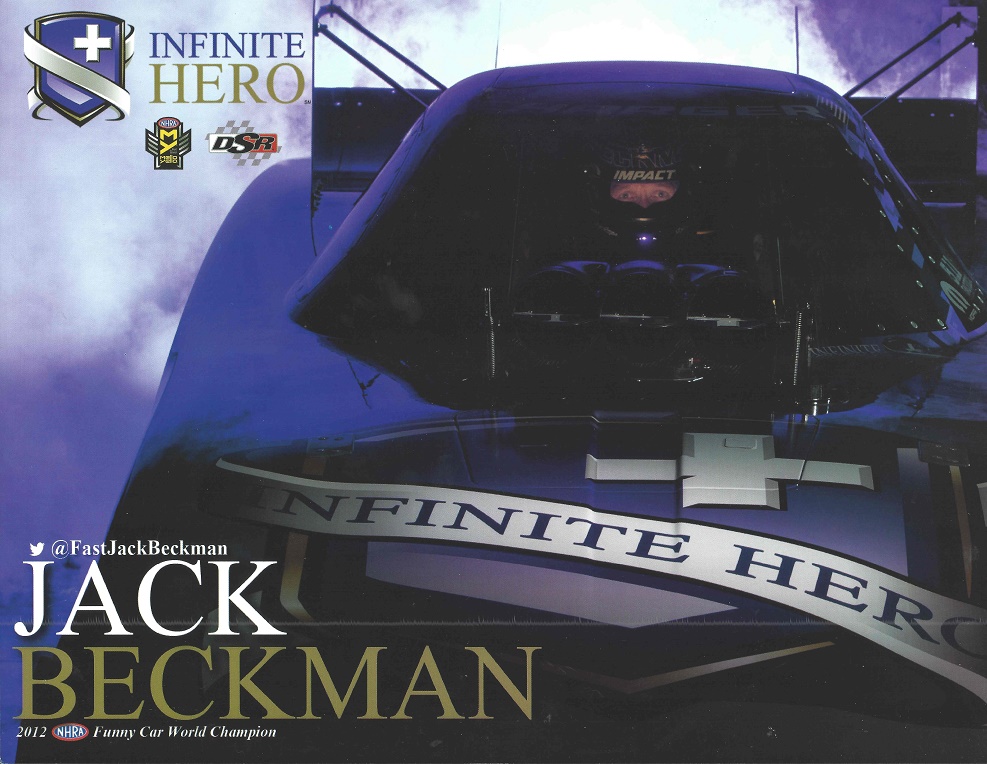
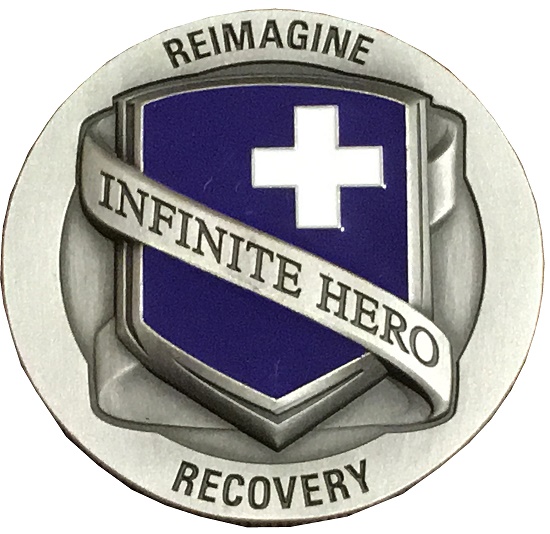
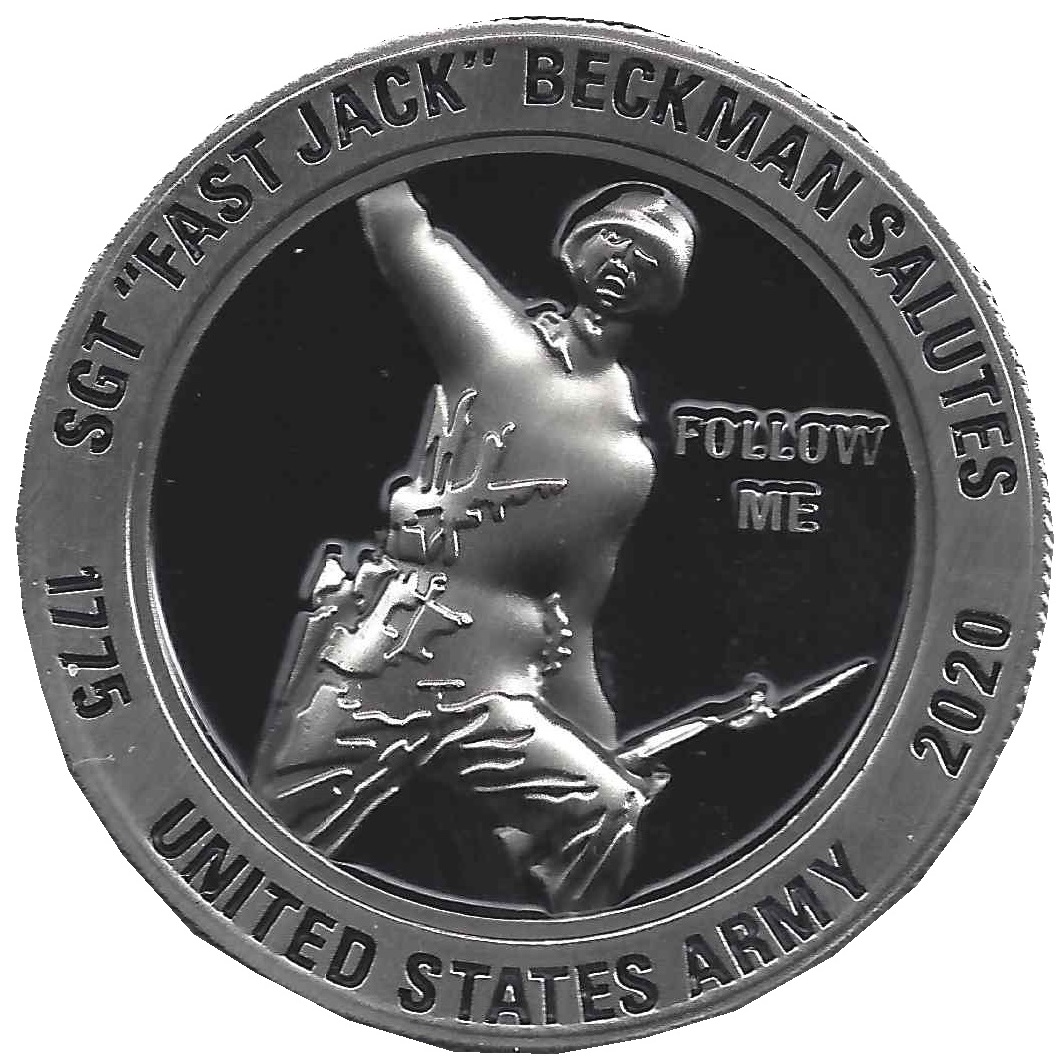
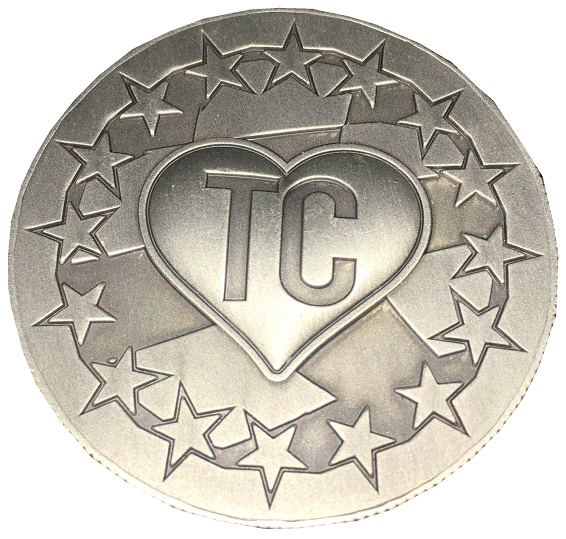
The 2014 design is quite thick, and has a ridged edge. One side featured “Courage, Honor, Virtue, Heroism,” around a globe design with an Oakley logo. Oakley is a partner with the Infinite Hero Foundation. The other side features an Infinite Hero Foundation logo with purple enamel. The coin was placed in a round, flat plastic container, with black foam braces. The retail coin lacks the blue enamel that the coin that comes with the glasses coin, and future coins, and has a very plain look. I do like the plain look.Jack used was identical to the one sold in stores. Jack autographed the plastic case.   In 2014, this 1/24 scale die cast was produced. It is a full replica of Beckman’s funny car. Valvoline was a primary sponsor, and this was the only season Infinite Hero and Valvoline were together on the car. It’s also the only time that Infinite Hero Challenge appeared on the older Dodge funny car body. In 2015, the current body was introduced, and Pennzoil replaced Valvoline. Jack has autographed the windshield. A redesigned coin of the same size was introduced for 2015. The Oakley logos are gone. One side features a design similar to the globe design, but the globe design has been replaced with an American Flag design. “Courage, Honor, Virtue, Heroism” has been replaced with “Duty, Honor, Innovation, Courage.” The new emblem on the reverse side has one of the across bands removed. The new packaging is an upgrade, with the circular plastic cylinder replaced with an attractive box. It comes with a card that Jack Beckman autographed, and on the reverse it has the Infinite Hero Foundation Pledge. The first one is from The CARQUEST Auto Parts NHRA Nationals at Phoenix on February 22, 2015, where Jack was eliminated in the first round. The second one is from the Summit Racing Equipment NHRA Nationals in Norwalk, Ohio, where Beckman won the event, beating Courtney Force in the final round. Also in 2015, these hero cards were produced. Hero cards are given away at racing events and driver appearances. They have Jack’s picture, and information about the driver, team, and the Infinite Hero Challenge. For 2016, the coins got a major makeover. The Infinite Hero logo is now bigger. The words “Reimagine” and “Recovery” are stamped near the logo, and on the opposite side, a picture of Jack’s funny car replaces the flag motif. It should also be noted that the coin is slightly smaller, because it isn’t as tight in the coin case as the previous version. The Infinite Hero Pledge accompanies the coin. Also changed from 2016, Jack doesn’t sign the box and the pledge, he just signs the pledge. The 2017 Infinite Hero coin is slightly larger than the 2016 coin, and fits snugly in the box. The pledge piece remains unchanged. The coin itself has a plain pewter Infinite Hero Challenge logo on one side, and a blue enameled claw stripe design with a hex nut design on the border. Hero cards are given away at racing events and driver appearances. They have Jack’s picture, and information about the driver, team, and the Infinite Hero Challenge. For 2016-2017, a new card design was introduced. It has updated information, as well as the updated paint scheme introduced at the beginning of the season. This year’s design is done in memory of the late Terry Chandler, who passed away from cancer prior to the 2017 event. The front has a heart design with Chandler’s initials. The back of the coin has the Infinite Hero logo, with blue enamel. Jack also autographed a copy of the Infinite Hero pledge. For 2018, a new Hero card design was released. The 2019 coin design features the features the Air Force seal, with SGR “FAST” JACK BECKMAN INFINITE HERO FUNNY CAR engraved on the outside. The standard Infinite Hero challenge logo is on the reverse. This was autographed by Jack at the Route 66 Nationals. The 2020 coin design depicts a solder calling for his troops to FOLLOW MW, with SGT “FAST” JACK BECKMAN SALUTES UNITED STATES ARMY 1772 2020 engraved on the outside. The standard Infinite Hero Challenge logo is on the reverse. This was autographed by Jack at the 2020 Dodge NHRA Indy Nationals presented by Pennzoil at Indianapolis. Jack Beckman is a great driver, who races for a great sponsor, and supports a great cause. He has been really amazing not just to me, not just to to The Driver Suit Blog, but to the NHRA and their fan base. I’m glad he’s going to be racing for The Infinite Hero Challenge until at least 2020. As long as he is selling them, I will continue buying the Infinite Hero Challenge Coins, and promoting them on The Driver Suit Blog. I can’t wait to see next year’s coin design.

Next week, some race-worn gloves.


Can’t Tell The Drivers Without A Program!

By David G. Firestone

I’ve been to Indiana quite a bit in my life. As a resident of Chicago, it’s almost a requirement. Thinking back of all the places I’ve been in Indiana, I can safely say I’ve never made it to Terre Haute. I’ve never had a reason to go there, so I haven’t. Yet it seems that Terre Haute is a major place in Indiana. It has a prison, two airports, Indiana State University, The Clabber Girl Museum, and was home to notable names like Scatman Crothers, Tommy John, Mick Mars, Max Carey, Orville Redenbacher, and Eugene V. Debs. I’m kind of surprised I never went there, in retrospect.

Founded in 1952 on the southern part of Terre Haute, the Terre Haute Action Track is a staple of dirt track racing. Legends like A. J. Foyt, Jeff Gordon, Parnelli Jones, Gary Bettenhausen, Jason Leffler, Doug Kalitta, and Tony Stewart raced on this half-mile dirt oval during their USAC days. These days, while crowds down due to the pandemic, the track has a long history, and a huge fan base.

A staple of live sports is the program. You go to an event, buy a program, both as a souvenir, and a way to tell who is who on the field, track, court, or rink. These have to be printed, and occasionally the printing blocks make it to sale. These printing blocks from Terre Haute Action Track are perfect examples. While these plates show wear, they are in great condition. The first plate has SPEEDWAY at the top, and a small map of the track. The second plate features STARS ON PARADE with a series of designs around a small square where a picture is meant to be. COMPLETE SCENIC PRODUCTION is at the bottom. The third plate features a series of signatures of drivers who have raced at the track. The fourth plate features a map showing the location of the track in a much more understandable way. The fifth plate is for an event called Thrill-O-Rama, and features a jumping car. Though hard to make out, the sixth plate is of a vintage picture of a driver. Even harder to make out, the seventh plate is a picture of a driver in a vintage race car. Now we get to the smaller plates. The largest of the smaller plates is this dual checkered flag plate. Slightly smaller is this rectangular plate with dual checkered flags and a car. The last two plates are a two part advertisement for RPM Delo diesel oil. The smaller plate is the RPM DELO logo, the larger is the outer ring.

Next week, Jack Beckman Returns!

Grading The 2020 Throwbacks!

By David G. Firestone

Well, the throwback race is officially behind us, so I’m going to grade all of the throwback schemes. As per the norm, the #1 scheme will win the Schemie for Best Throwback. Without further ado, let’s get started!

1-Ross Chastain #77 Dirty Mo Media Throwback Chevy CamaroNew sponsor for 2020, based on Dale Earnhardt’s 1976 Hy-Gain Chevy Malibu. A

2-Austin Dillon #3 American Ethanol Throwback Chevy CamaroNew scheme for 2020, based on Junior Johnson’s #3 Holly Farms Chevy. A

3-Darrell Wallace Jr. #43 Cash App Throwback Chevy CamaroNew scheme for 2020, based on D.K. Ulrich’s #6 scheme Richard Petty ran at the 1986 Coca-Cola 600. A

4-Josh Bilicki #7 Insurance King Throwback Chevy CamaroNew scheme for 2020, based on Tommy Baldwin Sr.’s modified car. A

5-Denny Hamlin #11 FedEx Throwback Toyota CamryNew scheme for 2020, based on Cale Yarborough’s 1973 Chevy Laguna. A

6-Matt DiBenedetto #21 Motorcraft Throwback Ford MustangNew scheme for 2020, based on The Wood Brothers’ 1963 Ford Galaxie. A

7-Cole Custer #41 HaasTooling.com Throwback Ford MustangNew scheme for 2020, based on Curtis Turner’s 1965 Ford Galaxie. A

8-Joey Gase #51 Jacob Companies Throwback Chevy CamaroNew scheme for 2020, based on Stroker Ace’s car from Stroker Ace. A

9-Timmy Hill #66 RoofClaim.com Throwback Toyota CamryNew scheme for 2020, based on Phil Parsons’ 1984 Skoal Bandit. A

10-James Davison #53 Signing Day Sports Throwback Ford MustangNew scheme for 2020, based on Tom Sneva’s 1983 Chevy. A

11-Joey Logano #22 Shell/Pennzoil Throwback Ford MustangNew scheme for 2020, based on Bobby Allison’s 1985 Miller Lite scheme. A

12-Brennan Poole #15 Remember Everyone Deployed Throwback Chevy CamaroNew scheme for 2020, based on Ricky Rudd’s 1985 Ford Thunderbird. A

13-Kyle Busch #18 M&M’s Throwback Toyota CamryNew scheme for 2020, based on Elliot Sadler’s 2004 Ford Taurus. A

14-Clint Bowyer #14 Peak Throwback MustangNew scheme for 2020, based on Kyle Petty’s 1990 Rockingham scheme. A

15-Kevin Harvick #4 Busch Throwback Ford MustangNew scheme for 2020, based on 1997 Busch beer can design. A

16-John Hunter Nemechek #38 Citgard Ford MustangNew scheme for 2020, based on Elliot Sadler’s Citgo scheme from 1999-2000. A

17-Martin Truex Jr. #19 Bass Pro Shops Throwback Toyota CamryNew scheme for 2020, based on Martin’s 2004 Xfinity Series car. A

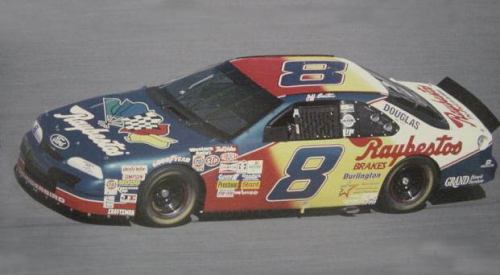
18-Tyler Reddick #8 Cat Power Throwback Chevy CamaroNew sponsor for 2020, Jeff Burton’s 1994 Rookie of the Year Rabestos Ford Thunderbird. A

19-William Byron #24 Liberty University Chevy CamaroNew scheme for 2020, based on Jimmie Johnson’s 2013 All-Star Scheme. A

20-Daniel Suarez #96 ARRIS Throwback Toyota CamryNew sponsor for 2020, based on Suarez’s 2018 ARRIS Camry. A

21-Ryan Blaney #12 Menard’s Throwback Ford MustangNew scheme for 2020, based on Paul Menard and his 2003 ARCA victory at Talladega. A-

22-Brad Keselowski #2 Discount Tire Throwback Ford MustangNew scheme for 2020, based on Brad’s 2010 Discount Tire Championship winning Ford . A-

23-Ty Dillon #13 GEICO Throwback Chevy CamaroNew scheme for 2020, based on Todd Bodine’s 2010 Truck Series Championship winning Toyota Tundra. B+

24-Ryan Newman #6 Oscar Meyer Ford MustangNew scheme for 2020, honoring his 1999 USAC Silver Crown Series Championship. B+

25-Quin Houff #00 Throwback Permatex Chevy Camaro-New scheme for 2020, black with spiral on hood, and beach motif on sides. B

26-Erik Jones #20 SportClips Throwback Toyota CamryNew scheme for 2020, Tony Stewart’s 2005 Martinsville Home Depot scheme. B

27-Chase Elliott #9 NAPA Throwback Chevy CamaroNew scheme for 2020, based on Jimmie Johnson’s 2009 Championship scheme. C

28-Alex Bowman #88 Truck Hero/Chevy Group Chevy CamaroNew sponsor for 2020, honors Jimmie Johnson’s 2006 championship season. C

29-Christopher Bell #95 JBL Throwback Toyota CamryNew scheme for 2020, based on Bell’s 2017 Truck Series Championship JBL scheme. F

30-JJ Yeley #27 Jacob Companies Throwback Chevy CamaroNew scheme for 2020, based on Kenny Irwin’s 1997 Nerf Ford Thunderbird. F

Next week, some dirt track memorabilia!

Collecting Toss Coins is So Much Fun!

By David G. Firestone

Going off topic this week. If you were a kid during the Roman empire, and you were with a friend, and needed something to do, you could play “navia aut caput” or “ship or head.” How it works is that you take a coin, and one picks ship, the other picks head, and then you flip the coin in the air, and whichever side the coin lands on the person who picked that side wins. If you were playing it in England, you were playing “cross and pile.”

That simple game would grow into a bit of dispute resolution that is still used today. While it is used in politics, and business on occasion, coin tossing has become a major part of sports. It’s used in soccer to determine which goal the winning team attacks first. Cricket uses it to determine who bats first and who bowls first. Fencing uses a coin toss at the end of a tied match, where overtime has also ended. But the most well-known usage of a coin toss is in American Football, at the start of the game, to determine who gets the ball first.

Three minutes prior to the game, the team captains meet at midfield, the referee then instructs the visiting team captain to chose heads or tails, which are named for being sides opposite each other. He then flips the coin into the air, and the side that wins can chose to receive, or kick, and to defer their choice until the second half.

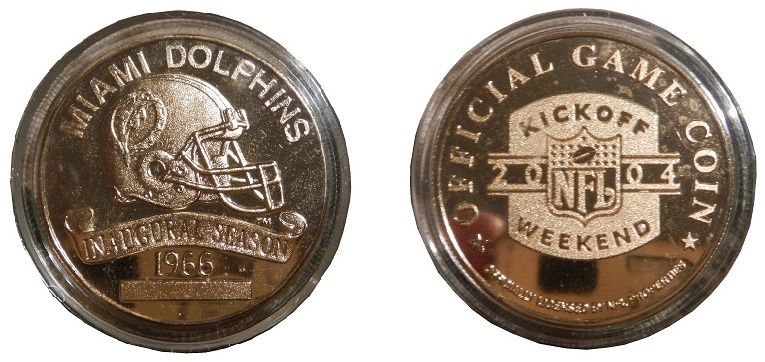
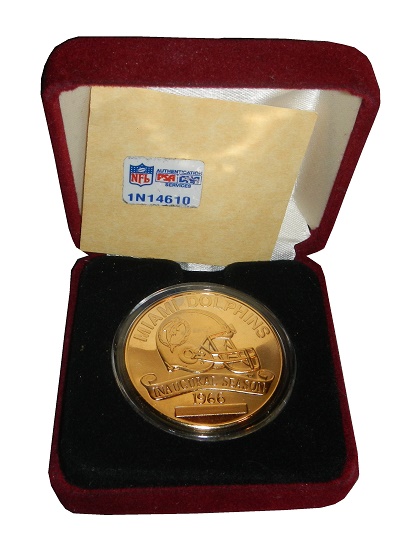
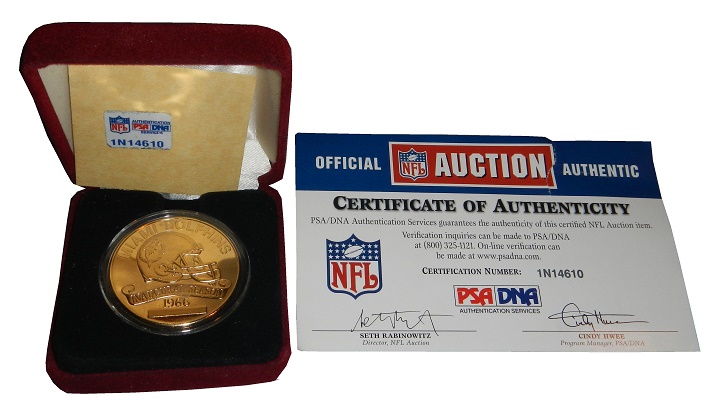
The 2004 season was one that Dolphins fans would like to forget. Not only did the Dolphins go 4-12, but they had to deal with Ricky Williams retiring from football. They also had to reschedule two games because of the threat of hurricanes. Their September 26th game was moved from 1 PM to 8:30 PM due to Hurricane Jeanne, and their opening day game was moved from September 12th to September 11th due to Hurricane Ivan. Their opening day game wasn’t great, they lost the game, and lost the coin toss, which was done with this Highland Mint coin.  The Highland Mint was founded in the 1980’s, and focuses strictly on sports coins, and custom minting. They make the game coins for the NFL. Every game coin from regular games to the The Super Bowl is taken from the game and sold by the NFL to the private market, and this is one such example.

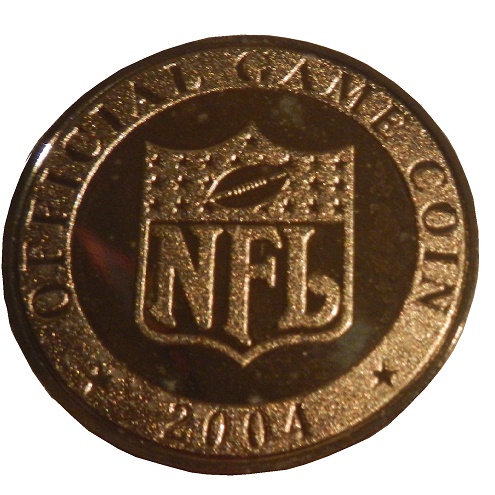
The coin is gold, and has on the head side, a Miami Dolphins helmet, and MIAMI DOLPHINS INAUGURAL SEASON 1966 stamped into the coin. There is also a box for the serial number to be etched, but since this wasn’t one of the limited edition coins that got sold on the collector market, it is blank. The tails side of the coin has the NFL Kickoff Weekend 2004 logo, and OFFICIAL GAME COIN and OFFICIALLY LICENSED NFL PROPERTIES stamped into the coin. This is 1 of 2500 coins, and has the serial number 0001 stamped into the edge of the coin, near the bottom of the front. It has been placed in a plastic holder, and comes in a felt box. It has a tag that comes with the retail coins, but it has the PSA DNA sticker on it, as well as a PSA/DNA lot. 2004 was not a great year for Chicago sports. The Blackhawks, Bulls, Cubs, Fire, and White Sox all missed the playoffs, while having mediocre to awful seasons. The Cubs and White Sox were dead by September, and while the Bulls and Blackhawks were getting started, it became clear rather quickly that they had nothing, and their seasons weren’t going to go anywhere. The Fire have always been the odd group out in Chicago sports. When they won the MLS Cup in October 1998, nobody in Chicago noticed or cared. But like the rest of the sports in Chicago, the season they had was not great in 2004.


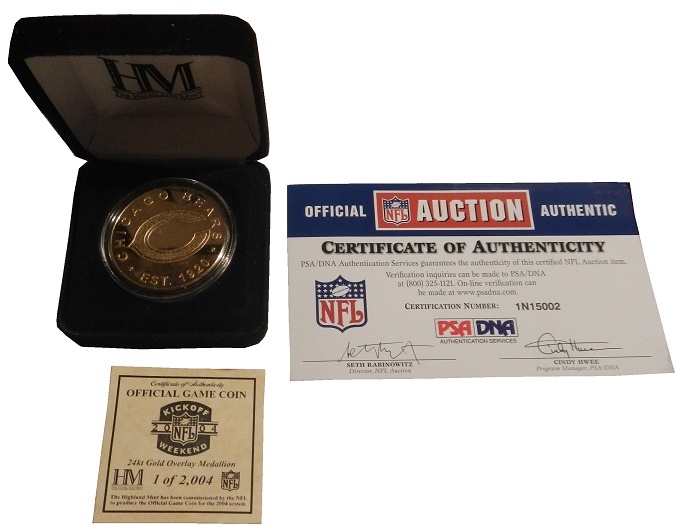
The bright spot was supposed to be football. The Bears had a decent roster, a new set of alternate uniforms, and a brand new coach in Lovie Smith. The NFC North wasn’t as strong as other conferences. So it is into this season the Bears started on September 12, 2004. The Bears began their season at home against the Lions. Before the game, they lost the coin toss, and went on to lose the game. The coin toss was conducted with this Chicago Bears coin.The HEADS side of the coin features a Chicago Bears “Wishbone C” logo, and CHICAGO BEARS EST 1920 stamped into it.
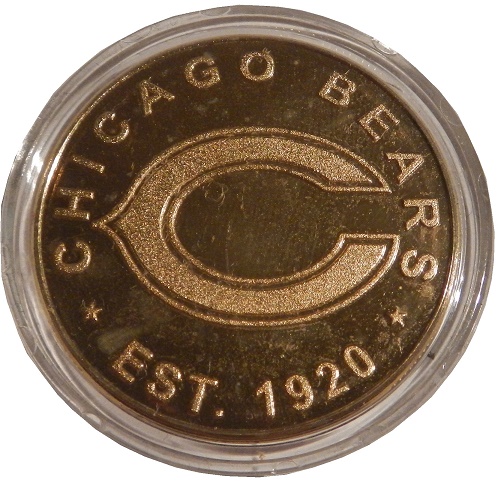
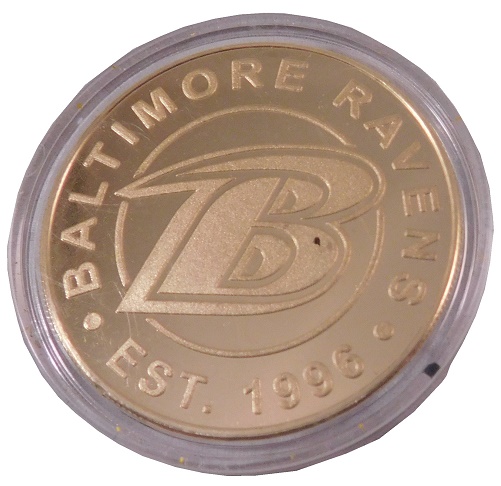
The coin is stamped #531. There were a total of 5000 made, and while other examples of game-used toss coins are numbered 0001, this isn’t surprising as any one of the 5000 coins made could find their way onto the field. In 2011, One team that looked decent, but didn’t make the playoffs were the New York Jets. With an 8-8 record, they missed the playoffs for the first time since 2008. The two teams would meet at M&T Bank Stadium in Baltimore on October 2, 2011. This special coin was used for the coin toss, which New York won, and deferred.  The Franklin Mint made coin doesn’t really show use, and is number 0001. It comes with PSA/DNA NFL Auction authentication. I’m not the biggest fan of tennis. I don’t understand a lot of the rules, and I don’t understand the scoring system, even though I took a class on it in high school. That said, tennis has a huge fan base. Naturally, the tennis memorabilia market is ripe, but unlike most other sports, until recently, The ATP was slower to wake than most other leagues. Now that the ATP is embracing the memorabilia market, the match-used market has a lot to offer.
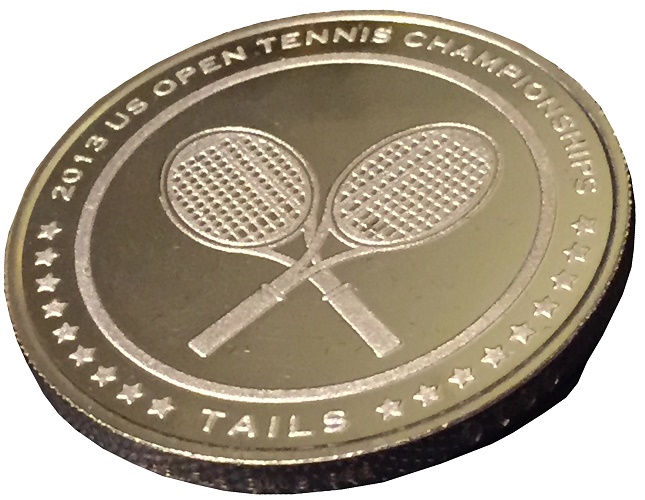
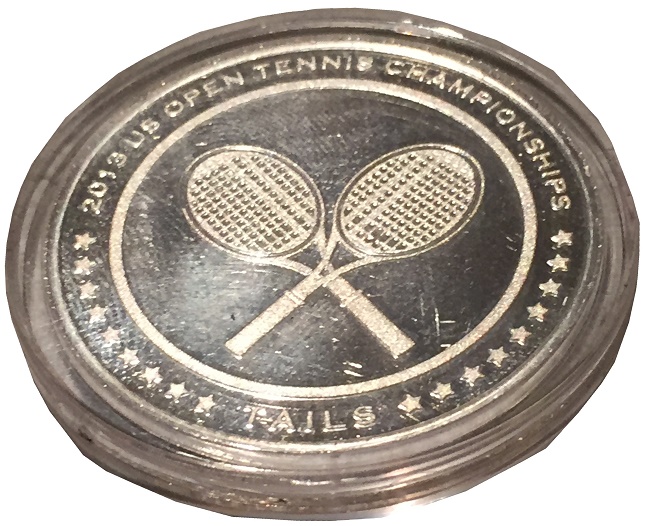
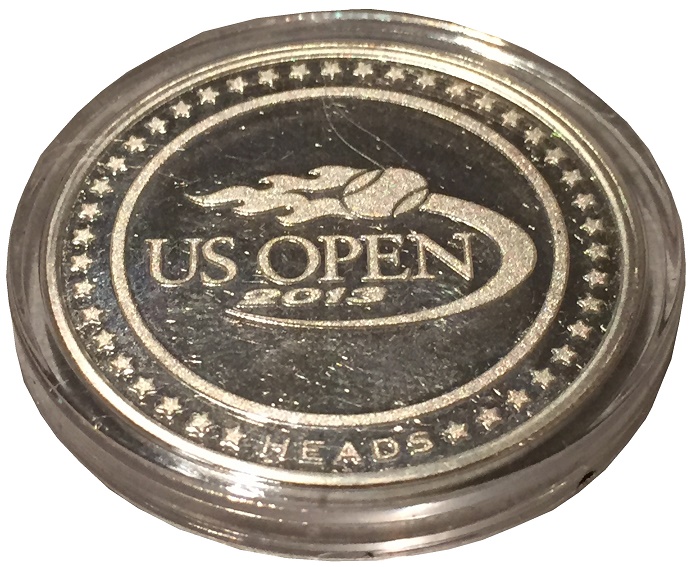
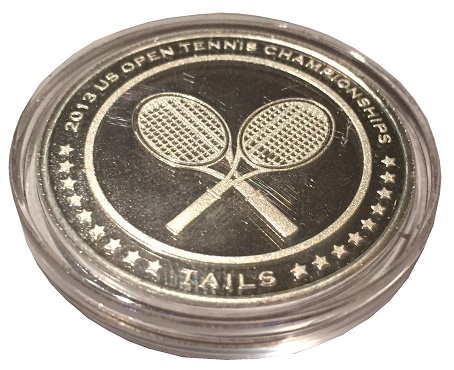
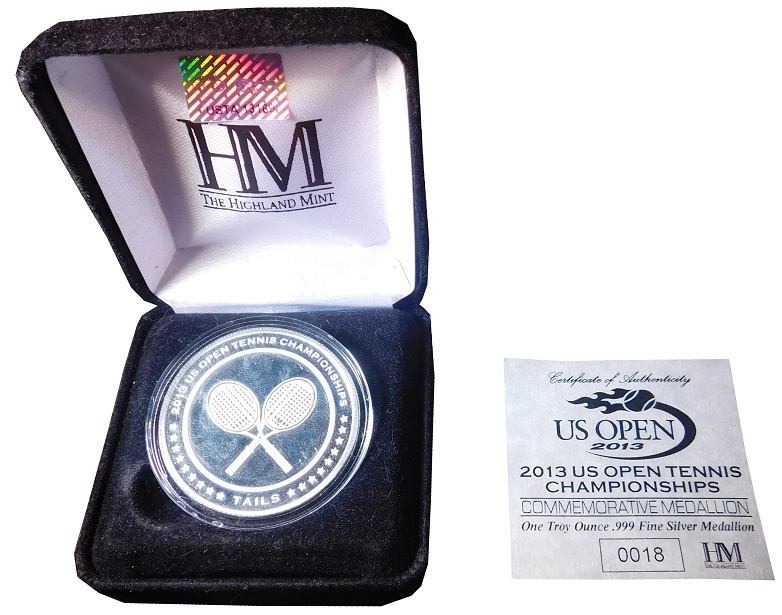
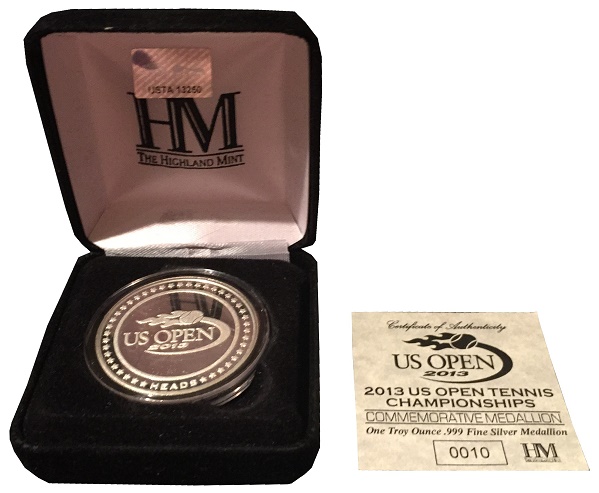
Like many other sports, tennis uses a coin toss to determine who serves and who receives. From at least 2008 to 2013, the US Open used Highland Mint made flip coins. Like other flip coins, these were custom designed for the occasion. I have a couple of match-used coins from the 2013 Tournament.

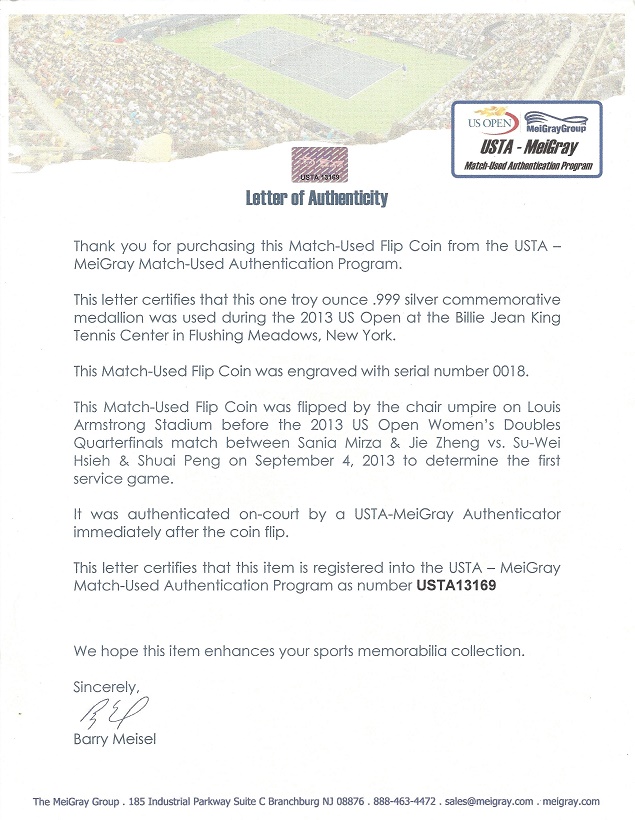
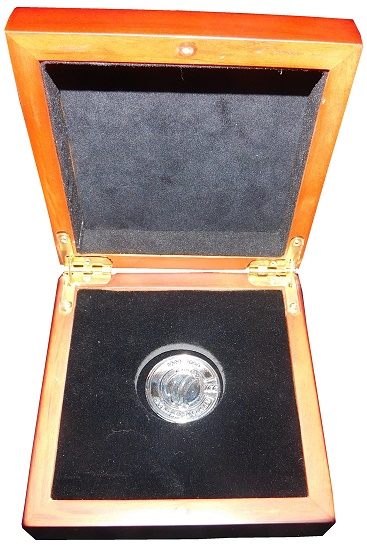
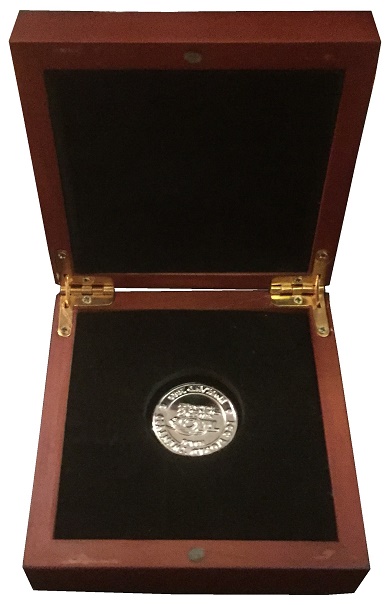
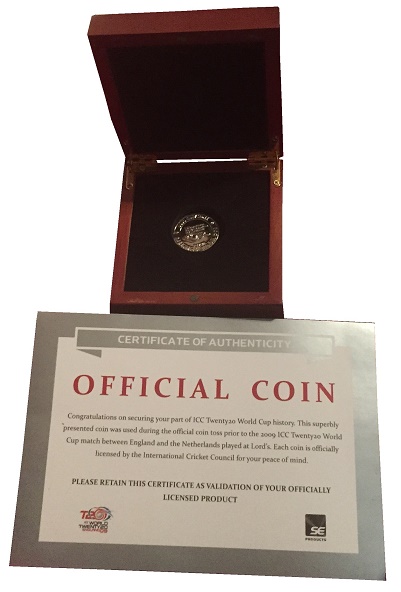
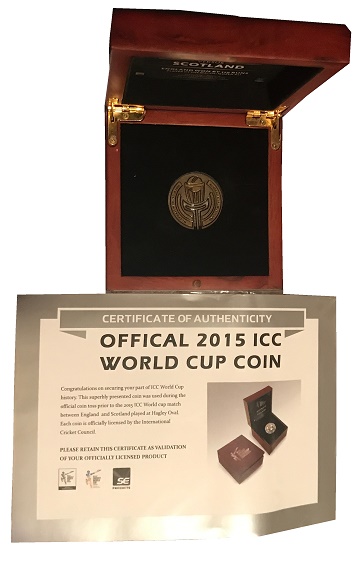
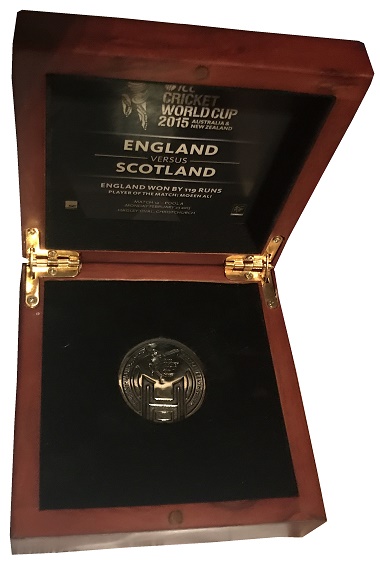
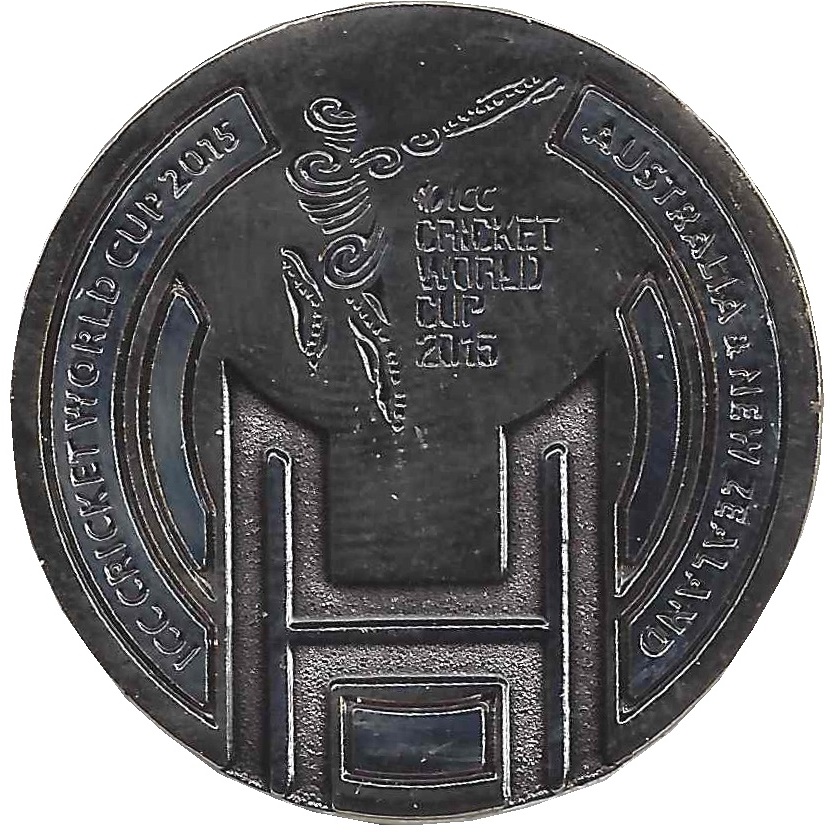
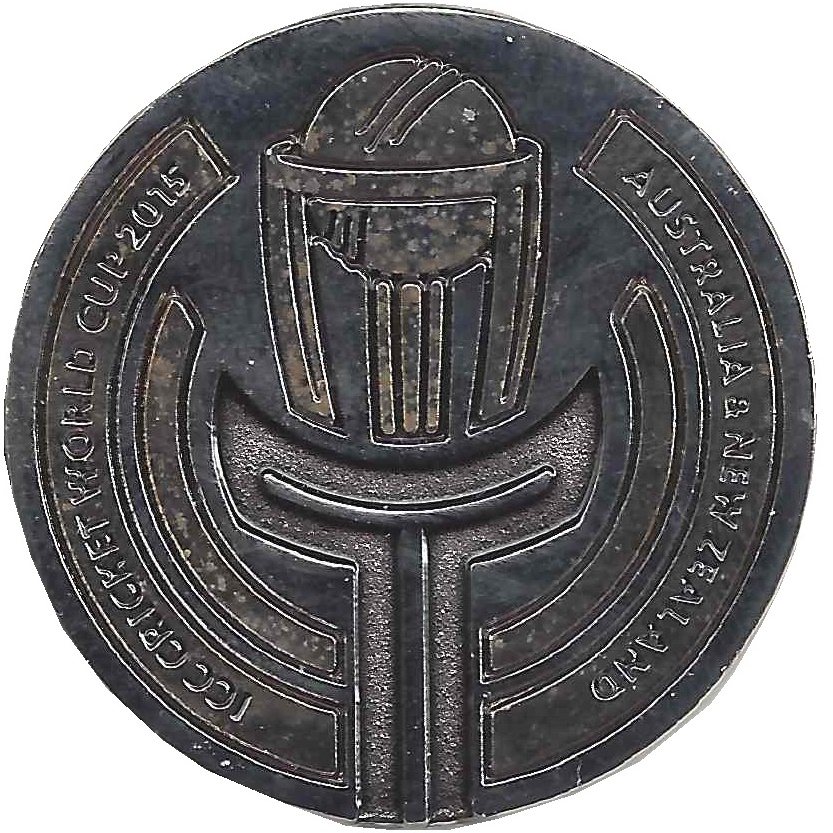
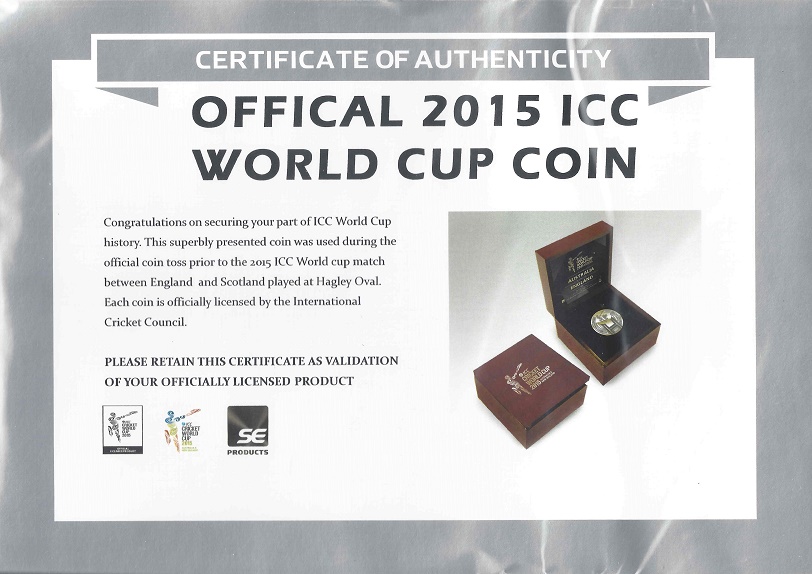
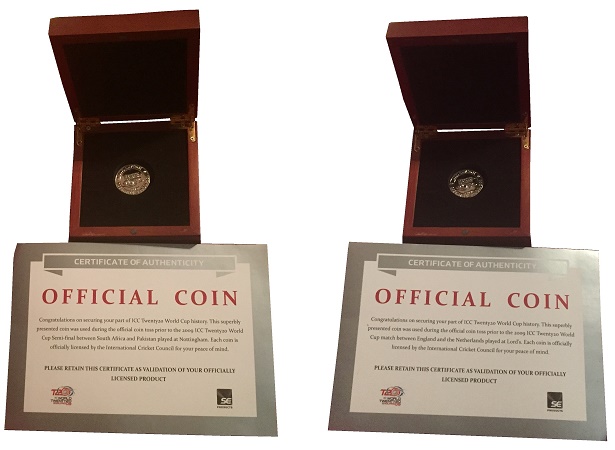
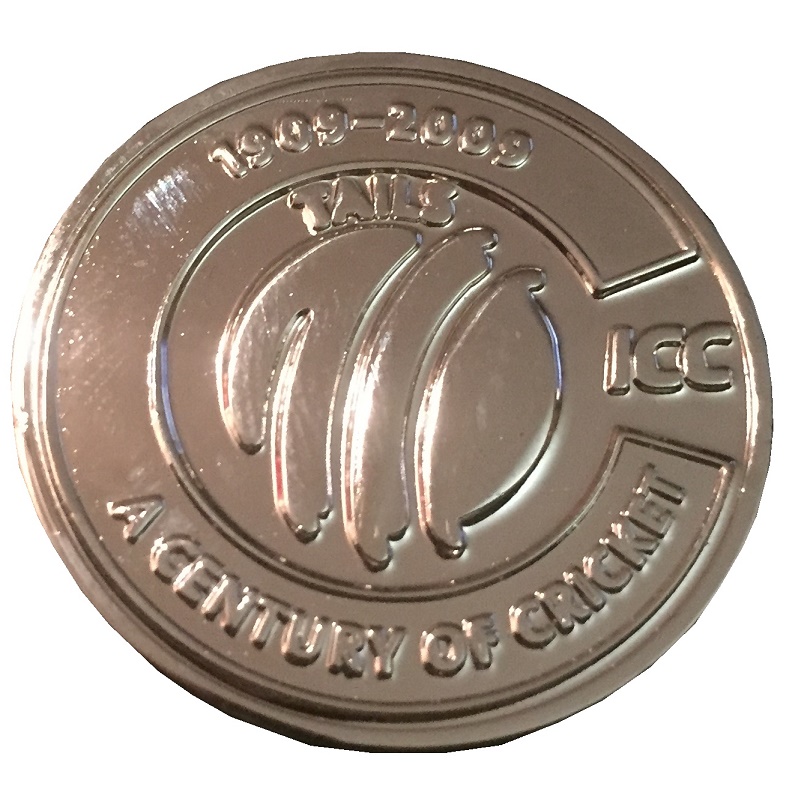
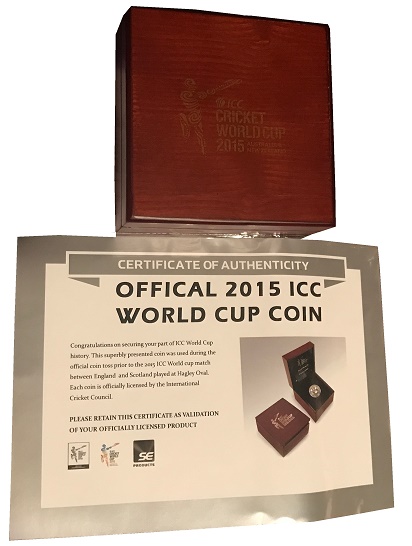
The Men’s Doubles saw Leander Paes and Radek Štěpánek defeat Alexander Peya and Bruno Soares in the Finals. On the way to the finals, Alexander Peya and Bruno Soares defeated Ivan Dodig and Marcelo Melo at Louis Armstrong Stadium 7–5, 6–4 on September 5, 2013. This coin was used for the coin toss.  This Highland Mint made coin was authenticated by MeiGray, which the US Open used from 2012 to 2015 for their memorabilia. It comes with a full Letter of Authenticity, and MeiGray hologram, in a MeiGray folder. The Women’s Doubles saw Andrea Hlaváčková and Lucie Hradecká defeat Ashleigh Barty and Casey Dellacqua on September 7 6–7(4–7), 6–1, 6–4 . To get there, Andrea Hlaváčková and Lucie Hradecká had to beat Sania Mirza and China Zheng Jie in the Women’s Doubles Semifinals on September 5 6–2, 6–2. The day before, Mirza and Zheng Jie defeated Hsieh Su-wei and China Peng Shuai 6–4, 7–6(7–5) in the Quarter Finals at Louis Armstrong Stadium. This Highland Mint Coin, #18 was used for the coin toss.  This Highland Mint made coin was authenticated by MeiGray. It comes with a full Letter of Authenticity, and MeiGray hologram, in a MeiGray folder. Cricket also uses toss coins. One form of cricket is Twenty20 cricket, aka Twenty-20, and abbreviated to T20. In a Twenty20 game the two teams have a single innings each, which is restricted to a maximum of 20 overs. The England and Wales Cricket Board created Twenty20 in 2002, and it has grown in popularity, spawning its own World Cup, like the ones played in 2009. I have a couple of match-used coins from the 2009 Twenty20 World Cup, including this one, from the South Africa vs. Pakistan semi-final, where Pakistan won with 149/4 over South Africa’s 142/5. The coin, slightly larger than an American quarter, is in great condition.  The specially made coin is not sold as a replica, and comes in a customized box, with an International Cricket Council logo. The box is about 4 inches square. The coin itself is slightly larger than an American quarter, though much smaller than an NFL toss coin. The heads and tails are marked. The heads side features a 2009 ICC Twenty20 logo, with England 2009. The tails section features an ICC logo, with a 100th anniversary commemoration. I also have a second coin, from a Group B competition between England and the Netherlands. This was one of the early matches, where The Netherlands won 163/6 over England’s 162/5. The coin is identical, no serial numbers are on these coins, and the only difference is the COA. Cricket also has a World Cup. The 2015 Cricket World Cup had a series of great matches. One such match was the game between England and Scotland that took place on February 23rd, at The Hagley Oval, Christchurch, New Zealand.  England triumphed over Scotland, by a score of 303/8 (50 overs) to 184 (42.2 overs). This coin, slightly larger than the 20Twenty coin, but smaller than an NFL toss coin was produced. It includes a display box featuring details on the game, and a COA. Next week…the grades for the Throwback race!
The Face-Shield Project Part 4-Other Face-Shields

By David G. Firestone

While helmets have been around since the beginning of auto racing, full face helmets are a relatively new phenomena, having only come around since the late 1960’s. With the advent of full-face helmets came the visor. Visors or face-shields, are clear pieces of plexiglass that cover the open area of the helmet. In addition to keeping wind and rain out of a driver’s eyes in open cockpits, they also shield the driver’s face from fire, and can be tinted for racing in sunlight. Each form of auto racing has their own quirks when it comes to face-shields. Face-shields are designed to snap closed, and they all feature holes for the connection to the helmet, holes to keep the visor closed, and handles to help open the visor. This week we will look at other kinds of face shields.

This particular face-shield isn’t just a driver face-shield, it’s also a passenger face shield. This is an Arai face shield off my Andretti Racing Experience helmet. This was used by both professional and amateur drivers, as well as passengers. The helmet is designed that the face-shield can be replaced by unscrewing with a quarter. This last visor is from racing artist and driver Dave Labs. While I can confirm this Bieffe made visor off his helmet is genuine, I’m not fully sure where this was raced. Labs has raced in both stock cars and drag racing. This looks more like drag racing helmet, but I don’t know for sure. That’s it for face-shields. Next week, I go off topic for a bit.

The Face-Shield Project Part 3-IndyCar Face-Shields

By David G. Firestone

While helmets have been around since the beginning of auto racing, full face helmets are a relatively new phenomena, having only come around since the late 1960’s. With the advent of full-face helmets came the visor. Visors or face-shields, are clear pieces of plexiglass that cover the open area of the helmet. In addition to keeping wind and rain out of a driver’s eyes in open cockpits, they also shield the driver’s face from fire, and can be tinted for racing in sunlight. Each form of auto racing has their own quirks when it comes to face-shields. Face-shields are designed to snap closed, and they all feature holes for the connection to the helmet, holes to keep the visor closed, and handles to help open the visor. This week we will look at IndyCar face shields.

IndyCar, like many other classes of auto racing is open cockpit. While there are windshields that protect the driver from harm, the face-shield is still a critical part of the helmet. These face-shields were the only thing keeping a driver from injury from debris. They tend to show a lot of use. This Johnny Unser face-shield was used during the 1996 Indy 500. It has a lot of wear and Johnny has autographed it with “INDY-1996” inscribed. It should be noted that he started 16th, and finished 33rd due to a transmission issue. This Jaques Lazier Menards face-shield was used in the 2003 Indy 500, where he started 20th, and finished 29th, due to a wreck with the 99 of Richie Hearn on lap 62. It features a tear away, commonly used among open cockpit race car face-shields. Next week, the face-shield discussion continues with other kinds of face shields.

The Face-Shield Project Part 2-NHRA Face Shields

By David G. Firestone

While helmets have been around since the beginning of auto racing, full face helmets are a relatively new phenomena, having only come around since the late 1960’s. With the advent of full-face helmets came the visor. Visors or face-shields, are clear pieces of plexiglass that cover the open area of the helmet. In addition to keeping wind and rain out of a driver’s eyes in open cockpits, they also shield the driver’s face from fire, and can be tinted for racing in sunlight. Each form of auto racing has their own quirks when it comes to face-shields. Face-shields are designed to snap closed, and they all feature holes for the connection to the helmet, holes to keep the visor closed, and handles to help open the visor. This week we will look at NHRA face shields.

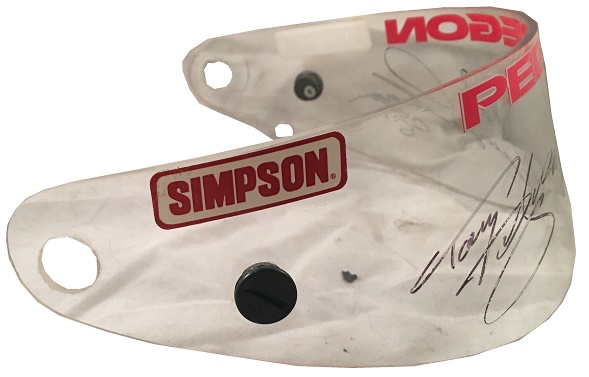
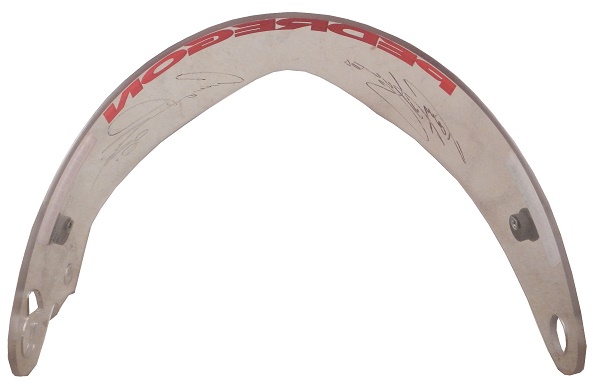
Drivers in the professional categories of the NHRA have two choices of face-shield. There is the traditional face-shield that is similar to NASCAR or IndyCar, and then there is the style that looks more like sunglasses. This was popularized by the Simpson Bandit. Many drivers prefer the Bandit face shield. The Pedregon brothers are an example of this, with a couple of race-worn examples.

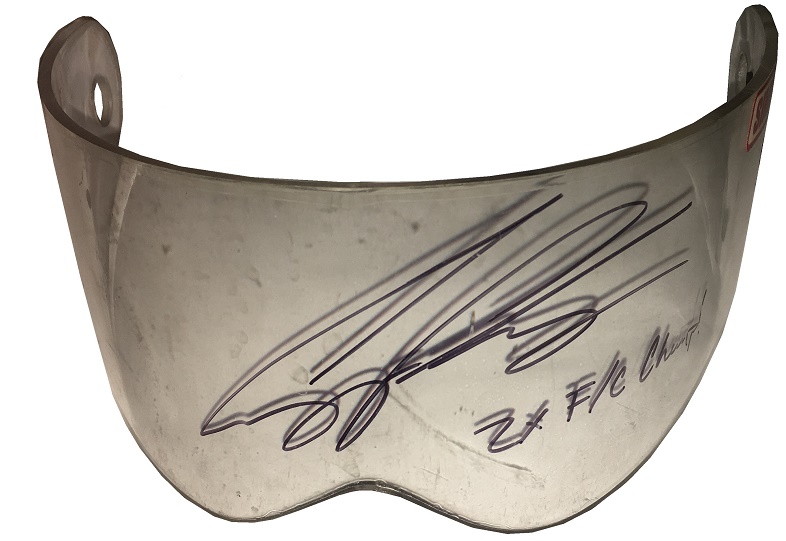
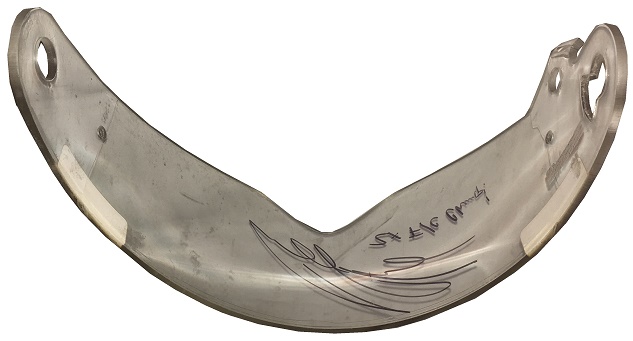
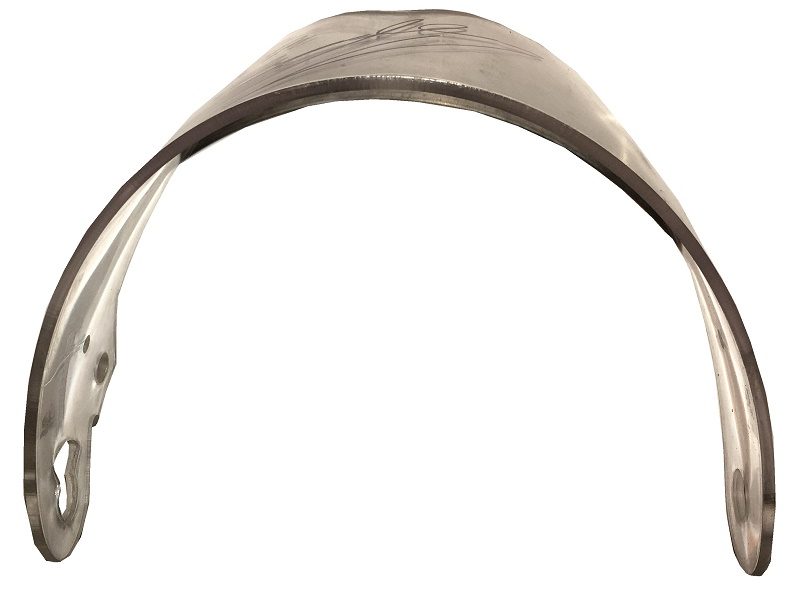
The first is a Simpson Bandit face shield, with PEDREGON on the visor stripe area, and it has been signed by Cruz and Tony Pedregon. It shows decent use. The second Pedregon face-shield is an unbranded Bandit-style visor, which shows decent use. It has been signed by Cruz Pedregon, and he inscribed “2X FC CHAMP.” This next example shows a helmet phenomena that is unique to drag racing. Many drivers like to use what Jack Beckman referred to as the “Clydesdale Effect.” It should be noted that in 2015 I interviewed Beckman. I asked him about the Clydesdale Effect, and he said that he didn’t use it, but he didn’t rule it out. He has since starting using the Clydesdale Effect. Drivers like parts of their visors blacked out, so they can only focus on the track. This TJ Zizzo tinted example shows how some drivers use the Clydesdale Effect.
Next week, the face-shield discussion continues with IndyCar face shields.