As the Chicago Bears hold their home opener this week, I felt it would be prudent to go off-topic this week. This will be the last off-topic Friday Feature for 2016. I will have some stuff for next year, but it will be more spread out…more on that later.
2004 was not a great year for Chicago sports. The Blackhawks, Bulls, Cubs, Fire, and White Sox all missed the playoffs, while having mediocre to awful seasons. The Cubs and White Sox were dead by September, and while the Bulls and Blackhawks were getting started, it became clear rather quickly that they had nothing, and their seasons weren’t going to go anywhere. The Fire have always been the odd group out in Chicago sports. When they won the MLS Cup in October 1998, nobody in Chicago noticed or cared. But like the rest of the sports in Chicago, the season they had was not great in 2004.
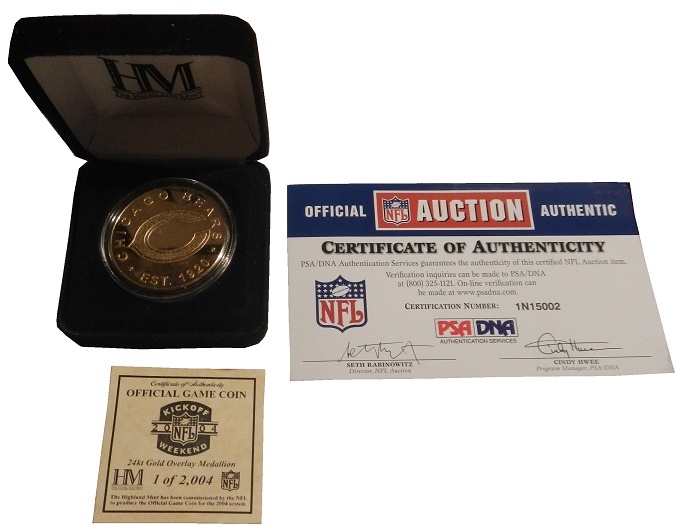
The bright spot was supposed to be football. The Bears had a decent roster, a new set of alternate uniforms, and a brand new coach in Lovie Smith. The NFC North wasn’t as strong as other conferences. So it is into this season the Bears started on September 12, 2004. The Bears began their season at home against the Lions. Before the game, they lost the coin toss, and went on to lose the game. The coin toss was conducted with this Chicago Bears coin.The Highland Mint Bears coin isn’t of the Opening Day variety commonly used, but comes with a box, and full PSA/DNA authenticationThe HEADS side of the coin features a Chicago Bears “Wishbone C” logo, and CHICAGO BEARS EST 1920 stamped into it.The back of the coin features the pre-2007 NFL shield, and has OFFICIAL GAME COIN 2004 stamped into it.The coin is stamped #531. There were a total of 5000 made, and while other examples of game-used toss coins are numbered 0001, this isn’t surprising as any one of the 5000 coins made could find their way onto the field.Game used coins are an interesting aspect of the memorabilia market, because there is a discussion about if they are “game used” or “pregame used.” I’m wondering if there should be a separate category for “pregame used” memorabilia. MLB and the NHL both have special warm up jerseys worn prior to games. Should they be called “game worn” when they never saw action during an actual game?
The coin itself could realistically be called “game used” because it directly affects the outcome of the game. It decides which team gets the ball first. It it is used in an overtime situation, it decides who gets the ball first in overtime. So my solution is that to have a separate sub-category in game-used sports memorabilia called “pregame used” memorabilia. This sub-category would consist of items used in pregame warmups, batting practice, or practice, but never actually used in games.
Truth be told, I have no idea why I like game-used coins. I used to collect coins, but I haven’t really done so for many years. I don’t always understand why I find things interesting, but I’m probably like a lot of people in this respect. We all have things that interest us, but we can’t really explain why they interest us.
OK, enough football stuff, next week, we go back to drag racing parachutes.
Most people associate parachutes with skydiving, para sailing, or military operations, but they have been critical over the course of auto racing as well. For those who follow drag racing or land speed records, parachutes being deployed at the end of the run is a common, and reassuring sight. Dragsters and funny cars can go from zero to 320 MPH in 3.87 seconds. There is no way these cars could stop as effectively without perfect parachute design. Most people also don’t realize that there are two very distinct designs used in drag racing, the Simpson design, and the Stroud design.
The most commonly known form of drag racing parachute is the cross-form style of parachute. This was the parachute developed from a French design used to air drop supplies during war time. It came to racing in 1958 by Bill Simpson, then 18 years old, after a drag racing crash. Legendary drag racing driver and innovator Don Garlits instantly knew this was a perfect design, and was Simpson’s first customer. Thus the Simpson Race Products company was born. The proof that this is an effective design is that aside from materials and size, there have been no modifications to the design in almost 58 years of continuous operation.
This example came from TJ Zizzo’s Peal Anti-Freeze dragster. TJ was sponsored by Peak from 2008 to 2013. The blue PEAK chutes can be seen on his carduring that time. The canopy is 12 feet by 12 feet square. The cross-form chute canopy has an opening in the very center, for air to go through. The pilot chute is attached here as well. Pilot chutes are universally used to deploy parachutes. When the cords are pulled, and the chute is released, the pilot chute deploys, which catches air and pulls the primary chute behind it. The chutes are strapped to a bar at the back of the car, the straps pre-covered in Nomex to prevent fire damage, then packed into a bag, before the race.
The Stroud design came from necessity. The cross-form has been proven effective in the faster cars, namely top fuel, and funny car in the professional classes, as well as top alcohol and top alcohol funny cars in the amateur classes. These are great at stopping cars over 200 MPH. However, there are a number of categories in drag racing where the cars run under 200 MPH and the cross-form deploys too roughly, and would drag the car up. This problem was confirmed by Bill Simpson himself. When he first tested the cross-form at 100 MPH the car took off, and he was hospitalized and arrested. Bob Stroud, who is an engineer who has made a number of designs to airborne parachutes worked on the problem, and came up with the current design in the 1980’s. While Stroud developed the chute, many companies have made design changes.
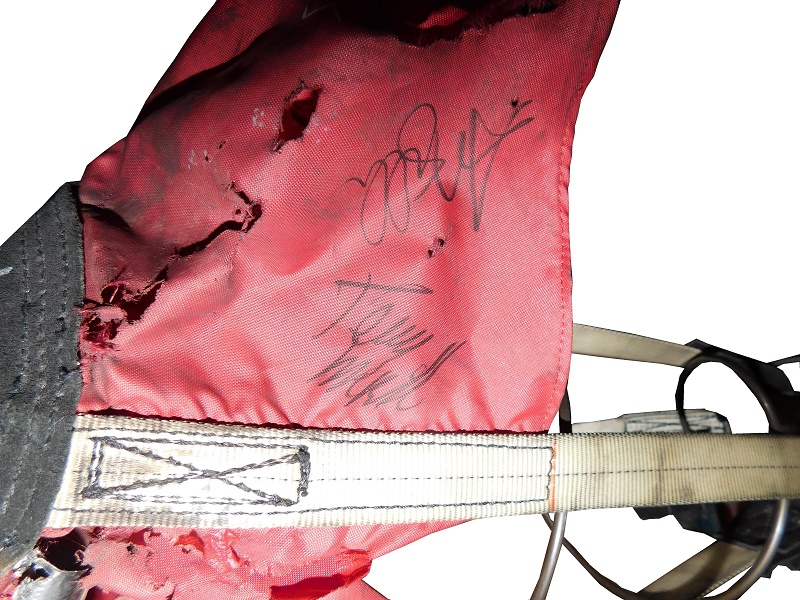
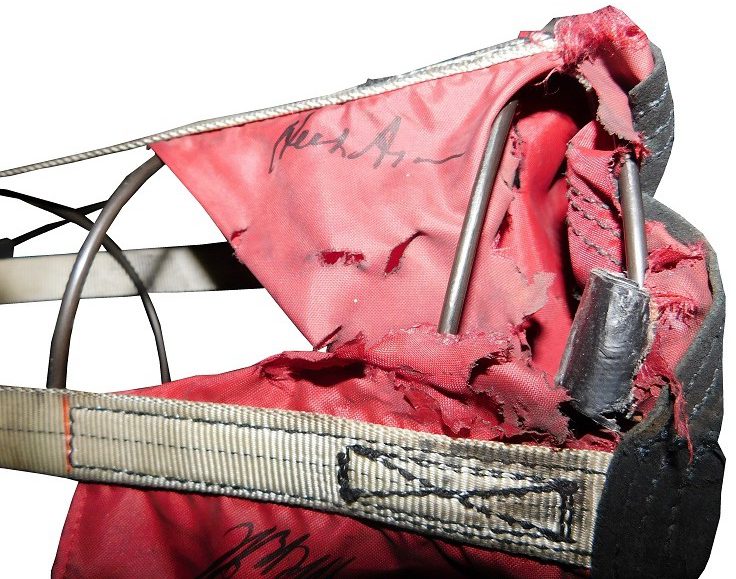
For a time, these designs were relegated to the amateur classes of the NHRA. It was in May of 1990, at the AC-Delco Southern Nationals at Atlanta Dragway that the Stroud design came to the professional leagues, stopping Warren Johnson at the end of his races. It should also be noted that at that time, many drivers simply didn’t deploy their chutes at the end of a run. While their design has evolved over time, it still remains the standard for cars that race up to 205 MPH. This example comes from Dave Connolly’s 2014 Chevy Camaro. It measures 8 feet square. Dave autographed it after he finished using it. It has the same pilot chutedesign as the cross-form.
These parachutes and pilot chutes are massive, but are packed into a bag which measures 9 inches square. There are two designs that are used to launch a parachute. There is the empty box design, which mounts to the back of the car, and is opened by pulling the cable. The second is a pneumatic launcher, used with smaller cross form, and most Stroud chutes. Drag racing parachutes are almost always packed by the drivers themselves. As one driver so elegantly phrased it, “If doesn’t work, I have nobody to blame but myself.” How do drivers pack their own chutes? I’ll let driver Rickie Jones explain that:
Next week, I’m gonna go a bit off-topic, but it will be interesting!
After The Vest Project, I need to go off topic for a bit. I’m going to discuss something I’ve done on The Driver Suit Blog Before. I don’t know where my fixation on lottery memorabilia came from I don’t know why I find this stuff interesting. I guess it had to do with the way I grew up. Up until my grandfather came to live with us at age 10, we only had free television. In the Chicago suburbs, that meant we had WBBM Channel 2, WMAQ Channel 5, WLS Channel 7, WGN Channel 9, WTTW Channel 11, and WFLD Fox 32. There were others, if you were lucky with your rabbit ears, but those were the ones we got. As such, we would watch the news on WGN, which was what my family liked.
A part of those newscasts were the Lottery drawings, which fascinated me, but I can never remember our family playing the lottery. Again, it goes back to what I said during my first Lottery column, when I said that “Human beings all have hope, but human beings need something to hope for, and something to inspire hope. For many, religion is that outlet. For others, it is their sports teams. For many, the hope that they could win millions in the lottery is that beacon of hope.”
The history of the lottery in the United States dates back to the 1600’s, while Europe was colonizing North America. Many colonies saw gambling as harmless fun, but as English investors waned to profit from the New World, this changed quickly. As time went on, each of the 13 original colonies had a lottery system in place to help fund the colonies. It became a civic duty to play the lottery. Recessions, scandals, and corruption had almost eliminated the lottery in the United States by 1868.
In 1934, Puerto Rico, then a US colony, started a legal lottery. It would take 30 years, but in 1964, New Hampshire started a lottery. Since then, 44 of 50 states, as well as Puerto Rico, Washington DC, and the US Virgin Islands have lotteries. Alabama, Mississippi, and Utah don’t have lotteries due to religious objections. Nevada has the gambling industry, and they don’t want competition, and Alaska and Hawaii, not being mainland states, aren’t worried about losing tickets out of state.
The lottery takes several forms. Scratch off tickets, first introduced in the 1970’s, are a very popular method of playing the lottery. There are many different kinds of games, with different rules. Pick 3, pick 4, main drawing, and Powerball have their origin in “numbers games.” Numbers games were popular in poorer areas of the country, especially urban areas. The game works by drawing balls that had numbers to pick the winner. A similar game was popular in South Florida and Cuba called “Bolita” or “little ball” was where betters would bet on which number would be pulled out of a bag containing 100 numbered balls.
All the pre 1934 lotteries had one major drawback that kept them from being as accepted as it is today. They were easily rigged, and people lost money on the racketeering that took place around them. Today, the equipment, the drawing, the tickets, and every other aspect is heavily supervised and regulated so that this kind of cheating is not possible. The level of security for a drawing is high, due to the amount of money involved.
One thing that I learned about lottery security is that most of the people directly involved don’t know what equipment is going to be used. 90 minutes before the drawing, the equipment is determined, tested, the host rehearsed, and by the time that is all done, the broadcast is almost ready to start. Though security is high, and equipment is tested, there is always the case that something can go wrong. Do a quick search for “lottery blooper” on YouTube, and you get several examples, including this one:
Security is also high because the amount of money can entice people to cheat, even those inside the system. The chance for cheating can’t be avoided either, as the Pennsylvania Lottery discovered on April 24, 1980, when the winning number for the Daily Number was 666, which tipped off the lottery officials that something was off. It turned out that Nick Perry, the announcer for the lottery drawing, and a group of people replaced the standard lottery balls with latex paint. Of the 10 lottery balls, 8 were replaced with these new balls, so there would reduce the number of possible combinations to eight: 444, 446, 464, 466, 644, 646, 664, and 666. The 666 combination seemed odd, so an investigation was conducted, the guilty parties were caught, and to this day, the number 666 in the Pennsylvania Lottery is referred to as a “Nick Perry.”
Another result of the amount of money involved being as high as it is, is that the equipment has to be specially designed under very secure conditions. Only a few companies have the ability to produce the equipment that is used, and the equipment itself is insanely expensive. One company that was very innovative in designing lottery equipment was Beitel Displays of Lawrenceville, New Jersey. Though they are credited with designing the
Criterion, which is the design basis of most, if not all, big lottery machines. Though this was a lucrative business, it was only a side business, since Beitel Displays was primarily in business to design displays and exhibits for trade shows and companies.
According to a 1992 Lawrenceville Journal article concerning the company: “Mr. Beitel can count customers in 27 states, including New York, Connecticut and Pennsylvania, as well as Washington. His machines are in 40 countries, from South Africa to Iceland. He does not play the lottery.
The National Basketball Association conducts its annual lottery draft using a Beitel machine and the Virginia Slims Tournament sets its teams using one of the machines.
Next January, the European Community will become a Beitel customer when it begins its “Eurogame” lottery, using the Criterion machine, with a potential audience of 100 million people. Mr. Beitel expects the political changes in Eastern Europe to create another surge of business.
Poland is one of Mr. Beitel’s newest customers and he and the vice president of the lottery products division, Tracey S. Herrera, have been negotiating with representatives from Bulgaria, Hungary and Czechoslovakia.”
Such was the influence of Beitel Displays, that one of their main engineers founded SmartPlay in 1993, and four years later, acquired the the rights and licenses to all their products. SmartPlay is based in Ohio, and manufactures the equipment used for state and national lotteries.
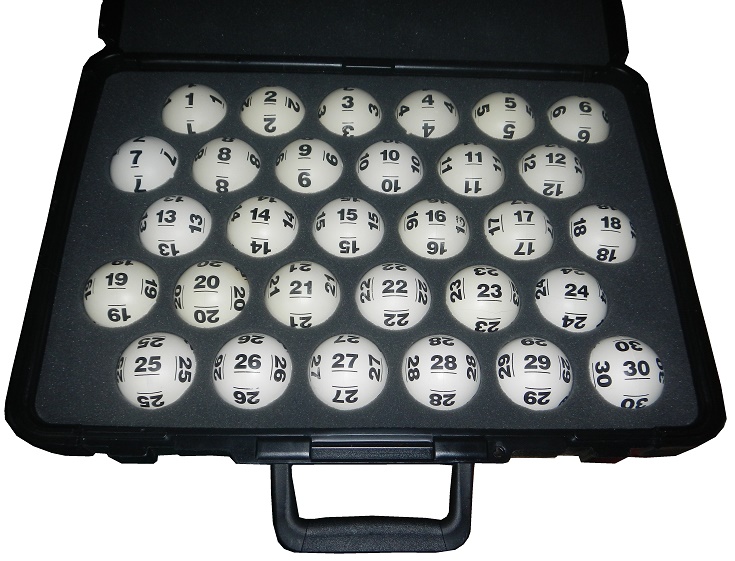
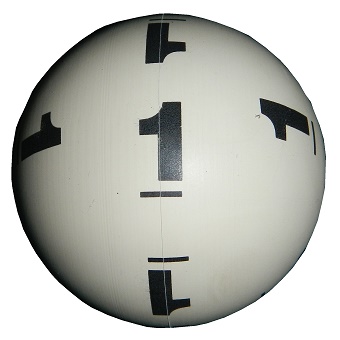
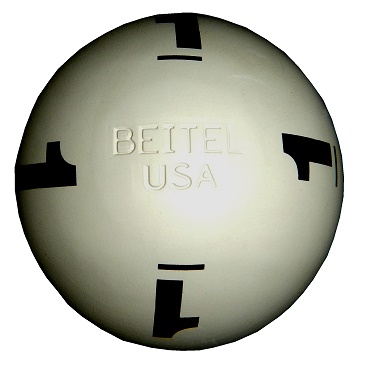
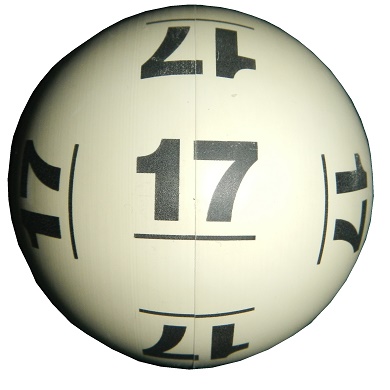
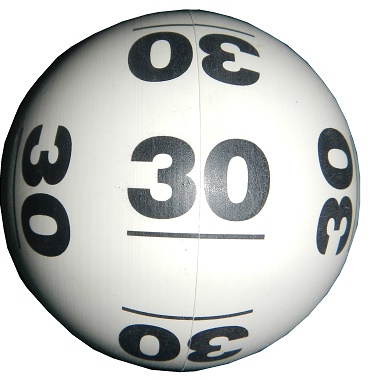
The Criterion was a major contribution, but it had a setback, in that it needed special rubber balls to operate. These balls are very carefully made, and very carefully matched up into a set. One such example is this set of Beitel Criterion balls of unknown vintage. This kit of 30 rubber lottery balls is custom-made, with each ball costing $60 each. According to the SmartPlay website, “The weight of each ball is measured in Grams (g). Each ball weighs between 77.80 and 79.50 grams. The variation of each ball in any given set is +/- .60 grams from the average weight of all balls within that set.” Though most of the balls don’t show that much abuse, some show more than others. Each ball is stamped with “BEITEL USA.”The interesting thing I noticed about these balls is that they have no bounce to them whatsoever. In the machine, they can bounce, because they are either being blown around, or something is spinning them, but when you try to bounce one on a table, they just land.
Wining the lottery is the ultimate hope of those who play the lottery, as winning the race is the ultimate goal of those who race cars, as watching their favorite driver win is the ultimate goal of those who watch racing. Next week, I will begin a two-part series about one of the best tools at a drag racer’s disposal.
Though NASCAR stands for “National Association for Stock Car Auto Racing” one of the major complaints is that the cars aren’t so much “stock” but “silhouette” cars. Stock cars are cars that are more or less bought off the showroom floor, brought to the track, and raced. Granted that early stock car racing was created by moonshine runners, who had souped up regular cars so that they could haul shine without attracting suspicion, and if the cops did light them up, the shiners could outrun the cops.
The standard NASCAR race cars are silhouette cars, meaning that while they are designed to look like their showroom counterparts, they have as much in common with them as LeBron James does with a junior varsity high school basketball player. Showroom cars are built for driving families to and from school, work, to the grocery store, and so on. Race cars are built to do one thing…race. It’s been pointed out that the term “stock” shouldn’t apply to NASCAR race cars anymore, and I tend to agree with that sentiment.
While NASCAR might not be racing “stock” cars anymore, there are a number of racing series that are running stock cars in 2016. Such series include the Pirelli World Challenge, the Canadian Touring Car Championship, a number of other classes and events in the SCCA, and the IMSA Continental Tire SportsCar Challenge. The IMSA Continental Tire SportsCar Challenge is a series that has had a decent amount of success.
The IMSA Continental Tire SportsCar Challenge has two different classes, “Grand Sport” and “Street Tuner.” Grand Sport or GS features large displacement 6, 8, 10, or 12 cylinder engine sports cars. GS also features small displacement 4-cylinder forced induction sports cars. Street Tuner, or ST features smaller 4-cylinder, 5-cylinder or 6-cylinder sedans, hatchbacks, coupes or convertibles. Though some minor modifications are allowed, for the most part, these cars are identical to their showroom counterparts. These cars aren’t specially built race cars, but the cars that you or I might drive to work in.
Regardless of if drivers are racing professionally for a well-paying, championship caliber team, or a weekend warrior racing for personal glory, there is one thing that they all want in the end. It’s also the most iconic item in auto racing, the checkered flag. As I stated in my Uni-Watch Flag column: “The most iconic flag in motor sports is universally used to indicate that the race has ended. Its exact origins are unknown, but the first picture of a checkered flag being used to end a race was at the 1906 Vanderbilt Cup on Long Island. NASCAR and IndyCar checkered flags carry the Sunoco logo.”
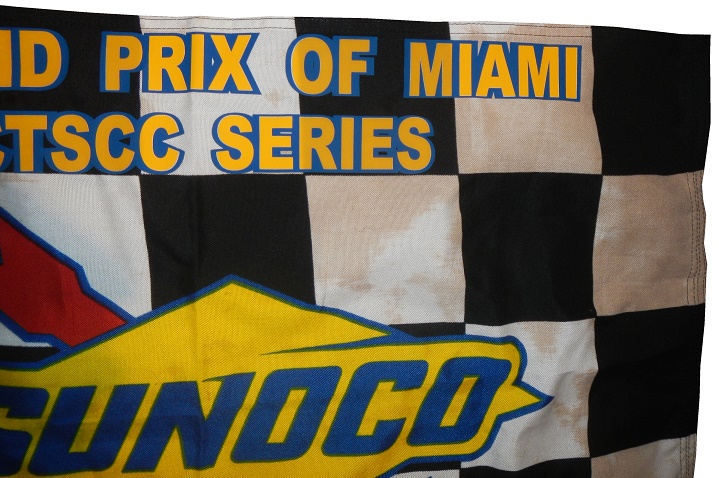
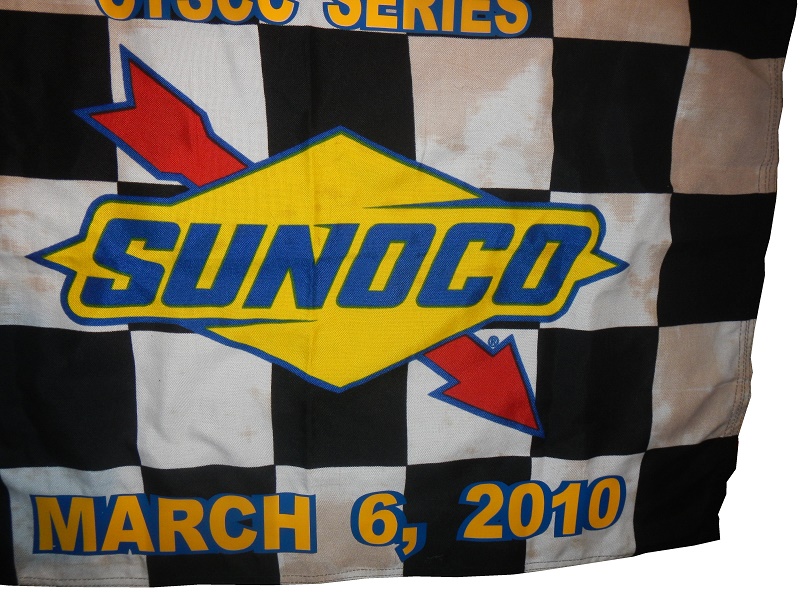
The tradition of the Sunoco logo on the checkered flag was actually started by Unocal. From 1948 to 2003, Unocal was the official fuel sponsor of NASCAR. As such, their logos appeared on the checkered flags during the 1980’s. It was around that same time that the race used flags would be customized with the name of the event, and presented to the driver, a process that continues to this day. One such example is this 2010 IMSA Continental Tire SportsCar Challenge Miami Grand Prix flag.The second race of the 2010 IMSA Continental Tire SportsCar Challenge was the Miami Grand Prix on March 6, 2010. During that 91 lap race, the #61 Roush Performance Mustang, driven by Billy Johnson, and Jack Roush Jr., won the overall event in GS, and the #25 Freedom Autosport Mazda MX-5 driven by Derek Whitis won ST. As Roush and Johnson were the overall winners, they were presented with this customized Sunoco race winner flag.The flag shows a heavy amount of use, including numerous stains all over, and some light snagging. The flag features the Sunoco logo on the front. Traditionally, flags are designed so that the pattern starts on the left side, and this flag is no different. The white stripe is the area where the flag pole is inserted. After the race, when the stains occurred, blue and yellow letters were heat-pressed onto the flag, which read “GRAND PRIX OF MIAMI CSTCC SERIES MARCH 6 2010.”The flag is meant to be displayed with the front only showing, because the back of the flag has the Sunoco logo reversed. The staining present on the front, is clearly visible on the reverse.Every driver who races wants to be the first one to see that black and white checkered flag. It’s the one hope of all drivers. I’ve discussed hope on The Driver Suit Blog before. I’m going to revisit my post on hope next week.
This is the final installment of The Vest Project. I know, I’m happy too. I enjoyed this when I started, but now I’m glad it’s over; I promise that you won’t see the word “vest” on this blog for a long time after this post. The three-piece firesuit is a quirk of racing suit design that made sense, but never really caught on.
This last vest is from The Sprint Cup Series, and is the only vest I’ve come across from the Cup Series. It was from BAM Racing in 2006. BAM stands for Beth Ann Morgenthau, the owner of the team. Their racing team started in 2001 racing Fords part time. In 2002, they switched to Dodge, which they raced until they folded in 2008. Their driver lineup included Ken Schrader, 1990 Daytona 500 winner Derrike Cope, and former Truck Series champion Ron Hornaday. Though they had 3 top 10’s with Schrader over the course of three seasons, 2003, 2004, and 2005, they never scored a top 5, or a win.
2006 would be a forgettable year for BAM Racing. Though they tried to start 33 races out of the 36 race season, they failed to qualify for 8 of them, and the ones that they did qualify for. One of the four drivers that raced for BAM was former US Air Force E-3 AWACS Air Surveillance Technician Brent Sherman. As his Air Force career is winding down, Sherman went to the Jim Russell Racing School in Sonoma, California, and eventually won a scholarship to race. He has raced in Indy Lights, ARCA, and NASCAR. He won an ARCA race, the 2006 Hantz Group 200 at Michigan. He raced 6 races in 2006 for BAM Racing, and tried to qualify for two more, with his dedicated sponsor Serta Mattresses. During those 8 races, a crew member wore this Simpson vest.Issued to a crew member named B Benton, the vest shows light use.
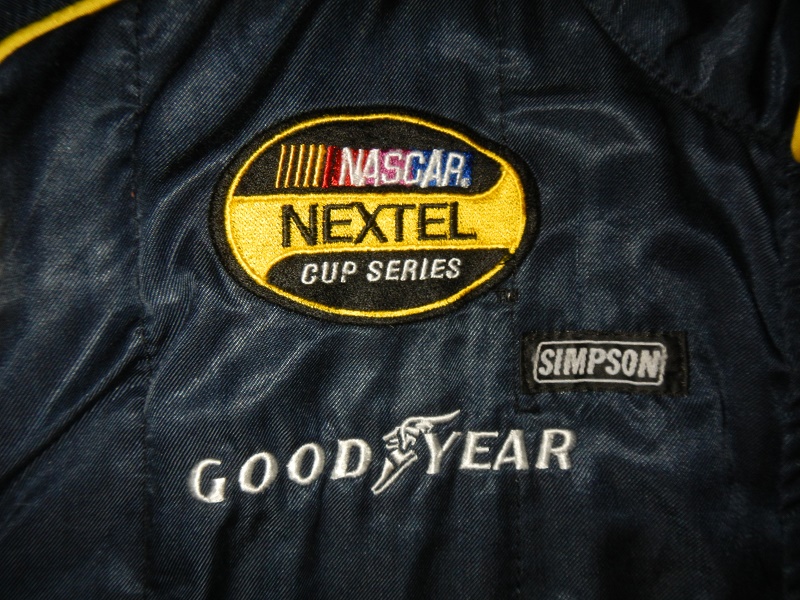
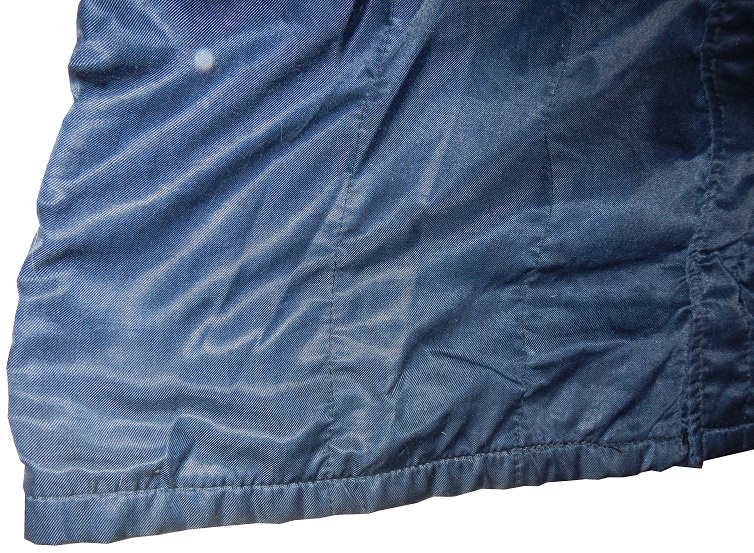
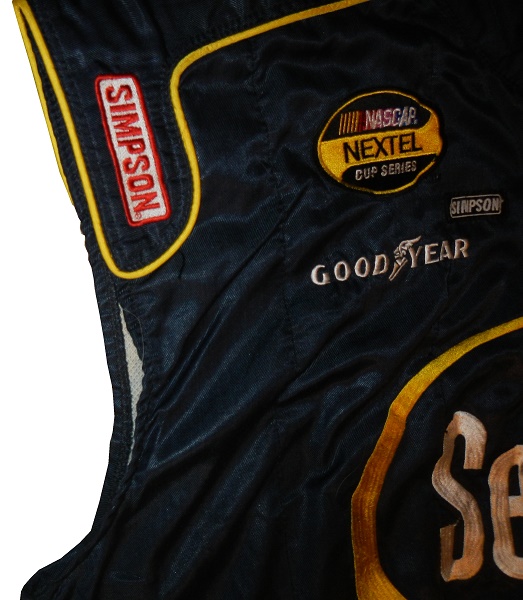
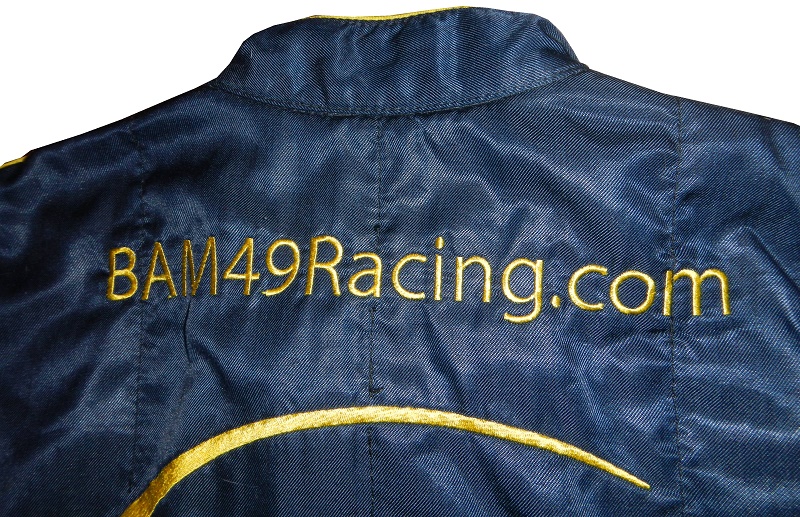
The collar has no logos on them. The old Simpson warranty label is sewn into the cowl, along with an identification tag stating that the vest is issued to B Benton. Benton is also written on the tag in Sharpie. The right chest features a NASCAR NEXTEL CUP SERIES logo, a SIMPSON logo, and a GOODYEAR logo present.The left chest features a BAM RACING logo and a Dodge logo.The front torso has a SERTA logo embroidered in white and yellow in the blue background material.The bottom hems don’t feature comfort straps, unlike Impact vests.The shoulder epaulets feature Simpson logos, but are otherwise unadorned. The back of the vest doesn’t show any real wear.The back of the neck is unadorned, but just below the neck, there is WWW.BAM49RACING.COM embroidered into it.The back torso features a SERTA logo above a BAM RACING logo.That’s it! The Vest Project is officially over! I don’t have to discuss vests anymore! Next Week, I’m going to discuss a form of trophy that all drivers want and often get!
Not all drivers are full-time drivers. There are many drivers in many national racing series who have real jobs, but race because they love to race. NHRA Pro Stock driver V Gaines races his shark-toothed Dodge Dart on weekends, but for the remainder of the week, he is Vieri Gaines, and he is the CEO of Western Distributing Transportation Corporation. Another example is Matt Hagans, who raced in ARCA, ASA, and NASCAR, but is also the owner of Indianapolis-based Eagle Creek Aviation Services.
Eagle Creek Aviation Services is a private aircraft sales and service company founded in 1982. Since then, they have become a national company, with a number of locations across the country. Hagans has built the business well, and has a lot of dedicated customers. He has built his business, and earned his wealth. He enjoys racing stock cars in his spare time.
Although he has worked with fellow businessman turned enthusiast Todd Braun for a few races, most of his races were with his own team and his own sponsorship. As he bounced around in ARCA, racing in a few events each season over the course of 5 years, raced in 20 events. During those seasons, one of his crew members wore this very plain Impact size M vest.The vest shows light use, not uncommon for a vest used for as few as 20 races.
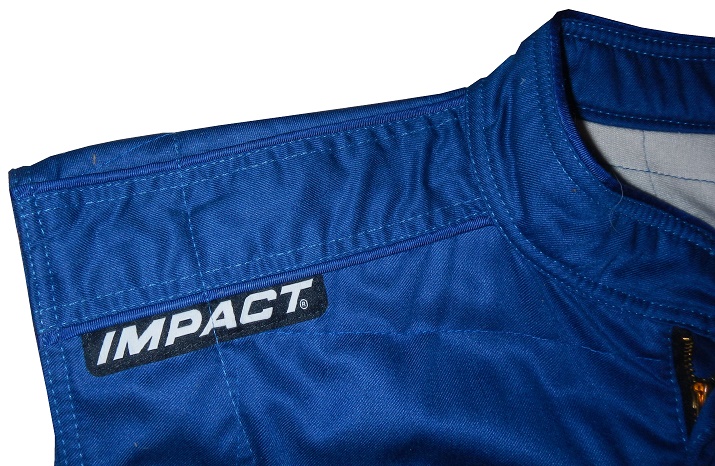
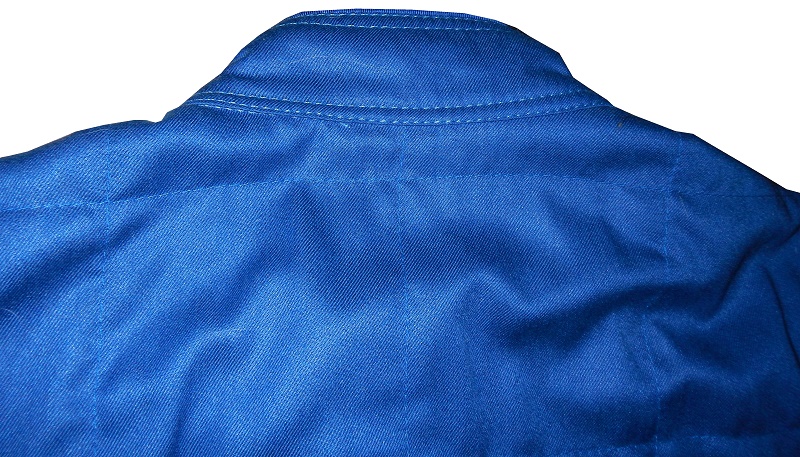
The collar has no logos of any kind, nor is there a cowl tag present. Though the vest would have been used during his ARCA racing, there are no logos of any kind on the chest areas.The only logo of any kind on this vest is a large HAGANS RACING logo, which, for some reason, is blue on a slightly lighter shade of blue.The warranty label is located next to the zipper inside the vest, behind the front logo.The all-familiar comfort straps are present on the sides of the hem.The shoulders have epaulets, that aside from Impact logos are unadorned. The standard vest sleeve holes are present as well.The back of the vest doesn’t show wear, and has no logos of any kind on it at all.Over 13 different articles thus far, The Vest Project has covered a number of different vests, and the issues surrounding them, and pit crew firesuits as well. We’ve covered vests from the Camping World Truck Series, and The Xfinity Series, but next week, for the final article in The Vest Project, we go to The Sprint Cup!
I had planned for the continuation of The Vest Project with an ARCA vest, but I’m going to hold off on that, because I’ve decided to go in a different direction this week. As my annual summer sabbatical comes to an end, I look back at the month of fun that I’ve had. Sadly, I didn’t get to do everything I wanted to do, because of weather issues, it was either too hot or full on thunderstorms. But I did get to have some fun.
My good buddy Josh came in, and my old clique from high school got together again for the first time in two years. I’m gonna say that I miss all of the guys getting together and hanging out. One of the things we made a point to do was to go to The Emporium, which is a vintage video game arcade and bar. All the games run on tokens, and each game is one token. If you are in the Chicago area, I suggest you take a visit, it’s worth it.
As I mentioned, I went to the Route 66 Nationals on Saturday July 9, and had a great time. In fact, that’s how a lot of my vacation time was spent, relaxing, and watching racing. The weather was very hot, so hot, that taking the dog for a walk at some points was a risky proposition. Lucy is a very timid creature, and I didn’t want to expose her for too long. So I had a few projects I had to slash, at least for the time being. Other times, thunderstorms dominated the weather, which kept my video feed busy.
I also did a couple box breaks,
and something…well I like it.
I did get a chance to take some pictures with my new camera, but due to a number of issues, such as heat, and restrictions due to events, I didn’t get anywhere near the photos I wanted.One thing I did do was pay attention to racing merchandise. I’ve been following sports and collecting sports stuff my whole life. I’ve seen the merchandise booth take many different forms, and have many different aspects. Officially licensed merchandise has gotten bigger over the years, and I’m not even going to talk about unofficial stuff. It’s not that often I see an officially licensed item that just makes my head hurt, but I’ve found something that has.
In the internet age, people are realizing that there are items for sale that they never knew they wanted. Sports fans are a very easy group to sell something to, in that they will buy most anything with their team logo on it. NASCAR fans are no different. Fans want stuff specific to their favorite driver. NASCAR’s online store is marketing this. It’s a race-used piston rod, with no indication as to which driver used it. You don’t know who used it…so why have it? The whole point of the race-used hobby is that fans can buy stuff used by their favorite driver and his team. Having a generic “race-used” item defeats the purpose of race-used memorabilia entirely. You don’t know which driver used it, you don’t know which team it came from, and you begin to question if it is authentic. Let me pay $70 for something I can’t prove is real…yeah, that’s a good deal.
While the piston rod is generic to the point of absurdity, the polar opposite is true for this Kyle Busch train set. For $299 plus shipping, you have an O-scale engine, three cars, and a caboose, all decked out in Kyle’s #18 paint scheme. As a bonus, the train also has two 1:64 die cast cars. That’s were things get interesting, since O-scale in model railroad translates to 1:48 to 1:43.5, depending on location, in the US it’s an even 1:48. To put it simply, you have a 1:48 train pulling a pair of 1:64 die cast cars. Scale be damned, we have sales to make! If Lionel’s creative team had more sense, they would have the train pull two 1:48 scale cars, which not only would be to perfect scale, but would create a rarer, more desirable version of the car, thus creating incentive for more collectors to buy it.
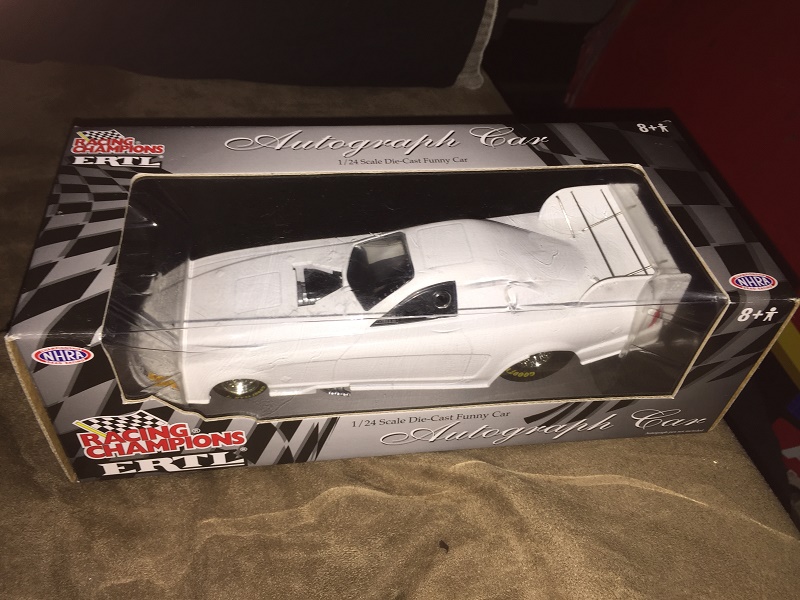
While those two are amazing, the item that gobsmacked me it this: Yes, that’s an autograph funny car, nothing really unusual about that…but what’s that logo on the front? For reasons I can’t understand, the NHRA decided to license A PLAIN WHITE CAR WITH NO LOGOS! Why? Why would you officially license something that is unpainted, and can’t in any way be connected to your brand? I can’t wrap my arms around this. While I have seen other examples, those do have official logos actually on the car. But looking at the back of the box gets even more entertaining. Ford has used the Mustang for their run in the NHRA, yet for whatever reason, the trademark on the bottom states it a TARUS, despite the fact it’s clearly modeled after a Mustang. Even so, using model names is a moot point, since nowhere on the car does it say anything about what model the car actually is. Nowhere on the car does it say that this is a Ford, nor does it say what model it is. Never mind the fact that it also lists Motorcraft and Areomax as trademarks, which, again, aren’t present on the car in any way. At least Goodyear’s logos are on the tires, so I can give them a pass.
This was made in 2002, which Ertl and Racing Champions were focusing more on quality than quantity in their racing die casts for the first time in the history of ever. Anyone who bought racing die casts in the 1990’s could go to Toys R Us, or Target, or Venture, and buy these for $1. Granted there were better options which were pricier, and Dale Earnhardt isn’t a part of these sets, but they were the cheap kids toys of the die cast market. But when you are trying to give the impression of quality, releasing an unpainted car that is for some reason officially licensed, and has the wrong model on the box doesn’t exactly scream quality goods.
This wouldn’t really work anyway, as the gloss coating increases the chance of the signature smudging before it dries, which when you are a little kid getting autographs from drivers, is a fate worse than death. A matte finish would be much better, and it would be easier to sign at an event. How over-budget and desperate for sales was Ertl that they decided to save the Chinese workers a half-step, and not apply decals, and package and sell this as an autograph car? I would seriously love to know who came up with that, and how it got to the shelves.
As idiotic as this is, they missed a great chance to make this an awesome product. Here is what you would have to do. Change the packaging from “autograph car” to “paint your own car” and add some paints and stickers. If you gave kids the chance to paint their own unique car, without the hassle of having to build the model first, this would be a gem. Even modern autograph cars make it clear that they are good for customization, and this one has official logos painted on the car. Then again, what more should be expected of a toy company that advertised its die cast tractors more than anything else?
Ok, we got off track(pun intended) and next week, that ARCA vest.
[Editor’s Note: I will be on vacation for all of July. I will continue the Vest Project as the Friday Feature while I’m away, as well as videos and Throwback Thursday. Once I get back in August, I’ll do My Thoughts on, and update the Paint Scheme Tracker and Grades.]
By David G. Firestone
Marketing can be hit or miss. Some marketing ideas might seem great, but backfire horrible. Some marketing ideas might seem horrible and work well. Sometimes marketing ideas work, and sometimes they don’t. Auto racing is a good strategy for marketing, because it brings in more people, and gives you a great promotional tool, which can bring in revenue. Your car can be made into a die cast, and sold, which will bring revenue, along with t-shirts, hats, coozies, and other such track souvenirs. Your driver will promote you while racing for the checkered flag.
While auto racing might seem like a top hit, sometimes a marketing idea comes along that just takes a great promotional tool, and takes it down to to a horrible one. The 1957 Chevy nonsense is a great example. Another good example that a lot fewer people remember is the 6 Hungry Drivers nonsense from 2005.
For those who don’t remember, from 1992 to 1999, Ray Evernham was Jeff Gordon’s crew chief at Hendrick Motorsports. They had previously worked together at Bill Davis Racing, even though the team hated Evernham. When Jeff Gordon joined Hendrick, Evernham joined him. Together, they won 47 of Jeff’s 93 wins, and 3 of his 4 Sprint Cup Championships. This partnership ended in 1999, when Evernham left Hendrick to pursue his own team, Evernham Motorsports.
Evernham Motorsports was actually a pretty decent on-track success, with 13 Sprint Cup Wins, 66 top 5’s, and 123 top 10’s. In the Xfinity Series, they had 5 wins, 13 top 5’s and 28 top 10’s. In 2005, they were sponsored by Unilever’s brand line, which includes Ragu, Country Crock Spread, Lipton Tea, and, of course, Hellmann’s Mayonnaise. Many of these sponsors were on car #6, and there were 6 different drivers who raced under this sponsorship, Paul Wolfe, Jeremy Mayfield, Mike Wallace, Kasey Kahne, Erin Crocker, and Bill Elliott. For this line of sponsorship, Someone came up with the bright idea to have “6 Hungry Drivers” as the slogan for this group of drivers.
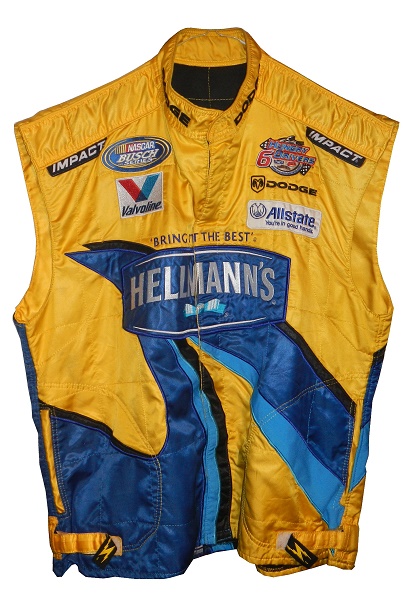
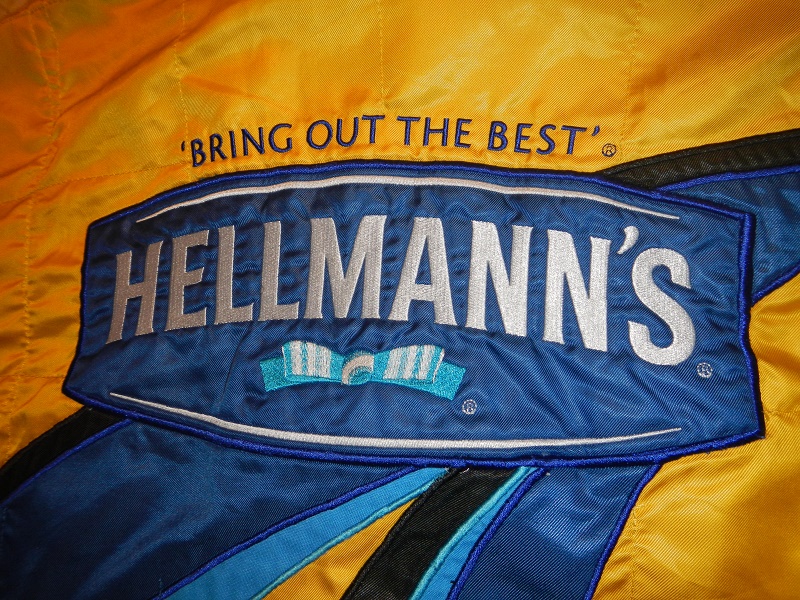
There is no better way to say that a team isn’t going to do well than saying “We have six different drivers who are hungry, since they haven’t found any on-track success at all, so don’t expect a lot from us” than using 6 Hungry Drivers. Of those six, Mike Wallace had a top 5, and two top 10’s, Paul Wolfe found a top 10, as did Jeremy Mayfield. The star standout was Kasey Kahne, who was really hungry, earning a win, three top 5’s and three top 10’s. Granted that not all of them came for the #6, but he really was hungry. For the races that these six drivers raced, this Hellmann’s Mayonnaise vest was produced.The vest itself shows some use, albeit light use.
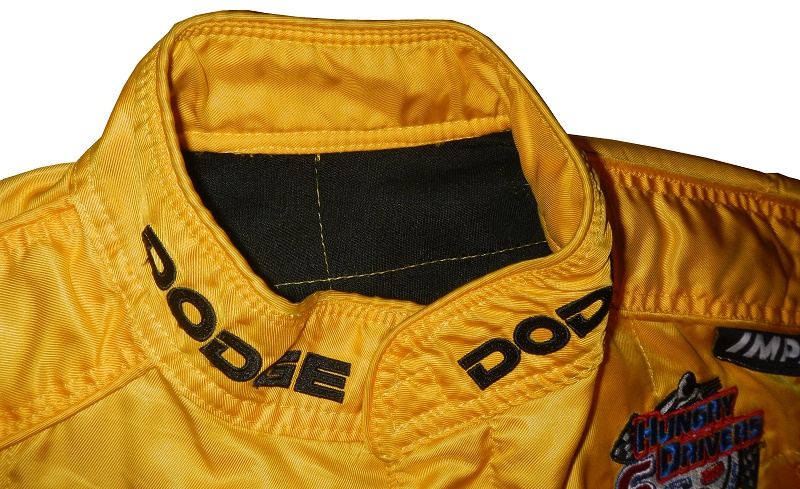
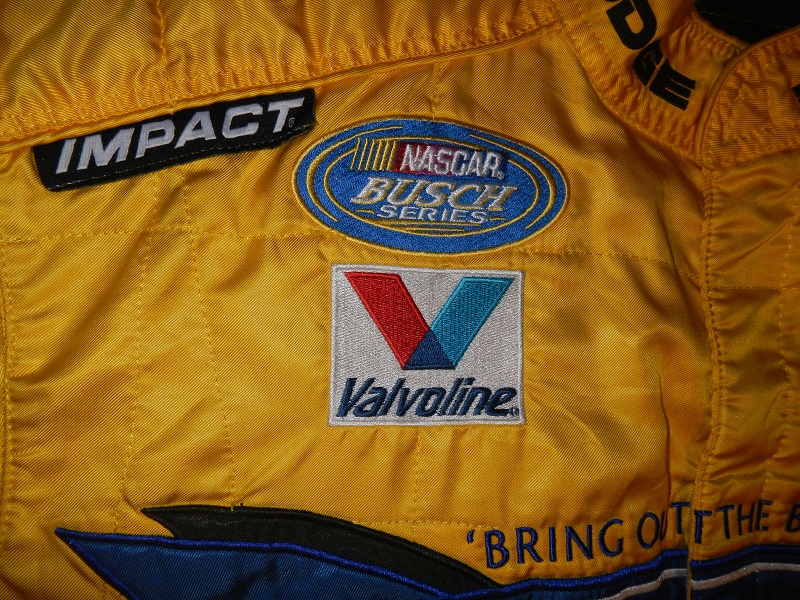
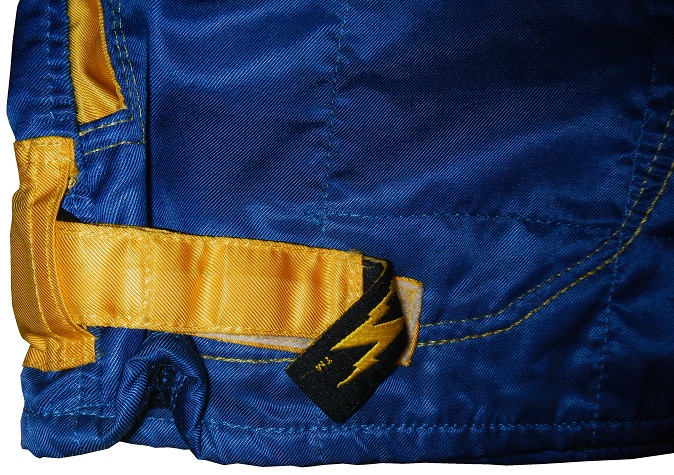
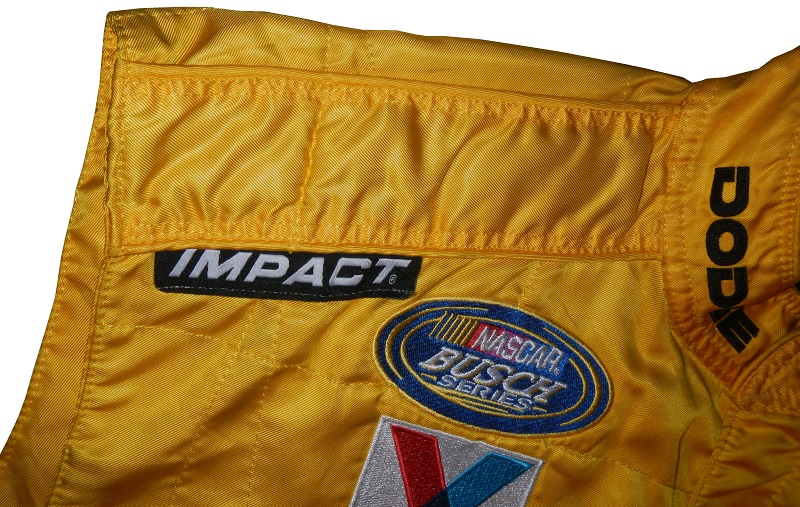
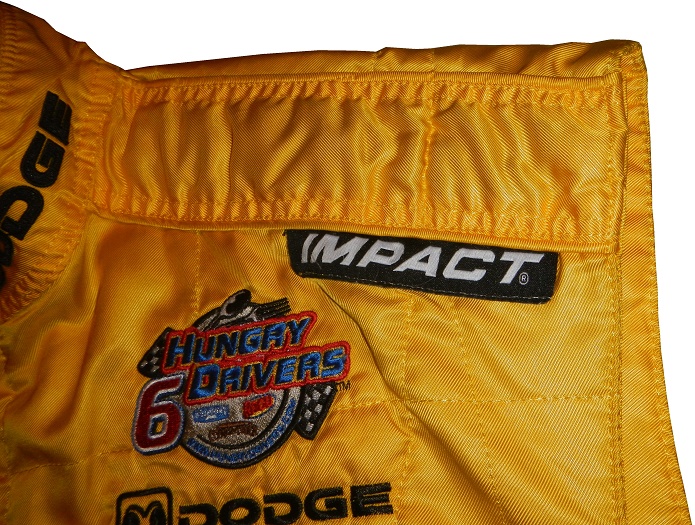
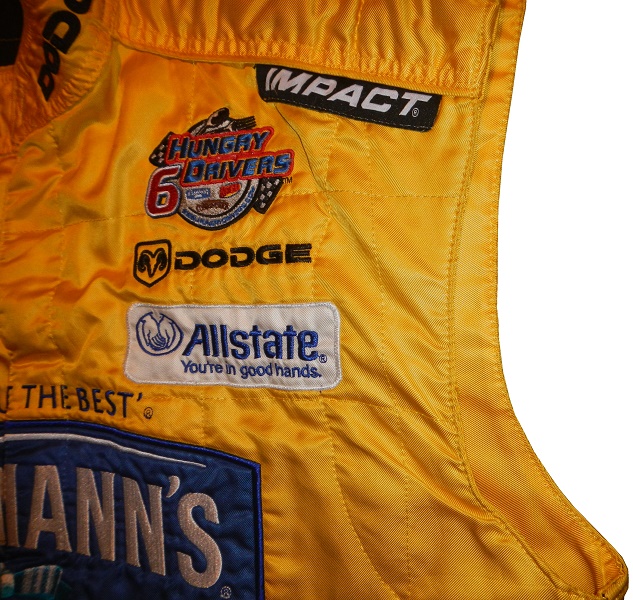
The collar has black DODGE logos on the yellow material. I’ve also noticed the black internal material which I haven’t seen that much in racing suits.The right chest sports NASCAR BUSCH SERIES and VALVOLINE logos.On the left chest, 6 HUNGRY DRIVERS, DODGE, and ALLSTATE INSURANCE logos have been placed.A large HELLMANN’S logo is present on the front torso, along with some odd blue striping.The Simpson warranty label is present inside the vest, behind the main logo, next to the zipper. There is an identification label, but that is in a different location.Unlike later models, this early Simpson vests sports comfort straps.Also unlike later models there is an identity tag…in the tail, as opposed to next to the warranty label. The name TOOD D is written in Sharpie, but no date has been written.The shoulders have yellow epaulets, which are unadorned. The standard vest sleeve-holes are present as well.The back of the vest shows some light wear.The back of the neck sports an Evernham Motorsports logo.The back logo features a HELLMANN’S logo, along with the same odd blue stripe, though in reverse.The 6 Hungry Drivers promotion was a bad idea from the start, and it didn’t last past 2005. Evernham Motorsports didn’t last much longer. In 2007, George N. Gillett Jr. bought a stake in the team, and the team became Gillett Evernham Motorsports. The team lasted until 2009, when it was bought by a new team, and both Evernham and Gillett left the team, thus leaving Richard Petty Motorsports.
Next week, I return from my vacation, I will bring back My Thoughts On, the Paint Scheme Grades and the Paint Scheme Tracker. Also we will look at a vest from the true definition of a home-grown team.
[Editor’s Note: I will be on vacation for all of July. I will continue the Vest Project as the Friday Feature while I’m away, as well as videos and Throwback Thursday. Once I get back in August, I’ll do My Thoughts on, and update the Paint Scheme Tracker and Grades.]
By David G. Firestone
Last week I discussed a vest with a small-time sponsor, this week we’re going bigger. Founded in 1923, Arkansas Best started with humble origins as a local freight hauler. As time progressed, ABF became bigger, and has gone from a local hauler based in Fort Smith, Arkansas to a large global shipping force. A few employees have grown to over 10,000, and a few thousand dollars have turned in to over a $1 billion.
Like many shipping companies, ABF has had to deal with bad economies, and increased completion. Also, they have turned to auto racing sponsorship to increase promotion, and gain attention. While they were never seen in the Sprint Cup, they did get a decent amount of exposure in the Xfinity Series for, of course, Braun Racing.
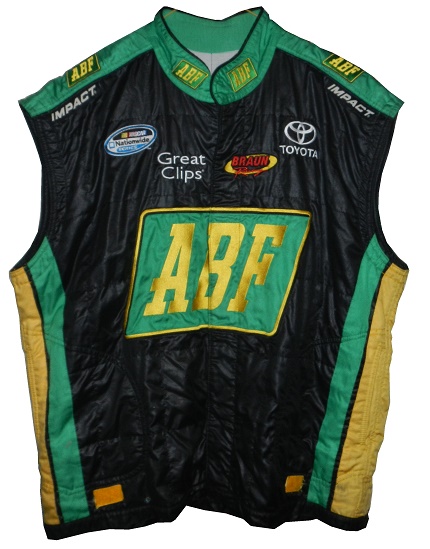
ABF’s sponsorship goes back to 2008, where they raced a number of different races for several different drivers. They left in 2009, but made a return in 2010, and 2011 between drivers James Buescher, and Jason Leffler. Lefler raced 7 races with ABF on the car, and had 2 top 5’s and 5 top 10’s in 2010. Buescher raced 4 races and had a top 10 in 2011. For those races, a large crew member with the nickname “Poptart” was issued this Impact size 2XL vest as a part of a three-piece crew suit.The vest shows some light use, not shocking, given that it was used for 12 races in 2 years minimum.
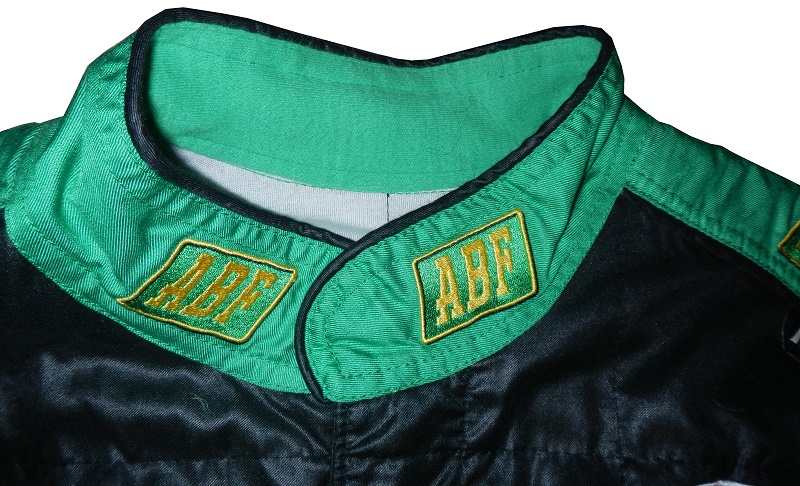
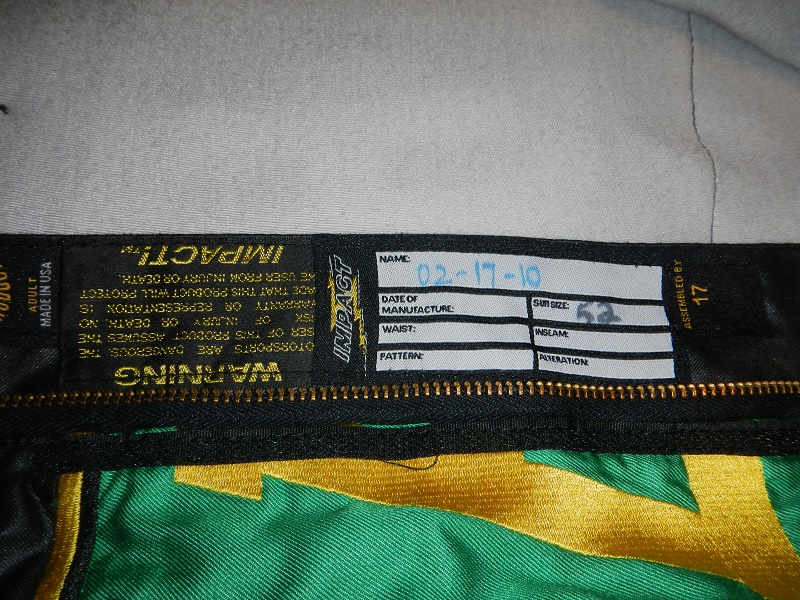
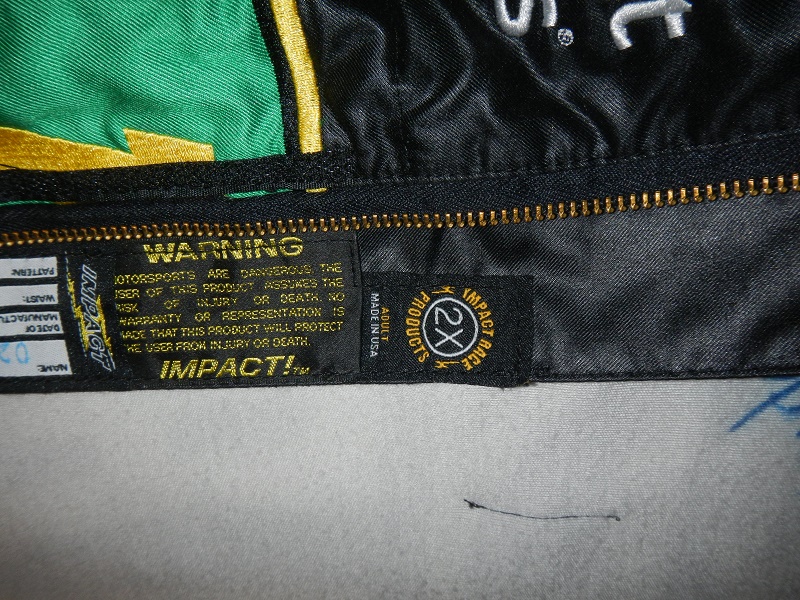
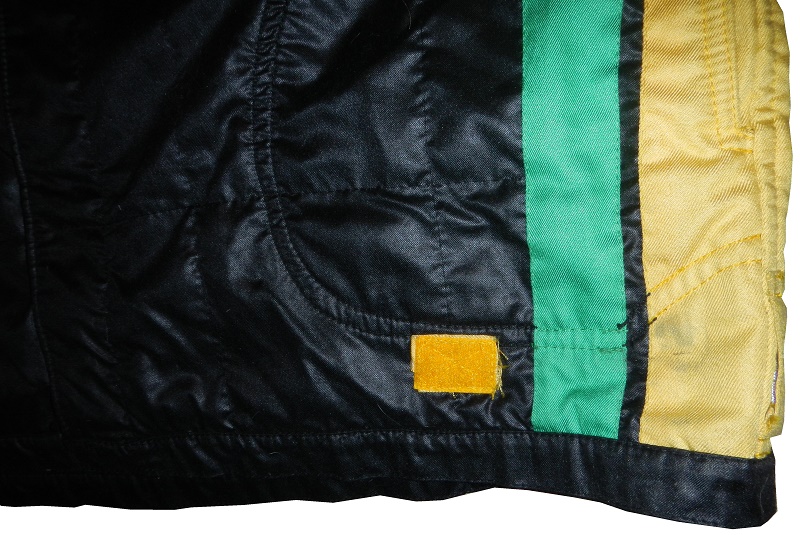
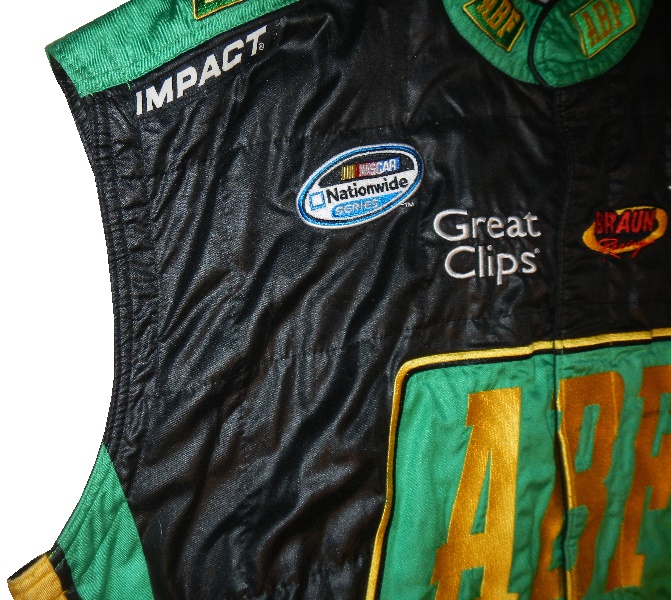
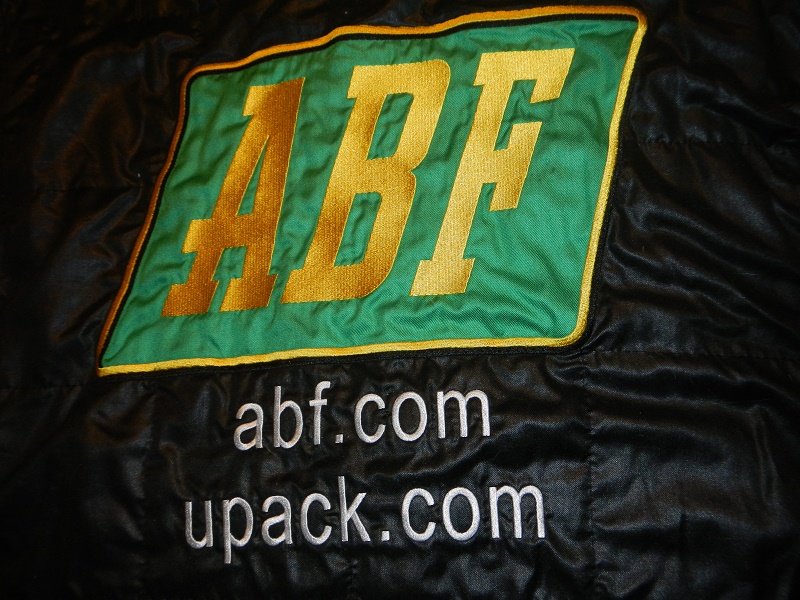
The green collar has yellow ABF logos embroidered, which are difficult to see given the shade of green used. The name Poptart is written on the inside in blue Sharpie.Embroidered in the right chest are NASCAR NATIONWIDE SERIES and GREAT CLIPS logos.The left chest features BRAUN RACING and TOYOTA logos.A large ABF logo is embroidered in green and yellow is present on the front of the suit.The standard Impact warranty label and identification label is present next to the zipper, behind the main logo on front.The comfort straps are present on the sides of the hem.The shoulders have green epaulets with yellow ABF logos on them, as well as Impact logos. The standard vest sleeve holes are present as well.The back of the vest doesn’t really show any wear.The back of the neck has a yellow Impact Z logo on the collar itself, and a white TOYOTA logo below it.The back torso has the same ABF logo as the front, though somewhat higher, and ABF.COM and UPACK.COM embroidered into it.Though Braun Racing had a good run, it would come to an end in at the end of 2010, when it merged with Turner Motorsports. The team would have some more glory before fading away in 2014. Next we will discuss a vest with a bad marketing idea, used by a team with that met an even more inglorious end. Let me make this clear, we are done with Braun Racing and Turner-Scott Motorsports for the time being!
To say our country has had a dark week would be an understatement. Between the senseless deaths of Philando Castile in Falcon Heights Minnesota, and Alton Sterling in Baton Rouge, Louisiana, and the Dallas Police Officers who were senselessly gunned down by a madman, our country has had a dark cloud hanging over it for a week. Sadly, not even motorsports could escape from this dark cloud, as long time Champ Car owner Carl Haas, of Newman/Haas Racing, and long time funny car driver Chuck Etchells also passed away this week.
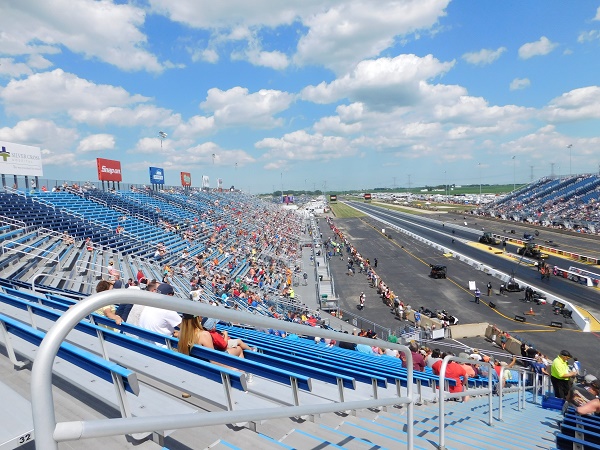
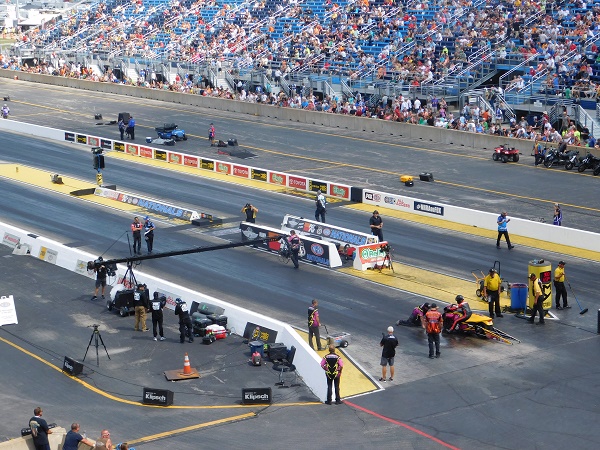
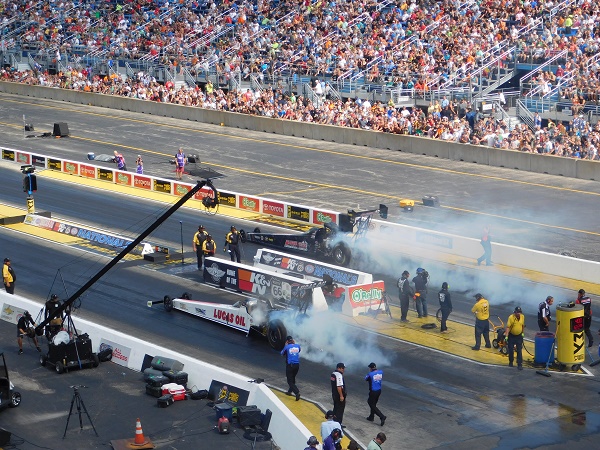
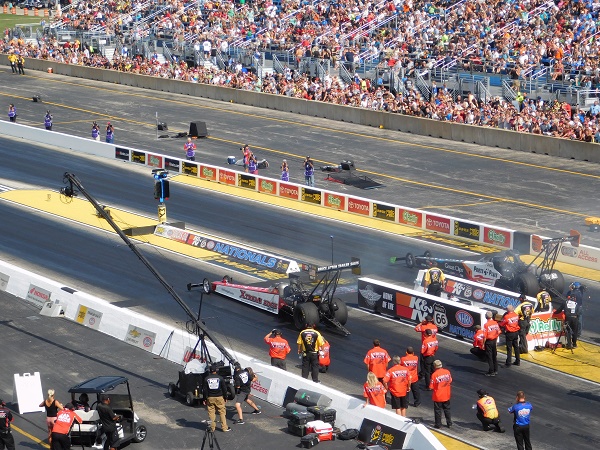
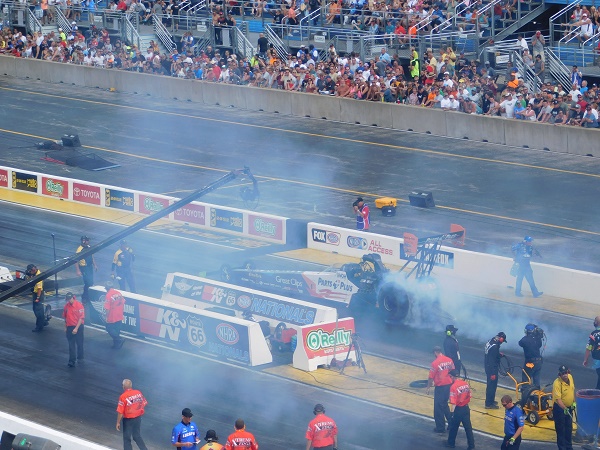
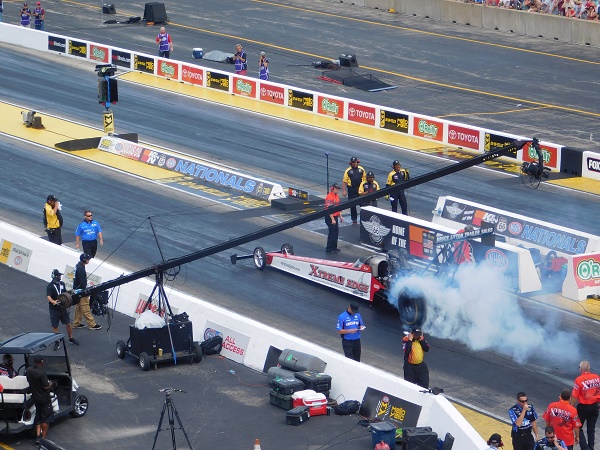
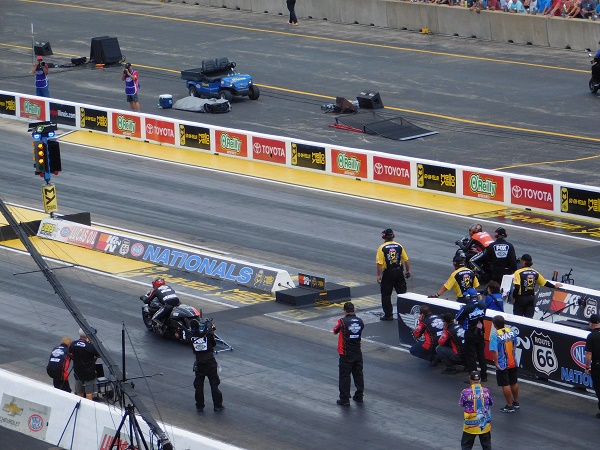
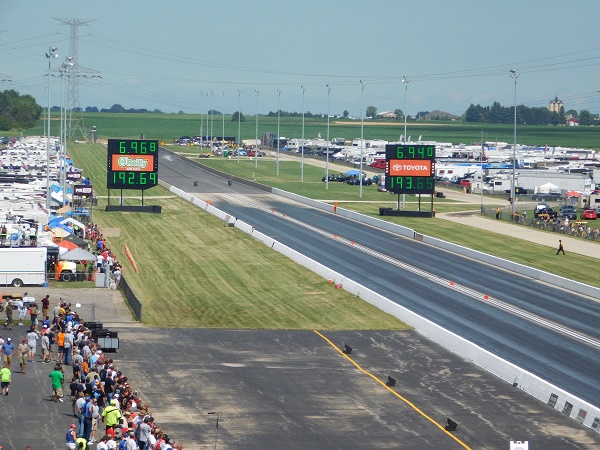
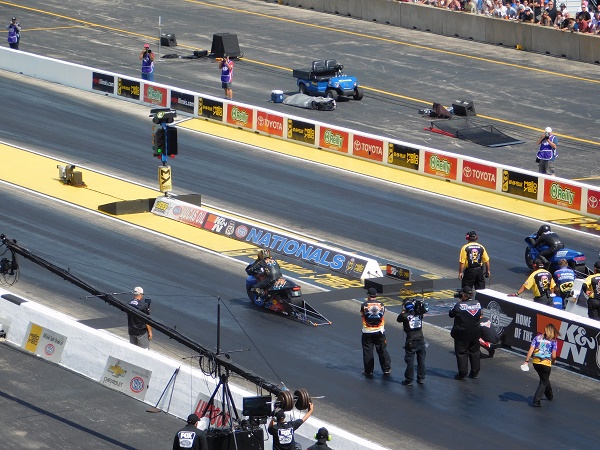
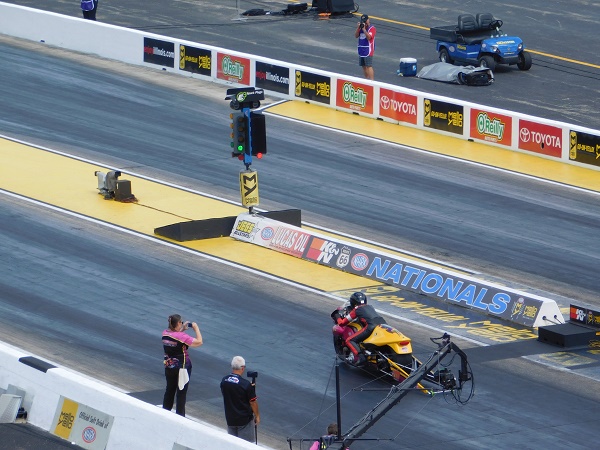
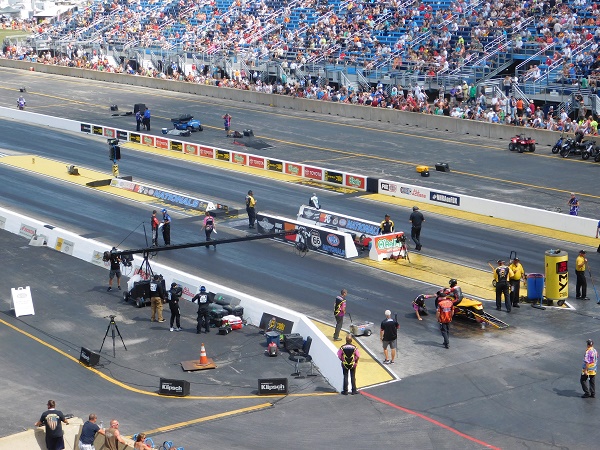
These dark clouds were all around myself and the rest of the country, but for Chicago area motorsports fans, the dark clouds lifted over Route 66 Raceway, where the K&N Filters Route 66 Nationals took place this last weekend. I went on Saturday to the event, and I had a great time as I always do. It’s become my annual summer tradition.
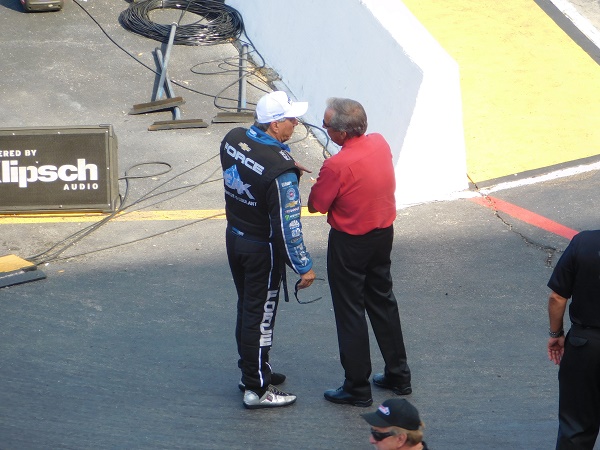
I praise the NHRA for being about the fans, and though I disagree with some of their recent decisions, the fan experience at the track is great! Fans can meet the drivers, get autographs, get pictures, for no extra cost, other than ticket price. No other form of racing that I’m aware of allows this, at least not on the national level, for free. It’s a great value, and a fun way to spend the day! I spent most of my time getting autographs and meeting drivers.
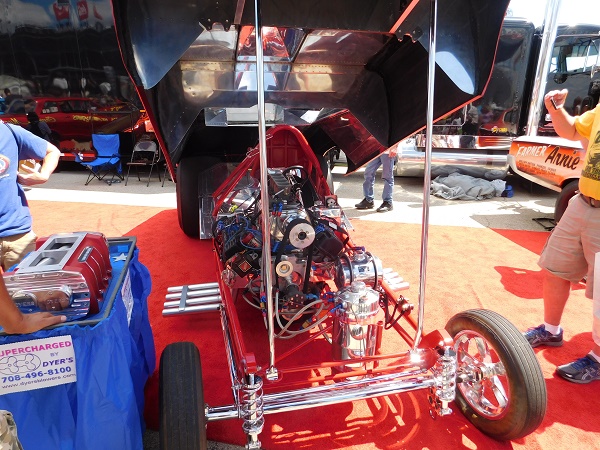
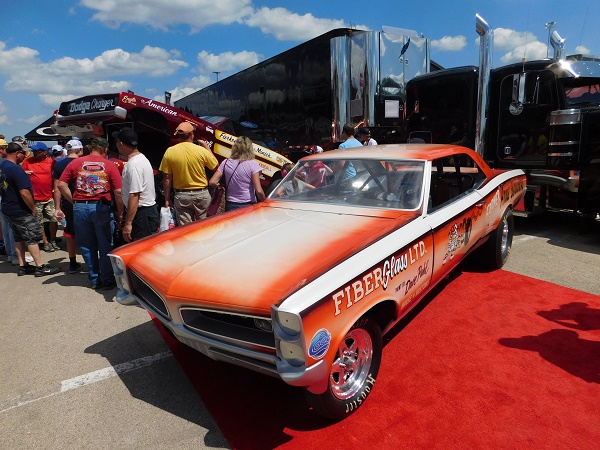
2016 marks the 50th Anniversary of the Funny Car class in the NHRA, and there were four beautiful vintage funny cars on display. The first of which is the “43 Jr.,” a 1965 Plymouth Barracuda which Richard Petty raced in 1965 and early 1966, after NASCAR banned Plymouth for their successful Hemi engine, One of the first flip-top Funny Cars, Pete Gates 1966 Mercury Comet “Gate Job,” The legendary “Chi-Town Hustler,” a 1969 Dodge Charger and Arnie “The Farmer” Bestwick’s 1966 Pontiac GTO. These are four very beautiful cars, in the perfect setting imaginable.
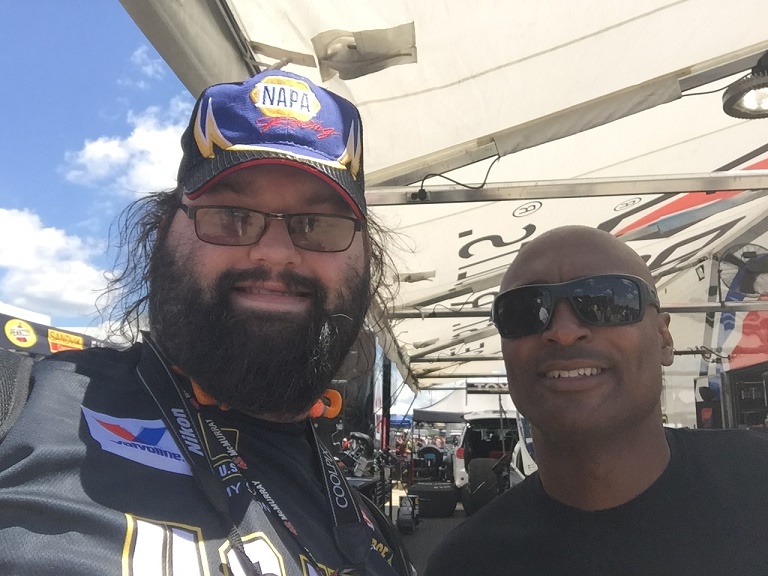
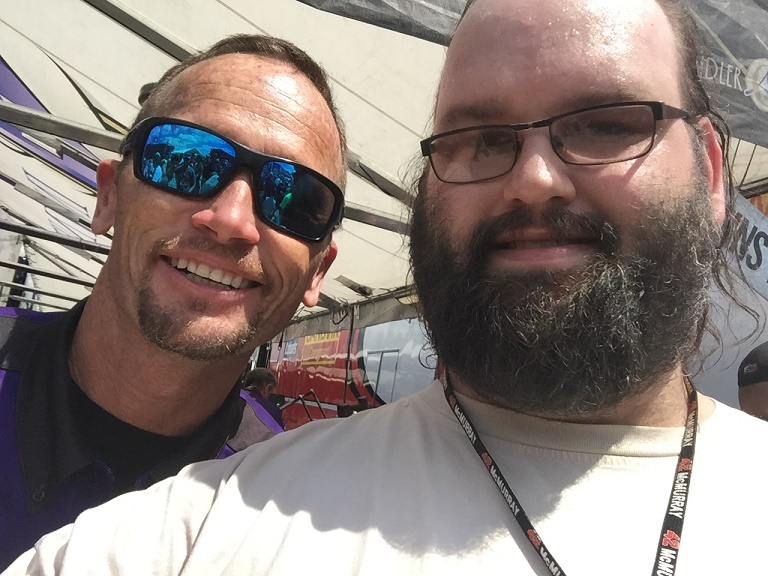
As I’ve discussed on The Driver Suit Blog in months past, I’m against taking selfies, unless there is a reason to take them. I consider meeting race car drivers a very valid reason to take selfies. There are drivers I like who I didn’t get the chance in years past, and I decided to get those selfies, and while I didn’t get every one I wanted to, I did get: John Hale, Antron Brown, Terry McMillen, Hector Arana Sr. and Hector Arana Jr., Clay Millican, Angelle Sampey, Robert Hight, Leah Pritchett, and perennial Driver Suit Blog favorites TJ Zizzo, and “Fast” Jack Beckman.
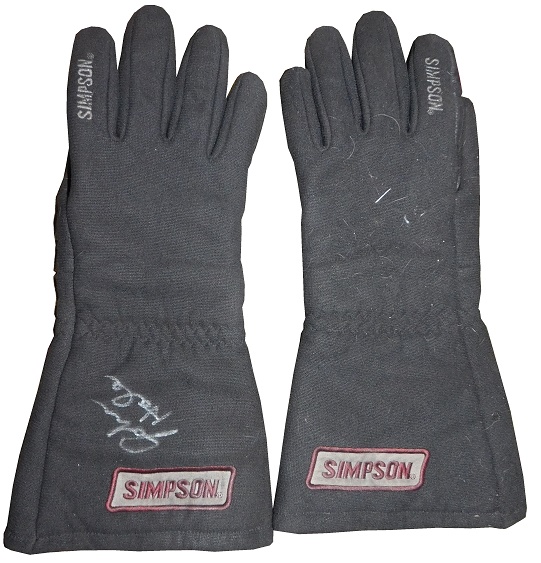
As is the case with these events, I brought items to get autographs on. I brought my TJ Zizzo pilot chute, and got Hector Arana Sr., Hector Arana Jr., Clay Millican, Terry McMillen, Leah Pritchett, and Jack Beckman. I brought a pair of John Hale Gloves, and got them signed by him. Finally, I brought my Bristol #1 Qualifyer hat, and got it signed by John Hale, Antron Brown, Terry McMillen, Hector Arana Sr. and Clay Millican, Hector Arana Jr., Angelle Sampey, Robert Hight, Leah Pritchett, and perennial Driver Suit Blog favorites TJ Zizzo, and “Fast” Jack Beckman.
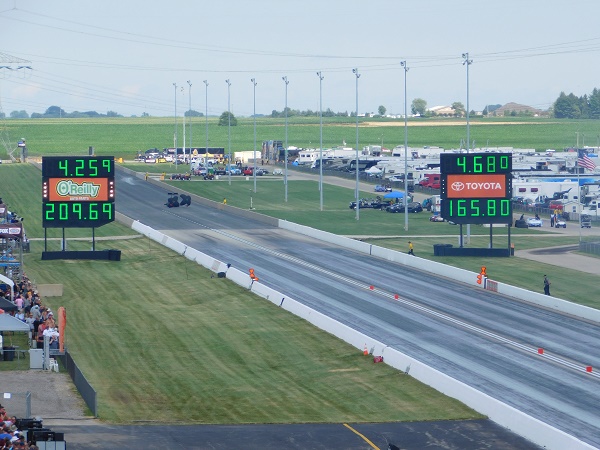
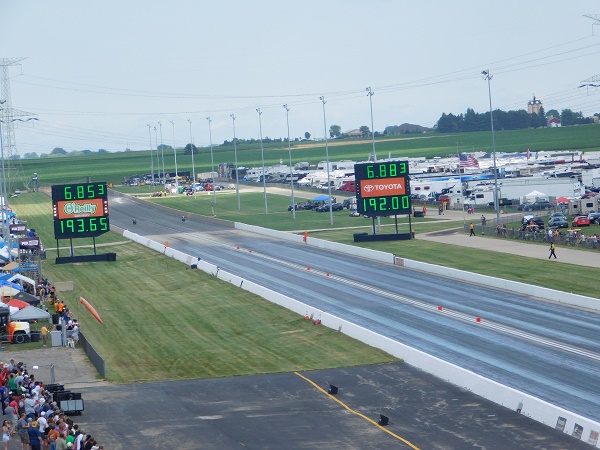
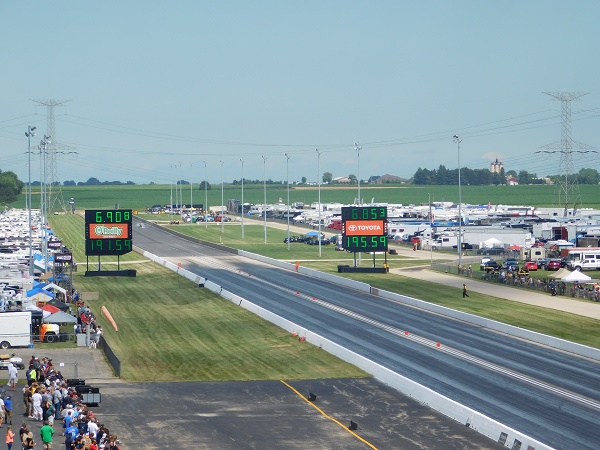
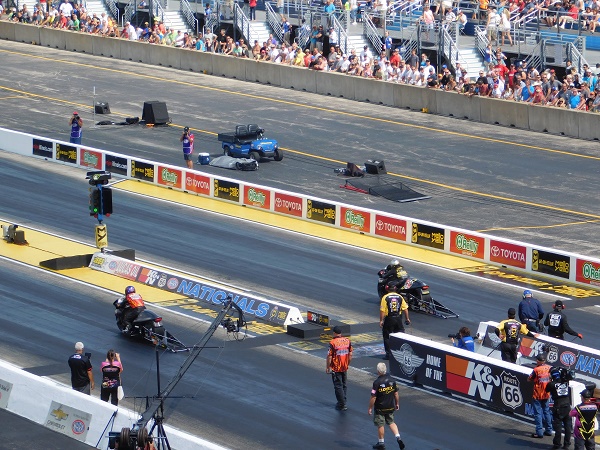
As the professional categories started their third qualifying round, I made my way to the stands to test out my new camera. I upgraded from a Nikon COOLPIX S100 to a Nikon COOLPIX L840. The L840 is a great camera, which I quickly discovered. I snapped this pic of the Sunoco Vision from my seat zoomed in, and then I snapped one from my seat zoomed out. Can’t see the screen, here it is.I then snapped a series of pictures of the racing action using the zoom, and ALL of them look good! Bob Bode wished his wife/backup girl a happy birthday on his car. Oh to be a fly on the wall of this conversation!I also did a few videos of the action,
and I tried to use the slo-mo feature on my iPhone. It didn’t work as well as I would have hoped…
If you have a chance to make it to an NHRA National event, I suggest you go, it’s worth the trip, and worth the tickets! One last thing, I learned before I went to the track that my favorite Pro Stock driver V Gaines decided to retire from racing, because the fun has gone away for him. I’m sad, I liked Gaines a lot, and he will be missed dearly. On behalf of the NHRA fans…YABBA DABBA DOO, old friend, YABBA DABBA DOO!

 By David G. Firestone
 The Highland Mint Bears coin isn’t of the Opening Day variety commonly used, but comes with a box, and full PSA/DNA authentication
 The HEADS side of the coin features a Chicago Bears “Wishbone C” logo, and CHICAGO BEARS EST 1920 stamped into it.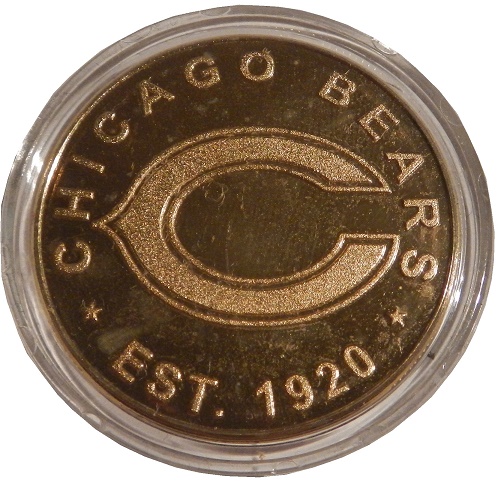
 The back of the coin features the pre-2007 NFL shield, and has OFFICIAL GAME COIN 2004 stamped into it.
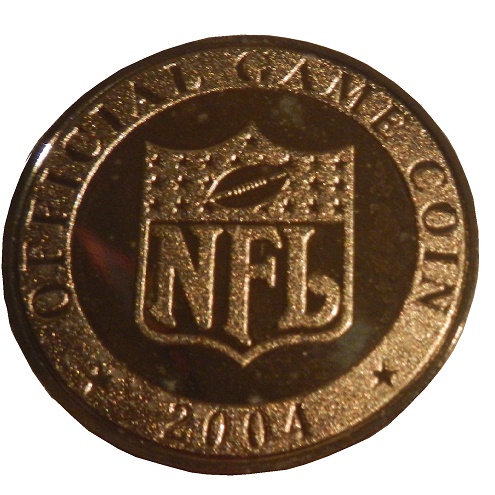 The coin is stamped #531. There were a total of 5000 made, and while other examples of game-used toss coins are numbered 0001, this isn’t surprising as any one of the 5000 coins made could find their way onto the field.
 Game used coins are an interesting aspect of the memorabilia market, because there is a discussion about if they are “game used” or “pregame used.” I’m wondering if there should be a separate category for “pregame used” memorabilia. MLB and the NHL both have special warm up jerseys worn prior to games. Should they be called “game worn” when they never saw action during an actual game?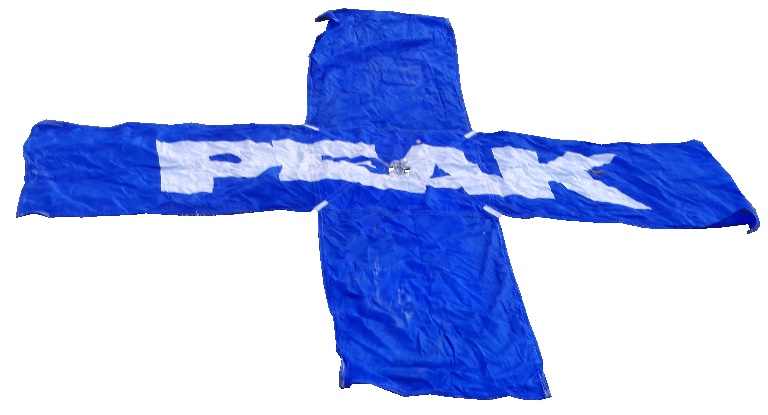



















































 The Driver Suit Blog
