The First Cuban To Win In NASCAR’s Top Series

By David G. Firestone

NASCAR is closely associated with a lot of things. One thing it isn’t typically associated with is Cuba. The typical driver profile that most people all drivers are Caucasian males. In recent years however, NASCAR has been working to increase diversity in the sport. The Drive for Diversity is a program that has brought a lot of diverse talent into NASCAR, including Paul Harraka, Darrell Wallace, Jr., Natalie Decker, Kenzie Ruston, Mackena Bell, Sergio Pena, Kyle Larson, Daniel Suárez, and Aric Almirola.
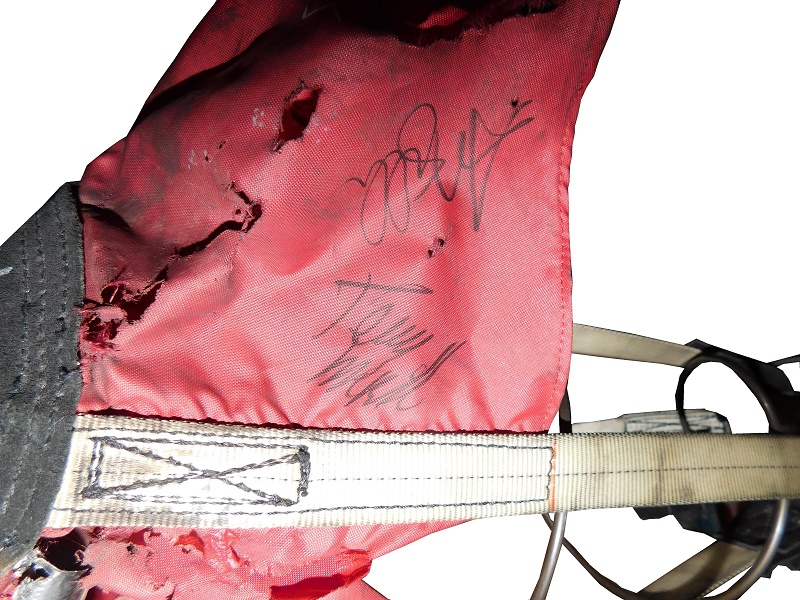
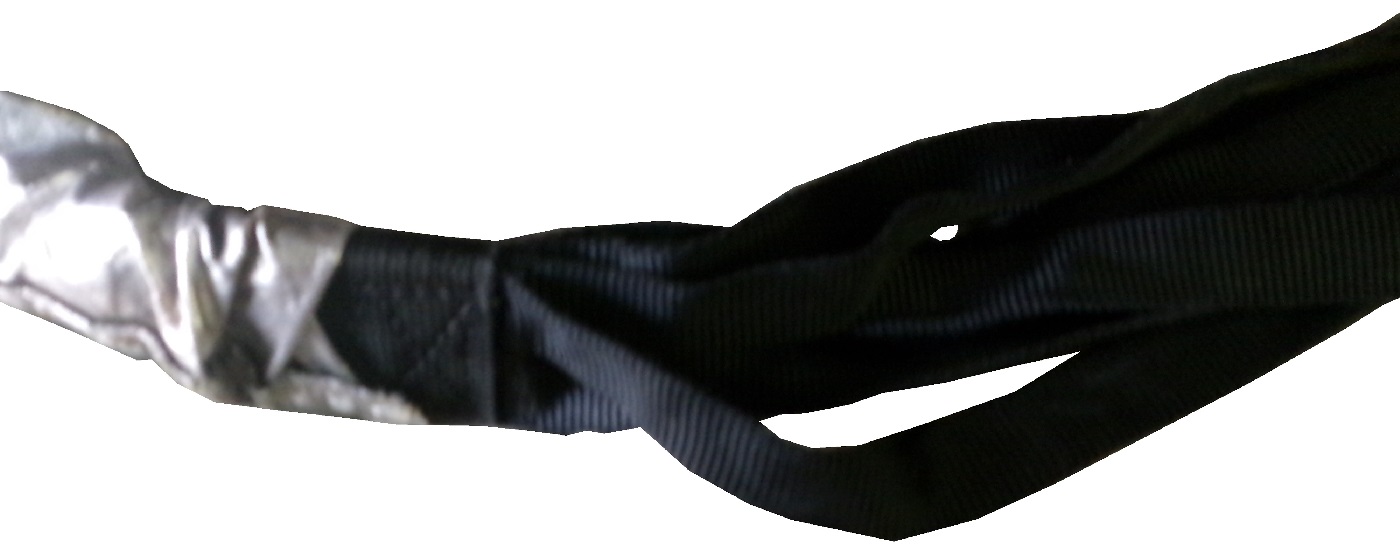
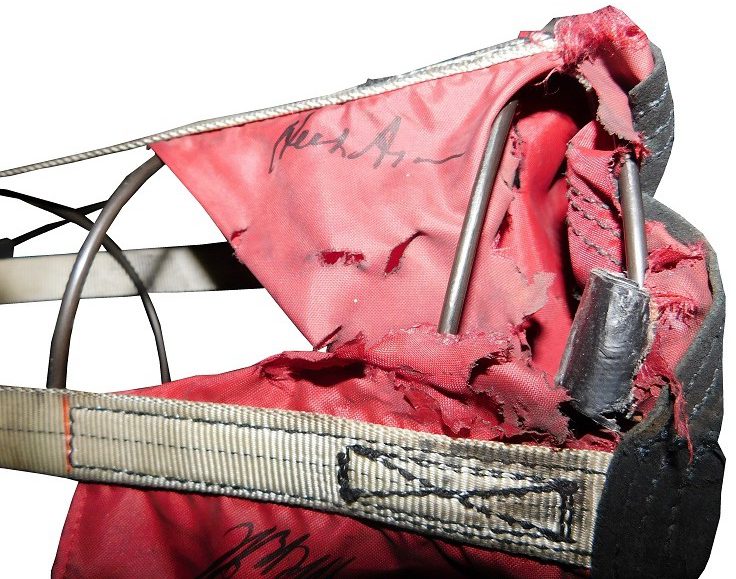
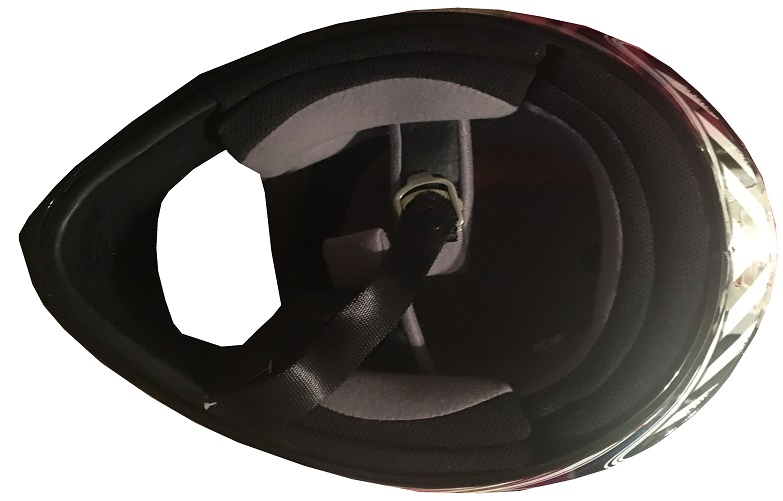
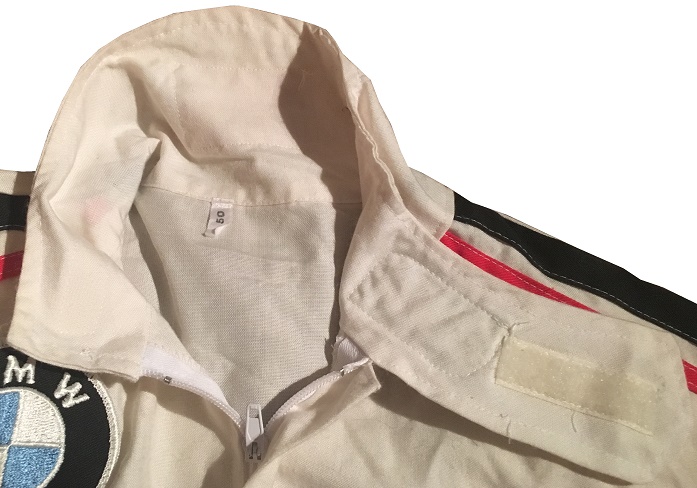
Born in Flordia to Cuban parents, Aric Almirola began racing karts at age 8, eventually racing nationally at age 14. In 2002, he started racing in NASCAR, eventually joining Drive for Diversity in 2004. In 2005 he began racing in the Truck Series, eventually becoming the 24th driver to win races in all 3 of NASCAR’s top 3 series. During his career, he wore this undershirt. This Sparco X-COOL Silver lightweight undershirt shows a little use.The cowl has a small size tag, and SPARCO is embroidered in gray lettering.The front torso is unadorned.There is a rubber X-COOL Silver patch on the left side.The shoulders and sleeves are unadorned. The back of the shirt shows some very light wear.The back of the neck is unadorned.Aric Almirola’s twitter handle @aric_almirola is printed on the back, as opposed to the front for some reason.I like this, and hopefully, I can get this signed at some point.

I wasn’t going to do another one, but I tried this, and I wanted to share this recipe. So, it’s…

TAILGATING TIME

Shrimp de Jonghe

4 servings

Ingredients

1 1/2 pounds shrimp, peeled and deveined

2 cups dry white wine

1 cup butter, melted

2 cloves garlic, minced

2 cups fresh bread crumbs

1 pinch ground cayenne pepper

1/2 teaspoon paprika

1 cup chopped fresh parsley

Instructions:

1-Preheat oven to 350 degrees F (175 degrees C). Lightly grease an 11x 7 inch casserole dish.

2-Place shrimp evenly in the casserole dish.

3-Pour wine over the shrimp.

4-Mix together butter, garlic, cayenne pepper, paprika, parsley and bread crumbs.

5-Sprinkle bread crumb mixture over the shrimp. Refrigerate now if desired.

6-Bake in preheated oven for 20 minutes, or until shrimp are firm and topping is golden brown. Serve immediately.

Next week, a firesuit from an aspect of racing that isn’t really discussed.

Miss Winston Revisited

By David G. Firestone

I was doing some cleaning recently, and I discovered I had this. I had to double check to see if I had covered this item, and it turns out I had, but not very well. So for this week’s Friday Feature, I will discuss this vintage Miss Winston suit.

Miss Winston was an idea thought up in the 1970’s. The idea was to have a beauty queen with the drivers in Victory Lane after races. The idea died after the Winston Cup turned to the Nextel Cup, but when Sprint took over in 2009, the idea was revived. Monster Energy kept the trend going, but with the new sponsorship setup, at the time of publication, I don’t know if it will continue.

At least 50 different women were Miss Winston at some point. Though they were told not to, many dated and even married drivers. The dress code was decided by Winston, and included this vintage jumpsuit.  It is a simple red polyester jumpsuit.There is a collar, and a wash tag in the cowl.It has a Winston logo embroidered on the chest.It come with a white belt and straps on the legs. The suit features short short sleeves. The back of the suit is unadorned. Winston was an idea thought up in the 1970’s. The idea was to have a beauty queen with the drivers in Victory Lane after races. The idea died after the Winston Cup turned to the Nextel Cup, but when Sprint took over in 2009, the idea was revived.

Since this is a short article, I’m going to add…

TAILGATING TIME!

It’s early in the year, it’s cold, so if you are going to watch a race with friend, you want something hearty, so I present:

Beef Pot Roast

8 Servings

Ingredients

2 teaspoons olive oil

4 pounds boneless chuck roast

1 onion, chopped

2 cloves garlic, minced

2 bay leaves

1 teaspoon salt

1/2 teaspoon freshly ground black pepper

Instructions:

1-Preheat oven to 325 degrees F (165 degrees C).

2-Heat a heavy Dutch oven on top of the stove over medium high heat.

3-Add oil, and sear meat in the center of the pan for 4 minutes.

4-Turn meat over with tongs; sear all sides for 3 to 4 minutes on each side.

5-Remove meat from pan. Arrange onion, garlic, and 1 bay leaf in the bottom of the pan, and sprinkle with salt and pepper.

6-Return meat to pan, place remaining bay leaf on top of meat, and cover.

7-Cook in the oven for 30 minutes at 325 degrees F (165 degrees C).

8-Reduce the heat to 300 degrees F (150 degrees C), and cook for 1 1/2 hours.

9-Remove roast to a platter to rest for 10 to 15 minutes.

10-Slice, and top with onions and gravy.

Next week, we focus on Aric Almirola.

Currencies: Coins and Paper Money-Revisited

By David G. Firestone

Money really is the great equalizer. Every human being on the planet wants as much of it as possible. We work jobs we hate in order to get it, and we spend it as we see fit. While we mainly spend it on things we need to live, food, shelter, and clothing, we do spend it on things that make us happy.

I find it amazing that most people know so little about one of the most important objects in the world. For a lot of us, our pocket change can be useful, but if you knew the history about it, and how it was made, they would be awestruck.

Metallic coins really started with the human desire for gold. While the earliest known coins date back to around the 8th and 7th centuries BCE, gold has been used since 600 BCE for monetary purposes. Today, gold is still a part of global currency, but most gold mined is used for other applications, such as jewelry, electronics, medicine, commercial chemistry, and other industrial uses.

Gold is also a status symbol. Gold medals, and trophies are symbols of victory and achievement. Gold used in jewelry is symbolic of wealth and success. Gold in and of itself is seen as both a form of good and evil. One of James Bond’s most well known foes was Auric Goldfinger, who spent his entire life trying to acquire as much gold as possible.

I happen to have some pure gold in my possession. I have .1 gram from NZP Gold, a smelting plant in Turkey. Gold is one of the few minerals we all want to have. This is a small gold nugget. It is .07 grams. When pure gold is flattened by “goldbeating” the end result is a sheet of gold leaf. It’s main uses are for art and architecture, but it can also be edible. These are two small jars of gold leaf. Silver has uses in many different applications, including electronics, medical uses, solar panels, currency, photographic film, x-rays, and numerous other uses. These are three 4 gram bars of 99.999% silver. Coins started their lives as a way to simplify the use of gold as currency. Coins were originally made by using molds and metal. The blank was made using bars of metal, which was hammered out on anvils. Then the blank, which is known as a “planchet” was then heated up, placed between the two molds, and hammered. This was a less than precise method, and since the mold had to be hammered by hand, the design would vary. This Constantine-era coin is an example of that process.These examples of medieval coins are also examples of that process.

 Modern currencies are very heavily monitored. The designs in recent years aren’t so focused on being artistic, but focused on being counterfeit-proof. Older coins tend to be better looking. These better-looking designs include:

Wheat Pennies, Liberty Nickels, Buffalo Nickels, and Mercury Dimes,As time went on, the process improved. Dies replaced the molds. The die process is similar in theory to the mold process, but there is a lot more quality control involved. Dies are cast from a master die. The design for the master die is drawn on paper, and then hand carved in clay then plaster by an engraving expert, in a much larger size than the coin will be. That is then coated in expoxy, which takes 18 hours to set and cure, then it is placed in a machine that is called a “reducing lathe” which spins the design around while transferring every minute detail from the large epoxy mold to a coin-sized die. This die is called “the reduction hub” and is used to make the master die.

When the master die is made, the reduction hub is placed into a machine with a cone-shaped piece of metal. The machine presses the hub into the cone, creating the master die. This master die is used to make “working hubs” which are used in the die press. Dies have the image of the coin reversed, so they come out properly in the minting process. Planchets come about from 1,500 foot rolls of prefabricated metal, which has the correct mixing of metals. The planchets are punched out, and the waste metal is recycled. These are two examples of modern planchets, one is a quarter, one is a dime.After they are washed and cleaned, the coins go through an “upsetting mill” which uses a large spinning disk to move the planchet through a groove which grows narrower and narrower. This adds a raised edge to the coin, higher than the design, which is called a “relief.” This is done to protect the relief. Then the planchet, with the raised edge heads to the press, where a die set is waiting. The coin press can stamp out 750 coins a minute, or 12.5 coins a second! One die is the “hammer” which moves back and forth during the stamping process, and the other is called the “anvil” and is stationary.

After the coin is struck, mint technicians examine a sample from the batch. If there are die errors, or other forms of damage, the lot it scrapped, the metal recycled, and a new hub is brought in. This is done for several reasons. The mint takes pride in their work, but the main reason is that new vending machines have scanners that scan coins as they are inserted. Errors of any kind mean that the scanner will reject the coin as it sees it as fake.

Interestingly, the US Mint doesn’t simply throw away used coin dies. They realize that there is a huge demand for coin dies. The relief is removed from the die, and destroyed. The end result is packaged with one of the coins it minted, and sold in sets to collectors.

The relief has to be removed. This is not a minor issue, as there are a lot of counterfeiters out there, who want to make money the illegal way, rather than earn it. This also goes back to the Canadian Voyager Die incident. In 1986, the Royal Canadian Mint shipped both sets of master dies from Ottowa to Winnepeg. In the following investigation, it was discovered that the Royal Canadian Mint had no set procedure for shipping dies, and in a bid to save $43.50 Canadian. This disastrous decision forced the Mint to come up with a new design, due to the very real fears of counterfeiting, and as such, the Loonie was chosen as the new design for the dollar coin.

While it is impossible to get a die used in a monetary coin, medallion dies are easier to get. While some dies are clearly canceled, others, such as these three examples, still have the reverse image present. These two small dies were used to make a small “B.T.” token, slightly bigger than a nickel.  The accompanying token is a fit to the mold. This second die is from a 1960’s Wildwood Medallic Arts Wildlife series medallion and the matching die. This is from the 3rd medal in the series, this is the Grizzly Bear die from the Grizzly Bear/Golden Eagle Medallion. The relief is just under 1.5 inches across, and is in perfect condition, having no evidence of cancellation. The medallion fits perfectly in to the die. The first government to issue bank notes was the Song Dynasty in China. The Song Dynasty, in the early 11th century, allowed 16 different banks to print up the first bank notes. This was done because copper coinage is much heavier than a bank note, and that copper production was declining. Once the Song Dynasty realized the advantages of bank notes, they took over production of the notes in 1023. By the 1200’s, most Dynasties were using some form of paper bank note.

Around the 13th Century, Marco Polo and other European explorers made their way into Asia, and began to encounter paper bank notes. Polo was especially interested in these notes, stating chapter 24 in The Travels of Marco Polo:

“All these pieces of paper are, issued with as much solemnity and authority as if they were of pure gold or silver… with these pieces of paper, made as I have described, Kublai Khan causes all payments on his own account to be made; and he makes them to pass current universally over all his kingdoms and provinces and territories, and whithersoever his power and sovereignty extends… and indeed everybody takes them readily, for wheresoever a person may go throughout the Great Kaan’s dominions he shall find these pieces of paper current, and shall be able to transact all sales and purchases of goods by means of them just as well as if they were coins of pure gold.”

This system was seen as effective way to transport currency from one country to another, with little confusion as to exchange rates. These early notes were not true bank notes, but were promissory notes. The note was an instruction to the bank to pay the person holding the note the amount in gold or silver. As time went on, the banks began preferring to issue bank notes as currency, and governments soon followed. For a time, there were both governments and private banks were issuing their own notes. Private banks were eventually banned from issuing their own notes as currency, and the government bank notes became the standard.

In the United States, the Federal Government is in charge of printing bank notes, though this was not always the case. The Coinage Act of 1792 specified a “dollar” to be based in the Spanish milled dollar and of 371 grains and 4 sixteenths part of a grain of pure or 416 grains (27.0g) of standard silver and an “eagle” to be 247 and 4 eighths of a grain or 270 grains (17g) of gold (again depending on purity). This was based on the Spanish Dollar, which was in use in many of the Colonies at that time. This had its drawbacks, as at the time, all 13 Colonies were each using a different state-specific currency. Each currency defined the value of a dollar differently. This system was used until 1862, when, because of The Civil War, banknotes attached to gold or silver, called gold certificates or silver certificates were issued. These could be exchanged for a set amount of gold or silver. Such as this $1 example from 1935: American bank notes are made with a special paper, which uses scrap cotton from the denim jeans industry. This helps with durability. Granted a coin will have a useful life of 30 years, whereas a bank note will have a useful life of 22 months. The paper itself is made by Crane and Company of Dalton Massachusetts, who have made this special paper since 1879. Blue jean scraps make up 75% of the material in the paper, with the other 25% being waste flax. The process is painstaking. The steps to make the paper itself, including reductions, security threads, and security strips are very exacting. The paper is then rolled into rolls and shipped.

The paper then goes to the Bureau of Engraving and Printing in either Washington D.C. Or Fort Worth Texas. The paper is cut into uniform squares, and printed using the Intaglio printing method, first used in Germany in the 1430’s. A simplified explanation of the process is that the dies that have the reverse image of the bill are filled with ink. Excess ink is removed, and the design is stamped into the bill. The ink fills all the small crevices of the die. This gives the bank note a textured feel to it, due to the different layers of ink.

While the United States has had a somewhat stable currency since the Civil War, some other countries were not as fortunate. Germany, for example, went through a lot of upheaval in the 20th Century. Prior to World War I, The German Gold Mark was the banknote Germans used. Produced in denominations of 20, 50, 100 and 1000 Mark, the bank notes are quite large, especially compared to American notes, as this 1000 Mark example from 1910 shows: The German Gold Mark was replaced in 1914, by the German Papiermark. This decision was because the link between the gold reserves and the mark was abandoned. By the end of the War in 1918, the German Papiermark was nearly worthless, due to the German loss, and insistence of Germany to pay back war debts by printing and using bank notes. The Rentenmark replaced the Papiermark as such, due to hyper inflation. It was replaced with the Reichsmark, prior to World War 11, and then the East German Mark, and Deutsche Mark from War’s end to 1990, when Germany was reunited, and the Deutsche Mark took over from 1990, until 2002, when the Euro took over as currency for Germany and much of Europe.

Another country that had a lot of economic upheaval was Russia. The Ruble is the traditional currency of Russia, and like other currencies, were made of gold or silver. The amount of metal per coin varied, until Peter The Great standardized the amount of silver in 1704. By 1768, banknotes were being printed, by the Assignation Bank. This lasted until 1843, when the Assignation Bank folded, and “state credit notes” were issued by the government.

The old system lasted until the October Revolution of 1917, when the Russian Soviet Federative Socialist Republic took over as government, and began circulating their own version of the ruble. The first version, which was used until 1922, had to be adjusted for post-war, non-gold standard hyperinflation after World War I. In 1922, the second version was instituted, this version having a rate of 1 “new” ruble for 10,000 “old” rubles, due to hyperinflation. The third change took place in 1923, at a rate of 100 to 1. This lasted until 1924, when Joesph Stalin’s consolidation of power following the death of Lenin, and Stalin issued the fourth version of the Soviet Ruble, which was attached to the gold standard, and lasted through 1947, when the fifth version, which was issued in response to citizens selling wartime rations for a profit, and keeping the money for themselves. This was placed on amounts over 3,000 rubles.

These are examples of the sixth version, used from 1961 to 1991. These brand new bank notes were designed by artist Victor Tsigal, and had a gold exchange rate of one ruble for 0.987412 gram of gold, though the gold was never offered to the general public. These are the 1, 3, 5, 10, and 25 ruble bills from 1961, the first year of issue. The size differences between vintage bank notes are amazing:Next week, a vintage suit revisited.

Wheel Reviews-Pit Stop-1969

By David G. Firestone

Most movie fans haven’t heard of Jack Hill. He is an exploitation director, who made a number of films, including Foxy Brown, The Big Doll House, City On Fire, and Spider Baby. He is credited with discovering Pam Grier, Sid Haig, and Ellen Burstyn. Quentin Tarantino has gone so far as to call Hill “the Howard Hawks of exploitation filmmaking”.

At some point in the late 1960’s, Hill went to a figure 8 stock car race. A figure 8 track is in the configuration of an 8, and the cross is where a lot of wrecks happen. Hill as so enamored with this kind of racing, that he made a movie about it. Origially titled “The Winner” it had to be changed to “Pit Stop” to avoid confusion with the Paul Newman racing film Winning released that same year.

The movie starts with a clearly tricked out car pulling into a parking space. Even though the movie is called “Pit Stop,” The Winner title card is still present. Two more cars drive and park nearby while the opening credits roll. More and more cars pill up in the middle of the street.

While the group admires the first car, a man walks over to one of the other cars, and discusses a racing bet. While the man in the suit watches, a street race takes place. Engines rev, and the race starts. One car hits a spilled can of Schitlz, and drives into the side of the house. The other driver, the main character, and tries, but fails to evade the police.

The man who made the bets drives to the police station, where the driver is released. The man who made the bet, Grant Willard, played by Brian Donlevy. The driver is Rick Bowman, played by Richard Davalos. Rick clearly doesn’t trust Grant, but Grant reveals that he is involved with real racing.

Grant takes Rick to a figure 8 race at Ascot Park. As the announcer says last names, he mentions Curtis Turner. The racing action is intense, with a series of wrecks, and mangled cars. One car is racing with the hood blocking the front windshield. Rick is freaked out by the on-track action, and Grant asks he wants to try it. Rick states that he “…would rather go back to the joint.” Eventually, a winner is crowned, and the crowd hates him. The driver is Hawk Sidney played by Sid Haig.

After the race, Rick, Hawk, and Grant meet up at a bar. Grant introduces Hawk to Rick. Hawk gives Rick a speech, and he reminds me of Cutter from House of 1000 Corpses, also played by Haig. After the speech, Grant asks Rick if he wants to race, to which Rick responds with “where can I get a car?”

The scene shifts to a junkyard car dealer, who shows Rick a car, and they discuss racing, and Grant. The two agree on a deal for the car. Rick takes the car back to the track, and enters his first race. As with the last scene, the action is fast, and Rick and the driver who wrecked him get in a fight. As he got wrecked, he how has to work at the junkyard , until the car is paid in full. In the junkyard, Rick works on cars, while Hawk combs the yard for a car.

Hawk decides to tease Rick as he works on a car. As Hawk leaves, Rick meets Jolene, played by Beverly Washburn. The two talk about the fight at the track, and then she leaves. The scene shifts back to the track, where Rick and Hawk race. Again, the racing action is great. Rick gets wrecked, and has to end his race early. Rick meets and old mechanic, and it’s revealed that Grant told Hawk that Grant would give Hawk’s car to Rick if Rick beat Hawk. More of the same follows at the junkyard. Mixed in with the junkyard are sequences where Rick gets a series of tips on how to improve his racing.

Another race is shown, but Rick is in the crowd for this one. Here, Ed McCLeod is introduced. Hawk shows up with a custom car, and he makes it clear that he will cause bodily harm to anyone who messes up his car. Rick convinces Grant to a deal where if Rick beats Hawk, Grant will sponsor Rick at Phoenix International. Rick is more aggressive with his racing. Rick ends up wrecking Hawk to take the win. As the track crew sprays Hawks’ car with a fire extinguisher, they spray him in the face. Hawk is clearly enraged.

The scene shifts to a club where Jolene and Rick dance with each other. Rick and Jolene, go outside, and sit in a car. Rick is clearly drunk, and the two start to make out. They stop, and the two go for a drive. The two agree to go to a motel, and decide to get some more booze. A drunk Hawk stalks the two. Hawk crashes into Rick, and beats both Rick and his car, to Jolene’s horror. Rick fights back but Hawk continues the beatings.

Rick is taken to the hospital, where he is diagnosed with a concussion. He is told to get bed rest. Rick goes to a pay phone, and calls Grant, who is discussing a new car with a custom car maker. Rick asks Grant where he can find Ed McCLeod Grant jokes with Hawk about Rick, but Hawk’s demeanor strikes Grant as odd.

Rick walks into a random store room, where the lights are oddly flickering, which is caused by a welder. The welder is Ellen McCLeod, Ed’s wife, played by Ellen Burstyn. Eventually, Ed meets Rick. They discuss beating Hawk, and racing at Phoenix. Ed doesn’t believe Rick isn’t cut out for real racing. Rick convinces Ed to watch him at a race.

Another day, another figure 8 race, and more great racing action. Rick is getting his car ready, and has Jolene break his arm cast with a hammer. Hawk is also racing, and for some reason, has STP written on his hand. This would be a great time to mention that the announcing for the races is amazing, on par with Dorf Goes Auto Racing. Hawk and Rick avoid wrecks, and the race continues. Hawk gets spun out, and Rick wins. Ed admits that Rick is good “…for a rookie.”

Jolene congratulates Rick, and Hawk approaches menacingly. Hawk offers to buy Rick a beer, then apologizes. The scene shifts to the club, where Hawk dances, and Grant, Ed, and Rick discuss business. An idea comes across to bring Hawk along to Phoenix to win the race.

Rick goes back to his motel, drinks, and smokes. Jolene is all over him. They talk about the idea of him winning at Phoenix. The discussion turns to religion, and Jolene babbles for a little bit. Back at the shop, the cars are coming along, and Rick is enamored with Ellen. The group goes off-roading in the desert. The desert hill climbing scene is very well shot, and is great.

That night, a friendly sing along near a fire happens. Jolene is really into it, dancing around, where others are talking about their cars. Ellen decides to take a walk in the desert. After asking if there is any place left in the world without empty beer cans, the two make out.

The scenes shifts to the race track, where Sonny Simpson, the new antagonist,is introduced. Hawk decides to tease Sonny. Hawk qualifies better than Sonny. Sonny is easily riled, and Hawk is trying to get in Sonny’s head. Rick qualifies well, and then Ed qualifies. Ellen and Ed discuss the upcoming race at the Oasis Motel. Ed and Ellen decide to take a real vacation. Ed also tells Ellen that if he wins, they will start a family.

The scene shifts to Jolene taking a shower, while Rick reads Hot Rod. Jolene tries to get Rick to notice her, but he keeps reading. The two begin arguing. Rick is stressed because of the race, Jolene is upset because Rick keeps getting mad.

Race day begins at Phoenix. Rick makes an adjustment to his car, while Grant looks on. Grant tells Rick that he doesn’t car who wins the race, so long as one of his drivers wins. The race begins. Hawk eventually takes the lead. Sonny isn’t going down quietly, and the two battle for the lead. Hawks engine eventually gives out, and Rick starts moving up the lead. A dejected Hawk looks over his car. Sonny is now in the lead, and is rapidly lapping the field. Sonny gets spun out, and Rick is in second. Ed and Rick are first and second in the race, coming into the checkered flag, and Ed is spun out and hit. Rick takes over. Ed climbs out of the car, and is placed in an ambulance. Rick goes on to win the race.

After the race, it’s revealed that Ed has been taken to the hospital. Rick makes his way to the hospital, and eventually finds Jolene, who tearfully tells Rick that Ed has died from his injuries. As Rick walks into the hospital room, Grant, Ellen, and Hawk give Rick looks. Though Grant tries to reassure Rick that nobody blames Rick for what happened. Ellen breaks down into tears, while Grant and Rick leave to discuss Riverside. Rick asks Jolene to come to Riverside, and Jolene responds with “I don’t like you anymore.” Grant pulls up in his car, Rick gets in, and the movie ends.

I’m going to give this movie an A. I really can’t complain. The acting is amazing, especially Sid Haig. The story is good, the characters work well, and the music is awesome. I really can’t say anything bad about it.

Next week, I revisit a non-racing topic.

Wheel Reviews-The Hot Rod Story-Drag Racing-1965

By David G. Firestone

Hot Rod magazine first hit the shelves in January of 1948. Robert E. Petersen of Petersen Publishing Company published it, and NHRA founder Wally Parks was their first editor. It features tech tips, stories and many well designed and built hot rods. The NHRA or National Hot Rod Association and Hot Rod Magazine have been great for the sport of drag racing.

The two had an official partnership in a series of races. The Hot Rod Magazine Championship Drag Races took place at Riverside, California between 1961 and 1969. All the professional categories, and many sportsman categories took part in the event. The 1965 Hot Rod Magazine Championship Drag Races featured the A/FX (Factory Experimental) category, which would evolve into what we call Funny Cars.

In 1965, a film, The Hot Rod Story-Drag Racing, was produced covering the 1965 event. It was produced by Robert E. Petersen, and narrated by Dick Enberg. Surprisingly, there isn’t much information about this movie. Enberg hosts the movie as a sports show.

The opening features a drag race, with what can be called typical California drag racing music over the credits. Dick introduces the show, and then cuts to a historical package about the history of drag racing. The background music in this scene is very ill-fitting, better suited for a last dance at prom scene. The package covers circle track, as well as salt flat racing. The cars all look amazing in this package.

The history of the NHRA is detailed, and the various classes are discussed. Again, for some reason, very ill-fitting music is used in the background. Elapsed time is explained, and more beautiful racing footage is shown.

The scene shifts back to the current events. Enberg interviews Wally Park about the current state of the sport. The original slingshot dragster, here referred to as a “rail job” is discussed in detail. The safety aspects are discussed. The engine is also discussed, in detail.

The scene shifts to the racing action. The scene starts with fans packing the stands, as the drivers prepare their cars for the race. The technical inspection is also shown. The rare duel engine dragster is shown, as well as teams preparing the parachute. The drivers meeting takes place, where the rules are explained.

After the meeting, Enberg discusses the Christmas Tree. Ray Brock explains the way the tree works. After that, the pre-race ceremonies take place, where all the cars are paraded for the fans. Several names of drivers are discussed, including Connie Kalitta, Tom “The Mongoose” McEwen, and Don “the Snake” Prudhomme. The registration and paperwork aspects of racing are discussed. The weight is measured, and the safety team inspects the cars. A beautiful scene of driver Les Allen painting the number on his car is shown. An even more amazing scene of Les Allen putting his fire protection on follows.

Les drives to the starting line, and completes a run. Enberg questions Allen, who is disappointed in the run. He ran 169 MPH but he wants a run of 185. He plans on running every weekend. Qualifying continues, with more and more drivers making runs. The stock category is discussed next . There are many shots of races, all of which have beautiful cars and awesome racing. Shirley Shahan, one of the few women in the event, is interviewed. A/FX Factory Experimental is also discussed.

Top gas, a category similar to Top Fuel is discussed. It should be noted that by 1971, Top Gas had been dropped as a category. Some of the waiting drivers including Don Prudhome, and Tom McEwen, and Ed “The Ace” McCullochare interviewed by Enberg.

The “rail job” races are up next. The racing action is great, but the music is ominous for some reason. After some more racing, Connie Kalitta is discussed. The Bounty Hunter is shown racing his Ford dragster. It’s mentioned that the engine has a shelf life of 12 races. At the time of production, the speed record in top fuel was 206 MPH. Kalitta discusses how a broken engine part messed up his run. He also discusses how the turn around worked in 1965.

Back to racing again, now the focus is on the parachutes. A scene where a driver gets loose is shown. The scene shifts to the pits as eliminations starts. The teams furiously work over their engines. One dragster is getting a new rear end from another dragster in order to race. For some reason, a scene featuring top gas is reused.

The official in the tower is shown. A race is shown from the perspective of the car, first from behind the front wheel, and second, facing the parachute. Another race is from the perspective of the driver. The point that anyone can win is proven when an underdog wins, trophies are presented, and the movie comes to an end.

I am giving this movie an A-. My one complaint is that at times, the music isn’t really suited to what’s being shown on screen. Aside from that, everything else about the movie is great. The narration, footage, and pacing all work well. The movie does a great job explaining the basics. Some parts haven’t aged well, but all in all, this is a great movie for drag racing fans.

Next week, a Jack Hill drama.

Wheel Reviews-The Devil on Wheels-1947

By David G. Firestone

Kids who street race has been a movie trope for years now. From American Graffiti to The Fast and The Furious, there are no shortage of movies featuring street racing. But when did this tread start? Well, it’s not as straight forward as it might seem. Some movies aren’t so much about telling a story, so much as they are about teaching morals. The subject of dangerous driving has spawned a number of movies. Sometimes, these movies were shown at schools as part of a class. Other times they were theatrically released.

That brings us to this week’s movie, The Devil on Wheels. The Devil on Wheels is a safety movie disguised as a drama. Produced by Benjamin Stoloff and directed by Crane Wilbur, the movie is less than subtle about the fact that hot rods and speeding are bad. Supposedly, it’s also the first movie to show women in bikini tops, but since two piece suits are hundreds of years old, I’m taking that fact with a grain of salt. What is the movie like?

Like any other ham-fisted old moral movie, it starts with vintage ominous music. Shots of cars filmed from an overpass play under the opening credits. The movie opens with Michael and Todd working on their hot rod, and discussing various adjustments, when they are joined by Rusty and Peggy.

Mickey’s father John gets a new Ford, and is driving it home, when he witnesses a horrific car accident that kills a little girl. The father was driving fast, missed a curve, which resulted in the death of the daughter. John wants to act as a witness, but is rebuffed. John makes it home, and the entire neighborhood comes over to see the new car. The hot rodders are impressed that the speedometer goes up to 120, and John lectures them on the dangers of speeding.

John takes the family on a drive, and promptly proves himself a hypocrite, dangerously passing multiple lines of cars, until he causes a fender bender. John freaks out on the other driver, until a cop shows up, and starts writing tickets to John. The scene shifts to court, where it’s revealed that the car John hit is the town judge, who tells him that his driving habits are awful. The judge, Judge Roger Tanner, lets John off with a lecture. On the way home, John nearly gets hit by a passing car. He again proves he’s a hypocrite, by complaining. The kids know the judge’s daughter from the country club.

The scene shifts to the country club pool, where Mickey starts hitting on Sue, the judge’s daughter. Using the accident as an excuse, they start a conversation which ends with Sue telling Jeff off. Rusty and Peggy are smitten with Jeff. Eventually, Jeff and Sue go out for a date. They seem to hit it off.

John takes his wife to the train station, and goes back to his old driving habits. They discuss Mickey’s new hot rod, which is seen driving, but has some issues under the hood. Rusty and Peggy mock Mickey for his slow driving habits, and not drag racing. The teasing works, and Mickey drives to the drag race. This includes a scene where a bunch of kids discuss their cars in hilarious scripted manners.

The first race is a free for all, to check out the new drivers. It eventually attracts the attention of the police, and all involve scatter. One driver gets caught, and the group has been arrested. Judge Tanner summons the kids, and makes it clear that hot rods are banned, and that anyone who violates this ruling, will have their parents summoned to courts. John makes Mickey gives up his hot rod.

Mickey and Todd speed and drive wrecklessly to catch his mom’s train. They run a railroad crossing, and they pull in to a mortuary, to lose the cops. The scene shifts to a beach at night, here the group is hanging out. Peggy is scared that she failed her finals, Rusty is smitten with Todd. As they listen to the radio, they hear a story about a hot rod that ran into the ocean. They speculate as to who the driver is, and decide to stop in the morgue.

Since the morgue is closed, they decide to break it, through a back door. Peggy is justifiably resistant to the whole situation. As they walk through the morgue, they feel the need to ring the doorbell, before entering a door, which leads to an office. They discuss the various items in the room, before focusing on a table with a cloth. The cloth starts to move, which is actually a cat. There is an eerie noise, which turns out to be dripping water.

Mickey eventually finds his way into a room with bodies in it. After some searching, he finds a body with a toe tag, revealing that the driver was Bob Cooper, who the group knows. As this is going on, a police officer arrives, and the group scatters, leaving Rusty behind. As the group discusses what to do, the cops arrive, a chase ensues, and the end result is a fatal accident.

Rusty is trapped in the morgue, and Mickey sneaks back into his house. Jeff and Sue arrive, and John meets with the two of them. Sue and John clear the air, and it’s revealed that the two are going to get engaged. The happy moment is interrupted by a phone call, which troubles John. The three of them leave. Mickey wanders around aimlessly, until a news report reveals that Todd has died in a crash that also killed Mickey’s mother.

Sue tries to console Mickey, but Mickey is convinced that his mother is still alive. Mickey calls his uncle, hoping that his mother is still there. As he talks, it becomes clear that his mother is, in fact, dead. Mickey is devastated. Mickey insists on going to the hospital, and meets with Jeff and John. Jeff tells a distraught Mickey to “be a man” and the three of them go into a room, where it’s revealed that his mother is alive, but just barely. Mickey reveals that he was the hit and run driver, and that Todd was the driver killed in the wreck. John disowns Mickey, but Jeff comes to his defense.

Mickey is arrested, and charged with suspicion of manslaughter. Jeff accompanies Mickey to the police station. The scene shifts to the police station, where Rusty is discussing the situation with her father and the prosecutor. He claims that she encouraged the behavior, and has responsibility.

At the trial, it’s revealed that Mickey’s mother will recover. In front of the judge, John claims that he is just as responsible for what happened. He proceeds to give a long-winded and melodramatic speech about the whole series of events. Mickey pleads guilty. The judge tells him not to tell his mother about the proceedings. At the hospital, Mickey tearfully tells his mother about the accident. At the end of the movie, John and his wife go to pick up Mickey. John almost goes back to his old ways, in the passenger seat, until he hears a police siren, and he realizes the truth. The movie fades to black.

I’m going to give the movie a B-. There really isn’t that much racing to speak of, and the racing shown uses sped up footage. The movie is more about driving safely. In this respect it does get the message across. The acting is good, and the set design is decent. Some of the writing could use work, though. The only race shown has a sequence where a series of rodders discussing their cars. It’s not very well scripted, and it comes across as awkward.

My one real complaint here, is that the movie is told from the perspective of the teenagers, and as a result, the laws and cops are considered the enemy. In this sense, the movie hurts itself. Other than that, there are no real antagonists in the movie, which does hurt it a little more. It’s not a terrible movie, but there is a lot of room for improvement.

Next week, another hot rod movie, The Hot Rod Story Drag Racing.

Wheel Reviews-Speed-1936

By David G. Firestone

First off, Happy New Year! 2020 is upon us, which means that for the month of January, I will spotlight some little-known racing movies. Before we get to this week’s review, I do have some housekeeping things I need to discuss.

I had to make some difficult decisions in December. I spent a decent amount of time burnt out from The Driver Suit Blog, YouTube, and issues from other aspects of my life. As such, I’ve decided not to do Throwback Thursdays for 2020. These were filler anyway, so it isn’t the end of the world.

The second decision is that 2020 will probably be the last year for The Driver Suit Blog in its current form. I’ve been operating at an unsustainable level for some time, and it’s finally caught up. I will not give up, but I will probably not run as many new Friday Features as I once did, or I might rerun stuff more. I haven’t made the final decisions yet. The Driver Suit Blog isn’t going away, but I have to change for the better. With that out of the way, on to the review!

Jimmy Stewart had an acting career that spanned from 1935 to 1991. He worked with many esteemed directors, like Alfred Hitchcock, Frank Capra, Otto Preminger, and Cecil B. DeMille. Some of his most well-known movies include Mr. Smith Goes to Washington, The Philadelphia Story, It’s a Wonderful Life, The Naked Spur, Rear Window, Anatomy of a Murder, Vertigo, and The Man Who Shot Liberty Valance. His likeable personality made him box office gold, and a box office god.

While most might not consider Jimmy Stewart the top choice to play a racing driver, in 1936, he starred in Speed, an MGM drama about an engineer working to make his invention a reality. Produced by Lucien Hubbard and directed by Edwin L. Marin, the movie is Stewart’s first starring role, and costars Ted Heally of Three Stooges fame. The movie was seen as “passable” by many critics, claiming that the storyline was weak.

Jimmy Stewart plays Terry Martin, an engineer at the Emery Motors in Detroit. The scene opens at a car factory which also houses a dirt track. The scene opens with Jane Mitchell watching a car get destroyed, as a part of testing. Terry is the driver, and although he crashes, he is unhurt. Clarence “Gadget” Haggerty played by Ted Healy is ensuring that Terry isn’t hurt. Jane and Terry talk for a while, and then Terry takes a tour of the factory. Jane and Terry hit it off.

Frank Lawson is an automotive engineer who is competing for Jane’s hand. As they are touring the factory, and takes her in to a restricted area, which houses testing equipment. It’s clear that Terry is her choice. Terry and Frank don’t really like each other.

The scene shifts from the factory to a random dirt road. As Frank and Jane are driving, Terry and Gadget drive by, the two testing out a new carburetor. While Jane, Frank and Jane talk, Gadget makes some adjustments to Frank’s car, which causes it to shut off, after he claims “…it’s nearly perfect as we can make it. Nothing can go wrong with it.” Gadget and Terry tease Frank, and Terry takes Jane back to the plant. En route to the plant, Terry asks Jane if she can go with him to a company party, though she declines. Frank asks her at the factory, but she initially declines his advances as well.

The scene shifts to the party, which is decorated with racing flags. Terry dances with Gadget’s date, and Frank shows up with Jane. The party progresses very slowly, as does most of the film. Terry gets drunk at the party, and then has an argument with Jane, and sends her away, not listening to her explanation. Executive Jo Sanderson confronts Terry, and they try to figure out why Jane knows as many high up as she does.

The company decides to fund the carburetor, with Frank added on the project. There is obvious tension between the two. Jane arrives and tells them that the carburetor will be placed in a car in Indianapolis, in a race car. Frank and Terry perfect the carburetor, and the team races at Indianapolis.

The scene shifts to Indianapolis, where the the team prepares for the race, and witness a crash. Jane is understandably nervous when the driver is pronounced dead. Terry gets into the car, and starts his run with Gadget, which proves a successful run, equaling the track record. Frank and Terry have a brief argument about Jane, which is broken up by Jo. The team drives back to the hotel.

At lunch, Jane and Terry meet up, and Jane explains that she is interested in him. Terry’s inferiority complex is becoming more of an issue. Frank and Jo show up, and Terry has to leave to get back to the track to continue his race work, with Frank following him. The team prepares for the race, with Terry insisting that there is something wrong with the carburetor, and Frank stating that everything is ok.

The scene shifts to the day of the race, which starts on time. The car proves itself fast, with the team watching excitedly. Terry avoids a spin, and the race continues. At lap 150, Terry makes his attempt for the lead, which he eventually gets. Terry gets into a crash, flipping over the wall. The team rushes over to the car, where Terry is hurt, but Gadget suffers serious injuries.

At the hospital, Gadget’s injuries are severe, Terry is healing. Jane walks into Terry’s room, and they discuss the events of the day. Terry blames Frank for the accident, claiming that Frank was muscling in on Terry’s carburetor design. Jane reveals that she was the one who demanded that Frank be added to the project. Terry is enraged, thinking that Jane has feelings for Frank, and sends her away.

As Terry is dealing with his injuries, Gadget is brought to see him. Though his injuries, Gadget thinks that the two are going to work on the carburetor, but Terry rebuffs him. Gadget hits on the idea for placing the carburetor in a car to attempt a land speed record(301.129 mph at the time of filming). Mr. Dean, the head of the factory, says that the carburetor isn’t being funded due to the board of directors. As Mr. Dean speaks with the owner, Jane walks in and talks with the owner, and somehow gets the decision reversed

Mr. Dean and Terry talk, and it’s revealed that the decision has been reversed. Terry isn’t willing to work with Frank. The car is readied for the test at Muroc Dry Lake in California. Jean comes in and talks with Terry about publicizing the test, and it seems as the tension between the two is gone. The new team prepared for the race, and they end up going to a barn dance. At the dance, all involved are having a great time. Frank eventually shows up. Terry is worried about the attempt the next day. Terry and Jane get into a fight, and she leaves in a huff.

The scene shifts to the test the next day. The Falcon, the custom designed car, is prepared for the test. Frank, Gadget, Jane and the rest wish him the best on his attempt. The attempt is broadcast on the radio. The Falcon outruns an airplane taking a picture of the attempt from above. As the test is going, a fuel pipe breaks, and causes a crash. Terry, having loosened his helmet, is injured in the wreck. Emergency teams arrive, and tend to him. Frank puts Terry into the car, and drives to seek help. They end up at Muroc hospital.

As Terry lies in the hospital, he wonders how he got there. It’s revealed that driving Terry in the Falcon set the record. Jane Mitchell is revealed to be Jane Emery, niece of the owner, and heir to the company. Gadget and Fanny Lane make up, and Terry and Jane finally fall in love.

In summary, I agree with the critics who say that the movie is passable. It’s nothing ground breaking, and there are a lot of cliches. I didn’t like this movie for the same reason I loved Greased Lightning. In Greased Lightning, there is a great ratio of racing plot and character plot. With Speed, it’s mostly character plot, with a little racing plot.

The characters aren’t great either. Jimmy Stewart is good in his role, but the rest of the characters aren’t good. The antagonist, Frank Lawson, isn’t really that unlikeable, and doesn’t fill the antagonist role well. Most of the other characters are bland. Only Terry has any real depth to him. Even characters who are supposed to be protagonists aren’t really likeable. The twist with Jane at the end is predictable. The whole movie is a bland racing movie. I’m giving this a C. It’s bland and mediocre.

Next week, a movie from 1947.

Nomex-The Core Of Driver Suits

By David G. Firestone

Editor’s note: I had a Wheel Reviews prepared for this week, but after Bill Simpson’s passing, I felt like I should repost this as a tribute.

I must have said the word Nomex a thousand times on this blog, but what exactly is Nomex? In short, it is a flame-resistant meta-aramid cloth material. It is an aramid material, which is the same thing as Kevlar, but it is not as strong as a bulletproof vest, but it has great thermal, as well as chemical resistance, which makes it great for racing firesuits.

The development of the Nomex firesuit has been a long road. This road has seen its share of driver deaths and injuries. Before the Coca Cola 600, I discussed the deaths of Fireball Roberts, Eddie Sachs, and Dave McDonald in fire-related crashes over the course of 6 days in 1964. What took place from there would cross the paths of racing and a young drag racer.

Bill Simpson was born in Hermosa Beach, California in 1940. He took up drag racing at a young age, and at age 18, broke both arms in a drag racing crash. As he recuperated, he thought of safety in racing for the first time. He developed the idea of an X shaped parachute, and using materials from his uncle’s army surplus shop, developed a functional drag racing parachute. Don Garlits noticed the new parachutes, and took an interest, which helped the Simpson Drag Chute company to form. As time went on, he started making other racing equipment, which caught the attention of drivers, and, oddly enough, NASA. During a project, he met Pete Conrad, who introduced the now 27 year old Simpson to Nomex in 1967.

Nomex was created in 1967, for NASA. Far from the uses it has today, its main use at the time was for the Apollo Command Module parachutes. NASA needed a material that could stand up to the heat of reentering the earth’s atmosphere, and still remain fully functional. Simpson saw what the material could do, and decided it would work well to make driver suits, and other uniform items.

Contrary to what most people think, Nomex is not fire PROOF, rather it is fire RETARDENT. It does burn, but burns at a much slower rate, and that protects the driver in the event of a fire. Bill Simpson decided to show how much better this material was by having a “burn off.” He put on one of his Simpson racing suits, doused himself in gasoline, and lit himself on fire. Though he was fully engulfed in flames, he was not hurt. Though he admits that is was a bad idea, it sold drivers on Nomex. Even today, 46 years later, Nomex is still the go-to material for driver suits.

Nomex is used for many other things. Nomex sheet is used in power cords for insulation. Fire-fighters use Nomex for protection in saving lives. Fighter pilots wear Nomex suits in case of cockpit fires. Nomex was developed for NASA and NASA still uses a lot of Nomex. It is used in what NASA refers to as the “Thermal Micrometeoroid Garment of the Extravehicular Mobility Unit”, or in regular English, the “outer layer of a spacesuit.” The spacesuits that space shuttle astronauts wore on liftoff and touchdown were primarily made of Nomex. Almost every project that NASA has done in the last 40 years involves Nomex in one form or another, so it is a very versatile material.

Interestingly, as safety concerns increased, and safety equipment changes for the better, you begin to see that Nomex is beginning to have competition in the driver suit market in terms of fire protection. While I’m typically a traditionalist when it comes to sports uniforms, for driver suits that is a great thing. Developing a new material that serves the same purpose as Nomex, but can do it better and longer is a great thing. Eventually, Nomex will go the way of typewriters, film cameras, the printing press, and the floppy disk as an invention that is obsolete but changed the world.

Next week, Wheel Reviews returns.

2019 Paint Scheme Leaderboard Part 4-The Grand Finale

By David G. Firestone

Thanksgiving has passed, holiday music and decorations are abound, and the 2019 Paint Scheme Leaderboard is here! Here’s how the process works. I will rank all of the Cup Series teams by their paint scheme GPA. I will rank them by manufacturer, then all of them in one final list. There is no committee this year, as Zoe chose to skip the proceedings. Here is the Chevy list:

1-JTG Daugherty Racing #47 Chevy Camaro

Rank Last Year: 26th of 47

Number of Schemes: 2

GPA: 4.00

2-Tommy Baldwin Racing #71 Chevy Camaro

Rank Last Year: N/A

Number of Schemes: 1

GPA: 4.00

3–XCI Racing #81 Toyota Camry

Rank Last Year: N/A

Number of Schemes: 1

GPA: 4.00

4-Hendrick Motorsports #24 Chevy Camaro

Rank Last Year: 15th of 47

Number of Schemes: 10

GPA: 3.87

5Motorsports Business Management #66 Toyota Camry

Rank Last Year: 3rd of 47

Number of Schemes: 14

GPA: 3.82

6-Team Penske #12 Ford Mustang

Rank Last Year: 4th of 47

Number of Schemes: 18

GPA: 3.78

7-Spire Motorsports #77 Chevy Camaro

Rank Last Year: N/A

Number of Schemes: 21

GPA: 3.70

8-Gaunt Brothers Racing #96 Toyota Camry

Rank Last Year: 34th of 47

Number of Schemes: 3

GPA: 3.67

9-Team Penske #2 Ford Mustang

Rank Last Year: 23rd of 47

Number of Schemes: 11

GPA: 3.63

10–Wood Brothers Racing #21 Ford Mustang

Rank Last Year: 8th of 47

Number of Schemes: 18

GPA: 3.60

11-Joe Gibbs Racing #18 Toyota Camry

Rank Last Year: 4th of 47

Number of Schemes: 11

GPA: 3.52

12-Go FAS Racing #32 Ford Mustang

Rank Last Year: 4th of 18

Number of Schemes: 18

GPA: 3.50

13-Stewart-Haas Racing #14 Ford Mustang

Rank Last Year: 16th of 47

Number of Schemes: 15

GPA: 3.49

14-Premium Motorsports #15 Chevy Camaro

Rank Last Year: 22nd of 47

Number of Schemes: 17

GPA: 3.43

15-Stewart-Hass Racing #41 Ford Mustang

Rank Last Year: 3rd of 47

Number of Schemes: 16

GPA: 3.42

16-Richard Petty Motorsports #43 Chevy Camaro

Rank Last Year: 11th of 47

Number of Schemes: 14

GPA: 3.41

17-Premium Motorsports #27 Chevy Camaro

Rank Last Year: N/A

Number of Schemes: 8

GPA: 3.39

18-Stewart-Haas Racing #4 Ford Mustang

Rank Last Year: 7th of 47

Number of Schemes: 15

GPA: 3.36

19–Motorsports Business Management #46 Toyota Camry

Rank Last Year: N/A

Number of Schemes: 2

GPA: 3.35

20-Richard Childress Racing #8 Chevy Camaro

Rank Last Year: 44th of 47

Number of Schemes: 18

GPA: 3.34

21-Joe Gibbs Racing #20 Toyota Camry

Rank Last Year:17th of 47

Number of Schemes: 12

GPA: 3.33

22-Joe Gibbs Racing #19 Toyota Camry

Rank Last Year: 37th of 47

Number of Schemes: 6

GPA: 3.28

23-Hendrick Motorsports #9 Chevy Camaro

Rank Last Year: 30th of 47

Number of Schemes:16

GPA:3.18

24-Hendrick Motorsports #88 Chevy Camaro

Rank Last Year: 32nd of 47

Number of Schemes: 15

GPA: 3.18

25-Stewart-Haas Racing #10 Ford Mustang

Rank Last Year: 24th of 47

Number of Schemes: 13

GPA: 3.18

26-Front Row Racing #34 Ford Mustang

Rank Last Year: 1st of 47

Number of Schemes: 10

GPA: 3.12

27-StarCom Racing #00 Chevy Camaro

Rank Last Year: 42nd of 47

Number of Schemes: 31

GPA: 3.10

28-Chip Ganassi Racing #42 Chevy Camaro

Rank Last Year: 40th of 47

Number of Schemes: 10

GPA: 3.10

29-Rick Ware Racing #53 Chevy Camaro/Ford Mustang

Rank Last Year: N/A

Number of Schemes: 7

GPA: 3.10

30-Richard Childress Racing #3 Chevy Camaro

Rank Last Year: 19th of 47

Number of Schemes: 18

GPA: 3.09

31-Joe Gibbs Racing #11 Toyota Camry

Rank Last Year: 11th of 47

Number of Schemes: 6

GPA: 3.03

32-Hendrick Motorsports #48 Chevy Camaro

Rank Last Year: 9th of 47

Number of Schemes: 4

GPA: 3.00

33-Leavine Family Racing #95 Toyota Camry

Rank Last Year: 39th of 47

Number of Schemes: 14

GPA: 3.00

34-Front Row Racing #36 Ford Mustang

Rank Last Year: N/A

Number of Schemes: 16

GPA: 2.85

35-Chip Ganassi Racing #1 Chevy Camaro

Rank Last Year: 10th of 47

Number of Schemes: 9

GPA: 2.82

36-Rick Ware Racing #52 Chevy Camaro/Ford Mustang

Rank Last Year: 2nd of 47

Number of Schemes: 25

GPA: 2.75

37-Chip Ganassi Racing #40 Chevy Camaro

Rank Last Year: N/A

Number of Schemes: 3

GPA: 2.67

38-Roush-Fenway Racing #6 Ford Mustang

Ford Mustang Rank Last Year: 12th of 18

Number of Schemes: 20

GPA: 2.66

39-Rick Ware Racing #51 Chevy Camaro/Ford Mustang

Rank Last Year: 9th of 47

Number of Schemes: 12

GPA: 2.59

40-Richard Childress Racing #31 Chevy Camaro

Rank Last Year: 31st of 47

Number of Schemes: 2

GPA: 2.50

41-JTG Daugherty Racing #37 Chevy Camaro

Rank Last Year: 31st of 47

Number of Schemes: 23

GPA: 2.46

42-Germain Racing #13 Chevy Camaro

Rank Last Year: 24th of

Number of Schemes: 6

GPA: 2.45

43-Rick Ware Racing #54 Chevy Camaro/Ford Mustang

Rank Last Year: N/A

Number of Schemes: 5

GPA: 2.50

44-Team Penske #22 Ford Mustang

Rank Last Year: 18th of 47

Number of Schemes: 10

GPA: 2.16

45–Front Row Racing #38 Ford Mustang

Rank Last Year: 14th of 47

Number of Schemes: 18

GPA: 2.08

46-Beard Motorsports #62 Chevy Camaro

Rank Last Year: 1st of 47

Number of Schemes: 2

GPA: 2.00

47–Roush-Fenway Racing #17 Ford Mustang

Rank Last Year: 33rd of 47

Number of Schemes: 13

GPA: 1.95

Well, that was the 2019 year for The Driver Suit Blog. I’ve had fun, and I hope to see you again soon. Next week, Wheel Reviews returns for 2020!

2019 Paint Scheme Leaderboard Part 3-Toyota

By David G. Firestone

The 2019 Paint Scheme Leaderboard rolls on, this week, it’s the Toyota teams time to shine!

1-XCI Racing #81 Toyota Camry

Rank Last Year: N/A

Number of Schemes: 1

GPA: 4.00

2-Motorsports Business Management #66 Toyota Camry

Rank Last Year: 3rd of 9

Number of Schemes: 14

GPA: 3.82

3-Gaunt Brothers Racing #96 Toyota Camry

Rank Last Year: 6th of 9

Number of Schemes: 3

GPA: 3.67

4-Joe Gibbs Racing #18 Toyota Camry

Rank Last Year: 4th of 9

Number of Schemes: 11

GPA: 3.52

5-Motorsports Business Management #46 Toyota Camry

Rank Last Year: N/A

Number of Schemes: 2

GPA: 3.35

6-Joe Gibbs Racing #20 Toyota Camry

Rank Last Year: 2nd of 9

Number of Schemes: 12

GPA: 3.33

7-Joe Gibbs Racing #19 Toyota Camry

Rank Last Year: 7th of 9

Number of Schemes: 6

GPA: 3.28

8-Joe Gibbs Racing #11 Toyota Camry

Rank Last Year: 8th of 9

Number of Schemes: 6

GPA: 3.03

9-Leavine Family Racing #95 Toyota Camry

Rank Last Year: N/A

Number of Schemes: 14

GPA: 3.00

Next week, the Grand Finale!