NASCAR Napkin RIngs Part 2

interstatering-1 - CopyBy David G. Firestone

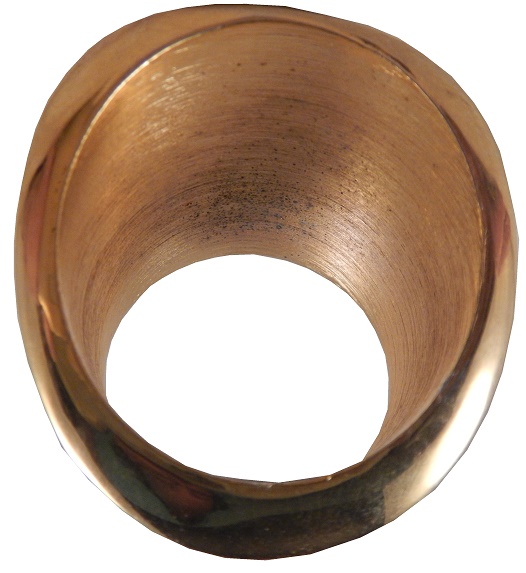
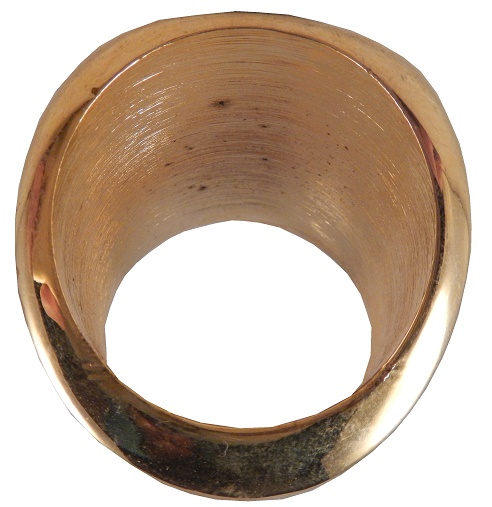
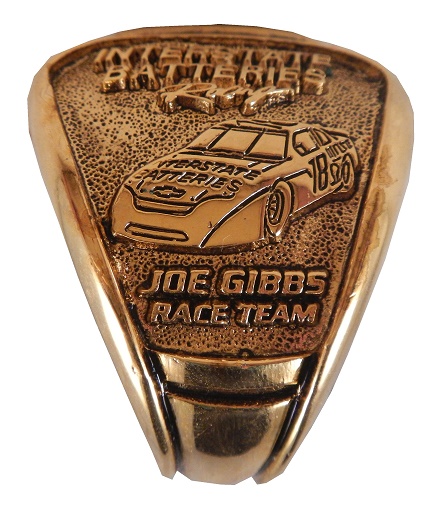
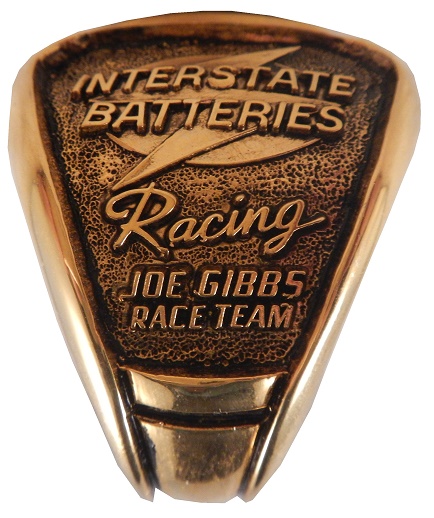
I’ve talked about NASCAR banquet rings before. They just fascinate me. I’ve understood the significance of championship rings, who doesn’t. But I’ve never seen these kinds of rings before, where they were enlarged, and used at the banquet as napkin rings until I came across these NASCAR example. With the exception of a Jeff Burton example, they are all Joe Gibbs #18. I’ve come to learn recently, that Interstate Batteries was the group behind these. We’ll get to that in a minute.

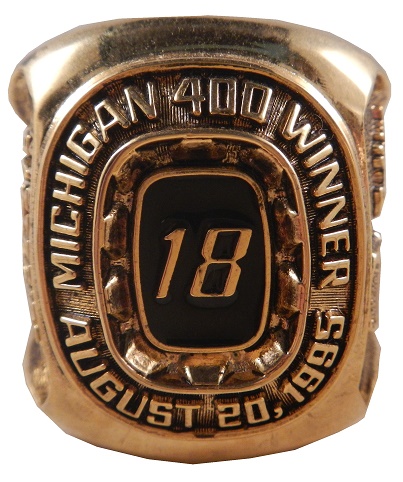
At the end of every season, there are banquets, one for all the drivers and teams, as well as ones for individual teams hosted by sponsors or teams. At Joe Gibbs Racing, these napkin rings were given out to crew members and their families as a thank you. Every ring represents a race win. I’ve covered the Daytona 500, jarretring2-1 jarretring2-5 jarretring2-4 jarretring2-3 jarretring2-2Mello Yello 400, jarretring4-1 jarretring4-5 jarretring4-4 jarretring4-3 jarretring4-2and Coca Cola 600 labontering2-1 labontering2-2 labontering2-3 labontering2-4 labontering2-5 rings before, but I have a couple of copies of these rings, so I will move on.

I also have an example from the 1995 Miller Genuine Draft 500, which took place at Michigan International Speedway, which Labonte won. That took place on June 18, 1995. On August 20, 1995, Labonte returned to Michigan and won the GM Goodwrench Dealer 400 that same year. This ring, same design as the other two rings that season, but with green around the front 18 instead of red.labontering5-1 labontering5-2 labontering5-3 labontering5-4 labontering5-5

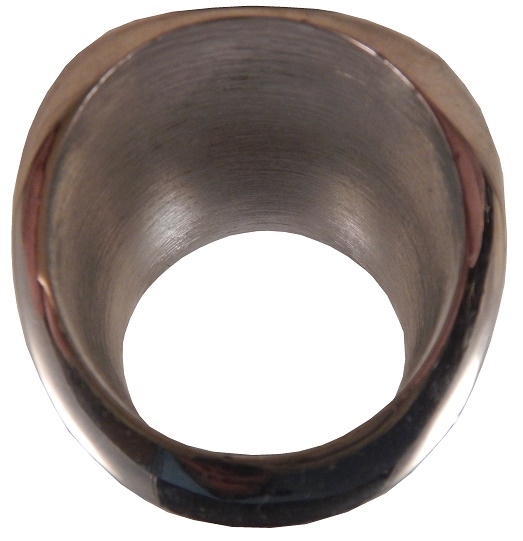
In 1997, Texas Motor Speedway hosted their first race, the Interstate Batteries 500. The event saw Dale Jarrett on the pole and Jeff Burton winning the race. This proves my theory that Interstate Batteries was behind the rings. This pewter ring was prepared for the race. I haven’t been able to figure out if this is was used at a banquet, or was sold in the gift shop. But it’s nearly identical design and style is hard to ignore. Since Interstate Batteries was doing this for Joe Gibbs racing before this race, and then this ring was made for that race, there is no doubt in my mind that Interstate Batteries was the driving force behind that.interstatering-1 interstatering-2 interstatering-4 interstatering-5

Above and beyond that, it makes sense that Jeff Burton’s team would do that, since at that time, they were sponsored by Exide Batteries, a competitor to Interstate. Exide had to have found out what Interstate was doing, and once Jeff Burton began winning races, Exide decided to join in the fun. It would also explain why there don’t seem to be any examples of any other teams making these rings besides Joe Gibbs Racing, and Roush Racing.

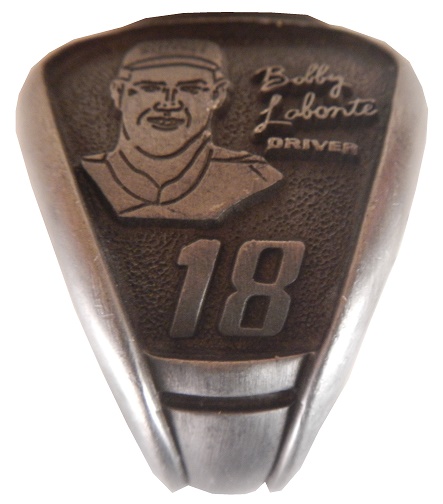
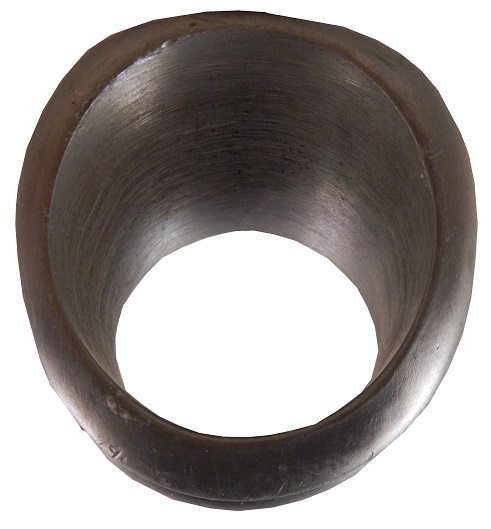
Ok, now with that out of the way, let’s stay in 1997, and look at a new design that Bobby Labonte’s team was given. The 1997 Napa 500 at Atlanta was the season finale. Jeff Gordon won the championship over Dale Jarrett by 14 points. Bobby Labonte won the race. It’s the same design as the other rings, except it is made of pewter. The material change is very evident in that it shows scratches and more chips than their brass counterparts.labontering4-1 labontering4-2 labontering4-3 labontering4-4 labontering4-5

Pewter didn’t last too long, and they switched back to brass by 1999. By 1999, the rings were redesigned as well. The driver profile hasn’t changed, but on the other side, a new logo design takes over the car logo. The crest of the ring has a bigger #18 and a glaze around it, instead of a cheap enamel.labontering6-1 labontering6-2 labontering6-3 labontering6-4 labontering6-5

The silver color returned in 2000, which culminated in Bobby Labonte winning the NASCAR Winston Cup Championship over Dale Earnhardt. One of the four races he won was the 2000 Dura Lube / Kmart 400 at Rockingham. This brand new design was prepared. A new #18 panel was designed, with the sponsor panel unchanged. The crest has been redesigned with car color on the stone area, and bigger lettering on the front.labontering7-1 labontering7-2 labontering7-3 labontering7-4 labontering7-5

Next week, It’s that time of year again,we delve into the Paint Schemies…See you then.

The Tools Of The Trade

lee-pannel3By David G. Firestone

Last week, I discussed one of the most important tools in auto racing, the steering wheel. This week, we are going to look at minor tools that help one of the other major tools in auto racing. We are going to look at parts of the engine. The engine of a race car is like the mechanism of a Rolex watch, in that all of these intricately designed pieces, each with a very specific function come together, and interact with each other to propel a car from 0 to 300 MPH in a matter of seconds.

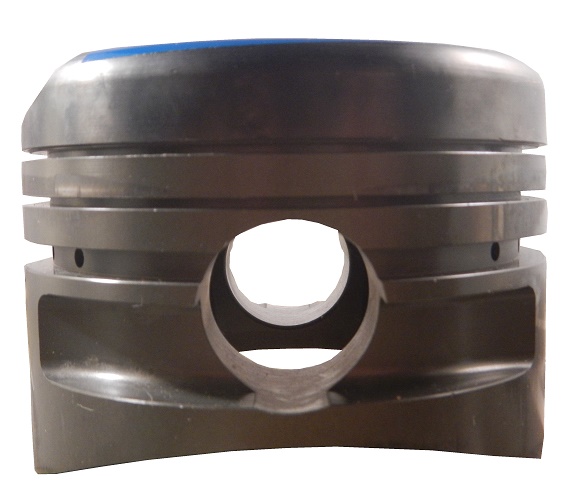
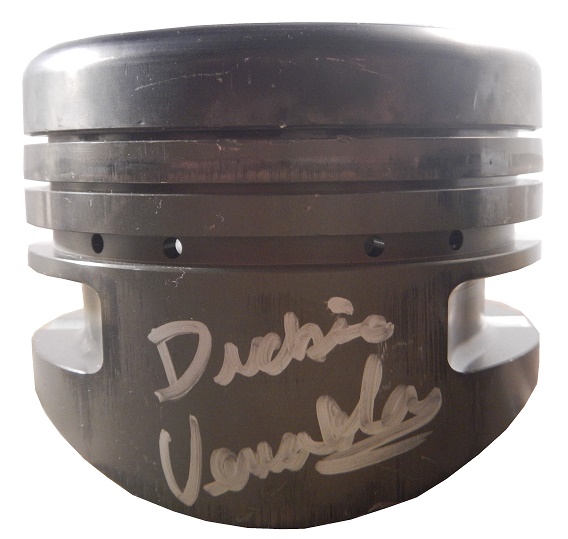
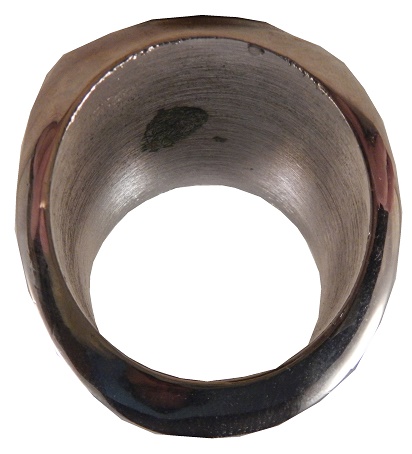
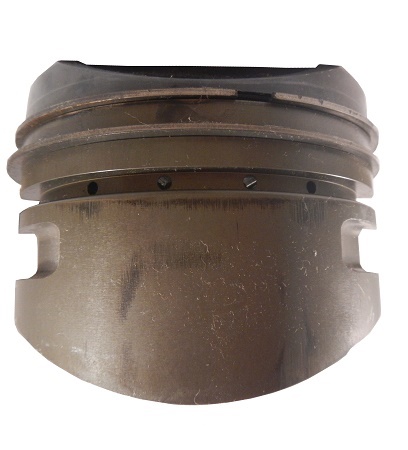
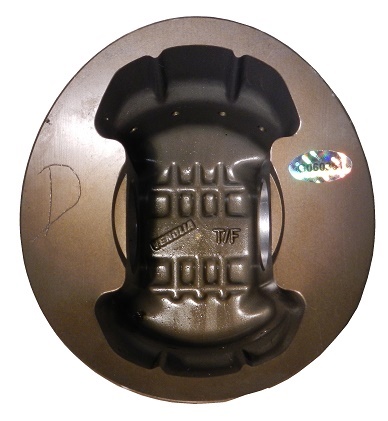
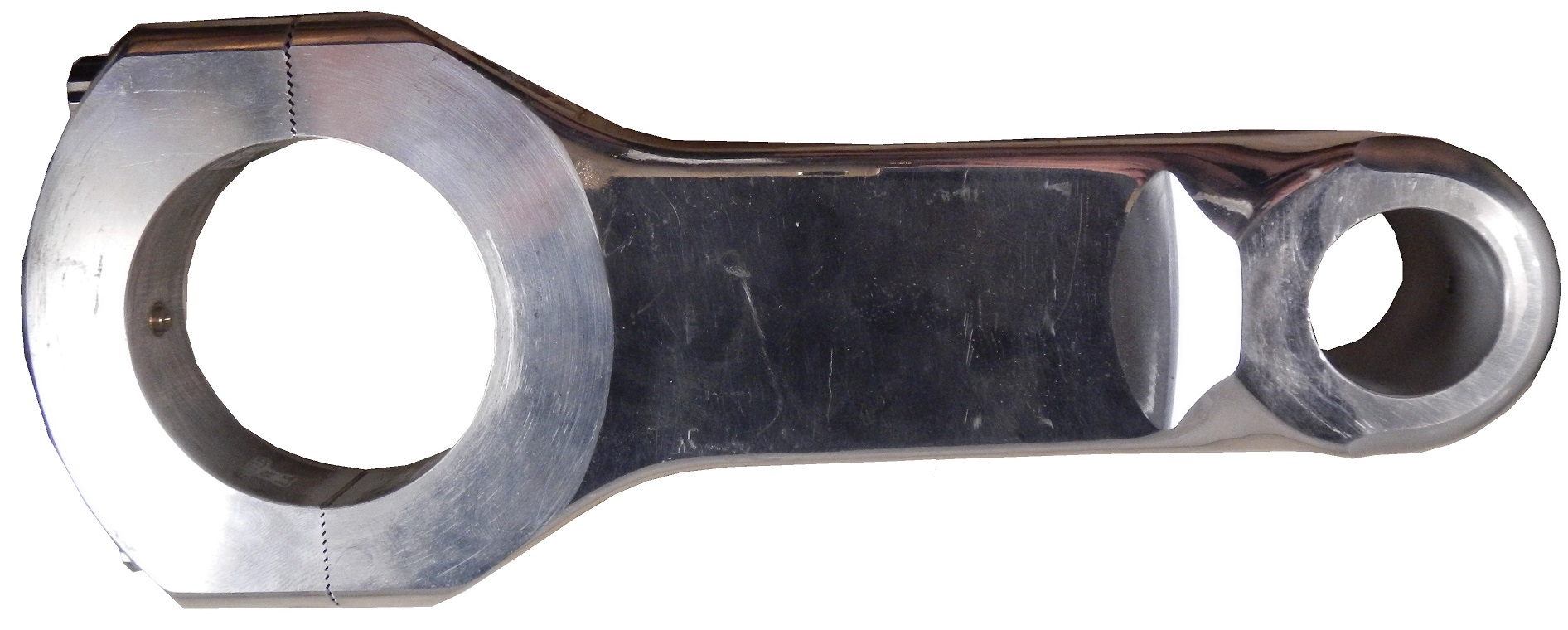
Let’s focus on NHRA nitromethane engines. These are some of the most powerful engines in auto racing. These 10,000 horsepower engines require $5,000 worth of parts for one single run. Some parts can be used for more than one run, but for the most part, moving parts are used for only one run. The most well-known moving part is the piston. Each piston, generates 1,250 horsepower, and is in a sleeve, which is placed in the engine, and attached to the crank shaft. Often, the piston head, and the piston shaft have been removed from each other before being sold to collectors. This head is from and signed by Brandon Bernstein, bernstein-piston1 bernstein-piston3 - Copy (2) bernstein-piston4 - Copy (2) bernstein-piston5 - Copy (2) bernstein-piston6 - Copy (2) bernstein-piston2 - Copy (2)and this shaft was used and autographed by Bob Vandergriff.vandergriff2 vandergriff1

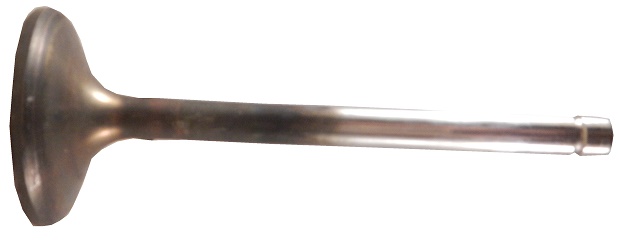
Pistons in an engine need things to function. An example are valves, and valve springs. The valves move in conjunction with the movement of the pistons. One set introduces fuel and air into the engine, and the other set removes exhaust from the engine. These examples are from Bob Tasca’s funny car.tascavalve1-1 tascavalve1-2 tascavalve1-3 tascavalve1-4 tascavalve1-5 tascavalve1-6 tascavalve2-1 tascavalve2-2 tascavalve2-3 tascavalve2-4 tascavalve2-5 tascavalve2-6

Valve springs help the opening and closing of the valves at the speed the engine requires. These are three examples, one from Cruz Pedregon, and two from Paul Lee.pedregonspring-2 pedregonspring-1

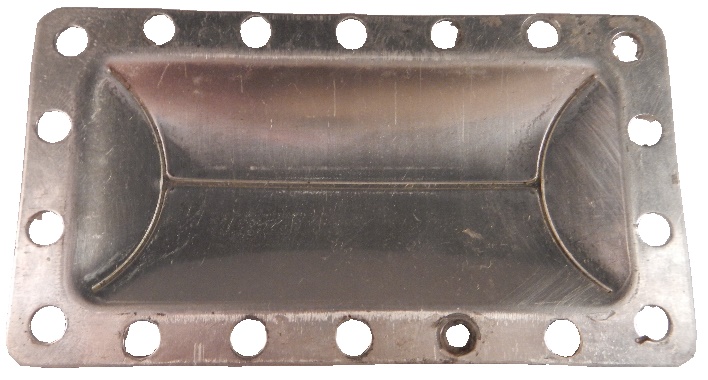
lee-spring1 lee-spring2 lee-spring3 lee-spring4On the subject of Paul Lee, these are what are known as manifold burst panels. These are specifically design to burst when the pressure in the manifold gets too high. They are meant to sacrifice themselves to save the engine.lee-pannel1 lee-pannel4 lee-pannel3 lee-pannel2

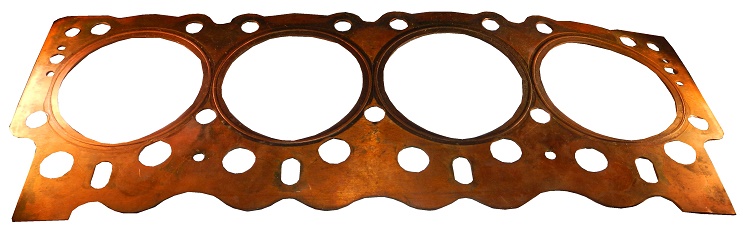
I also have this head gasket from Paul Lee. NHRA engines are sealed systems, under a lot of pressure and heat. Expansion of engine parts will occur, and copper head gaskets are used to keep the seal intact. They will expand with the rest of the engine. This is an example Paul Lee’s funny car. It is bent, and shows staining from race wear.leegasket-1 leegasket-2

I’ve discussed the importance of spark plugs, and their prevelance in the auto racing memorabilia market before, so I won’t go into that again. I will show one of TJ Zizzo’s race-used spark plugs, which he managed to autograph. Given the size of the plug, that isn’t easy to sign.zizzosparkplug

In keeping with the tool theme, next week, we will look at a helmet worn by the driver’s closest group…the pit crew. Stay tuned!

One of the Most Important Tools At A Driver’s Disposal

vickers wheel-1By David G. Firestone

NASCAR teams give drivers a number of tools to help get their cars to victory lane. One of the most important is the steering wheel. Having a car that can go 200 miles per hour is great, but if you can’t control it, what good is it? The driver has control over almost every aspect of the steering wheel. Drivers will insist on the size of the steering wheel, and where the buttons are placed on it. Race car drivers are control freaks, and this is no other part of the car that is as important for control as the steering wheel.

Brian Vickers will go down in NASCAR history as one of those drivers who had a lot of talent, a lot of potential, but who never lived up to that potential. He was hired by Hendrick Motorsports in 2003 to replace Ricky Hendrick as a driver in the Xfinity Series. He would win 3 races in the Xfinity Series in 2003, and won the Championship that season. He would go on to race in the Sprint Cup, winning three races, the controversial 2006 UAW 500, where he spun out Jimmie Johnson and Dale Earnhradt Jr.. The 2009 Carfax 400 at Michigan was his second win, this one for Red Bull Racing. His final win came at the 2013 Camping World RV Sales 301 at Loudon.

Sadly, his career has been derailed by health issues. He missed a lot of races in recent years because of blood clot issues, as well as having surgery to repair a hole in his heart. Sadly, this appears to be the deathnail in his career, as he does not appear to be able to race anymore, at least not a full season. This steering wheel was used during Brian Vickers’ Hendrick Motorsports days.vickers wheel-1The wheel itself is not much bigger than a regular car steering wheel. It has a large pad at the center, which Vickers has autographed, albeit upside down. Inside is a gel, with padding beneath that. vickers wheel-2 vickers wheel-3 vickers wheel-4The pad is made by Mattec Racing Products who just went out of business recently. Vickers wrote “Future Nextel Cup Champion under his name. That would narrow the time the wheel was used from 2004 to 2007, since it is impossible to tell if this was used in either Xfinity Seires racing or Nextel Cup Racing. The Nextel Cup became the Sprint Cup in 2008.

The wheel has two holes drilled into the spokes. vickers wheel-5A serial number, 2547, is drilled on the reverse side of the right spoke. vickers wheel-9These holes are used to facilitate the addition of radio buttons, and other buttons that are added on to the wheel. This allows communication easily, without removing hands from the wheel.

The wheel is made in two parts. The wheel itself is made by Schroder, vickers wheel-8 vickers wheel-6which is a California-based company that focuses on auto racing steering products. The quick-release mechanism on the back of the wheel is made by Sweet Manufacturing, a Kalamazoo, Michigan based company. Again this does not surprise me, as this combination would meet Vickers’ standards. vickers wheel-10 vickers wheel-11Quick-release mechanisms are used in auto racing, as space is at a premium, and the wheel is often very close to the driver’s body. It is removed when the driver is getting out of the car.

One other detail that needs to be addressed is that the very top center of the steering wheel padding has the remnants of tape visible. The tape is place such that when the car is going straight, the tape is perfectly vertical. This is an important tool for drivers, as it can tell them if there are steering or suspension issues in the car. The outline is very hard to see, but can be seen.vickers wheel-7

Though the steering wheel is one of the most important tools a driver has, they have many other tools, some of which we will examine next week.

Savagery and Speed At Its Finest

bernstein-piston1 - CopyBy David G. Firestone

Drag racing is one of the most intense forms of drag racing. Two cars with 10,000 horsepower engines line up at a starting line, move into position, and then blast off, going from 0 to 300 miles per hour in just under 4 seconds. After each run, the engine is dismantled, most of the moving parts are replaced, and the engine is rebuilt, and tested before the next run.

When the race is on, a thousand things can go wrong with the car, especially the engine. One of the most common pieces of equipment to go wrong is with pistons. Top fuel and funny car pistons generate 1,250 horsepower each. If they aren’t aligned right, aren’t lubricated enough, or something is wrong, that can cost the driver a win or even a championship. This example is a piston head used and autographed by Brandon Bernstein.bernstein-piston1 - Copy (2)It was only used for one run, but shows some light use, and is in good condition.bernstein-piston3 - Copy (2) bernstein-piston4 - Copy (2) bernstein-piston5 - Copy (2) bernstein-piston6 - Copy (2) bernstein-piston2 - Copy (2)Now let’s look at an interesting Del Worsham piston from 2002.bernstein-piston1The story behind this piston is interesting. At the 2002 Checker Schuck’s Kragen Nationals at Firebird International Raceway, Del Worsham beat John Force in the final. Worsham temporarily denied Force his 100th event win. This mangled piston wrecked the engine block during that run. The piston chewed the block and itself up during that final run. Part of the piston arm is still wedged inside the piston, and one side is almost completely gone.bernstein-piston1 bernstein-piston3 bernstein-piston4 bernstein-piston5 bernstein-piston6 bernstein-piston2 - CopyNow let’s take a side-by-side look at a piston that worked well, and a piston that destroyed the engine.bernstein-piston1 - Copy bernstein-piston3 - Copy bernstein-piston4 - Copy bernstein-piston5 - Copy bernstein-piston6 - Copy bernstein-piston2 - CopySavagery and speed are one in the same. This kind of wear happens a lot on NHRA cars, and we will look at some more parts next week.

A Great Pair Of Boots Never Goes Out Of Style

pedregonboots-1By David G. Firestone

The NHRA Mello Yello Drag Racing Series is renowed for their diversity in drivers. Such is the diversity that African-American, Hispanic-American, Middle Eastern, Asian, Jewish and Women have all had success in the top levels of the NHRA. When it comes to Hispanic drivers, one immediately thinks of Cruz and Tony Pedregon.

Cruz started in Top Fuel in 1991, and moved to Funny Car in 1992, winning the Championship, being the only driver to beat John Force for a championship in the 1990’s. Tony followed suit in 1993, but didn’t win his first Championship until 2003. They both ran the full schedule in 1998, Tony won 2 events, one at Texas, the other at Denver. During that season, he wore these Simpson Holeshot drag boots.pedregonboots-1These boots are unlike most racing shoes because they are designed to cover both the shoe, and the end of the leg of the driver suit. Why would funny car drivers wear such boots? Well, to answer that, let’s look at the design of the inside of a funny car. This is a Ron Capps diecast, but it shows how the car is set up.capps-15 The driver sits almost on top of the rear axle, with the 10,000 horsepower engine, and nitromethane fuel tank directly in front. Should there be an engine explosion, which isn’t uncommon, the fire would blow back into the driver. There are firewalls in place, but those can’t always be counted on to protect the driver from the full effects of fire in the time it takes to get a funny car stops. That’s where these boots come in. They will give that little extra bit of help to the driver in exiting the car.pedregonboots-1 pedregonboots-2 pedregonboots-3 pedregonboots-5 pedregonboots-7 pedregonboots-9

They are rated 15, not bad for 1998 standards, but would have a 20 rating in 2015. Both boots have been signed by Pedregon and he added the inscription “’98.” pedregonboots-4 pedregonboots-8Both have Simpson warranty tags, and the right boot has an SFI tag 3/3 tag. pedregonboots-6 pedregonboots-11 pedregonboots-10To understand the degree of protection drag racing requires from driver uniforms, you need to understand the rating. NASCAR suits, both driver and pit crew have an SFI rating of 5, which means that they will protect the wearer from 2nd degree burns for 10 seconds. NHRA top fuel, funny car, top alcohol dragster, and top alcohol funny car have ratings of 20, which means that the suit will protect the wearer from 2nd degree burns for 40 seconds.

It’s amazing the risk that drag racers take. It’s also amazing the amount of damage a mistake in the engine can cause, and we will examine that much closer next week.

A Perfect Example of An Early Racing Helmet

torringtonhelmet-2By David G. Firestone

Across the whole of sports, the helmet has experienced a lot of design upgrades. Nowhere is this more evident than in auto racing. In the early days of racing, many drivers were happy to wear a leather helmet, similar to early football helmets. After WWII, the flack helmet took over as the primary design. As time went on, the motorcycle helmet became the standard, and after many design upgrades, began to resemble the current racing helmet, which will be improved in the future.

One variation of racing helmet from the early days was a helmet that looked like a baseball batting helmet. This example was used by a driver who raced at Stafford Speedway in Stafford Springs, Connecticut.torringtonhelmet-2It comes with a photo of the driver who raced in the helmet, in his modified car. It looks like it was take in the late 1960’s to early 1970’s, probably before the track started holding NASCAR events.torringtonhelmet-7 torringtonhelmet-8

The helmet shows a lot of wear, and some water damage. The insides are leaking the old padding that is present. It has dog ears and straps, to provide a snug fit and extra protection. The helmet and car are number 168, and are in a green and white color scheme. The mold from the water damage is present on the helmet, and on the photo.torringtonhelmet-2 torringtonhelmet-1 torringtonhelmet-3 torringtonhelmet-4 torringtonhelmet-5 torringtonhelmet-6

The independent driver makes auto racing what it is. Examples like this are reasons why. His name might have been lost to history, but his spirit lives on in the future drivers in auto racing. Next week, we take a look at some boots…

Lottery Ticket Design Was Awesome Back In The Day!

1858-full-1 1858-half-1 1858-quarter-1By David G. Firestone

I’m gonna go off topic today. When I wrote about the Lottery Ball back in July, I mentioned that “The history of the lottery in the United States dates back to the 1600’s, while Europe was colonizing North America. Many colonies saw gambling as harmless fun, but as English investors waned to profit from the New World, this changed quickly. As time went on, each of the 13 original colonies had a lottery system in place to help fund the colonies. It became a civic duty to play the lottery. Recessions, scandals, and corruption had almost eliminated the lottery in the United States by 1868.”

How these lotteries worked was much the same way as today. Tickets were sold with official stamps and endorsements and the proceeds would go to a certain charity, or group that needed funding. These tickets could be very lucrative, as the prizes, when adjusted for inflation, were quite good. A perfect example are these three lottery tickets from the Maryland Consolidated Lotteries for the benefit of the Patapsco Female Institute which was in Ellicott City, Howard County, Maryland. All three tickets are from December 6, 1858.

One ticket is for one quarter, another for one half and the third for a full ticket. If one of these tickets was a winner and the winning amount was $10,000($269,586.38), the full ticket would bring the whole amount. For the half ticket, the winner would get $5,000($134,793.19). The quarter ticket would bring $2,500($67396.60). Each ticket has a Maryland State revenue stamp on it (not an actual paper stamp, but ink stamped). The half ticket has a little dent on the right. All three are in excellent condition. Real treasures of Maryland history. Like most of the early lottery tickets from Maryland, they shows Baltimore on them.

Looking at the designs, you can’t help but be impressed with the design. These are from 1858, the designs look impressive, and are even more impressive considering how much work had to go into something that seems so mundane. Even the rubber stamp designs look good, considering the era. I can’t help but be awed by the amount of work that went into them.

This is the full ticket:1858-full-1 1858-full-1 - Copy (1) 1858-full-1 - Copy (2) 1858-full-1 - Copy (3) 1858-full-2This is the half ticket:1858-half-1 1858-half-1 - Copy (2) 1858-half-1 - Copy (3) 1858-half-1 - Copy 1858-half-2This is the quarter ticket:1858-quarter-1 1858-quarter-1 - Copy (2) 1858-quarter-1 - Copy (3) 1858-quarter-1 - Copy 1858-quarter-2

I love vintage design, not just in race cars, but in a lot of things. Money, baseball cards, sports tickets, book and magazine covers, and sports programs just don’t look as good as they did back in the day. That’s why I love good throwback scheme.

Bill Stroppe, A Legend In Off Road Racing

stroppe-1By David G. Firestone

Most racing fans don’t know the name Bill Stroppe, but they should. Stroppe was a long time builder in various forms of racing, including NASCAR and SCORE. Stroppe’s cars have won 5 races from 1957 to 1967, including Parnelli Jones’ last win at Riverside in 1967. He turned his attention to off-road racing in 1965, when Ford released the Bronco. He took to the sport instantly, and become one of the most respected builders in the sport.

He was also a driver, who won the 1971 Baja NORRA Mexican 1000 in the Big Oly Bronco. Stroppe also built trucks for clients, including George Harrison, Larry Minor, Rodney Hall, James Garner, Walker Evans, Steve McQueen, Ted Nugent, Mexico’s President Lopez Mateos, and worked on the Presidential Ford Bronco at the Western White House. By the 1980’s he stared to put together a top shelf Ford racing team under the Bill Stroppe Motorsports banner. This team was part of a larger group of Fords known as “The Rough Riders Off-Road Racing Team.” There were a lot of drivers who raced, Stroppe had a number of drivers. The Rough Riders were one of the best teams in off-road racing, especially desert racing.

One of these drivers wore this helmet in or after 1992 while driving truck #712. This Simpson helmet shows tremendous use, and has a Velcro modification I have never seen before. There are large FORD logs on either side, and the 712 cross design is very visible on the back and top. The visor is held in place with a piece of Velcro, and and has BILL STROPPE MOTORSPORTS added in stick on lettering.  The microphone equipment is still present.stroppe-1 stroppe-2 stroppe-3 stroppe-4 stroppe-5 stroppe-6 stroppe-7Sadly, The Rough Riders bit the dust in 1995, and Bill Stroppe died the same year. But they were dominant, and they were a great group of drivers. They are missed, and will forever be missed.

Lou Feger’s Racing…A Perfect Example of What Makes Racing Great!

olsonBy David G. Firestone

Overwhelmingly, race car drivers are individuals who work real jobs from 9-5 and race on the weekends. Some are chasing their dreams of racing professionally, others are racing for the love of the game. In many instances, this continues for generations. This is also true for race teams, and racing equipment stores, such as Lou Feger’s Racing Equpment.

Founded by racer “Lightin’ Lou” Fegers in Delano, Michigan in 1965, Lou Fegers Racing Equipment has been a must stop shop for Michigan racing enthusiasts for 50 years. Drivers and teams have been buying from Lou Fegers for generations. Their stock of parts is extensive and covers many aspects, from people souping up road cars, to race car drivers looking for quality parts.

These kinds of stores will often sponsor race cars as advertising, and set up shop at the track during events in case teams need parts. The team will design the car, and a driver suit comes with the sponsorship package. This Worth Racing suit is an example of one of the driver suits worn by a Lou Fegers sponsored car, Harry Olson.olsonThis single-layer, non certified driver suit is in great condition, and shows some use.

The collar has a Velcro closure design.olson-collar

The cowl has a small tag which reads “100 nylon Nomex,” and has a Worth Company logo present.olson-tag

The right chest has no design at all on it.olson-rchest

The left chest has a racing stripe that extends to the name, which is embroidered in a chain-stitch like design.olson-lchest

The front torso and belt have no adornment at all.olson-flogo olson-belt

The legs have a red stripe fully running out of the sides, and have standard cuffs.olson-legs

The shoulders have no epaulets, rather a stripe runs down the shoulder to the end of the sleeve.olson-rshoulder olson-lshoulder

Other than the stripe, the right sleeve has no design on them at all.olson-rsleeve1 olson-rsleeve2

The left sleeve has a WORTH patch sewn into it, no other designs are present.olson-lsleeve1 olson-lsleeve2

The back of the suit has some light wear.olsonb

The back of the neck is unadorned.olson-neck

The back torso features a LOU FEGER’S RACING EQUIP logo embroidered into it, with a checkered flag pat sewn into it.olson-blogo

Family run independent stores and teams are part of what make racing great. We go to races and watch, and enjoy. Drivers race because the fans love to watch them. I hope this tradition continues forever and ever!

Next week, a helmet from an underrated racing innovator.

A Suit From a Driver Who Helps Make NASCAR More Diverse.

12-contrerasBy David G. Firestone

Auto racing, NASCAR in particular, has had an image that portrays a lack of diversity. This reputation is not wholly undeserved. The sport was founded in the southern United States and while it has become an international sanctioning body with series in Mexico, Canada, Europe, and used to hold events in Australia and Japan.

NASCAR’s top 3 series has been more diverse than most people think. The first was Mario Andretti, who won the 1967 Daytona 500. Australian Marco Ambrose has won 7 races, 2 in the Sprint Cup, and 5 in the Xfinity Series. Canadian Ron Fellows has 6 wins, 4 Xfinity, 2 Truck Series. Colombian Juan Pablo Montoya has won 3 races, 2 Sprint Cup, 1 Xfinity. African Americans have found success as well. The legendary Wendell Scott, the Jackie Robinson of NASCAR won a Sprint Cup Series race in 1965 at Speedway Park in Florida. Many other African Americans including Elias Bowie, Charlie Scott, George Wiltshire, Randy Bethea, Willy T. Ribbs and, most recently, Bill Lester have competed in Sprint Cup competition. Darrell Wallace Jr. has won 5 Truck Series races from 2013-2014.

One of the first Hispanic drivers to enter the Xfinity Series was Carlos Contreras. Born in Mexico City, Contreras first attempted a race in 2002, but failed to qualify. He did join the series in 2003, and has raced part time ever since. He has raced in the Truck Series, with 5 top 10’s, and in the NASCAR Toyota Series, which is held in Mexico, with 23 top 10’s, but in the Xfinity Series, he has failed to score a top 10.

From 2005 to 2007, Contreras raced for Fritz-Bradshaw Racing, owned by Armando Fitz and Terry Bradshaw. In 2006, they raced in 6 races. For two of those races, The 2006 Telcel-Motorola 200 Presented by Banamex at Autodromo Hermanos Rodriguez in Mexico City, Mexico, and The 2006 Zippo 200 at Watkins Glen, he was sponsored by Gould’s Pumps, and wore this driver suit.12-contreras

This SFI 5 rated triple layer driver suit is in good condition, and doesn’t show much use, not shocking for a suit worn for only two races.

The collar doesn’t close, had Gould’s Pumps logos embroidered on the sides.12-contreras-collar1There is no Warranty Tag in the cowl.12-contreras-collar2

The right chest has a BUSCH SERIES 25th ANNIVERSARY logo, as well as DODGE, GOODYEAR, and JANI-KING logos embroidered into it.12-contreras-rchest

The left chest has a FRITZ-BRADSHAW RACING logo, which looks like a Steelers logo embroidered into it, along with SUPERCUTS and TAKE ME AWAY VACATIONS logos.12-contreras-lchest

The front logo features a GOULD’S PUMPS logo on a four pointed star.12-contreras-flogo

The belt is a bit wide, and has CARLOS CONTRERAS in traditional cursive embroidered into it.  The Warranty Tag is located behind the zipper.12-contreras-beltThe legs are black and have red stripes running up them. There are no logos in television logos present.12-contreras-legs

The shoulders have black epaulets, with red borders, and GOULD’s PUMPS embroidered into them. Impact Racing tags are present as well.12-contreras-rshoulder 12-contreras-lshoulder

The right sleeve has IMPACT,COTTMAN TRANSMISSION, SAM BASS, OLYMPIA STEEL BUILDINGS and MONACO logos embroidered into it. There are no logos in television logos present.12-contreras-rsleeve1 12-contreras-rsleeve2

The left sleeve has IMPACT, MAC TOOLS, FREIGHTLINER, BETTERLIVING PATIOS AND SUNROOMS, and SUNOCO logos present, but no television logos.12-contreras-lsleeve1 12-contreras-lsleeve2

The back of the suit has no real wear to speak of.12-contrerasb

The back of the neck has GOULD’S PUMPS embroidered into it.12-contreras-neck

The back torso has the same four pointed star logo with WWW.GOULDSPUMPS.COM and WWW.FITZBRADSHAW.COM embroidered into it.12-contreras-blogo

Diversity in auto racing is a great thing and drivers like Carlos make NASCAR great. The diversity of fans and sponsors is only going to make the sport better. NASCAR is no longer regional, not even national, it’s international! I love that!

Next week…We’re going vintage…I’m looking forward to it, and I hope you are too!