The Vest Project Part 18-An ARCA Vest

[Editor’s note: I am on vacation until the end of July, normal operations will resume then.]

By David G. Firestone

Until being taken over by NASCAR, ARCA was an alternate group to NASCAR, with their own rules, teams, drivers, and fan bases. Many drivers used ARCA to get to NASCAR, and if their NASCAR careers didn’t work, they had the option to return to ARCA.

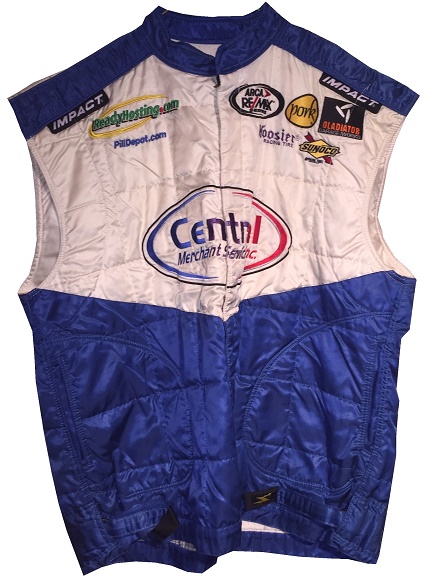
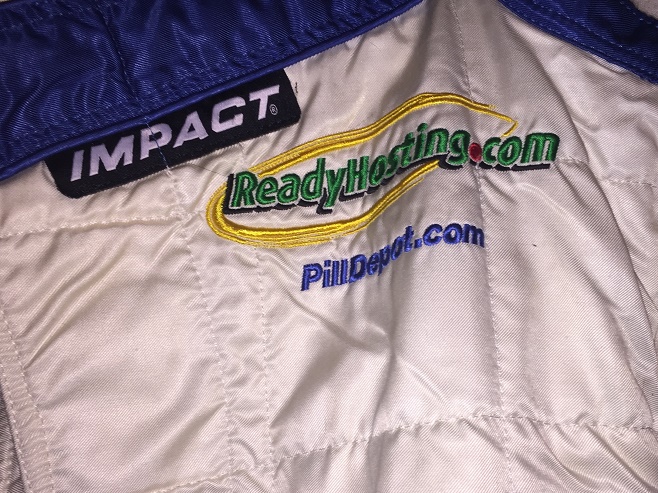
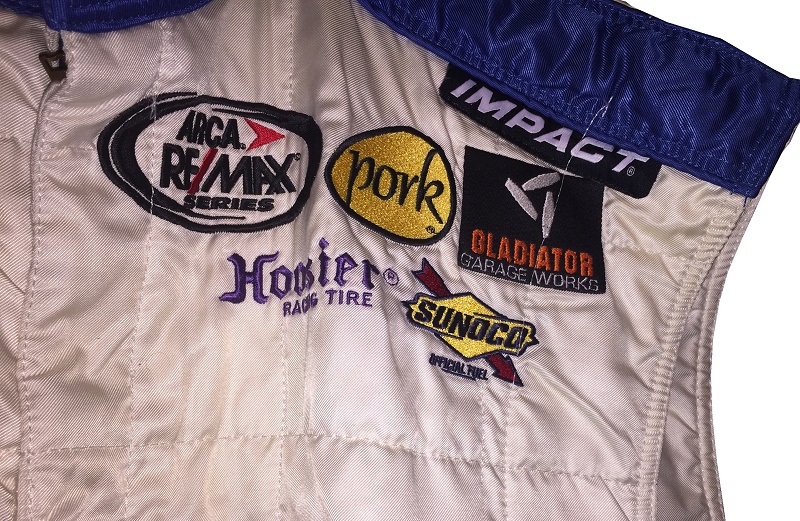
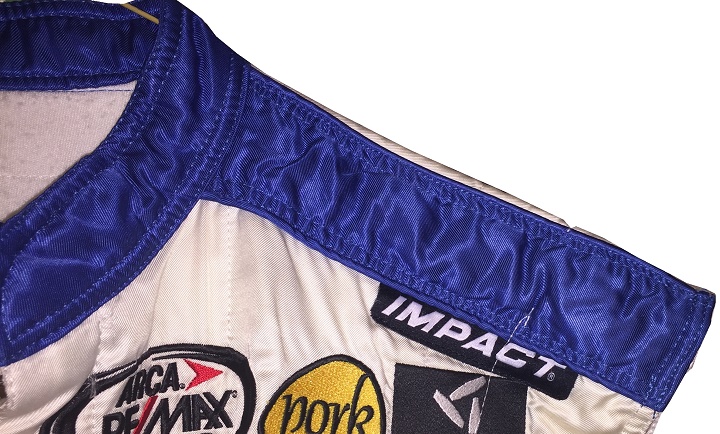
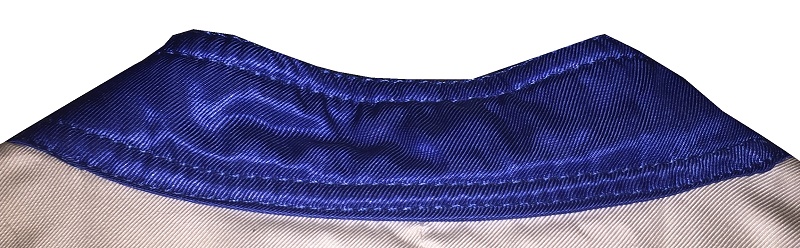
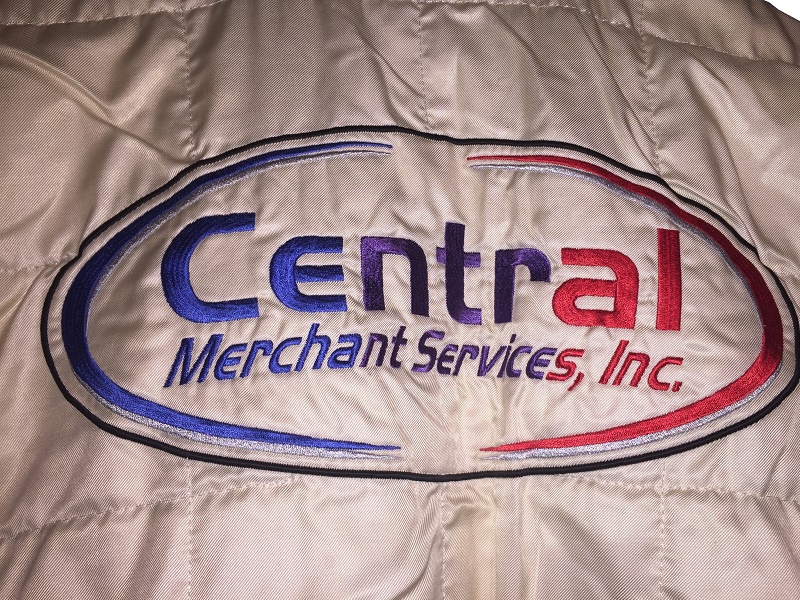
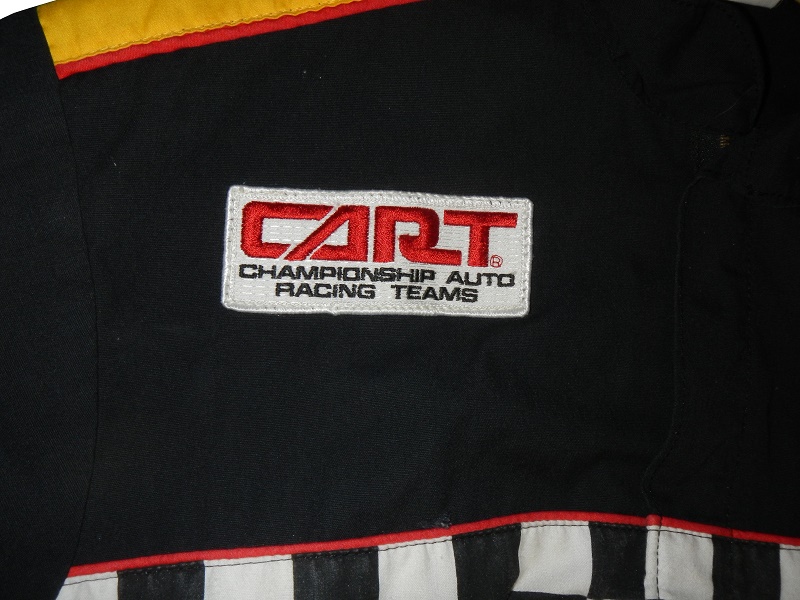
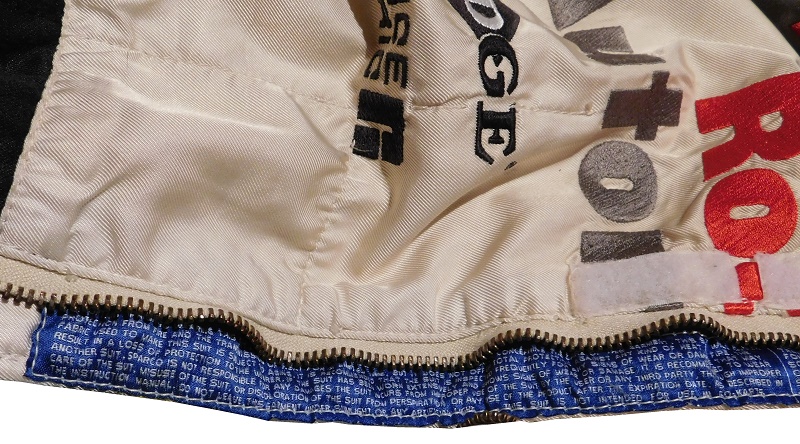
Central Merchant Services, Inc sponsored a few teams in ARCA from 2006 to 2009 for S&H Motorsports and Venturini Racing among others. They had some success on track. During that time, one of the pit crews wore this Impact vest. The vest shows very light use.The blue collar is unadorned.The right chest features READYHOSTING.COM, and PILLDEPOT.COM embroidered into it.The left chest features ARCA RE/MAX SERIES, PORK, GLADIATOR GARAGE WORKS, HOOSIER RACE TIRE, and SUNOCO logos embroidered into it.The front torso features a blue CENTRAL MERCHANT SERVICES logo embroidered in the white material. There is blue material below that.Inside the front zipper is the Impact warranty label.The corners have Velcro comfort straps attached. The blue shoulder epaulets are unadorned. The vest has standard arm holes present. The back of the vest doesn’t show that much use.The blue collar is unadorned in the back.The back torso features a blue CENTRAL MERCHANT SERVICES logo embroidered in the white material.It’s sad that ARCA, once an independent stock car racing series with its own identity is going to become just another NASCAR developmental series. Guys like Billy Venturini need ARCA to help their careers, and help keep their identity. I hope the ARCA guys are able to find their places after this is all said and done.

Next Week, we cover a familiar topic.

Maxim…Not The Magazine, But A Forgotten Racewear Company

By David G. Firestone

In NASCAR, there are usually two kinds of teams: big and small. The big teams include Stewart-Haas Racing, Hendrick Motorsports, Team Penske, Chip Ganassi Racing, Joe Gibbs Racing, and Furniture Row Racing. Big teams are multi-car teams that are championship caliber, and have little if any trouble with sponsorship issues. Small teams are teams like Tommy Baldwin, Germain Racing, Premium Motorsports, BK Racing, The Wood Brothers, Go FAS Racing, Circle Sport/TMG, Rick Ware Racing, and Leavine Family Racing. These teams, while they may have more than one team, are often underfunded, have mediocre drivers and on track results.

Interestingly, there is a third group, which could really either be considered big or small, depending how one looks at them. These teams include Richard Childress Racing, JTG Daugherty, Richard Petty Motorsports, Roush-Fenway Racing, and Front Row Motorsports. These are all teams that while they have multiple teams and decent sponsorship, they aren’t championship caliber, even though they do often make the playoffs and win races. The have a decent driver or two, and have decent fan bases. One of the most well-known and least appreciated of these teams is Front Row Motorsports.

Founded by Bob Jenkins and Jimmy Means in 2005 as a single-car team, the original team merged will Mach 1, and began a two-car operation. Eventually, the team shad as many as three teams, with two full time. Since team owner Bob Jenkins owns over 150 franchises from Yum! Brands, including Taco Bell and Long John Silver’s, as well as Morristown Driver’s Services or MDS, those sponsors frequently appear on the sides of his cars. While the team hasn’t shown much strength on many tracks, they show strength on superspeedways.

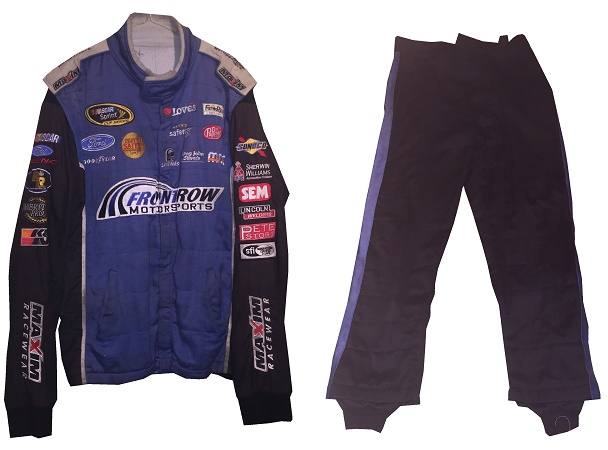
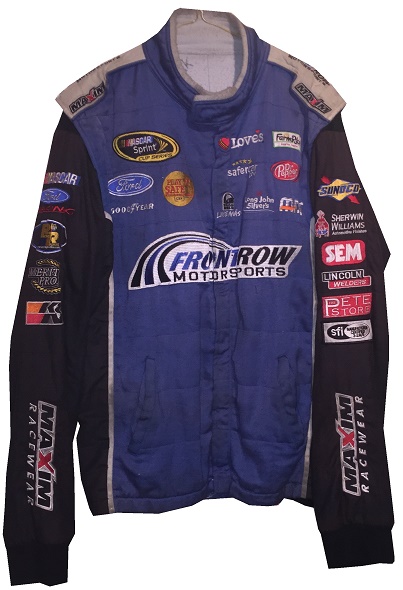
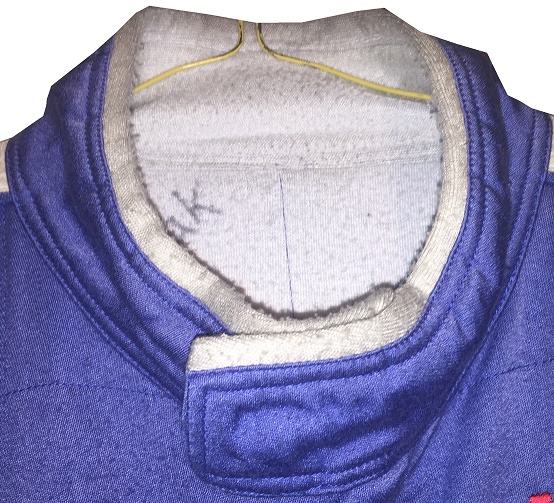
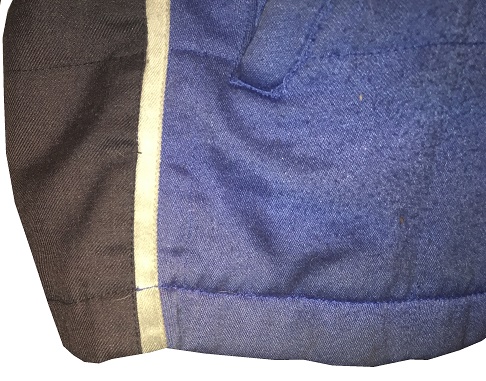
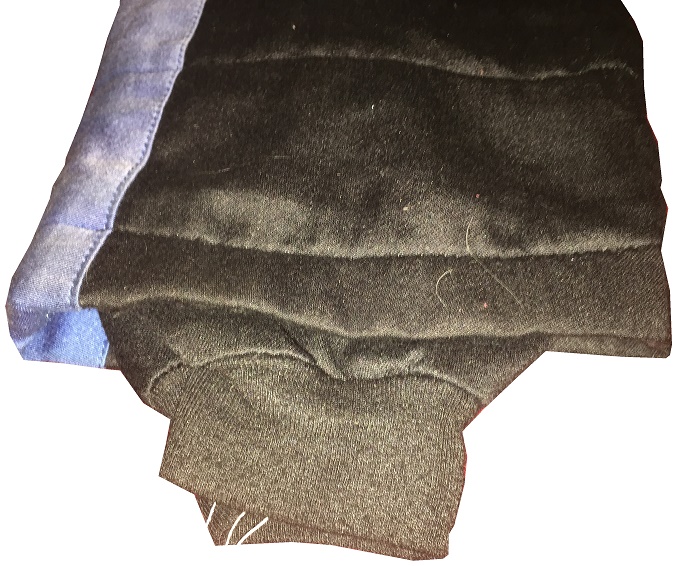
Founded some time in the early 2010’s, Maxim Racewear was a small-time operation that provided crew uniforms to lower-end teams, and eventually was found by some teams in the upper echelons of NASCAR, including Front Row Motorsports. The company went out of business around 2015, so information on them is difficult to get. One team they made pit crew uniforms for is Front Row Motorsports, as evidenced by this 2013-2014 example. This mismatched suit shows decent use, with scuff marks and stains.The blue collar has silver accents, and is unadorned.The name NOVAK is written in Sharpie in the cowl.The right chest has NASCAR SPRINT CUP SERIES,FORD,CSX PLAY IT SAFE, and GOODYEAR logos embroidered into it.The left chest features LOVE’S TRUCK STOPS, FARM RICH, SAFECAR.GOV, DR PEPPER, TACO BELL, LONG JOHN SILVERS, and MDS logos embroidered.The front torso features a FRONT ROW MOTORSPORTS logo embroidered into it.Inside the front zipper of the jacket features a Maxim Racewear warranty label.The sides of the jacket have Velcro comfort straps on the back. The shoulder epaulets have FRONT ROW MOTORSPORTS embroidered logos, as well as MAXIM RACEWEAR logos present. The right sleeve has NASCAR, FORD RACING, RACING RADIOS,MERIT PRO, and K&N logos on the upper sleeve, and a MAXIM RACEWEAR logo in television position on the end of the sleeve. The left sleeve features SUNOCO, SHERWIN WILLIAMS, SEM, LINCOLN WELDERS, THE PETE STORE, and the SFI certification on the upper sleeve, and a MAXIM RACEWEAR logo in television position at the end of the sleeve. The back of the jacket shows some wear with a few scuff marks and stains.The back of the neck is unadorned.The back torso has @FRONTROWNASCAR, I BREAK FOR TRAINS, and a FRONT ROW MOTORSPORTS logo embroidered into it.The pants show decent use, with the tag destroyed, and some scuff marks.In the inside of the pants is written 38 SPARE and some Asian lettering.There is a tag in the waist of the pants, but the pants have been washed some many times, the tag has been destroyed.The black pants have a blue stripe up the sides, and has boot cuffs, though the cuffs do show some wear. The back of the pants show some light wear.Front Row Motorsports is a little team that can, and they have a number of wins in the Cup Series. They have had a lot of talented drivers, and I hope they have a lot of success in the future.

Next Week, The Vest Project continues.

The Vest Project Part 17-Revisiting A Team I’ve Already Covered.

By David G. Firestone

Ok, I get that last week’s Friday Feature was a long read. I had been wanting to do something like that for a while. Now that the coins are done, let’s pick up the vest project where we left off. Two years ago, I “finished” the vest project with a Serta vest from BAM Racing. Since then, I have acquired a few more vests, including this one from BAM racing. Since it’s pretty much the same vest, albeit with some minor differences, I’m just going to use the article I did for the Serta vest, update with the changes.

This vest is from The Sprint Cup Series, and is the only vest I’ve come across from the Cup Series. It was from BAM Racing in 2006. BAM stands for Beth Ann Morgenthau, the owner of the team. Their racing team started in 2001 racing Fords part time. In 2002, they switched to Dodge, which they raced until they folded in 2008. Their driver lineup included Ken Schrader, 1990 Daytona 500 winner Derrike Cope, and former Truck Series champion Ron Hornaday. Though they had 3 top 10’s with Schrader over the course of three seasons, 2003, 2004, and 2005, they never scored a top 5, or a win.

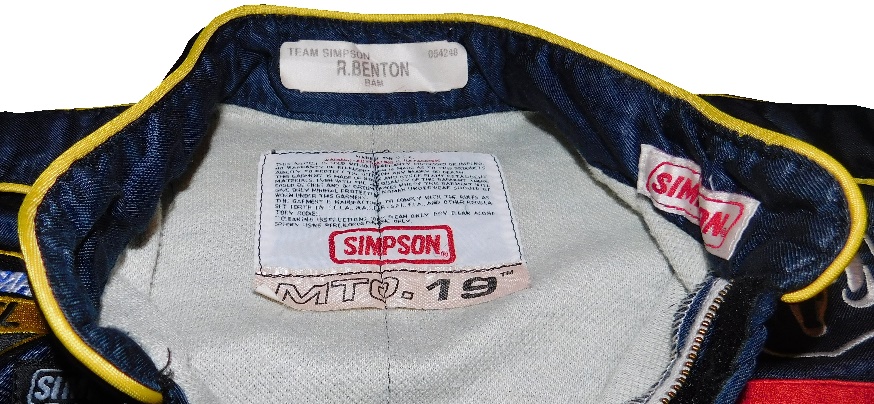
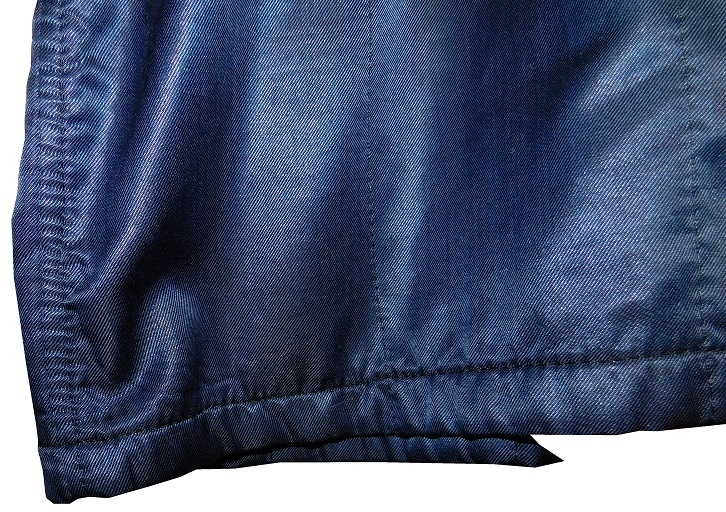
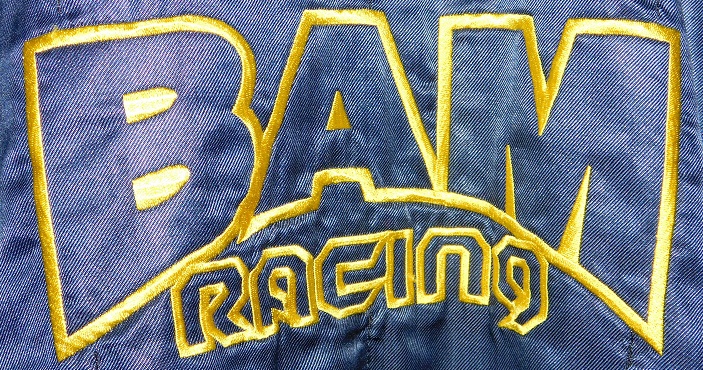
2006 would be a forgettable year for BAM Racing. Though they tried to start 33 races out of the 36 race season, they failed to qualify for 8 of them, and the ones that they did qualify for, they failed to even score a top 10. During some of those 24 races, a crew member wore this Simpson vest.  Issued to a crew member named R Benton, the vest shows light use.The collar has no logos on it.The old Simpson warranty label is sewn into the cowl, along with an identification tag stating that the vest is issued to R Benton. The right chest features a NASCAR NEXTEL CUP SERIES logo, a SIMPSON logo, and a GOODYEAR logo present.The left chest features a Dodge logo and an SEM logo.The front torso has a BAM RACING logo embroidered in white and yellow in the blue background material.The bottom hems don’t feature comfort straps. The shoulder epaulets feature Simpson logos, but are otherwise unadorned. The vest has standard arm holes. The back of the vest doesn’t show any real wear.The back of the neck is unadorned, but just below the neck, there is WWW.BAM49RACING.COM embroidered into it.The back torso features a SERTA logo above a BAM RACING logo.The vest project will go on, and I do plan on doing more vests in the coming months. I just hated doing vest after vest after vest. I do learn from these vests, and I do enjoy collecting them.

Next week, a pit crew suit from an established Cup team, made by a company I have never heard of.

An Artifact From One Of The World’s Most Popular Sports

By David G. Firestone

Having grown up in the United States, we never watched Cricket, we watched baseball. Cricket is one of the world’s most popular sports. Its origins can be traced back to the late 1500’s. Like association football, cricket has their own World Cup. Using Wikipedia, I am going to provide an overview of the rules:

During normal play, thirteen players and two umpires are on the field. Two of the players are batsmen and the rest are all eleven members of the fielding team. The other nine players in the batting team are off the field in the pavilion. In the photo, the two batsmen have taken position at each end of the pitch. One of the two umpires is stationed behind the wicket at the bowler’s end of the pitch. The bowler is bowling the ball from his end of the pitch to the batsman at the other end who is called the “striker”. The other batsman at the bowling end is called the “non-striker”. The wicket-keeper, who is a specialist, is positioned behind the striker’s wicket and behind him stands one of the fielders in a position called “first slip”. While the bowler and the first slip are wearing conventional kit only, the two

batsmen and the wicket-keeper are wearing protective gear including safety helmets, padded gloves and leg guards.

While the umpire stands at the bowler’s end of the pitch, his colleague stands in the outfield, usually in or near the fielding position called “square leg”, so that he is in line with the popping crease at the striker’s end of the pitch. The bowling crease is the one on which the wicket is located between the return creases. The bowler intends to hit the wicket with the ball or, at least, to prevent the striker from scoring runs. The striker intends, by using his bat, to defend his wicket and, if possible, to hit the ball away from the pitch in order to score runs.

Some players are skilled in both batting and bowling so are termed all-rounders. Bowlers are also classified according to their style, generally as fast bowlers, medium pace seam bowlers or, spinners. Batsmen are classified according to whether they are right-handed or left-handed.

Of the eleven fielders, three are in shot in the image above. The other eight are elsewhere on the field, their positions determined on a tactical basis by the captain or the bowler. Fielders often change position between deliveries, again as directed by the captain or bowler.

If a fielder is injured or becomes ill during a match, a substitute is allowed to field instead of him, but the substitute cannot bowl or act as a captain. The substitute leaves the field when the injured player is fit to return. The Laws of Cricket were updated in 2017 to allow substitutes to act as wicket-keepers, a situation that first occurred when Mumbai Indians’ wicket-keeper Ishan Kishan was injured in a match on 18 April 2018.

A bowler reaches his delivery stride by means of a “run-up” and an over is deemed to have begun when the bowler starts his run up for the first delivery of that over, the ball then being “in play”. Fast bowlers, needing momentum, take a lengthy run up while bowlers with a slow delivery take no more than a couple of steps before bowling. The fastest bowlers can deliver the ball at a speed of over 90 mph and they sometimes rely on sheer speed to try and defeat the batsman, who is forced to react very quickly. Other fast bowlers rely on a mixture of speed and guile by making the ball seam or swing (i.e. curve) in flight. This type of delivery can deceive a batsman into miscuing his shot, for example so that the ball just touches the edge of the bat and can then be “caught behind” by the wicket-keeper or a slip fielder. At the other end of the bowling scale is the spin bowler who bowls at a relatively slow pace and relies entirely on guile to deceive the batsman. A spinner will often “buy his wicket” by “tossing one up” (in a slower, steeper parabolic path) to lure the batsman into making a poor shot. The batsman has to be very wary of such deliveries as they are often “flighted” or spun so that the ball will not behave quite as he expects and he could be “trapped” into getting himself out. In between the pacemen and the spinners are the medium paced seamers who rely on persistent accuracy to try and contain the rate of scoring and wear down the batsman’s concentration.

There are ten ways in which a batsman can be dismissed: five relatively common and five extremely rare. The common forms of dismissal are bowled, caught, leg before wicket (lbw), run out and stumped. Rare methods are hit wicket, hit the ball twice, obstructing the field, handled the ball and timed out. The Laws state that the fielding team, usually the bowler in practice, must appeal for a dismissal before the umpire can give his decision. If the batsman is out, the umpire raises a forefinger and says “Out!”; otherwise, he will shake his head and say “Not out”. There is, effectively, an eleventh method of dismissal, retired out, which is not an on-field dismissal as such but rather a retrospective one for which no fielder is credited.

Batsmen take turns to bat via a batting order which is decided beforehand by the team captain and presented to the umpires, though the order remains flexible, when the captain officially nominates the team. Substitute batsmen are not allowed.

A skilled batsman can use a wide array of “shots” or “strokes” in both defensive and attacking mode. The idea is to hit the ball to best effect with the flat surface of the bat’s blade. If the ball touches the side of the bat it is called an “edge”. The batsman does not have to play a shot and can allow the ball to go through to the wicketkeeper. Equally, he does not have to attempt a run when he hits the ball with his bat. Batsmen do not always seek to hit the ball as hard as possible, and a good player can score runs just by making a deft stroke with a turn of the wrists or by simply “blocking” the ball but directing it away from fielders so that he has time to take a run. A wide variety of shots are played, the batsman’s repertoire including strokes named according to the style of swing and the direction aimed: e.g., “cut”, “drive”, “hook”, “pull”.

The batsman on strike (i.e. the “striker”) must prevent the ball hitting the wicket, and try to score runs by hitting the ball with his bat so that he and his partner have time to run from one end of the pitch to the other before the fielding side can return the ball. To register a run, both runners must touch the ground behind the crease with either their bats or their bodies (the batsmen carry their bats as they run). Each completed run increments the score of both the team and the striker.

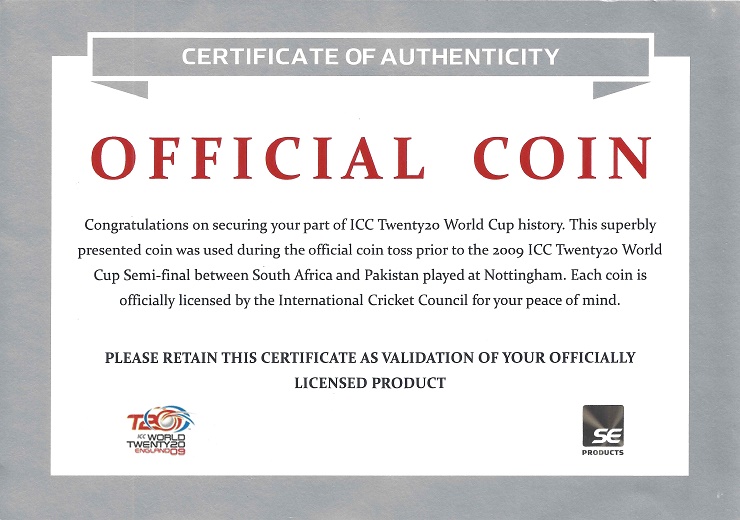
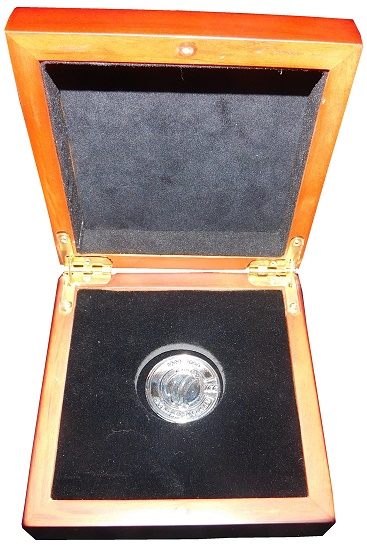
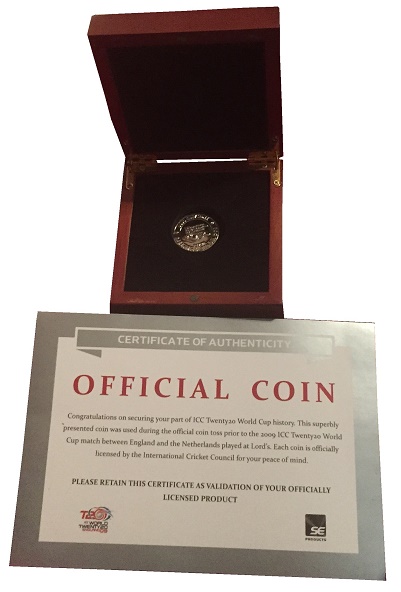
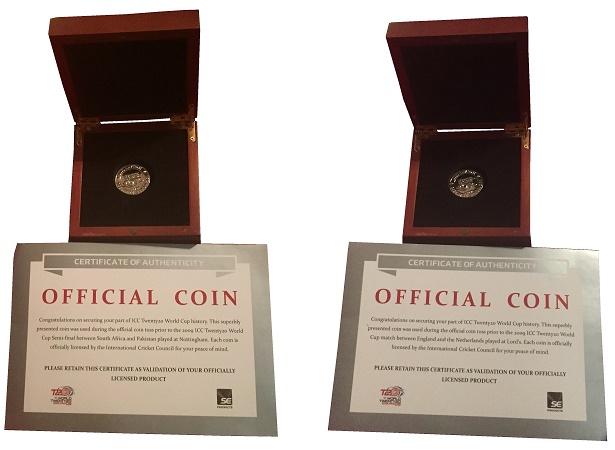
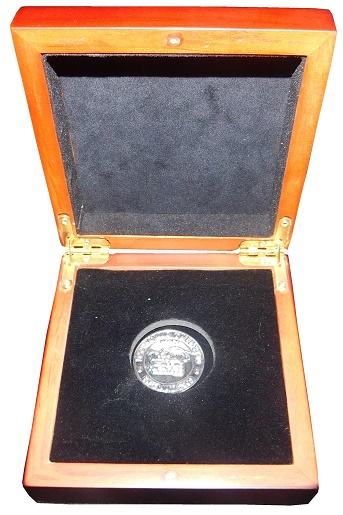
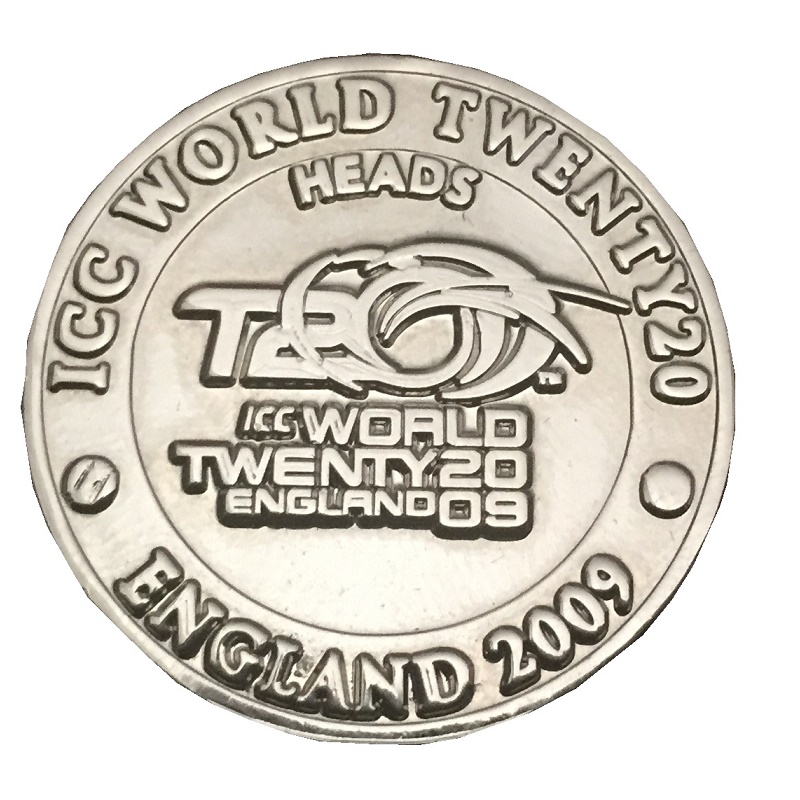
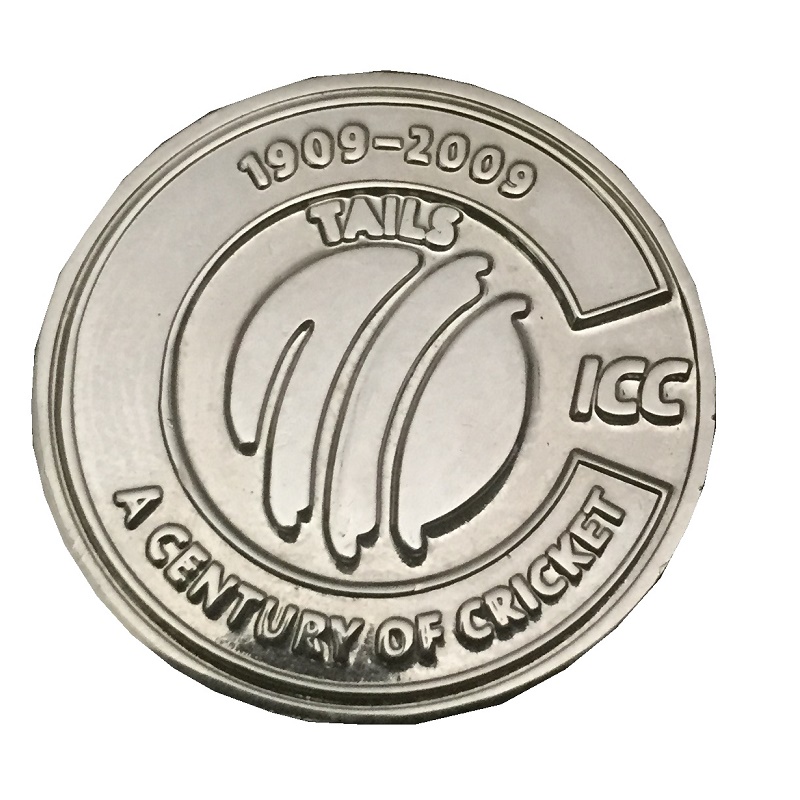
One form of cricket is Twenty20 cricket, aka Twenty-20, and abbreviated to T20. In a Twenty20 game the two teams have a single innings each, which is restricted to a maximum of 20 overs. The England and Wales Cricket Board created Twenty20 in 2002, and it has grown in popularity, spawning its own World Cup, like the ones played in 2009. I have a couple of match-used coins from the 2009 Twenty20 World Cup, including this one, from the South Africa vs. Pakistan semi-final, where Pakistan won with 149/4 over South Africa’s 142/5.  The coin, slightly larger than an American quarter, is in great condition.

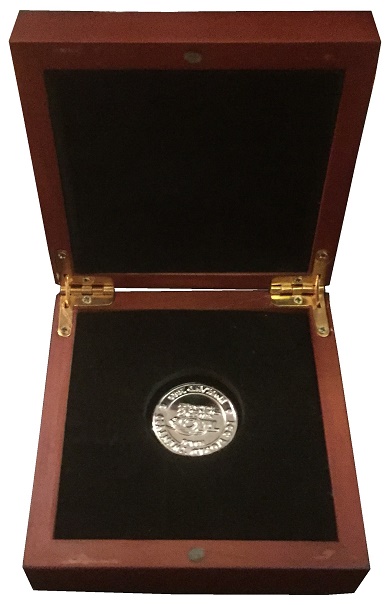
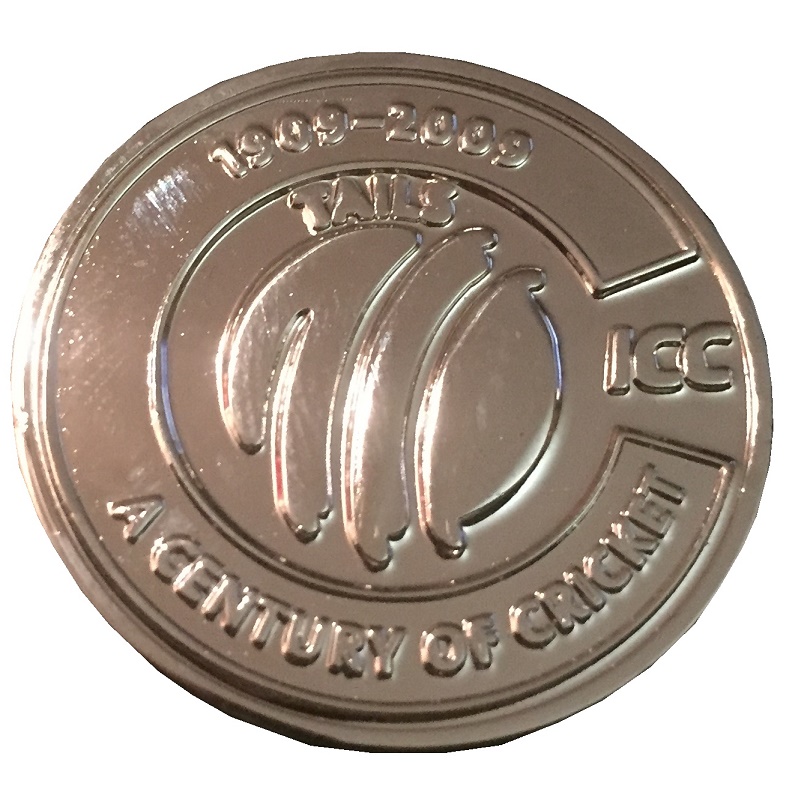
The specially made coin is not sold as a replica, and comes in a customized box, with an International Cricket Council logo. The box is about 4 inches square. The coin itself is slightly larger than an American quarter, though much smaller than an NFL toss coin. The heads and tails are marked. The heads side features a 2009 ICC Twenty20 logo, with England 2009. The tails section features an ICC logo, with a 100th anniversary commemoration. The coin comes with an ICC COA.I also have a second coin, from a Group B competition between England and the Netherlands. This was one of the early matches, where The Netherlands won 163/6 over England’s 162/5. The coin is identical, no serial numbers are on these coins, and the only difference is the COA. Next week, I resume the vest project.
The Best Way To Spend A Weekend

By David G. Firestone

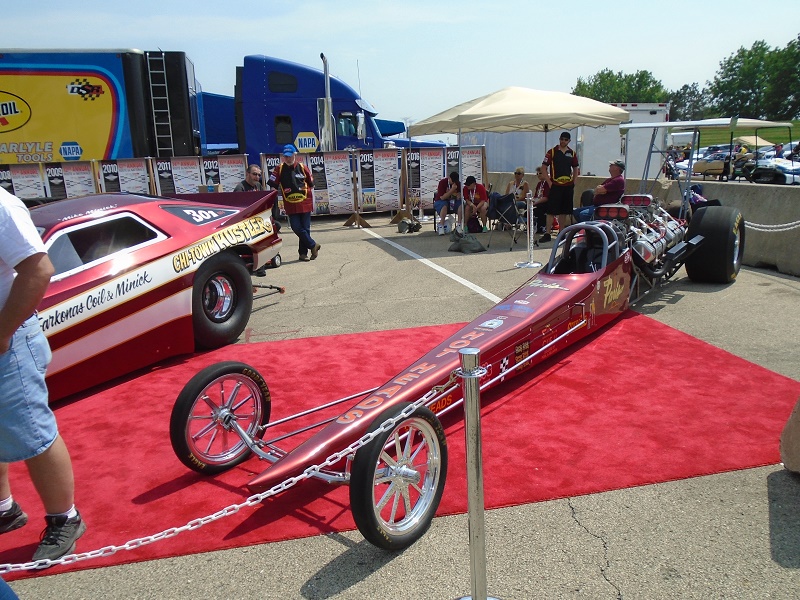
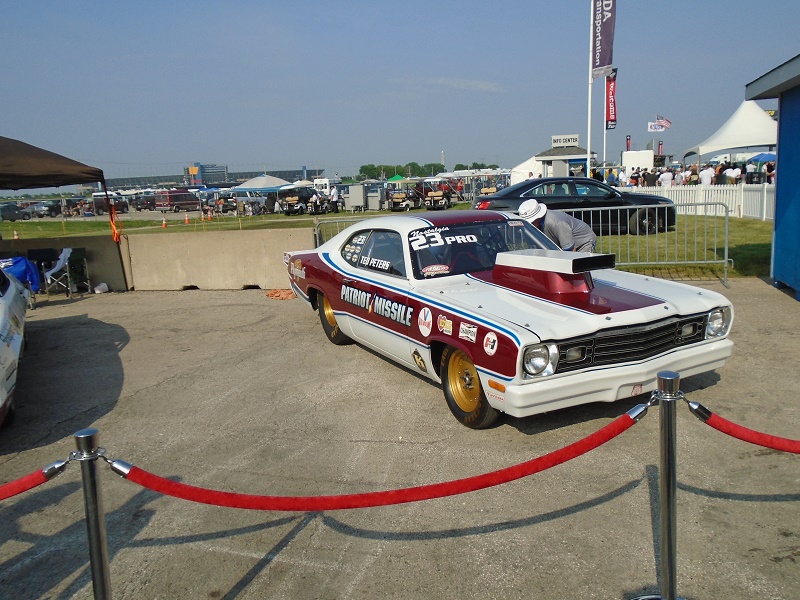
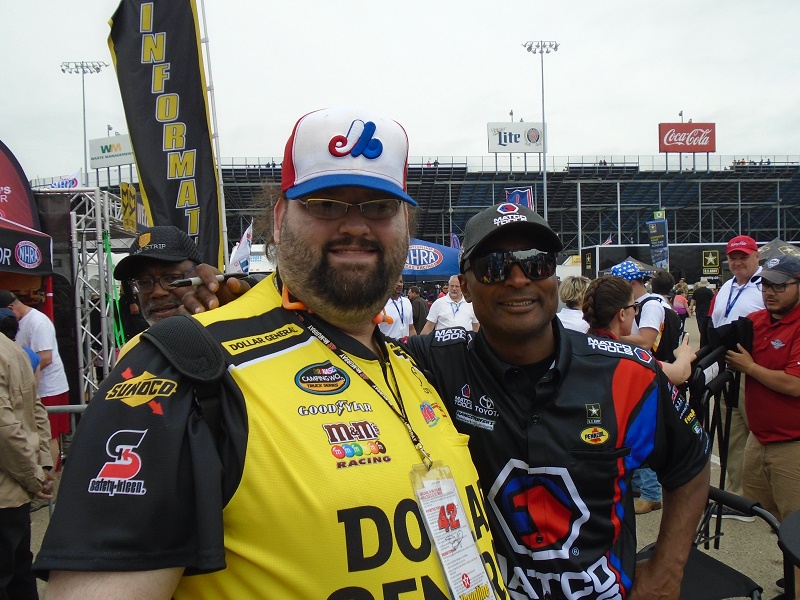
A bad day at an NHRA Mello Yellow Drag Racing Series event beats a good day doing most anything else. Fortunately, last Saturday was not a bad day at all. Since NASCAR has moved their Chicagoland event to July, the Route 66 Nationals were moved to the first weekend in June. The weather was great, not too hot, and enough of a breeze. I love drag racing, and the Route 66 Nationals is the NHRA’s stop on the Mello Yello Drag Racing Series tour. I go with friends from work, and every year, we have a great time.

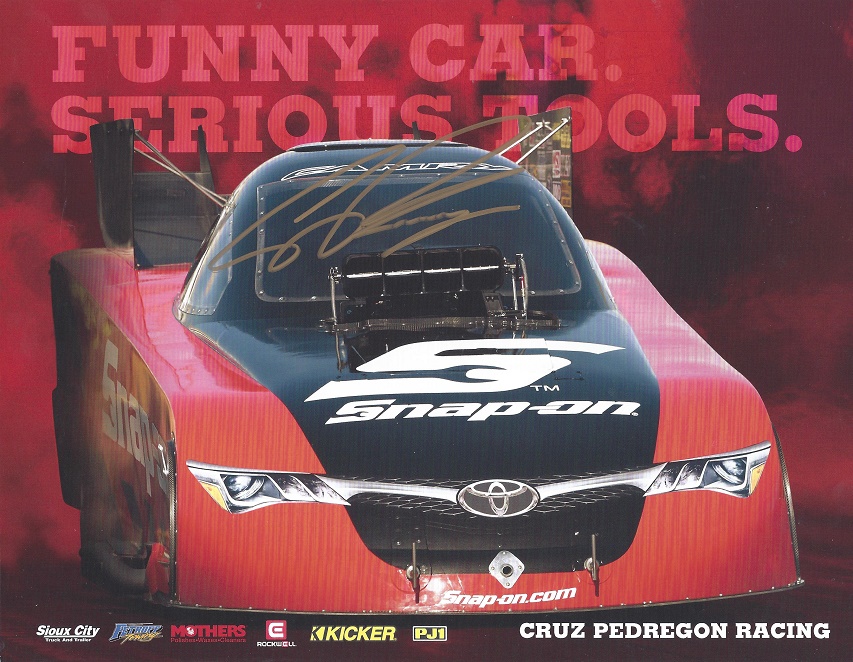
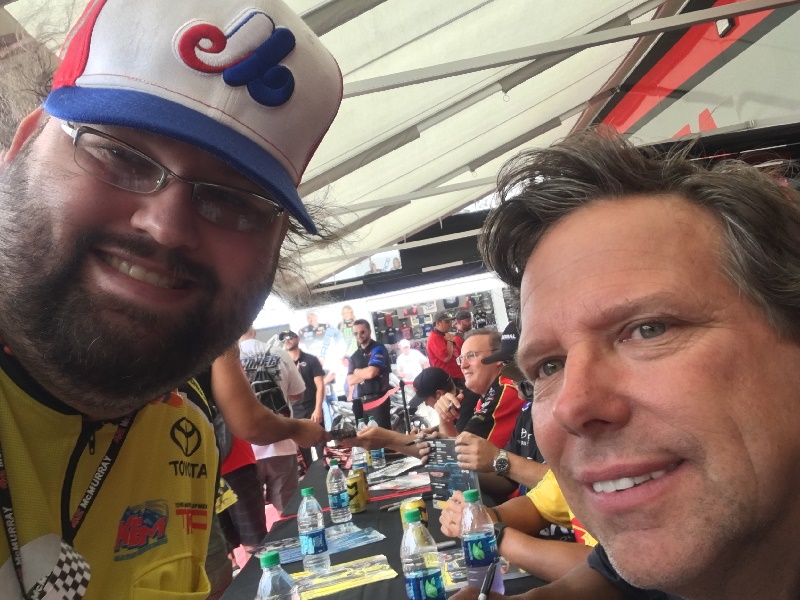
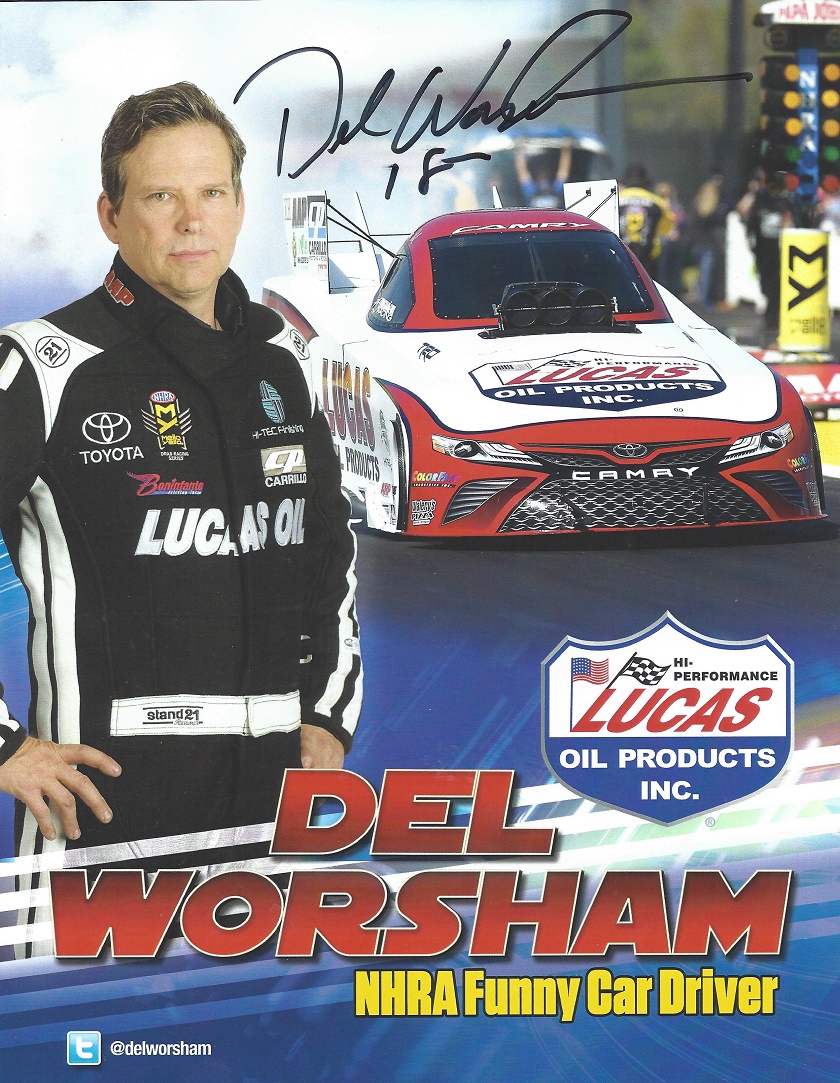
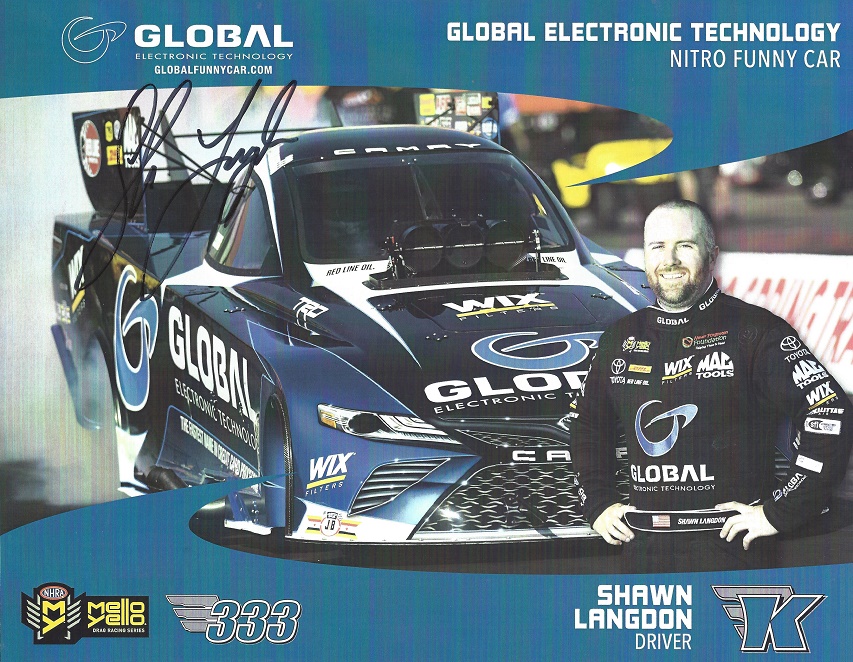
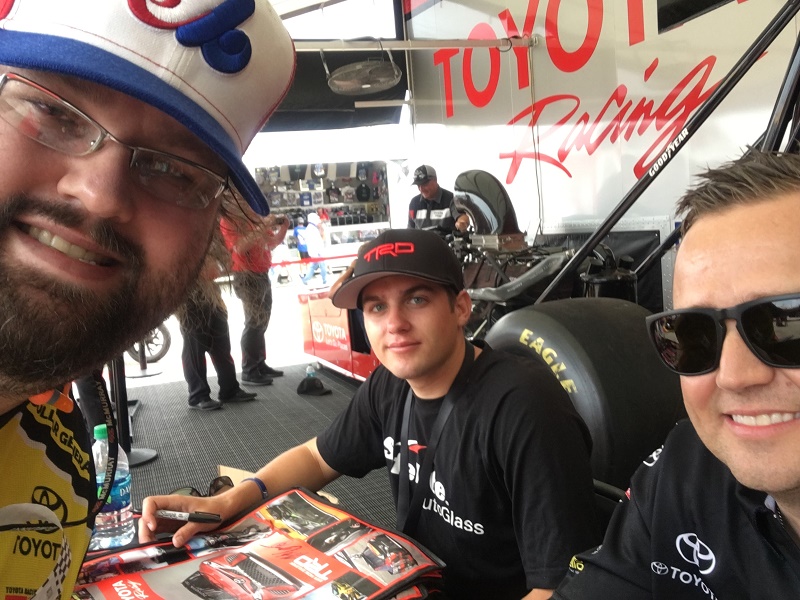
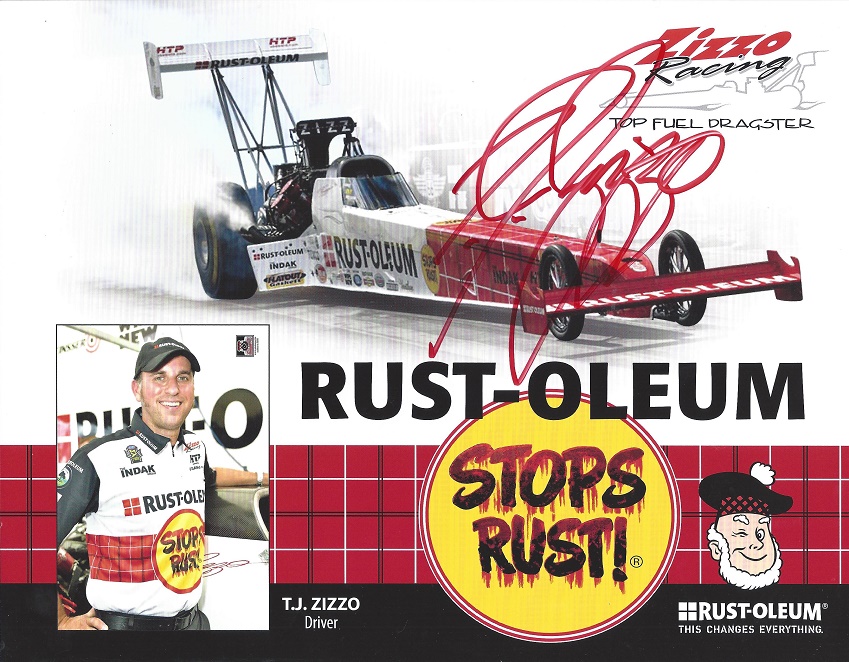
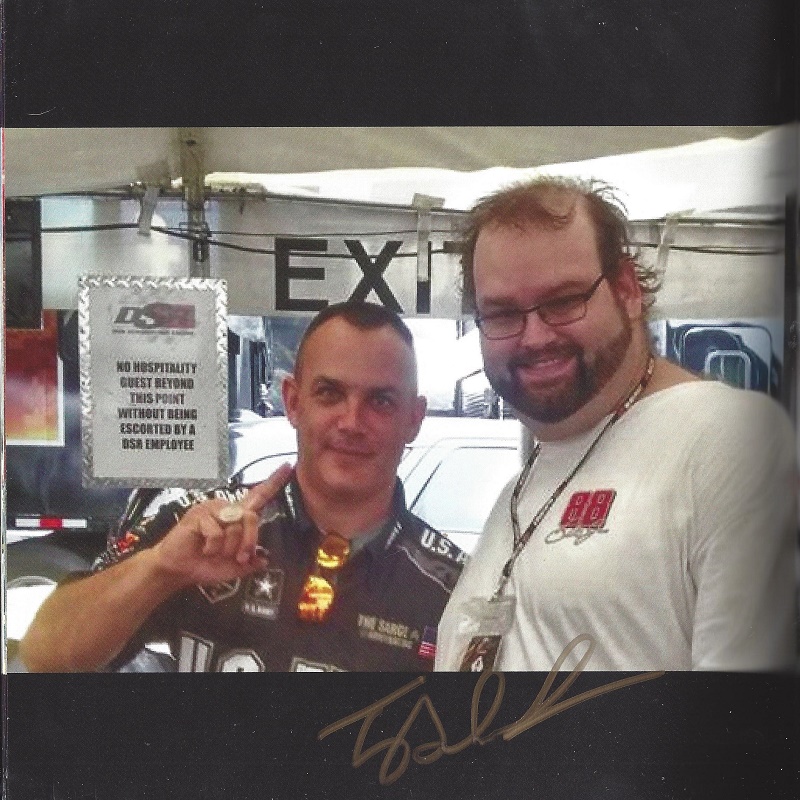
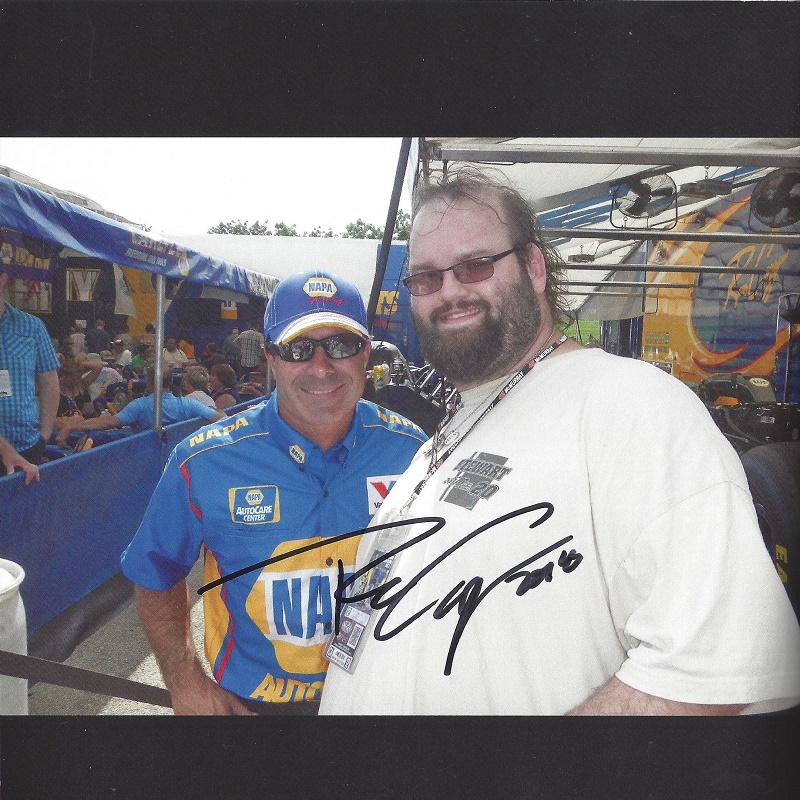
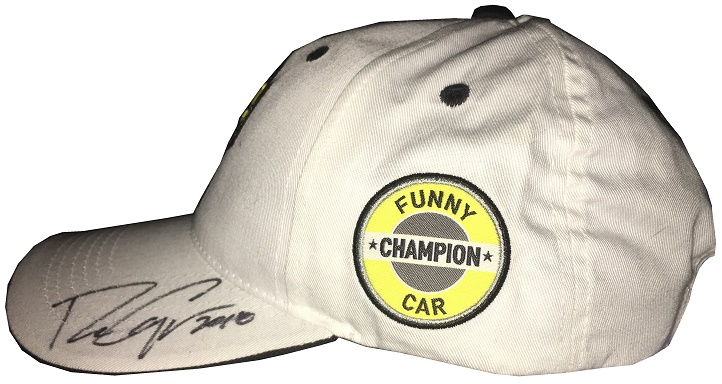
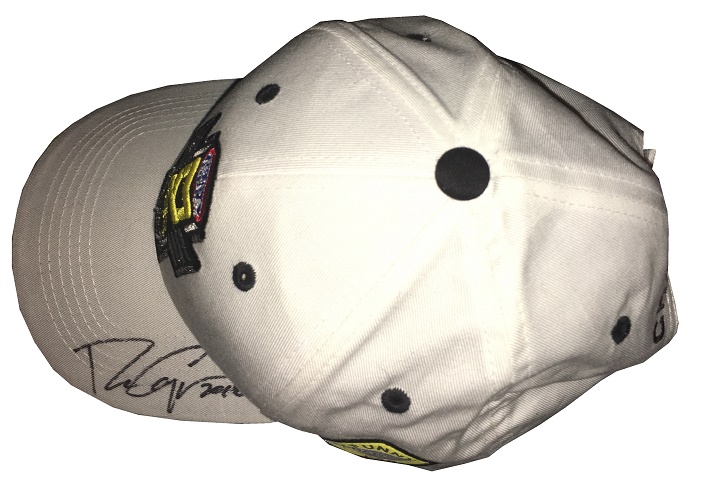
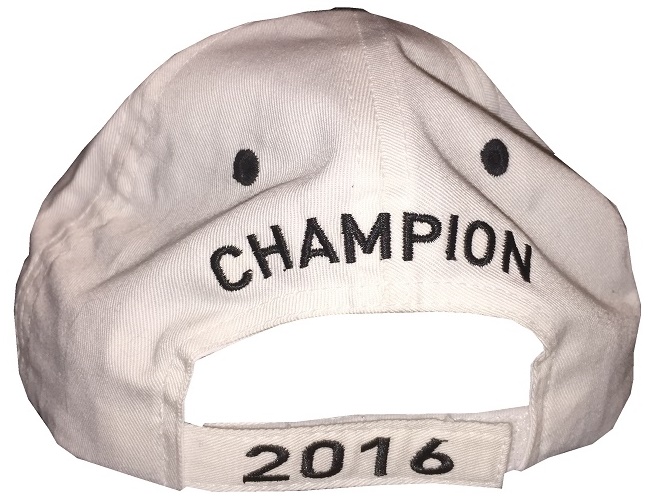
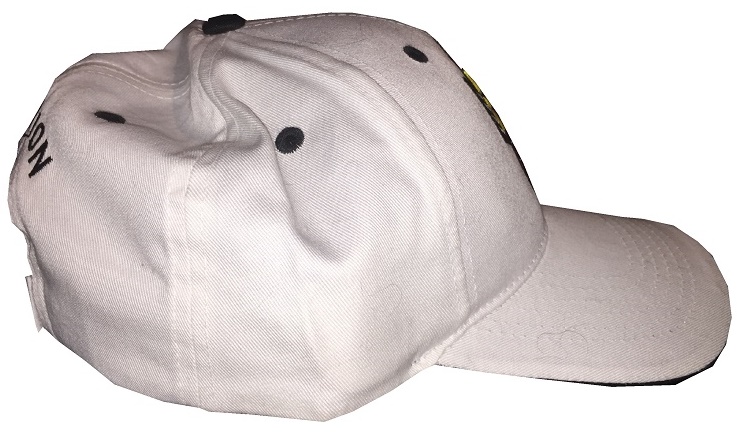
We arrived, and spent a lot of time wandering around the midway. We picked up a number of hero cards, and watched the crews work on these 11,000 horsepower engines. After a while, I got in line at the Toyota pavilion, and got autographs and selfies with Cruz Pedregon, Del Worsham, JR Todd, Shawn Langdon, Antron Brown, Doug Kalitta, Richie Crampton, and Noah Gragson. I then got in line for the Mello Yello autograph session, and got Deric Kramer, TJ Zizzo, Don Garlits, Barry Dyer, Larry Reyes, Jeg Coughlin Sr., and Ron Colson. In walking around the pits, I also got Angie Smith to sign a hero card, Tony Schumacher to sign my book, and Ron Capps to sign my book and my championship hat.

Once the professional categorizes got underway, the racing was great. The roar of the engines and the scent of burnt rubber and nitromethane added to the allure of seeing some of the greatest drag racers on the planet. Enjoying a great Saturday watching drag racing is always fun.

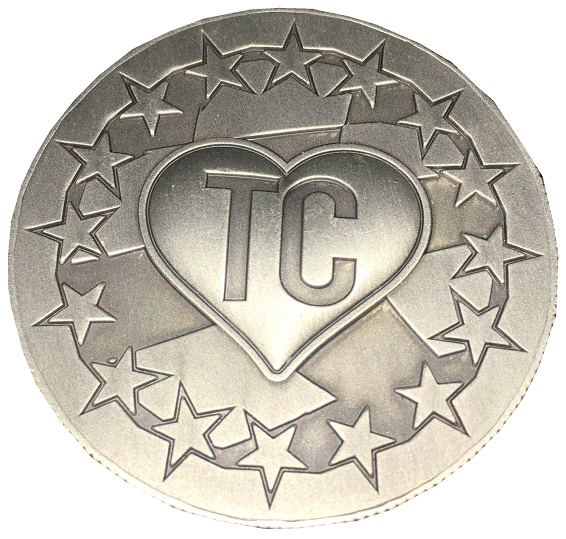
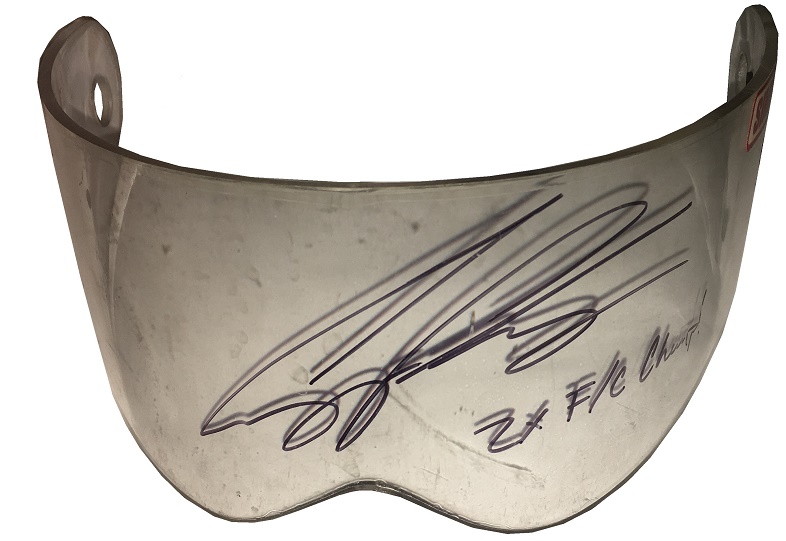
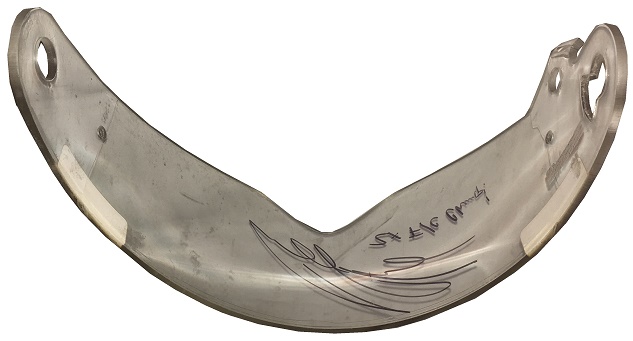
Also, since I have interviewed Jack Beckman, I purchased an Infinite Hero Challenge Coin. This year’s design is done in memory of the late Terry Chandler, who passed away from cancer prior to the 2017 event. The front has a heart design with Chandler’s initials. The back of the coin has the Infinite Hero logo, with blue enamel. Jack also autographed a copy of the Infinite Hero pledge. I also came across this Cruz Pedregon race-used visor. It’s a Simpson visor, which shows a number of scratches, and scuff marks, and Cruz has autographed the visor with the inscription “2X FC CHAMP!.” After getting my coin and my visor, we decided to head back home. It was a great day, but then any day watching racing is a great day!

Next week, gonna go off-topic with something off beat.

Race Rock Revisited

By David G. Firestone

In 2016, I wrote a piece on a Race Rock racing suit. At the time I wrote the article, I thought that Race Rock was a real racing team, and they used this suit for promotion. I had spent a long time trying to find out information on Race Rock, but with no success. So I went with the best information I had at the time.

Not long after I posted the colum, it was pointed out to me that I was completely wrong about what Race Rock was. It wasn’t a racing team, but it was a racing themed restaurant in Las Vegas. After doing some more research, it turned out that I was totally wrong about Race Rock. I was going to redo the article, but as does happen in life, I got busy with other things, and Race Rock got put on the back burner. So I’m going to redo the article, but with the updated information. So here we go:

I’ve talked about the promotional advantages of driver suits and racing suits before. True, a racing sponsorship can pay a lot of dividends. According to this article from Fox, “A new study conducted jointly by the Los Angeles-based media agency Wasserman and Buffalo, New York-based Nervve showed that Denny Hamlin’s Daytona 500 victory was worth $1.9 million in earned media value for his primary sponsor, FedEx.”

But where racing suit design differs than regular work design is that the sponsor or team can design the suit in ways which most normal companies wouldn’t be able to. Denny Hamlin’s suit can be designed for maximum sponsor exposure. While Denny for some reason doesn’t wear TV logos on the sleeves, if any FedEx employee were asked to wear a uniform similar to Denny’s suit or the teams pit shirts, the company would be a laughing stock.

While racing suit design for promotional appeal is a new concept in marketing, mechanics in auto racing have been around since day one. Mechanics make the cars run, and keep them running. They have to work on cars and wear special clothes, as the fluids in the car can ruin most street clothes. The design of auto racing uniforms has influenced fashion many times over the years, and has proven popular.
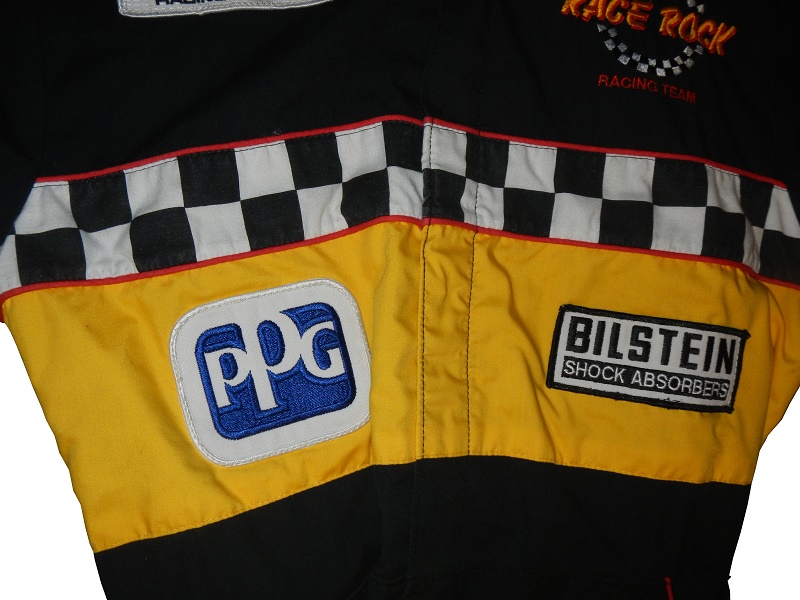
Race Rock was an auto-racing themed restaurant in Las Vegas, which operated from 1999 to 2001. It was similar to the NASCAR cafe, in that it was filled with auto racing memorabilia. It was meant to work in conjunction with the Neonopolis mall, but the mall didn’t open until 2002, the restaurant was a flop, it closed, and the memorabilia was sold off. The wait staff were issued these jumpsuits to wear as uniforms.

racerock

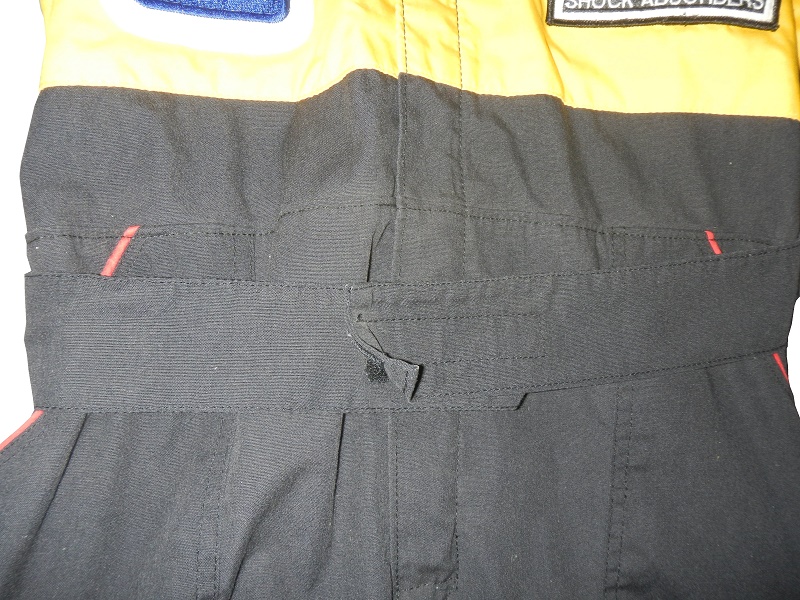
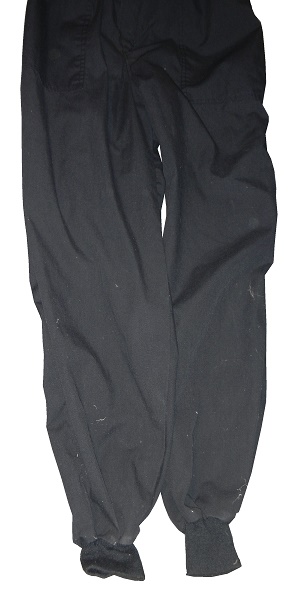
The front has a CART patch and RACE ROCK RACING TEAM embroidered into the chest,a checkered flag stripe, and a yellow stripe across the chest with a PPG patch and a BILSTEN SHOCK ABSORBERS patch sewn into the yellow stripe.racerock-rchest racerock-lchest racerock-flogoThe belt, and legs are unadorned.racerock-belt racerock-legs

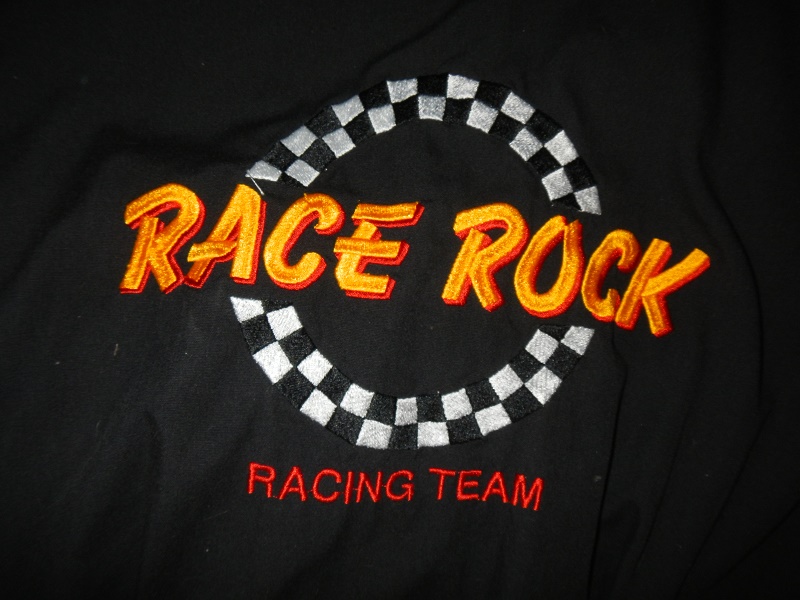
The shoulders have yellow unadorned epaulets, racerock-rshoulder racerock-lshoulderand short sleeves with MOPAR PERFORMANCE RACING TEAM and CHAMPION SPARK PLUG patches on the right sleeve, and VALVOLINE RACING and HOLLEY patches on the left sleeve.racerock-rsleeve racerock-lsleeveThe back of the suit has a giant RACE ROCK RACE TEAM logo embroidered into it. Other than that, there are no designs present at all.racerockb racerock-blogoRace Rock was an interesting experiment that could have worked, but fate was against them.  It was also another in the long line of theme restaurants that were tried in the late 1990’s, and failed.  Race Rock joins The NASCAR cafe, The WCW Nitro Grill, The All-Star Cafe, Mars 2124, WWF New York, ESPN Zone, Michael Jordan’s, and countless other restaurants that tried to lure fans into their doors, but failed.  I can only wonder if the mall across the street succeeded, how long Race Rock would have lasted

Next week, something fun and special.

Memories Of A Little Team That Could

By David G. Firestone

James Whitener and Gregg Mixon found GIC-Mixon Motorsports in 2001. Using a series of different drivers, they fielded Xfinity Series teams from 2002 to 2005. The team did not have any success, failing to score a top 10, or even lead a lap. The two owners shut down the team in 2006. Mixon and Whitener would later reunite to found JGL Racing in 2014, which still runs teams today.

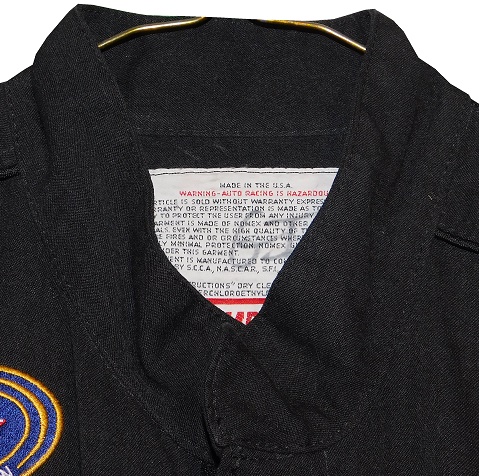
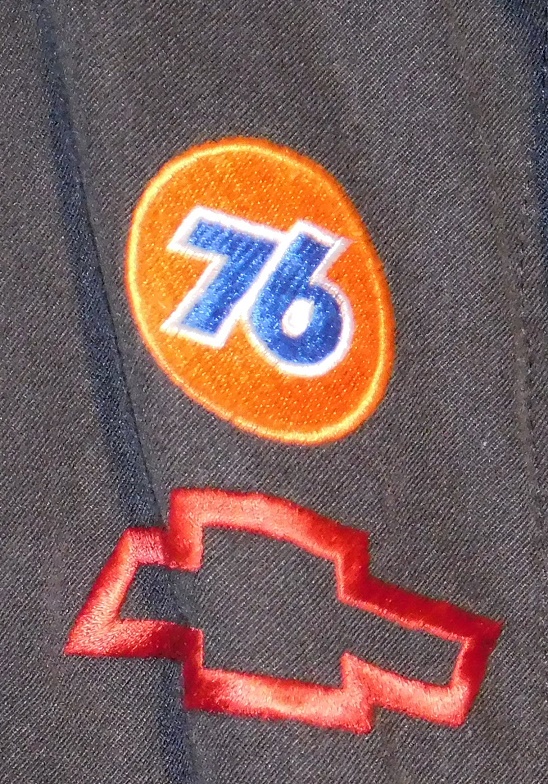
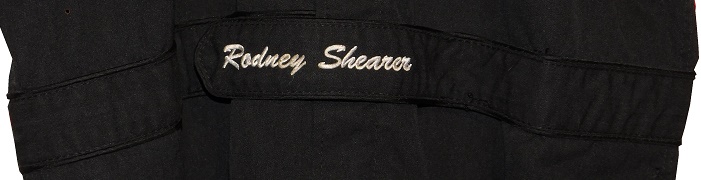
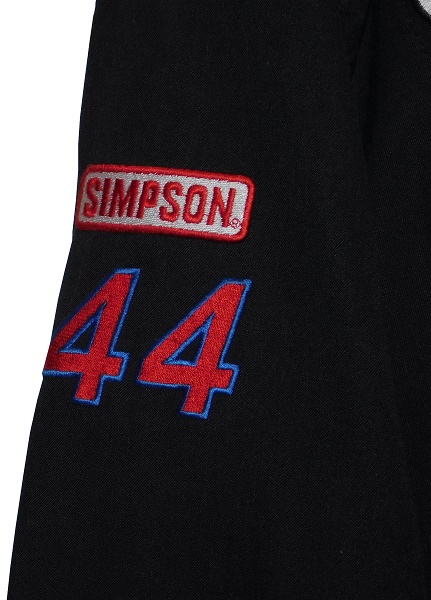
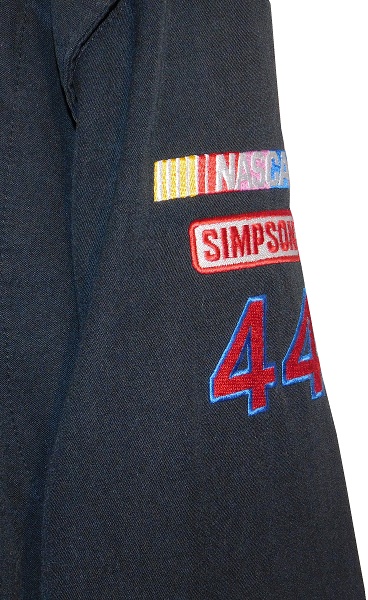
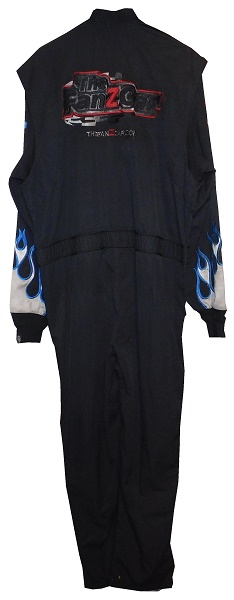
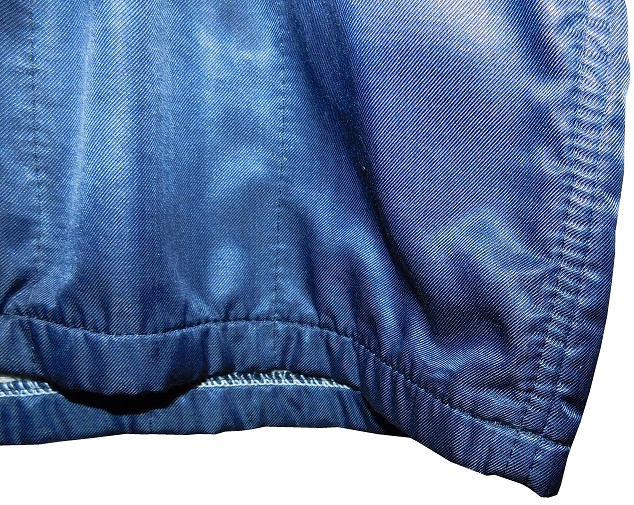
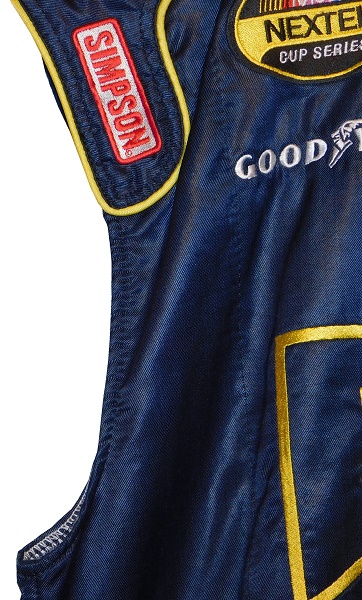
In 2003, Mike Harmon raced a number of races sponsored by The FanZCar. One of his crew members was Rodney Shearer, who passed away in 2017. He wore this well-worn Simpson double-layer firesuit for his time with GIC-Mixon, and the suit has been recycled.  The suit shows heavy use with numerous stains and some fire discoloration.The collar is a standard collar, and has no designs on it.The cowl has a standard Simpson warranty label, with a yellow piece of paper pinned to it, and an M.T.O 6 tag, which shows heavy use.The right chest features a NASCAR BUSCH SERIES GRAND NATIONAL DIVISION logo and a GIC MIXON MOTORSPORTS logo embroidered into it.The left chest features a UNOCAL 76 logo and a CHEVY bow tie logo embroidered.The front torso has GIC MOTORSPORTS embroidered in gold across it.The belt features RODNEY SHEARER embroidered in white on the black fabric.The legs feature THE FANZCAR.COM logos in television position, which have been blacked out with Sharpie. The cuffs show light fire discoloration, and have blue and white flame designs.The black shoulder epaulets have GOODYEAR embroidered in white. The right sleeve has a SIMPSON patch sewn it, and 44 embroidered. The cuffs have the same flame design as the leg cuffs. The left sleeve has a NASCAR logo embroidered, a SIMPSON patch sewn it, and 44 embroidered. The cuffs have the same flame design as the leg cuffs. The rear of the suit has some wear, including fire damage on the cuffs.The back of the neck is unadorned.The back torso features a THE FANZCAR.COM logo embroidered, which has been blacked out using Sharpie. This is so the suit can be recycled.GIC-Mixon Motorsports was one of those teams that raced and worked hard, but achieved little, if anything. There are many of these teams in the history of racing, at all levels. It’s sad that teams that work hard with little resources don’t get the recognition they deserve. These teams work just as hard as the super teams. They deserve to be spot lighted, and be given the respect that the super teams get regularly. I’m glad that Whitener and Mixon have founded another team.
JGL Racing has been racing full time in the Xfinity Series with a series of drivers, and has 6 top 5’s and 12 top 10’s. They are a team perfectly capable of wining a race in the very foreseeable future. With Kaz Grala as a driver, it should only be a matter of time.

Next week, I’ll revisit a suit that I didn’t research properly.

A Firesuit Worn By A Racing Executive…Huh?

By David G. Firestone

Founded in 1991, Joe Gibbs Racing has gone from a single car team to a super team powerhouse. The team has shown strength in the Cup Series, the Xfinity Series, and the Truck Series. A lot of top shelf drivers have raced for Joe Gibbs Racing.

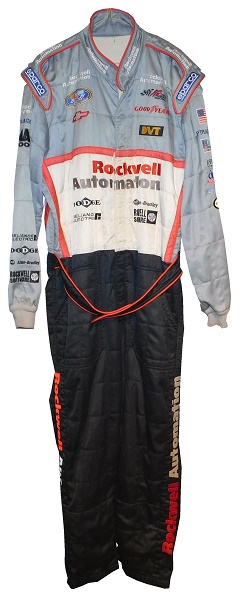
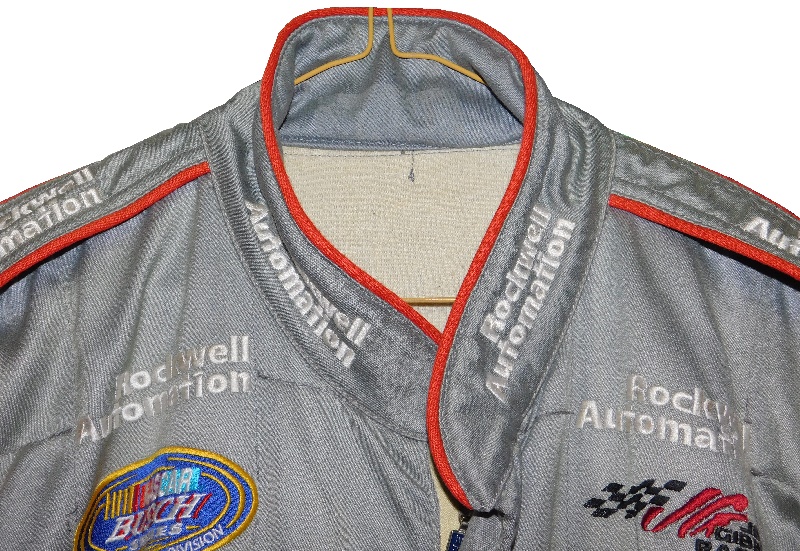
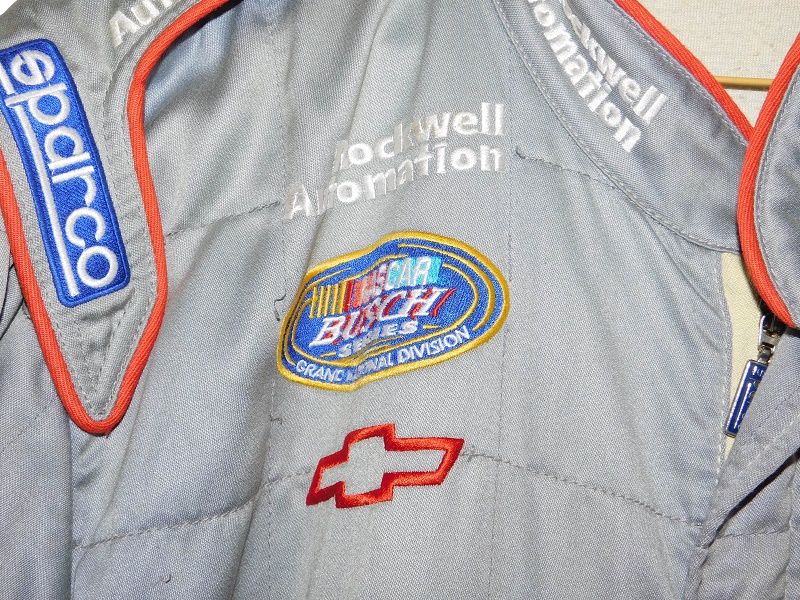
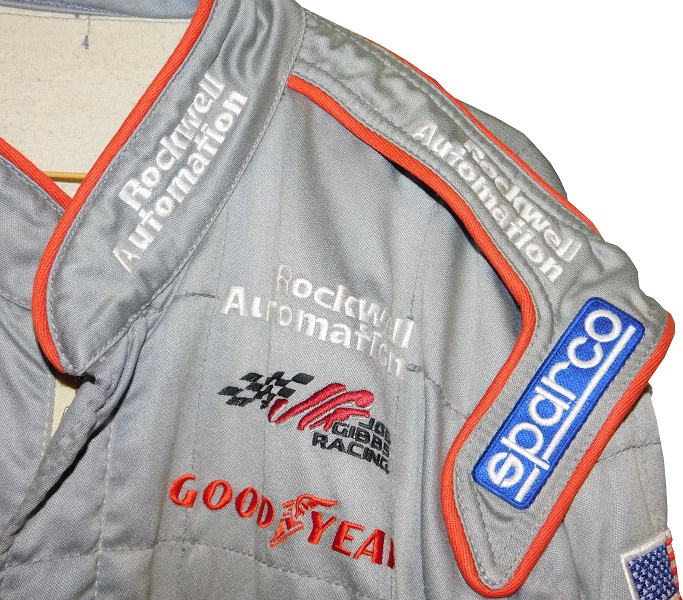
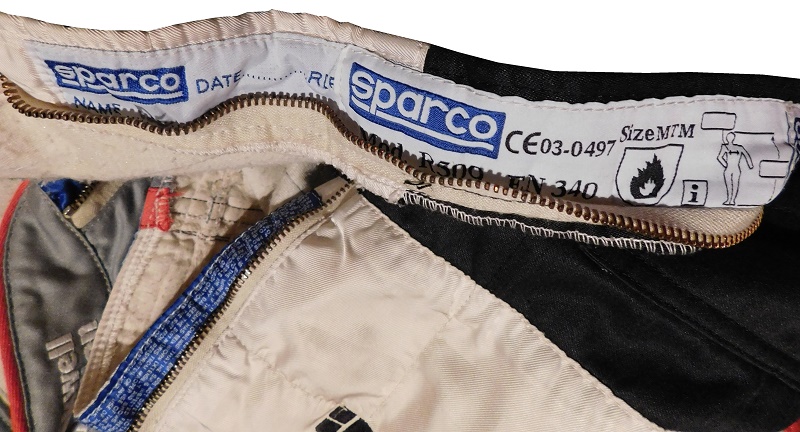
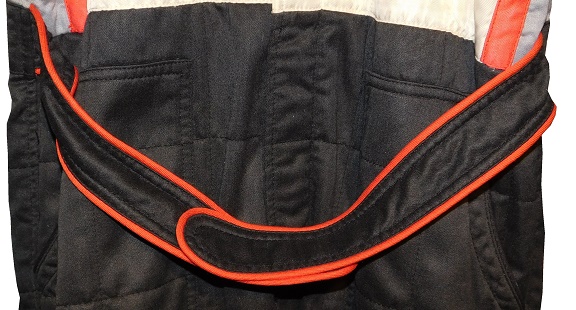
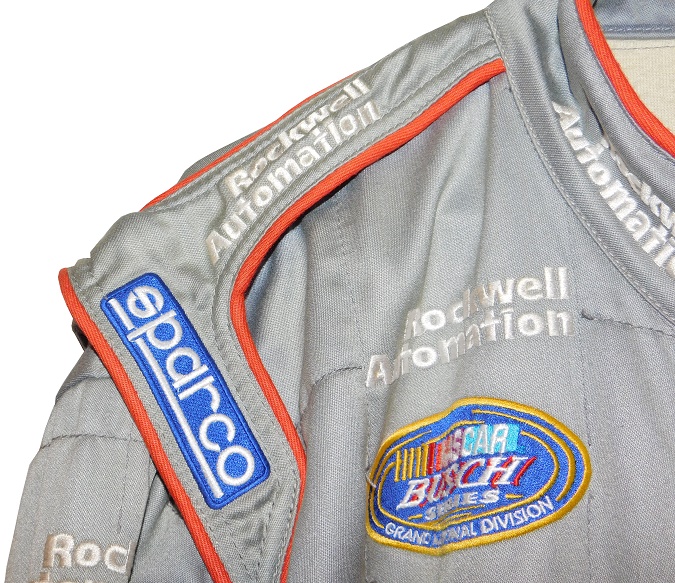
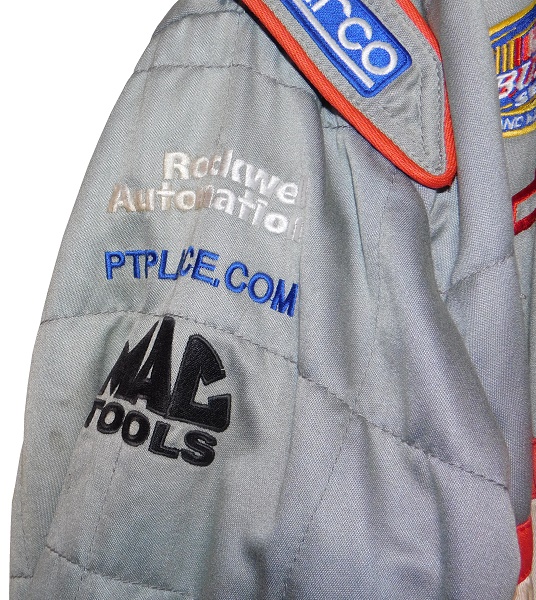
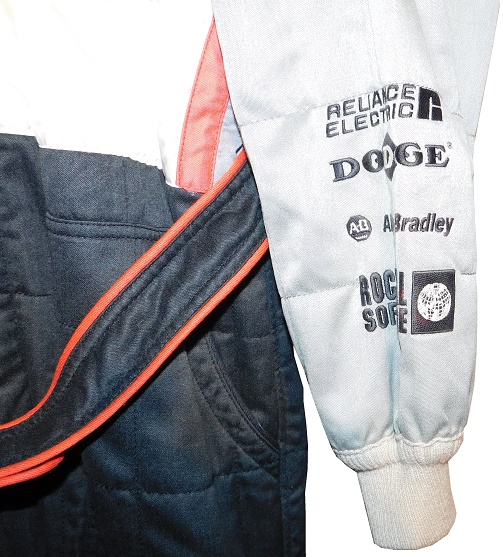
From 2003 to 2006 the #20 was sponsored by Milwaukee, Wisconsin-based Rockwell Automation. 2002 Truck Series Champion Mike Bliss raced the #20 in 2004, winning the Lowe’s Presents the SpongeBob SquarePants Movie 300, earned 6 top 5’s, and 14 top 10’s. During that time, a crew member wore this suit, which was later give to Steve DeSouza, who serves as Vice President of Xfinity Series Operations at Joe Gibbs Racing, which shows light wear.The collar is a standard collar, with ROCKWELL AUTOMATION logos embroidered into it.The right chest features ROCKWELL AUTOMATION, NASCAR BUSCH SERIES GRAND NATIONAL DIVISION logos, and a Chevy bow tie logo embroidered.The left chest features ROCKWELL AUTOMATION, JOE GIBBS RACING, GOODYEAR, and DVT MACHINE VISION logos embroidered into it.The front torso features a ROCKWELL AUTOMATION logo and some of their product logos, including DODGE BEARINGS, RELIANCE ELECTRIC DRIVES, ALLEN-BRADLEY, and ROCKWELL SOFTWARE logos embroidered on a white background.Inside the zipper on the front is the Sparco Warranty label, and the care tag. There is a red outlined black belt over the black legs, and is unadorned.The black legs have red and white ROCKWELL AUTOMATION logos in television position. The suit has boot cuffs.The silver-gray shoulders have ROCKWELL AUTOMATION and SPARCO logos on the epaulets. The right sleeve has ROCKWELL AUTOMATION, PTPLACE.COM, MAC TOOLS, DODGE BEARINGS, RELIANCE ELECTRIC DRIVES, ALLEN-BRADLEY, and ROCKWELL SOFTWARE logos embroidered.The back of the suit features some very light wear.


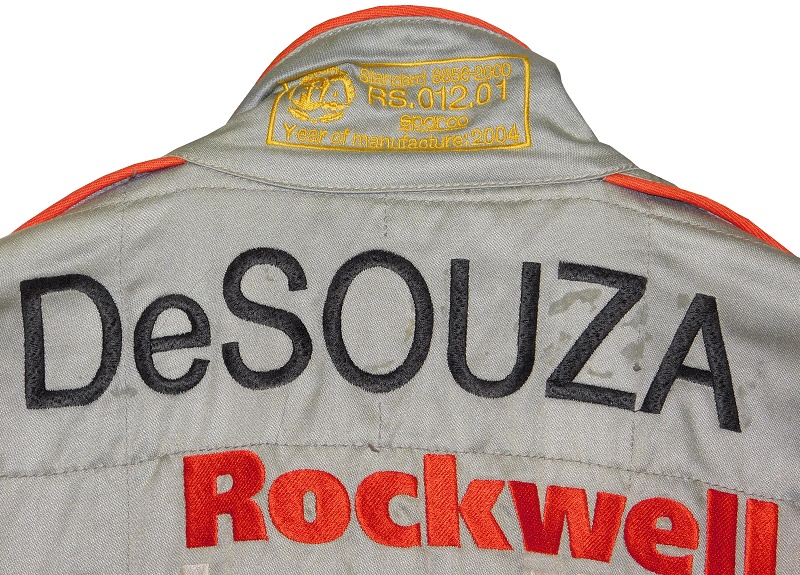
The left sleeve featres an American Flag patch, SHERWIN-WILLIAMS, TRIAD PACKAGING, CINTAS, SPECTRUM CONTROLS, and HYTROL logos embroidered. The back of the suit features some very light wear.The back of the neck features an FIA STANDARD 8856-2000 RS.012.01 logo, which indicates that the suit was made in 2004. Below that is the name DeSOUZA, which is embroidered into the suit. The area that the name is embroidered shows evidence of a nameplate having been removed.The back torso features a ROCKWELL AUTOMATION RACING logo, as well as ROCKWELLAUTOMATION.COM embroidered into it.The suit was worn by Steve DeSouza, who currently serves as Vice President of Nationwide Series Operations at Joe Gibbs Racing, Inc.. DeSouza is a former F1 Powerboat world champion who made the jump to NASCAR in the 1990’s. He has served as VP for Xfinity Series Opperations for many years for Joe Gibbs Racing.

There is no evidence that DeSouza was an active member of the pit crew. It may have been a gift, or DeSouza was a backup crew member. The area around the name shows evidence of a nameplate being removed, which isn’t that shocking, since these suits cost close to $2000, and teams often recycle suits when crew members leave the team. The fact that the suit doesn’t show as much wear as other suits could also mean that the suit was made for DeSouza specifically. Many crew chiefs wear firesuits, due to the danger posed by fire, so it makes sense that DeSouza would want to wear a firesuit. I don’t know everything about this suit, but I do know one thing…it is a nice looking suit.

Next week, a pit crew suit that has been through the ringer.

A Clean End To A Long Career

By David G. Firestone

While he only has one Cup win and two Xfinity Series wins to his name, Bobby Hillin Jr. was a regular on the NASCAR national circuit from the 1980’s to 2000. He raced in two races in the late 2000’s, one in 2008, one in 2009, both in the Xfinity Series. He is now retired from racing, and working for T-Rex Engineering & Construction, which he founded in 2001.

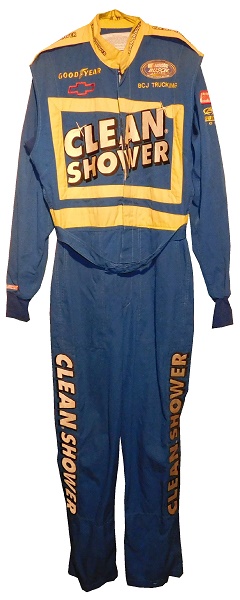
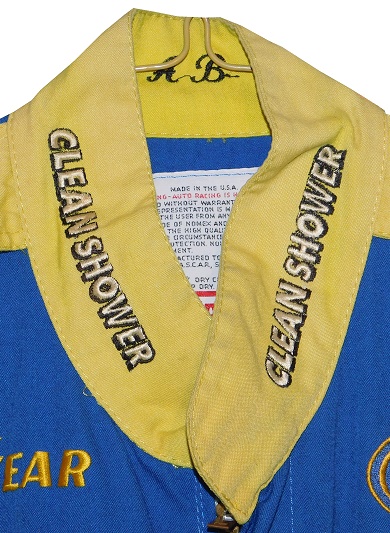
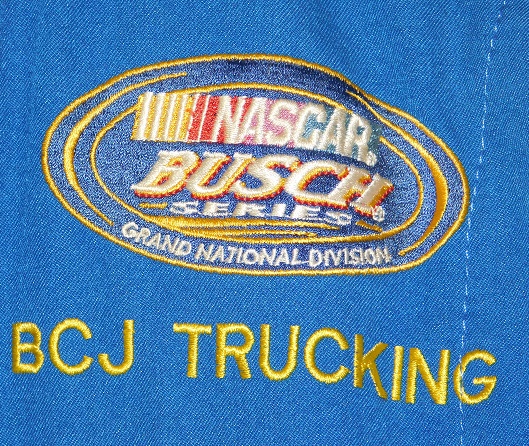
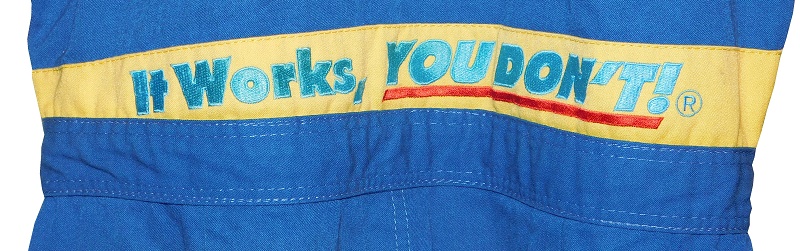
From 1998 to 2000, Bobby Hillin, Jr. raced for Bobby Hillin Racing. In 1998 and 1999, the team had some success, with 1 top 5 and 5 top 10’s in 1998, and one top 10 and 2 top 10’s in 1999. The team did have 5 DNQ’s in 1998 and 4 DNQ’s in 1999. For a number of races, they were sponsored by Clean Shower cleaning spray, and during that time, one of their crew members wore this firesuit.The suit itself shows decent use, with some scuff marks, and some material snags.The collar is a standard collar, with CLEAN SHOWER logos embroidered on the sides.The standard Simpson Warranty Label is in the cowl. The initials AB are embroidered into the back of the collar.The right chest features a yellow GOODYEAR logo, and a red Chevy bow tie logo embroidered into it.The left chest features a BUSCH SERIES GRAND NATIONAL DIVISION logo and a yellow BCJ TRUCKING logo embroidered into it.The front torso features a large CLEAN SHOWER logo.The blue belt is unadorned.The legs feature CLEAN SHOWER logos in television position, and some wear on the cuffs.The yellow shoulder epaulets have white and black CLEAN SHOWER logos embroidered into them. The right sleeve is unadorned, except for a tiny Simpson patch on the end of the sleeve. The left sleeve features a SIMPSON patch and a BOBBY HILLIN RACING logo embroidered into the top, and nothing at the ends of the sleeve. The back of the suit features some light wear on the torso.The back of the neck is unadorned.The back torso features a giant CLEAN SHOWER logo. There are some scuff marks below it.Just above the waist on the back is a yellow strip with IT WORKS YOU DON’T embroidered into it in blue.Bobby Hillin Jr. is a driver who was never a superstar, but who was an honest, hard working driver who had a decent fan base. He had a good career, and it’s great that he’s now found his calling as the owner of a construction company. He is missed in NASCAR though, and I hope he shows up at a race soon.

Next week, a more modern suit with a unique design.

The Lifeblood of Auto Racing

By David G. Firestone

To say oil is critical to auto racing is like saying that water is the key to life. Without oil, auto racing couldn’t exist as it does today. Crude oil is refined into gasoline, and also into motor oil, which keeps the engine lubricated.

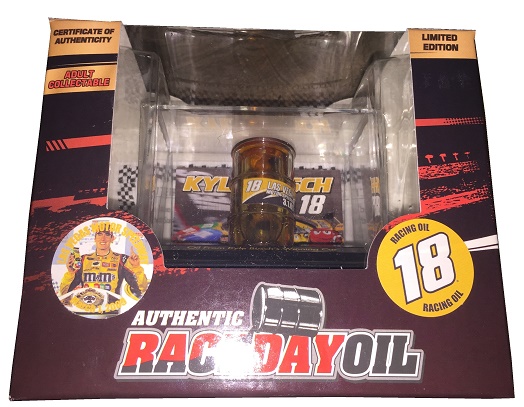
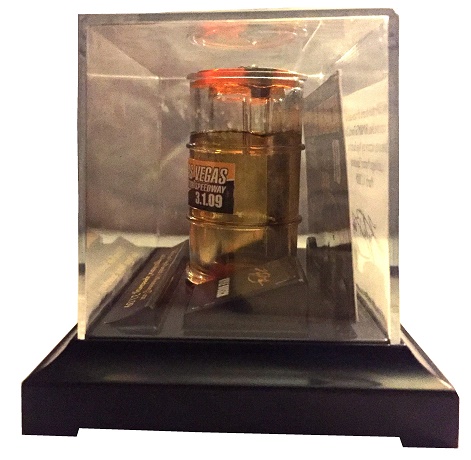
In recent years, NASCAR has started a green program to help their image. This includes recycling, clean energy, and oil recycling. Not long ago, it was discovered that used motor oil can be re-refined into almost anything that crude oil can be refined into. Interestingly, sometimes oil was sold to collectors, as is evidenced by this display of oil from Kyle Busch’s #18 Toyota Camry when he won the 2009 Shelby 427 at Las Vegas.The package is about 5 inches long by 3 inches wide, and contains a card, an ounce of thick motor oil, a COA, and a card. This is one of only 504 ever made. Inside the box is the display which is slightly smaller than the box. It has a small oil drum with a small amount of motor oil. The oil has a thick viscosity, which is needed because of the wear that Cup engines produce during a race. The COA comes in the box, and states that this is #359 of 504.This is an interesting little piece of memorabilia, something that I’ve never seen offered before or since. With NASCAR going green, it seems unlikely that something like this will be offered up again. Since I know that this week’s column was a little thin, so I’m switching gears, and offering up…

Tailgating Time!

NASCAR fans love red meat. That has never been disputed by anybody. While most people simply grill steak, I thought it would be good to make something a little more complex…and tasty. With that, I present:

Steak and Mushrooms

8 Servings

Ingredients:

8 steaks

4 packages pre-sliced baby bella mushrooms

4 cups red wine

2 sticks unsalted butter

16 sprigs of thyme

Kosher salt and pepper

Vegetable oil

Instructions:

1. Place a large saute pan on the stove top over medium-high heat.

2. Salt and pepper both sides of your steaks, and then add them to the hot pan.

3. Sear 4-5 minutes until browned, then repeat on the other side.

4. Just before you remove the steaks from the pan, add the thyme springs and butter in there. Let it melt, then take a spoon and baste the tops of the steaks continuously with it.

5. Set the steaks aside on a plate to rest.

6. Put another drizzle of oil in your hot pan and add the mushrooms.

7. Season them with salt and pepper and cook them, tossing occasionally, until they release their water and start to take on some color, about 8 minutes.

8. Add the wine, and let the liquid cook down until thickened.

9. Plate your steaks on top of the crispy green beans, and add mushrooms on top of steak with sauce.

Next week, we look at a vintage pit crew suit.