
By David G. Firestone
So the 2026 Daytona 500 is behind us, and it was actually a good race. The Duels were good, and the race as a whole was good. I will say that, like a lot of fans, I’m over a few things. First, when it comes to FOX, I do NOT need to hear Larry McReynolds say “You can’t make mistakes on pit road” every telecast. We get it. Making a mistake at a critical point in the race is bad.
But the other thing I’m over is stage racing. Seriously, nobody wanted this to begin with, and most fans are done with it. Maybe the drivers like it, or maybe the teams, but as a long-time fan, I’m done. I don’t see how this is a net positive for anyone here. Let the drivers race.
But I’m posting this just after the 25th anniversary of the 2001 Daytona 500. Growing up, the first race I ever watched was the 1990 Daytona 500. I saw that black and silver #3 Chevy Lumina running at the front, and I was hooked! That love carried stayed until the 2001 Daytona 500. I’ve never been able to have a favorite driver since Earnhardt’s death. One of my all-time favorite photos of myself is me next to one of Dale’s Luminas, taken at the museum at Talladega in 1999.
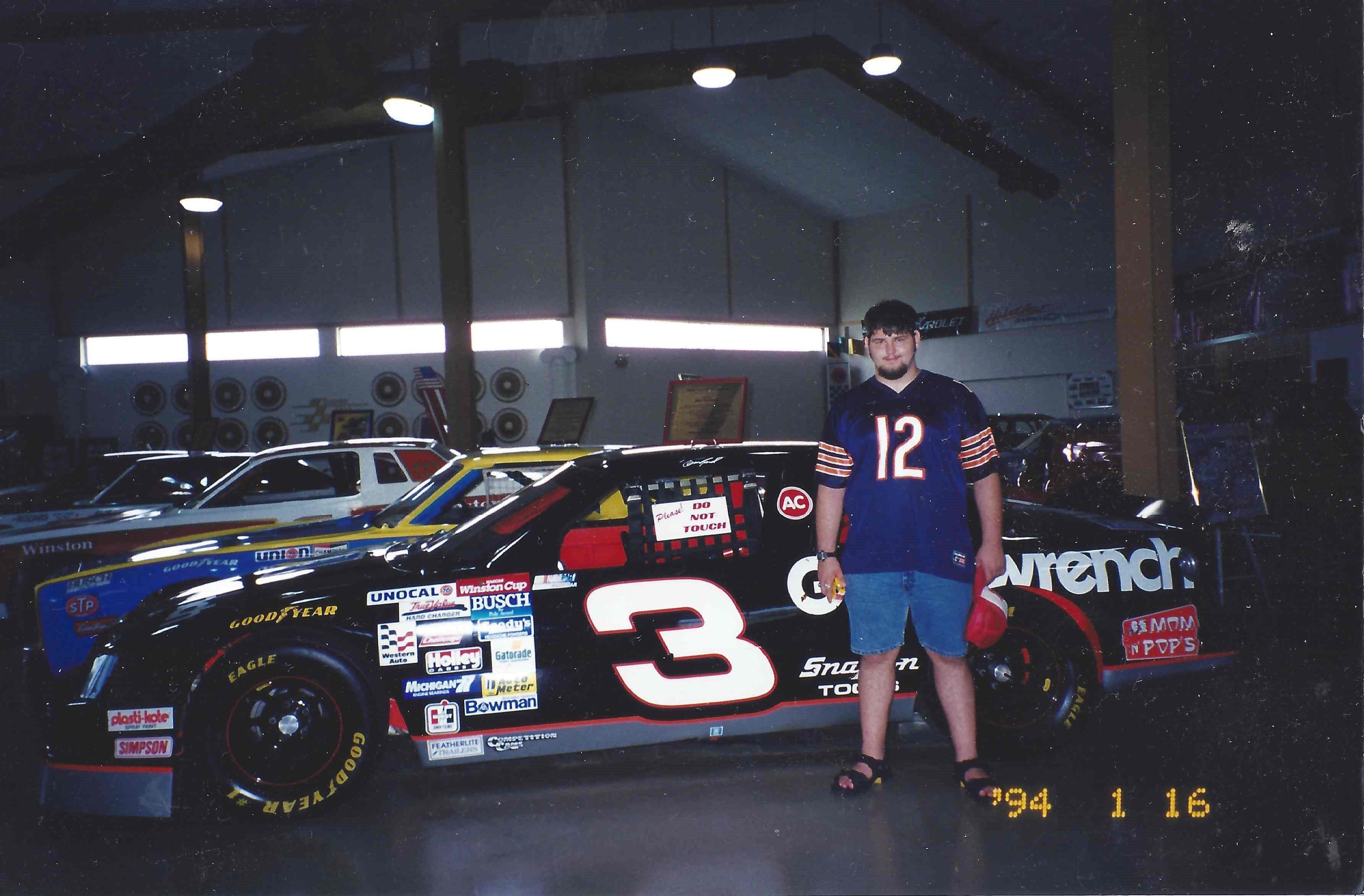
Dale’s death hit me hard. I cried in my dorm room after my roommate went to work out. I had just lost my idol, and a huge piece of inspiration. 25 years later, I’m still not fully over it, and neither is NASCAR. Sure, new drivers have slowly replaced the old guard, but with Dale Earnhardt, he was so much more. He was a true legend in every sense of the word. But his legacy means so much more to auto racing.
Dale Earnhardt’s death was a moment that robbed us of one of the greatest drivers of the modern era, but also was a water shed moment for racing safety. Auto racing safety has always been written in blood. It’s also a constantly moving target. As the cars get faster and more technically complex, the safety standards have to change too. Sometimes these changes are made in good faith, other times, blood has to be spilt.
After the 2001 Daytona 500, there was a massive shift in the way racing viewed safety. Before, for a lot of racing, the approach was a matter of fixing problems after they happen. After Earnhardt’s death, that switched to trying to fix problems before they lead to serious injury or death. While there had been pushes for new safety standards, Earnhardt’s death kicked all of that into high gear.
While I was thinking about this column, I came to a realization. F1 had already started that approach after Ayrton Senna’s death in 1994, but somehow, no real changes outside of F1 took place between 1994 and 2001. A major driver was going to have to die before this approach was implemented. The question I began to think about was, who would that driver have been?
Thinking about this, it’s a pretty horrifying thought. Would it have been Jeff Gordon? Dale Jarrett? Mark Martin? Michael Andretti? John Force? That number was going to land on someone, and on February 18, 2001, that someone was Dale Earnhardt Sr.
Another thought that I had was, what if none of the major drivers died? Sure, there were plenty of other drivers who were killed in wrecks across the world, but nobody’s death was more critical to the overall safety culture of the sport than Dale Earnhardt Sr. So if this major death never happened, what would auto racing look in 2026?
First, I can promise that there would have been a lot more deaths in auto racing across the board. Second, a lot of safety features, many of which are taken for granted, wouldn’t be as uniformly implemented as they are now. Eventually that major death would have happened, but there would be a much bigger body count.
In the end, Dale Earnhardt’s death was tragic. While NASCAR hasn’t recovered from it, there are countless race car drivers who owe their lives to the safety culture his death helped create. I can say for sure, his death wasn’t in vain. Rest in peace Dale.
 The Driver Suit Blog